Category Archives: Food

North Napa Wineries(And Great Food!)

Our annual New Year’s tradition in Napa Valley began by responding to a “Living Social” offer for a bed and breakfast/spa package in Calistoga, a small town in the north valley that served as a regular get-away decades ago.  Friends and fellow “foodies”, Rosemary and David, carefully selected some restaurants of recent note and we were off for a mini “fork and cork” experience that began with lunch at Cindy’s Backstreet Kitchen.
Chef Cindy Pawlcyn, beginning 25 years ago with the infamous Mustard’s Grill on Highway 29, has developed three restaurants in the Napa Valley, including Cindy’s Backstreet Kitchen, located in a quaint historic building along the railroad tracks, east of St. Helena.   The charming old supper club atmosphere is enhanced by a very unique menu that includes such dished as the “Chinatown Duck Burger with house made shiitake mushroom ketchup and French fries” and “Adult Grilled Cheese, mostly vegetarian NO CRYBABIES! and polenta fries”.    They feature a very diverse choice of fine wines by the glass and bottle, micro brews like “Death and Taxes” Black Lager from Moonlight Brewing and creative cocktails such as their “Thai-gin-tini”.  What a wonderful start to an entire weekend of gourmet experiences.
The town of Calistoga is historically known for its spas that feature naturally hot mineral and volcanic ash baths.  Over the past decades, restaurants, B&B inns, elegant spa hotels and boutique wineries have become mainstays of the local landscape.  Our first wine tasting stop, the Vincent Arroyo Winery, fits the local persona with wines as unpretentious as they are bold and supple.

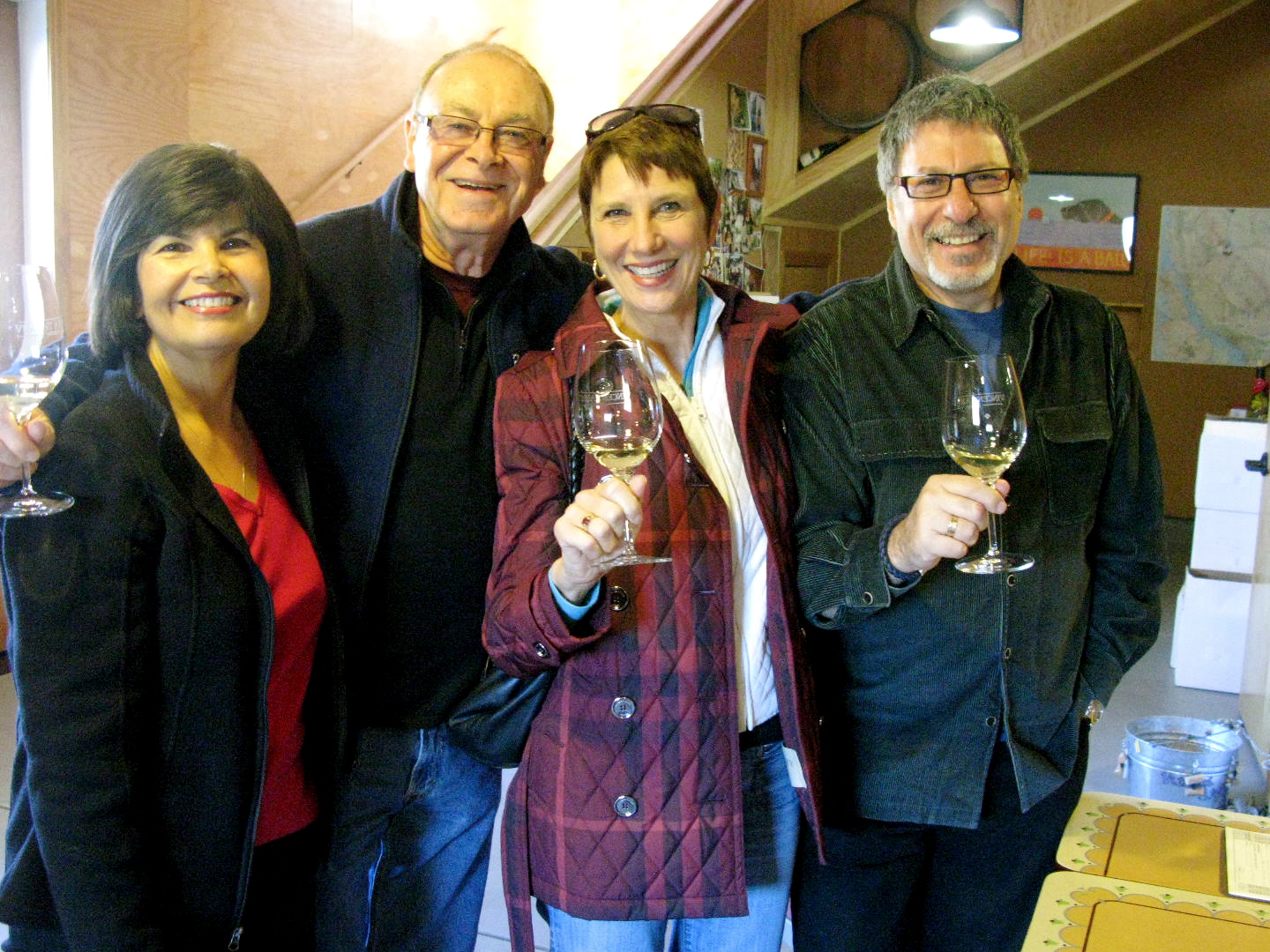
Entering the barn at Vincent Arroyo Winery, after an official greeting by black lab, JJ and chocolate lab, Bodega, their tails wagging, you are reminded that this is a small working winery and, amid a relaxed environment are friendly staff that are very serious about their wine.  We tasted several current releases, beginning with the 2010 Vincent Arroyo Chardonnay ($24), two-thirds fermented in stainless steel tanks and the rest in French oak barrels resulting in a very crisp flavors with hints of vanilla.

JJ - Vincent Arroyo greeter

Tempranillo has become a very trendy varietal and seems to be expanding in very diverse regions throughout the state.  Of Spanish origin, the grape typically generates nice, heavy fruit
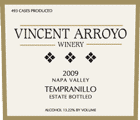
Vincent Arroyo Tempranillo 2009

bouquet and flavors and, like Cabernet Sauvignon, enjoys the company of oak.  The 2009 Vincent Arroyo Tempranillo ($28) delivers all the features of a dry Cabernet, with ripening fruit flavors at a relatively moderate price.   Moving to blends of French descent, the 2008 Vincent Arroyo “Nameless” ($30)is a left-bank Bordeaux blend of merlot (62%) and cabernet
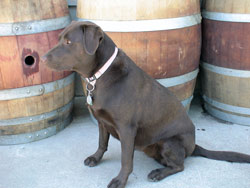
Bodega - unofficial host

sauvignon (38%) that is well-balanced, semi-tart and great to pair with food.

Another varietal expanding throughout California wine regions is petite sirah, a dark inky-colored grape with rich texture and very soft, accessible flavors.  Of the three produced, we enjoyed the 2009 Vincent Arroyo Petite Sirah Rattlesnake Acres, from a vineyard at the winery entrance.  Exhibiting all the traditional qualities of the varietal, the flavors were very forward with a nice lingering finish.   The 2008 Vincent Arroyo Petite Sirah “Winemaker’s
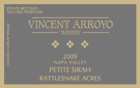
Vincent Arroyo Petite Sirah "Rattlesnake Acres" Vineyard

Reserve” ($50) aged three years, is still young, but has a structure that will continue to mature.

The flagship wine of our day was the 2009 Vincent Arroyo “Entrada”  ($65), an unusual blend of syrah, cabernet sauvignon and petite sirah with bold flavors and near perfect balance that is drinking well now, but will continue to develop structurally with time.

For our first dinner, Rosemary had reserved a table at the Michelin-starred SolBar, on the Solage Spa grounds, just east of town.  We are pleased that she did.   Upon entering SolBar, one is immediately immersed in an understated elegance that is inviting for fine food and wine.  It is a modern, sleek, but homey room where everything seems to work the way it should.  Carrying a bottle of Kosta Browne Pinot Noir Garys’ Vineyard 2009, we were definitely in the mood to sit, relax, select and enjoy.   One look at my wine and our young female waiter suggested that we decant it right away.  That’s apparently what happens at a Michelin-starred restaurant.   The pinot noir opened up and paired perfectly with the wild, sustainable sea bass as well as the beef confit salad. The SolBar experience was my best in recent memory.
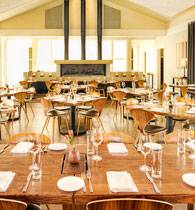
SolBar restaurant

Laura Zahtila Swanton’s story is a somewhat familiar one, one that has a happy ending.  Working at Cisco Systems in Silicon Valley, she purchased the property of her estate vineyard and winery, relied on her technological skills and set out to produce limited-quantity boutique wines along the Silverado Trail in the Napa Valley.  Coming upon her property, with no prior knowledge of her wines, we decided to make the short trek to a quaint tasting shack only to be pleasantly surprised by many of her recent releases.
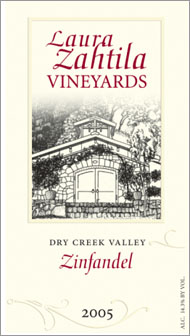
Laura Zahtila "Odone Vineyard" Zinfandel 2005

We began with a comparative tasting between the 2004 and 2005 vintages of the Laura Zahtila Vineyards Zinfandel “Odone Vineyard” ($40), revealing vast differences in flavor and structure.  The 2004 was well structured, soft and a bit tannic while the 2005 was much more fruit forward with nice vanilla and cinnamon hints.  Both wines need decanting for a few hours.  Decanting is also recommended for the Laura Zahtila Vineyards Zinfandel “Oat Hill
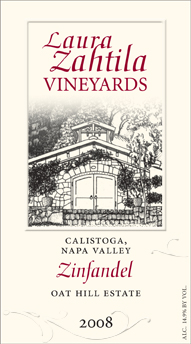
Laura Zahtila "Oat Hill" Zinfandel 2008

Vineyard” 2007 ($45), much more jammy with plum and blackberry.

This is the Napa Valley.  While winemakers are experiencing with different varietals and terrior, cabernet sauvignon is still king.  As we were tasting the Laura Zahtila Cabernet Sauvignon “Barlow Vineyard” 2007 ($50), a nicely structured wine aged in 40% new French oak, our hostess opened a library bottle of Laura Zahtila Cabernet Sauvignon “Beckstoffer and Georges III Vineyards” 2002 ($60) from two famed valley vineyards.  This wine expressed a very unique bouquet and an earthiness indicative of the fine wines produced from these Rutherford vineyards

Our final carefully selected culinary destination was “Farmstead”, the gourmet, comfort-food restaurant by Long Meadow Farms, a 650-acre ranch above the valley that produces grass fed beef, eggs, heirloom fruit and vegetables, olive oil, all in a sustainable, organic and responsible way.  Having supplied top American chefs with fresh products, they developed “Farmstead”, south of St. Helena to showcase their mission of healthy, responsible food that tastes great.  Dishes like “Brick-cooked chicken with savory spinach with rancho gordo beans and salsa verde” and “Salad of kalcinato kale with chile pequin, lemon and toasted
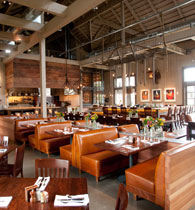
Farmstead Restaurant in St. Helena

grana cheese” are rare recipes that are not duplicated anywhere else.

Our final tasting was at Summers Estate Wines, a small boutique winery, north of Calistoga, producing 8-9,000  multi-varietal cases per year, mostly from their 28-acre estate vineyards.  My first contact with Summers wines was a glass of their “La Nude” Unoaked Chardonnay 2008, recommended as being crisp, but with softer flavors.  The Summers Estate 2008 Reserve Chardonnay ($22), dissimilar from others we had recently tasted, was aged for 10 months in French oak, infusing a rich vanilla essence with nice orchard fruit flavors.

Among other fine attributes, Calistoga apparently has good “terrior” for the rare, once abundant Charbono grape that suffered from an identity crisis in its early California years.  Story
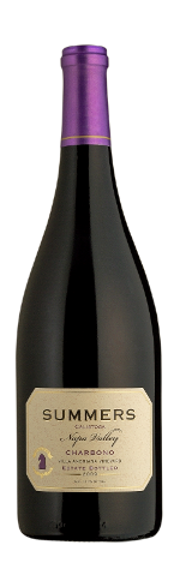
Summers Estate Wines Charbono 2009

has it that Italian immigrants brought the grape here during the Gold Rush, thinking it was barbera.  Although widely grown throughout the Napa Valley in those early years, Summers reports that their 80-acres are the only Charbono vines left on the planet.  The Summers Estate Charbono, Villa Andrianna Vineyard 2008 ($28), aside from deep ruby color, has rich berry and spice flavors that pairs well with pasta and tomato-based sauces.

Zinfandel is a varietal that generally thrives on mature vines that have adapted, over the years, to their soil conditions.  The Summers Estate Zinfandel “Four Acre Zin” ($34) is one of those wines, made from 40-50 year old vines, creating a wine that effectively balances the sumptuous flavors of strawberry jam and the spiciness of cracked pepper.  Our last wine, the Summers Estate Reserve Cabernet Sauvignon ($48) expressed multi-layered flavors and nice texture.  Unlike the Charbono and jammy Zinfandel, this wine must compete with the multitude of other Cabernets that have made the Napa valley famous.

Synonymous with renowned names like Mondavi, Stag’s Leap and Spottswode, the Napa Valley has also become, over the past 30 years, a region that can still be accessible to small production, boutique winemakers who rarely get the ratings and major press, but nonetheless are serious and talented in their craft.  These and other north valley wineries are worth exploring, using Calistoga as a home base, whether in a local B&B such as the Calistoga Wine Way Inn or the Mount View Hotelon Lincoln Avenue.  Memorable food, good
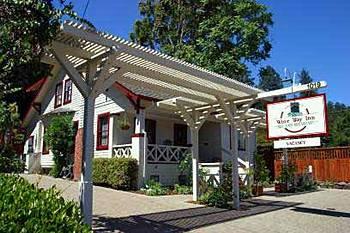
Calistoga's "The Wine Way Inn"

wine, spa treatments and other outdoor activities are at your fingertips in the north Napa Valley.

“Fork and Cork” in Angels Camp


"Wine a Bit"

The Brown’s Valley Fork and Cork Society, growing impatient of scheduling problems, grabbed an open weekend and assembled at our friends Robin and Ginny Jaquith’s mountain home in Angels Camp to express our culinary (or lack of) skills, share wine, catch up and plan something special. This weekend included a private winemaker’s dinner, exploring new area wineries and some good home cooking. For those unfamiliar with Angels Camp or Murphys, CA, my advice is explore these quaint villages, located in the Sierra foothills, the heart of gold country with shops, restaurants and new, exciting wines from the Calaveras and Amador

Robin and Ginny Jaquith

appellations.  Uniquely designed frogs fronting many of the business’s reminds us that Angel’s Camp is the setting of Mark Twain’s 1867 fiction, “The Celebrated Jumping Frog of Calaveras County”, a familiar novel if you are my age.

The first order of business upon our arrival was to complete the Thursday night dinner main course, our contribution to the weekend festivities.  We extracted a “Fennel-crusted Salmon with Celery Root/Pear Puree” recipe from Wine Spectator magazine, added some fresh grilled asparagus and paired with a local 2008 Leona Valley Winery Sangiovese.  The meal began with a fresh butternut squash soup with crème fraiche paired with a superb Russian River Valley sauvignon blanc, arguably one of the varietals best in California with past appearances on Wine Spectator’s annual Top 100 list.

Merry Edwards RRV Sauvignon Blanc 2008

The 2008 Merry Edwards Russian River Valley Sauvignon Blanc, with consistent ratings in the mid-nineties, expresses a rich texture, soft flavors of honey and melon and a bit of citrus.  A fantastic food wine, it enhanced the butternut squash soup and was a bridge to the herbed, grilled asparagus.

David Reynold’s 2008 Leona Valley Winery Sangiovese began with an interesting story.  For various reasons, his neighbors could not pick their sangiovese grapes and offered them to David with the promise of his first ten cases.  The wine, with multi-layered flavors, some added barbera, stood up to the fennel, also offering a long, soft finish.

Friday morning led us to Amador County’s wine trail to visit a new producer that has “accelerated” onto the local scene.  The

"combustible sculpture" at Driven Cellars

location, Driven Cellars, is novel on many counts; including the eclectic collection of old trucks and tractors that adorn the property like some “combustible” sculpture garden.  The vineyards began in 1993 with mostly popular zinfandel and have expanded to a variety of other reds, releasing the first vintage in 2003.  Although their impressive  “green” facilities incorporate recycled buildings, rainwater collection systems and solar heating/cooling, the impression that I left with was one of a variety of very fine wines, quietly produced under the radar and offering high quality for value prices.

We tasted the entire palette of wines from Driven Cellars, a barbera with candied fruit on the nose, luscious zinfandel and aprimotivo, aged in, of all things, Minnesota oak.  Of all these nice wines, three stood out, unique examples of the local terrior.  The tempranillo varietal, known as the Spanish cabernet sauvignon, seems to thrive in California’s gold country.  The Driven Cellars Tempranillo 2008 ($23), to prove my point, was luscious on the nose and palate, with rich fruit through a long finish.

The tempranillo varietal seems to standout in the Sierra Foothills, notably the Twisted Oak “The Spaniard” blend and young Allegorie Tempranillo 2009, recently tasted in the picturesque town of Murphy’s.

The petite sirah grape also prospers in the local terrior, but a few offer even more than the deep, dark color and deep, dark cherry fruit. Strong hints of fennel and mint on the nose distinguish the Driven Cellars Petite Sirah 2006, adding rich flavors that

Driven Cellars Petite Sirah 2006

were balanced and complex. I now sense that we have set upon something authentic, something beyond the panoramic views and abstract metal, reminiscent of man’s relationship with vehicles, those monstrosities needing V8’s to leave tire marks on the pavements.

It is all seemingly tied together with the Driven Cellars “454” Red Wine 2007, their inimitable flagship blend that pays homage to the cubic inches of those hot rod engines. This exclusive blend of primotivo (48%), syrah (24%), zinfandel (23%) and tempranillo (5%) manages to maintain texture and balance, with flavors accessible for most palates. The novelty of the site does not overpower the wine, but foreshadows that which exceeds expectations.

Robin and Ginny continued our exploration of Calaveras County wineries by planning an exclusive “Fork and Cork” winemaker’s dinner at Val Du Vino Winery in Murphy’s. Owners Jonathon Phillips and Jeanine Hebel have a clear division of duties in operating the winery.  Jonathon sticks to winemaking and Jeanine, a renowned French chef, handles catering and special pairing dinners.  What a treat to enjoy Jeanine’s exquisite cooking and Jonathon’s stories of his diverse career as he poured and exuded pride in his wines.

Jonathon Phillips sources all of his grapes from fine vineyards in the Sierra Foothills and beyond.  His profile includes a zinfandel from Paso Robles and a north coast cabernet sauvignon, undertaking a hands-on approach to winemaking and content with limited production.

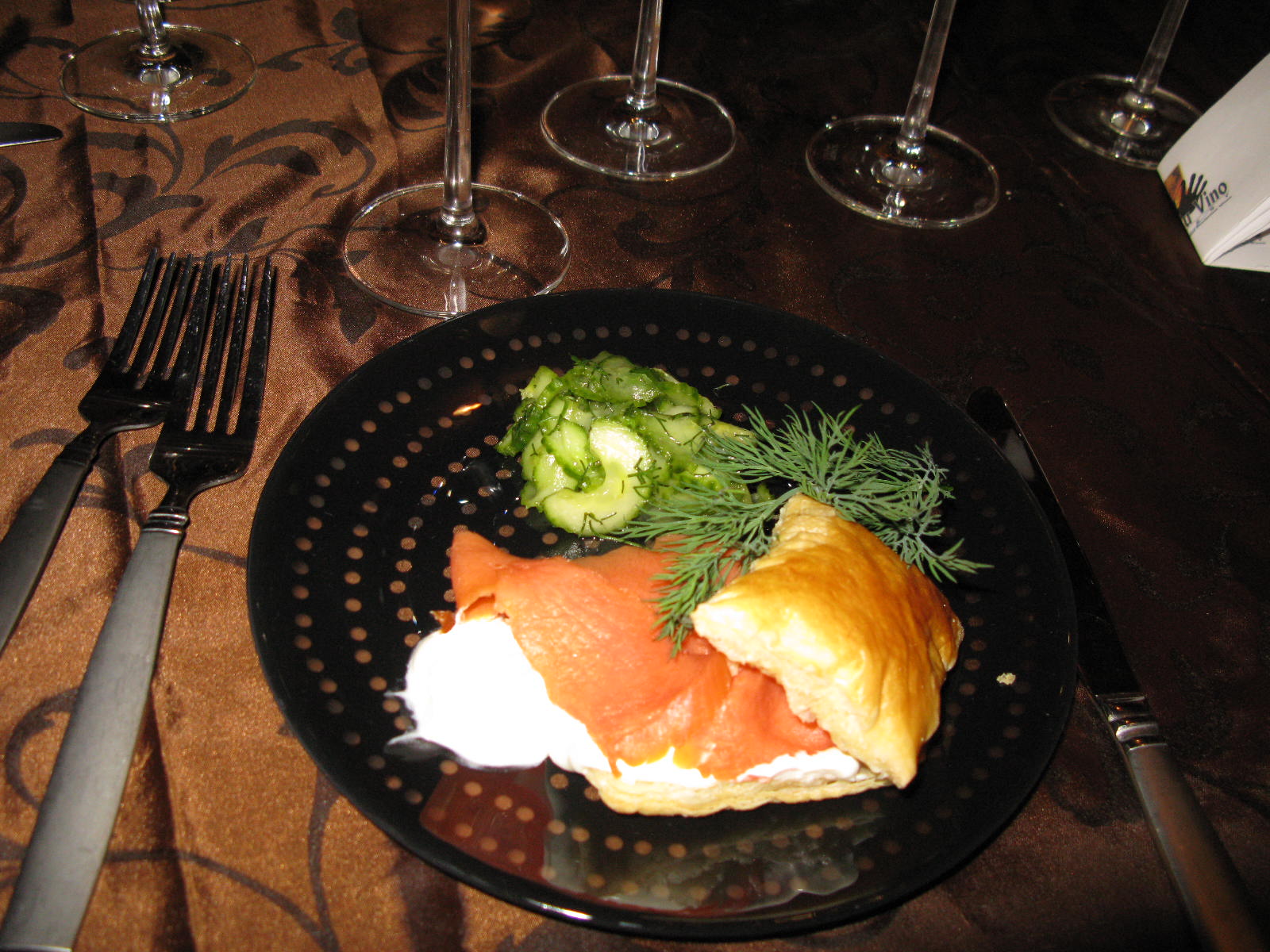
salmon galette filed with herbed goat cheese, figs and prosciotto

Jeanine’s delicious Shrimp Viognier Aspic Soup topped with Zabaillone was paired with the Val du Val Viognier Amador County 2010 ($24), very aromatic wine with strong impressions of the orchard fruits.  There was at least one bottle in each couples cart that evening.  The second pour, the Val du Vino Grenache 2009, grown locally and emanating highly ripened berry flavors, accompanied a Galette filled with Herbed Goat Cheese, Figs and Prosciotto. The herbs enhanced the strong fruit-based flavors, a common component of any good grenache

The magnificent entrée’s were paired with three bold new red wine releases, one, the Val du Vino Syrah 2009 ($30) from Calaveras County coupled with her Lamb Moussaka.  Heavy spice hints combine with concentrated fruit in classic syrah style, always good with lamb.

The ultimate paired wines included a fruity Val du Vino Zinfandel Paso Robles 2009 ($25) and Val du Vino Cabernet Sauvignon 2007 ($35) from Mendocino County.  The cabernet, surprisingly paired with Salmon Fillets in a Cabernet Sauce served with Potato Leek Ravioli, was big and soft at the same time, the result of good balance and texture. The jammy flavors of the central coast zinfandel stood up some incredible Baked Pears filled with Stilton, Cranberries and Walnuts. What a feast, kept real with moderate portions that truly helped the expression of the wine.


Val du Vino Winery was a nice discovery; tasting handcrafted, boutique wines with celebrated contemporary French cuisine. These limited production releases will be impossible to find in So Cal, making their wine club or internet sales the best option.

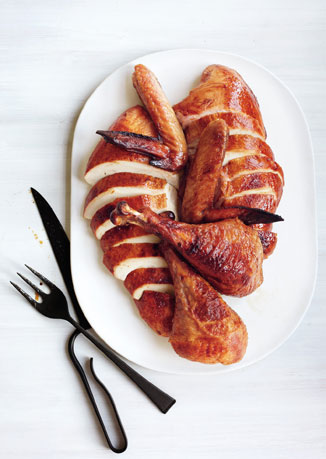
Our hosts coordinated a divine pre-holiday feast for Saturday evening, our last together.  It was an Anita Lo menu in Bon Apetite’ that included Cider-Brined Turkey with Star Anise and Cinnamon, Kabocha Squash Puree with Ginger and Candied Mandarin Oranges and Cranberries; a diverse menu, but not a challenging one to pair. We began with a Foley Estate “Barrel Select” Chardonnay 2008, from the Santa Rita Hills appellation; a creamy, well-structured, full-bodied wine

Cider-brined Turkey with Star Anise and Cinnamon

with nice aromas and flavors of melon, tropical fruit, honey and butterscotch on the finish.

The Novy Syrah Rosella’s Vineyard 2008, from friend David’s cellar, would be the first dinner wine.  Novy Family Wines, based in Santa Rosa, produce mostly syrah from some of the state’s finest vineyards. This one has been consistently rated in the mid-nineties. The second pair, RN Estate Pinot Noir Santa Rita Hills 2009 from Kathy Joseph’s Fiddlestix Vineyard conveyed nice, balanced fruit aromas and flavors. Both wines matched up well with the spices of the meal, as they were intended to.

Friends of nearly 40 years, Robin and Ginny earned their service points for the Brown’s Valley Fork and Cork Society.  Thanks for a delightful and informative weekend.


Santa Barbara Wine Day


By Lyle W. Norton  (8/13/2011)

An invitation to attend an afternoon Pinot Noir release party afforded me an opportunity to plan a complete wine day tasting new releases from the Santa Rita Hills and Santa Ynez appellations. If I timed my day properly, I could fit in lunch at Los Olivos village and a tasting of new Richard Longoria wines before the Foley Estate event.

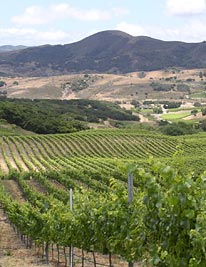
Rancho Santa Rosa Vineyard

Foley Estate Winery, creators of some of California’s finest Pinot Noir and Chardonnay since the 2002 vintage was celebrating the release of their special “Brand” series and Lindsay’s Vineyard Pinot Noir, vintage 2009.  Having covered earlier vintages, their careful blending of clones within the 230-acre Rancho Santa Rosa Vineyard and Lindsay’s (formerly Rancho Los Hermanos) Vineyard, use of oak as well as fermentation techniques has pushed complex flavors forward and increased richness and texture with each vintage.

An irony of the afternoon was finding time to sneak across from the tents to the tasting room to secure a few bottles of 2009 Foley Estate “Barrel Select” Chardonnay ($50), my hands down favorite.  This Chardonnay delivers nice flavors of tropical fruit, honey, and vanilla within a creamy, rich texture.  To paraphrase The Most Interesting Man In The World:  “ I don’t always drink Chardonnay, but when I do, I prefer Foley Estate “Barrel Select”. However, this party is about Pinot Noir and the food that supports it, ready to showcase local restaurants.

Oak influences are the signature of the 2009 Pinot Noir Rancho Santa Rosa Vineyard, lending earthiness to the bouquet and flavors.  Some tannins and tartness add to the structure of a rich, concentrated texture.

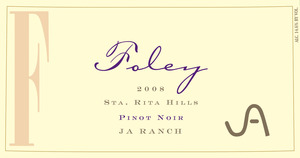
JA Ranch Pinot Noir

Perfectly braised beef short ribs from the Hadsten House Hotel, near the entrance of Solvang, accompanied the Foley Estate 2009 Pinot Noir, JA Ranch ($45), combining specific clones from the Rancho Santa Rosa and Lindsay’s Vineyards.  Typical Pinot elegance was evident on the nose and the earthiness was balanced with hints of vanilla, anise and a very soft texture.

Offering many luxury amenities at reasonable prices, the Hadsten House has been a true “find” in the Solvang area.  It is family friendly, offers a true gourmet breakfast and, now has an on-site restaurant featuring traditional dishes of chicken, salmon, chops steaks and a wine list continuously updated to feature the best the region has to offer. I can tell you that their well-spiced short ribs fell off the bone.

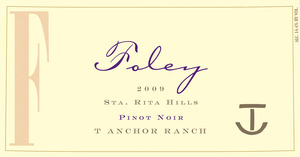
Just when I felt the “JA Ranch” Pinot was the “best of show,” along comes the Foley Estate 2009 Pinot Noir, T Anchor Ranch ($55)with enough spice on the nose and palate to pair with spice-rubbed lamb, courtesy of Petros Restaurant in the Wine Country Inn at Los Olivos village.  Certainly the most complex wine of the release, the “T Anchor

2009 "T Anchor" Pinot Noir

” has a variety of strong spices including cloves, brown sugar and cinnamon delivered through a velvety texture that lasts and lasts.  This is a good wine to track throughout the year.

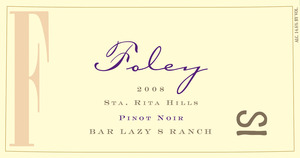
The “Brand Series” Pinot Noir blend specific clones from the Rancho Santa Rosa and Lindsay’s Vineyards. Our final series taste was the 2009 Pinot Noir, “Bar Lazy S”, a

"Lazy S Ranch" Pinot Noir

medium-bodied wine with classic black cherry flavors preceded by a candied nose. The wine was accompanied by cannellini beans with Italian sausage, black and white pepper, pairing nicely with the toasted nut hints on the finish.

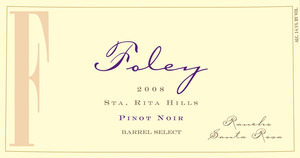
Whether red or white, the Foley “Barrel Select” concept blends the most complex and complementary barrels after the fermentation and aging process. A high percentage of the juice completes a malolactic fermentation process that adds to the softer, rich texture.  Fantastic Boneless Baby Back Ribs with Pressed Casaba Melon and Tomato Salad, for me, could pair with almost anything, including the 2009 Foley Estate Pinot “Barrel Select” ($60).  With a slight bouquet and traditional flavors, the complexity of this wine is nicely packaged in a creamy texture and long finish.

The 2009 Two Sisters Pinot Noir Lindsay’s Vineyard ($75)is comprised of the best clones within the vineyard, blended after individual aging in 90% new French oak barrels. With nice floral hints on the nose and caramel, cinnamon on the finish, “Two Sisters” has all the layered flavors and texture expected from a wine in the higher price range.

Foley "Barrel Select" Pinot Noir

The Foley’s daughters are placed in a prominent role throughout their family of wines.  After acquisition, the westerly Rancho Hermanos Vineyard was divided into two distinct vineyards and renamed for the sisters, Lindsay for the reds and Courtney for the whites. Both “Two Sister” wines are carefully crafted, but the Pinot Noir will need lengthy cellar time.

Another Foley family operation, Lincourt Winery, located in the Santa Ynez Valley near Los Olivos village, combines the sister’s names for its own.  Adding sauvignon blanc, pinot grigio and cabernet sauvignon to the traditional pinot noir and chardonnay, Lincourt offers a palate of reasonably priced, quality wines.

The Foley Estate Winery, under the leadership of winemaker Leslie Renaud, is producing luscious high-end Pinot Noir and Chardonnay in a region known for it, within a state that leads the world.  There are simply many to choose from.  For those interested in “stepping up” their wine experience a notch, I feel that the Captain’s Club” would be both informative and fun.  Although I am not a member, I do know that their wines are really getting good, the winery resides in a serene valley located off Highway 246 and they always host multiple events for the member’s enjoyment.

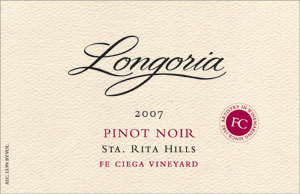
My previously mentioned detour to the Richard Longoria tasting room, initially intended to secure a specific wine, introduced me to some new releases, tasted outside, in a lovely garden setting.  I tasted the 2008 Longoria “Fe Ciega Vineyard” Pinot Noir ($48)as a symbolic gesture.  Actually, this wine had me at hello.  Rated consistently in the mid-

Longoria "Fe Ciega Vineyard" Pinot Noir

nineties, the vintage 2008 “Fe Ciega” has gotten great press, convincing me to acquire a few bottles to cellar for at least a year.

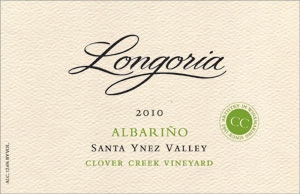
In the garden, we began with a vintage 2010 Albarino ($23), offering some soft tropical fruit with a citrus “kick”.  A nice wine, but with all the chardonnay, sauvignon blanc, viognier and white Rhone-style blends saturating the market, one wonders where this Spanish white grape will fit in.

Continuing to work with Spanish varietals in the warmer Santa Ynez Valley, Longoria has planted the tempranillo grape, often compared to our

2010 Longoria "Albarino" a white Spanish grape.

cabernet sauvignon. Having first tasted the 2008 Longoria Tempranillo Clover Creek Vineyard ($36) months earlier at a private tasting in Glendale, I was anxious to discover if my initial positive impressions were justified.  Once again, the somewhat earthy bouquet and flavors were enhanced with nice structure and texture, aided with hints of Merlot and Syrah. I would definitely select this vintage from a wine list to pair with red meats or pasta.

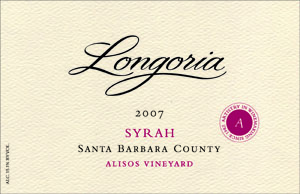
Richard Longoria produces two distinct single-vineyard Syrah, one from the Alisos Vineyard in Los Alamos Valley, the other from Clover Creek Vineyard in Santa Ynez.  Described as a more restrained vintage than past due to cooler late summer and less sugar content, the 2007 Longoria

Syrah from Alisos Vineyard in Los Alamos

Syrah Alisos Vineyard Santa Barbara County ($34), even if somewhat acidic, expressed wonderfully balanced spice and berry flavors.  Although it is drinkable now, this wine definitely needs time to optimize.  For those who have access to wild meats like venison or boar, this syrah would pair perfectly.

The thought of ten new and interesting wines, a few for my cellar, boneless baby back ribs with pressed casaba melon and tomato salad and an opportunity to spend a day amidst the new California landscape; oak-studded rolling hills and vineyards has me already wanting to do it again.


The Value of “Barrel 27”

On our way to attend an event called, “Wine, Women and Song” at the quaint Hotel Cheval in downtown Paso Robles, we received a text that our friends, Rosemary and David, were going to be in town for the last few nights of their month-long “No Reservation Road Trip.”  This two night get-a-way just got busier.

As friends, our serious interest in wine began in the mid-eighties.  Discovering new eating establishments and wines is what we are about when our paths cross in Paso.  During lunch, I explained my plans to visit Barrel 27, a new winery that recently has received recognition for producing good value-priced Rhone-style blends. With everyone game after lunch, we headed east from town to hopefully, discover some new releases.

Reviews from two major periodicals led me to the Barrel 27 ’08 “High On The Hog” White blend ($15) with ratings well into the nineties, medium-dry with layers of flavor.  Aside from comparing “Hog” vintages ’08 and ’09, the plan was to taste their entire palate of single-varietal and blended wines.

Barrel 27 Winery is located approximately one mile east of Highway 101, in the old industrial condo building that once housed Garretson Winery.  It’s visible from Highway 46, but only accessible from Golden Hill and Union Roads   Winemakers and friends, McPrice Myers and Russell From, drawn together by fate, are very upfront about their mission to respect the fact that hard working people should be able to drink high quality wine and still pay for the mortgage, car, kids and pets.  With two whites, five reds and a moscato dessert wine, we set about to make our own judgments.

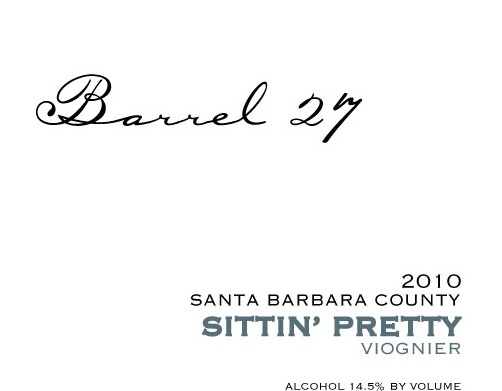
From 100% Santa Barbara County vineyards, their second release of “Sittin’ Pretty” Viognier 2010 ($18) delivered a nice blend of tropical and orchard fruits, but the rich, dense texture embodied the softer flavors of honey and melon. Although its price is average, this wine surpasses the standard in bouquet and taste.

I was not surprised that the 2009 “High On The Hog” White ($16), primarily Grenache Blanc and Viognier, stood up to its predecessor in overall quality.  Strong floral hints on the nose led to complex orchard fruit, honey and softened mineral flavors through a nice finish.  This is a great food wine.

Only their second vintage, Barrel 27’s single-varietal release of Grenache, a grape that, when done properly, can push the fruit forward without becoming overpowering.  Exhibiting a beautiful deep, ruby color, the 2008 ‘Rock and a Hard Place”  Grenache” ($18) was superbly balanced and full-bodied, delivering jammy fruit and spice on the palate.  The wine was rated in the high eighties by Wine Spectator and Robert Parker.

The winery’s signature release, sourced from Santa Barbara County vineyards exclusively, is poised to deliver the highest quality at value price of any Syrah in California. Consumer interest in Syrah from our central coast has driven starting costs above $30 per bottle.  The 2007 “Right Hand Man” Syrah ($18) is bold, both in bouquet and taste, with complexity and richness of wines twice the price.  Simply stated, this wine is a wonderful “find.”

The next wines are special, illustrating the winery’s ability to create single-varietals and blends with texture and complexity.  The costs are higher, but very competitive with similar high-end wines. Three wines before us, a bold Syrah, a classic Rhone-style and a “bullish” blend that promises to, possibly, be “the great steak wine of all-time.”

Smelling the bouquet of the 2007 “Head Honcho” Syrah($28) is a sensual task in itself.  The longer you do it, the more aromas you discover. The texture (heavy on the tongue) and the balance of sweet and savory flavors, to be expected from quality syrah, combine with typical spice influences to signify a compelling wine even before you experience floral hints on the finish.  A few bottles will rest in my wine cabinet for 6-12 months because everything about this exceptional wine signals that it will get better with time.

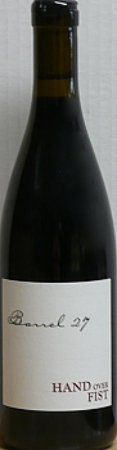
After discovering Barrel 27 through their white Rhone-style blend, the moment has come to taste their only classic Rhone-style red blend, unavoidably mindful of comparisons with wines tasted during my recent trip to Chateaunef-du-Pape.  The 2008 “Hand Over Fist” ($30) is Barrel 27’s highest rated wine, a classic Rhone-style blend of syrah (60%), Grenache (30%) and mourvedre (10%), nearly identical to those in the southern Rhone Valley.  Quoting some knowledgable person, “this wine is big and bold from nose to finish.”  The flavors are perfectly balanced, very jammy and liqueur-type in their intensity.  I agree with the winery’s recommendation to decant the wine for at least an hour, thinking maybe two is better.  A wine like this must have time to breathe and adjust to a new environment before it begins to “open up” to strangers.

I propose another historical event, a blind tasting to be held in Avignon, pitting new Paso Robles Rhone-style whites and reds against legendary, century-old wines from Gigondas, Chateaunef-du-Pape and other southern Rhone Valley appellations.  California is at the same stage in Rhone-style blend development as the Napa Valley was with Cabernet Sauvignon and Chardonnay during the 1976 Paris Tastings.  How we would compare is still a question, but my instincts see us performing better than expected.

Visualize the “Hand Over Fist,” The Saxum James Berry Vineyard Paso Robles 2007 ($67), Wine spectator’s 2010 Wine of the Year, the Tablas Creek Espirit de Beaucastel Paso Robles 2007 ($50) representing California going head-to-head with France’s Chateau de Beaucastel Chateaunef-du-Pape Hommage a Jacques Perrin Grande Cuvee’ 2007 ($535), Domaine les Pallieres Gigondas Terrasse du Diable 2007 ($28) and others.  We have nothing to lose and everything to gain from such a contest.

In conversations within French people about California, they always inquire how far I live from the Napa Valley.  Paso Robles, as a winegrowing region, was not on their radar at all.  A good showing from our stealth Paso wines would send shock waves through the world wine business.
The previously referenced “monster wine” is a powerful, multi-regional blend of Petit Verdot, representing Bordeaux, Syrah, from the Rhone Valley and Tempranillo, originating from the Roija region of Spain.  Concentrated fruit and berries, exotic spices, vanilla and, even chocolate are up-front on the nose through the finish of the 2007 “Bull By The Horns” Red Wine ($32).  This is a wine that needs that to be tamed by some extra time in the bottle, at proper temperature, with regular turnings.  This investment will result in a mature wine that will enjoy the company of a Filet Mignon with “Diana Sauce,” a favorite recipe from the “Wine Lover’s Cookbook.”

The tasting concluded with the 2008 “Head Over Heels” Moscato ($23), Barrel 27’s sweet, slightly sparkling, dessert wine. To me, an apéritif or dessert wine must stand on its own, shine with or without the accompaniment of everything from crème brulee to sharp cheeses.  The “Head Over Heels” has complex flavors of orchard fruits(peach), honey and melons. However, minerality and nice floral hints on the finish build a case that it can be THE dessert if necessary.

I wrote about all Barrel 27’s releases because I like them all.  For those beginning to research and target wines, they offer very good quality at a decent value.  My recommendation is to discover and enjoy their wines before the entire area does. Real or perceived scarcity can result in higher prices.

Our rendezvous with friends also led to some “catching up” over a nice lunch at Thomas Hill Organics and another memorable dinner at “Artisan,” arguably Paso Robles best restaurant, accompanied by a 2005 Leona Valley Winery “I+L+Y=O” Bordeaux blend from my cellar.  As for the “Wine, Women and Song” event, that’s another story.


Cooking with Chef Moreno


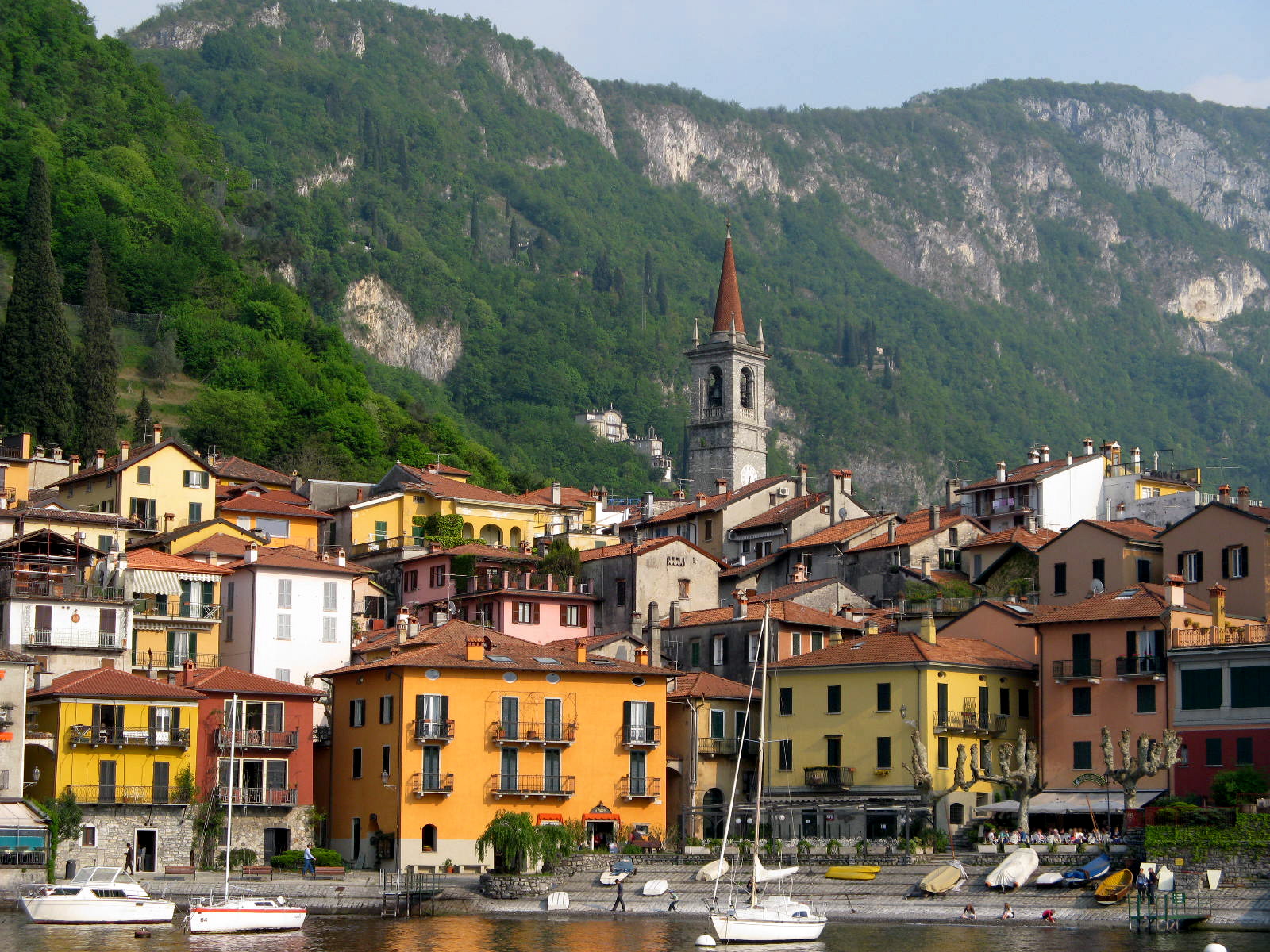
The village of Varenna, along the shores of Lake Como in northern Italy, is possibly the most peaceful and authentically beautiful place I have ever seen.  The huge lake, at the base of the Swiss Alps, was glass-like except for the occasional wake of a water taxi taking passengers to Bellagio, the stunning gardens of Villa Carlotta and other points north. Another lasting memory of this area was the opportunity to make gnocchi, risotto and other dishes with chef Moreno Maglia, owner of Il Caminetto Ristorante, in the rugged hills above the village.

The success of Il Caminetto Ristorante is based upon reputation, not walk-in traffic.  In fact, the only way that you can, or would want to get to it is to be transported and returned to the village in a van or taxi. The narrow, winding road up to the site would not be something that anyone but locals could manage; two-way traffic on a one-way road that requires the sound of a horn to warn potential on-coming automobiles of your presence.  My advice is to close your eyes, think about great food and pray that you’ll make it, both up the hill and down.

“Please speak slowly, my English is like my pasta, homemade” cautioned the chef after a barrage of questions about his cooking philosophy.  He finally offered, “few rules, more passion” which was the first indication that we needed a sharp pencil, plenty of paper and enough power for the video camera.  We arrived within minutes, greeted by a cappuccino, biscotti and the menu for today’s class:  Pancetta-wrapped Pork Sirloin, Gnocchi with Gorgonzola Sauce and Risotto with Strawberries and Balsamic.  What follows are not recipes, but my best recollection of the class to, hopefully, stimulate your improvisational cooking skills.

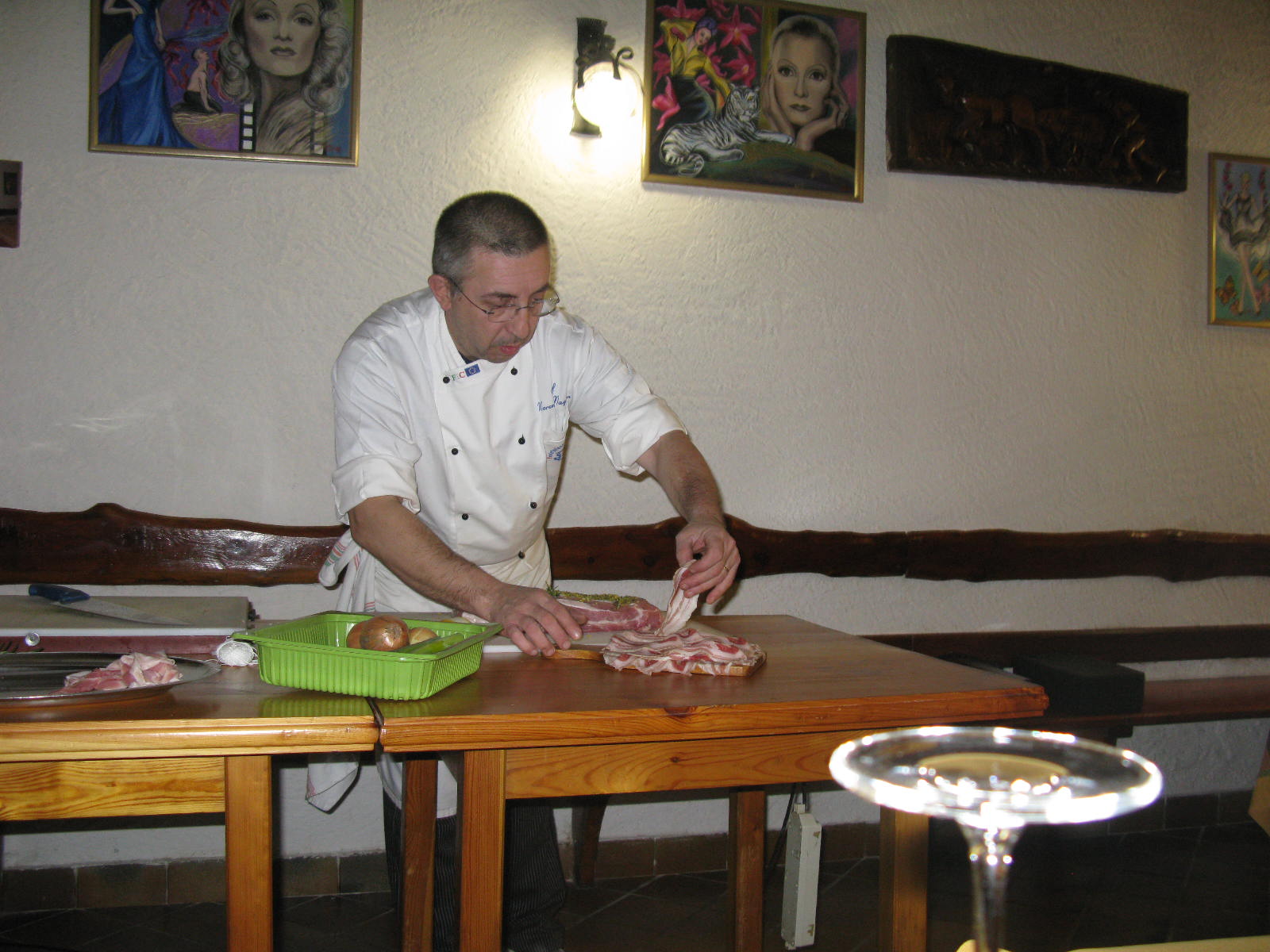
Proclaiming “everything in moderation,” Chef Moreno trimmed some and left some fat on a gorgeous pork sirloin.  After seasoning with Kosher salt and ground black pepper, he cut several two-inch deep slices that were filled with fresh rosemary twigs before preparing a fresh rub, consisting of finely chopped lemon zest, rosemary, thyme and marjoram.  The herb mixture was then spread on the sirloin, pressing it in for complete and even coverage.

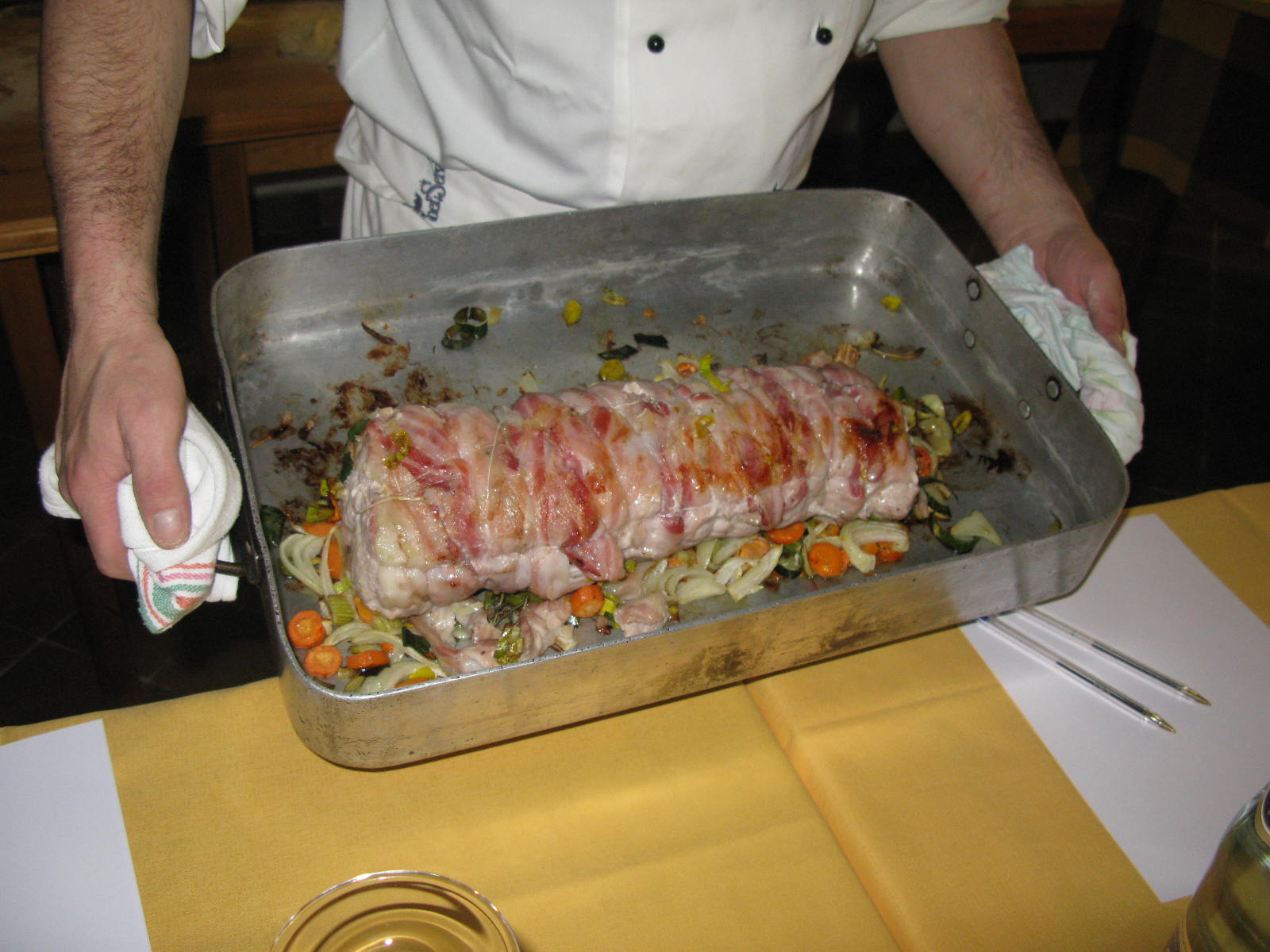
Warning us not to be “skimpy,” he then wrapped the entire upper sirloin with 1.5 lbs. of pancetta, which is Italian bacon that is cured, seasoned and dried for several months.  His pancetta was thicker than most commercially found in stores. True “foodies” can have it cut thicker at butcher shops.  After the rub and pancetta wrap, the sirloin was wound tightly, 8-10 times with string and set aside while the bed of vegetables was prepared.

The vegetables, consisting of leeks (tops only), cut in ½ inch pieces, sliced carrots, onions and celery are mixed with good extra-virgin olive oil and, for those inclined, some of the trimmed fat from the meat. Then the pancetta wrapped pork is laid atop the vegetables and trimmed fat.   After adding 2-3 large glasses of dry white wine to the pan, it is roasted on all sides for an hour and a half at 375 degrees, turning two times, finishing with the pancetta on the top.  When the wine reduces, Chef suggests adding 3-4 glasses of beef or veal stock and, if it begins to dry out, covering with foil.  With the sirloin comfortably in the oven, protocol requires a glass of Rosso di Vatellino Vendemmia Nebbiolo 2006 or other suitable Italian red wine before moving to the gnocchi.  We all agreed that it was 5pm somewhere.

Adding 4 tbsp. white flour, 1.5 litre cold water, a pinch of salt and black pepper to the vegetable mixture, then skimming with a level wooden spoon before straining can make a simple pork loin sauce.  As Chef Moreno tossed out the vegetables for chicken feed, we thought it smelled good enough to eat.

Gnocchi (“noki”) is a dumpling-like, potato based pasta served in most fine Italian restaurants. Our next task was to prepare fresh gnocchi from scratch by first boiling 2.5 lbs. potatoes, with skins, until there is some resistance with the knife, then gingerly peeling them (NO FOOD PROCESSORS ALLOWED) while they are still hot enough to burn your fingers.  Where’s the sous chef?  Oh, I guess that would be me.  Once peeled, the potatoes are shredded through a “potato ricer”, available at gourmet kitchen shops.  I found mine at Williams-Sonoma in Pasadena for $32. Chef Moreno warned that if the ricer is not put into cold water immediately after use, it might be the last time it is usable. Apparently, hot water can actually cook the residue into the device. A generous portion of freshly grated parmesan or other “grana” cheese and 3 oz. of flour is added to the potatoes before the kneading process begins.  Hopefully, the potatoes have cooled off a little.

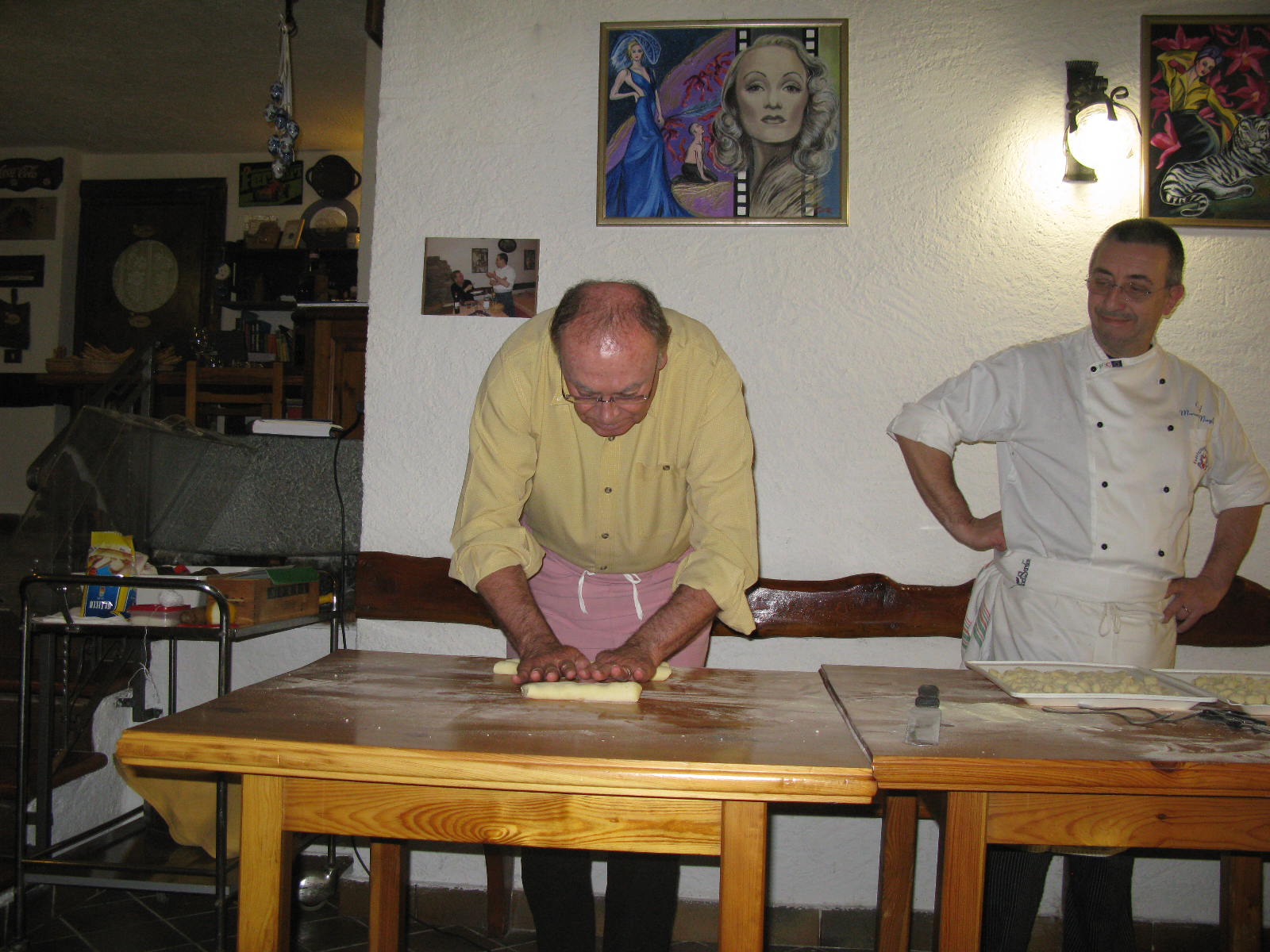
The next step is to knead together the potatoes, flour and cheese into a big ball.  Once the dough is ready, it is separated into 1-½ inch balls that are set-aside for a few minutes.  After spreading durum flour on the cutting board to help shape the dough, the gnocchi balls are gently rolled inside out, using spread fingers, into sticks approximately 18 inches long.  Impressed with my “gnocchi rolling” skills, Chef asked if I was an engineer, stating they usually perform well during this stage of the process. After answering in the negative, I became more determined to out do any engineer, past, present or future.

Once the sticks are cut into one inch pieces, they begin to look, with one exception, like the gnocchi you see in restaurants.  The exception is the trademark serrated edge that is the most delicate, yet difficult part of the entire process. Each little gnocchi piece is held with two fingers and softly, but quickly slid along a fork to make the serrated edge.  In teaching this step to students, Chef encourages them to say “shut up” as they snap the little gnocchi ball across the fork.  I guessed that it was some type of rhythm thing, but it seemed to work.

Using a large spatula, the gnocchi is then moved onto trays for inspection before putting them into boiling water for the brief cooking time.  If they are too dense, you have used too much flour.  The little balls are then cooked in boiling water until they rise to the surface, ready to eat.  They’re best eaten right away or the same day. If you must make the gnocchi the day before serving, put them into a plastic bag with a little olive oil and refrigerate.  The next day, re-boil in salt water until they rise to the surface.  Since we generally don’t eat pasta without sauce, there is one more caloric step in the process.

The sauce for the gnocchi combines sliced leeks (white stems only), Gorgonzola cheese (3 tbsp for 4 portions), extra-virgin olive oil and one cup heavy cream.  Cook the leeks over medium heat until they become translucent; add cream, black pepper, then the cheese.  The reduced sauce is ready when it coats the spoon.  Pour the sauce over an individual bowl of gnocchi and enjoy, preferably with another glass of wine.

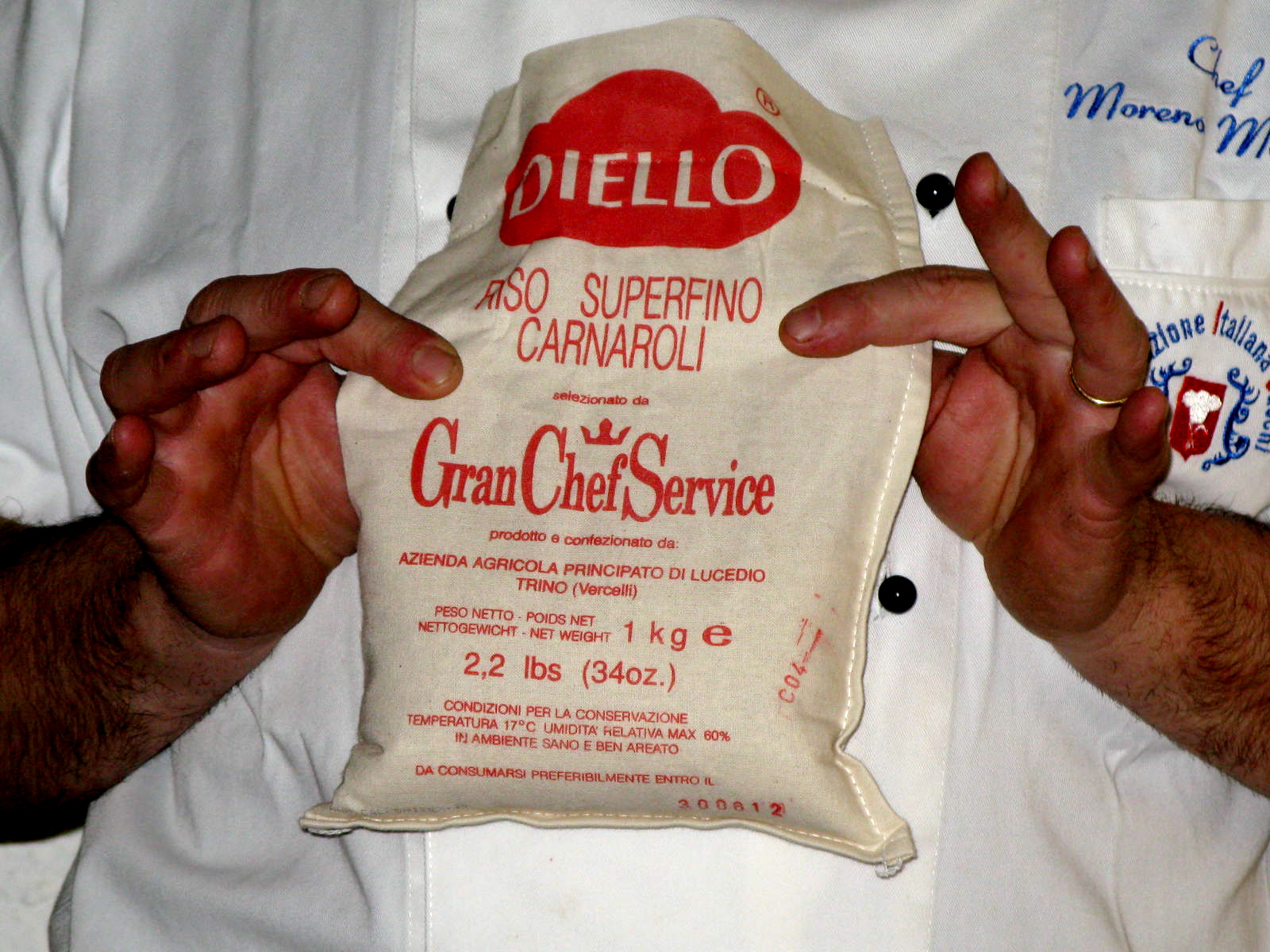
Although, it would be too heavy to add risotto to a meal of pancetta-covered pork sirloin and gnocchi, the rice mixture can be paired with a fresh salad for an exceptional Italian meal. Cooking risotto, for most amateur chefs, falls into the category of “easier said then done.” My attempts usually become too soft and sticky or too crunchy. Hopefully, Chef Moreno can help me to improve and impress my friends with Risotto with Strawberries and Balsamic.  He said that a good start would be to use Carnaroli or another quality brand of rice.

To prepare this dish for four portions, Chef recommends 11 oz. rice, 3 oz. unsalted butter, 4-5 strawberries, 4 tbsp. balsamic vinegar, 2.5 litres of vegetable stock and 2 oz parmigiano-reggiano cheese.  Start by melting one tbsp. butter in a shallow pot, then add the rice, pushing down with a wooden spoon and toasting until shiny.  Secondly, add the vinegar and reduce, then add already hot stock. Next, add the strawberries, cook for 18-19 minutes, adding more stock as the mixture gets dry. Finally, add 2 tbsp. butter, the cheese and black pepper.

Chef Moreno’s risotto was not too dry, not too “mushy” with balanced flavors, none over-powering the other.  With his lead and some practice, we can, eventually master the art.  However, like a good wine, we will need time.

This was one of our most memorable days in Italy.  Chef Moreno is both knowledgeable and charming and his family’s history with the stone building restaurant and inn (circa 1785) is almost beyond comprehension.  The next time you are in Varenna, contact him at +39-0341-815-225 or info@caminettoonline.com for a culinary experience and a ride up and down the hill that you soon won’t forget.

The following evening, just beginning to think about food again, we found a great menu in the restaurant at the Hotel Villa Cipressi, overlooking the lake.  Who knew that, after traveling through Rome and Verona, our top culinary experiences would be in Varenna, midway up the shores of beautiful Lake Como. If this is not paradise, it’s close enough for my taste.


San Diego Wine and Food Festival


The wine community is not immune from the effects of the global recession.  The International Organization for Vine and Wine recently projected that production this year will fall to an eight year low.   This trend was not evident as the annual San Diego Wine and Food Festival attracted nearly 60 wineries to a reserve tasting event following a week of intriguing “fork and cork” programs.  Marketed as the largest festival of its kind in Southern California, the participation of 170 wineries and breweries, 70 restaurants and several celebrity chefs were apparent throughout the five-day affair.

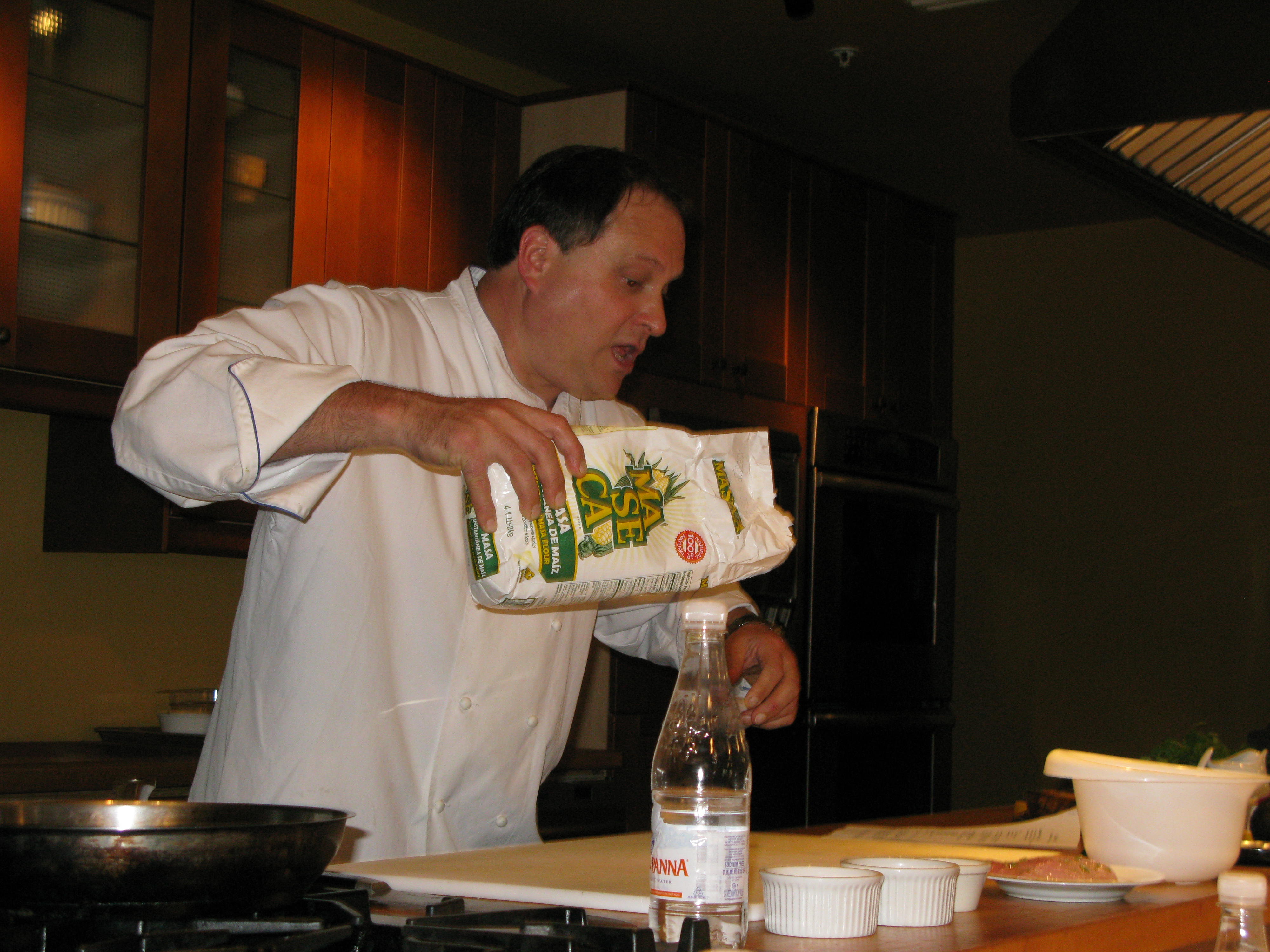
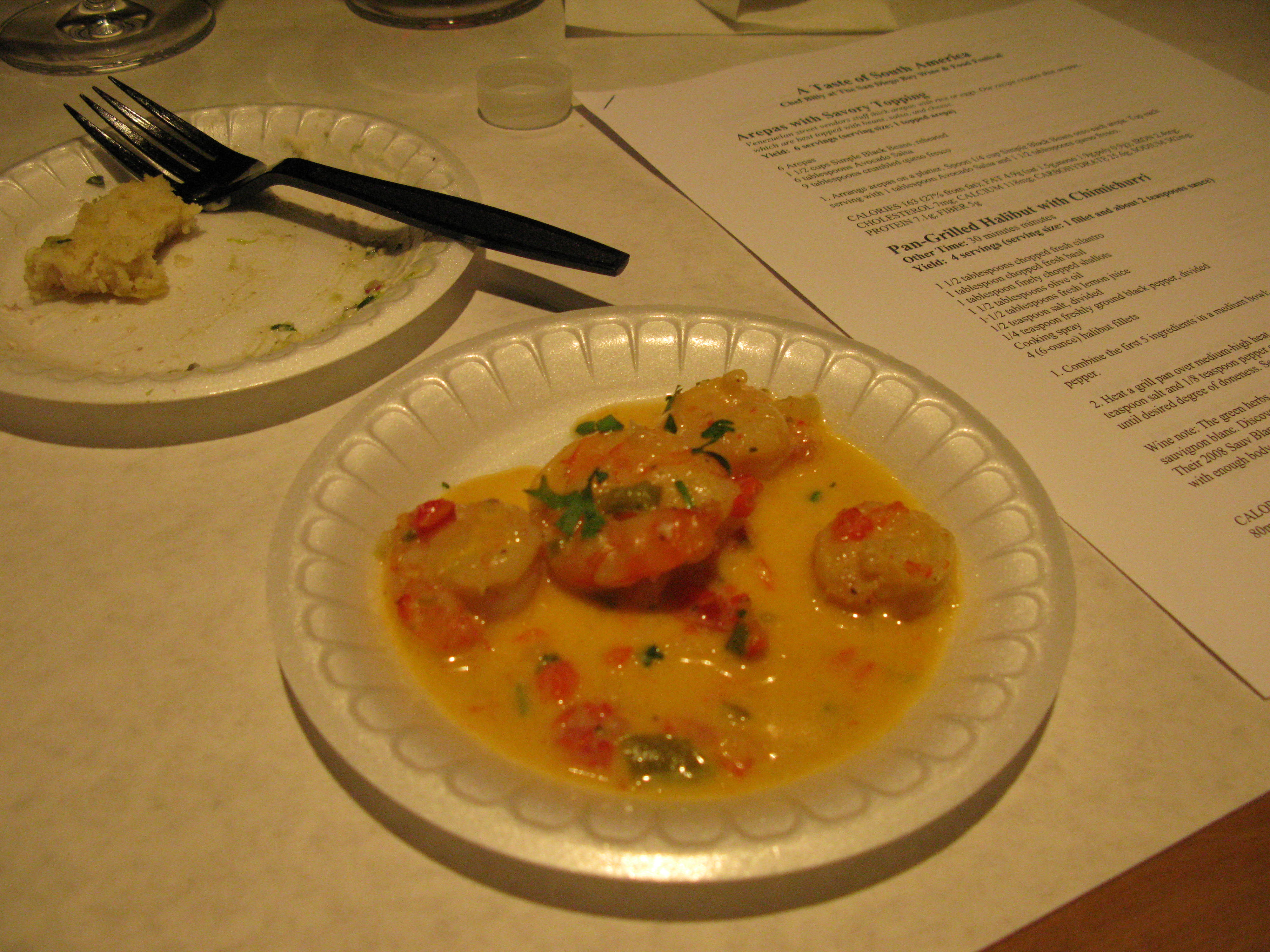
Food plays an equal role to wine at this festival, whether learning to cook California-style French food, South American cuisine or indulging in creative chocolate making through classes from one of the celebrity chef’s on-site or the fabulous small plates from San Diego’s finest restaurants.  Recently returning from the continent, we chose to attend “A Taste of South America,” with Billy Strynkowski, Executive Chef for “Cooking Light “ magazine.   Strynkowski’s east coast casual style provided energy and laughter as he guided us through mango mojitos’s and a menu of arepas, pan-grilled halibut with Chimichuri, maduros (sautéed sweet plantains) and enchilado de camerones (deviled shrimp).   The chef, aside from stressing proper knife cutting techniques, shared tips like “never buy an avocado with the stem missing,” “never crowd fish when cooking” and that “400 degrees is the new 350.”  Of course, our menu was paired with a solid Chardonnay and an excellent Tempranillo, both from Paso Robles’ WCP Cellars, an up and coming winery from a region that is the current “buzz” in California.

A few days after Wine Spectator magazine announced Justin Smith’s Saxum Winery  “James Berry Vineyard” Rhone blend its “2010 Wine Of The Year,” proof that Paso Robles winemakers have positioned themselves as a powerhouse was clear throughout the San Diego fête.

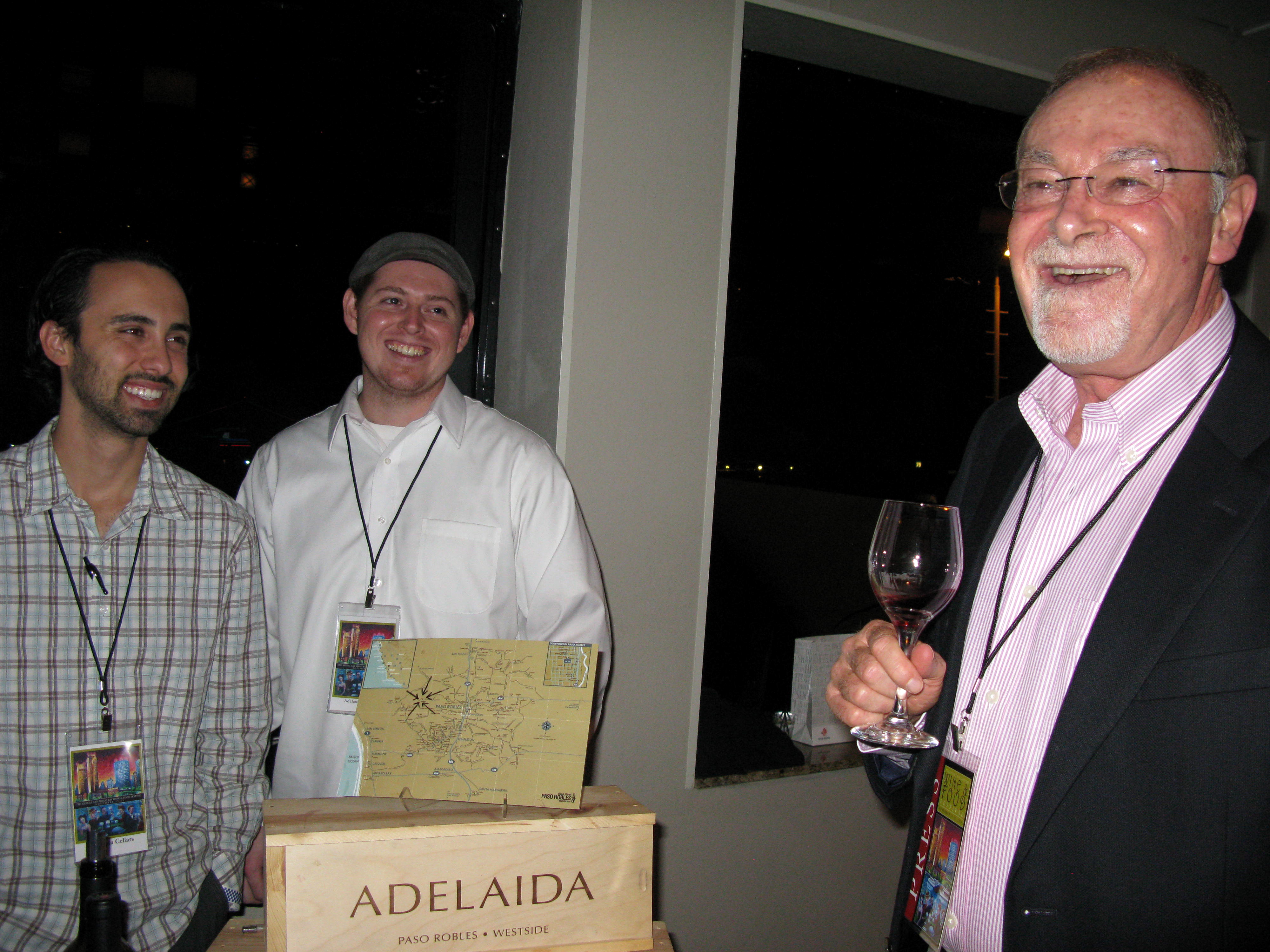
WCP Cellars was only the first of many fresh, new Paso wineries that we encountered.  Another occurred when co-founder Sherman Smoot, a former fighter pilot, was pouring wines at the Reserve Tasting from his boutique Bella Luna Winery, producing less than 2,000 cases.   Although they source varietals from other vineyards, the flagship wines, 2008 Bella Luna Estate Sangiovese and 2006 Estate Riserva, a Sangiovese-Cabernet Sauvignon blend, originate from their five-acre estate vineyard in the Templeton Gap, south of town.  Both wines stood up to other exceptional local Sangiovese in texture, balance and taste.

Clautiere Vineyard, a small east Paso winery with an interesting history, was pouring their unique blends and a 100% Mourvedre, an earthy grape noted for softening Rhone blends.  Aside from being well balanced and textured, their Clautiere Vineyard Estate “Mon Beau Rouge,” a classic Rhone-blend with Syrah, Counoise, Grenache and Mourvedre and Estate “Mon Rouge,” a Syah-Cabernet blend both delivered great taste and a notably long finish.

Curiosity of the varietal drew me to the 2006 Derby Wine Estate Petite Sirah, a young Paso Robles producer whose distinctive wines, including a 100% 2007 Counoise, are attracting attention. Counoise, another Rhone varietal, contributes spice and some good acidity to the ensemble, overcoming negligible depth of color.   The 2007 Derby Vineyard “Fifteen 10” red Rhone-blend and the unique 2006 “Mocab” (Mourvedre 60%-Cabernet Sauvignon 40%) blend are both wines I would suggest.  The “Fifteen 10 white Rhone, not available in San Diego, has also received good reviews.  Exploring the many new, gifted wine producers from Paso Robles promises to be both fun and informative in coming years.

The Reserve and New Release Tasting event, held aboard the elegant Hornblower Inspiration yacht, is a great opportunity for wine enthusiasts; winemakers and restaurateurs to network through new release wines and great food.  Among the wineries represented, my most significant take away was a Chardonnay from a small Sonoma County winery in Healdsburg.

With no prior knowledge that it had amassed accolades including best of varietal at the 2010 San Diego International Wine Competition, the 2008 Dutcher Crossing “Stuhlmuller Vineyard” Chardonnay instantaneously became my favorite new discovery of the event.  Expressive, creamy texture, the result of 100% malolactic fermentation, leads us through soft fruit flavors followed by those of nuts and butterscotch on the finish.  The high-end $34 price tag is justified for those drawn to Chardonnay multi-layered with flavor and texture.  This wine will remain on my radar.

Few are aware that nearly 20% of California’s total wine production originates from Lodi, exceeding Napa and Sonoma combined. While Zinfandel put the region on the map, Lodi is also a leader in the production of Cabernet Sauvignon, Merlot, Chardonnay and Sauvignon Blanc.

Last month I mentioned that Michael and David Winery’s “Earthquake Zin,” from Lodi, was a good locally available wine.  “MDW” has recently expanded its accreditation, primarily through the release of their full-bodied “Seven Deadly Zins” wine.  The festival affords enthusiasts occasion to be on the front end of something good. At the reserve tasting, I had the pleasure to try the Michael and David Winery 2007 “Sloth,” “Lust,” and “Gluttony,” all part of the new “Sin series,” all living up to the hype.  Each of the wines hails from a specific vineyard, offering a unique blend with the Zinfandel grape.  All three posses a smooth, creamy texture with “Lust,” certainly no coincidence, adding hints of caramel and chocolate on the finish.

Lodi and nearby Calaveras County also produce much of the state’s Petite Sirah, an ink colored wine that usually delivers strong bouquets and well-balanced dark fruit favors, often under $20.  Once such wine is the 2008 Van Ruiten Family Vineyards Petite Sirah, drinkable now, priced at $19.99.

Vintage 2007 was good for Napa Valley Cabernet Sauvignon.  The region placed five wines in the first twenty of Wine Spectator magazine’s top 100 of 2010 including the 2007 Altamura Napa Valley Cabernet Sauvignon, listed as #4 with 97 pts. A part of that success resides in a small area, southeast of downtown Napa, known as the Tulcay-Coombsville District.

Bruce Ahnfeldt first planted Cabernet Sauvignon and Merlot in Coombsville during the mid-eighties, providing grapes to other wineries, including Altamura.  Since the inception of his label in 2002, Ahnfeldt wines have consistently been rated in the nineties by major periodicals.  The 2005 Ahnfeldt Cabernet Sauvignon Napa Valley was a nice relief from the rain and wind that impacted the Saturday Grand Tasting Event, staged on the green near Seaport Village.  The boldness of this wine is not overbearing, softened by impeccable balance and a smooth, creamy texture.  The Coombsville area has several family owned wineries, waiting to be included in future explorations of Napa Valley.
For those who love food, wine and this city, the San Diego Wine and Food Festival, held annually in November, is a great way to welcome in the winter.  We came away with some great recipes and cooking tips, sampled food from the areas finest restaurants and, of course, discovered several new wine releases, all of high quality.

Although the festival lasts only five days, the experience continues as we try to perfect new dishes and pursue the best values from the world’s finest wine regions.  There is also plenty of opportunity to hang out in the Gaslamp District or at the beach.