Category Archives: Travel

A Garden Of Earthly Delights


It’s near, I can tell by the way the approaching hallway was quickly filling up with people as I walked through.  Hopefully, the crowds won’t be a distraction.  Knowing that I would be spending some days in Madrid in 2012, I made it a point to come to the Musee de Prado to view, among other pieces,  artist Hieronymous Bosch’s, “The Garden of Earthly Delights,”  the controversial 15th Century triptych that formed a college research project and began a lifetime passion for the arts and natural beauty in general.  As my eyes quickly brushed across the piece, left to right, I noticed an attractive, middle-aged woman, her brown eyes also fixated on Bosch’s bold images.

The left panel has been described as depicting Creation,  the serenity and beauty of its namesake forming a blissful scene while God introduces Eve to Adam.  In the large central panel, the artist begins to question our morality with scenes of increasing vice and unheeded warnings of future danger.  Chaos begins to emerge, presented theoretically with images, such as a man struggling to carry a large mussel shell partially encasing naked bodies, a curious metaphor.    Having done some research on the painting, I would have loved to spend an evening with Bosch, picking his fresh brain on details, after he completed the work in 1510.

The Garden of Eathly Delights

The Garden of Eathly Delights

The right panel is clearly Hell and Damnation, represented in an abstractly modern way, a fantasy of grotesque images, even by today’s standards.  We see musical instruments inflicting torture while a large rabbit carries a human corpse on the end of its spear.  Then, there he is, hiding behind some gnarled skeletal remains, Bosch, in self portrait, observing the carnage, looking unsurprised and expressionless.

As the crowd began to dissipate, my mysterious compatriot moved in for a closer look as did I.  Finally approaching her and, putting my hand on her shoulder, I whispered into her ear,  “This may sound corny, but I have observed this painting twice in my life, 43 years apart and, both times, the same woman was standing next to me.”   Smiling, my wife responded,  “I don’t think its corny, it’s kind of romantic.  Forty-three years doesn’t seem like much after looking at this.   And, before I forget,”  she continued,  We must see “Guernica” before we leave, it’s here in Madrid somewhere.”  “Guernica” is a famous Pablo Picasso abstract painting depicting the horror and aftermath of the bombing of a small village in northern Spain by Nazi and Italian planes.  Picasso had controversially submitted it as his contribution to the Spanish Exposition at the 1937 World’s Fair in Paris.  We had learned more about the painting at the Picasso Museum in Barcelona and Karen had already labeled it a “must see.”

"Guernica" by Pablo Picasso

“Guernica” by Pablo Picasso

Since that day in 1969, when we both, as undergraduate students, traveled to the DeYoung Museum in San Francisco and selected a piece of art to research for my final paper, our passion  began to grow into what has been has become a major part of our lives over the past 47 years.  Together, we have seen Monet’s “Water Lilies” at the Musee’ de L’Orangerie in Paris,  Chagall’s stained glass “Windows” at the Art Institute of Chicago, Cristo’s “Umbrellas,” Richard Serra’s 100 meter long “Snake” at the Guggenheim Museum in Bilbao, James Turrell’s evening exhibit at the Chichu Museum on Japan’s Naoshima Island and the Impressionists at the d’Orsey, always an aphrodisiac, enhanced during our last trip by a small room on Rue Clare and a cheap bottle of French wine.

The month of April 2012 in Spain was extraordinarily wet.  It was raining, days later when, after visiting “Guernica” at the Reina Sofia Museum, we boarded a train and left Madrid for parts south, Granada, Alhambra and Sevilla.  We were also bound for a cave that Karen had researched, located somewhere near the base of the Andalucia Mountains, containing art of a more primitive form.  She justified her desire to see the Pileta Cave by reminding me that we had a car reserved in Ronda and that we could visit the famous white hill towns nearby.

Karen had done most of the research for our 28-day journey, but the itinerary fluctuated as she immersed herself into each experience that generated new “must sees.”  Our normal paradigm is that I am initially reluctant to her changes and later, as men do, boast about them as if they were always my idea.  This experience was no different as we were about to discover more than Andalucia’s hill towns.

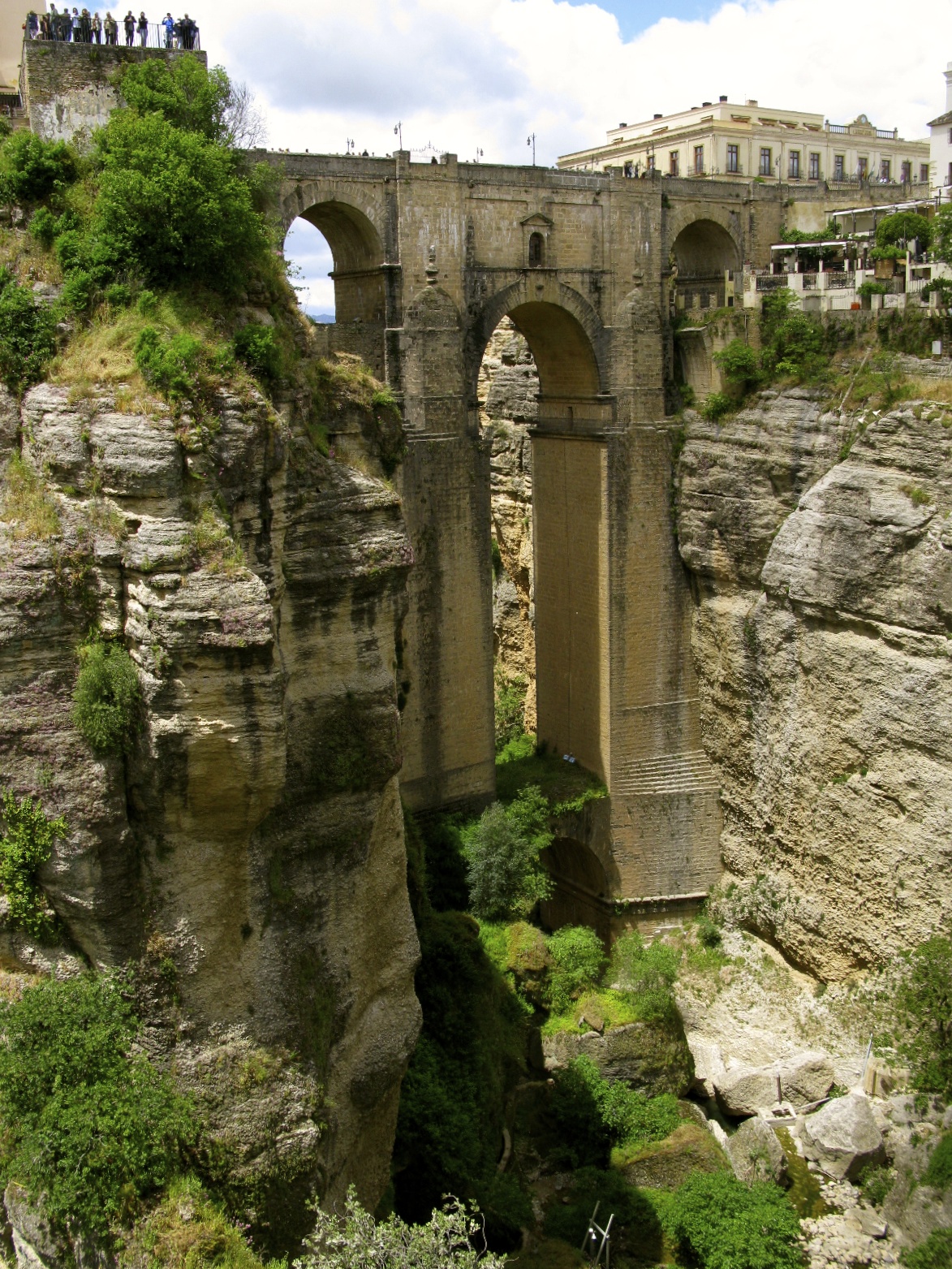
Most images of old Spain are based in Andalucia.  It is the home of bullfights, flamenco, gazpacho and, to our discovery, breathtakingly majestic landscapes and ancient history.  In Ronda, rain pushed us into a taxi from the train station to the hotel.  Curiosity and the need to walk sent us out in the rain, staring directly at Spain’s oldest bullring as we exited out into the street.  A hotel clerk directed us to turn left and keep walking until we came to Plaza de Espana and the new bridge. I am always entertained by the Old World’s  interpretation of time and this “Puente Nuevo”  project dated back to 1751, back when they made them like they used to.  As I asked for clarification, the clerk responded with very good, broken  English, “Don’t worry, you will know it when you see it.”

The walk down to the plaza was pleasant, but unremarkable.   Aside from the old bullfights and being the home of Ernest Hemingway, Ronda was a very charming city, but we anticipated that the true scenic drama would come from the white hill towns at hand.  Walking across the plain stone surface of the plaza, Karen, approached the railing first, looking out across at the bridge and softly muttered, “OK, this is pretty spectacular.”   I turned, responding to her and it appeared, a view so breathtaking, so unforeseen, that fresh words were not necessary. Continuing to stare in silence,  we could not have imagined that this unassuming bridge would span, bothRonda, Spain vertically and horizontally, the gorge locals called “El Tajo,” 400 feet deep, 200 feet wide, connecting us to La Cuidad, the old Moorish district, its ancient structures perched along the cliffs on the other side of the chasm.    As we continued to explore with a new adrenaline rush,  more staggering cliffs appeared and it was soon clear that Ronda was the most magical hill town in Andalucia.
Our month in Spain had left us with enduring memories but these cliffs, “El Tajo” with its bridge and the ancient structures were majestic, as awe-inspiring as the recent visual images by Picasso, Goya, Bosch and others.  Gaudi’s Sagrada Familia in Barcelona and Gehry’s Guggenheim in Bilbao were magnificent, but did not overpower the striking natural beauty of Ronda.   Without much discussion, I realized that this was another “Garden of Earthly Delights” moment.  We had, again, "El Tajo"discovered something together that moved us, two very visual people, sharing a moment, locking in a memory.  This rainy afternoon in Ronda was mesmerizing, leaving us wanting more, but we had a “Ford something” reserved the next day and alluring places to be.  Both of us knew that we had not finished exploring Ronda.
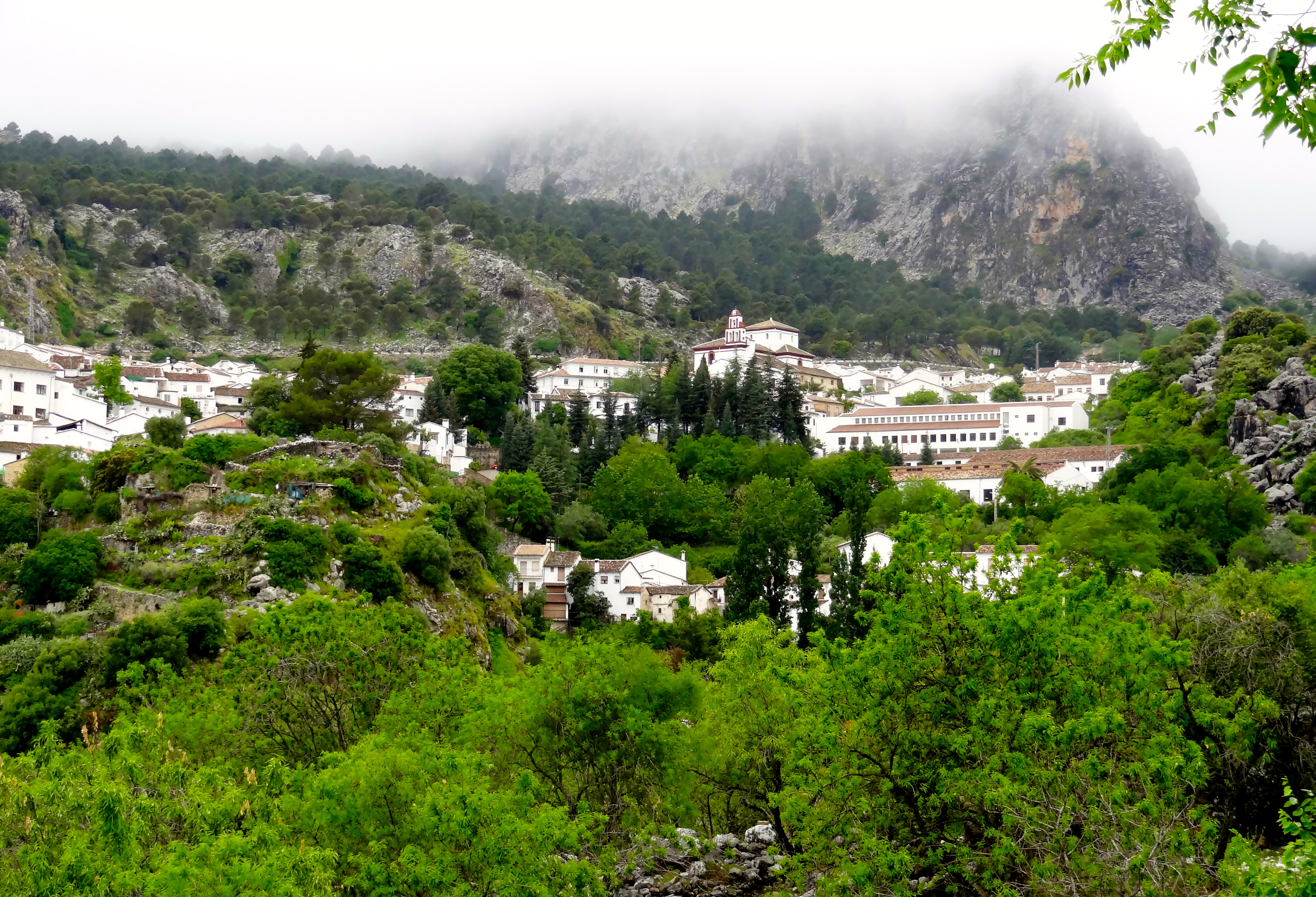
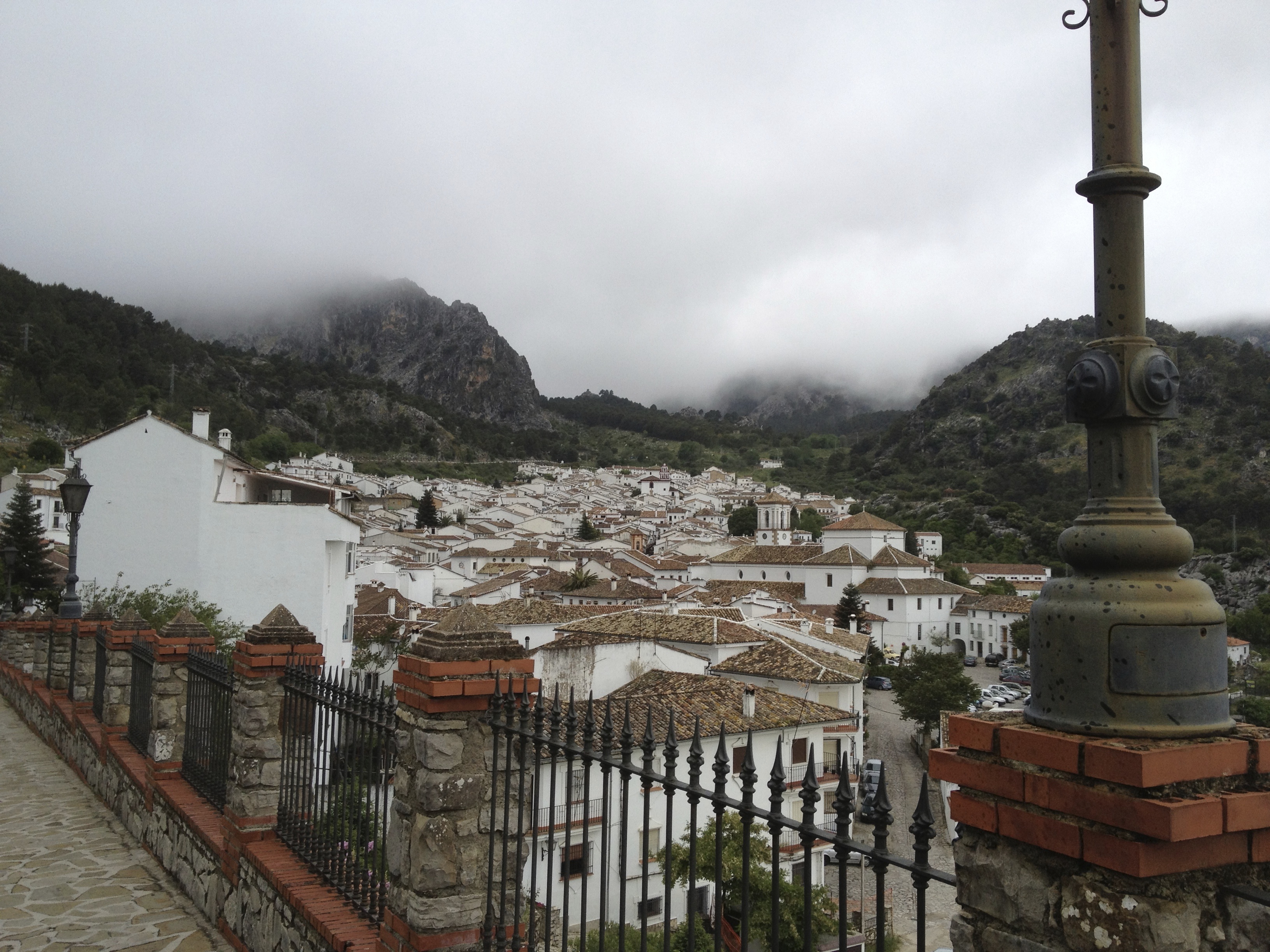
The early morning rain made the white-knuckled drive over the steep and winding Cadiz Mountain pass the most quiet of our trip.  Healthy fear always trumps complaints of one’s driving or navigating.  More relaxed to be driving on the gently winding valley road, we soon approached the cozy village of Grazalema with its whitewashed buildings, red roofs and bright floral window boxes.  The extraordinary picturesque town,  Zahara, with white buildings spread out below an old fortified Moorish castle and the cliffs, simmering from the afternoon sun in Arcos were truly indelible images, a consistent theme of
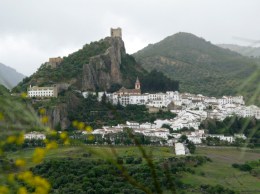
Zahara, Spain

Zahara, Spain

Andalucia.   The evening return to Ronda on a two-lane highway was dry and flat, stimulating more conversation than the unnerving morning jaunt over the mountain.  We discussed our schedule for the next few days but it was difficult for me to think beyond wanting  to explore “El Tajo.”

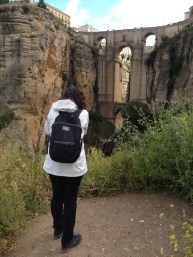
We started early and the sun was shining.  Crossing the bridge and stealing yet another glance at the gorge, we entered La Cuidad seeking trail access to descend its walls. Passing the old building entrances that innocently faced the street, it is difficult to imagine that they are resting directly upon the top of the cliffs.   “I think this is it,” Karen proclaimed as a small path dissecting two structures appeared.  We followed it and soon were descending down into “El Tajo” with a perspective that seemed to reshape itself with every step.  The surrounding flora changed, the deeper we plunged.  The gorge became a series of unique ecosystems complete with waterfalls, blue ponds and green foliage, rooted in the rocky cliffs.  Our desires to photograph kept us mostly to ourselves but the experience was and will be forever ours.

The walk back up the canyon was equally stupendous, ending with a late lunch in one of those buildings roosted atop the cliffs with a view of the bridge.  It began to rain again and, feeling a bit overwhelmed, I suggested that we
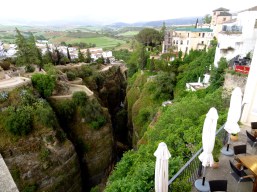
Panoramic of Ronda

Panoramic of Ronda

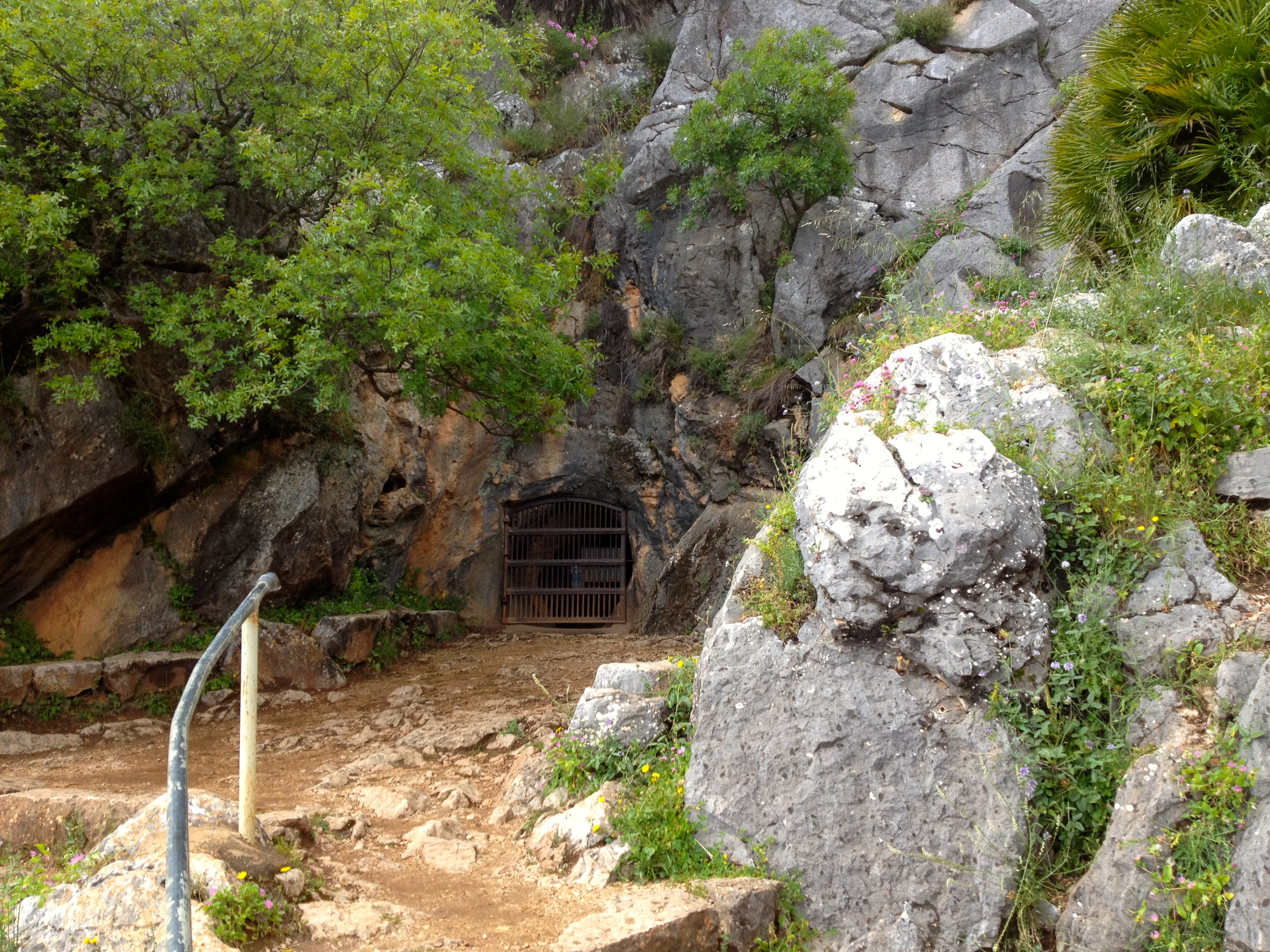
forgo the Pileta Cave.  With a challenge disguised as an option, Karen replied, “You can do what you want, but I’m going to see what’s in there.”   Soon, I was making the somewhat unpleasant, dark, damp and slippery descent into a cave to view prehistoric finger painting, depicting animals and fish, evidence that the artists were familiar with the sea.  The experience was beyond description and, once again, I was appreciative of the spousalIMG_0391 nudge.
We left Ronda by train, vowing to return.  Although our next few days would be spent in Sevilla, Karen had made arrangements to debark the train for a few hours in Cordoba so that we could visit the Mezquita, an ancient temple with both Moorish and
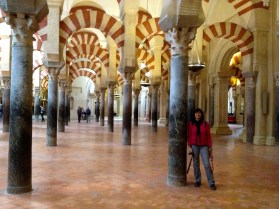
Karen at the Mezquita in Cordoba, Spain

Karen at the Mezquita in Cordoba, Spain

Christian influences.  Our time in Ronda and the Andalucia was still very much on my mind.  The experience, days after we revisited a significant piece of art in our lives, was a reminder that there are vast earthly delights to explore and, more significantly,  that we still had the passion to find them.


The Art That Is Japan


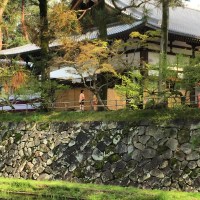
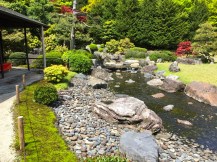
Among many, my most lasting memory of Japan are the gardens.  The breathtaking palaces and temples and the most humble country dwellings all share beautiful

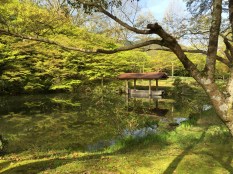
Gardens in Kyoto

Gardens in Kyoto

manicured gardens, some larger, some smaller, but always perfect.  These winsome gems, like so much of the traditional Japanese culture stems from a conviction to “respect” and “honor.”  It is evident in the way they revere the land, their high regard for guests or hosts and in their meticulous approach to traditional Japanese arts as the basis of their heart and culture.  Our Japan experience was not about visiting Tokyo and other major tourists sites, it evolved from a rare opportunity to attend a two-week seminar in traditional Japanese arts at the Oomoto Foundation and School in the town of Kameoka, outside of Kyoto.

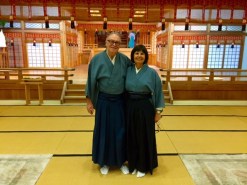
Banshoden Prayer Hall, Oomoto

Banshoden Prayer Hall, Oomoto

Friend and Sonoma County artist Mario Uribe has studied Japanese culture along with his wife, Liz, for the past twenty years.  Both were participants in past Oomoto seminars.  After years of excluding visitors from the program, Oomoto granted Mario permission to work with the school in developing an arts study seminar for 15 people themed “Sei” or “Purity.”  Weeks later, we found our impulsive selves flying over the Pacific with no real idea of what lie ahead.

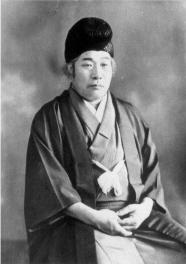
Oomoto is a sect, originating from the Shinto religion, that was founded in 1892 when Deguchi Nao, an impoverished, illiterate woman had a “spirit dream” and began writing and reciting the words of the spirit Ushitora no Conjoin that formed their doctrine

Onisaburo Deguchi

Onisaburo Deguchi

. Nao’s son-in-law, Onisaburo Deguchi is recognized as the original seishi (spiritual teacher) of Oomoto and was responsible for the core belief that the practice of Japanese traditional arts together could create a deep spiritual wisdom for all.  Abandoning the traditional focus of mastering a single art, Onisaburo advocated practicing all the art forms, taking advantage of commonalities to create something holistically greater.  Today, under the 5th spiritual leader, Kurenai Deguchi, students and other followers attend the Oomoto School and Ayabe retreat center to enhance their spiritual development through traditional arts.

Afternoon arrival at the island Kansai International Airport and the ensuing bus ride to Kameoka left us with only time to check-in, have dinner, unpack and place futons on tatami floor mats, our bed for the next two weeks.   The first day was fairly relaxing at an on-site Kan’O Chakai Festival where we attended a noh drama performance and tea ceremony, foreshadowing the work ahead.

The next two weeks would be as exhausting as they were rewarding, exemplifying the phases, “Out of one’s comfort zone”

Serious students

Serious students

and “Information overload.”  Understanding is the key to studying a new culture and, only when I began to discover the values they reveal and their importance to the Japanese way of life did I begin to immerse myself into the various traditional arts, understanding my limitations.

Each day began at 5am with chanting, broadcast into our rooms, a reminder that we had an hour before our morning Shinto prayer service at Banshoden Hall.  The service, of course, is optional but we felt it enhanced the experience to attend each morning.

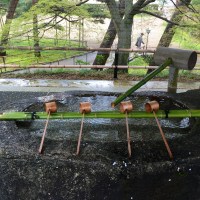
Entering the grounds to the prayer hall began with a bow from the waste, followed by a short walk to the temizuya, a decorative water fountain with bamboo ladles used to cleanse hands and mouth.  Shoes came off and another bow was required entering the prayer hall, women to the left, men to the right.  The prayer service is the same each day, participatory readings, chanting and rhythmic hand clapping designed to gain the attention of the gods.

After prayer came breakfast and later lunch, consisting of a small amount each of protein and vegetable with all the rice

temizuya

temizuya

and miso soup you can eat. The Japanese diet is seafood based with much smaller portions than we are used to.  At times, I was happy for more rice and miso soup.  In case you are wondering, we had many gourmet meals that, although different and new to the palate, were outstanding.

The morning session generally began with dressing in kimono which was a fairly complex procedure that often required assistance. It is disrespectful to even practice the sacred arts of noh drama, tea ceremony or waraku budo without men and women both wearing kimono. Mostly, practice times coincided but when they didn’t, it was a long day in the wardrobe room.  Once the practice session were over, the kimono and undergarments must be folded in a very specific, traditional method. Admittingly, as someone who is used to throwing on  jeans and a t-shirt, this process required some patience and skill.

Traditional Japanese Arts

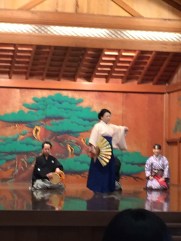
A 16th Century poet, Yoshida Kenko wrote that, “The moon is most beautiful when seen through clouds.”  Noh Drama, said to be “the world’s oldest continuously performed tradition of theater,” is an art form that uses illusion and subtle, yet precise movements and song to tell a story.  Common to other traditional Japanese art forms, its simplicity takes a lifetime to master.  We were privileged to study, over six sessions, with Tatsumi Manjiro Sensei, Lead Character Actor of the

Noh Drama performance

Noh Drama performance

Hosho School of Noh Drama, one of the traditional schools dating back to the 16th Century.  At over six-feet tall with the voice of James Earl Jones, Manjiro Sensei was quite intimidating as we watched him effortlessly glide, not walk, across the stage.  His humor and patience with us was humbly appreciated.

Group I, Michael, Miles, Daniel and me, after extensive practice,  performed the first act (3 minutes) of the story of a poor, street sake vendor who, through living a good life and caring for others, was divinely blessed with a continuously full barrel of saké. Learning to glide, not walk, in a kimono with precise, expressive movements and with a fan acting as a saké ladle requires more practice and muscle memory that time permitted, but we got through it.

Perceived simply as a traditional way to entertain guests, my discovery that Tea Ceremony is, in fact “moving meditation” woven into the Japanese culture, from the Zen temples of Kyoto to current day, was a major takeaway from the seminar.  As a 40-year “steep and sip” guy, it took some time to begin to understand the formality of it all.  I have a friend who has studied Tea Ceremony twice per month for 20 years. I recently met her instructor, asking the question, “How long does it take.”  “A lifetime” was her answer.

IMG_4852

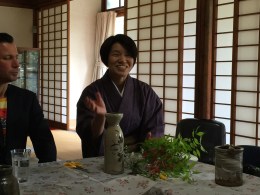
“Michiko”

Tea Ceremony has always been associated with the Zen philosophy and is truly an art form that allows a host to create a

“microcosm of paradise” for their guests. Simple, but elegant tea rooms are designed to create a pure, quiet, harmonious space. We were invited to several very special tea rooms and each space, while unique, seemed always to relax us.

A teahouse is entered without shoes and on one’s knees.  After bowing, the guest spends time respecting and admiring a scroll, some of them valuable antiques, others quite simple, but always present.  After admiring the scroll, each guest gives a brief glance to the chabana, a small, minimalistic, somewhat insignificance flower arrangement that is essential to any tea room.

We studied otemae, the art of preparing the tea, learned the intricate process of hosting or receiving the tea as a guest including the precise folding of the silk fukusa cloth, used to purify the utensils and the practice of admiring (respecting) the tea bowl before it is returned.  Local women, adorned in beautiful kimono, assisted our training with unparalleled patience and purpose. Friends, upon our return, requested that we host a tea ceremony for fun.  We declined, incapable, at this time, of honoring it properly.

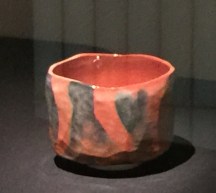
tea bowl

tea bowl

In its meticulous complexity, the sacrament of tea ceremony  is inclusive of tea bowls, the essential visual jewel to the entire art form.  Raku tea bowls are cherished, collector’s covet them, museums display them and their designs spanning the 16th Century to present day, are simple, yet stunning works of art.   Unisaburo Deguchi committed the last thirty years of his creative life to making tea bowls.  While attending a ceremony in the intimate tea room of a wealthy restauranteur, our host explained that Unisaburo created the bowl I was drinking from, leaving me honored and a bit stressed, holding it carefully.

IMG_1429

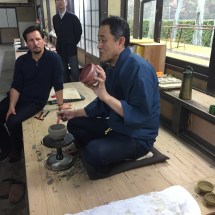
Sensei at Shoraku-gama studio

Our sessions at Shoraku-gama studio to throw and trim our own tea bowls were very therapeutic and relaxing, but pride was lifted when Michiko sensei asked permission to use my bowl to present tea to the gods to begin the final ceremony.  I proudly consented, directing a quick smile in the direction of my wife, a potter for 35 years. She whispered back, “They needed one to sacrifice.” Celebrating this new art form, upon our return to the States, we traveled to LACMA in Los Angeles to view the most extensive raku tea bowl exhibit ever assembled, an astonishing visual exhibit spanning five centuries.

Moriya Michiko, Tea Master, Calligraphy Master and Flower Master of the Usugumo Gosho-Ryu, co-host and lead instructor for all three arts, became known to all of us simply as “Michiko,” always smiling and helpful.  As a Master, with the tea name, “Sochi,” she had tremendous patience and virtue to observe and teach beginning students with limited understanding of the culture.

Tea ceremony is truly the “queen of the arts,” involving landscape and architectural design, ceramics, chabana, poetry and calligraphy, or “painting of the heart,” that, as most Japanese art forms, is meant to express the inner spirit of the creator.  Unlike our fountain pens, calligraphy is done with Asian brushes that come in many sizes, held vertically to give the writer more flexibility and richness of expression. Compared to our 26-letter alphabet, about 2,000-3,000 characters are regularly used in Japan, with total characters exceeding 13,000.

Eager to express myself, the more mundane initial task was grinding the ink stick, sumi on the ink stone, suzuri to create ink the ancient way, and a meditative state before writing.  We began by writing the eight strokes of Eternity (Ei), a character than has all the basic brush strokes and soon expanded our repertoire to a dozen or more characters including my attempt at the kanji symbol for “love” as a gift for my granddaughter.   

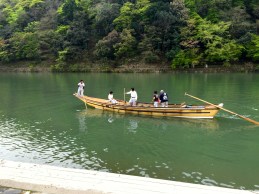
Boats on the Hozugawa River near Kyoto

Boats on the Hozugawa River near Kyoto

We also attended workshops in regional sushi-making, taiko drums, washi(paper-making) making tea sweets, another essential component of tea ceremony, with Master Aoyama Yoko and Waraku Bodu with founder Hiramasa Maeda Sensei.  Waraku Budo, a martial art aligned with the Shinto religion, uses a wooden staff and involves spiral body movements, breathing  and chanting intended to bring energy and harmony to the body. It required full kimono and as much focus as we could generate.

The Oomoto seminar ended with a full noh drama performance before a live audience and a student hosted tea ceremony for invited local residents.  We were ready to decompress during a brief stay in Kurishiki, but the memories of “Sei” still linger, like a good film, months after being home and I am beginning to understand it more each day.

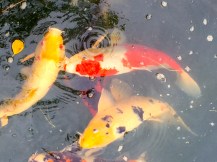
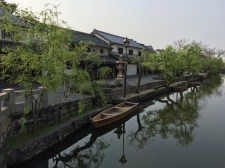
Kurishiki in the Okayama Prefecture is a city of nearly half million people that is best known for the quaint Bikan District, with its canals, shops and restaurants.  Aside from a memorable evening with friends in a very congenial sake bar, the

Koy pond in Kurishiki

Koy pond in Kurishiki

Ohara Museum of Art, with works by Modigliani, El Greco, Gauguin and various modern artists was the highlight of our two-day visit.  Our final stop was Naoshima, the “art island,” described as a nontraditional Japanese experience,

Bikan District, Kurishiki

Bikan District, Kurishiki

presenting contemporary art in a fashion, unique to the world.

Contemporary Arts 

IMG_1867

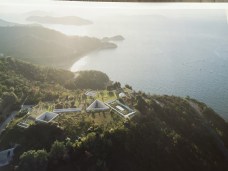
Chichu Museum on Naoshima Island

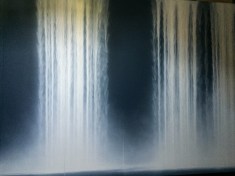
Naoshima Island lies in the Inland Sea, an old fishing village, now home to a hotel with extensive modern art works, two museums and the Art House Project all funded by billionaire Soichiro Futuake, president of the publishing company, Bennesse.  The Naoshima Art House Project invites leading artists from around the world to create installations in small, wooden houses within the old port village area.  One needs to purchase a “treasure” map to find the “art houses” because they blend with the adjacent humble dwellings and there is no signage. We found a James Turrell installation that uses darkness and light, Kadoya, where the floors are filled with water and floating, illuminated numbers and, my favorite, a house filled with sensual mist and waterfall paintings by Senju Hiroshi.  The project is dynamic and will expand as Fututake’s curators procure

"Waterfall" - Senju Hiroshi

“Waterfall” – Senju Hiroshi

additional artists and houses.

Built into an island mountain, the subterranean Chichu Museum features four artists in four unique, inspiring spaces that weep serenity and our relationship with nature.  Each of the underground galleries are illuminated by natural light

including five “Water Lily” paintings by Claude Monet, three James Turrell pieces and an amazing installation by artist Walter De Maria that places the viewer in the center of a surreal art piece.  Anyone who appreciates modern, contemporary art must put Naoshima and the Chichu Museum, on their bucket list including the

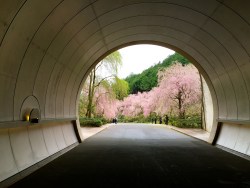
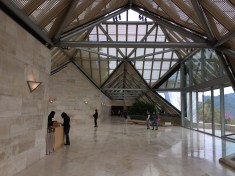
Miho Museum

Miho Museum

special evening James Turrell exhibit that requires advanced reservations.

Another extraordinary place, located in the remote Shiga Mountains, southeast of Kyoto, the Miho Museum and grounds are an art piece in themselves.  The vision of Mihoko Koyama, heiress to the Toyobo textile empire, the steel and glass structures were designed by architect I.M. Pei, who carved the location out of a mountain top that was totally restored and re-forested. The Miho houses an

Miho Museum

Miho Museum

extensive collection of Asian art and antiques including ceremonial tea art.  While the collection is impressive, the Miho, itself, is breathtaking.

The Gardens 

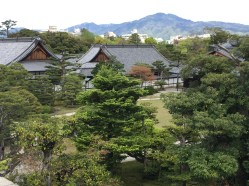
Serene, manicured gardens were everywhere, at small homes or large palaces, injecting beauty and aesthetic into daily lives of the people.  Kyoto, recently

Kyoto

Kyoto

named one of the world’s great cities by Travel and Leisure magazine, has the seemingly endless Imperial Palace gardens, but my favorites were in the city’s Arashiyama district.

Rather than the 15 minutes subway ride, we opted to travel from Kameoka to Arashiyama via a 10 passenger boat, maneuvered by three young men through

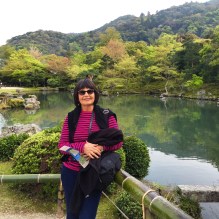
Karen ai Kogenji Temple, Kyoto

Karen ai Kogenji Temple, Kyoto

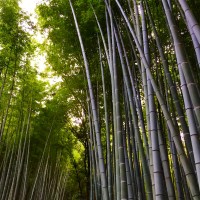
moderate rapids on the Hozugawa River. Dozens of natural cherry trees, numerous cranes, two monkeys and one hour later, we arrived, a bit wet, to a magnificent setting of classic Japanese landscape.  The first stop was the Kogenji Temple whose gardens were visually overwhelming and the adjacent Bamboo Forest, with trees rising 30-40 feet into the afternoon light, was a photographer’s dream.

Bamboo Forest, Kyoto

Bamboo Forest, Kyoto

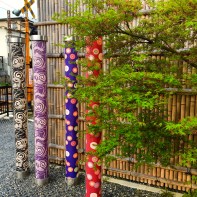
Described as a “forest,” but looking more like miniature Cristo installation, Arashiyama’s Kimono Forest consists of hundreds of illuminated glass tubes, each lined with real kimono fabric. Entering at dusk, its impact was enhanced as darkness fell.

The lasting memory of serene landscapes came from an early morning walk through the grounds of Oomoto’s retreat center in Ayabe, where it all started.  It was crisp and I was alone with my thoughts amid indescribable beauty, feeling the tranquillity they were

Gardens in Ayabe

Gardens in Ayabe

meant to bestow.

I leave Japan with lasting memories and a copy of the 1st English transition of Hidemaru Deguchi’s book “In Search of Meaning.”  Deguchi(1897-1992) became part of Oomoto teachings in 1919 and the book is a compilation of his writings.  I have not

Kimono Forest

Kimono Forest

yet found true meaning, but know that when I do, it will be serene, respectful, steeped in traditional, inspiring new thoughts and perceptions like the fabric of the Japanese culture that we experienced.


Anderson Valley Wines, 2014


Our second “Fork ‘n Cork 2014” adventure took us to the remote Buchner Estate in the mountains outside of Booneville to enjoy good food, some time with friends and explore wines in the Anderson Valley, the heart of California’s Mendocino County. Described in a 2013 WineOLYMPUS DIGITAL CAMERA Spectator article as the “New Frontier of Pinot Noir”, the region has managed through economic difficulties, a forest fire and obscurity to remain a wonderful terroir for the production of pinot noir, chardonnay, gewürztraminer, Riesling and others.


Webpage-photoTwo of the valley’s top rated pinot noir producing wineries listed in the 2013 article, Londers and Breggo, are no longer in business. So, these three days will be about exploring new and established small production wineries that represent the diversity and spirit of the region.


Foresight Wines


Upon my friend’s recommendation, we drove directly from San Francisco to Foresight Wines, located on CA128 at the south entrance to Booneville. Some good history with another winery sourcing grapes from their Charles Vineyard and the intrigue of a small vintner with long local lineage drew us to Foresight.


Bill and Nancy Charles made their mark in the Anderson Valley through lumber and construction before establishing the 15 acre Charles Vineyard in 2000, sourcing grapes to other vineyards with their first vintage in 2006. Today, daughter Kristi Charles and husband Joseph Webb work together to produce small lots of pinot noir, sauvignon blanc and, to my delight, Semillon from their estate vineyard.


The tasting began with the bone-dry 2011 Foresight Charles Vineyard Sauvignon Blanc ($20), from 100% stainless steel tanks with full malolactic fermentation, more indicative of the New Zealand style wines with a lively acidity and hints of citrus and lemongrass.


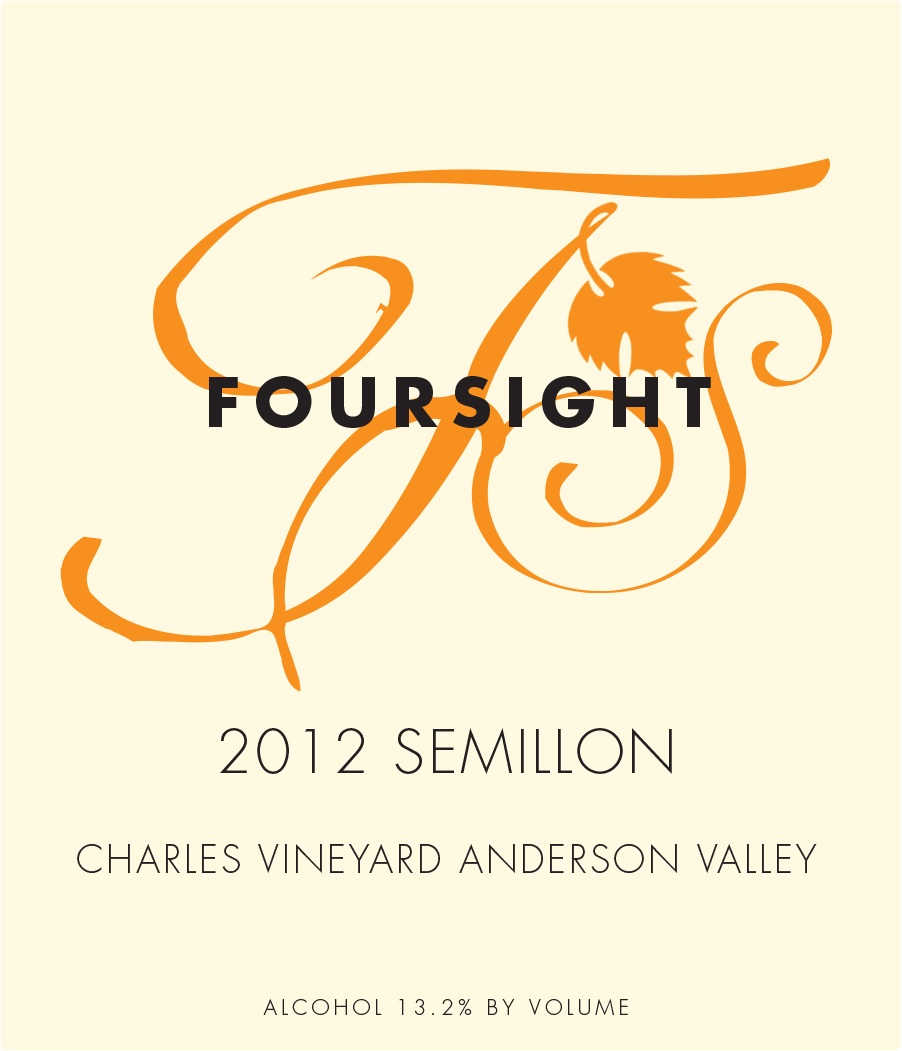
2012 Foresight Semillon Charles Vineyard

2012 Foresight Semillon Charles Vineyard

Rare to the Anderson Valley, Semillon is one of the three approved white grapes in the Bordeaux region of France where it is most often blended with Sauvignon Blanc. Also fairly abundant in Australia, I enjoy the soft “stone” that it typically conveys. The 2012 Foresight Charles Vineyard Semillon ($20) leads with a mineral nose and ends with a creamy texture and nice acidity. Unfiltered, fermented mostly in stainless steel, this wine lives up to its 90-pt ratings and was a perfect pair with the shrimp and scallop dish we serve the following evening.


Joseph the winemaker explained that eliminating any “new oak” influences to pinot noir enable a more true expression of its fruity flavors. The unique 2011

Foresight “Zero” Charles Vineyard Pinot Noir ($38) uses only oak barrels that are at least two years old, resulting in a wine with a vibrant fruity nose with matching flavors of cherries and dark berries.

2011 Pinot Noir "Zero"

2011 Pinot Noir “Zero”


Billed as their house-style pinot, the 2011 Foresight Charles Vineyard Pinot Noir ($46) is a blend of grapes from the vineyard’s four clones. Apparently, 2011 was an exceptionally cold year in the Anderson Valley giving advantage to those easterly vineyards, like Charles, that can still pick fully ripened grapes before the Fall rains. This result is a well-balanced wine with soft spice on the finish.


Catering to the need of the “heartbreak grape” to balance both hot and cold, the Anderson Valley offers unique opportunities and challenges to those seeking the perfect pinot noir. It has the largest temperature change, day to night, of any wine-growing region in the world, as high as 50 degrees. Any native knows that the middle of California’s far north gets extremely hot during the summer while the coast is encased in fog. The altitude and the welcome coastal breezes combine, with proper care, push it closer to perfection.


2011 Foresight Clone 05 Pinot Noir

2011 Foresight Clone 05 Pinot Noir

The best pinot noir that I tasted on this trip was the 2011 Foresight Clone 05 Charles Vineyard Pinot Noir ($48), 100% Pommard Clone with extended maceration and aged in two-thirds new French oak. The family has learned that this quality clone, in this terroir, does exceptionally well with new French oak. Pinot noir flavors are distinct, but texture and balance of this wine have resulted in well-deserved ratings in the nineties.

A few library wines and a barrel tasting concluded a very informative experience and great new discovery. Among the older wines, the 2009 vintage Charles Vineyard Pinot Noir ($49) was noteworthy with strong hints of star anise (licorice) on the nose and palate.


The barrel tasting revealed something special with local history involved. The well-known Londers Winery, no longer producing wine, created a popular pinot noir they called “Paraboll”, a wine that Joe Webb worked on. He is now crafting his own “Paraboll” to honor the Londers wine and, if the young juice in the barrel is any indication, the 2014 Foresight Charles Vineyard “Paraboll” would be something to buy futures in. In fact, I was impressed with detailed approach to winemaking, surely foresight that will lead to long-term, sustainable success.


Toulouse Winery


Toulouse Vineyard

Toulouse Vineyard

The Toulouse Winery began as a retirement venture for Vern and Maxine Boltz when they purchased, in 1997, a 160-acre parcel near the town of Philo. Today, they farm 320 acres of sustainable vineyards in a terroir that is ideal for pinot noir, but I was also searching for some little known white varietals that also thrive in this climate.


In lieu of typical crackers, our host at Toulouse dispensed fennel seeds to prepare and cleanse our palates before tasting each wine. Fennel seeds have a licorice, anise flavor that can also compliment the wine. Serving tasty dried cherries, spiced with sassafras and star anise with the 2010 Toulouse Anderson Valley Pinot Noir was also a clever idea. They complimented the earthy rhubarb and cola flavors of the wine in decadent fashion.

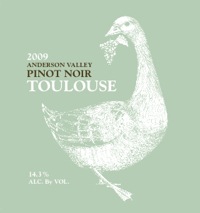
2009 Toulouse Pinot Noir Anderson Valley

2009 Toulouse Pinot Noir Anderson Valley


Our initial tasting was a very crisp, nicely astringent blend of Riesling (30%) and pinot gris (70%), balanced and flavorful at a low price. I found the 2011 Lautrec “Can-Can” White Table Wine ($12) to my liking with hints of grapefruit throughout a nice finish. A good quality food wine at this price is difficult to pass up.


In my subtle pursuit of unique California white varietals, I have learned that much of the state’s best Gewürztraminer comes from the Anderson

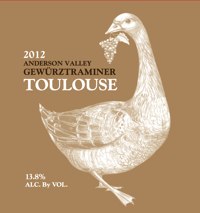
label_gewuerztraminer_2012

2012 Toulouse Gewürztraminer Anderson Valley

Valley. The 2012 Toulouse Gewürztraminer ($24) is a cool climate white wine, sourcing grapes from nearby vineyards and produced in an Alsatian-style, dry and aromatic. It is very floral, with honeysuckle, jasmine followed by nice hints of citrus, stone and tropical fruits.


Our group was also impressed with the pale; pink Toulouse Rose’ of Pinot Noir, a dry wine,expressing melon on the bouquet with nice strawberry essence throughout. Of course, we could not leave without tasting the 2008 Lautrec Pinot Noir, their very drinkable fire damaged release with “everything smoky.” Serve it with BBQ ribs right off the grill and see when happens.


As I was leaving, a woman stopped and invited me to taste their 2010 Toulouse Riesling Estate ($24) that became one of the most notable wines of the trip. Reminding me of Riesling from the Spatlese appellation in Germany, the wine expressed soft floral bouquet and a nice mouth-feel with stone fruits, pineapple and spice flavors, balanced and dry.


Phillip Hill Winery


Our third boutique winery, Phillips Hill, started making wine in 2002, producing less than 1,500 cases annually. Aside from their nice wines, I appreciate the effort it took to create an olfactory “smell” room to assist people in identifying typical bouquets and flavor in wine.


In an “old barn” setting, the tasting started with the 2013 Phillips Hill Chardonnay “Ridley Vineyard” ($30) with a nice mineral element to balance the stone fruits. However, the white wine that stood out was the 2013 Phillips Hill Gewürztraminer ($20) an

2012 Phillips Hill Gewürztraminer

2012 Phillips Hill Gewürztraminer

austere, but fruit forward release with hints of apple and grapefruit that converted a few of our members to the varietal.


We soon moved from whites to tasting a flight of the four current pinot noir releases. I recommend all of them, including 2011 Phillips Hill “Boontling” Pinot Noir ($25), named for the local jargon and utilizing grapes from various valley vineyards to create classic pinot aroma and taste. Although the Cerise and Ridley Vineyards are both in the Anderson Valley, they represent two distinct AVA designated

2011 Phillips Hill Two Terroirs Pinot Noir

2011 Phillips Hill Two Terroirs Pinot Noir

appellations or “two terroirs.” The 2011 Phillips Hill “Two Terroirs” Pinot Noir ($40) was the big, earthy wine of the flight, with healthy tannins, spice on the finish and a prosperous future.


The final wines were single-vineyard releases, one from Elk, CA and the other from Comptche, five miles inland from the Pacific Ocean.   Both the 2011 Phillips Hill Oppenlander Vineyard Pinot Noir ($40) and the 2012 Phillips Hill Valenti Vineyard Pinot

2012 Phillips Hill Valenti Vineyard Pinot Noir

2012 Phillips Hill Valenti Vineyard Pinot Noir

Noir ($45) expressed the complexities and rich texture throughout and were both exceptional wines. Because of stories of a superb 2012 vintage in the vineyards surrounding Elk, Ca, I chose the younger Valenti Vineyard release that is already showing forward fruit flavors of pomegranate and strawberry along with full spice on the finish. One can only imagine what a few more months in the bottle can bring.


Two hours north of San Francisco, Booneville and the Anderson Valley deliver a slower, more remote lifestyle to relax and also discover emerging, innovative wine makers producing unique wines of high quality. The people are friendly, the stories are abundant and the stars exploding in the night sky is worth the effort to get there.


Our second “Fork ‘n Cork 2014” adventure took us to the remote Buchner Estate in the mountains outside of Booneville to enjoy good food, sometime with friends and explore wines in the Anderson Valley, the heart of California’s Mendocino County. Described in a 2013 Wine vineyard_1Spectator article as the “New Frontier of Pinot Noir”, the region has managed through economic difficulties, a forest fire and obscurity to remain a wonderful terroir for the production of pinot noir, chardonnay, gewürztraminer, Riesling and others.


Two of the valley’s top rated pinot noir producing wineries listed in the 2013 article, Londers and Breggo, are no longer in business. So, these three days will be about exploring new and established small production wineries that represent the diversity and spirit of the region.


Foresight Wines


Upon my friend’s recommendation, we drove directly from San Francisco to Foresight Wines, located on 128 at the south entrance to Booneville. Some good history with another winery sourcing grapes from their Charles Vineyard and the intrigue of a small boutique with long local lineage drew us to Foresight.


Bill and Nancy Charles made their mark in the Anderson Valley through lumber and construction before establishing the 15 acre Charles Vineyard in 2000, sourcing grapes to other vineyards with their first vintage in 2006. Today, daughter Kristi Charles and husband Joseph Webb work together to produce small lots of pinot noir, sauvignon blanc and, to my delight, Semillon from their estate vineyard.


The tasting began with the bone-dry 2011 Foresight Charles Vineyard Sauvignon Blanc ($20), from 100% stainless steel tanks with full malolactic fermentation, more indicative of the New Zealand style wines with a lively acidity and hints of citrus and lemongrass.


Rare to the Anderson Valley, Semillon is one of the three approved white grapes in the Bordeaux region of France where it is most often blended with Sauvignon Blanc. Also fairly abundant in Australia, I enjoy the soft “stone” that it typically conveys. The 2012 Foresight Charles Vineyard Semillon ($20) leads with a mineral nose and ends with a creamy texture and nice acidity. Unfiltered, fermented mostly in stainless steel, this wine lives up to its 90-pt ratings and was a perfect pair with the shrimp and scallop dish we serve the following evening.


Joseph the winemaker explained that eliminating any “new oak” influences to pinot noir enable a more true expression of its fruity flavors. The unique 2011

Foresight “Zero” Charles Vineyard Pinot Noir ($38) uses only oak barrels that are at least two years old, resulting in a wine with a vibrant fruity nose with matching flavors of cherries and dark berries.


Billed as their house-style pinot, the 2011 Foresight Charles Vineyard Pinot Noir ($46) is a blend of grapes from the vineyard’s four clones. Apparently, 2011 was an exceptionally cold year in the Anderson Valley giving advantage to those easterly vineyards, like Charles, that can still pick fully ripened grapes before the Fall rains. This result is a well-balanced wine with soft spice on the finish.


Catering to the need of the “heartbreak grape” to balance both hot and cold, the Anderson Valley offers unique opportunities and challenges to those seeking the perfect pinot noir. It has the largest temperature change, day to night, of any wine-growing region in the world, as high as 50 degrees. Any native knows that the middle of California’s far north gets extremely hot during the summer while the coast is encased in fog. The altitude and the welcome coastal breezes combine, with proper care, push it closer to perfection.


The best pinot noir that I tasted on this trip was the 2011 Foresight Clone 05 Charles Vineyard Pinot Noir ($48), 100% Pommard Clone with extended maceration and aged in two-thirds new French oak. The family has learned that this quality clone, in this terroir, does exceptionally well with new French oak. Pinot noir flavors are distinct, but texture and balance of this wine have resulted in well-deserved ratings in the nineties.

A few library wines and a barrel tasting concluded a very informative experience and great new discovery. Among the older wines, the 2009 vintage Charles Vineyard Pinot Noir ($49) was noteworthy with strong hints of star anise (licorice) on the nose and palate.


The barrel tasting revealed something special with local history involved. The well-known Londers Winery, no longer producing wine, created a popular pinot noir they called “Parabol”, a wine that Joe Webb worked on. He is now crafting his own “Parabol” to honor the Londers wine and, if the young juice in the barrel is any indication, the 2014 Foresight Charles Vineyard “Parabol” would be something to buy futures in. In fact, I was impressed with detailed approach to winemaking, surely foresight that will lead to long-term, sustainable success.


Toulouse Winery


The Toulouse Winery began as a retirement venture for Vern and Maxine Boltz when they purchased, in 1997, a 160-acre parcel near the town of Philo. Today, they farm 320 acres of sustainable vineyards in a terroir that is ideal for pinot noir, but I was also searching for some little known white varietals that also thrive in this climate.


In lieu of typical crackers, our host at Toulouse dispensed fennel seeds to prepare and cleanse our palates prior to tasting each wine. Fennel seeds have a licorice, anise flavor that can also compliment the wine. Serving tasty dried cherries with sassafras and star anise with the 2010 Toulouse Anderson Valley Pinot Noir was also a clever idea. They complimented the earthy rhubarb and cola flavors of the wine in decadent fashion.


Our initial tasting was a very crisp, nicely astringent blend of Riesling (30%) and pinot gris (70%), balanced and flavorful at a low price. I found the 2011 Lautrec “Can-Can” White Table Wine ($12) to my liking with hints of grapefruit throughout a nice finish. A good quality food wine at this price is difficult to pass up.


In my subtle pursuit of unique CA white varietals, I have learned that much of the state’s best Gewurztraminer comes from the Anderson Valley. The 2012 Toulouse Gewurztraminer ($24) is a cool climate white wine, sourcing grapes from nearby vineyards and produced in an Alsatian-style, dry and aromatic. It is very floral, with honeysuckle, jasmine followed by nice hints of citrus, stone and tropical fruits.


Our group was also impressed with the pale; pink Toulouse Rose’ of Pinot Noir, a dry wine,expressing melon on the bouquet with nice strawberry essence throughout. Of course, we could not leave without tasting the 2008 Lautrec Pinot Noir, their very drinkable fire damaged release with “everything smoky.” Serve it with BBQ ribs right off the grill and see when happens.


As I was leaving, a woman stopped and invited me to taste their 2010 Toulouse Riesling Estate ($24) that became one of the most notable wines of the trip. Reminding me of Riesling from the Spatlese appellation in Germany, the wine expressed soft floral bouquet and a nice mouth-feel with stone fruits, pineapple and spice flavors, balanced and dry.


Phillip Hill Winery


Our third boutique winery, Phillips Hill, started making wine in 2002, producing less than 1,500 cases annually. Aside from their nice wines, I appreciate the effort it took to create an olfactory “smell” room to assist people in identifying typical bouquet in wine.


In an “old barn” setting, the tasting started with the 2013 Phillips Hill Chardonnay “Ridley Vineyard” ($30) with a nice mineral element to balance the stone fruits. However, the white wine that stood out was the 2013 Phillips Hill Gewurztraminer ($20) an austere, but fruit forward release with hints of apple and grapefruit that converted a few of our members to the varietal.


We soon moved from whites to tasting a flight of the four current pinot noir releases. I recommend all of them, including 2011 Phillips Hill “Boontling” Pinot Noir ($25), named for the local jargon and utilizing grapes from various valley vineyards to create classic pinot aroma and taste. Although the Cerise and Ridley Vineyards are both in the Anderson Valley, they represent two distinct AVA designated appellations or “two terroirs.” The 2011 Phillips Hill “Two Terroirs” Pinot Noir ($40) was the big, earthy wine of the flight, with healthy tannins, spice on the finish and a prosperous future.


The final wines were single-vineyard releases, one from Elk, CA and the other from Comptche, five miles inland from the Pacific Ocean.   Both the 2011 Phillips Hill Oppenlander Vineyard Pinot Noir ($40) and the 2012 Phillips Hill Valenti Vineyard Pinot Noir ($45) expressed the complexities and rich texture throughout and were both exceptional wines. Because of stories of a superb 2012 vintage in the vineyards surrounding Elk, Ca, I chose the younger Valenti Vineyard release that is already showing forward fruit flavors of pomegranate and strawberry along with full spice on the finish. One can only imagine what a few more months in the bottle can bring.


Two hours north of San Francisco, Booneville and the Anderson Valley deliver a slower, more remote lifestyle to relax and also discover emerging, innovative winemakers producing unique wines of high quality. The people are friendly, the stories are abundant and the stars exploding in the night sky is worth the effort to get there.


The White Hill Towns of the Andalucia


Photographed By:  Karen and Lyle Norton


While visits to Granada, Alhambra, Cordoba and Sevilla are a must when traveling in southern Spain, our decision to spend three days exploring the hill towns of the Andalucía Mountains left us with a memorable experience that exceeded expectations at all levels.

Our image of old Spain is, in many regards, based in Andalucía.  It is the home of bullfights, flamenco, gazpacho and unbelievable landscapes.  With the larger cities of southern Spain on the horizon, our focus for the next few days was Ronda and the other pure, picturesque whitewashed hill towns, each sustaining their own unique village lifestyle.

Learning a few days earlier that the Ronda Avis office had closed, thus terminating our reservation, we were able, through the help of a hotel clerk in Madrid, to secure an early 21st Century “Ford something” from a local entrepreneur.

Ronda, Spain

Ronda, Spain

We arrived by train in Ronda, which was intended just to be our headquarters for daily excursions to the hill towns.  Rain required a taxicab straight to our hotel, but our desire to walk and to see some of the town before dusk led us back out, requiring an umbrella and rain coats.  While on this walk we soon discovered that Ronda was not only our base, but also the largest and most spectacular hill town of them all.

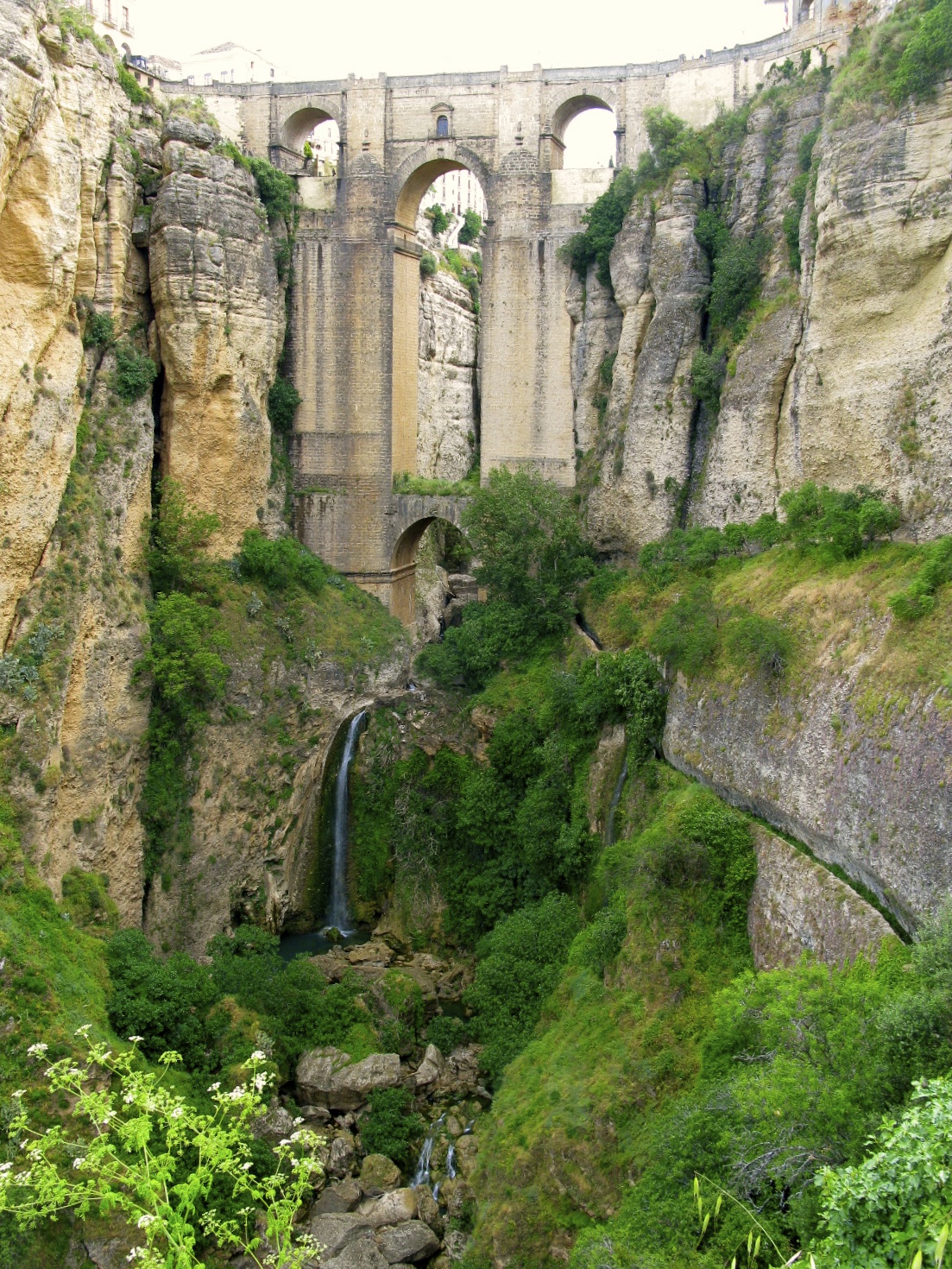
"El Tajo"

“El Tajo”

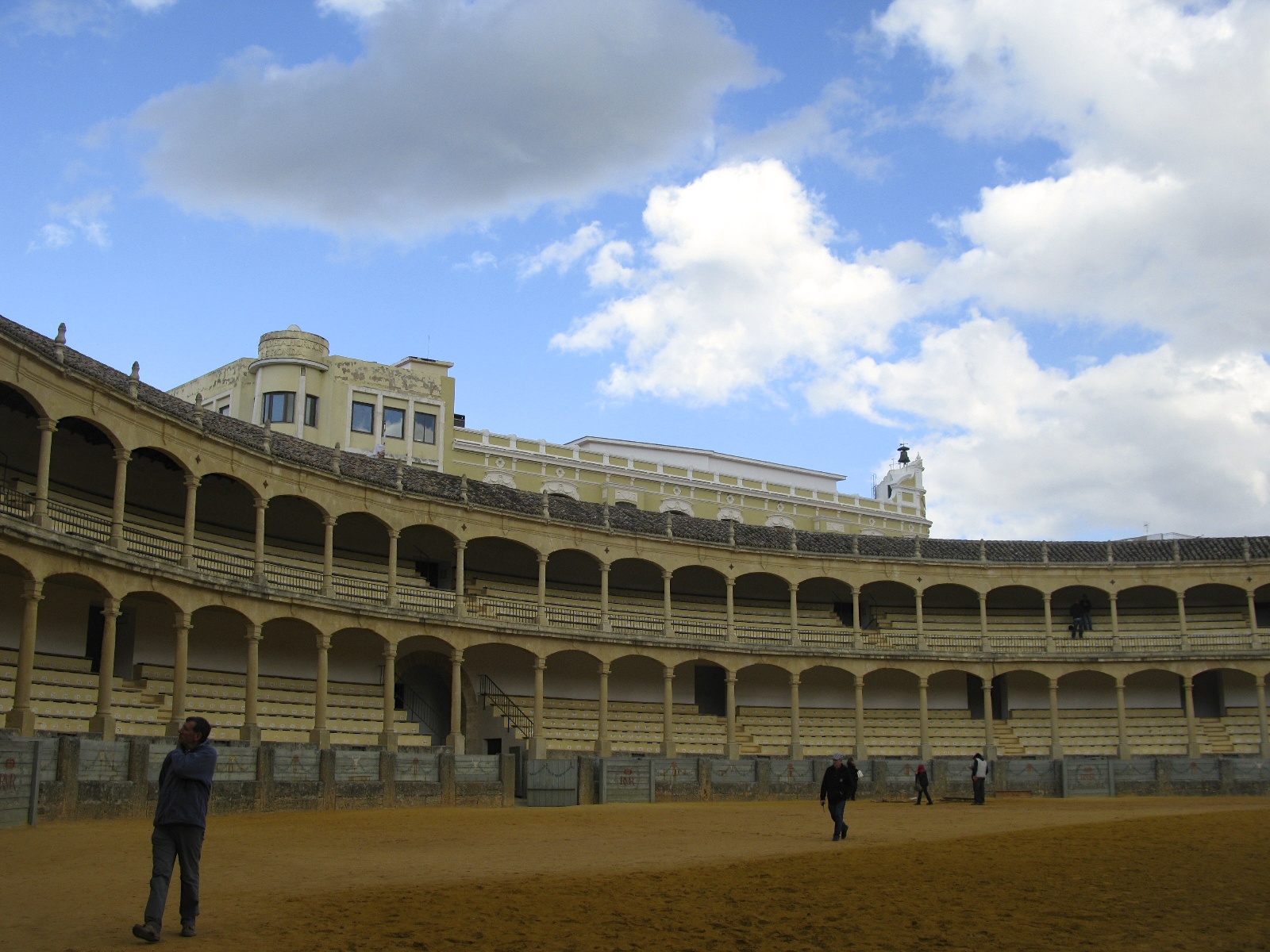
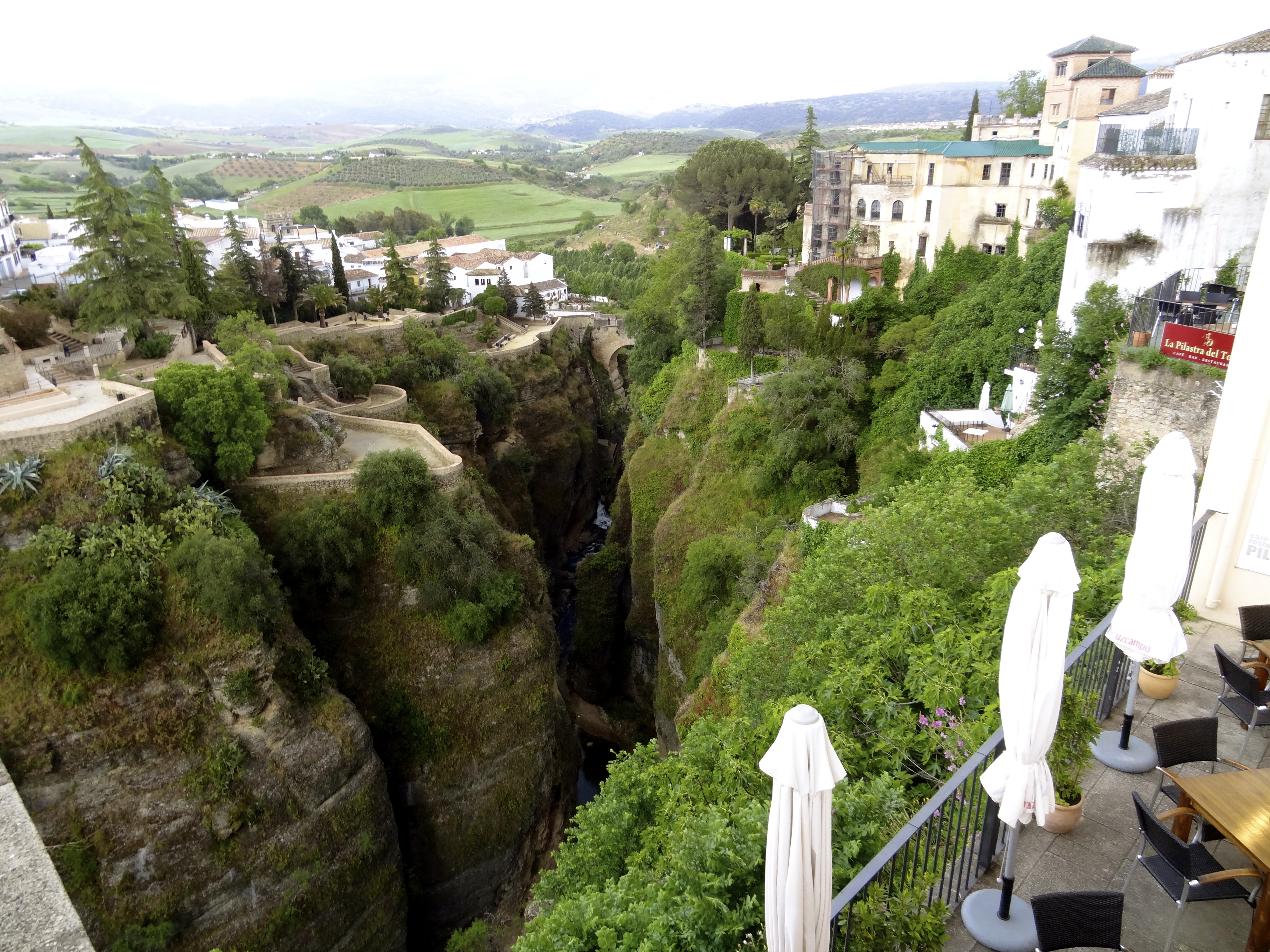
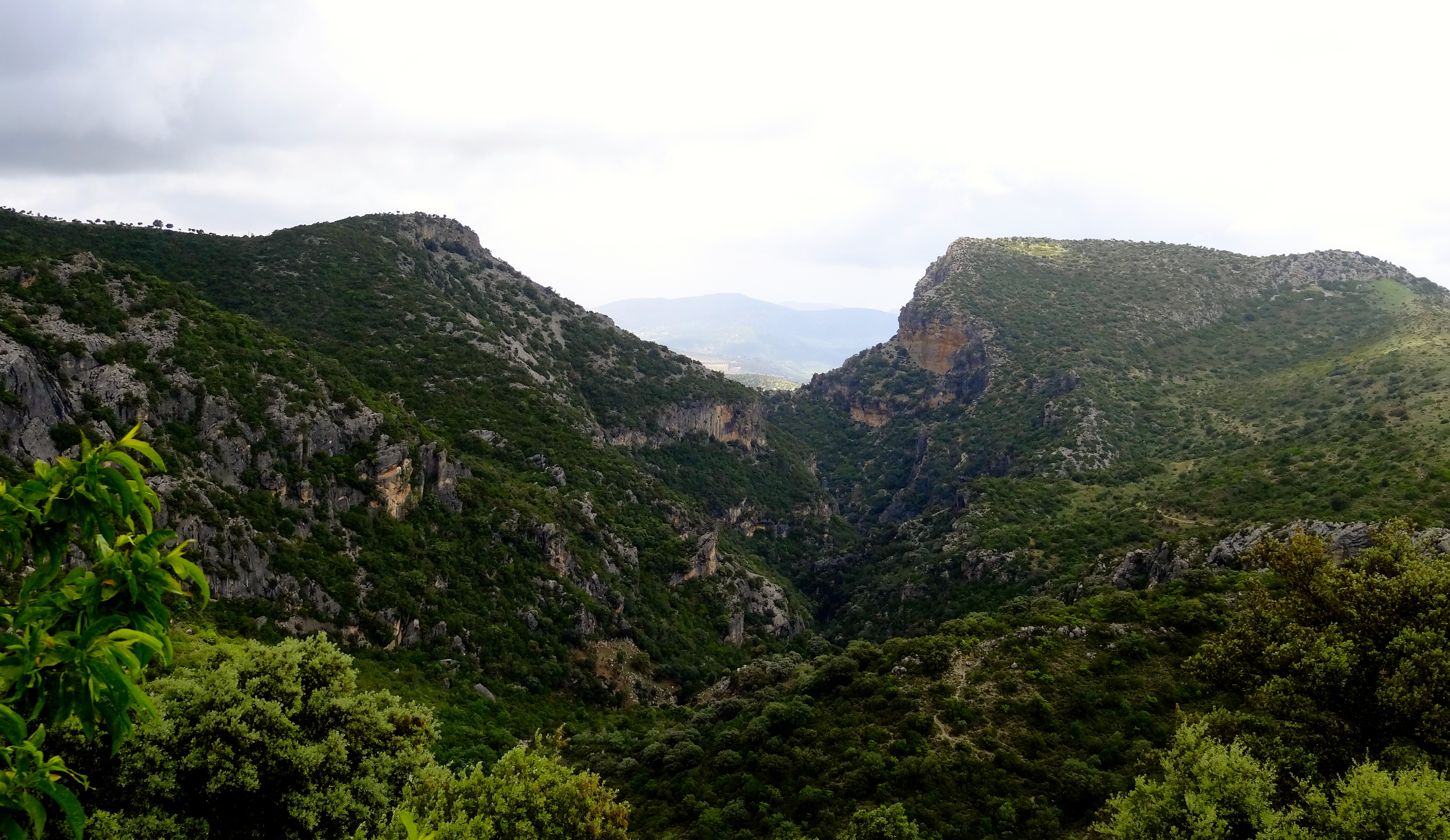
Directed to Plaza se Espana and the New Bridge, built in 1751, which leads to the entrance of Old Town, we first passed by Spain’s first great bullring, dating back to the 16th Century.  Then, as we approached the “Puente Nuevo,”  the deep gorge they call “El Tajo” came into view.  A ravine, nearly 400 feet deep and 200 feet wide that divides the old Moorish area, La Cuidad, from the new town (cir. 1485) “El Tajo” is spectacular enough with majestic rock formations, natural landscapes and buildings perched at the base of its cliffs, but the view of the bridge, reaching deep into the canyon amid wildflowers and waterfalls was as spectacular as any span I had ever seen.

This first visit was a stunning preview to Ronda and sparked our desire to hike down the Jardines de Cuenca Park trail for the best views.  However, we had a car reserved for the next morning and the hike would have to wait until we had explored the other white hill towns.

GRAZALEMA

DSC00973

Grazalema, Spain

Amid a steady rain, we received our car and were soon driving among olive groves, then cork forests in the Sierra de Grazalema Natural Park before the winding incline that assured us we were on our way to Grazalema, the first white hill town. Grazalema, Zahara and the Pileta Cave, three stops on our visit, are all located within the park.

Grazalema is a cozy little village, nestled into the hills, surrounded by large, spectacular rock

Rooftops of Grazalema

Rooftops of Grazalema

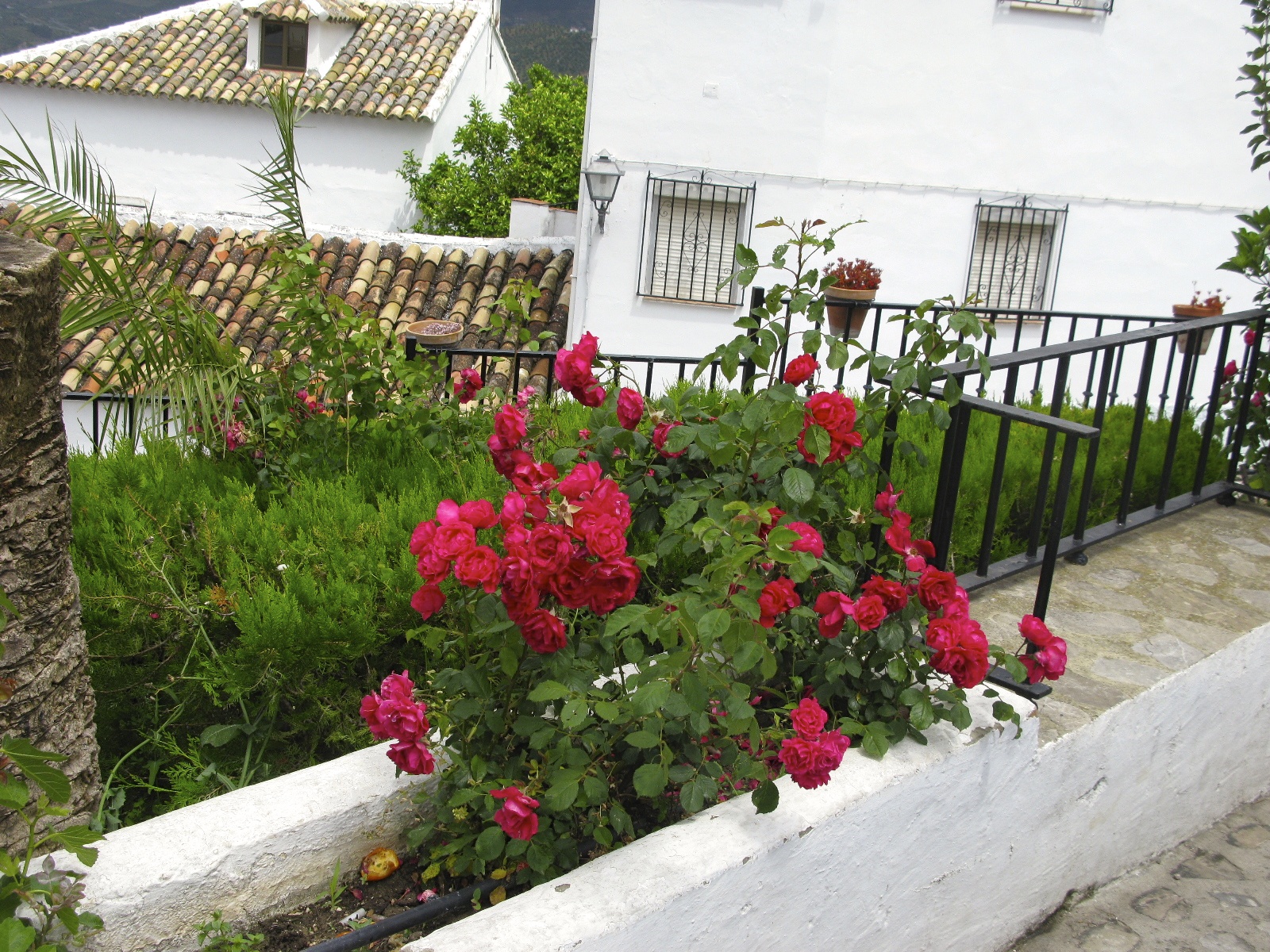
outcroppings.  Whitewashed buildings, red roofs and window flower boxes spilling over with bright flowers line the narrow streets that all lead to a small public square, which was fairly empty on a rainy Sunday morning. With quaint shops and remarkable views, Grazalema is a popular base for Spaniards who hike in the natural park.

Driving over the steep Cadiz Mountain pass to Zahara was my most “white-knuckled” in memory. Twisting, slick roads at high altitude, with no protective barriers, in a strange car with manual transmission all shared responsibility for the increase in my heart rate. We did find respite at the summit with the large mountainous saddle rendering views of the Zahara Reservoir.  More winding roads lie ahead as we began DSC00978our dissent down the mountain toward the second village.

ZAHARA

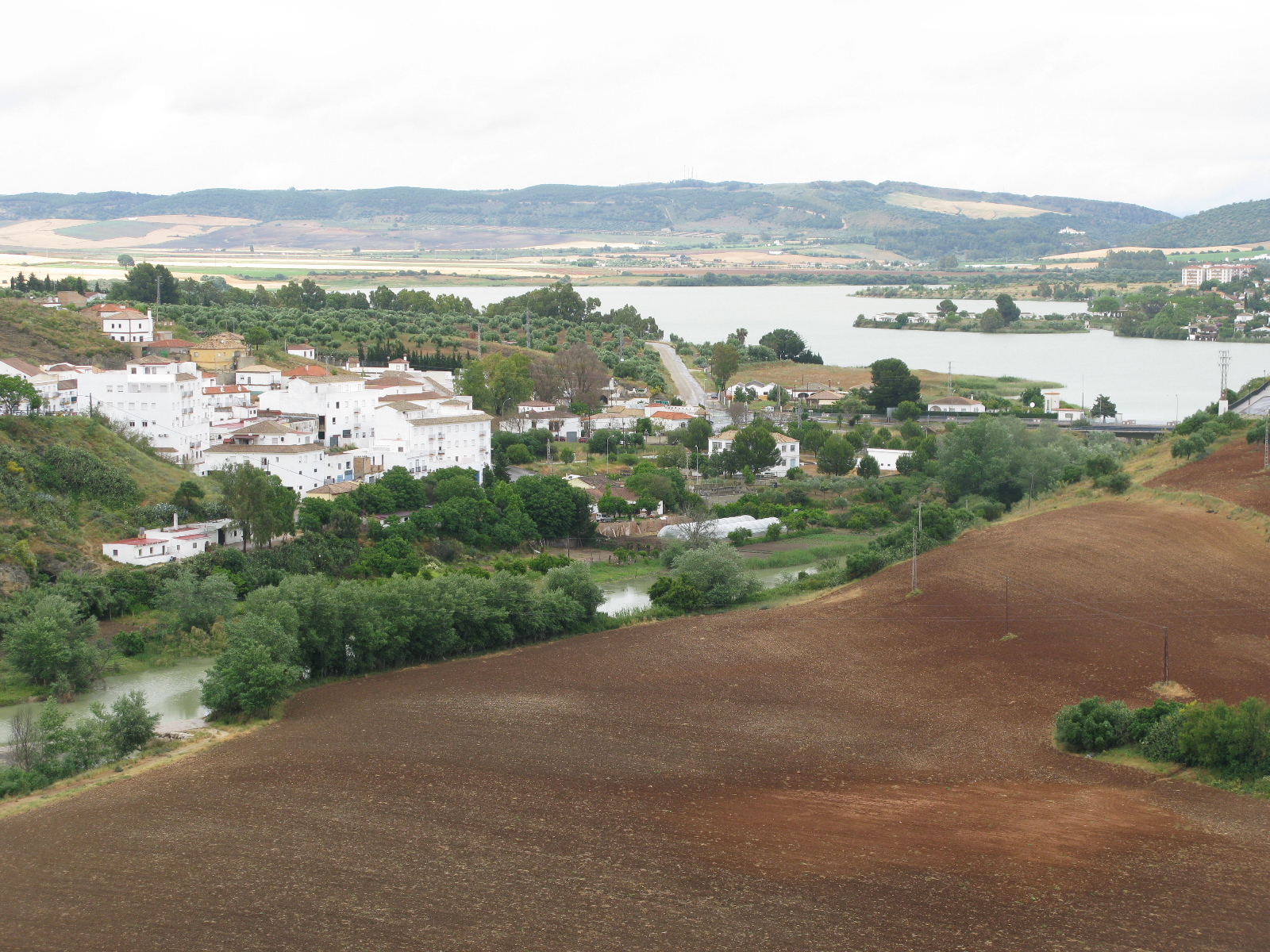
Zahara spreads out below an old fortified Moorish castle that once constituted its boundaries.  Once a stronghold for the Moors, Zahara played a significant role in the Reconquista in 1482.  The hike from the village up to the castle is good exercise and renders some impressive views of the region.

Zahara, Spain

Zahara, Spain

Our brief time in Zahara was spent exploring the cobble-stoned streets between more whitewashed

View of Zahara Resevior

View of Zahara Resevior

buildings, finding interesting shops and numerous vista points.  In a small church off the town square sits the Virgin of Dolores, an iconic statute that is celebrated throughout the year.

The quiet solitude of Zahara reflects a simpler lifestyle, the locals going calmly about their business in a friendly manner.  If arriving or leaving Zahara via route A-374, a stop at the Zahara

Flowers in Zahara

Flowers in Zahara

Reservoir turnout is recommended for great panoramic views of the town.

Route A-374 soon turns into A-384 and we are on our way to Arcos de la Frontera, our final white hill town stop of the day.

ARCOS DE LA FRONTERA

The old town of Arcos narrowly spreads itself across the hillside cliffs, seemingly a totally different place than the lower village.  For me, the best part of Arcos is the views of old town shimmering in the late afternoon sun.

Arcos

Arcos

Plaza del Cabildo, the center of old town is bookended by the Church of Santa Maria and the parador, a former governor’s palace. After a surprisingly nice dinner in old town, we drove back to Ronda, anxious to explore our local environs more thoroughly.

BACK TO RONDA

Our base, the Hotel Maestranza, is located on the original home site of legendary bullfighter Francisco Romero, directly across the street from the bullring. Aside from the experience of standing in the middle of the ring, smaller than imagined, there was a wonderful museum including centuries old costumes and, more recent

Ronda Bullring cir. 16th Century

Ronda Bullring cir. 16th Century

photos of Ernest Hemmingway who was a part-time resident here. The picturesque arena, perched on the cliffs was intriguing, but the canyon spoke to us.

Crossing the bridge, stealing another glance at the gorge, we are soon in old town with more narrow streets and whitewashed buildings.  The building entrances innocently face the street.  Only once inside do you realize they are built directly on the cliffs of “El Tajo.”

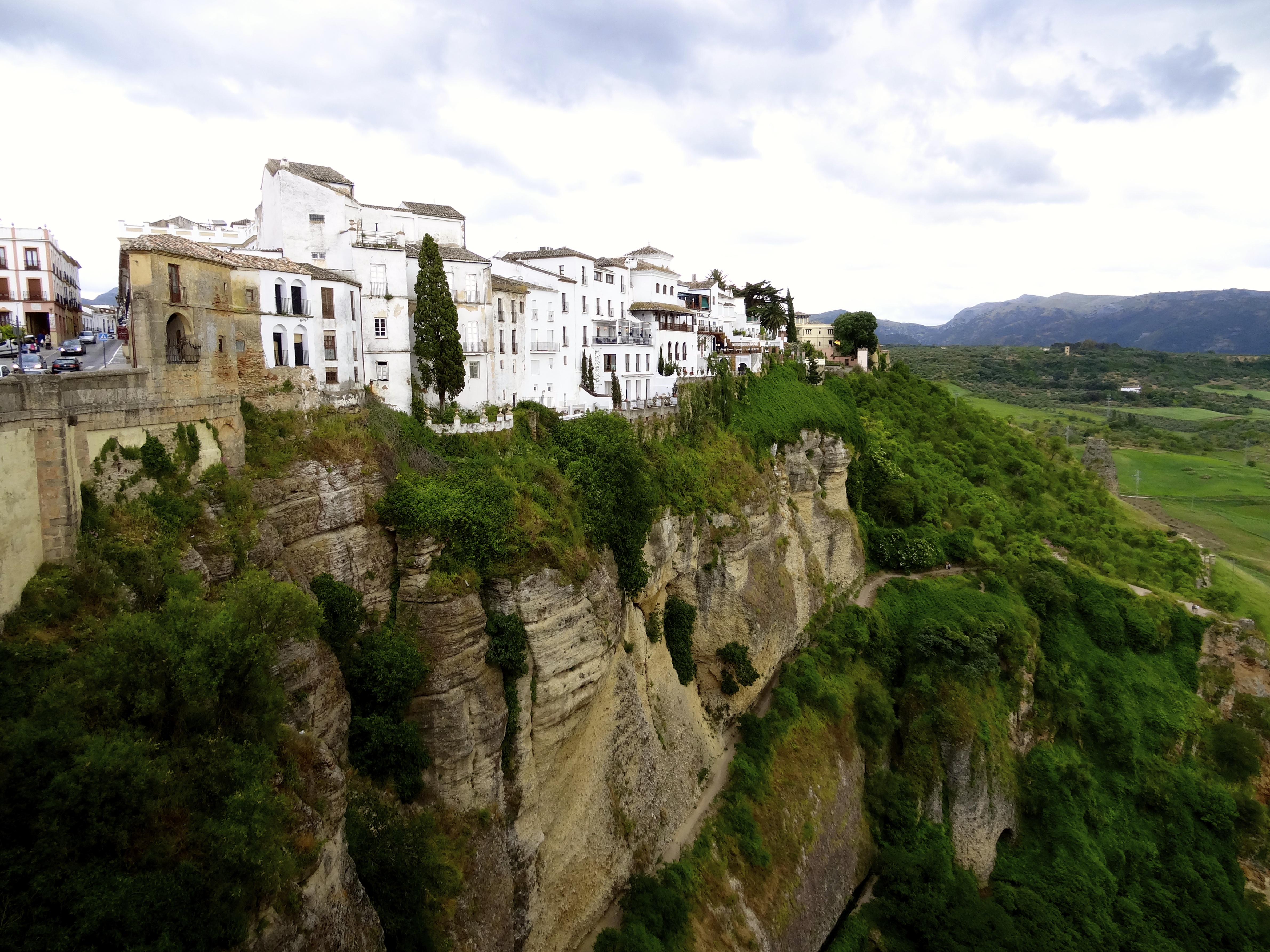
Panoramic of Ronda

Panoramic of Ronda

As we entered the trail down into the canyon, the breathtaking views of the bridge, cliff-top buildings, waterfalls and the surrounding flora continued to change the deeper we descended. Dozens of photographs later, we ascended the trail back to old town and began to explore the ancient La Cuidad area, including the remnants of early Arab cultures.

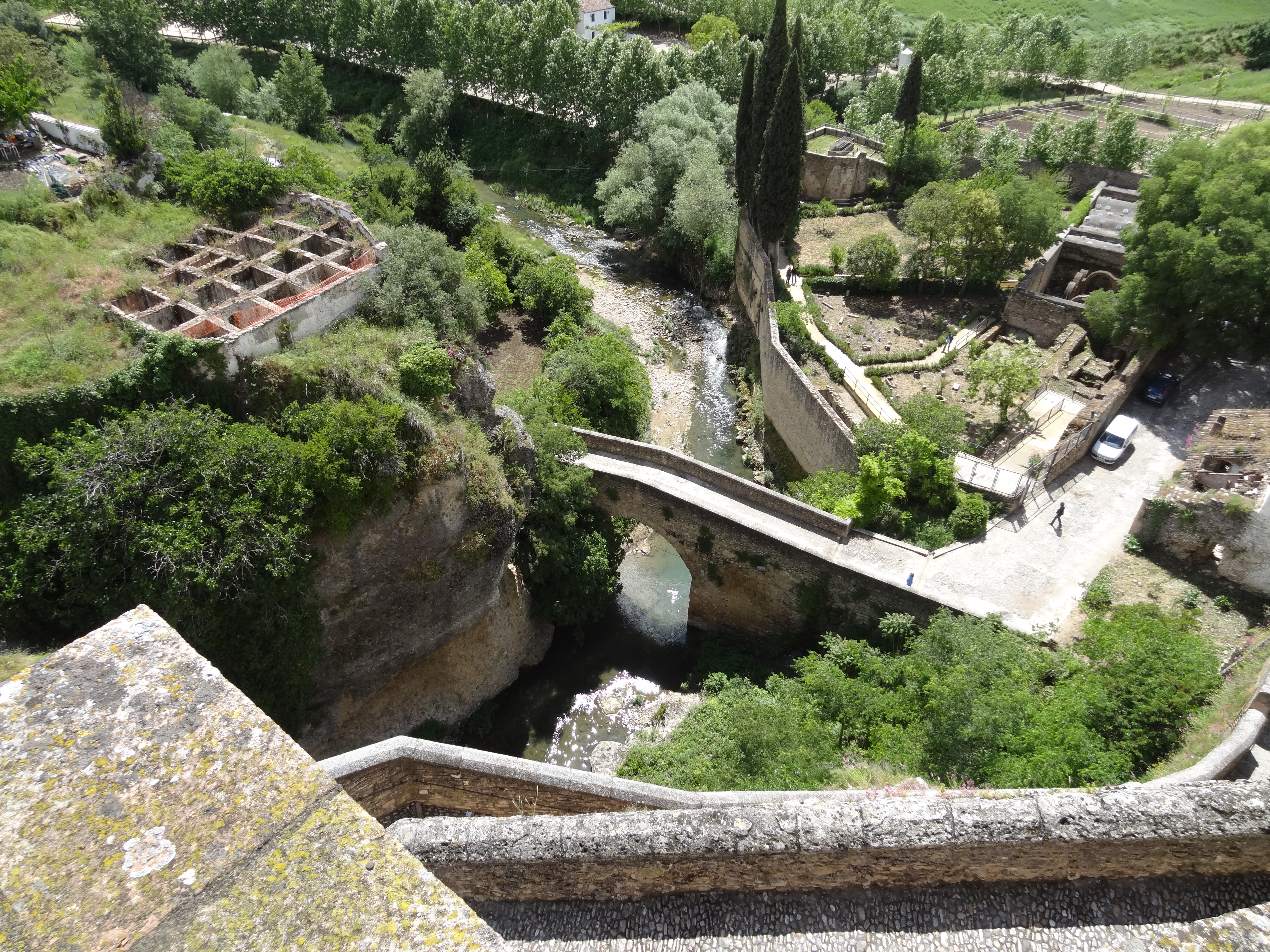
View of Arab Bridge

View of Arab Bridge

Up from the gorge, we traversed through the Moorish Quarter and its amazing history, walking toward “El Tajo,” moving down past the Old Bridge, which was built around 1616, and an old city wall to the Arab Bridge, marking the ancient entrance to Ronda.

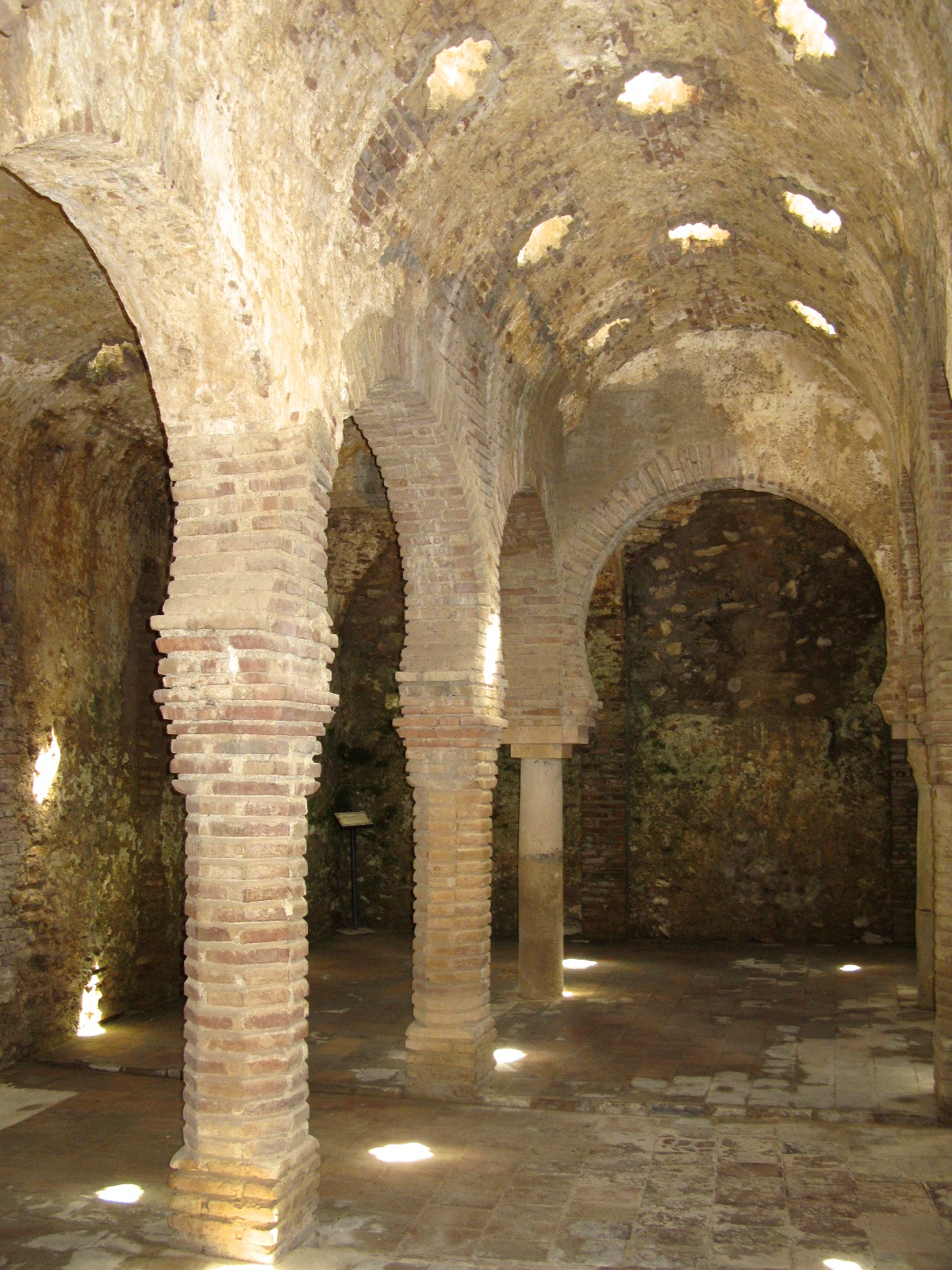
A short distance past the Arab Bridge lies the remains of the Arab Baths whose location was not an accident.  After a long journey, the baths provided the necessary place to cleans one’s body before prayer.

Arab Baths

Arab Baths

Our ascension back up the opposite side of the canyon to Plaza de Espana left us with many scenic views and an appetite.  We found a restaurant perched on the canyon wall and settled into a relaxing lunch with more breathtaking views. During lunch my wife informed me that we had to be at the entrance of Pileta Cave by 4pm.  What and where, I inquired.

A history buff, Karen had discovered that Pileta Cave is

Spain’s best opportunity to view Neolithic and Paleolithic paintings, some dating back 25,000 years.  Soon, we were back in our car, driving past cork and olives toward the small town of Benaojan, a benchmark on the way to the cave.

Entrance to Pileta Cave

Entrance to Pileta Cave

Descending into a cave is never really pleasant, it’s deep, dark, damp, and slippery and, as a designated lantern carrier, I felt responsible for the six people between the next lantern and me. However, the rewards were astonishing and sometimes hard to comprehend. This is prehistoric finger-painting at its best with many definitive drawings of horses, cattle and, uniquely, a large fish.

Touring the Pileta Cave was an amazing end to an amazing three days. Ronda and the White Hill Towns

"El Tajo"

“El Tajo”

of the Andalucía surpassed all of our expectations and became one of the most memorable stops during our month in Spain.  The next morning we were on a train headed to Cordoba and Sevilla with the conviction that we would one day return to Ronda to further explore the area and relax in the atmosphere of true Spanish hospitality.


Food and Wine of the Hitching Post


                      Photographs:  Karen Norton


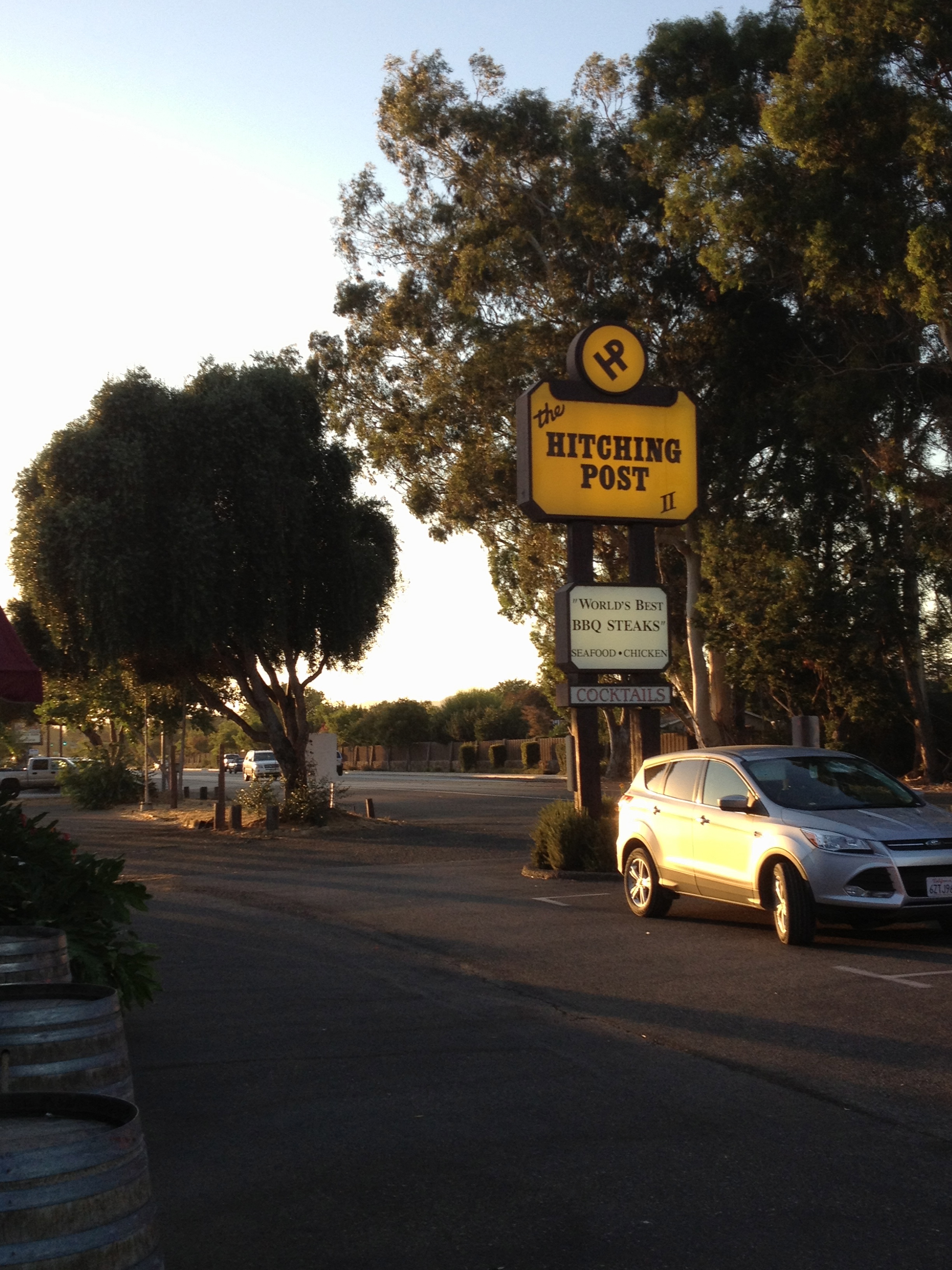
The Hitching Post II Restaurant was a local legend long before the film; “Sideways” exposed it to a much larger audience.  Today, it is a must stop for those in town enjoying wine tasting or the many other attractive features in the north San Barbara County area.  While the

Frank Ostini Jr. and Gray Hartley

Frank Ostini Jr. and Gray Hartley

waitress, Mya, is still good for business, locals have appreciated open red oak BBQ grilling, “Santa Maria Style” since the Ostini Family opened the original Hitching Post Restaurant in nearby Casmalia, CA in 1952.  The in-direct open fire grilling method, rather then closed smoker, seems to generate great flavor in everything from filet mignon to salmon. The Hitching Post II also has its own house wines with a much different story than one might imagine.

Several years ago, I met Gray Hartley at a tasting event when he was promoting Hartley-Ostini Hitching Post Wines.  Experience tells us to be cautious when restaurants, especially BBQ restaurants, begin to make their own house wines, especially Pinot Noir.  Fortunately, we can all throw caution to the wind.  Beginning as a hobby, Hartley-Ostini Hitching Post Wines is a long-term business and personal partnership between old friends who are now serious winemakers creating fine wines from many of the top vineyards in the region.

As with most wineries in north Santa Barbara County, the harvest was taking place and the Hitching Post  staff was in fourth

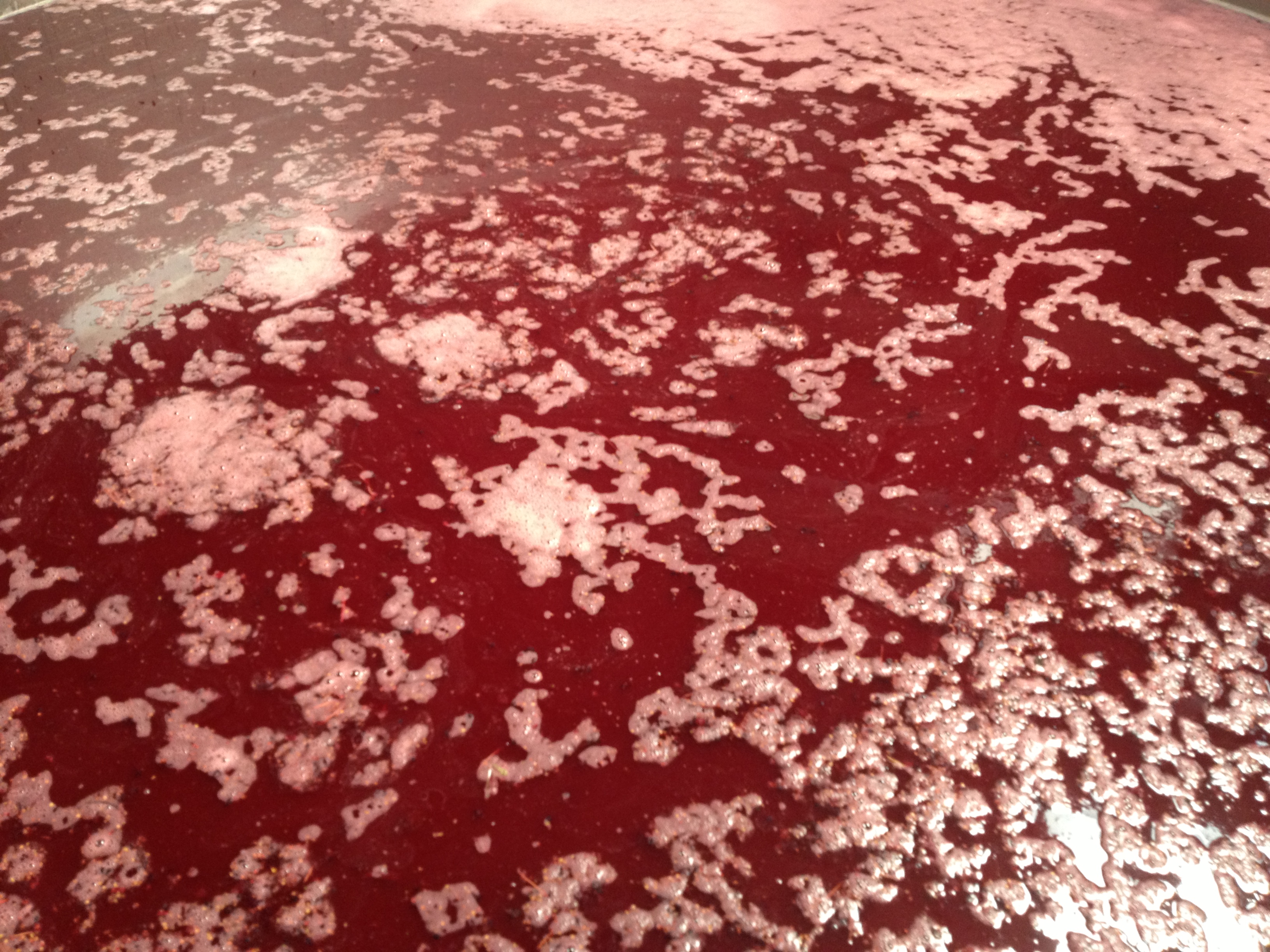
new juice

new juice

gear,  moving  fresh grapes from trucks through the initial crushing process.  Hartley oversees the production of 17,00 0cases annually, but he was as excited as we were to watch the grapes come off the trucks and to visit the scales before the fruit was loaded onto conveyor belts, drawn through crushers and de-stemmers before resting in holding tanks awaiting a winemakers touch.

When asked what makes him a good winemaker, Hartley pauses for an instant before responding, “Frank.”  High school friend, Frank Ostini convinced him in 1979, to leave his fishing business in Alaska to pursue the dream of creating pinot noir and other varietals that people would want to drink, inside or outside the restaurant.  A self-described romantic, Hartley depicts his partner as analytical and pocessing scientific approach, providing a good balance.

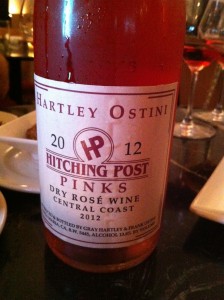
Hartley Ostini 2012 Hitching Post "Pinks" dry rose

Hartley Ostini 2012 Hitching Post “Pinks” dry rose

Speaking of balance, Gray pours a glass of the new 2012 Hitching Post “Pink’s” Dry Rose, comprised of valdiguie (48%), Grenache 47% and Pinot Noir (5%).  Valdiguie, also known as Gros Auxerrois is a grape native to the Languedoc-Roussillon region of southern France, near Provence, that is producing fine rose’.

While the “Pink’s” in the name refers to the salmon that Hartley used to fish in Alaska, the flavors and texture of this rose’ would pair nicely with the Hitching Post II BBQ Sautéed Mushrooms or Grilled Artichokes with Smoked Tomato Pesto.

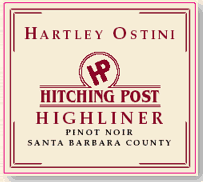
The most popular Hitching Post wine is the “Highliner” pinot noir. The 2007 Hitching Post “Highliner” Pinot Noir ($40), named for the “great men of the Alaskan Salmon Fishery, combined the best barrels from four of north Santa Barbara County’s

Hartley-Ostini Hitching Post "Highliner" Pinot Noir

Hartley-Ostini Hitching Post “Highliner” Pinot Noir

extraordinary vineyards.  It expresses complex fruit flavors and should drink well for 5-6 years. The popular “Highliner” and other Hitching Post Wines are exported to 12 states, Japan, Denmark and Canada.

While most Hitching Post wines spend 18-20 months in the bottle before release, the 2008 Hitching Post “Hometown” Pinot Noir ($20)) was released after only 10 months, appealing to those who prefer the flavors and texture of young, value-priced pinot noir.

Frank and Gray both emphasize the need to keep flavors in balance; the flavors must be strong, but not dominant.  They aspire to create the Burgundian-style, food friendly pinot noir that can accompany all food including beef.

While Frank recommended the 2009 Hitching Post “Cork Dancer” Pinot Noir ($29), I opted

Frank Ostini

Frank Ostini

for the 2008 Hitching Post “Perfect Set” Pinot Noir (55) to pair with my fresh Grilled Salmon.  This pinot represents the best barrels from Fiddlestix Vineyard in the Santa Rita Hills appellation.  As with grapes for her own Fiddlehead Cellars, owner/winemaker Kathy Joseph’s meticulous work in the vineyard has put her stock in demand by winemakers throughout the region.  The “Perfect Set” is aromatic, earthy wine with full fruit flavors, living up to its name.

The Hitching Post Wines portfolio include single vineyard pinot noir from four of the area’s renown vineyards including the Fiddlestix and Cargassachi Vineyards in the Santa Rita Hills and Julia’s and Bien Nacido Vineyards in Santa Maria.  Research will show that many of California’s fine pinot noir releases source fruits from these vineyards. The 2009 Hitching Post “Bien Nacido Vineyard” Pinot Noir ($42) expresses luscious, deep flavors with fully ripened, concentrated fruit.

Although they claim to not make wine for food, nor food for wine, this Hitching Post team, with their unique blend of

Barrel Tasting

Barrel Tasting

experience, were at the forefront of food and wine pairing.  With “no pretense,” they continue, since the first vintage in 1984, to use a “holistic” approach to winemaking and food preparation that helps maintain a healthy balance with each.

For those seeking heavier wines to pair with the wonderful open-fire flavors of beef, lamb and pork, the 2010 Hitching Post “Big Circle” Syrah ($24) and the 2007 Hitching Post Syrah “Alisos Vineyard”($30)  are both good alternatives.  The “Big Circle” expresses complex, balanced flavors and an acidity that makes it very food friendly.

One of the fascinating features of California wines is the multitude of human stories of people, their passion, desire and commitment to perfection.  Although the winemaking passion of Gray Hartley and Frank Ostini has become a $2 million annual operation, luckily they still see themselves as two friends making wine in their garage. Their allegiance to “trust the vineyard, trust your senses and share knowledge” is what makes everything about the Hitching Post operation especially appealing.

IMG_1605

The Hitching Post Restaurant II in Buellton

The Hitching Post Restaurant II is located on Highway 246, less than a mile from the Buellton exit of Highway 101 and the nearby wine tasting room is in the ultra-modern Terravant Wine Company, shared with other local winemakers.  Stops at both should be part of any excursion to the breathtakingly beautiful wine region of north Santa Barbara County.


Galapagos!


Crossing to Santa Rosa Island

As we lift off the runway in Guayaquil, Ecuador and bank toward Baltra in the Galápagos Islands, some 600 miles away, I still don’t know what to expect.  I have dreamed of this moment for decades, but still wonder how the experience will match my expectations.  Hopefully, I can put aside anticipation and focus on the moment. Stepping onto Galápagos soil, my first reaction was, “Did I just see a Joshua Tree?

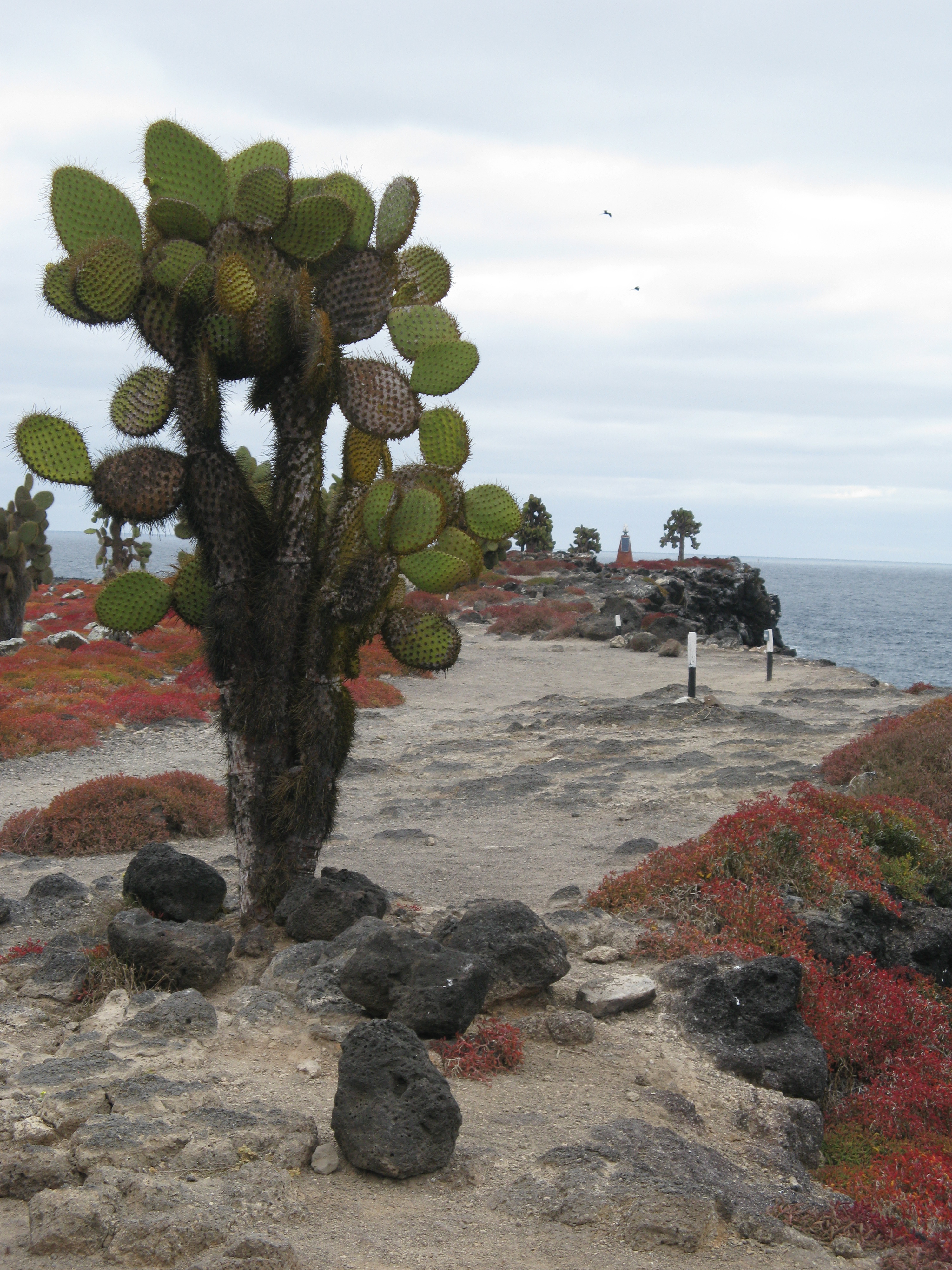
Proceeding through customs in a building without walls, covered only in thatch, with no lines is nearly stress free. A good beginning. Soon on the bus for the three-mile trek to our ferry, I got my first glimpse of the Prickly Pear tree, resembling the shape of the Joshua tree with large, flat, prickly pads.

Prickly Pear

An abundant and vital part of the Galápagos landscape, the flowers of the Prickly Pear feed the giant tortoises and the pads, after falling to the ground, are devoured by the land iguanas, “prickles” and all.

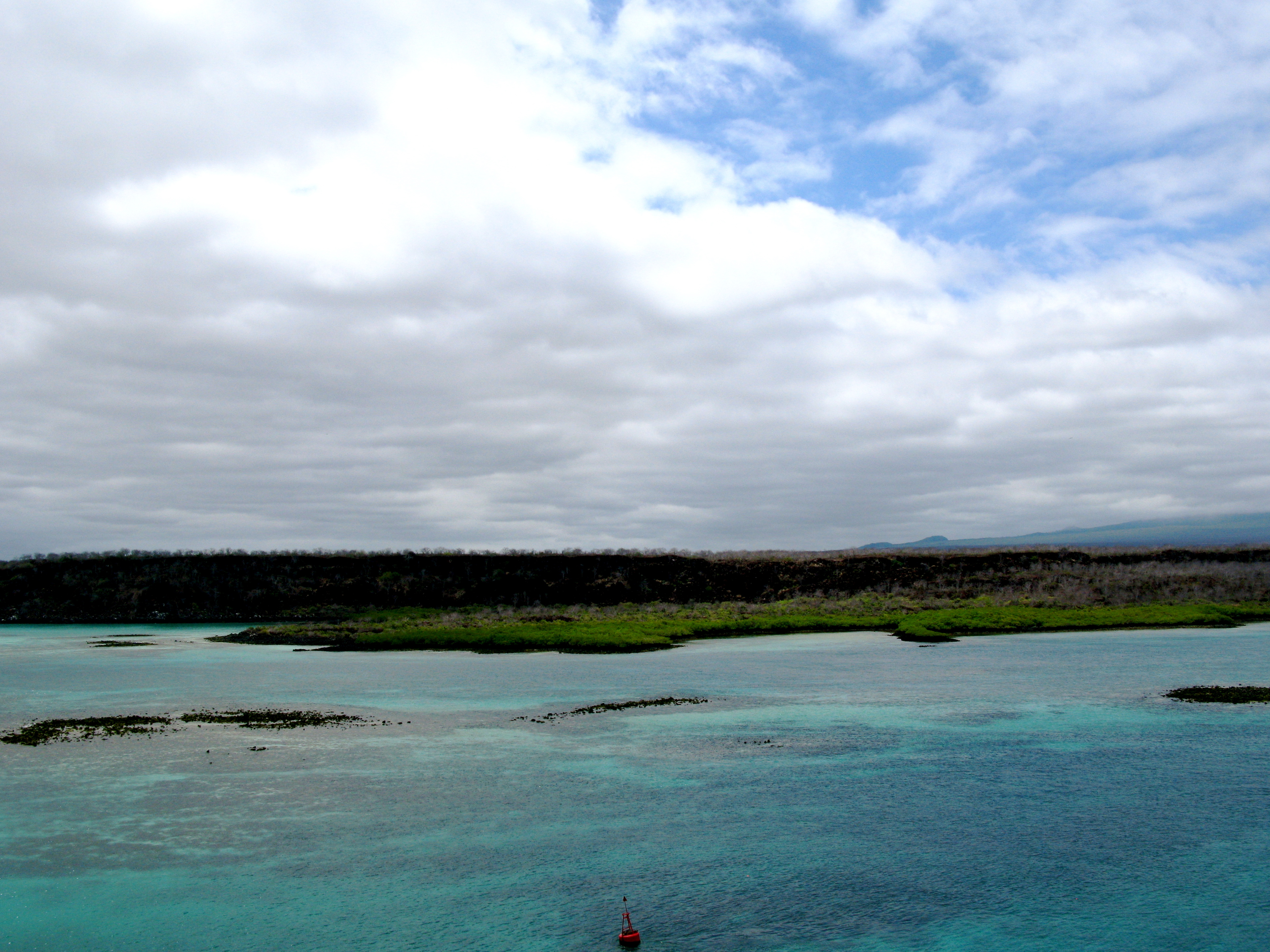
The first ferry ride was less than one mile, the distance between Baltra and Santa Rosa Islands. The initial arid landscape was now mitigated by this stretch of turquoise sea with visible sea life.  I’m here.

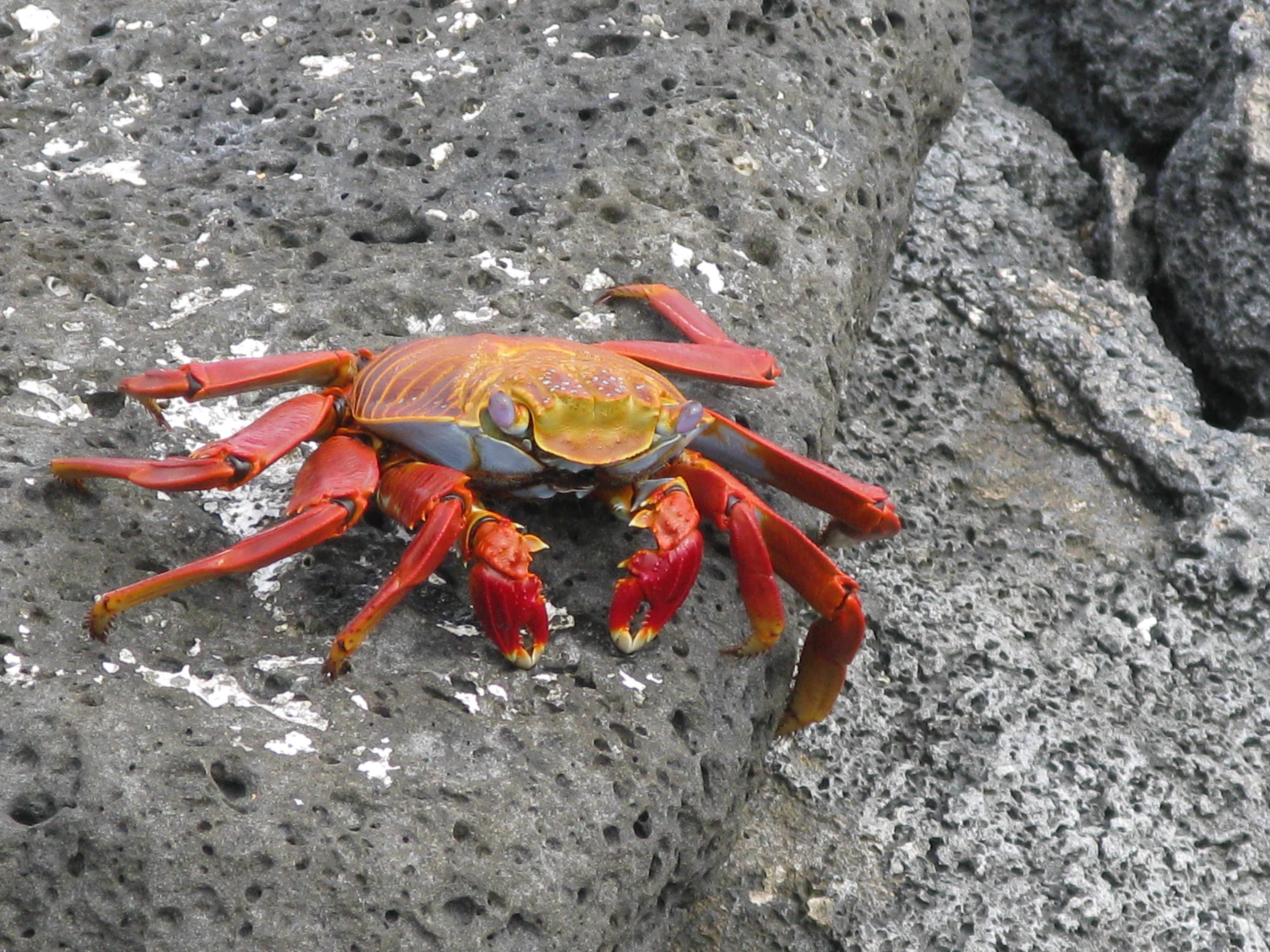
Sally Lightfoot Crab

Stepping off the ferry on Santa Cruz Island, one of the largest in the Archipelago, my eyes caught a Sally Lightfoot crab scurry across the volcanic rocks.  Hoping to see some of these colorful, animated creatures during the trip, my guess was that over 150,000 crossed our paths during the next four days. They were everywhere, their vibrant pigments contrasting the black rocks.  The babies are black for protection; the adolescents transform through a red period before assuming, as adults, a myriad of visually sensational colors.

Santa Cruz is more tropical than the other islands.  It is also home to the giant domed tortoise, that thrives inland of it’s namesake Baie Tortuga along the route to Peurto Isidro Ayora, where

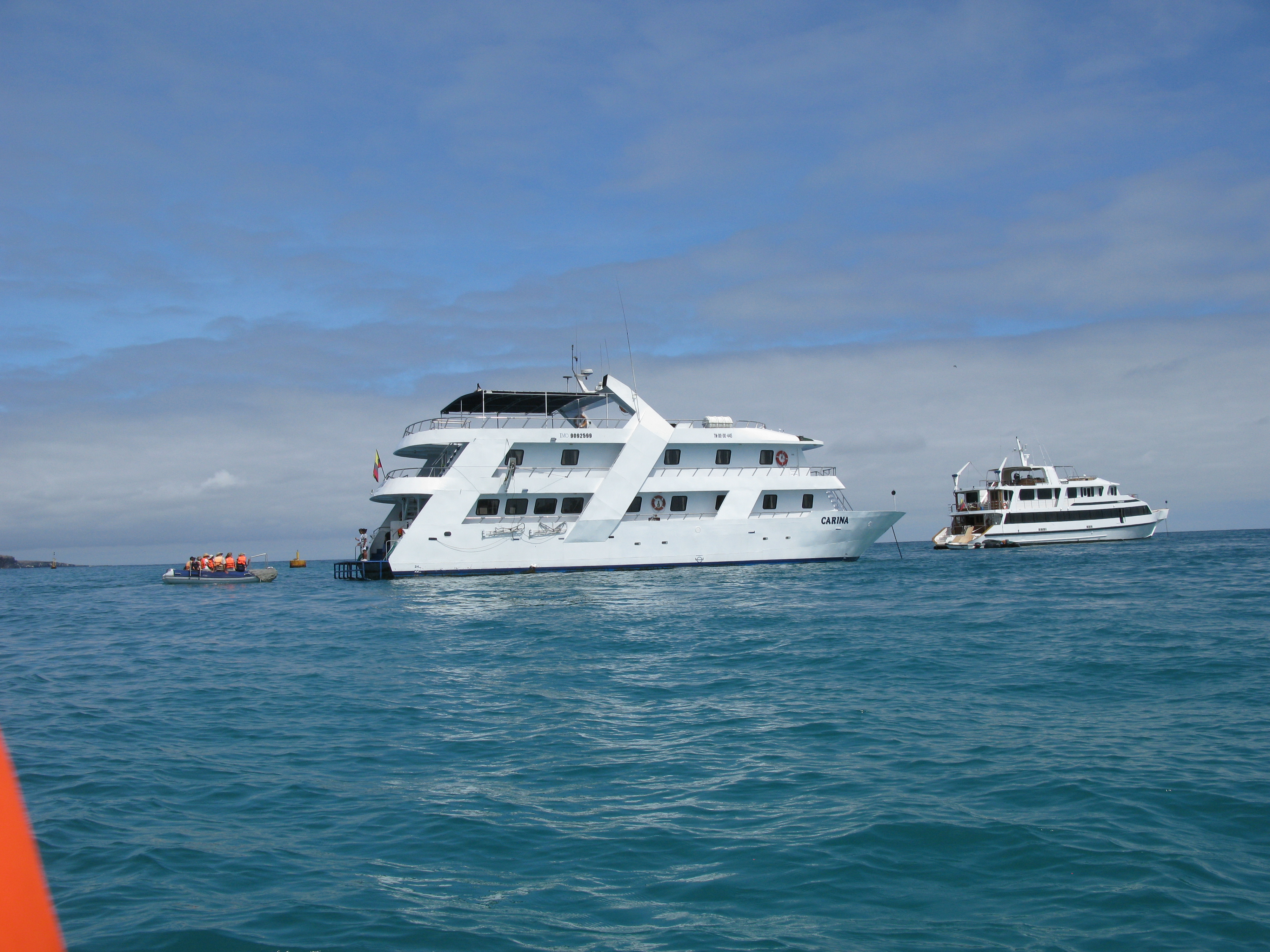
The Carmina

“Carmina,” our home for the next four days, was “anchor down,” awaiting us.  Only the gentle giants of this island are reason to delay our rendezvous.

A short hike off the road, into a large, lush meadow led to our first glance of the giant dommed tortoise.  Everyone’s eyes locked on the first creature, within seconds we distinguished 15 or so quietly eating the meadow grasses.  A few of the gentle giants withdrew into their shells as we passed, but most went about their normal routines of ingesting without chewing to begin the three-month digestive process. With shells waist-high to a normal adult and often six feet long, head to tail, it’s hard to comprehend these stupendous creatures once being slaughtered for fresh meat on pirate ships.

A new "old" friend

The necessity to perform the forbidden led to one memorable experience.  As we departed, the bus encountered a very large tortoise resting in the middle of the road.  We waited patiently for a few minutes before our naturalist, Pauli, announced that we had a boat to catch and sought volunteers to lift and relocate him.  Six of us carefully, with near precision, lifted the creature and moved him several feet off the road.  This experience was followed by observing, clearly the fastest moving of all tortoises.  Other islands are home to the saddle tortoise, whose shell is arched to provide more reach to the Prickly Pear flower, food that hangs three to four above the ground.

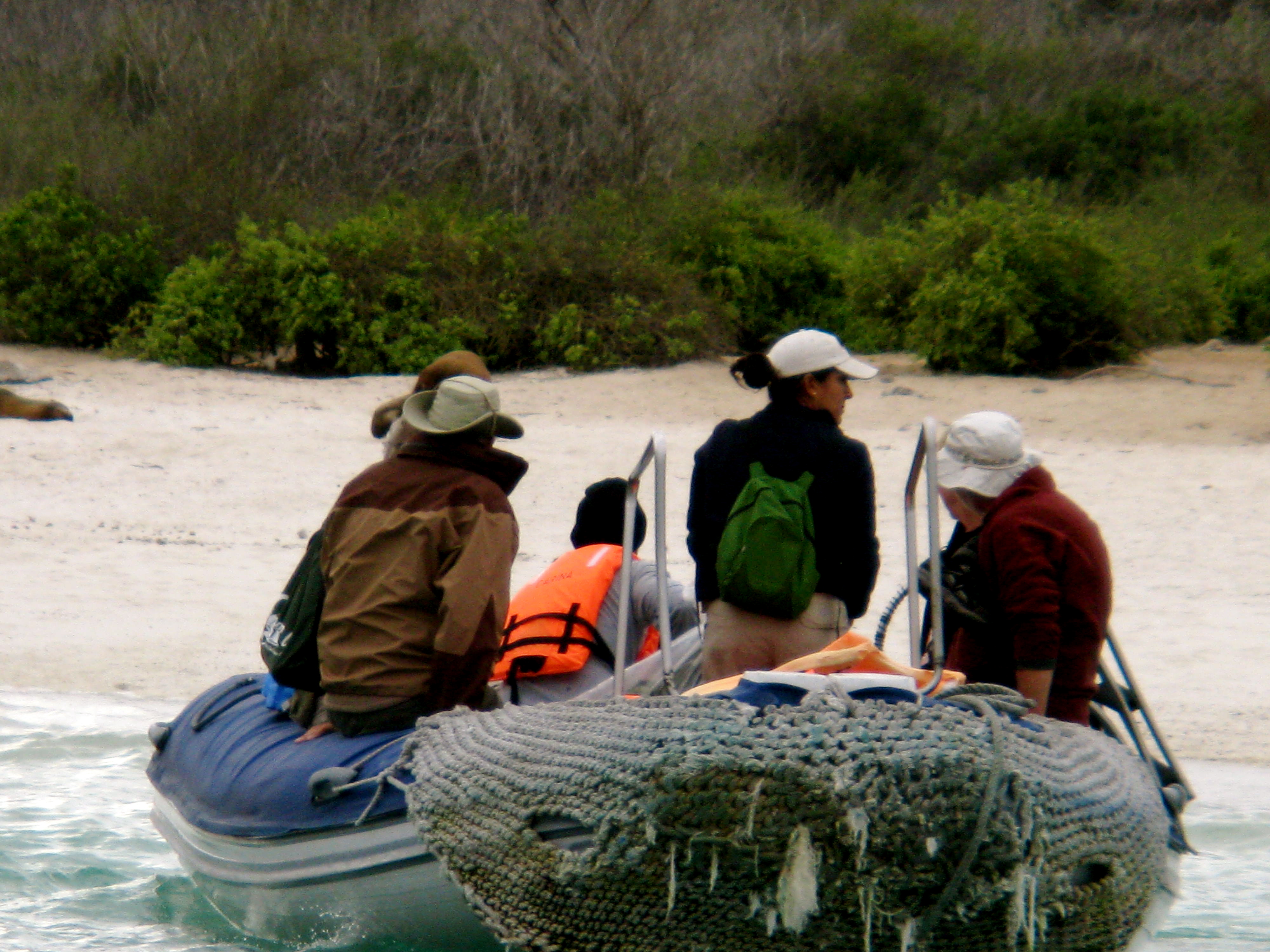
Puerto Isidro Ayora, Galapagos’ largest town with a population of 30,000 is a main port for all cruise vessels.  As our group of 15 boarded two zodiacs for the half mile journey to our small cruise ship, a discussion of our diverse expectations ensued, some fulfilling life-long dreams, others being drug along by their spouses.  Once again, I put aside perceptions and immersed myself in the moment.

After an onboard toast with pina colatas and a wonderful dinner prepared by our chef, Raoul, we went to bed early, hoping to survive the movement of the boat as we lifted anchor and cruised north to Bartolome’ Island, a volcanic rock with minimal plant or animal life.

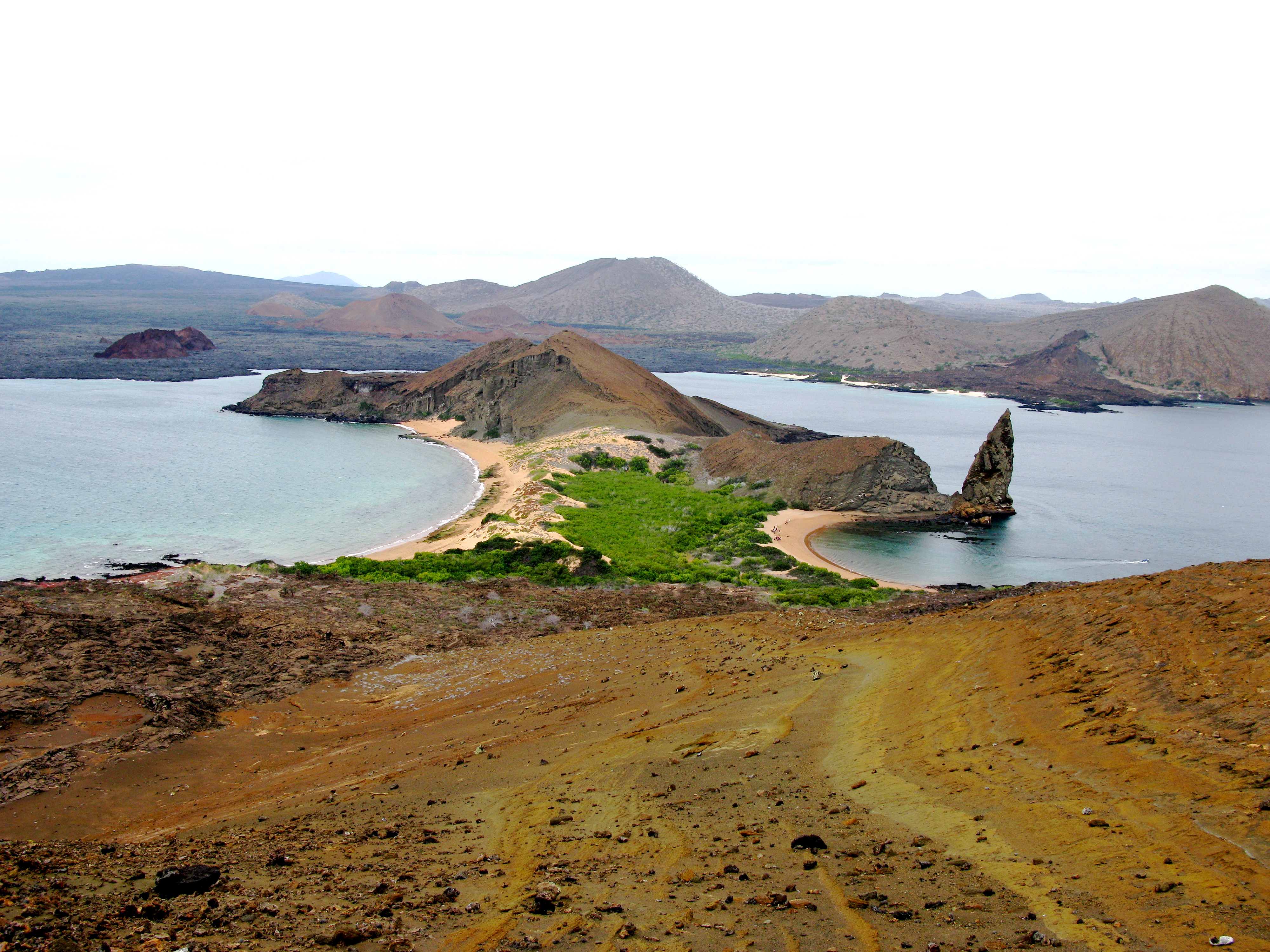
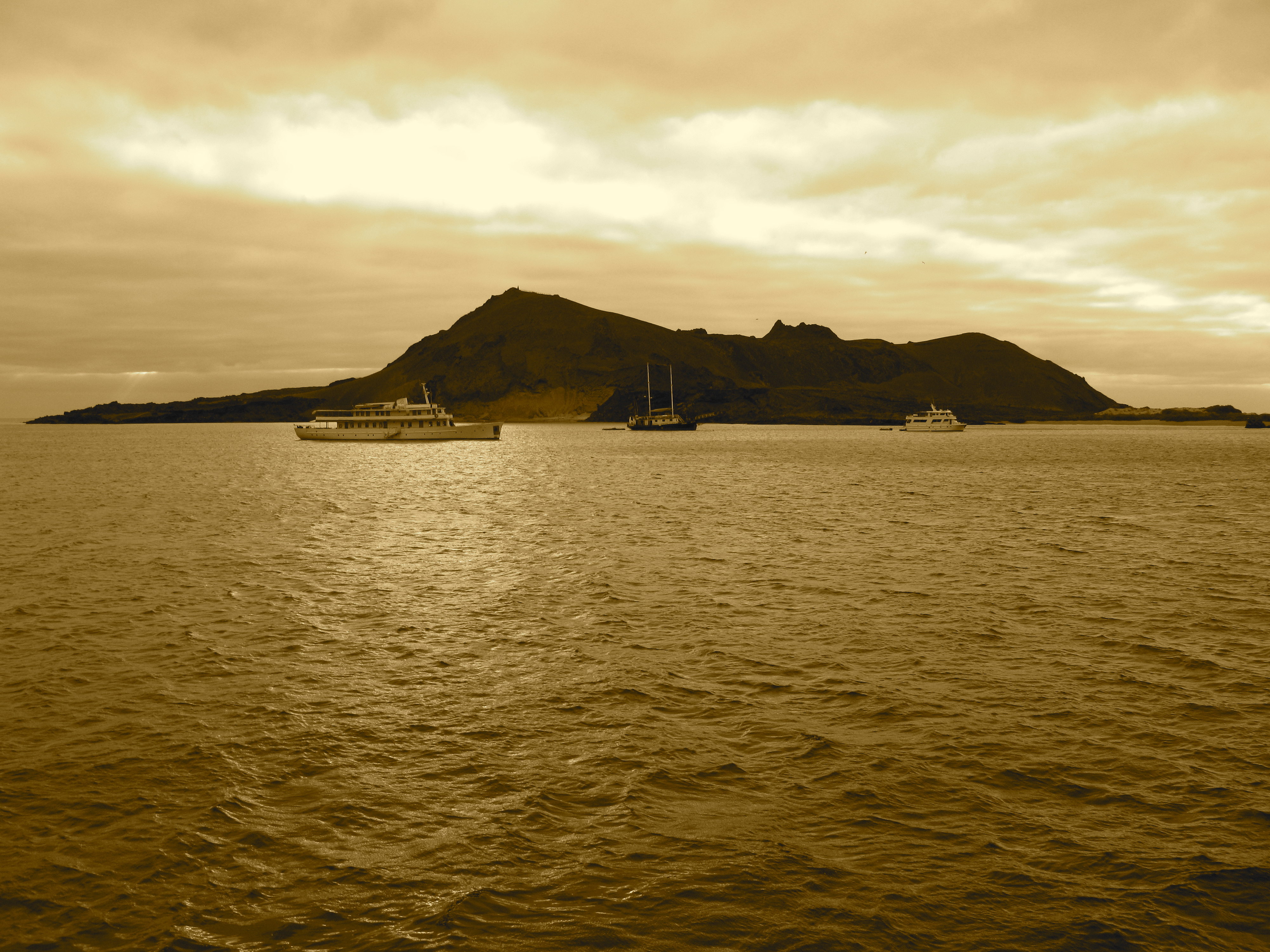
Sullivan Bay from Bartolome Island

On the zodiacs by 8 am, we departed for the island and a challenging hike up some 400 steps through the lava beds to the top, followed by snorkeling in a small cove in Sullivan Bay, directly below the majestic, wind-carved Pinnacle Rock.  Views from the top of Bartolome’ Island and below the ocean’s surface were stunning, the latter courtesy of a huge school of Yellow-tail Surgeon Fish.  We would see many more fish, along with sea lions, marine iguanas, eels, rays and sea turtles during our daily snorkeling adventures.

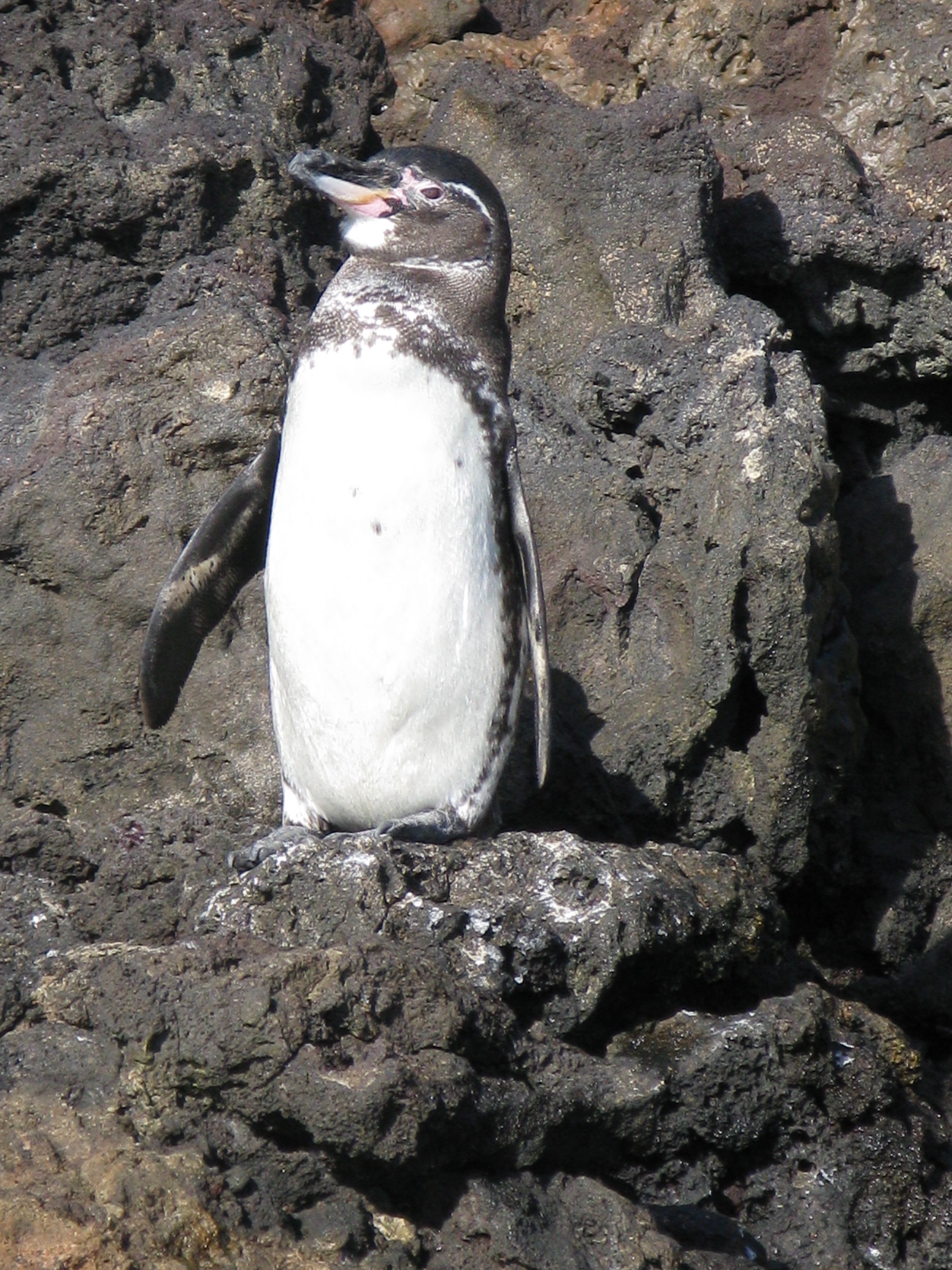
After lunch on “Carmina”, we are back on the zodiacs, patrolling the volcanic cliffs in search of the shy Galápagos penguins, camouflaged by the rocks, amongst the fluorescent Sally Lightfoot crabs and a few Blue-footed Boobies.  At twenty-four inches, these rare penguins are the second smallest of the species, generating tremendous speed and agility once in the water.

Lyle with the marine iguana

Day 2 began with a dry landing on Peurto Egas, a lava beach on Santiago Island and a hike encountering large colonies of sea lions, marine iguanas and, of course, more Sally Lightfoot crabs.  The volcanic cliffs led us to a flat lava plateau, filled with tide pools and ledges near the surf, providing protected water access for the sea lions and marine iguanas.  Hundreds of prehistoric looking marine iguanas appeared on the ledge, laying side by side and on top of each other, somewhat oblivious to our invasion.  Aside from the occasional snort, evacuating the salt from their latest ocean sojourn to eat red and green algae and cool their bodies, they seemed somewhat lifeless.  On a stakeout, we observed these lethargic creatures sunning themselves until the necessity to repeat the cycle drove them to the sea.

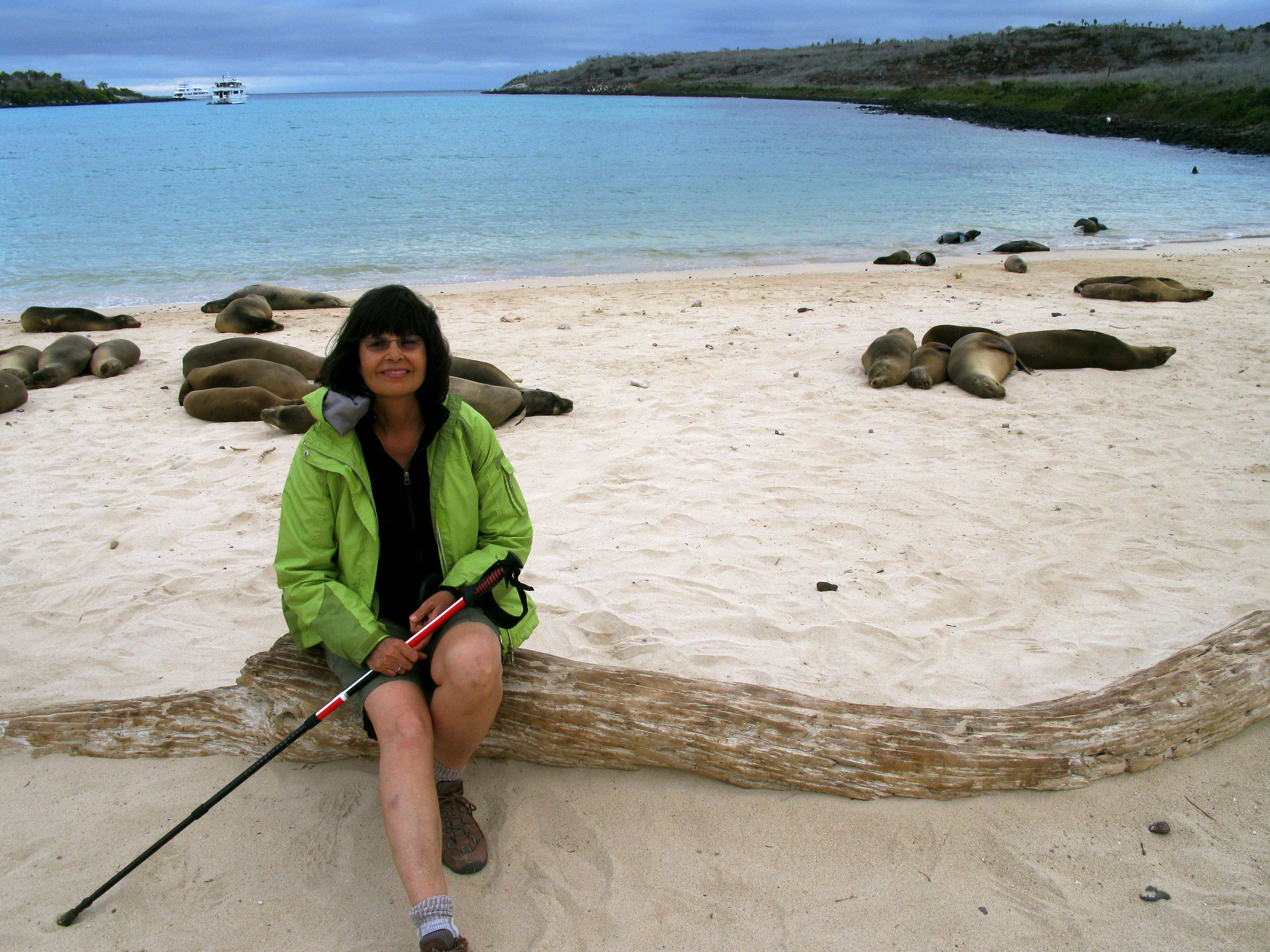
We’ve all seen the California sea lions, the Galápagos variety’s closet relative, but few have been invited into their world, to witness their daily lives, parenting habits as well as the chauvinistic attitudes of the alpha male.  Amidst these magnificent mammals, Pauli consistently identified red-billed

Galapagos penguin

tropicbirds, brown pelicans, flightless cormorants, Galápagos hawks, lava herons, and many of the 14 finches found on the islands.

Following snorkeling in a small bay, abundant with sea turtles and rays, we returned to the boat for lunch and navigation to Rabida Island for our first deeper water snorkeling off the dingy.  The timing for this jaunt was perfect to observe the last lunch call for several Blue-footed Boobies, innocent looking birds with striking turquoise feet that, once in the air, become missiles, driving into the surf with the force and synchronization of the Blue Angels.

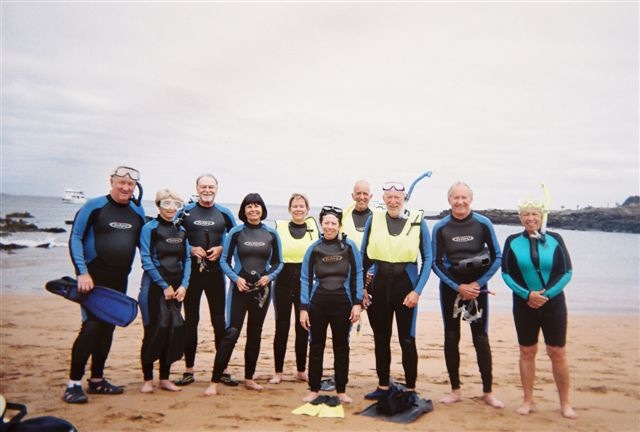
Flipping off the dingy like a scuba diver, Rod was first in the water.  Before I can slide in, he re-appears, emphatically pointing a specific location.   Adjusting my mask, I quickly put my face in the water to discover a marine iguana, feeding on some algae, and then proceeding to the surface.  Watching the creature swim was hypnotic, the spell finally broken by a sea turtle that

"The Team"

calmly passed

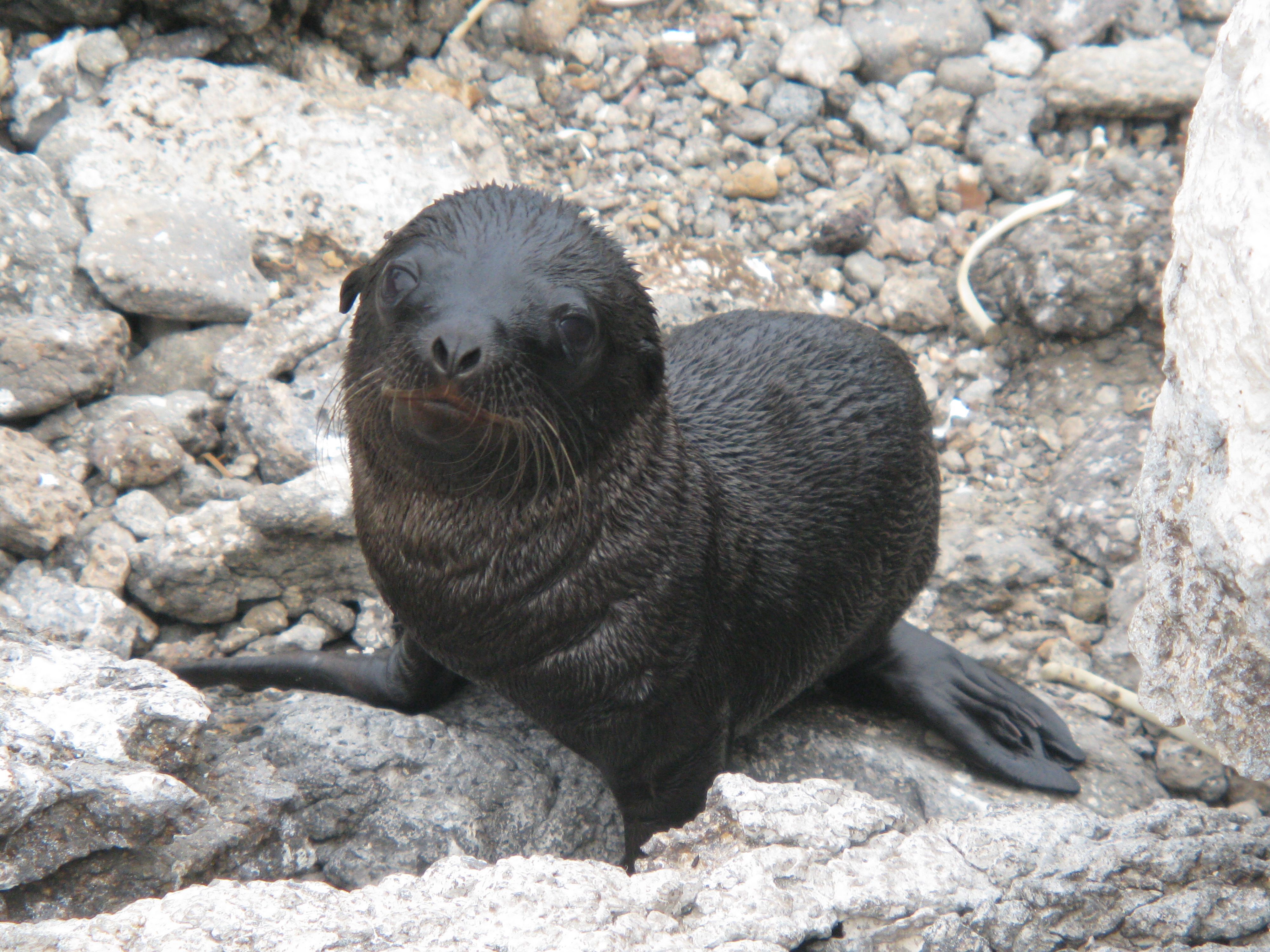
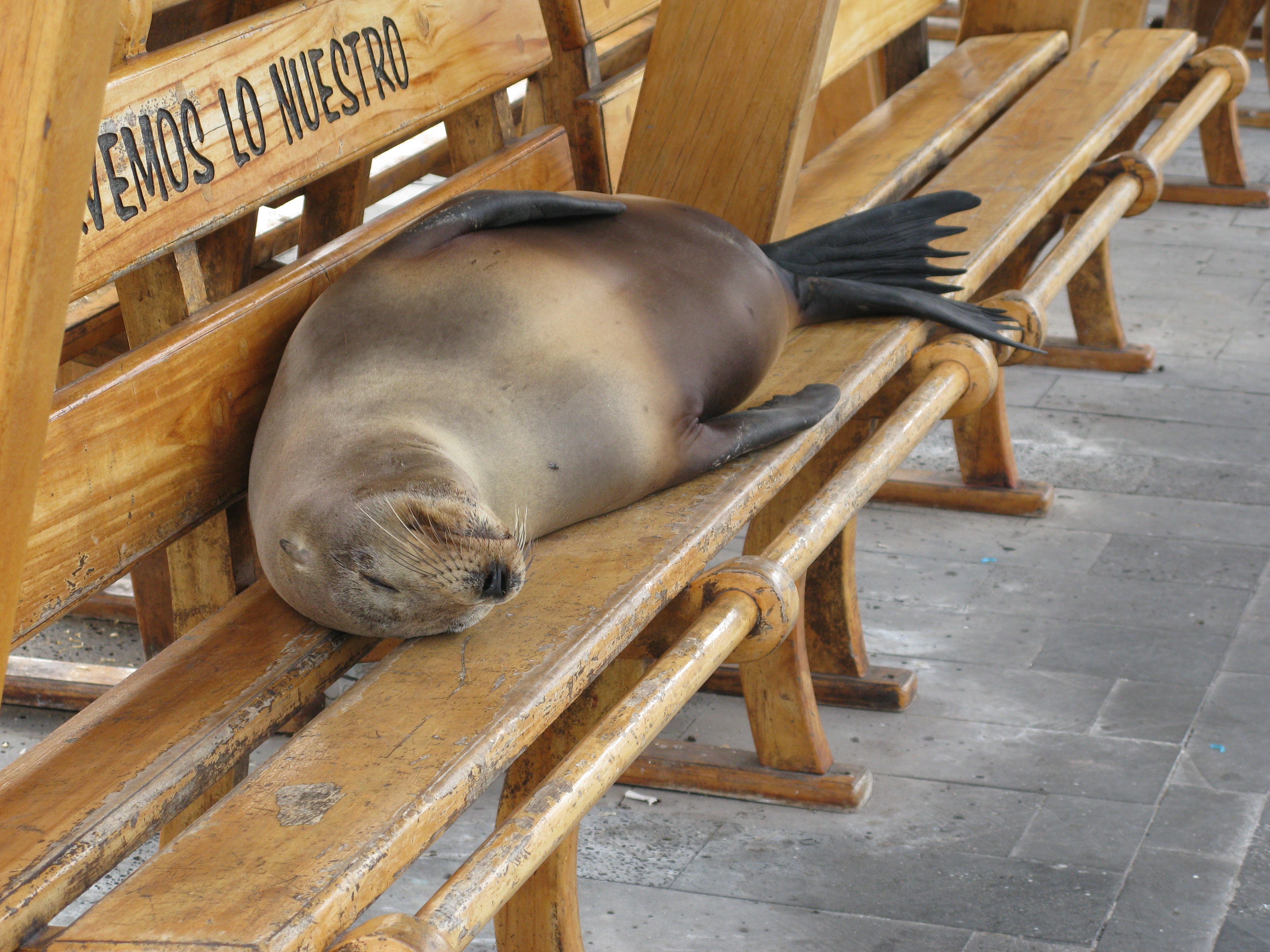
Baby sea lion

within arm’s reach.  The five of us who chose to join the first dingy dive were rewarded well beyond our expectations.  Back on the boat only to remove our wet suits, we re-boarded the zodiacs and crossed the inlet for a wet landing on Rabida Island

Gorgeous red sand beaches and a huge sea lion colony is the “cliff note” description of the small Radiba Island, southeast of Santiago Island.  A landscape of low to medium shrubs and Prickly Pear trees give a vibrant contrast to the red sand and soil.  Our first observation of the dictatorial alpha male hierarchy occurred on Rabida.  The large alpha male sea

transportation in Galapagos

lions rule their “harems” with an iron fist, against other interested males and females with a wandering eye.  Thrusting out one’s chest and yelling stridently is, apparently, required to maintain their power; machismo a bit over the top for my tastes.

On the return trip to “Carmina,” the drivers meticulously maneuvered the dingy close to the rocks of the minute Nameless Island for close observation of Blue-footed Boobies nesting on the rocks.  The resting birds did not seem to fit their air acrobatic profile on display when they were hunting fish.  Back on the boat for dinner, we set sail to South Plaza Island, a small patch of land a few hundred meters east of Santa Cruz Island that promised unique terrain and wildlife.

The 6 am rumpling of a dropping anchor signaled that we were somewhat close to land.  South Plaza Island required a wet landing because the minuscule strips of sand immediately ascended to steep rocks that we carefully crossed to reach the effervescent scarlet and yellow seauvium succulent ground cover, contrasting the dramatic Prickly Pear trees.  The trails led to steep, vivid cliffs, affording views of fierce blue-green surf and Elliot’s storm-petrel “galapagosensis,” a long-legged bird that stays close to land, accentuating its speed and agility.

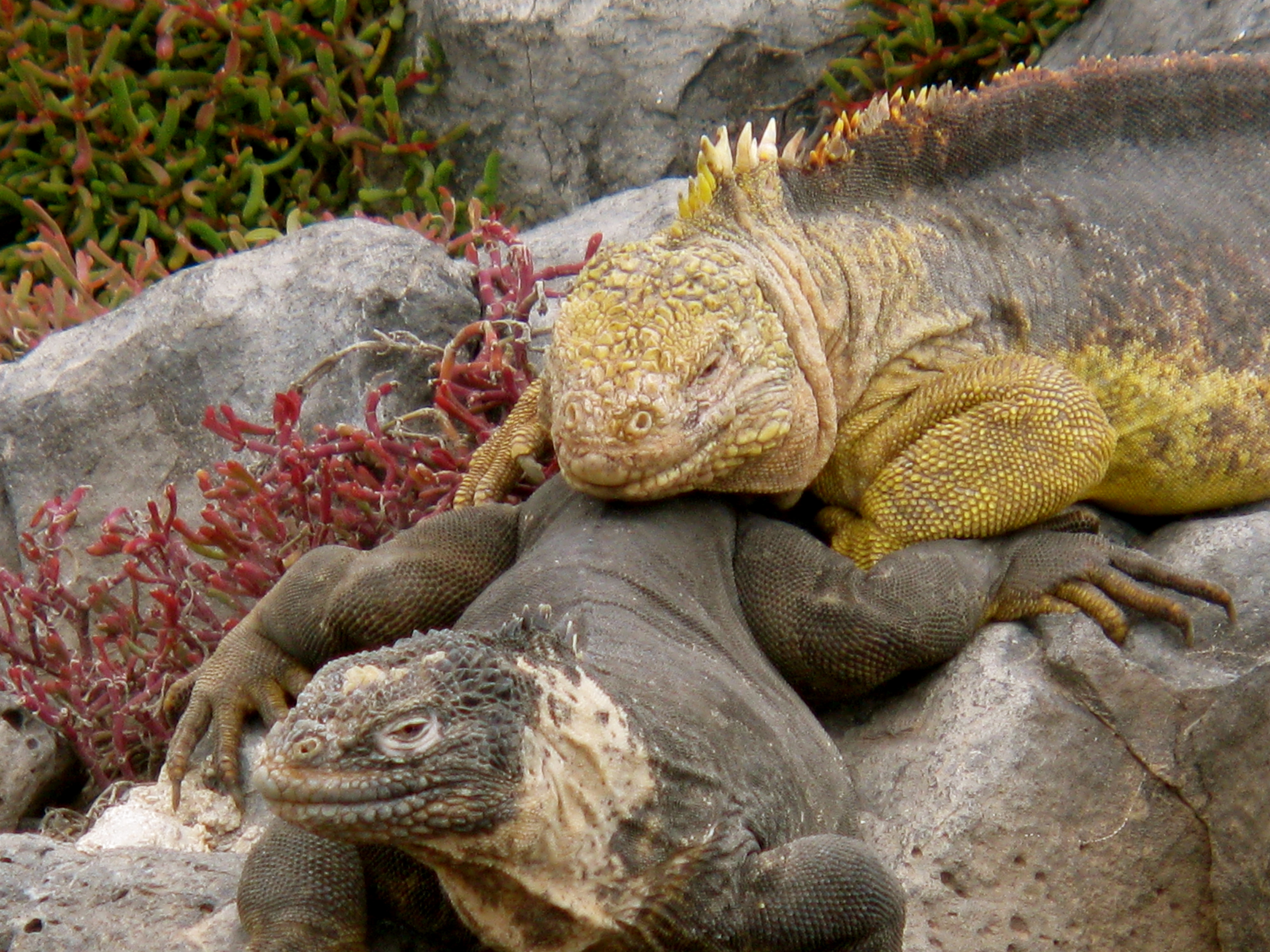
The male iguana that resides on South Plaza Island is unique, displaying lurid colors to attract females during mating season.  The ones we encountered, 2.5-3 feet in length, were

Quality time for land iguanas

bright yellow with scales resembling an ear of corn.  Karen carefully shot them from all angles, and then was rewarded when the female arrived for some quality time.  One lasting memory from this small island, thriving with life, was watching a mother sea lion and newly born pup. Pushing the pup away from the after-birth, toward the sea, she anticipated that the frigate birds would soon come in numbers for the unusual meal.  The dynamics of the whole, the acrobatic, hungry frigates, the protective sea lion mother and the pup, trying to comprehend “womb to water,” was mind-boggling to watch. Back to the boat for lunch and some relaxation as we sail to Santa Fe Island, our last exploration of this miraculous place.

Karen at Darwin Bay

Our time on Santa Fe, one of the oldest of the Galápagos Islands, began as the dingy entered the translucent waters of a small bay, leading to a wet landing on a beach with abundant sea lion activity that nearly caught one of our group in a compromising position between an angry alpha male and an unwelcome male intruder.  Amidst loud barking and some aggression by the alpha male, the situation was soon resolved as the female of interest accepted her fate.

The unforgettable wildlife of Santa Fe was beneath the ocean surface.  After a deep water entry off the dingy, we had the time to “snorkel” the bay, identifying three rays, spotted-eagle, diamond and sting, sea lions, eels, multitudes of fish and the large, graceful sea turtles methodically flying by.

Chef Roaul out did himself with a wonderful last dinner and we all had some time to reminisce.  The choppy waters, during our final sail to Peurto Baquerizo Moreno on San Cristobal Island, make us wish we had completed packing before dinner. Our bags managed to get outside the door by the 6 am deadline and we were soon on our last dingy ride to enjoy the village before departing for

Waiting for a water taxi

Quayaquill on the Ecuador coast.  The Galápagos experience was ending, the memories beginning.  We came upon more plant and wildlife imaginable, swam in its oceans and witnessed the results of volcanic eruptions.  A lifetime of activity condensed into five days.  After eating like a horse the entire trip, I returned home from Peru and Galápagos six pounds lighter. While the regiment doesn’t require one be a marathon runner, some physical preparation is required.  It’s definitely worth the gym time.


Wines and Lexus

Photos: Karen Norton


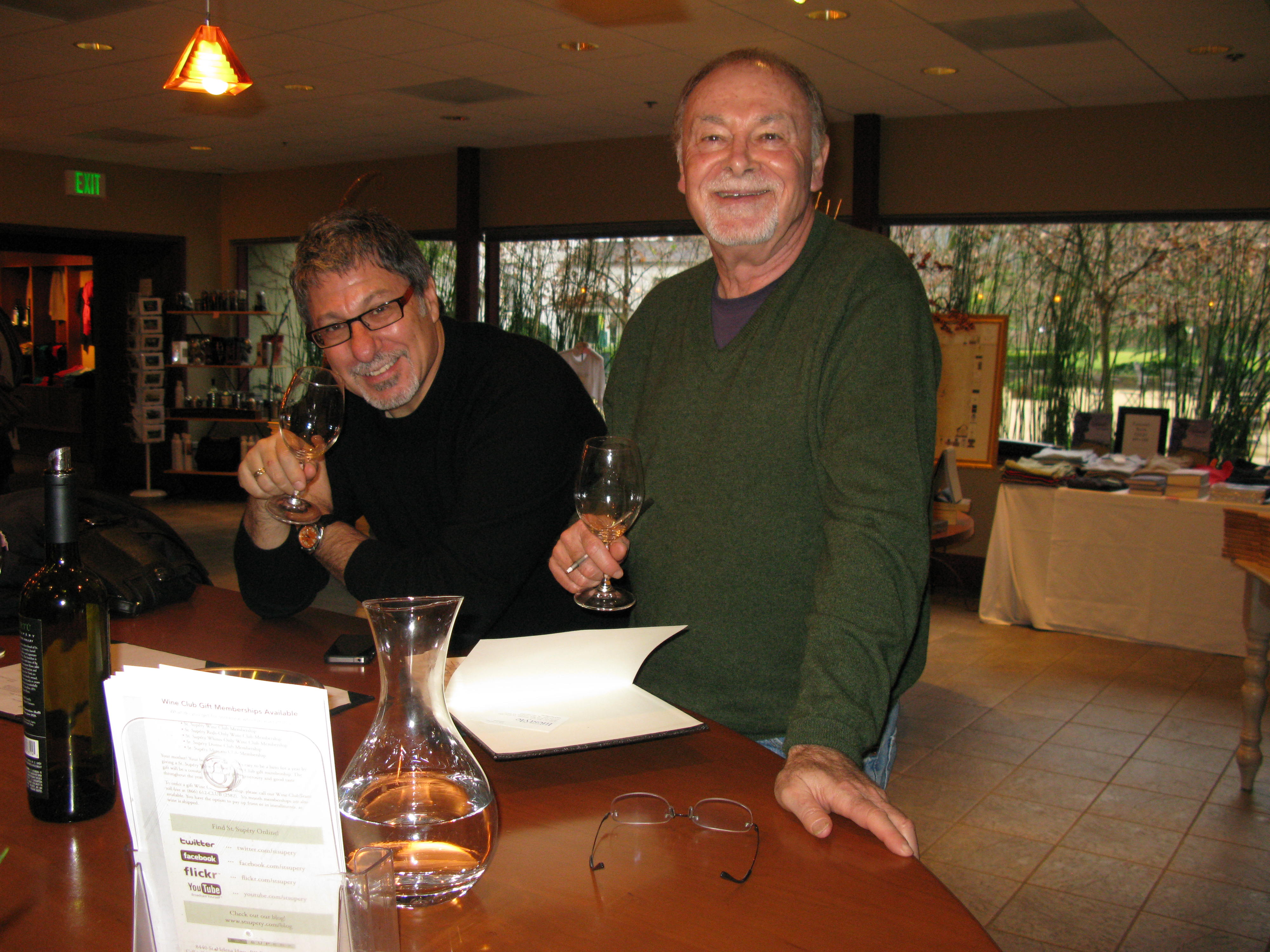
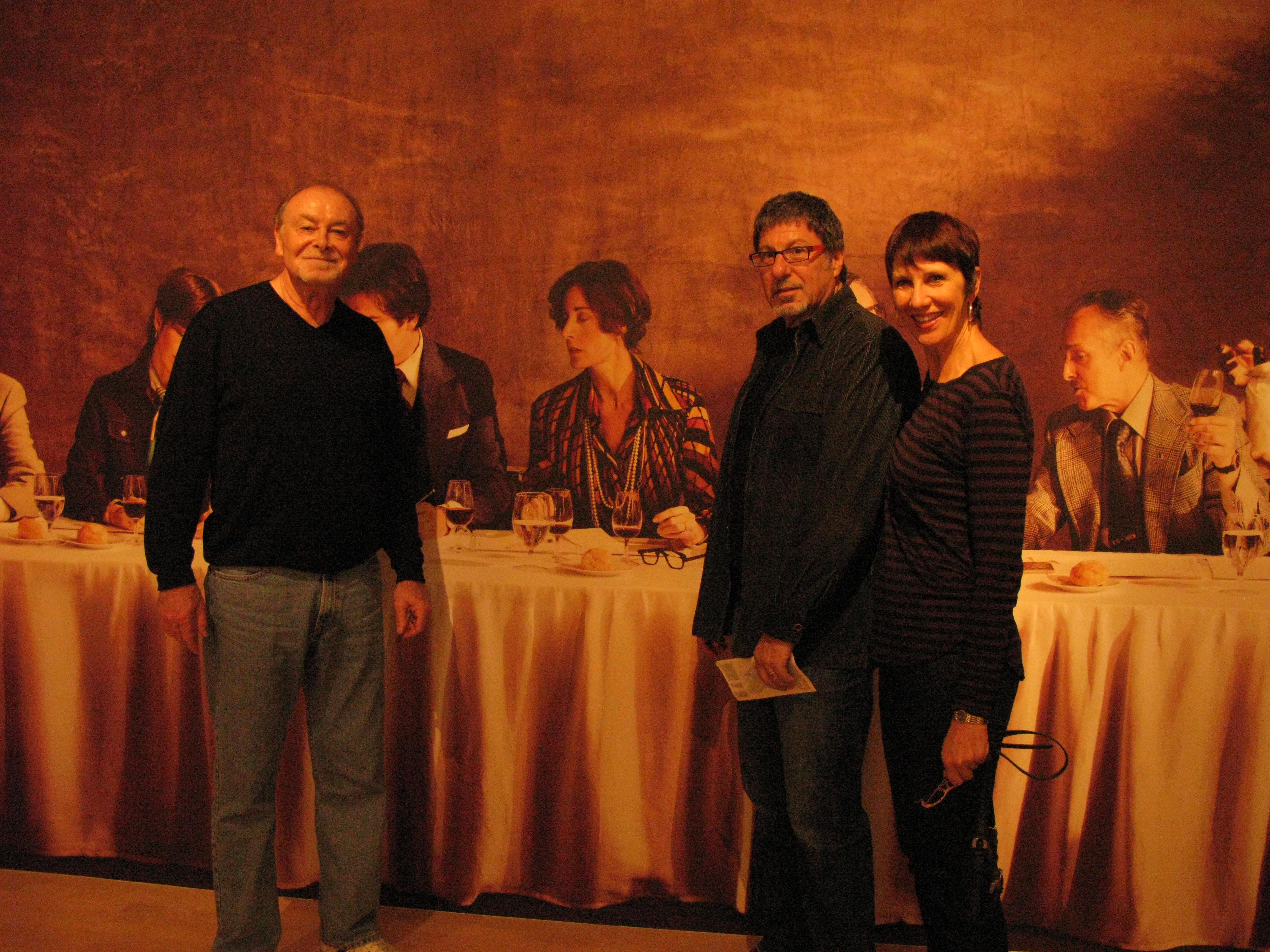
David and Lyle at St. Supery Tasting Room

Long-time friend David’s birthday was January 1st; it falls on the same date each year.  What was special about this year, other than it’s his last to truthfully avoid the big 6-0, was that we joined he and his lovely wife, longer-time friend Rosemary for a few days in the Napa Valley.  Anticipating relaxation, food and wine exploration, we were amazed by the other benefits engendered from the fact that David drives a 2010 Lexus RX450h.

Firstly, he made a call to a live person requesting directions to the Avia Hotel in quaint downtown Napa.  Moments after clarifying the spelling, a map and directions appeared on the screen of the on-board GPS system.  Uncertain of what impact the Lexus had while checking into the hotel, I am certain that David never negotiated four room upgrades at the original discounted rates before he bought the car. One-bedroom suites with fireplaces require very little discussion, a smile, and a simple thank you. It really is a beautiful car.
Lastly, aside from the comfortable ride, Lexus drivers are afforded opportunities to schedule special tastings at designated wineries.  We scanned their list and quickly chose two fine Napa Valley wineries to explore, one producing a wine included on Wine Spectator’s Top 100 List of 2010.

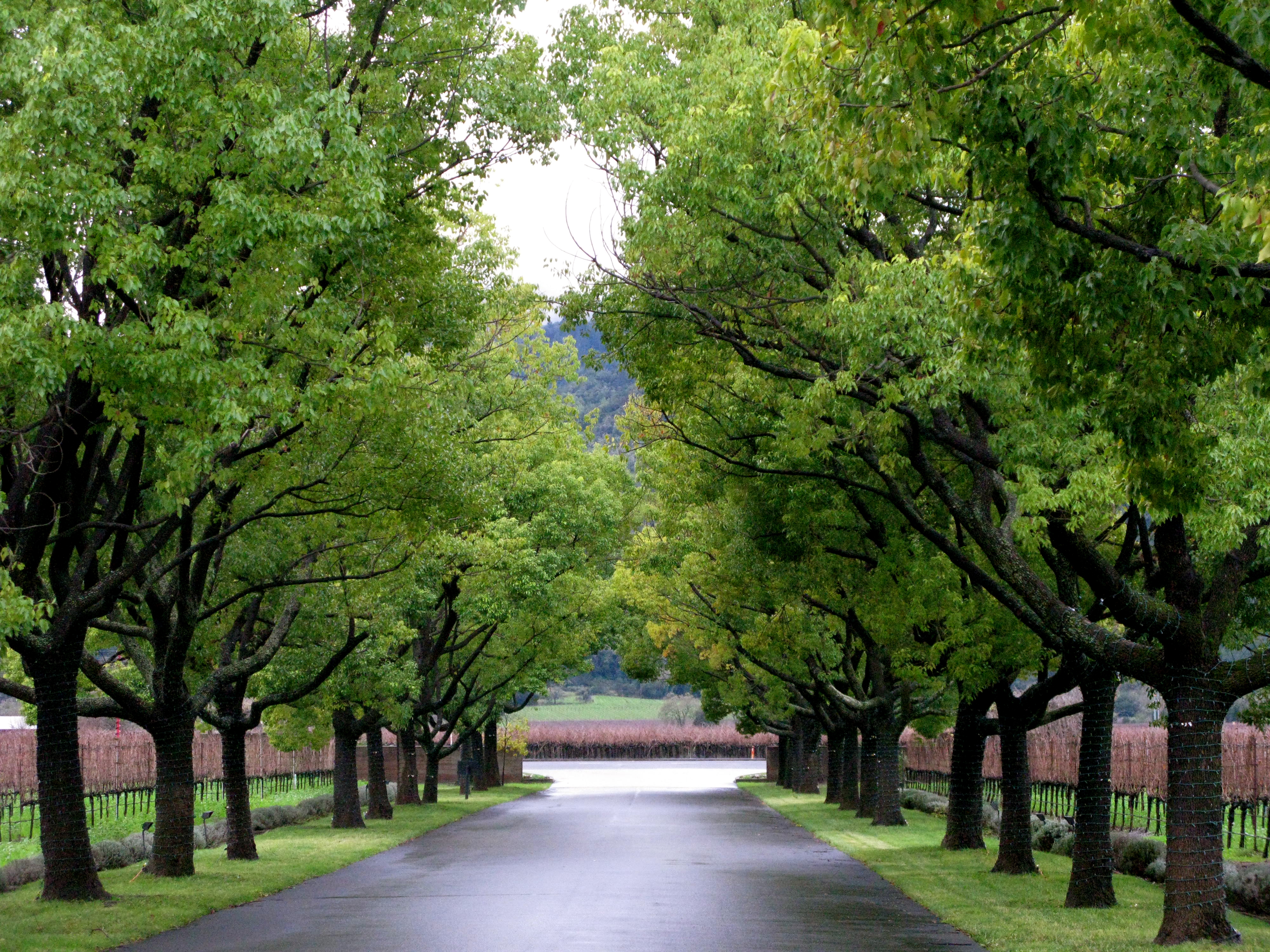
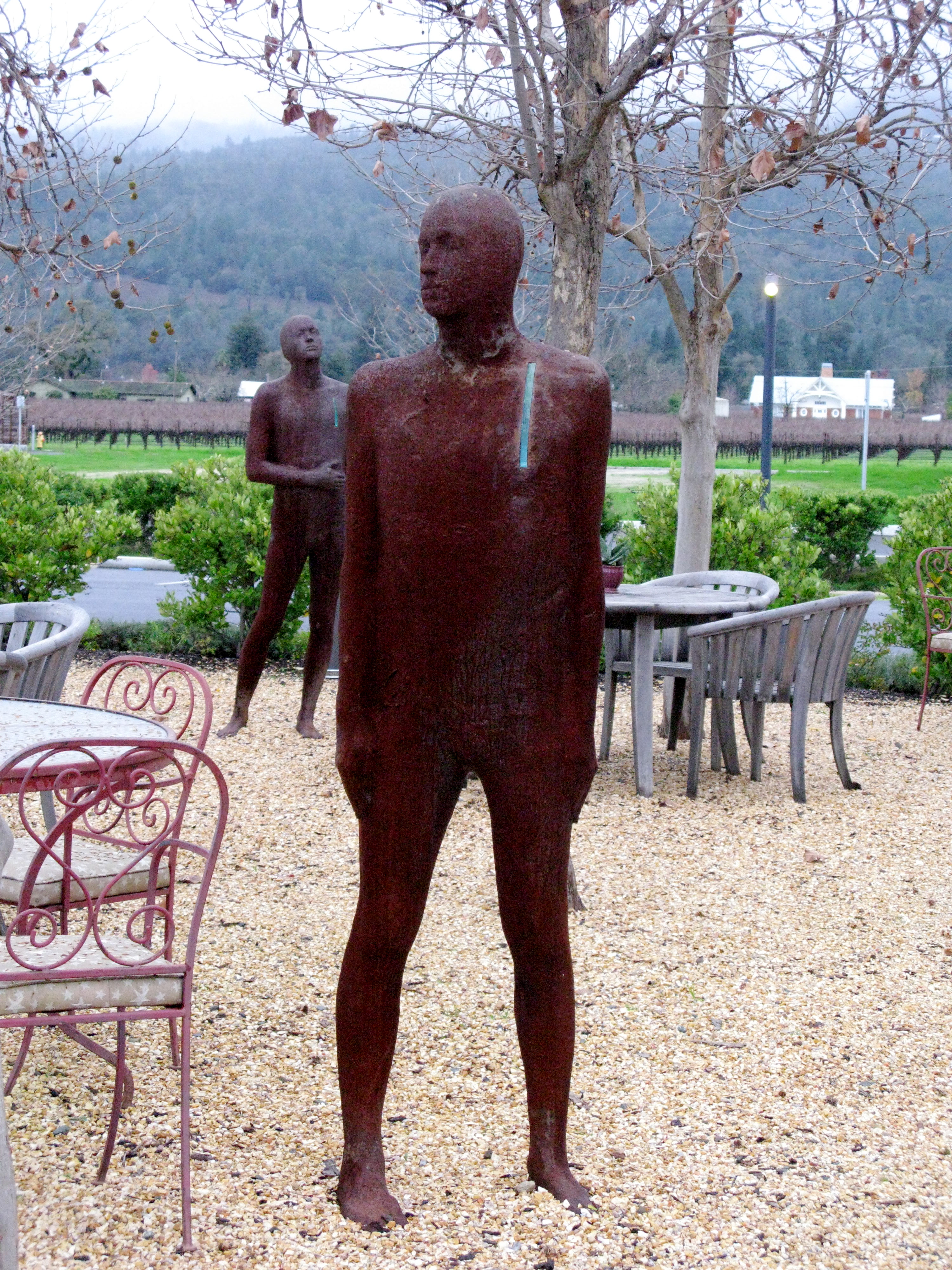
Moving through the spectacular tree-lined entrance to St. Supery Vineyards and Winery in Rutherford, surrounded by estate vineyards, one would expect to discover a French château and not a modern concrete and glass building, amid pleasingly landscaped grounds.  Once inside, the art gallery and attractively appointed tasting room were inviting to all senses.

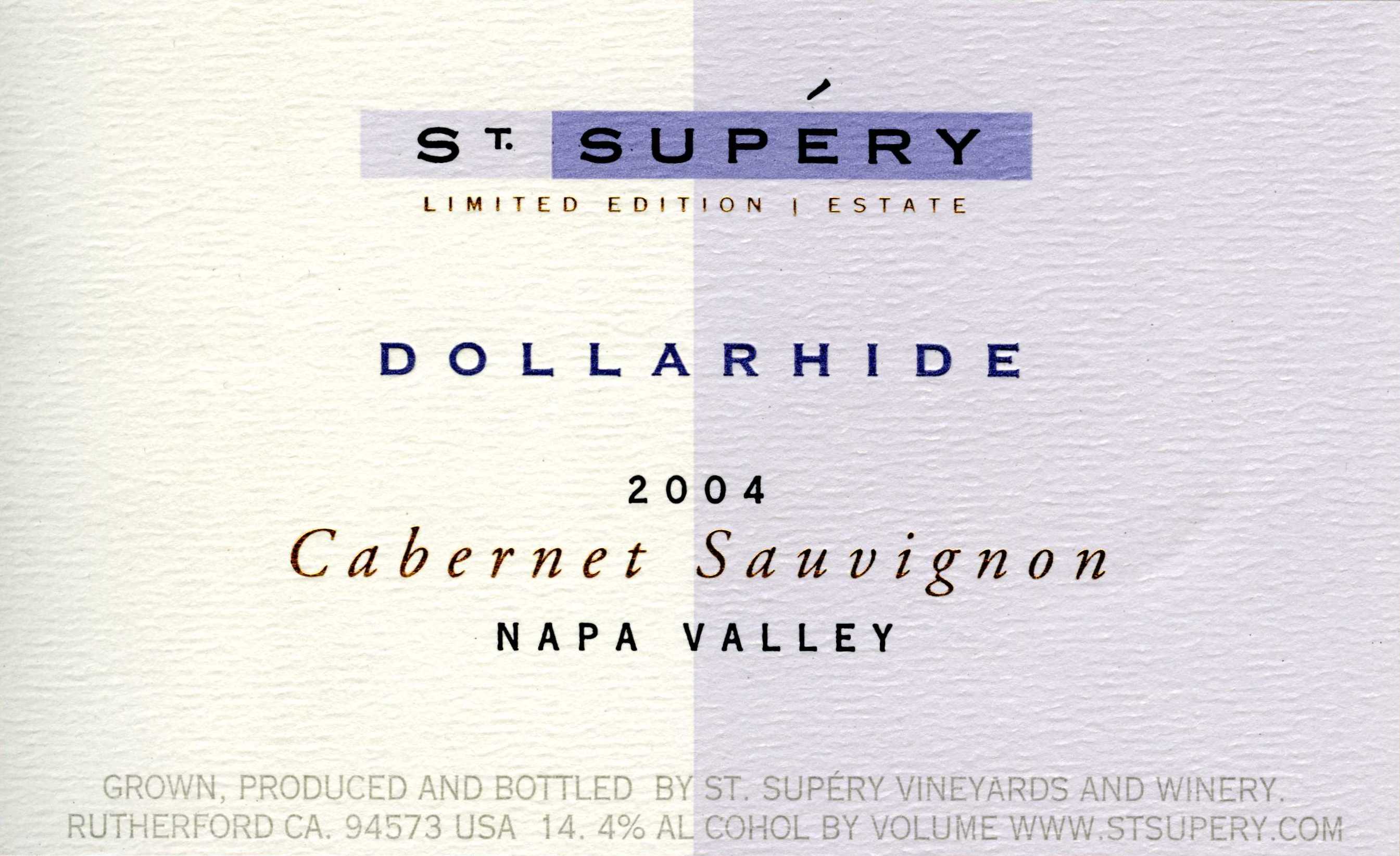
Founded decades ago, St. Supery is known for producing fine Cabernet Sauvignon and, with the addition of its Dollarhide Vineyards years later, varietals from the Bordeaux region of France.  Our tasting included a wonderful Sauvignon Blanc, two very special blends, a single varietal Bordeaux grape and a flight of exceptional Cabernet Sauvignon.

For several years, Sauvignon Blanc has served as, for many, a softer alternative to Chardonnay.  In recent years, California winemakers have opened up the limits of the grape, shaping it into a more food friendly wine and pushing it to full flavor potential.  The 2009 At Supery Sauvignon Blanc “Dollarhide Vineyard” ($25) is a good example of positive results.  Grapefruit, pineapple and other tropical fruits are evident on the nose, followed by more orchard fruits (apricot, pear) and hints of oak on the finish.

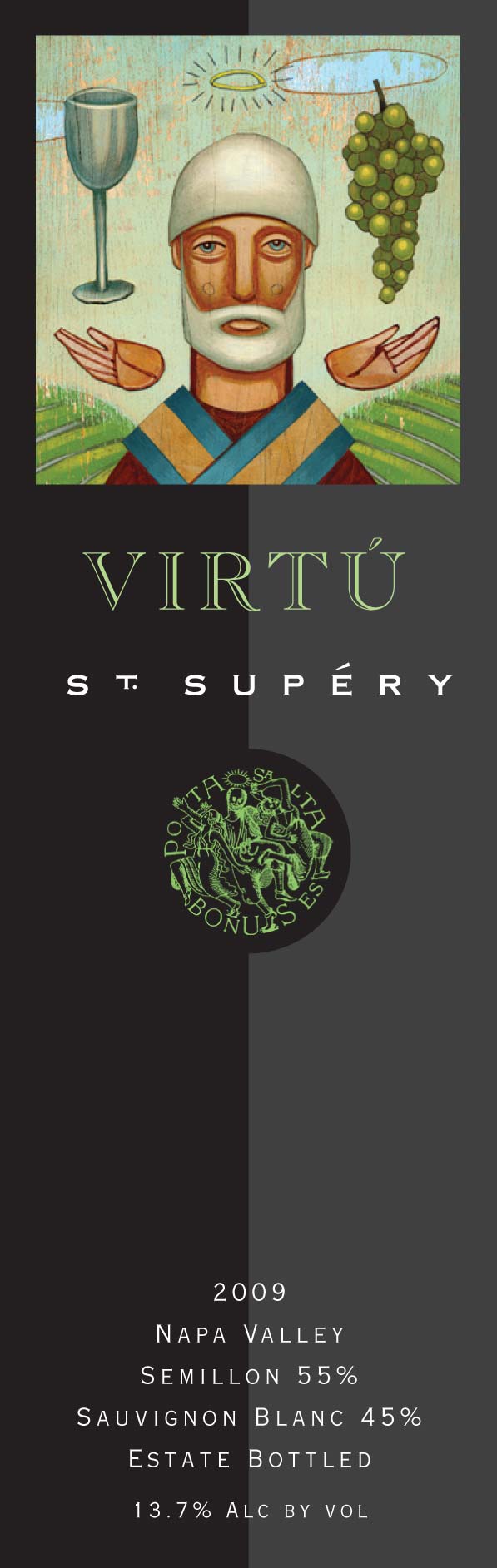
First discovering the Semillon varietal in Australian wines, I later learned that it is one of three white wine grapes approved to be grown in the Bordeaux region of France. Used sparingly in French dry blends, it’s abundant in late-harvest or dessert wines. In California, Semillon is most often blended with Sauvignon Blanc as a dry white wine.  The 2009 St. Supery “Virtu” is one such blend, beginning with orchard and tropical fruit on the nose, progressing to a wonderful texture and “smoked” flavors, combining the best traits of each varietal. This wine is a must for those interested in exploring white blends.  Unique flavors and deep textures were enough for me to add a few bottles to my collection.

As a single varietal wine, Petit Verdot is relatively rare, commonly used in Bordeaux or California meritage blends.  Although difficult to find, single-varietal Petit Verdot can express soft flavors and good texture.  When available, the Leona Valley Petit Verdot, grown locally, is one I would definitely recommend.  Enjoying a bottle with family at Christmas dinner prompted an email to Leona Valley owner David Reynolds to share the many compliments it received.  The 2007 St. Supery Petit Verdot ($50), another exceptional wine, expresses rich, concentrated flavors and oak influences. Researching the availability of this grape as a single varietal will truly spawn just rewards.

The Cabernet Sauvignon-dominant 2005 St. Supery “Elu’” ($65), a Bordeaux-blend with Merlot and hints of Cabernet Franc and Petit Verdot, near flawless with wonderful hints of vanilla on the finish, was a definite prelude for the flight of Napa Valley Cabernet that followed.

The St. Supery 2006 Rutherford Vineyard Cabernet Sauvignon($80), 2005 Napa Valley Cabernet Sauvignon($30) and the 2005 “Dollarhide Vineyard” Cabernet Sauvignon ($85) showcase all the micro-climates of their vineyards and a variety of flavors.  Firstly, the cost-effective “Napa Valley”, a blend of all the vineyards, can stand up to any other Cabernet Sauvignon within its price range and beyond. However, the single- vineyard wines expressed minerality, good tannins and significant bursts of flavors, the Rutherford adding a “liqueur-like” richness. The “Dollarhide Vineyard” version, awarded 95 pt by Wine Enthusiast magazine, expressed the most balance with a myriad of flavors to compliment the dominant black cherry.

We completed our tasting with the 2009 St. Supery Moscato, a dessert wine with low residual sugar, sweet while displaying complex aromas and flavors.  We were pleasantly surprised with all the wines that we tasted at St. Supery, equally enjoying the ambiance.  The Lexus program, by providing an opportunity to taste the best wines in the St. Supery profile, succeeded in gaining exposure to the right people.  Located along the St. Helena Highway in Rutherford, St. Supery is strongly recommended as a stop on your next Napa Valley excursion.

Sculpture at Hall Winery

Located a few miles north along the highway in St. Helena is Hall, a winery with an impressive palate of wines including one Cabernet that has recently received some accolades.  A desire to taste the 2006 Hall Cabernet Sauvignon Napa Valley ($40) and the fact that the venue was part of the Lexus catalogue simplified our decision to stop.

The most reasonable priced Cabernet Sauvignon on the WS 2010 list; the 2007 “Napa Valley” is a full service wine, expressing pungent aromas, complex flavors, great texture and the obligatory long finish.  Ill-conceived or not, their story of looming scarcity of the wine was believable, prompting me to purchase two bottles for the cellar.

The highlight of the Hall tasting was comparing a flight of three bold, luscious and pricy single-vineyard Cabernet Sauvignon, each with unique attributes and accolades.  From their Artisan Collection, the 2006 Hall Cabernet Sauvignon Hall T Bar T Ranch Vineyard ($45), with a touch of Petit Verdot, expressed an earthiness in both bouquet and flavor.

Hints of Malbec, Petit Verdot and Cabernet Franc add to the aromas and complexity of the 2006 Hall Cabernet Sauvignon Bergfield Vineyard ($100), a full-bodied, fruit-forward wine with firm tannins, destined for greatness.  The Bergfield Vineyard in St. Helena has a long history in the Napa Valley and this wine only accentuate its reputation.

1976 Paris Tasting

The last wine, an opulent 2007 Kathryn Hall Cabernet Sauvignon ($80), has received rave reviews in all the major wine periodicals.  With 4% Cabernet Franc added, the “Kathryn Hall” is dense, rich, but soft with innumerable flavors including that of licorice.  It was hard to pass on any of these fine wines, especially the “Bergfield”, but snagging a few of the last bottles of #18 on the 2010 WS list was adequately consoling.  Hall is a flourishing winery, one that will no longer be overlooked by any wine enthusiast.

Happy Birthday, David and much appreciation to your new Lexus for opening new doors in the noble Napa Valley to unearth yetKaren, wife and photographer more distinguished vintages to taste, even if most are beyond our budget.


Cooking with Chef Moreno


The village of Varenna, along the shores of Lake Como in northern Italy, is possibly the most peaceful and authentically beautiful place I have ever seen.  The huge lake, at the base of the Swiss Alps, was glass-like except for the occasional wake of a water taxi taking passengers to Bellagio, the stunning gardens of Villa Carlotta and other points north. Another lasting memory of this area was the opportunity to make gnocchi, risotto and other dishes with chef Moreno Maglia, owner of Il Caminetto Ristorante, in the rugged hills above the village.

The success of Il Caminetto Ristorante is based upon reputation, not walk-in traffic.  In fact, the only way that you can, or would want to get to it is to be transported and returned to the village in a van or taxi. The narrow, winding road up to the site would not be something that anyone but locals could manage; two-way traffic on a one-way road that requires the sound of a horn to warn potential on-coming automobiles of your presence.  My advice is to close your eyes, think about great food and pray that you’ll make it, both up the hill and down.

“Please speak slowly, my English is like my pasta, homemade” cautioned the chef after a barrage of questions about his cooking philosophy.  He finally offered, “few rules, more passion” which was the first indication that we needed a sharp pencil, plenty of paper and enough power for the video camera.  We arrived within minutes, greeted by a cappuccino, biscotti and the menu for today’s class:  Pancetta-wrapped Pork Sirloin, Gnocchi with Gorgonzola Sauce and Risotto with Strawberries and Balsamic.  What follows are not recipes, but my best recollection of the class to, hopefully, stimulate your improvisational cooking skills.

Proclaiming “everything in moderation,” Chef Moreno trimmed some and left some fat on a gorgeous pork sirloin.  After seasoning with Kosher salt and ground black pepper, he cut several two-inch deep slices that were filled with fresh rosemary twigs before preparing a fresh rub, consisting of finely chopped lemon zest, rosemary, thyme and marjoram.  The herb mixture was then spread on the sirloin, pressing it in for complete and even coverage.
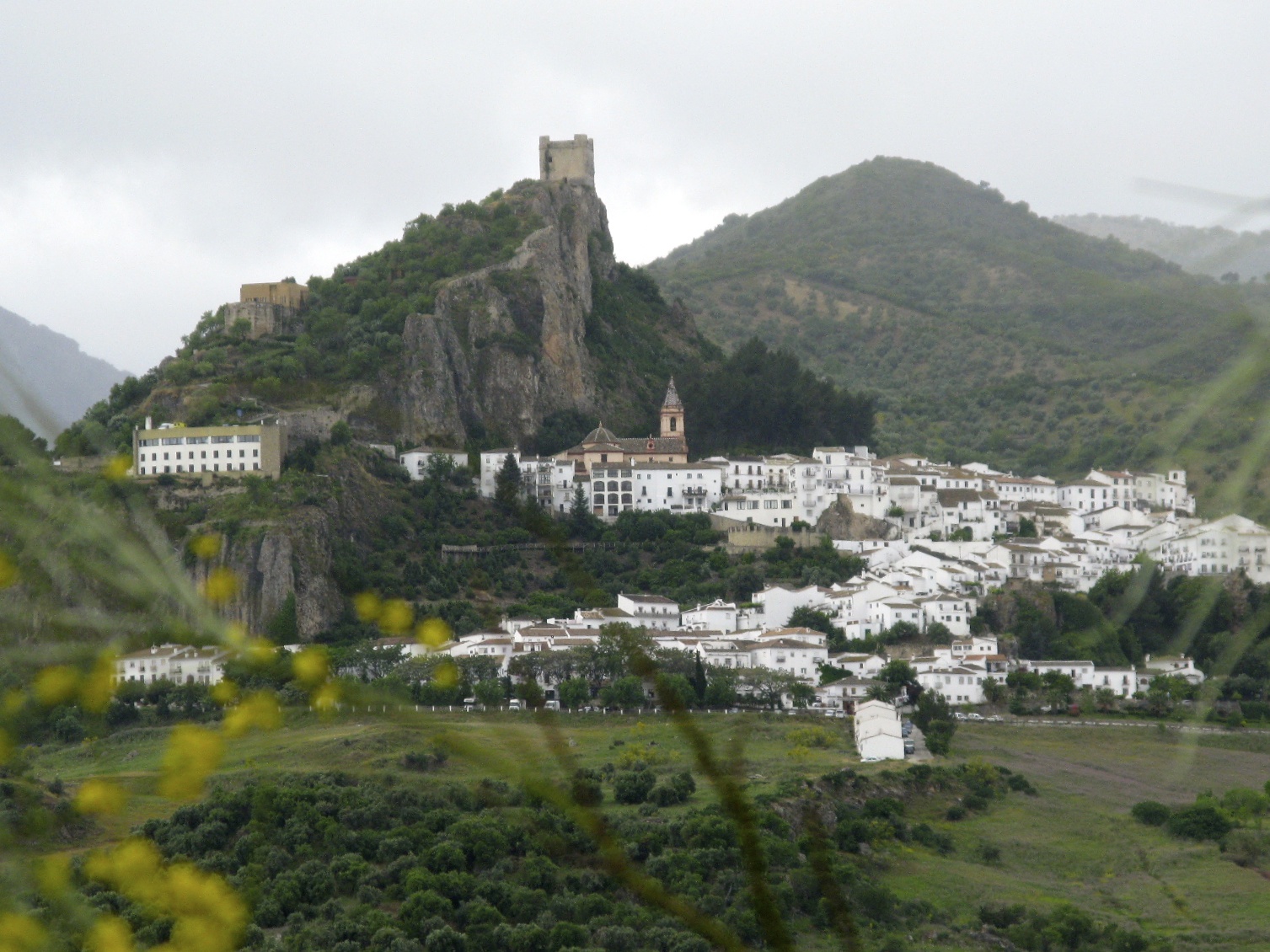
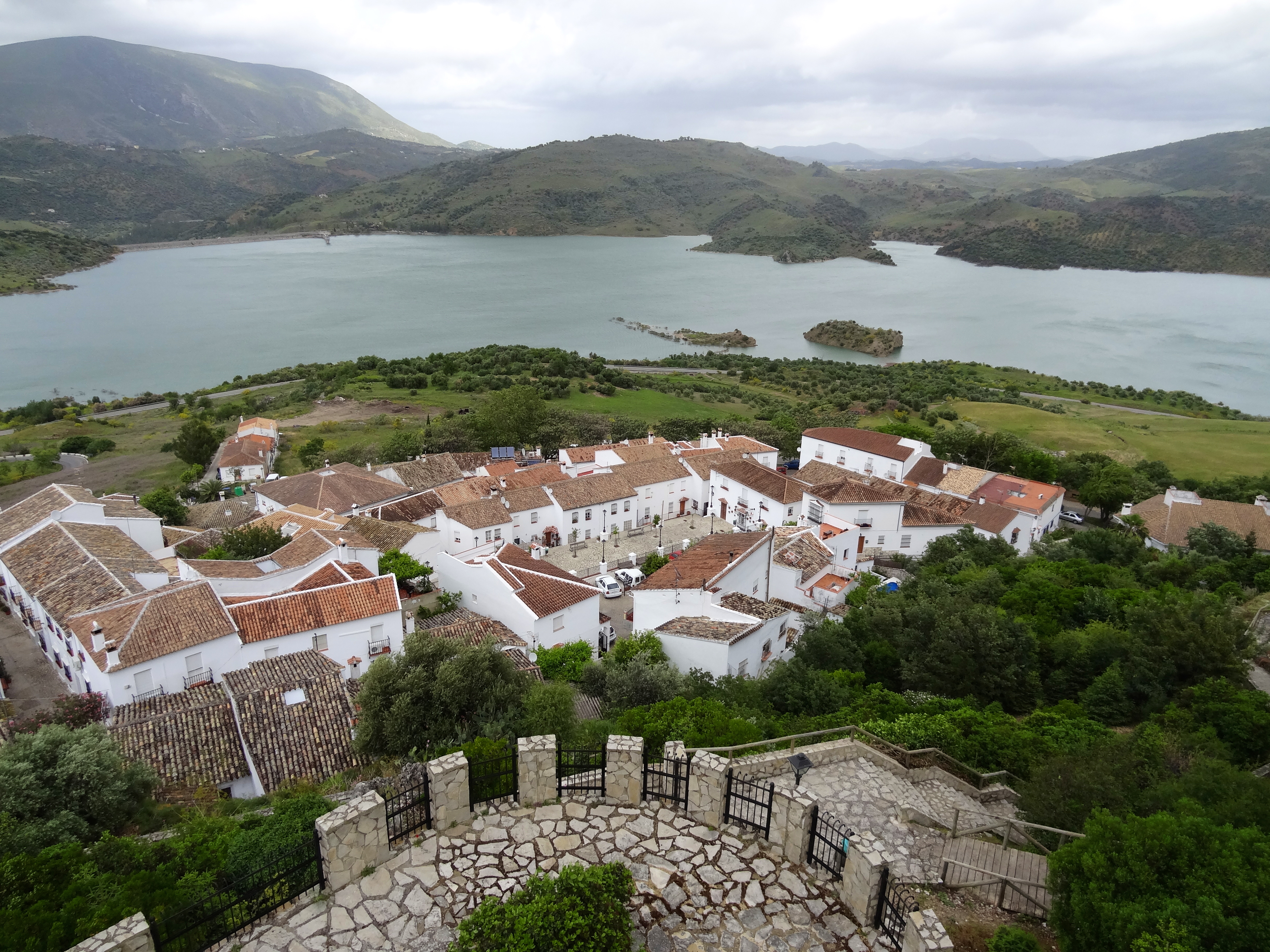
Warning us not to be “skimpy,” he then wrapped the entire upper sirloin with 1.5 lbs. of pancetta, which is Italian bacon that is cured, seasoned and dried for several months.  His pancetta was thicker than most commercially found in stores. True “foodies” can have it cut thicker at butcher shops.  After the rub and pancetta wrap, the sirloin was wound tightly, 8-10 times with string and set aside while the bed of vegetables was prepared.

The vegetables, consisting of leeks (tops only), cut in ½ inch pieces, sliced carrots, onions and celery are mixed with good extra-virgin olive oil and, for those inclined, some of the trimmed fat from the meat. Then the pancetta wrapped pork is laid atop the vegetables and trimmed fat.   After adding 2-3 large glasses of dry white wine to the pan, it is roasted on all sides for an hour and a half at 375 degrees, turning two times, finishing with the pancetta on the top.  When the wine reduces, Chef suggests adding 3-4 glasses of beef or veal stock and, if it begins to dry out, covering with foil.  With the sirloin comfortably in the oven, protocol requires a glass of Rosso di Vatellino Vendemmia Nebbiolo 2006 or other suitable Italian red wine before moving to the gnocchi.  We all agreed that it was 5pm somewhere.

Adding 4 tbsp. white flour, 1.5 litre cold water, a pinch of salt and black pepper to the vegetable mixture, then skimming with a level wooden spoon before straining can make a simple pork loin sauce.  As Chef Moreno tossed out the vegetables for chicken feed, we thought it smelled good enough to eat.

Gnocchi (“noki”) is a dumpling-like, potato based pasta served in most fine Italian restaurants. Our next task was to prepare fresh gnocchi from scratch by first boiling 2.5 lbs. potatoes, with skins, until there is some resistance with the knife, then gingerly peeling them (NO FOOD PROCESSORS ALLOWED) while they are still hot enough to burn your fingers.  Where’s the sous chef?  Oh, I guess that would be me.  Once peeled, the potatoes are shredded through a “potato ricer”, available at gourmet kitchen shops.  I found mine at Williams-Sonoma in Pasadena for $32. Chef Moreno warned that if the ricer is not put into cold water immediately after use, it might be the last time it is usable. Apparently, hot water can actually cook the residue into the device. A generous portion of freshly grated parmesan or other “grana” cheese and 3 oz. of flour is added to the potatoes before the kneading process begins.  Hopefully, the potatoes have cooled off a little.

The next step is to knead together the potatoes, flour and cheese into a big ball.  Once the dough is ready, it is separated into 1-½ inch balls that are set-aside for a few minutes.  After spreading durum flour on the cutting board to help shape the dough, the gnocchi balls are gently rolled inside out, using spread fingers, into sticks approximately 18 inches long.  Impressed with my “gnocchi rolling” skills, Chef asked if I was an engineer, stating they usually perform well during this stage of the process. After answering in the negative, I became more determined to out do any engineer, past, present or future.

Once the sticks are cut into one inch pieces, they begin to look, with one exception, like the gnocchi you see in restaurants.  The exception is the trademark serrated edge that is the most delicate, yet difficult part of the entire process. Each little gnocchi piece is held with two fingers and softly, but quickly slid along a fork to make the serrated edge.  In teaching this step to students, Chef encourages them to say “shut up” as they snap the little gnocchi ball across the fork.  I guessed that it was some type of rhythm thing, but it seemed to work.

Using a large spatula, the gnocchi is then moved onto trays for inspection before putting them into boiling water for the brief cooking time.  If they are too dense, you have used too much flour.  The little balls are then cooked in boiling water until they rise to the surface, ready to eat.  They’re best eaten right away or the same day. If you must make the gnocchi the day before serving, put them into a plastic bag with a little olive oil and refrigerate.  The next day, re-boil in salt water until they rise to the surface.  Since we generally don’t eat pasta without sauce, there is one more caloric step in the process.

The sauce for the gnocchi combines sliced leeks (white stems only), Gorgonzola cheese (3 tbsp for 4 portions), extra-virgin olive oil and one cup heavy cream.  Cook the leeks over medium heat until they become translucent; add cream, black pepper, then the cheese.  The reduced sauce is ready when it coats the spoon.  Pour the sauce over an individual bowl of gnocchi and enjoy, preferably with another glass of wine.

Although, it would be too heavy to add risotto to a meal of pancetta-covered pork sirloin and gnocchi, the rice mixture can be paired with a fresh salad for an exceptional Italian meal. Cooking risotto, for most amateur chefs, falls into the category of “easier said then done.” My attempts usually become too soft and sticky or too crunchy. Hopefully, Chef Moreno can help me to improve and impress my friends with Risotto with Strawberries and Balsamic.  He said that a good start would be to use Carnaroli or another quality brand of rice.

To prepare this dish for four portions, Chef recommends 11 oz. rice, 3 oz. unsalted butter, 4-5 strawberries, 4 tbsp. balsamic vinegar, 2.5 litres of vegetable stock and 2 oz parmigiano-reggiano cheese.  Start by melting one tbsp. butter in a shallow pot, then add the rice, pushing down with a wooden spoon and toasting until shiny.  Secondly, add the vinegar and reduce, then add already hot stock. Next, add the strawberries, cook for 18-19 minutes, adding more stock as the mixture gets dry. Finally, add 2 tbsp. butter, the cheese and black pepper.

Chef Moreno’s risotto was not too dry, not too “mushy” with balanced flavors, none over-powering the other.  With his lead and some practice, we can, eventually master the art.  However, like a good wine, we will need time.

This was one of our most memorable days in Italy.  Chef Moreno is both knowledgeable and charming and his family’s history with the stone building restaurant and inn (circa 1785) is almost beyond comprehension.  The next time you are in Varenna, contact him at +39-0341-815-225 or info@caminettoonline.com for a culinary experience and a ride up and down the hill that you soon won’t forget.

The following evening, just beginning to think about food again, we found a great menu in the restaurant at the Hotel Villa Cipressi, overlooking the lake.  Who knew that, after traveling through Rome and Verona, our top culinary experiences would be in Varenna, midway up the shores of beautiful Lake Como. If this is not paradise, it’s close enough for my taste.


The Real Rhones

by: Lyle W. Norton

Although our trademark is single varietal releases, we still describe California wines in terms of French regions. Our Bordeaux-style blends are called Meritage and come mostly from the Napa Valley, our Burgundian wines from Sonoma, Santa Barbara and the Anderson Valley and, lately we have all discovered and hailed the great Rhone-style blends from Paso Robles. Last month, I got a taste of authenticity and some very good wine as we toured the Vacqueyras, Gigondas and the Chateaunef-du-Pape appellations in the Rhone Valley in southeast France. As a bit of perspective of the history of winemaking in this region, we tasted a red blend that the family called “1717” in honor of their first vintage, nearly 70 years before our Constitutional Congress.

Heavily regulated by the “Appellation d’ origine controlee” (AOC), serving to support a high quality standard, the region permits the planting of only 13 varietals, regulates blend percentages in certain appellations and even the soil type in which each grape can be planted. The character of the Rhone Valley, steeped in centuries of fine wine making tradition, has not only passive charm; it’s the authentic passively charming place that we try hard to replicate in the U.S. wine regions. Although, everyone understands that the “mistral winds” are ever-present to provide some healthy stress to the tranquility.

The blends differ from appellation to appellation in the Rhone Valley, but none step beyond the boundary of the permitted grapes that include mainly reds like Syrah, Grenache, Mourvedre, Cinsault, while Viognier, Marsanne, Rousanne and Grenache Blanc mostly represent the white varietals. The cooler northern Rhone sub-region produces only Syrah exclusively as a red wine and mostly Viognier as a single-varietal white. Experiencing a more Mediterranean climate, southern Rhone creates the famous blends, specifically regulated in each appellation.

As for our experience, facing time constraints, my wife’s ongoing wish to visit Roman ruins and the need to explore as much as possible, an investment in some time efficiency was in order and we arranged for a small tour with a local company, http://www.provence-panorama.com, promoting a very personalized experience in three appellations: Vacqueyras, Gigondas and the king, or more appropriately, the Pope of all areas, Chateaunef-du-Pape “New Castle of the Pope.” History tells us that in 1308, the papacy was relocated to Avignon and the Popes soon fell in love with the local wines. One, John XXII, became specially enamoured with the area a was responsible for building the famous castle seen in photographs.

Our chauffeur and local wine expert, Emily Molins, met us at the downtown Avignon Tourist Office, a few steps from our apartment and our adventure began with some history of the city before picking up Travis and Marion from Mercer Island, outside of Seattle and Greg and Trish, visiting from Melbourne. The small group had a healthy knowledge and appreciation of wine, all anticipating new discoveries as we left the Medieval-walled city and followed the mighty Rhone River up to Vacqueryras and our first estate.

Vacqueyras

The Vacqueyras appellation, overshadowed by Chateaunef-du-Pape and even Gigondas, is known for powerful wines; the bulk of which are red blends featuring grenache, syrah, mourvedre, cinsault, muscardin and counoise. The area boasts 1,300 hectares (hectare=10,000 square metres) and a history beyond comprehension. Our first stop was the Vieux Clocher estate, operated by the Arnoux and Fils family and our first wine was a rare white blend of primarily grenache blanc and clairette. The French use stainless steel and not oak in the production of white wines. The result is a balanced citrus flavors following a nice bouquet of wild flowers on the nose.

The flight of red blends began with the 2009 Vieux Clocher “Recolte”, a grenche/syrah/mourvedre blend that serves as their most accessible wine in both price and taste. This “collection” of certified Rhone grapes had an impressive nose and soft flavors soon to be overshadowed with escalated richness as we proceed up the flight to their premium wines. Old vines generally produce smaller yield and more concentrated, rich flavors, the reason we often see it promoted on many labels. The Vieux Clocher Vacqueyras Seigneur de Lauris 2005, awarded 90 points from Robert Parker, proved to be the steal of the day, expressing deep, rich flavors for about $20. Consistently compared to those produced by their neighbors, Gigondas and Chateaunef-du-Pape, I found, in this 70%grenache/30%syrah blend all the depth, balance, structure and flavor expected from wines twice the price. Although this wine can stand up to rack of lamb and other meats, we paired my bottle, later in the apartment, with an assortment of cheeses, meats, eggplant ragout, bread and some fine jazz piano.

The tasting concluded with the very soft, complex Veiux Clocher Jean Marie Arnoux 2009 and the before mentioned “1717”, their top wine whose 3,500 annual bottles first spend 26 months in thirsty oak barrels. The “1717” was a classic Cotes de Rhone Cru, born from grenache, a personal favorite of all French grapes; bold but balanced. In the end, I could not pass up great quality at a value price and purchased a bottle of the “Seigneur de Lauris”. Believe me, if I could have determined a conveniently plan to transport it back to the States, I would have bought more. As the glasses were distributed, Emily commented on how rare it is for each guest to grasp it properly, by the stem. This is a group that knows what they’re doing and is ready to move deeper into the Rhone.

Gigondas

The Gigondas appellation consists of 1,030 hectares and is unique in that no white grapes are permitted to be grown and the red blends, known for their boldness, all consist of 80% grenache, 15% syrah and 5% mourvedre. It was charming French countryside encased in vineyards and establishments such as Caveau des Gormets Restaurant Vignerum, who hosted hors’douves and some tastes of local vintages. The flight of wines, all very good; all very bold, were poured into black glasses, a tradition in blind tastings to disguise the age of the wine, lightening in color with time. Enjoying the atmosphere, we could have spent the afternoon on the patio. However, anticipation of visiting Chateaunef-du-Pape, the patriarch of all southern Rhone appellations, was overpowering and we were soon heading to our final destination.

Chateaunef-du-Pape

While the heritage of this wine region is entwined in 12th Century papal history, its winemakers uphold tradition while continuely evolve to meet the demands of global markets. Although the cultivation of all 13 grapes, is permitted, there is a definite trend to concentrate on the red blends that feature the multi-dimensional “terrior” of the appellation. A tasting at Ogier Depuis, founded in 1859, highlighted the impact of soil in creating distinctive wines.

The soil has always been credited as a key component in the development of good Rhone blends. Ogier Depuis serves as an indoor, outdoor classroom allowing one to sensually experience it firsthand. The four distinct soils of the region were on full display in a small demonstration garden on the property, mostly “river rock” (60%) retaining the heat that allows Grenache to flourish. Poor draining “limestone” (20%), clay-based “sol” (15%) and red sandstone (5%) complete the “terrior” palate. Our flight of red blends to taste were specifically selected to feature the attributes of the dirt. But first, as I have learned from California Rhone-style winemakers, before focusing exclusively of reds, we must start with a white blend.

Earning a 91 pt. rating from Robert Parker, the Clos de l’Oratoire des Papea Chateaunef-du-Pape Blanc, from river rock soil, had multiple concentrated flavors of flowers, orchard fruit and melon, clearly of well-ripened stock. This wine would stand up well to chicken or fish. Our flight of vintage 2007 red blends from various “terrior” within the appellation opened the door to experiencing the “true” Rhone blend, beginning with the 2007 Galets Roules Caves du Pape.

Representing the “river rock” soil type, the Terrior Galets Roules’ Caves du Pape was a soft, accessible wine, expressing very full nose and flavors. From the limestone soil “terrior,” the 2007 Terrior Eclats Calcaires Chateaunef-du-Pape, a very good wine, was fully ripened and jammy, benefitting from some daily heat. So highly concentrated, the 2007 Terrior Safres Chateaunef-du-Pape displayed a liquer-type intensity and richness to its flavors. By comparing differences, it was easy to celebrate the similarities in these wines: full flavor and nose, balance and richness. As always, there was one wine that caught my attention.

My personal favorite of the Ogier Depuis tasting was the 2007 Ogier Caves des Papes Terrior Gres Rouges Chateaunef-du-Pape. After a very perfumed bouquet, expressed hints of smokey flavors blended with those of dark berry and fig. Well-rounded and highly concentrated, the velvety texture motivated my palate to “flag it” as the one.

With many grapes to blend and many terrior to select from, a good question about their winemaking technique is “when to blend?” The answer is immediately prior to the aging process. They let them grow old together. Having recently acquired a bottle of a single-varietal 2009 Bonny Doon Cinsault, a consistently good Rhone blending partner, I inquired about its value. Apparently, it is very fragrant, dry with concentrated juice and usually pocesses a long soft finish. One can overlook the insignificant color and the lack of tannins for a long, soft finish.

The qualities of our last wine, the 2007 Clos del Oratoire de Pape, has received attention of Robert Parker and Wine Spectator magazine who awarded it 91 points. Grenache-based with hints of Syrah, Mourvedre and Cinsault, this vintage was earthy and very fruit forward, concluding our tasting on a terrific note. A quick ride to the remains of the 14th Century castle gave us all, especially my wife, a historical perspective of the region, not to mention a panoramic view. As the sun faded, we were reminded, once again, that the “mistral winds” have a daily presence and impact to each vintage.

Although we barely scratched the surface of all the great Rhone blends, the tour provided opportunities to view barrel rooms, visit with the winemakers and enjoy the fruits of their labor. Our guide, Emily and her assistant,Erick, were very knowledgable, not only of the local area, but with fine wines of the world. Those interested can register at the Avignon Tourist Office or phone them direct at +33(0)4 90 29 76 05.

With my new-found information, I intend to research availability of wines from the Rhone Valley at local wine outlets. Expect to pay in the $30-35 range for a good one and, of course, comparisons with those new blends from the central coast is also in order


Some Back Down

We soon settled into our seats, on a runway at Heathrow, across the aisle from each other.  We tell ourselves that we prefer the perceived extra space when, in fact, it’s a safety precaution, conceived from the realization that there is no realistic method to predict the state of a relationship after living three weeks out of a suitcase, on floors of trains, laying blame for many failed menu interpretations.

Our short time in Paris was filled with walking and good immersion. Something in the water or “pastis” in this city has one looking across the breakfast table and talking about how beautiful her hair looks today, wondering why I don’t say it aloud more.

Maybe it’s the art.  Few things surpass the sensuality of her with Degas, Seurat, Renior, Cassat and that wonderful deco furniture exhibit at the D’Orsay.

The way we see it, the aisle will serve as an appropriate barrier, either from each other or from a fantasy of unrequited love.  If I reached across to hold her hand, would the German tourists brand me a crazy American?

Shortly after takeoff, a glance revealed my masked compadre, already progressing into a state of “coach bliss,” differentiated from “slumber bliss.”  I stared for a moment, reclined a bit, put on the headphones and “Back Down South” by Kings of Leon, thought about home and how good life is.  A last glance at my masked partner or blindfolded lover or, you know, whatever, reminds me of how much we have shared together.

Later during the flight, while blowing my nose, a small blood vessel burst.  Have you ever done that at 37,000 feet?  The German tourists started screaming, flagging down “stewardei” (plural for flight attendant), as blood strewn down my lips, dripping on my sweater.  After weighing totally opposed treatment options from a flight attendant and the woman across the aisle, the bleeding soon subsided and eventually clouted.  Things are back to being good.

No, kemosabi, things are very good.