Category Archives: Wine

The Summer of Chardonnay


The summer months always evoke discussion of nice white wines that are more refreshing in the heat. In the forefront of any such discussion is chardonnay, arguably the most popular grape in the world.  It thrives in Burgundy, France; Australia, northern and southern California and even New York State because it can be distinctive and unique, heavily influenced by soil, climate and many post harvest techniques.  The grape responds to stainless steel or oak, limestone or marl, cool or warm climates and 0% to 100% malolactic fermentation, a technique that significantly softens the wine by converting the tart malic acid into lactic acid,  producing those more full-bodied, buttery wine flavors.

Foley Estate Rancho Santa Rosa Vineyard

Thriving earlier in the Napa Valley, today’s chardonnay vineyards can be found from Mendocino to Santa Barbara County, gradually shifting to more coastal appellations like Santa Lucia Highlands, Santa Rita Hills and the Sonoma Coast.  In fact, Sonoma County past vintages rank the highest in California and, with the Burgundy region of France, produces the world’s best chardonnay.  Over the past few years, it has been difficult to find a bad one from the Napa Valley or Sonoma regions.

Normally a fan of the soft, buttery, oak-driven, lactic-laden California chardonnay, I have begun to appreciate the minerality in Burgundian wines, so influenced by the nature of the soil.

The following is a list of recent vintage chardonnay that I have enjoyed during the past year, representing a variety of price points, regions and oak influence. I did not designate a certain vintage because these wines are consistently good.

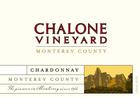
Chalone Vineyard Chardonnay Monterey County ($12). Chalone Vineyards have produced Burgundian-style wines for decades, contributing a chardonnay for the 1976

Chalone Chardonnay Monterey County

Paris Tasting.  Although they produce very good single-vineyard estate chardonnay at higher prices, the Monterey County designate is a complex wine that is accessible locally.

Merryvale Starmont Chardonnay ($18).  From the cooler climates in the Napa Valley, this amply available wine consists of grapes aged in both stainless steel and oak with partial malolactic fermentation.  The result is one of the most full-bodied, creamy chardonnay available under $20 anywhere. Nice citrus is engulfed with rich, nutty flavors with a nice minerality on the finish.

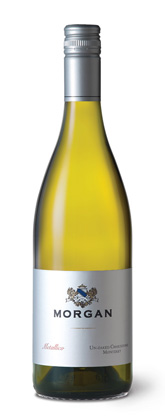
Morgan “Mettalico” Un-Oaked Chardonnay ($21).  Morgan Vineyards produce good quality pinot noir, chardonnay and other varietals from the Santa Lucia Highlands.  The “Metallico” favors those with no regard for oak or malolactic fermentation.  It is a very crisp, food-friendly wine with a nice

Morgan “Metallico” Chardonnay

acidity and stone fruit flavors.

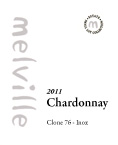
Melville Estate Chardonnay Clone 76 “Inox” ($36).  Located on East Highway 246 on the way to Lompoc, Melville creates nice pinot noir and cool-climate chardonnay in the Santa Rita Hills.  “Inox” is the French word for stainless steel, foreshadowing a wine void of oak and any softening of its crispness.

Melville “Clone 76 Inox” Chardonnay

Cold temperatures are integrated into the fermentation process, protecting all the malic acid from harm.  Aromas and flavors of lemon, lime, pineapple, apple and honeysuckle assure us that it is not void of taste.

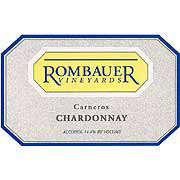
Rombauer Carneros Chardonnay ($32).  Familiar with this wine for several years, I was recently surprised to see a bottle in the “frig” at a “fork and cork” rental home and quickly drafted it to pair with scallops and smoked salmon cakes.  Complex aromas and flavors of peach, melon, citrus and vanilla make this wine, consistently, a great pair with food and a top value within this price range. It is often available locally.

Fort Ross Vineyard Chardonnay Sonoma Coast ($32). From the Sonoma coast, this wine embellishes both the crispness and rich opulence that chardonnay can express. Combining pineapple with butterscotch and vanilla in a balanced way is the main reason it found itself among Wine Enthusiasts Top 100 wines of 2011 with a 92 pt. rating.

Rombauer Chardonnay Carneros


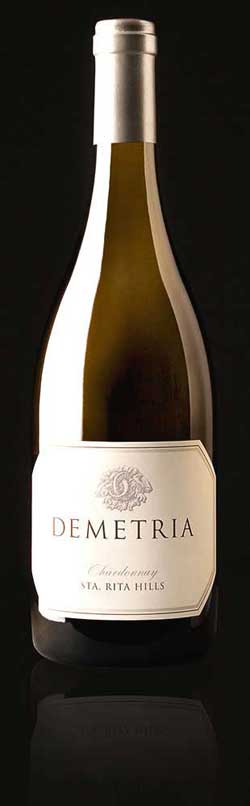
Demetria Winery “Eighteen” Chardonnay ($45). My first encounter with Demetria Winery in the Santa Ynez Valley was through this wine at a tasting last year.  The “Eighteen” stood out among the others.  Aged 18 months in French oak, it combines wonderful stone fruits aromas and flavors that are rich and heavy-on-the-tongue.  With only 200 cases produced, one will not find this wine outside of the winery.

Demetria “Eighteen” Chardonnay


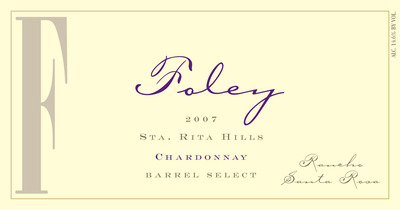
Foley Estate “Barrel Select” Chardonnay ($50). This wine is simply my favorite California chardonnay from a winery that produces many. To retain some acidity, 25% of the grapes are void of malolactic fermentation.  The best barrels are combined and aged another 21 months in oak.  The result is consistently lush citrus aromas and flavors balanced with rich vanilla and toasted nuts.  A pass through the area always warrants a stop for “Barrel Select”.


Mt Eden Vineyards Chardonnay Santa Cruz Mountains ($55).Any discussion of good white wine always includes Mt. Eden’s classic California chardonnay from the Santa Cruz Mountains appellation that produces many. A bulk of the aging is with new French oak creating a creamy, heavy-on-the-tongue wine with a perfect balance of citrus, spice and toasted nuts. It is always ranked among the best.

Foley Estate “Barrel Select” Chardonnay


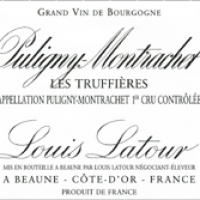
Louis Latour Puligny-Montrachet ler Cru ($55). Discovered at a tasting, this wine, from one of Burgundy’s finest appellations, has a nice earthy/mineral quality combining some citrus with melon flavors and a very long finish.  Grand Cru from this area can age up to 10 years, becoming supple, less acidic along the way.  Available at Monopole in Pasadena.

Louis Latour Puligny-Montrachet “Les Truffieres”

These are my recommendations although what I know about this wine is what I don’t know. Having the opportunity to taste good chardonnay from many regions

within California and abroad, I am always reminded of the complexity of the wine and it’s ability to enhance food.  Any one of these wines and a myriad of others were designed to augment shellfish, sea bass, game hens and even veal.  The major player of the United State victory in the 1976 Paris Tasting, California chardonnay has never sat on its laurels.


Burgundian Wines 101


With my love of California pinot noir, I have longed to explore the famous wines of the Burgundy region of France.  Found among the cellars of the most discriminate collector’s, the great, elegant richness has not been easily available to the general consumer over the past few decades because of cost and the emergence of pinot noir in California and Oregon.  High quality winemakers Williams Seylem, Brian Loring and many others sight inspiration from exposure to Burgundian red wines at an early age.  So, when I discovered that Peter Nelson of Monopole Wines in Pasadena was leading a Burgundy focus class, I immediately registered.

The heart of Monopole is European wines and co-owners Nelson and Hiro Tamaki are a reliable source of providing vintages with a high quality to cost ratio.  Their extensive backgrounds as Master Sommelier to the Advanced Level of the Wine and Spirits Education Trust are impressive and led to an enjoyable, informative evening that included tasting 10 regional wines, both red and white.

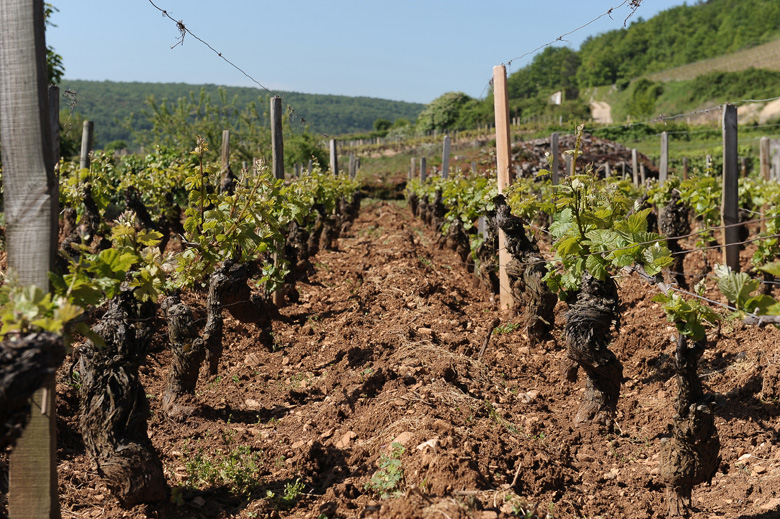
Vineyard in Chambertin

The region of Burgundy lies in eastern France, southeast of Paris.   Cistern monks, during the 12th Century controlled much of the land and began devoting time to winemaking.  They were the first to discover the variety of terroir, often distinctive every few meters. It seems that the diverse soils are all great, the weather is consistent and east-facing slopes, necessary for Burgundian varietals, are abundant.  Although half the size of Bordeaux, the Burgundy region boasts nearly 100 appellations and an excess of 1,000 named vineyards.

In most French regions, the wine is recognizable by the appellation, not the grape.  As a result, most people are not aware that famous Burgundy wines from Chablis, Cote d’ Or and Maconais use more than 98% of the time, only two grapes:  chardonnay for whites and pinot noir for reds. The only exception is the most southerly village of Beaujolais that experiments with the gamay grape.

The French closely regulate each region in their country and there are four levels of quality that identify Burgundian wines.  Regional or “Bourgogne” (Bor-gon-yeh) wines, making up more than 50% of production, are generally sourced by negiotiants (brokers who purchase grapes from other growers to make their wine) from any Burgundy appellation and are made for everyday consumption.  “Village” (Vee-Lawsh) wines represent 30% of production and are also sourced by negotiants, but must include only grapes from one specific village such as Gevrey-Chambertin or Muersault.

From 600 higher altitude single-vineyards come wines that have special characteristics worthy of a Premier Cru designation, about 15% of total production. Another 33 single-vineyards (2%) have been recognized for great qualities that earn a Grand Cru designation.

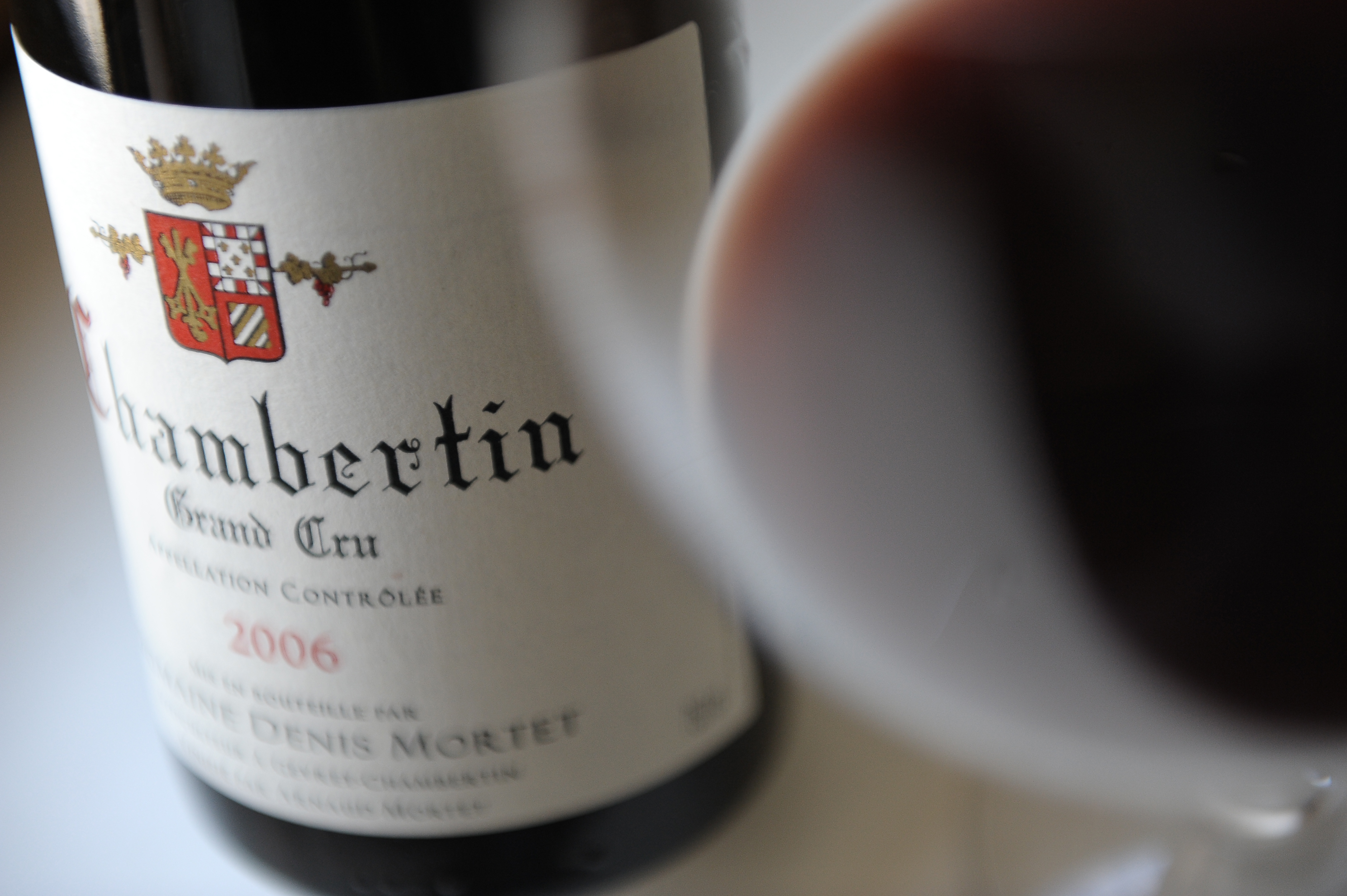
Of course, the reality of those Premier and Grand Cru wines is that they are extremely expensive. A recent Wine Spectator report on top-scoring Red Burgundies included wines like the Joseph Drouhin Musigny 2009 ($594), Jean Grivot Richebourg 2009 ($700), Denis Mortet Chambertin 2008 ($650) and several others in the $300 per bottle range. The same issue of the magazine highlighted affordable Burgundies under $100. Arguments ensue that the great California and Oregon pinot noir are as good quality and, generally a much better value.

However, it’s not always a competition.  Indeed, many of California’s fine pinot noir releases are successfully replicating Burgundies but the terroir is different. Terroir within Burgundy displays diverse soils that produce that minerality, those true citrus or butterscotch flavors in its whites and the deep berry and cherry flavors, the spice and earthiness in the reds.  By opening over $700 of Burgundy wines, the Monopole class allows us to experience, first hand, the bloodlines of those produced by the Cistern monks.

The first wine opened was the 2008 Patrice Rion Bourgogne Blanc ($25), a moderately priced white wine.  The label tells us that the negotiant is Patrice Rion who sourced chardonnay grapes in 2008 from throughout all of Burgundy. With a slight bouquet and lacking depth, there was a nice minerality and a natural lemony flavor throughout the finish.  The 2007 Jaffelin Muersault ($50) from the village of Meursault in the Cote du Beane sub-region, expressed nice stone fruit on the nose, some oak and nut influences with creamy vanilla on the finish.

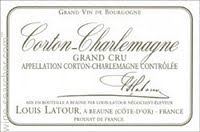
Corton-Charlemagne Grand Cru

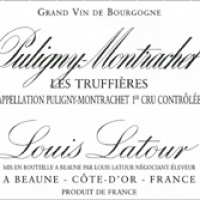
The last three white wines were all Grand Cru, priced among the finest California chardonnay, each conveying very distinctive flavors. The 2009 Louis Latour, Puligny-Montrachet ler Cru, “Les Truffieres” ($55)had a nice mineral, earthy quality, with hints of lemon-lime and supple melon throughout a very long finish.  Some of the world’s greatest white wines are made in the Puligny-Montrachet village and many can be aged for up to 10 years, distinct from our chardonnay that is generally consumed within 12 months of release.  Louis Latour is a well-known negotiant that, as many others, produces single-vineyard Grand Cru as well as Bourgogne wines.

Puligny-Montrachet “Les Truffieres”

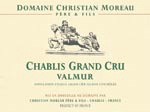
The 2008 Christian Moreau, Chablis Grand Cru, “Valmur” ($50) from the most northerly sub-region also put across a nice minerality, although I preferred the Puligny-Montrachet.  The final white, the 2009 Louis Latour, Corton-Charlemagne Grand Cru ($90) had it all, powerful aromas, a slate-type minerality, citrus and rich butterscotch and vanilla on the finish.  This is an exceptional wine, but I was still drawn to the Puligny-Montrachet for its value.

Of the value-priced reds, my preference was the 2009 Chateau de la Cree, Santanay “Clos de la Confrerie”, a Village wine with darker, earthy characteristics of tobacco and smokiness that will only get better with age.

Domaine Christian Moreau Chablis Grand Cru “Valmur”

The next Premier Cru wines, the 2008 Domaine de Pousse d’Or Volnay ler Cru “Caillerets” ($85) and the 2007 Jean Grivot Vosne-Romanee ler Cru “Les Beaumonts” ($95) were both very floral on the nose and had classic cherry, raspberry flavors with nice intensity and silkiness in the mouth. The pure elegance of pinot noir was thoroughly on display in both.

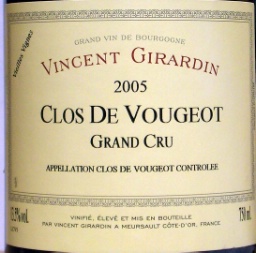
The final listed wine, the 2005 Vincent Girardin Grand Cru “Clos Vougeot” ($150), pronounced “Clo-Vo-Jo” is living proof that Burgundy wines are not about being huge, but elegant.  After a graceful and spicy bouquet, the same traditional flavors became richer which, in

Vincent Girardin Clos de Vougeot Grand Cru

turn, unveiled layers of new essence to the finish, too expensive to own, but lovely to taste.

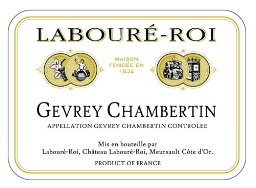
Laboure’-Roi Gevrey-Chambertin

Peter promised a mystery wine at the end of the session that became a 1990 Labroure’-Roi Gevrey-Chambertin, sourced from one of the most prestigious appellations in the Cote d’Or.  This mature Village wine, acquired through a private source, is old enough to drink itself. There was an explicit earthiness from bouquet to finish immersed with ripened berry flavors that did not overpower.  Declared ready to drink, grilled salmon with a Parmesan rub paired quite well with my newly acquired bottle.

The major take away from the tasting was that Burgundy wines are, in fact, distinctive and, with some experience, I may, one day, readily distinguish them from the Sonoma, Monterey and Santa Barbara County pinot noir and chardonnay that I continue to enjoy. For some that may be dissuaded by descriptions of minerality, earthiness, smokey or tannic, the flavors of these Burgundies are neither subtle nor obvious, but as multi-faceted and integrated as the soil will allow them to be.


Finding Santa Ynez Wines

At times overshadowed by the adjacent Santa Rita Hills appellation, the Santa Ynez Valley region provides a plethora of small boutique wineries

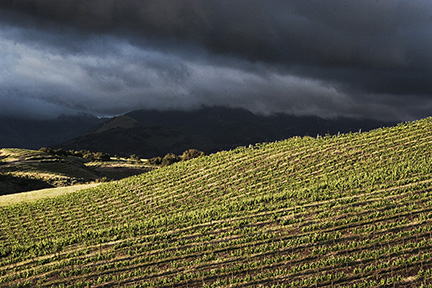
Steep vineyards at Demetria Estate

producing very impressive releases, often under the radar of many consumers.  On a gorgeous March day, I had an opportunity to follow-up with two local winemakers, both creating stunning wines, one making history.

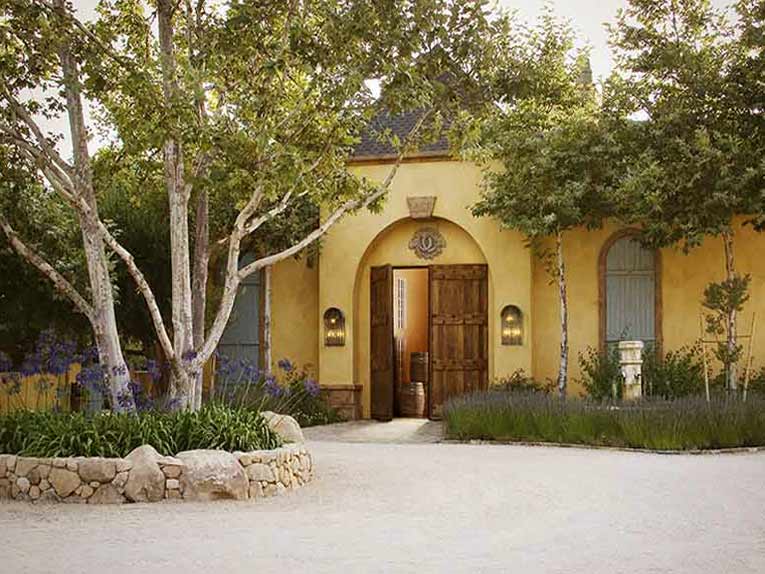
Deep into the valley, miles up Foxen Canyon Road, I come upon a small, discreet sign and electronic gate, the entrance to the entrance of Demetria Winery.  Inside the first gate, holding the code to the second, I began the 3.5-mile trek on a long and winding hilltop road surrounded by steep vineyards and incredible vistas.  Past the second gate, up the road another quarter-mile, we pass the beautiful home of John Zahoudanis, founder/owner and another few hundred yards, we find a classic country French estate winery/tasting room.  My arrival at Demetria, greeted by Alexei Zahoudanis, looking like the young “world’s most interesting man”, was full of anticipation of tasting good wines, including the 2009 Demetria “Eighteen” Chardonnay Reserve, Santa Rita Hills ($45), having tasted the previous vintage last year.

Grown in the westerly Santa Rita Hills appellation, known to produce diverse, micro-climate specific chardonnay, both vintages of the “Eighteen” expressed nice stone fruit, pineapple and floral notes on the nose, emphasizing rich pear and peach flavors that yield some acidity on the finish.  Adding 100% malolactic fermentation and negligible non-native yeast, this bone-dry wine is definitely one to bookmark.

Tasting room at Demetria Estate

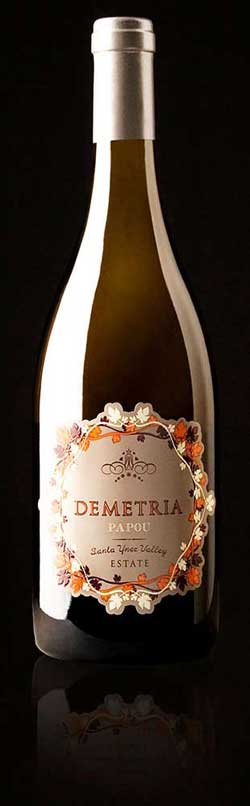
Known for the production of both Burgundian and Rhone-style wines, Alexei suggested a comparison of the 2009 and 2010 Demetria “Cuvee Papou” ($28).  “Papou”, meaning grandpa in Greek, is a Rhone white blend tribute to John’s grandfather that, through various vintages, includes such varietals as marsanne, roussane and grenache blanc grapes.  The distinction in the 2010 vintage is the addition of 35% roussane to the traditional marsanne-grenache blanc blend.  The result is a full feel in the mouth and more expressive orchard fruit flavors, a wine that will pair well with food or just sipping on a nice summer evening.

2007 Demetria “Cuvee Papou”

Speaking of good food wine, the 2009 Demetria Pinot Noir Santa Maria Valley expresses an earthy bouquet with nice acidity and spice in the flavors, a nice addition to a marinated pork roast.  Likewise, the 2009 Demetria Tempranillo ($55), from some of the oldest vines in the valley and spending 24 months in oak, has the deep, layered flavors that will stand up to spicy meats.

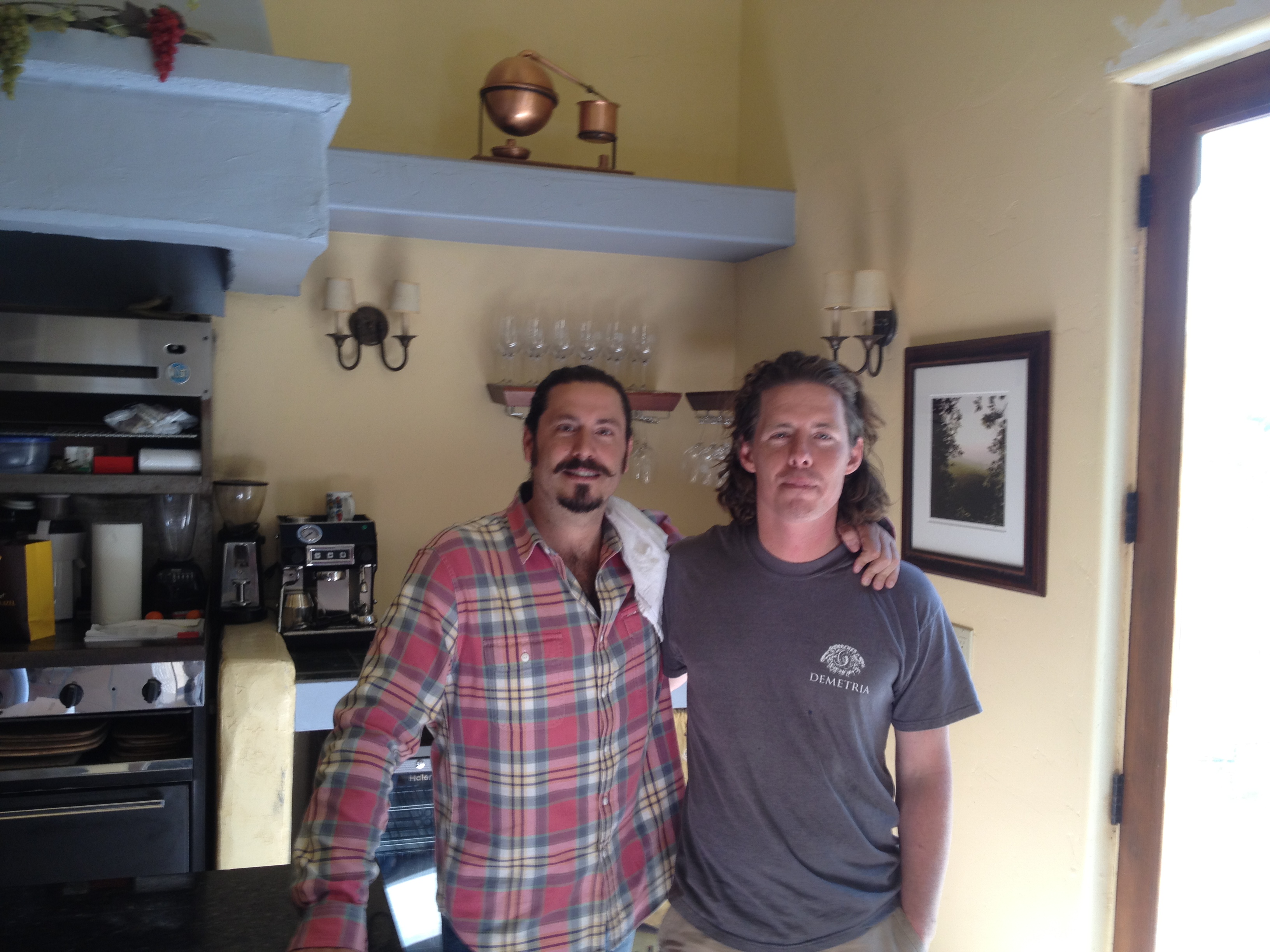
Soon, a gentleman looking very much like a Santa Barbara surfer  dude, with a pleasing Australian accent, joined us.  Harry Waye, the winemaker at Demetria, enthusiastically discusses his wines with anyone who will listen.  The passion exhibited by both Alexei and Harry actually made the wine taste  better.  Michael Roth, the original winemaker, is still involved as a consultant.

Saving the best wines for last, Alexei opened a bottle of 2009 Demetria “North Slope” Syrah ($37), a flagship release whose 2008 vintage received a 94-point rating from Wine Advocate.  The “North Slope” adds 5% viognier that is field-planted with the syrah, both biodynamically farmed.  It conveys ripened fruit on the nose and palate with the definitive creamy texture, setting it apart from other wines.  The next wine, the Rhone-style grenache-syrah-mourvedre blend 2009 Demetria “Cuvee Constantine,” flaunted very rich and jammy fruit flavors, notably the result of a late season heat spike, causing some grapes to be over ripened.  the end product is a nicely textured accessible wine that, according to Alexei, is ready to drink.

I am always interested when I see a good California single-varietal grenache, whether from Paso Robles, Calaveras County or points unknown.  the flavors are typically upfront with rich texture.  To my surprise, we ended the tasting experience with the all-grenache 2009 Demetria Rose’, a very nice summer sipping wine that delivers a vibrant acidity and flavors of strawberry and watermelon.  This rose’ could also accompany a light lunch.

Alexei Zahoudanis and Harry Waye

Although isolated, the Demetria Estate Winery provides aesthetics, great wine and a unique tasting experience, equal to any in the region.  Call ahead before your next visit to the area and give yourselves some time to get up and down the ridge.

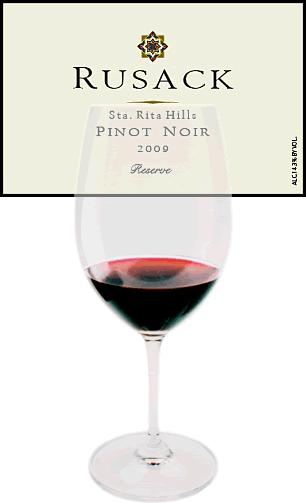
Outside of Solvang, up Ballard Canyon Road, one will find Rusack Vineyards, a small boutique winery that has produced low-yield, handcrafted wines since 1995, mostly under the direction of the husband-wife winemaking team of John and Helen Falcone.  I went to taste the inaugural vintages from their new vineyards on Santa Catalina Island, but took some time to enjoy the 2009 Rusack Reserve Pinot Noir Santa Rita Hills, sourced from the Fiddlestix and Rio VistaVineyards near Santa Rosa Road.  I have become familiar with the soft cinnamon on the nose and palate and the nice long finish that appear after ample decanting.  I was anxious to taste the 2008 Rusack “Anacapa,” a cabernet franc-based Bordeaux blend, to preview the bottle in my cellar.  Remarkable balance and soft flavors await, but both wines will continue to mature with some time in the bottle.

As reported before, Geoff and Alison Wrigley Rusack over the past few years have been engaged in a serious project to establish vineyards on and produce exclusive wines from Santa Catalina Island.  Alison is the great grand-daughter of William Wrigley Jr. who purchased the Santa Catalina Island Co. in 1919 and the family still owns most of the developable land.  The Rusacks in 2007 made use of the old El Rancho Escondido site along the southwestern coastline to plant 4.5 acres of vines:  2.5 in chardonnay, 1.5 in pinot noir and a special half-acre of ancient zinfandel, mined from Santa Cruz Island, part of the Channel Islands.

The vines, remnants from a rustic mission vineyard, were removed and sent to UC Davis for identification.  The lab determined the grapes to be from the zinfandel varietal and, replanted on Catalina, they exclusively make up the 60 cases of the first-harvest 2009 Rusack Santa Catalina Island Vineyards Zinfandel.  Although young and not a big fruit bomb, the wine expressed a nice spice to the flavors with hints of vanilla at the finish.

A nice crispness with some oak influences aptly describes the 2009 Rusack Santa Catalina Island Vineyards Chardonnay (250 cases), partially the result of 50% malolactic fermentation that impacts the full tropical bouquet and complex flavors.

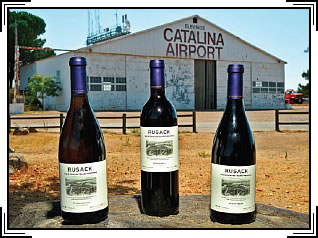
All the grapes were forced to weather a 100-degree heat spike in the fall, putting even more pressure on the extensive, yet delicate harvest process.  The grapes, some battling dehydration and pests, were picked during two early mornings, quickly transported in large bins to the Catalina Airport, loaded and flown to the Santa Ynez airport and unloaded and transported again to the Rusack facility to begin the winemaking process.  You’ve gotta love their

1st Vintage Santa Catalina Island wines

commitment.

The pinot noir grapes, some the last to be transported off the island, seem to have “weathered the storm” quite well.  Following a wonderful, traditional pinot bouquet of spice and black cherry, the 2009 Rusack Santa Catalina Island Vineyard Pinot Noir (125 cases) rewards the palate with cinnamon, vanilla and black cherry through an extended finish.

One can only guess the future of the island label.  The Rusack team, with a history of success, has done extensive research and, barring a consistently unpredictable climate, has the skill to make it happen.  However, there will always be a first vintage.  My other reason to stop by was to pick up a bottle of each varietal, properly packed in a “first harvest” wooden box and quickly transported to my cellar for some maturity.  I know that luck is the result of hard work.


The Diversity of Paso Wines

The incarnation of wines from the Paso Robles region has been, to say the least, captivating to watch.  Some of us remember, decades ago, listening to someone speak of very good zinfandel, later finding just that along with some cabernet sauvignon, chardonnay and a hint of pinot noir.  Pioneer wineries such as Adelaida Cellars, Justin and Tobin James still produce quality zinfandel, but have evolved with the newcomers toward the exploration of Rhone, Bordeaux and Spanish blends, making the Paso Robles wine profile as diverse as any region in the state.

Diversity was evident as we perused the Paso Robles Wine Country Grand Tasting event aboard the yacht, “Majestic”, docked in the Newport Beach harbor. Separated by varietals and blends, the wines were connected through quality.

The Bordeaux’

It is somewhat odd than a region gaining notoriety for producing varietals originating from southern France can comfortably create blends similar to Bordeaux in the northwest.  However, Bon Niche Cellars, located in warmer San Miguel, northeast of town, is a new boutique winery producing 1,200 cases including traditional Bordeaux blends, single varietal and a few unique releases.  Appropriately, we began with the Bon Niche Cellars  “L’Entrée” 2009 (The Entry-$45),a very fruit forward, single varietal Malbec with a nice bouquet.  With the grape’s recent prominence in the regions of South America, we can’t overlook that Malbec’s origins lie among the famous Bordeaux varietals.
Bon Niche Cellars “Fenetres” 2009
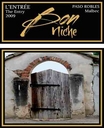
Bon Niche Cellars “l’Entree” 2009

The Bon Niche Cellars “Chemin’ 2009 (Path-$50) is a traditional left-bank Bordeaux blend of cabernet sauvignon (40%), malbec (25%), petit verdot (20%), merlot (10%) and cabernet franc (5%), but we tasted the Bon Niche Cellars “Voyage” 2009 ($40) that pairs a Rhone grape, syrah with cabernet sauvignon and enough merlot to enhance the bouquet and lengthen the finish.

Single varietal petit verdot, not commonly found, always gets my upmost attention.  If one can handle the tannins, releases like the Bon Niche Cellars  “Fenetres” Petit Verdot 2009 (“Windows”-$35) deliver rich, creamy texture and layered flavors.  A very nice wine; imagine it after a few hours of decanting because at some point, all windows need to be opened.

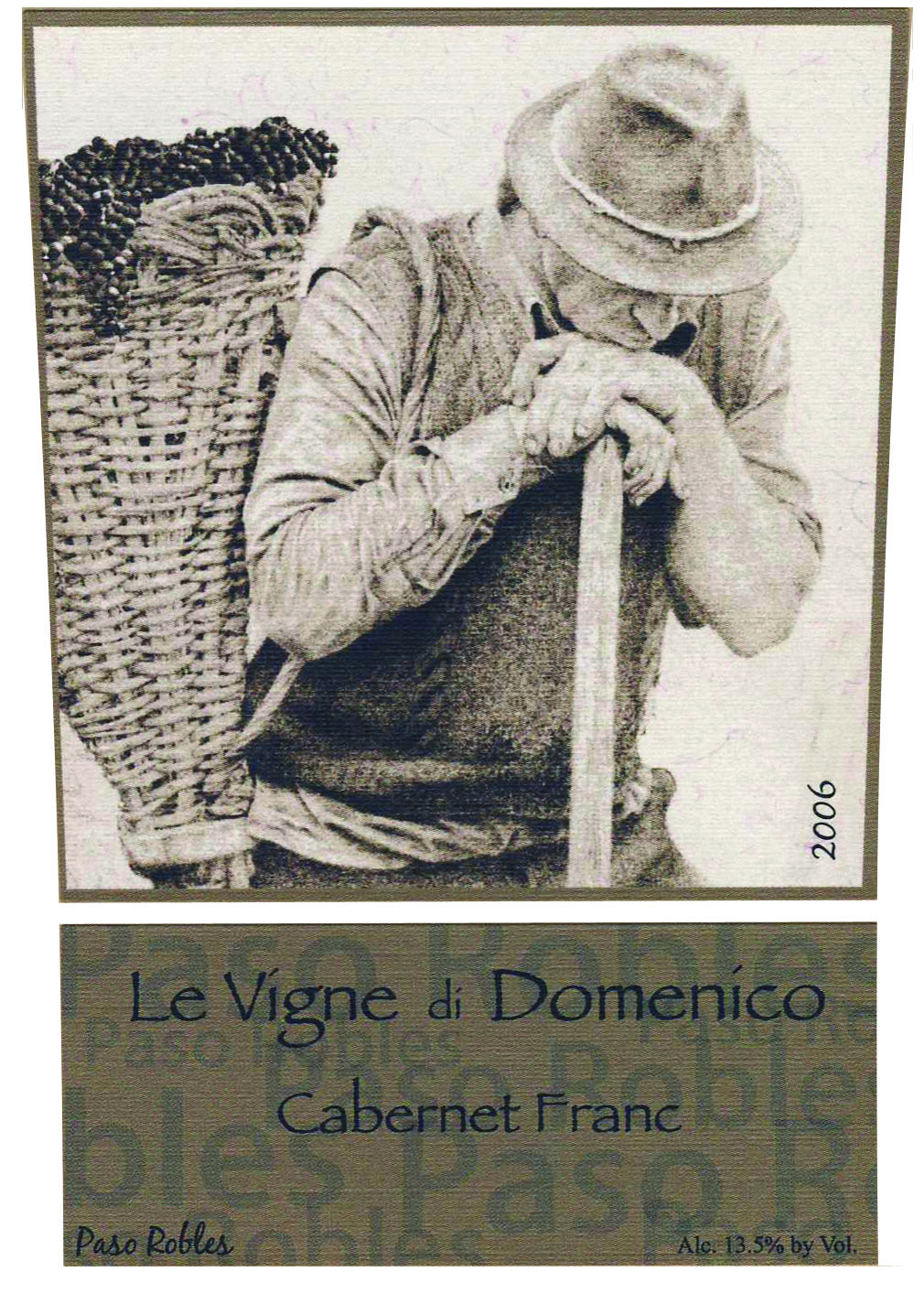
Two single-varietal releases captured my interest, both from Le Vigne Winery, also located in the northeast quadrant.    The Le Vigne di Domenico Cabernet Franc 2006 ($35) and the Le Vigne di Domenico Tannat 2008 ($39)both articulated rich, ripened berry and plum flavors that were upfront from beginning to finish.  Tannat, actually from southwest France, near the Pyrenees’, is often blended with cabernet sauvignon and cabernet franc that soften its strong tannins and welcome the deep color and abundant flavors. Le Vigne demonstrated their range by also pouring “Ame de la Vigne”, one of the best Rhone blends of the day.
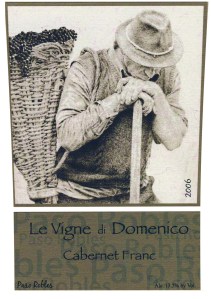
2006 Le Vigne Cabernet Franc

THE RHONES

With strong hints of spice on the nose, the Le Vigne di Domenici “Ames de la Vine” 2007 ($39) is an unusual southern Rhone blend that features syrah and petite sirah with hints of the usually dominant Grenache and mourvedre. The rich flavors are more reminiscent of a creamy pie rather than fresh berries. Experimentation with Rhone blends has led to strange bedfellows like zinfandel and cabernet sauvignon merging with traditional grapes. Among the best are those from Tablas Creek Vineyards, the patriarch of Rhone Valley wines in this region.

A mid-eighties partnership between the Perrin family of Chateau de Beaucastel and US importer Robert Haas led to the purchase of the 120-acre vineyards, chosen as similar terrior to the Chateaunef –du-Pape, producer of arguably the best southern Rhone wines.  Today, wines from Tablas Creek Vineyards are well rated and annually designated on many top lists.  With much anticipation of tasting the Tablas Creek Vineyard “Espirit de Beaucastel” 2009 ($55), their flagship award-winning wine, this pouring also featured the Tablas Creek Vineyard “Cotes de Tablas” 2009 ($30), a Grenache dominant blend, awarded 93 pts. by Wine Spectator magazine.  The “Cotes de Tablas” begins with a very fruity bouquet followed by wonderfully balanced flavors with a hint of cinnamon on the finish. The mourverdre based “Espirit de Beaucastel” is a more earthy, spice-driven wine, using grenache and syrah to offer full fruit flavors throughout.

Not to be out done by the reds, Tablas Creek Vineyards releases several white Rhone blends led by another award winner, the Tablas Creek Vineyards “Espirit de Beaucastel” Blanc ($40), a roussane dominant blend with support from Grenache blanc and picpoul blanc, a rare Rhone grape that adds a citric acidity.  In total Tablas Creek produces over 15 single varietal and blended wines, almost all rated above 90 pts and accessible, making it a priority while exploring the nectar of our central coast Rhone Rangers.

Among many fine new wineries present, my personal take-away was Terry Hoage Vineyards, an organically farmed Westside vineyard where Hoage and his wife Jennifer undertake the Rhone-making duties, citing a mentor that caught my attention.  In earlier years, Justin Smith, who arguably produces this nations top Rhone blends at nearby Saxum Vineyards, produced some wines for Terry a decade ago, conveying a minimalist approach to winemaking that the Hoage’s have adopted.

2010 Terry Hoage Vineyards “The Gap” Cuvee Blanc

A very balanced white blend, the 2010 Terry Hoage Vineyards “The Gap” ($38) uses over one-third picpoul blanc to create a tropical “tartness” combined with floral and orchard fruit essence by Grenache blanc and roussanne to create multiple flavors, foreshadowing their profile.   The full-bodied 2009 Terry Hoage “The Hedge” Syrah ($50), a single-varietal northern Rhone style release exhibited smoky, earthy aromas and flavors with hints of chocolate on a long finish, clearly one of the best syrah I have experienced this year.  Similar kudos go to the 2009 Terry Hoage “46” ($50), a syrah-grenache split, scoring a “triple-double” in flavor, texture and balance.
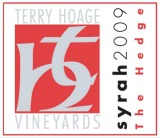
2009 Terry Hoage “The Hedge” Syrah

Partial to Grenache, the 2009 Terry Hoage “The Pick” Grenache Cuvee’ ($50) delivered on all fronts with flavors ranging from white pepper to ripened berries to chocolate on the finish.  Terry Hoage Vineyards was a very pleasant discovery and provides an opportunity to access some top tier Rhone blends, not available from others such as Saxum.

In yet another discovery at the Newport Beach event, Calcareous Vineyard, located on Peachy Canyon Road on the Westside, was pouring 2008 Calcareous Vineyard “Tres Violet” ($38), a syrah-based “GSM” blend, arguably the best of the showcase.  The initial perfumed aromas preview very fruit forward  “violets” with a nice, lingering texture.  Likewise the 2008 Calcareous Vineyard Syrah ($34)exudes very nice floral qualities combining with earthy tones and rich vanilla, to create a full-bodied wine with soft flavor
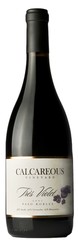
Calcareous Vineyards “Tres Violet” 2008

THE RIOJA AND DOURO BLENDS

 The international trend continues with the inclusion of Spanish and Portuguese blends, both surging in production and popularity worldwide in the past decade as well as blends, unique among themselves and to the region.

Sourcing her grapes from vineyards throughout the central coast and Napa valley, Dorothy Schuler, winemaker and co-owner of Bodegas Paso Robles specializes in varietals from Spain and Portugal to create some wonderful single and specialty blended wines utilizing the likes of tempranillo, graciano and bastardo from Spain and touriga and tinta cao from Portugal.  Beginning with a white blend boasting 40% malvasia Bianca, one would anticipate the sweetness of a dessert wine.  Contrary to the assumption that Grenache blanc would only heighten the sweetness, it actually enhances the floral, perfume bouquet in the 2009 Bodegas Paso Robles “Donna Blanca” ($18), providing enough crisp dryness to effectively balance the wine.

Next up was the wonderfully complex 2007 Bodegas Paso Robles “Viv Tu” Tempranillo ($26) from the locally renowned French Camp Vineyard.  A pleasantly unusual floral and spice hint in the bouquet and palate followed by anise and black cherry on the finish best defines this good value.

We also compared 2007 and 2008 vintages of their “Vaca Negra”, very different blends with different varietals tied together with an earthy softness.  The 2007 Bodegas Paso Robles “Vaca Negra” ($26) equally combines the spice of tempranillo with the fruitiness of Mouvedre for well-balanced wine with rich texture.  While Mourvedre sealed it’s reputation in southern France, it and Grenache originated in Spain where they are known as Monastrall and Granacha respectively.  The recently released 2008 Bodegas Paso Robles “Vaca Negra” ($26) adds 21% Grenache to the blend creating a soft, rich “fruit bomb”

Unavailable at the tasting, I am intrigued by the 2003 Bodegas Paso Robles “Iberia” ($44), a blend of Spanish and Portuguese grapes pairing tempranillo with rare graciano, touriga and tinta cao, sourced from the Napa Valley. The rioja region in northeast Spain gave us our first introductions to the tempranillo grape and the touriga and tinto cao, used in the world’s great ports, are, as consumers will soon be aware, part of an evolution in new, non-port single varietal and blended wines from Portugal.

Another interesting wine is the 2007 Bodegas Paso Robles “Pimenteiro” ($32), based from the old world port grape, bastardo, known for full fruit flavors and spice, from vineyards in Tres Pinos, south of Hollister in San Benito County.  We would all be hard pressed to find another “bastardo” wine in California, at least in the short-term.

THE OTHERS

Three wineries with fairly eclectic profiles, a local icon, a seasoned veteran and a newcomer, all with a diverse palate, are worthy of mention here. Since 1979, Eberle Winery, a staple among eastside Paso wineries, has produces the best cabernet sauvignon in the entire region.  The 2007 Eberle Winery Estate Cabernet Sauvignon ($34)maintains that status receiving a gold medal from the prestigious San Francisco Chronicle Wine Competition and high recommendations from many periodicals.  Very integrated flavors currants, black

2007 Eberle Cabernet Sauvignon

cherry and mocha throughout.

Before the Cabernet Sauvignon came a taste of the 2010 Eberle Winery Viognier Mill Road Vineyard ($23), a very nice summer wine with beautifully soft integrated flavor and loads of butterscotch and, of course, the 2008 Eberle Winery Zinfandel, Steinbeck and Wine-Bush Vineyards ($26), expressing well-balanced, complex flavors indicative of fine Zinfandel from this area that are drinking well now. Aside from a myriad of fine wines, the winery cave tour is also recommended.

Located in the southeast quadrant near Templeton, Victor Hugo Winery, producing about 5,000 cases annually, has created a varied assortment of wines for over a decade including the 2008 Victor Hugo Estate Petite Sirah ($22), expressing nice pepper, pungent herb aromas and soft, concentrated flavors that linger.  Also recommended is the 2009 Victor Hugo Estate “Opulence” ($28) an unusual cabernet franc dominant Bordeaux blend with diminishing contributions from cabernet sauvignon, petite verdot, malbec and merlot. They definitely created very good, soft-layered flavors that would pair well with hearty meats and pasta.

Sure, “Vines on the MaryCrest” is a catchy name for a new Paso winery, but quality is always subjects to proof.  Born from passion and respect for the land, winemaker Victor Abascal and wife Jennifer’s wines have received accolades from their early vintages.   The 2007 Vines on the MaryCrest “Round Midnight” ($25) caught my attention because it is a syrah-dominant Rhone blends as well as the fact that it bears the name of a favorite jazz classic. Highly spiced bouquet and flavors make this wine a suitable pair with spicy meats.

Receiving multiple awards from the San Francisco Chronicle and other respected wine competitions, the 2009 Vines on the MaryCrest “My Generation” ($27), a unique blend of zinfandel (48%), syrah (29%), mourvedre (12%) and petite sirah (12%), introducing 55-year old zinfandel vines to the Rhone world resulting in highly concentrated, balanced fruit flavors. Giving homage to Victor’s experience as a technical engineer in the music industry, the 2010 Vines on the MaryCrest “Summertime” Rose’, another release bearing the name of a classic tune, is another atypical blend of Grenache, mourvedre, tempranillo and zinfandel, reminding us that rose’ can be complex and layered.

It is difficult to keep up with the sheer number of new wineries that are emerging in the Paso Robles region.  Events like the Paso Robles Wine Country  Grand Tasting in Newport Beach intend to expose new and established wineries to the world.  When many of us predicted tremendous wine growth in the region, we couldn’t imagine the diversity of the terrior and the talent that would invest in it.  The year 2012 is time to branch out from our traditional, comfortable favorites and explore the depths and diversity and a region that continues to expand in size and stature.
North Napa Wineries(And Great Food!)

Our annual New Year’s tradition in Napa Valley began by responding to a “Living Social” offer for a bed and breakfast/spa package in Calistoga, a small town in the north valley that served as a regular get-away decades ago.  Friends and fellow “foodies”, Rosemary and David, carefully selected some restaurants of recent note and we were off for a mini “fork and cork” experience that began with lunch at Cindy’s Backstreet Kitchen.

Chef Cindy Pawlcyn, beginning 25 years ago with the infamous Mustard’s Grill on Highway 29, has developed three restaurants in the Napa Valley, including Cindy’s Backstreet Kitchen, located in a quaint historic building along the railroad tracks, east of St. Helena.   The charming old supper club atmosphere is enhanced by a very unique menu that includes such dished as the “Chinatown Duck Burger with house made shiitake mushroom ketchup and French fries” and “Adult Grilled Cheese, mostly vegetarian NO CRYBABIES! and polenta fries”.    They feature a very diverse choice of fine wines by the glass and bottle, micro brews like “Death and Taxes” Black Lager from Moonlight Brewing and creative cocktails such as their “Thai-gin-tini”.  What a wonderful start to an entire weekend of gourmet experiences.

The town of Calistoga is historically known for its spas that feature naturally hot mineral and volcanic ash baths.  Over the past decades, restaurants, B&B inns, elegant spa hotels and boutique wineries have become mainstays of the local landscape.  Our first wine tasting stop, the Vincent Arroyo Winery, fits the local persona with wines as unpretentious as they are bold and supple.

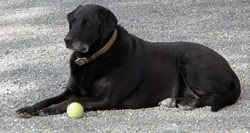
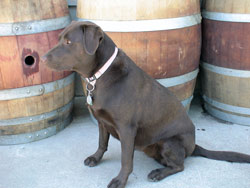
Entering the barn at Vincent Arroyo Winery, after an official greeting by black lab, JJ and chocolate lab, Bodega, their tails wagging, you are reminded that this is a small working winery and, amid a relaxed environment are friendly staff that are very serious about their wine.  We tasted several current releases, beginning with the 2010 Vincent Arroyo Chardonnay ($24), two-thirds fermented in stainless steel tanks and the rest in French oak barrels resulting in a very crisp flavors with hints of vanilla.

JJ - Vincent Arroyo greeter

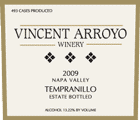
Tempranillo has become a very trendy varietal and seems to be expanding in very diverse regions throughout the state.  Of Spanish origin, the grape typically generates nice, heavy fruit

Vincent Arroyo Tempranillo 2009

bouquet and flavors and, like Cabernet Sauvignon, enjoys the company of oak.  The 2009 Vincent Arroyo Tempranillo ($28) delivers all the features of a dry Cabernet, with ripening fruit flavors at a relatively moderate price.   Moving to blends of French descent, the 2008 Vincent Arroyo “Nameless” ($30)is a left-bank Bordeaux blend of merlot (62%) and cabernet

Bodega - unofficial host

sauvignon (38%) that is well-balanced, semi-tart and great to pair with food.

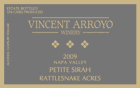
Another varietal expanding throughout California wine regions is petite sirah, a dark inky-colored grape with rich texture and very soft, accessible flavors.  Of the three produced, we enjoyed the 2009 Vincent Arroyo Petite Sirah Rattlesnake Acres, from a vineyard at the winery entrance.  Exhibiting all the traditional qualities of the varietal, the flavors were very forward with a nice lingering finish.   The 2008 Vincent Arroyo Petite Sirah “Winemaker’s

Vincent Arroyo Petite Sirah "Rattlesnake Acres" Vineyard

Reserve” ($50) aged three years, is still young, but has a structure that will continue to mature.
The flagship wine of our day was the 2009 Vincent Arroyo “Entrada”  ($65), an unusual blend of syrah, cabernet sauvignon and petite sirah with bold flavors and near perfect balance that is drinking well now, but will continue to develop structurally with time.

For our first dinner, Rosemary had reserved a table at the Michelin-starred SolBar, on the Solage Spa grounds, just east of town.  We are pleased that she did.   Upon entering SolBar, one is immediately immersed in an understated elegance that is inviting for fine food and wine.  It is a modern, sleek, but homey room where everything seems to work the way it should.  Carrying a bottle of Kosta Browne Pinot Noir Garys’ Vineyard 2009, we were definitely in the mood to sit, relax, select and enjoy.   One look at my wine and our young female waiter suggested that we decant it right away.  That’s apparently what happens at a Michelin-starred restaurant.   The pinot noir opened up and paired perfectly with the wild, sustainable sea bass as well as the beef confit salad. The SolBar experience was my best in recent memory.

SolBar restaurant

Laura Zahtila Swanton’s story is a somewhat familiar one, one that has a happy ending.  Working at Cisco Systems in Silicon Valley, she purchased the property of her estate vineyard and winery, relied on her technological skills and set out to produce limited-quantity boutique wines along the Silverado Trail in the Napa Valley.  Coming upon her property, with no prior knowledge of her wines, we decided to make the short trek to a quaint tasting shack only to be pleasantly surprised by many of her recent releases.

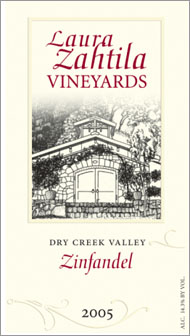
Laura Zahtila "Odone Vineyard" Zinfandel 2005

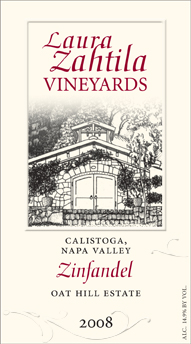
We began with a comparative tasting between the 2004 and 2005 vintages of the Laura Zahtila Vineyards Zinfandel “Odone Vineyard” ($40), revealing vast differences in flavor and structure.  The 2004 was well structured, soft and a bit tannic while the 2005 was much more fruit forward with nice vanilla and cinnamon hints.  Both wines need decanting for a few hours.  Decanting is also recommended for the Laura Zahtila Vineyards Zinfandel “Oat Hill
Laura Zahtila "Oat Hill" Zinfandel 2008

Vineyard” 2007 ($45), much more jammy with plum and blackberry.

This is the Napa Valley.  While winemakers are experiencing with different varietals and terrior, cabernet sauvignon is still king.  As we were tasting the Laura Zahtila Cabernet Sauvignon “Barlow Vineyard” 2007 ($50), a nicely structured wine aged in 40% new French oak, our hostess opened a library bottle of Laura Zahtila Cabernet Sauvignon “Beckstoffer and Georges III Vineyards” 2002 ($60) from two famed valley vineyards.  This wine expressed a very unique bouquet and an earthiness indicative of the fine wines produced from these Rutherford vineyards

Our final carefully selected culinary destination was “Farmstead”, the gourmet, comfort-food restaurant by Long Meadow Farms, a 650-acre ranch above the valley that produces grass fed beef, eggs, heirloom fruit and vegetables, olive oil, all in a sustainable, organic and responsible way.  Having supplied top American chefs with fresh products, they developed “Farmstead”, south of St. Helena to showcase their mission of healthy, responsible food that tastes great.  Dishes like “Brick-cooked chicken with savory spinach with rancho gordo beans and salsa verde” and “Salad of kalcinato kale with chile pequin, lemon and toasted

Farmstead Restaurant in St. Helena

grana cheese” are rare recipes that are not duplicated anywhere else.

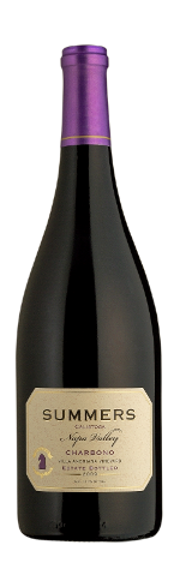
Our final tasting was at Summers Estate Wines, a small boutique winery, north of Calistoga, producing 8-9,000  multi-varietal cases per year, mostly from their 28-acre estate vineyards.  My first contact with Summers wines was a glass of their “La Nude” Unoaked Chardonnay 2008, recommended as being crisp, but with softer flavors.  The Summers Estate 2008 Reserve Chardonnay ($22), dissimilar from others we had recently tasted, was aged for 10 months in French oak, infusing a rich vanilla essence with nice orchard fruit flavors.

Among other fine attributes, Calistoga apparently has good “terrior” for the rare, once abundant Charbono grape that suffered from an identity crisis in its early California years.  Story

Summers Estate Wines Charbono 2009

has it that Italian immigrants brought the grape here during the Gold Rush, thinking it was barbera.  Although widely grown throughout the Napa Valley in those early years, Summers reports that their 80-acres are the only Charbono vines left on the planet.  The Summers Estate Charbono, Villa Andrianna Vineyard 2008 ($28), aside from deep ruby color, has rich berry and spice flavors that pairs well with pasta and tomato-based sauces.

Zinfandel is a varietal that generally thrives on mature vines that have adapted, over the years, to their soil conditions.  The Summers Estate Zinfandel “Four Acre Zin” ($34) is one of those wines, made from 40-50 year old vines, creating a wine that effectively balances the sumptuous flavors of strawberry jam and the spiciness of cracked pepper.  Our last wine, the Summers Estate Reserve Cabernet Sauvignon ($48) expressed multi-layered flavors and nice texture.  Unlike the Charbono and jammy Zinfandel, this wine must compete with the multitude of other Cabernets that have made the Napa valley famous.
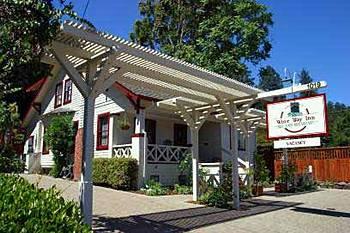
Synonymous with renowned names like Mondavi, Stag’s Leap and Spottswode, the Napa Valley has also become, over the past 30 years, a region that can still be accessible to small production, boutique winemakers who rarely get the ratings and major press, but nonetheless are serious and talented in their craft.  These and other north valley wineries are worth exploring, using Calistoga as a home base, whether in a local B&B such as the Calistoga Wine Way Inn or the Mount View Hotelon Lincoln Avenue.  Memorable food, good

Calistoga's "The Wine Way Inn"

wine, spa treatments and other outdoor activities are at your fingertips in the north Napa Valley.


“Fork and Cork” in Angels Camp


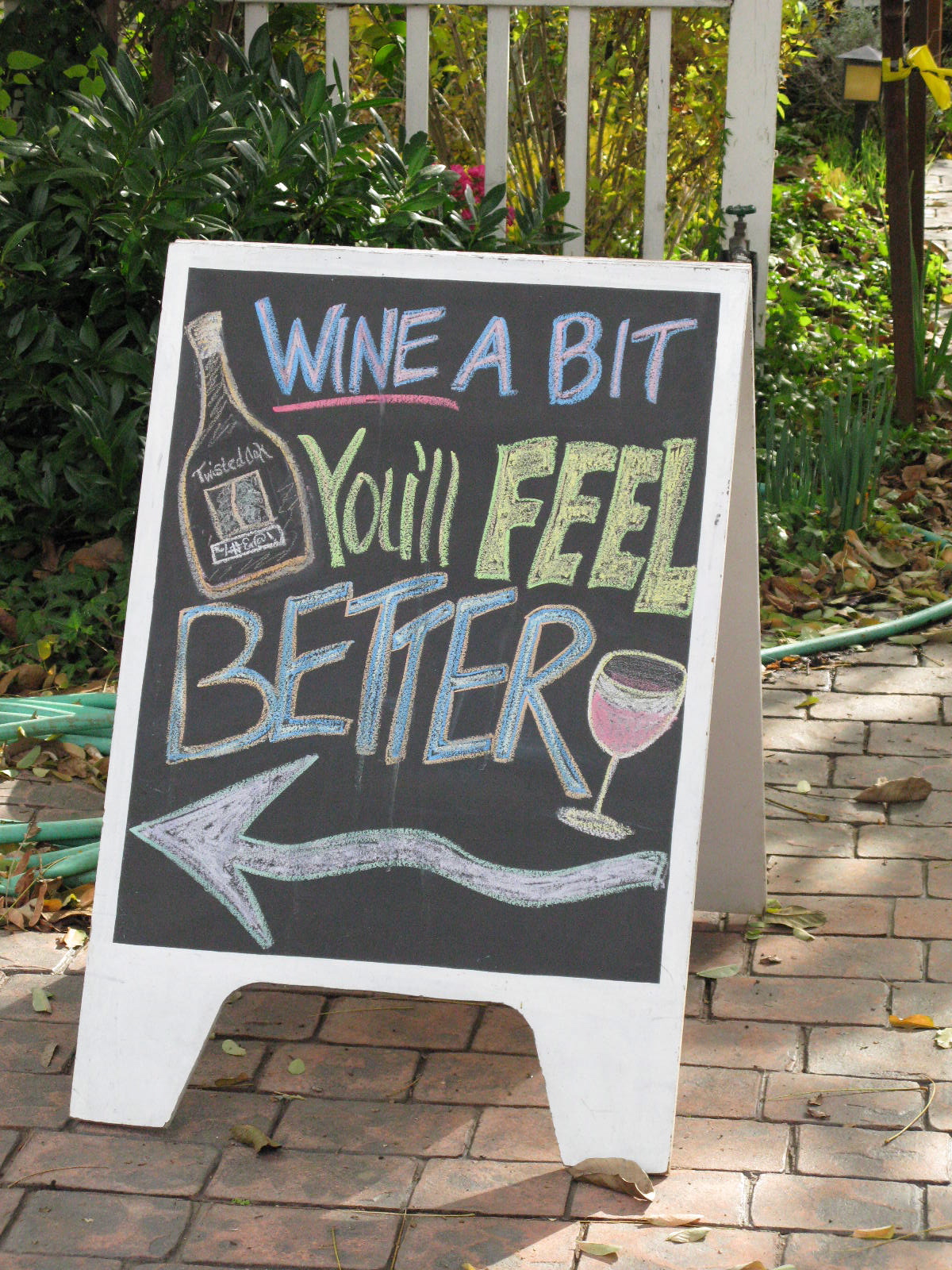
"Wine a Bit"

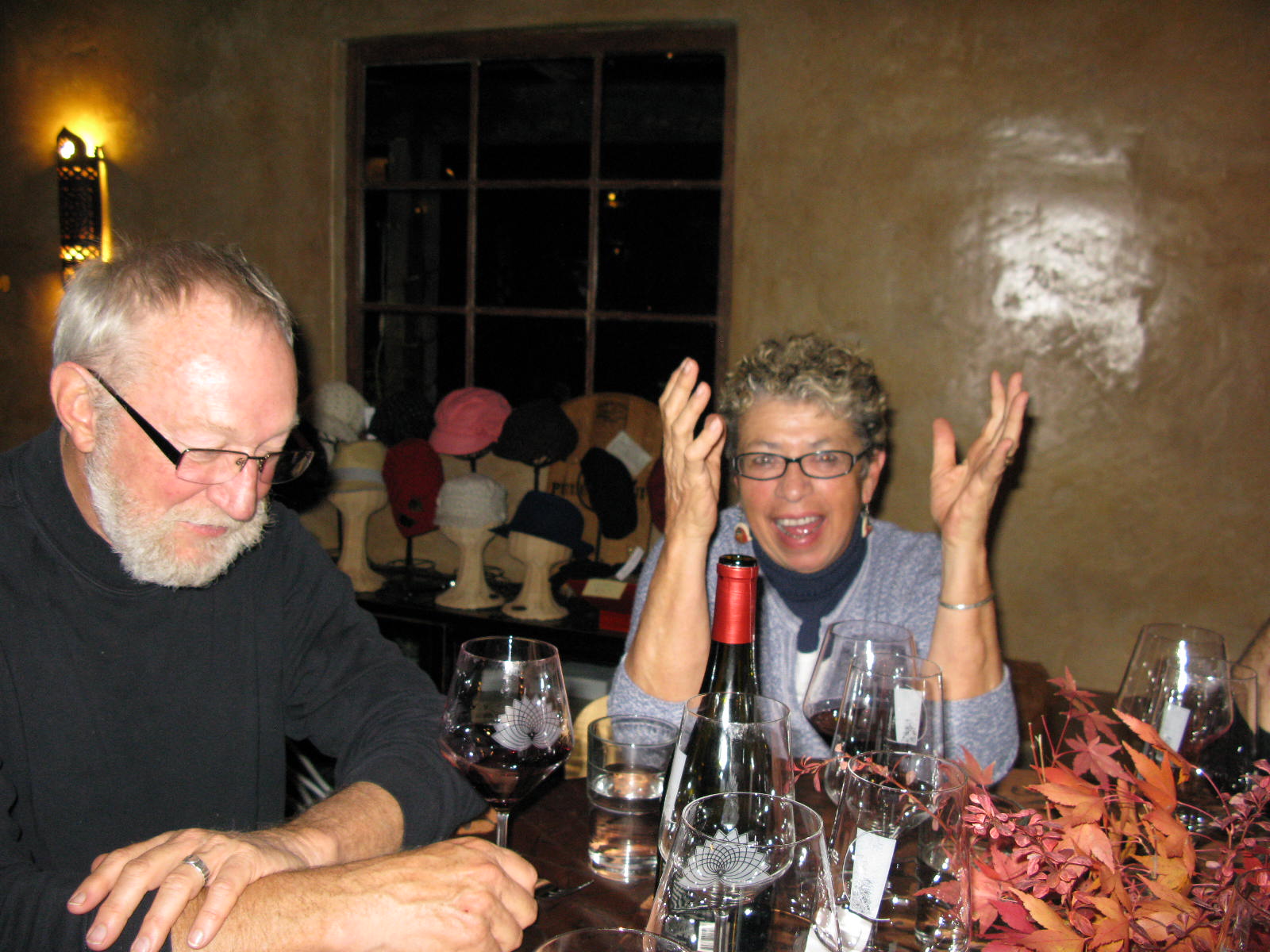
The Brown’s Valley Fork and Cork Society, growing impatient of scheduling problems, grabbed an open weekend and assembled at our friends Robin and Ginny Jaquith’s mountain home in Angels Camp to express our culinary (or lack of) skills, share wine, catch up and plan something special. This weekend included a private winemaker’s dinner, exploring new area wineries and some good home cooking. For those unfamiliar with Angels Camp or Murphys, CA, my advice is explore these quaint villages, located in the Sierra foothills, the heart of gold country with shops, restaurants and new, exciting wines from the Calaveras and Amador

Robin and Ginny Jaquith

appellations.  Uniquely designed frogs fronting many of the business’s reminds us that Angel’s Camp is the setting of Mark Twain’s 1867 fiction, “The Celebrated Jumping Frog of Calaveras County”, a familiar novel if you are my age.

The first order of business upon our arrival was to complete the Thursday night dinner main course, our contribution to the weekend festivities.  We extracted a “Fennel-crusted Salmon with Celery Root/Pear Puree” recipe from Wine Spectator magazine, added some fresh grilled asparagus and paired with a local 2008 Leona Valley Winery Sangiovese.  The meal began with a fresh butternut squash soup with crème fraiche paired with a superb Russian River Valley sauvignon blanc, arguably one of the varietals best in California with past appearances on Wine Spectator’s annual Top 100 list.

Merry Edwards RRV Sauvignon Blanc 2008

The 2008 Merry Edwards Russian River Valley Sauvignon Blanc, with consistent ratings in the mid-nineties, expresses a rich texture, soft flavors of honey and melon and a bit of citrus.  A fantastic food wine, it enhanced the butternut squash soup and was a bridge to the herbed, grilled asparagus.

David Reynold’s 2008 Leona Valley Winery Sangiovese began with an interesting story.  For various reasons, his neighbors could not pick their sangiovese grapes and offered them to David with the promise of his first ten cases.  The wine, with multi-layered flavors, some added barbera, stood up to the fennel, also offering a long, soft finish.

Friday morning led us to Amador County’s wine trail to visit a new producer that has “accelerated” onto the local scene.  The

"combustible sculpture" at Driven Cellars

location, Driven Cellars, is novel on many counts; including the eclectic collection of old trucks and tractors that adorn the property like some “combustible” sculpture garden.  The vineyards began in 1993 with mostly popular zinfandel and have expanded to a variety of other reds, releasing the first vintage in 2003.  Although their impressive  “green” facilities incorporate recycled buildings, rainwater collection systems and solar heating/cooling, the impression that I left with was one of a variety of very fine wines, quietly produced under the radar and offering high quality for value prices.

We tasted the entire palette of wines from Driven Cellars, a barbera with candied fruit on the nose, luscious zinfandel and aprimotivo, aged in, of all things, Minnesota oak.  Of all these nice wines, three stood out, unique examples of the local terrior.  The tempranillo varietal, known as the Spanish cabernet sauvignon, seems to thrive in California’s gold country.  The Driven Cellars Tempranillo 2008 ($23), to prove my point, was luscious on the nose and palate, with rich fruit through a long finish.

The tempranillo varietal seems to standout in the Sierra Foothills, notably the Twisted Oak “The Spaniard” blend and young Allegorie Tempranillo 2009, recently tasted in the picturesque town of Murphy’s.

The petite sirah grape also prospers in the local terrior, but a few offer even more than the deep, dark color and deep, dark cherry fruit. Strong hints of fennel and mint on the nose distinguish the Driven Cellars Petite Sirah 2006, adding rich flavors that

Driven Cellars Petite Sirah 2006

were balanced and complex. I now sense that we have set upon something authentic, something beyond the panoramic views and abstract metal, reminiscent of man’s relationship with vehicles, those monstrosities needing V8’s to leave tire marks on the pavements.

It is all seemingly tied together with the Driven Cellars “454” Red Wine 2007, their inimitable flagship blend that pays homage to the cubic inches of those hot rod engines. This exclusive blend of primotivo (48%), syrah (24%), zinfandel (23%) and tempranillo (5%) manages to maintain texture and balance, with flavors accessible for most palates. The novelty of the site does not overpower the wine, but foreshadows that which exceeds expectations.

Robin and Ginny continued our exploration of Calaveras County wineries by planning an exclusive “Fork and Cork” winemaker’s dinner at Val Du Vino Winery in Murphy’s. Owners Jonathon Phillips and Jeanine Hebel have a clear division of duties in operating the winery.  Jonathon sticks to winemaking and Jeanine, a renowned French chef, handles catering and special pairing dinners.  What a treat to enjoy Jeanine’s exquisite cooking and Jonathon’s stories of his diverse career as he poured and exuded pride in his wines.

Jonathon Phillips sources all of his grapes from fine vineyards in the Sierra Foothills and beyond.  His profile includes a zinfandel from Paso Robles and a north coast cabernet sauvignon, undertaking a hands-on approach to winemaking and content with limited production.

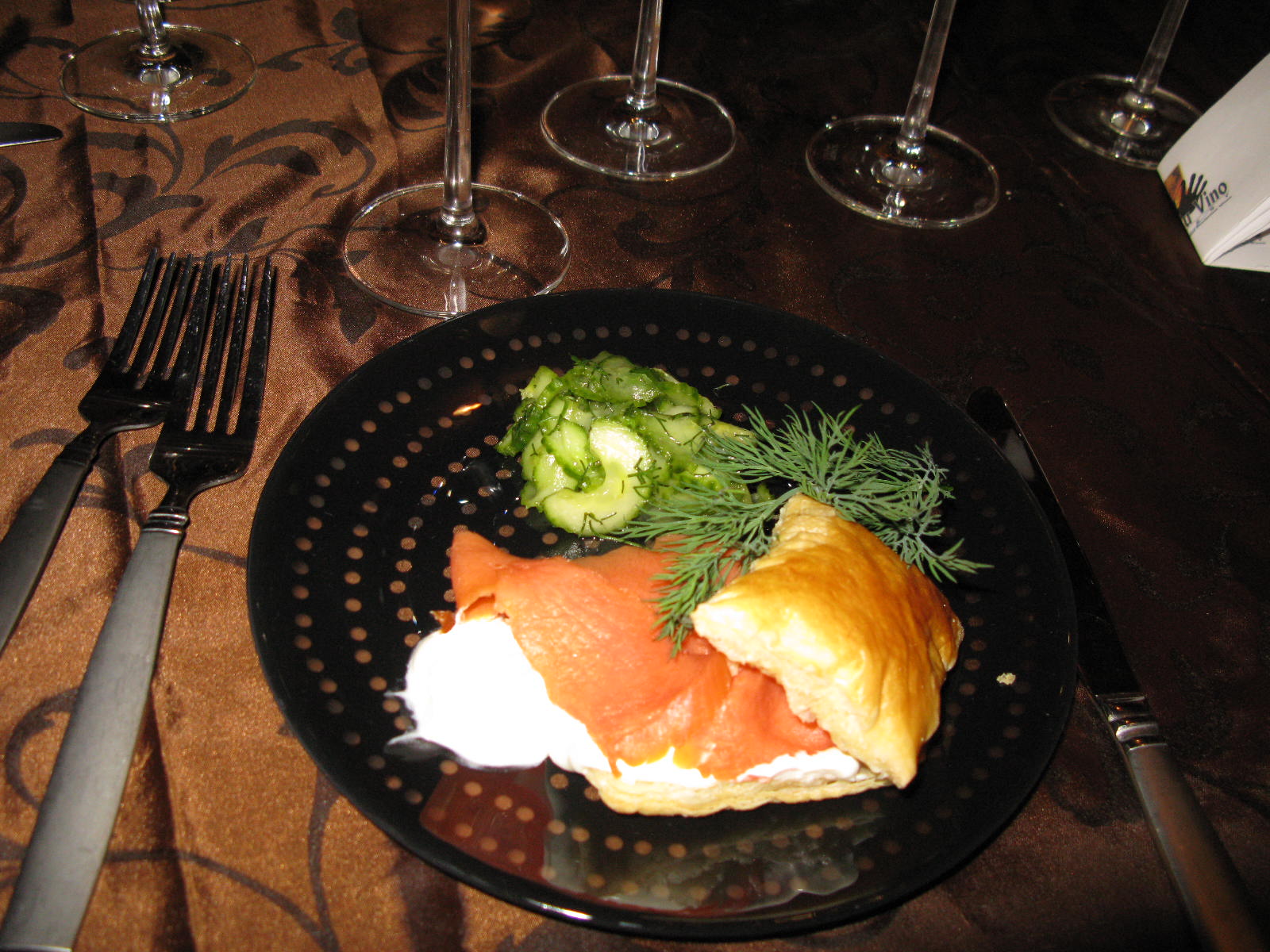
salmon galette filed with herbed goat cheese, figs and prosciotto

Jeanine’s delicious Shrimp Viognier Aspic Soup topped with Zabaillone was paired with the Val du Val Viognier Amador County 2010 ($24), very aromatic wine with strong impressions of the orchard fruits.  There was at least one bottle in each couples cart that evening.  The second pour, the Val du Vino Grenache 2009, grown locally and emanating highly ripened berry flavors, accompanied a Galette filled with Herbed Goat Cheese, Figs and Prosciotto. The herbs enhanced the strong fruit-based flavors, a common component of any good grenache

The magnificent entrée’s were paired with three bold new red wine releases, one, the Val du Vino Syrah 2009 ($30) from Calaveras County coupled with her Lamb Moussaka.  Heavy spice hints combine with concentrated fruit in classic syrah style, always good with lamb.

The ultimate paired wines included a fruity Val du Vino Zinfandel Paso Robles 2009 ($25) and Val du Vino Cabernet Sauvignon 2007 ($35) from Mendocino County.  The cabernet, surprisingly paired with Salmon Fillets in a Cabernet Sauce served with Potato Leek Ravioli, was big and soft at the same time, the result of good balance and texture. The jammy flavors of the central coast zinfandel stood up some incredible Baked Pears filled with Stilton, Cranberries and Walnuts. What a feast, kept real with moderate portions that truly helped the expression of the wine.
 

Val du Vino Winery was a nice discovery; tasting handcrafted, boutique wines with celebrated contemporary French cuisine. These limited production releases will be impossible to find in So Cal, making their wine club or internet sales the best option.
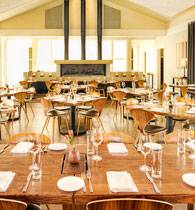
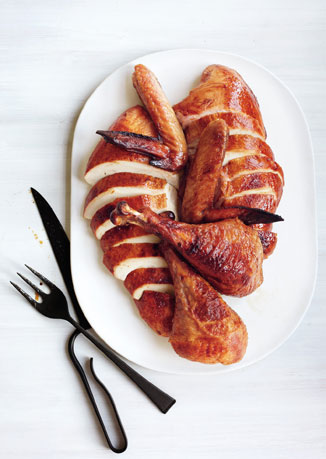
Our hosts coordinated a divine pre-holiday feast for Saturday evening, our last together.  It was an Anita Lo menu in Bon Apetite’ that included Cider-Brined Turkey with Star Anise and Cinnamon, Kabocha Squash Puree with Ginger and Candied Mandarin Oranges and Cranberries; a diverse menu, but not a challenging one to pair. We began with a Foley Estate “Barrel Select” Chardonnay 2008, from the Santa Rita Hills appellation; a creamy, well-structured, full-bodied wine

Cider-brined Turkey with Star Anise and Cinnamon

with nice aromas and flavors of melon, tropical fruit, honey and butterscotch on the finish.

The Novy Syrah Rosella’s Vineyard 2008, from friend David’s cellar, would be the first dinner wine.  Novy Family Wines, based in Santa Rosa, produce mostly syrah from some of the state’s finest vineyards. This one has been consistently rated in the mid-nineties. The second pair, RN Estate Pinot Noir Santa Rita Hills 2009 from Kathy Joseph’s Fiddlestix Vineyard conveyed nice, balanced fruit aromas and flavors. Both wines matched up well with the spices of the meal, as they were intended to.

Friends of nearly 40 years, Robin and Ginny earned their service points for the Brown’s Valley Fork and Cork Society.  Thanks for a delightful and informative weekend.


Wine Spectator’s Top Wines of 2011


"Wine of the Year"

As someone who enjoys lists, Wine Spectator magazine’s annual release of the year’s most exciting wines is highly anticipated, providing a plethora of information on current trends and vintages, both domestic and throughout the world.  Stories boasting the quality recent vintages for Sonoma County, Napa Valley, France’s Rhone Valley and Tuscany played out through their dominance on the list, generating nearly half the wines.  The prestigious top ten wines included two pinots from Sonoma, an exciting new Napa Valley cabernet sauvignon, three French and two Italian blends.

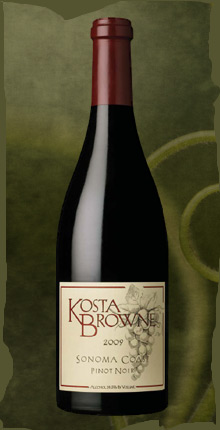
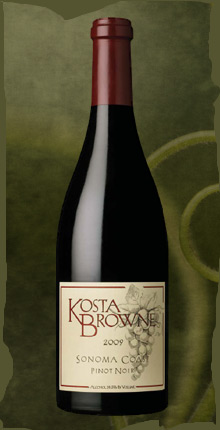
No stranger to the list during the past decade, the Kosta Browne Pinot Noir Sonoma Coast 2009 ($52), a wine for which I am very familiar, was the WS “2011 Wine of the Year”. The story of the emergence of Dan Kosta and Michael Browne as premier producers of pinot noir is not one of pedigree or years of apprentice in the region of Burgundy.  It’s simply the story of a couple of guys with nothing but desire, who plunged into winemaking and learned as they went along to ultimately discover their identity in the depth, richness and elegance usually distinguished in the great Burgundian treasures.

In 2011, Kosta Browne produced 11 pinots, most exclusively from esteemed vineyards such as Amber Ridge and Kanzler in the Russian River Valley. With all the leading single-vineyard releases, ironically, the top wine combines grapes from three different vineyards near the northern Sonoma coast and is, at $52, one of their most moderately priced wines. Not new to the WS list, this is the third vintage to reach the top ten since 2006.  Although my two bottles will remain in rest for at least another year, I have enjoyed the last five vintages and found extraordinary richness, “heavy on the tongue” creamy texture, concentrated, candied flavors and long finishes with each.  For those of us that follow California Pinot Noir, this 2011 coronation for Kosta Browne was only at matter of time.

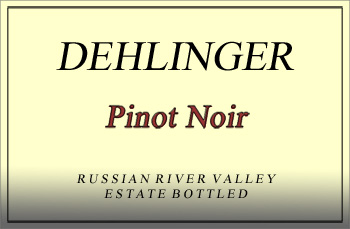
#5 Dehlinger Pinot Noir RRV 2008

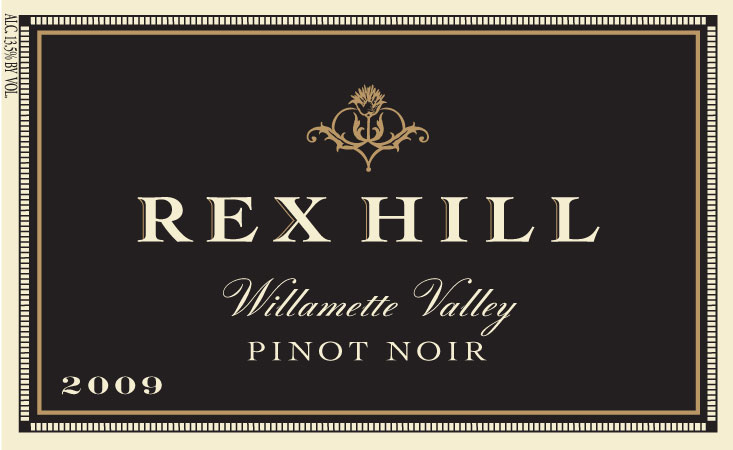
There were eight representatives from the pinot noir varietal, five from Sonoma and three from Oregon. Senior editor James Laube foreshadowed great results when he named the 2009 vintage California, especially Sonoma County pinot noir as the decade’s best; possibly the best ever.  The top ranked of the varietal all had ratings of 94-95 pts and all cost about $50, including the Dehlinger Pinot Noir Russian River Valley 2008 (95pt/$50) from a well-respected Sonoma winemaker with a reputation for producing very fruit forward, graceful wines.  The Domaine Serene Pinot Noir Dundee Hills Grace Vineyard 2008, from the Willamette Valley in Oregon was the highest rated at 97 pts, but was ranked #85 because the $125 price made it much less exciting.  I was pleased to see the Rex Hill Pinot Noir Willamette Valley 2009 (93pt/#38) on the list. They are very serious, hard-working winemakers and have released many nice pinots over the years.

The US contributed 41 wines, 28 from California, followed by exceptional vintages from Tuscany and France’s Rhone Valley, regions also rewarded with good recent vintages.  Outside of California, Washington state, continuing to emerge as a region of good quality and diversity, landed seven wines, Oregon four, New York state and New Mexico, one each.

If one commenced to produce a high quality, moderately priced sparkling wine, I doubt that they would seek to plant vineyards in

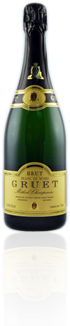
#43 Gruet Blanc de Noirs New Mexico

Truth or Consequences, New Mexico.  The Gruet family has planted pinot noir and chardonnay grapes at very high altitudes to bring into being the Gruet Blanc de Noirs New Mexico, scoring 90 pts from WS and retailing for $14 a bottle.  This sparkling release has generated enough curiosity to be ranked as the 43rd most exciting wine.  With 20,000 cases made, it shouldn’t be too hard to find.

Once again, the Paso Robles region had respectable representation on the list, with the 2010 “Wine of the Year,” Saxum James Berry Vineyard Paso Robles 2008 (97pt/$75), returning at #52.  Although it had a similar “off the charts” rating with a slight price increase, it is difficult, if not nearly impossible, to generate that much excitement for more than one year.  Known for sourcing grapes to other winemakers, the 126-acre Denner Vineyard produced the Syrah grapes for the Denner “The Dirt Worshipper” Paso Robles 2008 (97pt/$45), the highest ranked Paso wine at #11.  At this point, it is intriguing, but scarce.

Tablas Creek, a winery whose Rhone blends like the “Espirit De Beaucastel” are regulars on the list, placed the Tablas Creek Cotes de Tablas Paso Robles 2009 (93pt/$30) in the 37th spot. This Grenache-dominant blend with Syrah, counoise and mourvedre is fermented and aged in the French style and has the consistent quality expected from a pioneer of California Rhones.  Cheers for the Grenache grape; a dominant component of 10 wines on the list, four from the Golden State and six from the Rhone Valley.

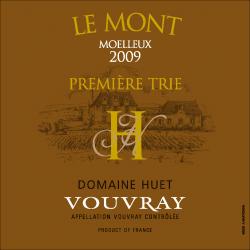
Aside from the Alain Graillot Crozes-Hermitage La Guiraude 2009 (94pt/$55), a reprise of the winemaker’s 2001 top ten appearance, the most interesting and highest ranked French wine was the Domaine Huet Vouray Moelleux Clos du Bourg Premiere Trie 2009 (96pt/$69),a chenin blanc from the Loire Valley, that used wet weather-induced Botrytis rot to help

#9 Alain Graillot Crozes-Hermitage La Guiraude 2009

create, as experts claim, a beautifully balanced, fruit forward white wine.

Washington State repeated an excellent 2010 performance with the inclusion of seven wines, all within the top 50. A nice balance of red wines including three Cabernet Sauvignon, two syrah and two Bordeaux blends illustrates the diversity of the great Pacific Northwest, also known for the production of Riesling.  The magazine placed the Baer “Ursa” Columbia Valley 2008 (95pt/$35), the winery’s signature merlot/cabernet franc blend, as #6, noting its consistent richness and clean flavors. In addition to the “Ursa”, wines like the Efeste Syrah Yakima Valley Jolie Bouche Boushey Vineyard 2008 (95pt/$36)have shaped Washington’s character in producing high quality at moderate prices. This syrah is very intriguing, but with only 385 cases made, it will be nearly impossible to find.

#6 Baer "Ursa" Columbia Valley Washington

There are some California wines that deserve specific mention.  Recently, I had an opportunity to enjoy a Merry Edwards Sauvignon Blanc Russian River Valley 2009 (93pt/$30) paired with a wonderfully rich butternut squash soup with crème fraiche.  A recurrent member of the annual list, this is one of the best food white wines out there, always expressing layered flavors and a trademark long, rich finish.

I am partial to Santa Cruz Mountains wines, having grown up among them.  This is one reason it’s nice to witness the Mount Eden Vineyards Chardonnay Santa Cruz Mountains 2007 and 2008 (95pt/$55) being honored in the top 20 in back-to-back years.  Coastal influences, great low-yield vines from historical vineyards and oak influences make for a great wine in most years.

In 2010, the well-textured Hall Cabernet Sauvignon Napa Valley 2006 was, at $40, one of the best values on the list.  Following early “buzz” upon its release, the Hall Cabernet Sauvignon Napa Valley “Kathryn Hall” 2008 (96pt/$90), named for the co-founder, was designated as the #2 wine in 2011.  I had the opportunity to taste the 2007 vintage and, although a bit pricy, it is definitely a collectible if it can be found.

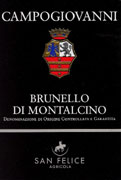
#4 Campogiovanni Brunello di Montalcino 2006

Tuscany contributed half of the Italian wines, most notably a classic Campogiovanni Brunello di Montalcino 2006 (96pt/$50), aged four years before release.  This wine may be available at K&L Wines/Hollywood in the near future.  With yet another example of Portugals’s port producers branching out to other reds, the Quinta Do Vallado Touriga Nacional Douro 2008 (95pt/$55), designated in the #7 spot, is a rare single-varietal (touriga nacional) wine from the north’s Douro region.

Another significant part of each year’s top wines list is who is not represented.  After resurgence the last few years, Germany listed only one Riesling and regulars, Australia and Bordeaux just two wines each. The safe bets among 2011 releases will come from Sonoma County, Tuscany, Washington State and the southern Rhone Valley.

The 2011 list clearly illustrates California’s prominence in the production of great wine.  With each new year, winemakers will monitor the weather and the soils as they care for their vines.  However, it is certain that the California “terrior” and passionate vintners will continue to prevail to create sensory wines in the grand appellations that serve them. Best to all in 2012!


Monopole: Pasadena’s new wine store


Pasadena’s “El Molino/Colorado Blvd.” Theater District has, for years, been one of our favorite southern California destinations, featuring such venues as the Pasadena Playhouse, Laemmle’s Playhouse 7 movie theater and a great bookstore.  However, with the Pasadena Playhouse in Chapter 11 bankruptcy and that we can now see great films locally at downtown Lancaster’s Laemmele Boulevard  Theater, could we find ourselves with no reason to go back?  Of course not.

The Pasadena Playhouse has re-structured its debt and is presenting their first full season in two years, restaurants like El Portal and Elements are still striving, Vroman’s Bookstore is continuously presenting authors and lectures and the new Monopole Wine at 21 South El Molino Avenue brings a whole new dynamic to the district.   We have walked by Monopole numerous times simplistically wondering how a retail wine shop could compete with wholesale and on-line establishments.  They seem to be doing well, but surely co-owners Peter Nelson and Hiro Tamaki have determined a strategy to set them apart.  It was time to discover just what that was and if it could make us steady customers.

Monopole (mon-uh-pohl), a French word meaning monopoly or, in wine terminology, sole vineyard ownership, was created to feature premium European wines and to educate through tastings and other fun events, an inviting business plan for someone who loves Pasadena and is ready to expand his knowledge beyond California and Pacific Northwest varietals.  Away from vast California vintages, it’s difficult to research value between the countless fine, century old wines from France, Spain, Italy and Germany.  Within a short time in the store, Peter directed me to good value and some unique norms of overseas wines.  Complimenting him on his selection of late 20th and early 21st Century vintages, Peter explained that they were all 2011 releases, cellared for nearly a decade before exposure to a consuming public.  California wineries may suggest further cellaring, but the release or “payday” usually happens within 24-36 months after grape harvest.

Another distinction of European wines comes from the label on the bottle.  While the prominent feature of a California label describes the varietal (usually a single grape), then the winery, region, vintage and, on occasion, a single vineyard, labels from France and surrounding countries tell a different story.

The most important and recognizable feature is the identification of the appellation or growing area.  In most cases, the grapes and percentages used are regulated by the Appellation d’Origine Controlee’ (AOC) and need not be identified. The next significant feature is the name of the individual winemaker or family that produces the wine, followed by the vineyard designation and finally, the bottler that may or may not be the same as the producer.  In rare cases, the varietals may be listed but typically identification of the appellation reveals that information.  Now, we have begun to understand European wines.

On this occasion, we taste a flight of wines from the Languedoc region, often disregarded as a stepchild to the mighty Southern Rhone wines from the Chateaunef-du-Pape, Vacqueyras and Gigondas appellations.  In April, we found that the city of Avignon, located due north of Provence, due south of the Rhone Valley and northwest of Languedoc-Roussillon, was ideal base for exploring southern France’s wine regions.  Although they all use basically the same varietals to produce their wines, Languedoc uses its “step-child” status to offer better value than the other, more famous appellations.  Today, we would learn more about the region and what Peter and Hiro consider good values.

First in a flight of good quality, moderately priced wines is the Chateau de la Liquiere Les Armandiers Faugeres Languedoc 2009 ($17), a blend of carignane, syrah, grenache and mourvedre that expresses texture and flavor found in blends with price points in the $25-35 range.  The nice bouquet foreshadowed soft, integrated flavors, accessible for most palates seeking a young blend requiring little to no analysis.  Unique to many wines from this region, red currant essence adds a subtle new dimension to the more traditional berry flavors of “straw” and “rasp”.  However, the key here is that none are overbearing, sending a subliminal message that it wants to be your friend.

Our second wine, a Domaine La Tour Penedesses “Montagne Noir” 2008 ($21) from the mountains in Faugeres in the Languedoc-Roussillon region offered a sweet, candied nose and nice bold flavors, although a bit tannic.  If you like fruit-forward wines at a moderate price, this would be a one to try.

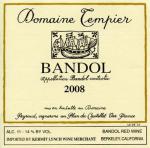
Mourvedre is an old, very famous grape known for playing a major support role to grenache and syrah in crafting those great southern Rhone blends.  Here, with the Domaine Tempier Bandol Rouge 2008 ($39), arguably the best wine from Provence, Mourvedre is featured with support from Grenache, cinsault and carignan.  The result is rich, concentrated flavors of juicy dark plums and ripening currants with some oaky, smokey on the finish.  This wine presents a unique flavor profile, different, one to remember more clearly while sharing my new bottle that lies in wait.

A very nice surprise and learned moment came with an offer to try a 2009 Domaine Cheysson Chiroubles Beaujolais ($20), recently awarded 91 pts from Robert Parker, produced exclusively from gamay grapes in the Chiroubles appellation of the Beaujolais region of France.  Apparently, 2009 was a great year for Beaujolais and this particular wine can be simply categorized as soft and ripe.  More specifically defined, the complexity of ripened tart fruit, combined with soft raspberry finishing with significant smokey, woodsy hints would be appropriate.  At $20, this package is what we call a value.

Our tasting was part of the “Mad Music Thursdays” event that occurs each Thursday on El Molino between Green St. and Colorado Blvd. and within participating businesses like Monopole.  It generally features gourmet food trucks and special music presented by local businesses like Zona Rosa coffee and Elements restaurant. This evening a cellist accompanied and joined our tasting.  The event is now on hiatus until summer 2012, but special wine tastings, wine dinners and other “educational” events will continue at the wine shop.  Those wishing to be informed of future events can register at info@monopolewine.com.

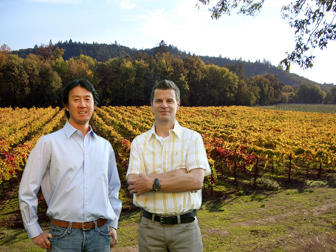
The paths that led partners Peter Nelson and Hiro Tamaki to Monopole are diverse, bonded through passion and some fate.  Nelson came to southern California from the Pacific Northwest to complete law school, while Tamaki came to California from Japan to pursue graduate studies, first in San Francisco, finishing with an MBA from USC.  Throughout their early years, they independently developed and pursued a passion for wine, both passing the Certified SommelierExam of the Court of Master Sommeliers and achieving the Advanced Level of the Wine & Spirits Education Trust, where they met.  Very highbrow credentials for a couple of casual guys, chasing second careers, that know what they are talking about and truly enjoy sharing their wisdom

Hiro Tamaki and Peter Nelson

As it turns out, Monopole is a tremendous resource to increase one’s knowledge of wines from Bordeaux, Tuscany, Rioja, Rhone Valley and other great region of Europe.  One may find themselves in a captivating discussion and leave with that special new “find” from the old country.

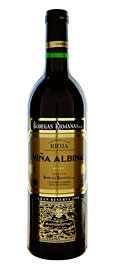
One such discovery occurred when our friends were searching for a good Spanish wine to pair with tapas at Three Drunken Goats in Montrose.  Peter led them a 1998 Bodegas Riojanas Vina Albina Gran Reserva Rioja ($40) from the famous region between Barcelona and Bilbao, recently boasting a 92 pt rating from Stephen Tanzer.  Surprised to find such an early vintage available, we learned it was a new release, aged over a decade.  It has all the complexity of an aged wine; beautifully layered flavors, great balance and texture.  Predominantly tempranillo, the wine delivers assorted hints of flavors from cherry to rhubarb and cedar; a perfect food wine.

1998 Bodegas Riojanas Vina Albina Gran Reserva Rioja

My passion for California pinot noir is no secret.  Hopefully, Peter and Hiro can help me understand it roots through the fine wines of Burgundy, a comparison of interest for sometime.  As I was about to leave, a young man came in with admittedly no knowledge of wine and asked for a recommendation, presumably for a potentially special dinner.  After some discussion of a probable menu, he was led to the relatively small California section and I overheard Peter asking him if he had seem the movie, “Sideways.”  He most likely hooked him up with a nice pinot noir from the Santa Rita Hills that could change his life forever.

In its simplest form, wine is still about passion; the kind of passion that created Monopole.  Wholesale outlets and wine warehouses have their place. Fortunately, shops like this still exist for those of us who remember the value of personalized service from a neighborhood store.  In this case, “professional service” includes impressive expertise, all within a district that continuously fuels the senses.


Wine Gossip

Vintage 2009 Pinot Noir

Autumn is a great time of year for many reasons; just one is that top Pinot Noir producers finally begin shipping their fall releases that have been purchased earlier in the year.  Many wineries will not ship to the Antelope Valley until November, assuring that our summer heat will not impact the wine.   Anticipations are high since Wine Spectator magazine’s James Laube declared the 2009 vintage pinot noir, especially Sonoma County, as arguably the decade’s best.   California pinot noir has made tremendous strides since early vintners set out to produce those astounding Burgundian wines in local soil.  Among the five major regions in the state to produce pinot noir (Mendocino, Sonoma, Carneros, Monterey Santa Barbara), the average vintage rating is nearly 96 points, 99 points for Sonoma which includes Russian River Valley, Sonoma Coast, Sonoma Mountain, Sonoma Valley and Green Valley appellations.  As a comparison, the previousl two vintages received ratings of 88.4 and 90.8 points.  Since 2003, Sonoma pinot noir vintages have averaged over 90 points.  The 2009 vintage has moved them from the “outstanding” into the  “classic” category.

Admittedly spoiling myself with fine pinot noir, I soon will be receiving 2009 vintages from Kosta Browne, William Selyem and Auteur from Sonoma and Seasmoke and Rusack from Santa Barbara County.  Among my meager allocation and budget will be a fruity, medium-bodied Williams Selyem Pinot Noir Sonoma Coast 2009 (91/$46) and a rich full-bodied Kosta Browne  Pinot Noir Sonoma Coast 2009 (95/$52), both highly touted and, more importantly, truly pleasurable to enjoy with friends.    By the way, the 10/15 issue of Wine Spectator has a good story on Ed Selyem and Burt Williams, early pioneers of California pinot noir.

Credit for the near-perfect 2009 vintage goes to moderate weather throughout the state and modest yields, something Brian Loring pays much attention to.  The Loring Wine Company produces outstanding Pinot Noir from 10 different vineyards located throughout the state.  His top rated vintage 2009 pinot noir, the Loring Pinot Noir Sonoma Coast Durell Vineyard 2009 (94/$45), the Loring Pinot Noir Paso Robles Russell Family Vineyard 2009 (94/$45) and the Loring Pinot Noir Santa Lucia Highlands Rosella’s Vineyard 2009 (94/$45) are evidence of statewide moderate weather and a credit to the winemaking aptitude of Brian Loring.

Garys’ Vineyard, located in Monterey County’s Santa Lucia Highlands region, again, claims a major presence in the 2009 vintage.  The story is old now.  Two childhood friends named Gary emerge from college to transfer agricultural land into one of most respected vineyards in the state.  The following chart list ratings of outstanding vintage 2009 pinot noir from major producers using grapes from Garys’ Vineyard:

Siduri                                    94            $53

Loring                                  93            $45

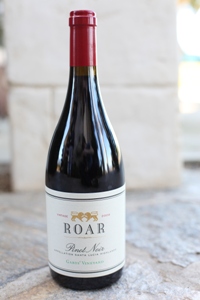
Roar Pinot Noir Garys' Vineyard 2009

AP Vin                                 93            $48

Kosta Browne                    93            $72

Roar                                     92            $50

Vision Cellars                    89            $48

Miner                                    86            $60

Logic tells us the grapes are exceptional and the winemaking varies.  However, if you find “Garys’ Vineyard” on any wine label, trust that you have found a quality wine.

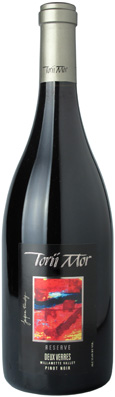
Although a brief perusal of our local Bevmo store revealed many vintage 2009 Pinot Noir, the Nautilus Marlborough Pinot Noir 2009 ($25/90pts.) from New Zealand and the Erath Pinot Noir 2009 ($20/88 pts.} are two that I would recommend as very good, moderately priced wines with good fruit and texture.  In addition, I must give special mention to the Torii Mor “Deux Verres” Pinot Noir 2007 ($40/92 pts.) from a well-respected Oregon winemaker.  This may be a “find” since I checked the winery website and they have none listed under available library wines.

Vintage 2011

The trend of great California vintages in odd-numbered years may be coming to an end with much concern worldwide over the 2011 vintage.  In California, it was too much rain, in parts of Europe; there was excessive heat through the spring.  In other regions, periods of steady rain and extended heat played havoc with the vines.

As we all know, California experienced early rainfall and plenty of it through the spring.  In many regions mildew and even botrytis, a fungus that affects the vines, threatened low-yield and difficulty ahead in maintaining quality in a tough year.

The Napa Valley, who experienced a near perfect vintage 2007, had unusually cool temperatures that delayed harvest.  Central Coast and Paso Robles region were hit with a late frost that resulted in voluntary and involuntary fruit loss.  Many Mendocino County vineyards, impacted a few years back with fire damage, had to deal with above average rainfall and low temperatures.

By no means should we “throw in the towel” on vintage 2011.  First, October could offer some extra sunshine and winemakers are accustomed to unpredictable weather and adapting to make the best with what they have.  One prediction seems probable; that there will be less wine to go around when vintage 2011 is released in a few years.  Until that time, enthusiasts should be conscious of good value wines from vintages 2007 and 2009.

Vineyards on Catalina Island?

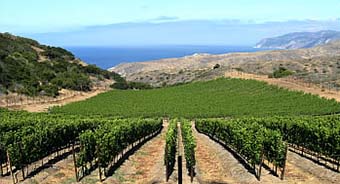
If one had access to acreage on the islands and was inclined to plant wine grapes, what varietals would match the terrior?   Having not been to Santa Catalina, almost totally unfamiliar with its climate, I can speculate to the existence of many microclimates that can support such diverse grapes as pinot noir and zinfandel.

Rusack, a small Santa Ynez Valley boutique winery, has produced well-reviewed pinot noir, syrah and sauvignon blanc for the past decade in the Solvang foothills.  Rusack is announcing their first release from the Santa Catalina Island Vineyards, the 2009 Zinfandel from the old El Rancho Escondido property.  So, why after many years in the wine business would Geoffrey Claflin Rusack and Alison Wrigley Rusack decide on the Catalina Islands?  The answer begins with Alison’s middle name.

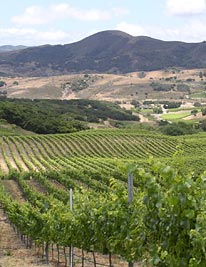
Her great-grandfather, William Wrigley Jr. purchased the Santa Catalina Development Co. in 1919 and the family stills controls the land, including the old ranch site along the southwestern coast.   That’s where the Rusack’s have planted 4.5 acres, mostly in pinot noir and cool-climate chardonnay with a small plot dedicated to a zinfandel clone, unique to their name.

Santa Catalina Vineyards

Geoffrey Rusack discovered some vines, apparently from an old winery on Santa Cruz Island, part of the Channel Islands chain, received permission to remove them and had them analyzed by UC Davis as a zinfandel clone.  Some of the vines were relocated and planted on a small half-acre plot on the Santa Catalina Island Vineyards.  The Rusack Santa Catalina Island Vineyards Zinfandel 2009 will soon be the first release from the new label.  As a member of Rusack’s “Anacapa Club”, I will have an opportunity to acquire some fairly soon and am anxious to try it.

Whatever trends occur in the wine industry are most likely generated in California, responsible for 92% of US production.  Through good and bad vintages, our wine production will continue to grow at an extraordinary pace.  A 2008 study, “Recent Trends in the California Wine Grape Industry” by professors at UC, Davis, states that wine is responsible for 8.7% of agricultural revenue, a percentage that will continue to grow.  The North and Central Coast regions produce 36% of the state’s wine and regions like Paso Robles, as we have seen, have grown from 20 wineries in 1990 to over 170 today.

Nature’s element, new expanded regions and near fanatic attention to terrior reminds us that holistic wine production is an art as well as a science.  It is a part of our culture and will increasingly be a part of our identity.


Santa Barbara Wine Day


By Lyle W. Norton  (8/13/2011)

An invitation to attend an afternoon Pinot Noir release party afforded me an opportunity to plan a complete wine day tasting new releases from the Santa Rita Hills and Santa Ynez appellations. If I timed my day properly, I could fit in lunch at Los Olivos village and a tasting of new Richard Longoria wines before the Foley Estate event.

Rancho Santa Rosa Vineyard

Foley Estate Winery, creators of some of California’s finest Pinot Noir and Chardonnay since the 2002 vintage was celebrating the release of their special “Brand” series and Lindsay’s Vineyard Pinot Noir, vintage 2009.  Having covered earlier vintages, their careful blending of clones within the 230-acre Rancho Santa Rosa Vineyard and Lindsay’s (formerly Rancho Los Hermanos) Vineyard, use of oak as well as fermentation techniques has pushed complex flavors forward and increased richness and texture with each vintage.

An irony of the afternoon was finding time to sneak across from the tents to the tasting room to secure a few bottles of 2009 Foley Estate “Barrel Select” Chardonnay ($50), my hands down favorite.  This Chardonnay delivers nice flavors of tropical fruit, honey, and vanilla within a creamy, rich texture.  To paraphrase The Most Interesting Man In The World:  “ I don’t always drink Chardonnay, but when I do, I prefer Foley Estate “Barrel Select”. However, this party is about Pinot Noir and the food that supports it, ready to showcase local restaurants.

Oak influences are the signature of the 2009 Pinot Noir Rancho Santa Rosa Vineyard, lending earthiness to the bouquet and flavors.  Some tannins and tartness add to the structure of a rich, concentrated texture.

JA Ranch Pinot Noir

Perfectly braised beef short ribs from the Hadsten House Hotel, near the entrance of Solvang, accompanied the Foley Estate 2009 Pinot Noir, JA Ranch ($45), combining specific clones from the Rancho Santa Rosa and Lindsay’s Vineyards.  Typical Pinot elegance was evident on the nose and the earthiness was balanced with hints of vanilla, anise and a very soft texture.

Offering many luxury amenities at reasonable prices, the Hadsten House has been a true “find” in the Solvang area.  It is family friendly, offers a true gourmet breakfast and, now has an on-site restaurant featuring traditional dishes of chicken, salmon, chops steaks and a wine list continuously updated to feature the best the region has to offer. I can tell you that their well-spiced short ribs fell off the bone.

Just when I felt the “JA Ranch” Pinot was the “best of show,” along comes the Foley Estate 2009 Pinot Noir, T Anchor Ranch ($55)with enough spice on the nose and palate to pair with spice-rubbed lamb, courtesy of Petros Restaurant in the Wine Country Inn at Los Olivos village.  Certainly the most complex wine of the release, the “T Anchor

2009 "T Anchor" Pinot Noir

” has a variety of strong spices including cloves, brown sugar and cinnamon delivered through a velvety texture that lasts and lasts.  This is a good wine to track throughout the year.

The “Brand Series” Pinot Noir blend specific clones from the Rancho Santa Rosa and Lindsay’s Vineyards. Our final series taste was the 2009 Pinot Noir, “Bar Lazy S”, a

"Lazy S Ranch" Pinot Noir

medium-bodied wine with classic black cherry flavors preceded by a candied nose. The wine was accompanied by cannellini beans with Italian sausage, black and white pepper, pairing nicely with the toasted nut hints on the finish.

Whether red or white, the Foley “Barrel Select” concept blends the most complex and complementary barrels after the fermentation and aging process. A high percentage of the juice completes a malolactic fermentation process that adds to the softer, rich texture.  Fantastic Boneless Baby Back Ribs with Pressed Casaba Melon and Tomato Salad, for me, could pair with almost anything, including the 2009 Foley Estate Pinot “Barrel Select” ($60).  With a slight bouquet and traditional flavors, the complexity of this wine is nicely packaged in a creamy texture and long finish.

The 2009 Two Sisters Pinot Noir Lindsay’s Vineyard ($75)is comprised of the best clones within the vineyard, blended after individual aging in 90% new French oak barrels. With nice floral hints on the nose and caramel, cinnamon on the finish, “Two Sisters” has all the layered flavors and texture expected from a wine in the higher price range.

Foley "Barrel Select" Pinot Noir

The Foley’s daughters are placed in a prominent role throughout their family of wines.  After acquisition, the westerly Rancho Hermanos Vineyard was divided into two distinct vineyards and renamed for the sisters, Lindsay for the reds and Courtney for the whites. Both “Two Sister” wines are carefully crafted, but the Pinot Noir will need lengthy cellar time.

Another Foley family operation, Lincourt Winery, located in the Santa Ynez Valley near Los Olivos village, combines the sister’s names for its own.  Adding sauvignon blanc, pinot grigio and cabernet sauvignon to the traditional pinot noir and chardonnay, Lincourt offers a palate of reasonably priced, quality wines.

The Foley Estate Winery, under the leadership of winemaker Leslie Renaud, is producing luscious high-end Pinot Noir and Chardonnay in a region known for it, within a state that leads the world.  There are simply many to choose from.  For those interested in “stepping up” their wine experience a notch, I feel that the Captain’s Club” would be both informative and fun.  Although I am not a member, I do know that their wines are really getting good, the winery resides in a serene valley located off Highway 246 and they always host multiple events for the member’s enjoyment.

My previously mentioned detour to the Richard Longoria tasting room, initially intended to secure a specific wine, introduced me to some new releases, tasted outside, in a lovely garden setting.  I tasted the 2008 Longoria “Fe Ciega Vineyard” Pinot Noir ($48)as a symbolic gesture.  Actually, this wine had me at hello.  Rated consistently in the mid-

Longoria "Fe Ciega Vineyard" Pinot Noir

nineties, the vintage 2008 “Fe Ciega” has gotten great press, convincing me to acquire a few bottles to cellar for at least a year.

In the garden, we began with a vintage 2010 Albarino ($23), offering some soft tropical fruit with a citrus “kick”.  A nice wine, but with all the chardonnay, sauvignon blanc, viognier and white Rhone-style blends saturating the market, one wonders where this Spanish white grape will fit in.

Continuing to work with Spanish varietals in the warmer Santa Ynez Valley, Longoria has planted the tempranillo grape, often compared to our

2010 Longoria "Albarino" a white Spanish grape.

cabernet sauvignon. Having first tasted the 2008 Longoria Tempranillo Clover Creek Vineyard ($36) months earlier at a private tasting in Glendale, I was anxious to discover if my initial positive impressions were justified.  Once again, the somewhat earthy bouquet and flavors were enhanced with nice structure and texture, aided with hints of Merlot and Syrah. I would definitely select this vintage from a wine list to pair with red meats or pasta.

Richard Longoria produces two distinct single-vineyard Syrah, one from the Alisos Vineyard in Los Alamos Valley, the other from Clover Creek Vineyard in Santa Ynez.  Described as a more restrained vintage than past due to cooler late summer and less sugar content, the 2007 Longoria

Syrah from Alisos Vineyard in Los Alamos

Syrah Alisos Vineyard Santa Barbara County ($34), even if somewhat acidic, expressed wonderfully balanced spice and berry flavors.  Although it is drinkable now, this wine definitely needs time to optimize.  For those who have access to wild meats like venison or boar, this syrah would pair perfectly.

The thought of ten new and interesting wines, a few for my cellar, boneless baby back ribs with pressed casaba melon and tomato salad and an opportunity to spend a day amidst the new California landscape; oak-studded rolling hills and vineyards has me already wanting to do it again.