Category Archives: Wine

“Wine, Women and Song”


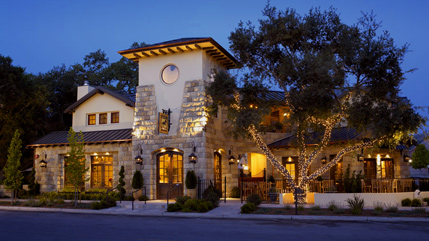
Hotel Cheval

Curiosity, and the Hotel Cheval property in Paso Robles led me to accept an invitation to attend an inaugural event called “Wine, Women and Song”, promoting a new book and wine company from author, entrepreneur Deborah Brenner and actress, singer/songwriter Rebecca Pigeon’s new release, “Slingshot,” due out in October 2011. Aside from promoting their wares, the two have embarked on a national tour supporting the Farm Aid effort.

Hotel Cheval is a charming inn, with 16 intimate rooms, located steps from the Paso Robles town square.  It’s perfect for those who want a pampered wine tasting weekend.  A quiet apéritif after dinner around one of the outdoor fireplaces or meeting friends for evening tastings at the Pony Club outdoor patio are both experiences that the property can deliver.  Well-appointed, luxurious rooms complete the upscale, relaxing encounter

Actually, Rebecca Pigeon was an attraction for me, having enjoyed many of her films including “State and Main,” “Red” and her memorable role as Susan Ricci in the classic “Spanish Prisoner,” directed by husband David Mamet.  This evening, her song writing and vocal skills will be showcased to 100 wine tasters, outdoors on a beautiful night.  No pressure there.

 

Deborah Brenner

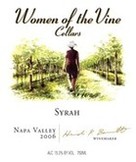
During the writing of her book, “Women of the Vine,” Deborah Brenner met and conferred with several prominent women in the wine industry.  Women like Merry Edwards, Heidi Patterson Barrett, Amelia Ceja and others not only gave her inspiration to finish the book, but to initiate an original company to unite several top women wine makers contributing wine under the new brand, “Women of the Vine.”

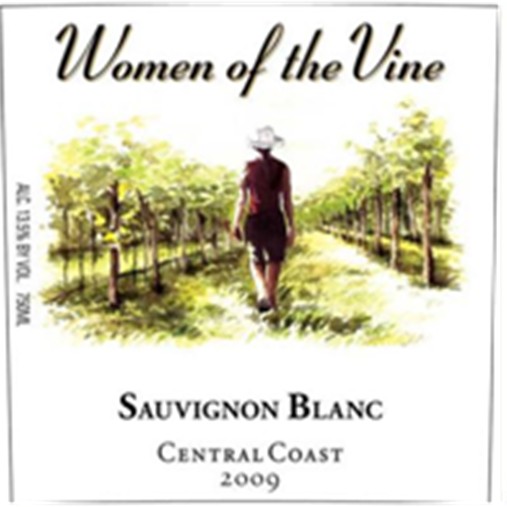
The “Women of the Vine” label gives sustainable growers and female wine makers a collaborative setting that has provided opportunity to bring their wines to the marketplace.  Thus far, some high-profile wine makers are contributing some very good wines.

Alison Crowe, who “cut her teeth” in winemaking for Randall Grahm at Bonny Doon Vineyards, produced two white and three red varietals, her WOTV Sauvignon Blanc Central Coast 2009, in my opinion, leading the way.  In addition, some high-end single-varietals and blends, from noted wine makers, stole the show.
Winemaker Heidi Peterson Barrett is part of Napa lore as a member of the Barrett Family, who’s Chateau Montelena Chardonnay helped establish some dominance of California wines at the 1976 Paris Tastings.  She has earned her own reputation by upgrading Beuhler Winery to produce reasonably priced, high quality wines and from her work with Screaming Eagle.  Her WOTV wine is the beautifully balanced, spice-driven 2006 Napa Valley Syrah ($65), terrific from nose to finish.

Dorothy Schuler, known for her Spanish varietals under the Bodegas Paso Robles label, contributed the WOTV 2006 Paso Robles Tempranillo ($34), well-balanced with a nice “jolt” of vanilla on the finish.  Her WOTV 2003 NV Napa Rojo ($52) blend was not available but the mixture of dry-farmed touriga, graciano, tempranillo and tinto cao left me intrigued.
The tasting also included a variety of wines from Napa Valley’s Miner Winery and J Dusi Wines from winemaker Janelle Dusi who’s family has been an integral part of the Paso Robles wine community for decades.
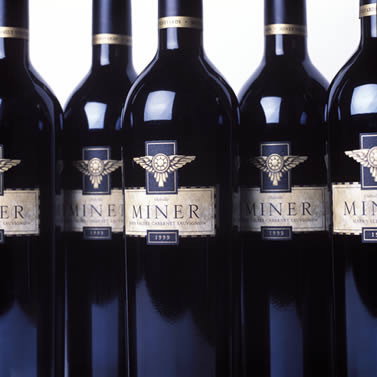
Miner Family Winery

The Miner Family Winery has develop a reputation for creating fine wines, especially their meritage, “Oracle” ($90) from Napa Valley.  Tonight, we tasted a soft, accessible 2010 Sauvignon Blanc, the small lot 2009 Napa Valley Petite Sirah ($40) and the unique 2008 Sangiovese Gibson Ranch($24) from Mendocino County. Plantings of Sangiovese, the dominant grape of Italian Chianti, has expanded in California over the past decade, not necessarily in the cool northern coast.  Releases from the Miner Family Winery should interest all serious wine enthusiasts.  Of note, Miner is now producing Pinot Noir from Garys’ and Rosella’s Vineyards in the Santa Lucia Highlands.
J Dusi Wines

The Dante Dusi Vineyard has played an important role in providing grapes for several high-end Paso Robles zinfandel wines since WW11.  Dante’s granddaughter, Janelle has expanded the family repertoire into winemaking through the release of her own label, J Dusi Wines.  Vintages 2007 and 2008 J Dusi Zinfandel offer proof that she can consistently create good, old-fashioned jammy, Paso Zin.  A must to try from J Dusi is the luscious zinfandel port wine.  It is a dessert in itself.

The tasting was both educational an enjoyable, but it was time to take our glasses and ourselves to the patio to enjoy the musical portion of the evening.

While reviewing her CD, “Slingshot”, one critic compared Rebecca Pigeon to the legendary Joni Mitchell, not musically but for imaginative lyrics. As she opened with “Get Up Get Out’, a song about change, I found her musical style to be as elusive as it was creative and charismatic.

Rebecca Pigeon

Beautifully produced by Larry Klein, “Slingshot” is a compilation of short stories that evoke visual images that one may find in a film. The haunting “Kiss Me”, with a melody reminiscent of early Janis Ian and the deceivingly upbeat, “I Love No-One” illustrate the diversity of her music, tied together with self-revealing, meaningful lyrics and an expressive voice.

Ms. Pigeon references acting as a metaphor for real life hypocrisy in “Is Anyone”, melodically set in a 30’s French style which leaves us with the following thought”

“And we play out the scene

And our heat sears the screen

Are we really what we seem

Oh well, Is Anyone?”

“He’s as young as Prozac, he’s as old as the wheel“ describes Rebecca’s “Disintegration Man”, a rock ballad filled with witticisms and edgy modern references.  Her signature piece at the concert and on the CD is a poignant cover of the late Warren Zevon’s classic ballad, “Searching For A Heart.”  Briefly commenting on Zevon, she then paid tribute through her beautiful rendition, a lasting end to the concert and our evening.

Both the “Women of the Vine” and “Wine, Women and Song” collaborations support and promote the Farm Aid benefit, donating a part of their profits to help sustain the American farmer. This event was the first of a national tour through October featuring wine tasting and Rebecca’s music, a combination I would willingly experience again.  More information on both artists can be found at www.womenofthevine.com and www.rebeccapigeon.com

The Value of “Barrel 27”

On our way to attend an event called, “Wine, Women and Song” at the quaint Hotel Cheval in downtown Paso Robles, we received a text that our friends, Rosemary and David, were going to be in town for the last few nights of their month-long “No Reservation Road Trip.”  This two night get-a-way just got busier.

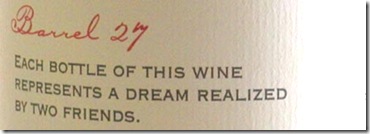
As friends, our serious interest in wine began in the mid-eighties.  Discovering new eating establishments and wines is what we are about when our paths cross in Paso.  During lunch, I explained my plans to visit Barrel 27, a new winery that recently has received recognition for producing good value-priced Rhone-style blends. With everyone game after lunch, we headed east from town to hopefully, discover some new releases.

Reviews from two major periodicals led me to the Barrel 27 ’08 “High On The Hog” White blend ($15) with ratings well into the nineties, medium-dry with layers of flavor.  Aside from comparing “Hog” vintages ’08 and ’09, the plan was to taste their entire palate of single-varietal and blended wines.

Barrel 27 Winery is located approximately one mile east of Highway 101, in the old industrial condo building that once housed Garretson Winery.  It’s visible from Highway 46, but only accessible from Golden Hill and Union Roads   Winemakers and friends, McPrice Myers and Russell From, drawn together by fate, are very upfront about their mission to respect the fact that hard working people should be able to drink high quality wine and still pay for the mortgage, car, kids and pets.  With two whites, five reds and a moscato dessert wine, we set about to make our own judgments.

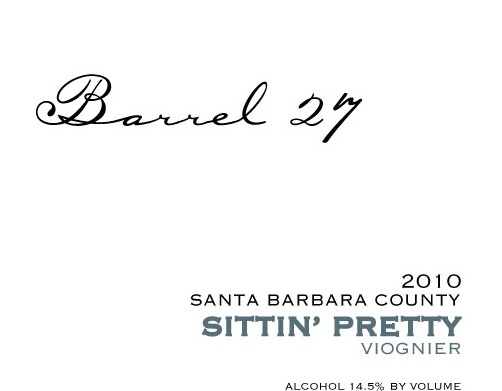
From 100% Santa Barbara County vineyards, their second release of “Sittin’ Pretty” Viognier 2010 ($18) delivered a nice blend of tropical and orchard fruits, but the rich, dense texture embodied the softer flavors of honey and melon. Although its price is average, this wine surpasses the standard in bouquet and taste.

I was not surprised that the 2009 “High On The Hog” White ($16), primarily Grenache Blanc and Viognier, stood up to its predecessor in overall quality.  Strong floral hints on the nose led to complex orchard fruit, honey and softened mineral flavors through a nice finish.  This is a great food wine.

Only their second vintage, Barrel 27’s single-varietal release of Grenache, a grape that, when done properly, can push the fruit forward without becoming overpowering.  Exhibiting a beautiful deep, ruby color, the 2008 ‘Rock and a Hard Place”  Grenache” ($18) was superbly balanced and full-bodied, delivering jammy fruit and spice on the palate.  The wine was rated in the high eighties by Wine Spectator and Robert Parker.

The winery’s signature release, sourced from Santa Barbara County vineyards exclusively, is poised to deliver the highest quality at value price of any Syrah in California. Consumer interest in Syrah from our central coast has driven starting costs above $30 per bottle.  The 2007 “Right Hand Man” Syrah ($18) is bold, both in bouquet and taste, with complexity and richness of wines twice the price.  Simply stated, this wine is a wonderful “find.”

The next wines are special, illustrating the winery’s ability to create single-varietals and blends with texture and complexity.  The costs are higher, but very competitive with similar high-end wines. Three wines before us, a bold Syrah, a classic Rhone-style and a “bullish” blend that promises to, possibly, be “the great steak wine of all-time.”

Smelling the bouquet of the 2007 “Head Honcho” Syrah($28) is a sensual task in itself.  The longer you do it, the more aromas you discover. The texture (heavy on the tongue) and the balance of sweet and savory flavors, to be expected from quality syrah, combine with typical spice influences to signify a compelling wine even before you experience floral hints on the finish.  A few bottles will rest in my wine cabinet for 6-12 months because everything about this exceptional wine signals that it will get better with time.

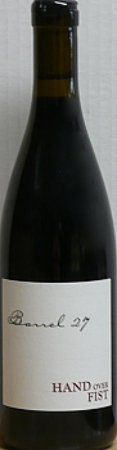
After discovering Barrel 27 through their white Rhone-style blend, the moment has come to taste their only classic Rhone-style red blend, unavoidably mindful of comparisons with wines tasted during my recent trip to Chateaunef-du-Pape.  The 2008 “Hand Over Fist” ($30) is Barrel 27’s highest rated wine, a classic Rhone-style blend of syrah (60%), Grenache (30%) and mourvedre (10%), nearly identical to those in the southern Rhone Valley.  Quoting some knowledgable person, “this wine is big and bold from nose to finish.”  The flavors are perfectly balanced, very jammy and liqueur-type in their intensity.  I agree with the winery’s recommendation to decant the wine for at least an hour, thinking maybe two is better.  A wine like this must have time to breathe and adjust to a new environment before it begins to “open up” to strangers.

I propose another historical event, a blind tasting to be held in Avignon, pitting new Paso Robles Rhone-style whites and reds against legendary, century-old wines from Gigondas, Chateaunef-du-Pape and other southern Rhone Valley appellations.  California is at the same stage in Rhone-style blend development as the Napa Valley was with Cabernet Sauvignon and Chardonnay during the 1976 Paris Tastings.  How we would compare is still a question, but my instincts see us performing better than expected.

Visualize the “Hand Over Fist,” The Saxum James Berry Vineyard Paso Robles 2007 ($67), Wine spectator’s 2010 Wine of the Year, the Tablas Creek Espirit de Beaucastel Paso Robles 2007 ($50) representing California going head-to-head with France’s Chateau de Beaucastel Chateaunef-du-Pape Hommage a Jacques Perrin Grande Cuvee’ 2007 ($535), Domaine les Pallieres Gigondas Terrasse du Diable 2007 ($28) and others.  We have nothing to lose and everything to gain from such a contest.

In conversations within French people about California, they always inquire how far I live from the Napa Valley.  Paso Robles, as a winegrowing region, was not on their radar at all.  A good showing from our stealth Paso wines would send shock waves through the world wine business.

The previously referenced “monster wine” is a powerful, multi-regional blend of Petit Verdot, representing Bordeaux, Syrah, from the Rhone Valley and Tempranillo, originating from the Roija region of Spain.  Concentrated fruit and berries, exotic spices, vanilla and, even chocolate are up-front on the nose through the finish of the 2007 “Bull By The Horns” Red Wine ($32).  This is a wine that needs that to be tamed by some extra time in the bottle, at proper temperature, with regular turnings.  This investment will result in a mature wine that will enjoy the company of a Filet Mignon with “Diana Sauce,” a favorite recipe from the “Wine Lover’s Cookbook.”

The tasting concluded with the 2008 “Head Over Heels” Moscato ($23), Barrel 27’s sweet, slightly sparkling, dessert wine. To me, an apéritif or dessert wine must stand on its own, shine with or without the accompaniment of everything from crème brulee to sharp cheeses.  The “Head Over Heels” has complex flavors of orchard fruits(peach), honey and melons. However, minerality and nice floral hints on the finish build a case that it can be THE dessert if necessary.

I wrote about all Barrel 27’s releases because I like them all.  For those beginning to research and target wines, they offer very good quality at a decent value.  My recommendation is to discover and enjoy their wines before the entire area does. Real or perceived scarcity can result in higher prices.

Our rendezvous with friends also led to some “catching up” over a nice lunch at Thomas Hill Organics and another memorable dinner at “Artisan,” arguably Paso Robles best restaurant, accompanied by a 2005 Leona Valley Winery “I+L+Y=O” Bordeaux blend from my cellar.  As for the “Wine, Women and Song” event, that’s another story.


Vins de Provence


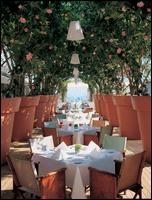
Long before being invited to this private tasting at the Mondrian Hotel in West Hollywood, I was aware that imports and sales of rose’ has risen over 20% and that a significant portion is produced in the Provence region of southern France.  However, there we were, standing in the white-on-white interior fusion restaurant, Asia de Cuba, staring at the wines of 18 Provence châteaux, set to discover what the excitement is all about.

With one small exception, all grapes produce the same clear juice, the color coming from lengthened contact with the skins.  Rose’ follows the same concept, but with very brief contact.  The wine still benefits from the pigments and tannins, giving the dry Rose’ its color, bouquet and flavor.  For prospective, 10% of the world’s wine production is rose’, 28% of all rose’ is French and 40% of that comes from Provence, with vineyards extending from the Mediterranean Sea up through Aix en Provence.

Throughout the world, Provence is the only region whose focus, primarily, is the production of dry rose’.  The vast majority comes from three appellations, each with distinctions within that create clear characteristics in the flavors.  Notably, Provencal winemakers ferment each varietal, individually, in vats, assembling the final “cuvee” blend afterward.  Prominent Rhone Valley grapes such as Grenache, Cinsault, Syrah and Mourvedre are used along with Cabernet Sauvignon, renowned in the Bordeaux region.

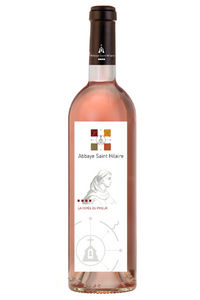
A collaboration between two winemakers from the heart of Provence led to the creation of Abbaye Saint Hilaire whose wine of note was not a rose’, but an inimitable red Rhone-blend that added 15% Cabernet Sauvingon, a strange bedfellow. The resulting Abbaye Saint Hilaire Cuvee Prieur Red Wine 2007 was a very accessible, well-balanced wine with loads of fruit on the nose and palate, allowing the 60% syrah to contribute a spicy, white pepper finish.  With some luck, one may find this reasonably priced cuvee’ on a SoCal wine list.  The fruit intensity was very clear and appreciated, but the Abbaye Saint Hilaire Cuvee Prieur Rose’ 2010 was best expressed through a soft minerality throughout.

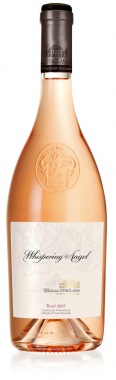
Chateau D’Esclans Domaines Sacha Lichine presented a flight of four rose’, each with vast differences in techniques, flavor and price point.  From the ripest vines on the property, The Grenache-based Chateau D’Esclans-Domaines Sacha Lichine “Whispering Angel” Rose 2010, their most popular wine, is lightly aromatic, heavy on flavor and designed to be very food-friendly.  By comparison with the full stainless steel fermentation, the mid-priced Esclans Cotes de Provence Rose’ 2008 added 20% oak to effectively soften the wine.  A real treat was in store with the last two wines, each from 50 to 80-year-old vines, aged in 100% oak barrels for months before release.

Both the Chateau D’Esclans—Domaines Sacha Lichine “Les Clans”($60) and “Garrus ($100) Rose’ 2008, each boasting a 75% Grenache, 25% rolle blend, expressed more complex, well-balanced flavors, adequate to stand up to food or enjoy individually.  However, at $20, I fully understand the attraction to “Whispering Angel”.

If you are a person who selects wine by the label or bottle shape, Chateau de Berne is targeting you.  Introducing new “liqueur” type, rectangular bottles two years ago, the Chateau de Berne Cuvee Speciale Rose 2010 has become a huge success, partly because of the sexy bottle, mostly because it’s a beautiful, reasonably priced dry rose’. Looking like a bottle of “patis”, consumed at an outdoor café, by a Peter Mayle character, this Grenache-cinsualt blend has the color of rose petals, a floral nose accented with soft orchard fruits that balance other exotic fruits on the palate.  The cinsault-grenache blend Chateau de Berne Bistrot Troezien Rose 2010, with the fruit intensity to match most, generates popularity through its $11 retail price.

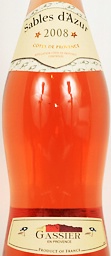
Another affordable rose’ with a sexy bottle, more vibrant in color, the Chateau Gassier Sables d’ Azur Rose’ 2010, from 100% stainless steel, was very fruit-forward through the finish.  The sales representative, boasting an 87 pt. rating from Wine Spectator, told us the wine is available throughout the L.A. region for under $15.

Clearly one of the best I tasted was the crisp, clean Chateau Roubine, Cru Classe’ Cuvee Classique Rose 2010, compiled from six Rhone grapes and Cabernet Sauvignon, followed a nice floral nose with fresh, expressive fruit that would pair well with Asian dishes or a porch swing.  This wine is now on my radar.  The Chateau Roubine Cru Classe Cuvee Classique White Wine 2010, combining lesser known varietals ugni-Blanc, semillon, rolle and clairette, is recommended to those seeking a very dry, light wine with significant mineral notes.

Yet a third stylish bottle housed the Chateau Saint Pierre Rose’ Cuvee Tradition 2010, a salmon-tinted, cinsault-based rose’ with peach and other orchard fruits on the nose and palate.  The flavors and texture were very rich and a delightful burst of spicy notes led to a nice finish. The cinsault grape is used extensively in Vins de Provnence, both as dominant and sub-dominant partners. Cinsault adds softness and bouquet to the famous Rhone Valley blends and, now, offers a reprise performance with rose’.

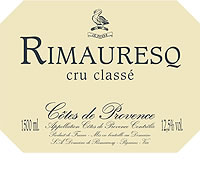
Unique terrior with cooing winds and longer shade sets Domaine de Rimaresq apart from many wineries and has led to recent accolades from Wine Spectator, Steven Tanzer and others. The Domaine de Rimauresq “Petit Rimauresq” Rose’ 2010 and Domaine de Rimauresq “Rimauresq Cru Classe” Rose’ 2010, both highly powered varietal blends, expressed concentrated, well-balanced fruit flavors and an unusually rich finish.

Rose’ has made a comeback, consumer interest has returned and Vins de Provence understands the dynamics.  Many of these featured wineries have built lodging on the chateaux to promote tourism. However, the bottom line of success is one’s ability to compete in the world market, which requires exports to California.

At times, rose’ can understandingly evoke a “taste one, tasted them all” attitude in some and “this isn’t half bad” among indiscriminate others.  However, I found the Vin de Provence rose’ consistently expressed complex, concentrated flavor that was very balanced, none better than the one I would like to take home.

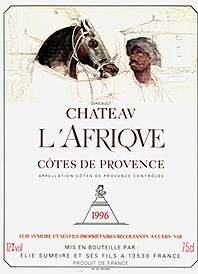
Among many other fine wines, my top rose’ uses all organically grown grapes, mostly Grenache, to create a wine that embodies all the best qualities of the region.  The Famille Sumeire Chateau L’ Afrique 2010, in addition to more traditional floral, orchard fruit nose and flavors, offers a clean, subtle cranberry tartness, all perfectly balanced and elegant.

The Sumeire family has cultivated their vineyards since the beginning of the 20th century.  Today, the 600 acres of vineyards, divided among three estates, are all officially organic.  Famille Sumeire also produced the Chateau L’ Afrique Red 2009, a Grenache-based Rhone-blend with a powerful nose and soft minerality, although benefits will be delivered with more time.

In France, vin rose’ out sells white wine and much of the production comes from the Provence.  As the wines emerge into the California market, they can, in my opinion, assimilate quite well and offer complex, deep flavors for those who are seeking something light during the summer months or year-round with Asian cuisine.


Wines and Lexus

Photos: Karen Norton


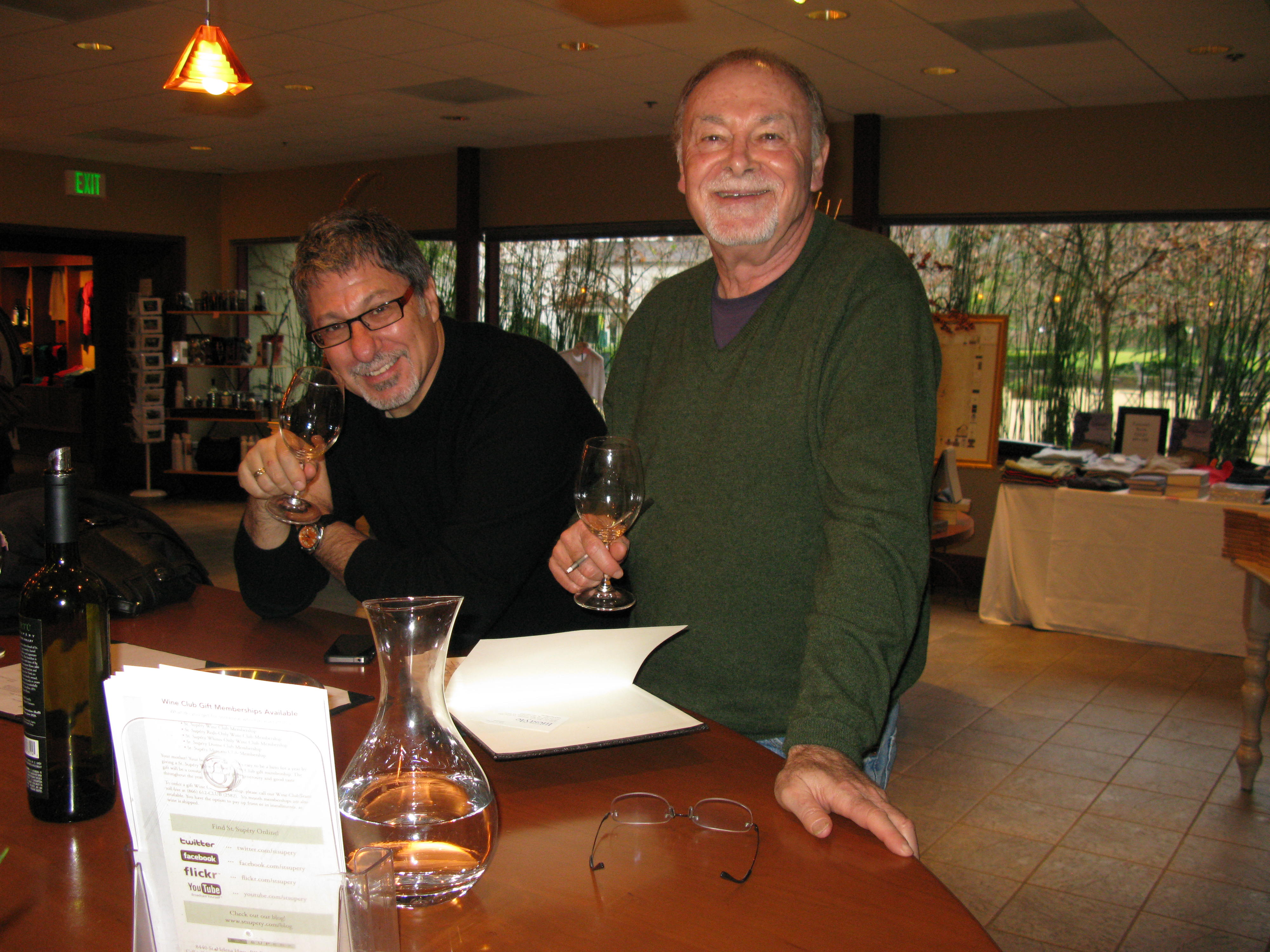
David and Lyle at St. Supery Tasting Room

Long-time friend David’s birthday was January 1st; it falls on the same date each year.  What was special about this year, other than it’s his last to truthfully avoid the big 6-0, was that we joined he and his lovely wife, longer-time friend Rosemary for a few days in the Napa Valley.  Anticipating relaxation, food and wine exploration, we were amazed by the other benefits engendered from the fact that David drives a 2010 Lexus RX450h.

Firstly, he made a call to a live person requesting directions to the Avia Hotel in quaint downtown Napa.  Moments after clarifying the spelling, a map and directions appeared on the screen of the on-board GPS system.  Uncertain of what impact the Lexus had while checking into the hotel, I am certain that David never negotiated four room upgrades at the original discounted rates before he bought the car. One-bedroom suites with fireplaces require very little discussion, a smile, and a simple thank you. It really is a beautiful car.

Lastly, aside from the comfortable ride, Lexus drivers are afforded opportunities to schedule special tastings at designated wineries.  We scanned their list and quickly chose two fine Napa Valley wineries to explore, one producing a wine included on Wine Spectator’s Top 100 List of 2010.

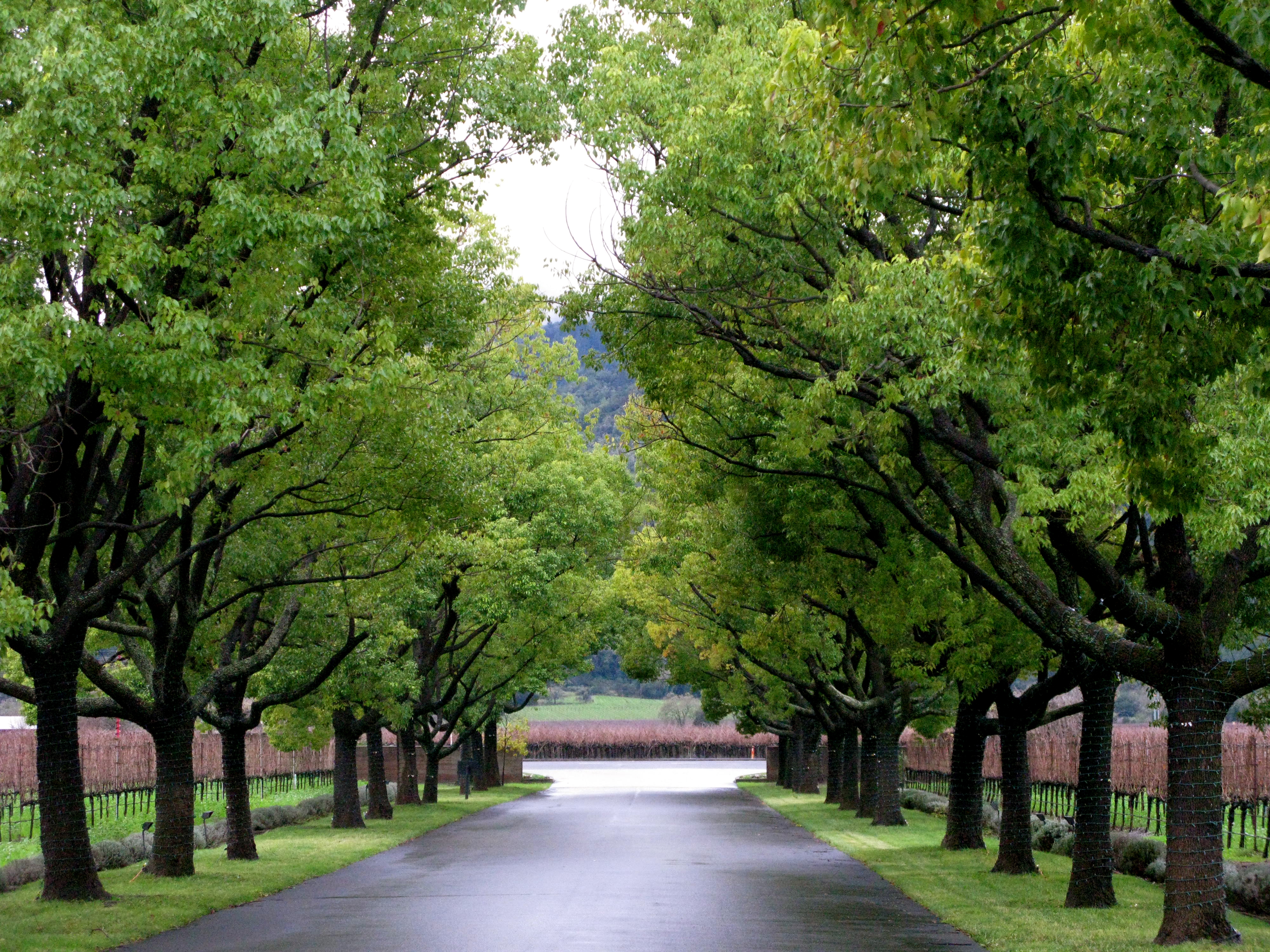
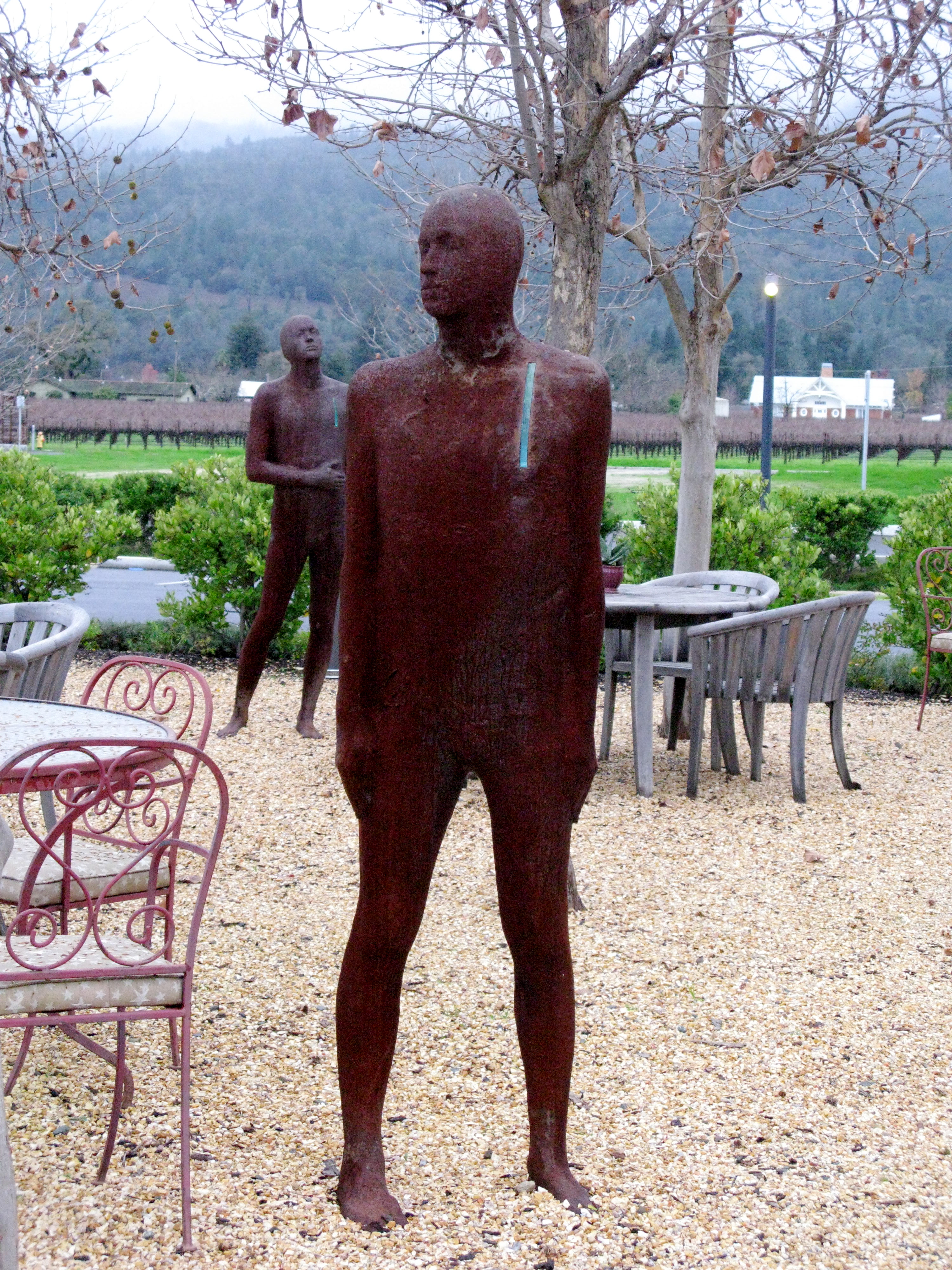
Moving through the spectacular tree-lined entrance to St. Supery Vineyards and Winery in Rutherford, surrounded by estate vineyards, one would expect to discover a French château and not a modern concrete and glass building, amid pleasingly landscaped grounds.  Once inside, the art gallery and attractively appointed tasting room were inviting to all senses.

Founded decades ago, St. Supery is known for producing fine Cabernet Sauvignon and, with the addition of its Dollarhide Vineyards years later, varietals from the Bordeaux region of France.  Our tasting included a wonderful Sauvignon Blanc, two very special blends, a single varietal Bordeaux grape and a flight of exceptional Cabernet Sauvignon.

For several years, Sauvignon Blanc has served as, for many, a softer alternative to Chardonnay.  In recent years, California winemakers have opened up the limits of the grape, shaping it into a more food friendly wine and pushing it to full flavor potential.  The 2009 At Supery Sauvignon Blanc “Dollarhide Vineyard” ($25) is a good example of positive results.  Grapefruit, pineapple and other tropical fruits are evident on the nose, followed by more orchard fruits (apricot, pear) and hints of oak on the finish.

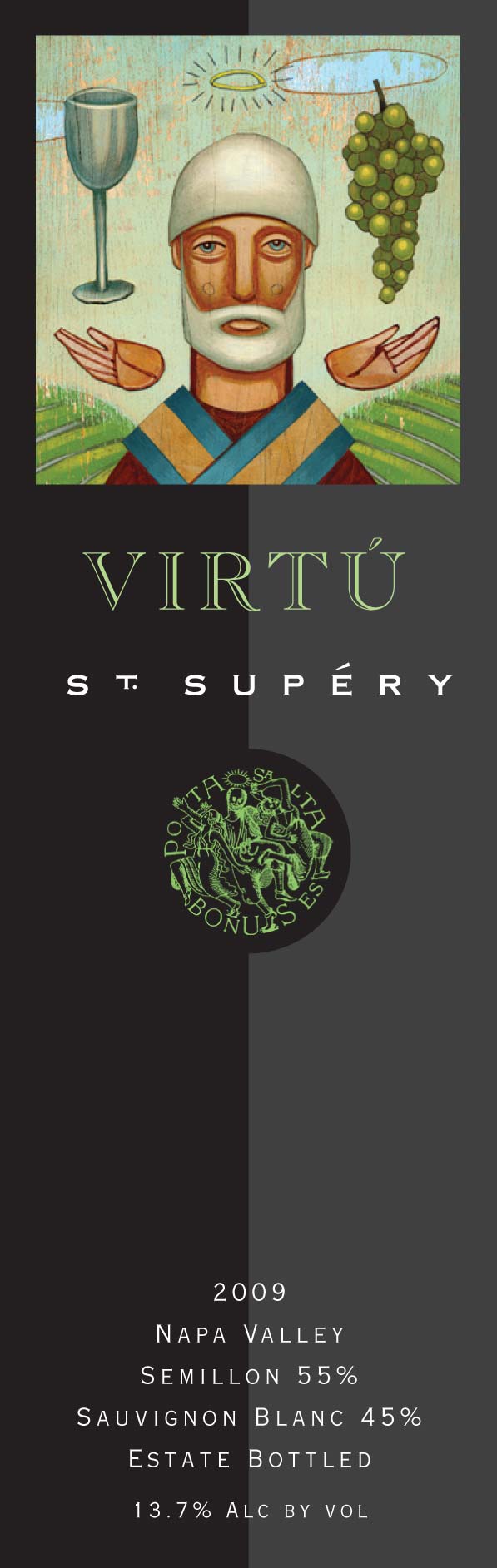
First discovering the Semillon varietal in Australian wines, I later learned that it is one of three white wine grapes approved to be grown in the Bordeaux region of France. Used sparingly in French dry blends, it’s abundant in late-harvest or dessert wines. In California, Semillon is most often blended with Sauvignon Blanc as a dry white wine.  The 2009 St. Supery “Virtu” is one such blend, beginning with orchard and tropical fruit on the nose, progressing to a wonderful texture and “smoked” flavors, combining the best traits of each varietal. This wine is a must for those interested in exploring white blends.  Unique flavors and deep textures were enough for me to add a few bottles to my collection.

As a single varietal wine, Petit Verdot is relatively rare, commonly used in Bordeaux or California meritage blends.  Although difficult to find, single-varietal Petit Verdot can express soft flavors and good texture.  When available, the Leona Valley Petit Verdot, grown locally, is one I would definitely recommend.  Enjoying a bottle with family at Christmas dinner prompted an email to Leona Valley owner David Reynolds to share the many compliments it received.  The 2007 St. Supery Petit Verdot ($50), another exceptional wine, expresses rich, concentrated flavors and oak influences. Researching the availability of this grape as a single varietal will truly spawn just rewards.

The Cabernet Sauvignon-dominant 2005 St. Supery “Elu’” ($65), a Bordeaux-blend with Merlot and hints of Cabernet Franc and Petit Verdot, near flawless with wonderful hints of vanilla on the finish, was a definite prelude for the flight of Napa Valley Cabernet that followed.

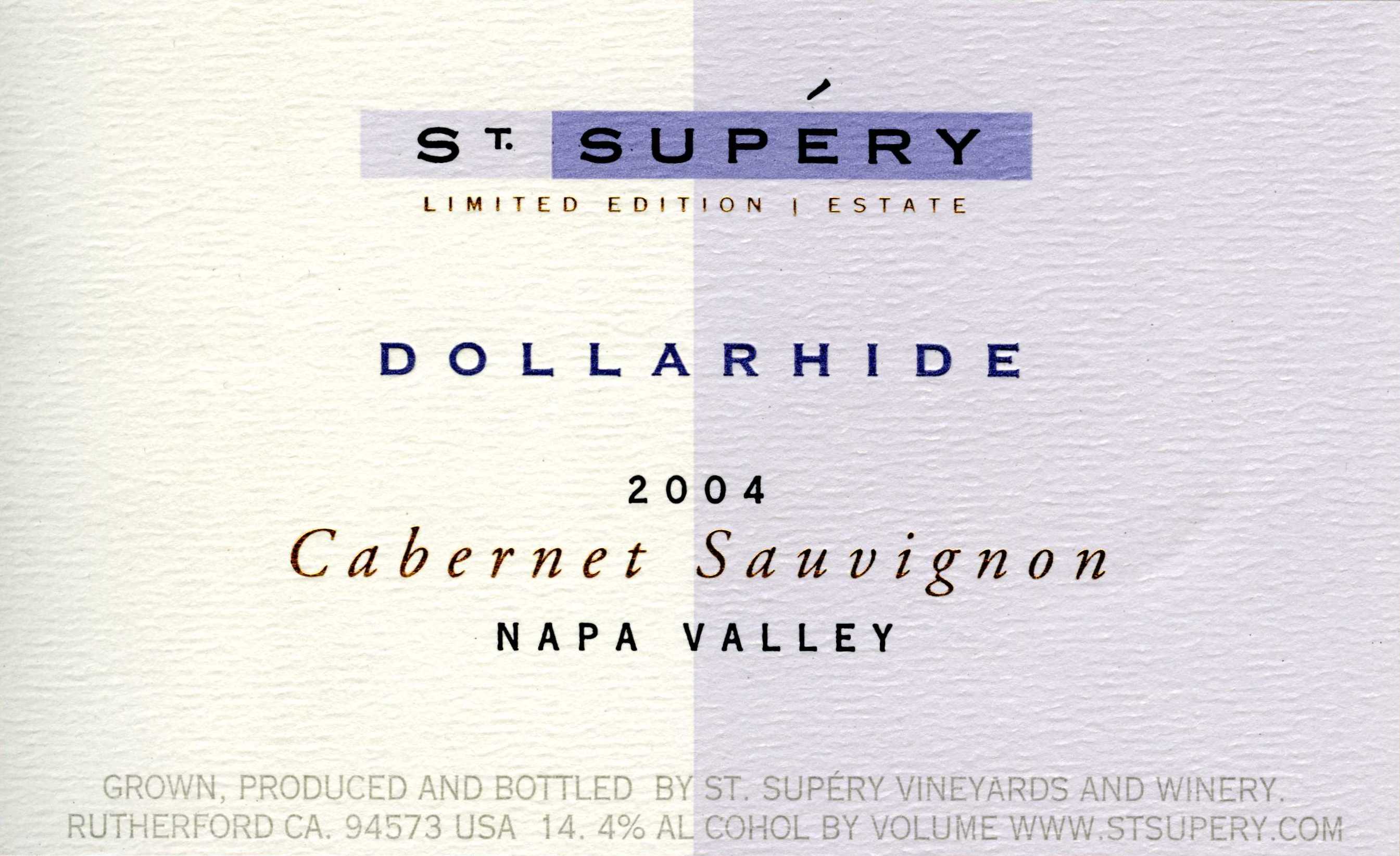
The St. Supery 2006 Rutherford Vineyard Cabernet Sauvignon($80), 2005 Napa Valley Cabernet Sauvignon($30) and the 2005 “Dollarhide Vineyard” Cabernet Sauvignon ($85) showcase all the micro-climates of their vineyards and a variety of flavors.  Firstly, the cost-effective “Napa Valley”, a blend of all the vineyards, can stand up to any other Cabernet Sauvignon within its price range and beyond. However, the single- vineyard wines expressed minerality, good tannins and significant bursts of flavors, the Rutherford adding a “liqueur-like” richness. The “Dollarhide Vineyard” version, awarded 95 pt by Wine Enthusiast magazine, expressed the most balance with a myriad of flavors to compliment the dominant black cherry.

We completed our tasting with the 2009 St. Supery Moscato, a dessert wine with low residual sugar, sweet while displaying complex aromas and flavors.  We were pleasantly surprised with all the wines that we tasted at St. Supery, equally enjoying the ambiance.  The Lexus program, by providing an opportunity to taste the best wines in the St. Supery profile, succeeded in gaining exposure to the right people.  Located along the St. Helena Highway in Rutherford, St. Supery is strongly recommended as a stop on your next Napa Valley excursion.

Sculpture at Hall Winery

Located a few miles north along the highway in St. Helena is Hall, a winery with an impressive palate of wines including one Cabernet that has recently received some accolades.  A desire to taste the 2006 Hall Cabernet Sauvignon Napa Valley ($40) and the fact that the venue was part of the Lexus catalogue simplified our decision to stop.

The most reasonable priced Cabernet Sauvignon on the WS 2010 list; the 2007 “Napa Valley” is a full service wine, expressing pungent aromas, complex flavors, great texture and the obligatory long finish.  Ill-conceived or not, their story of looming scarcity of the wine was believable, prompting me to purchase two bottles for the cellar.

The highlight of the Hall tasting was comparing a flight of three bold, luscious and pricy single-vineyard Cabernet Sauvignon, each with unique attributes and accolades.  From their Artisan Collection, the 2006 Hall Cabernet Sauvignon Hall T Bar T Ranch Vineyard ($45), with a touch of Petit Verdot, expressed an earthiness in both bouquet and flavor.

Hints of Malbec, Petit Verdot and Cabernet Franc add to the aromas and complexity of the 2006 Hall Cabernet Sauvignon Bergfield Vineyard ($100), a full-bodied, fruit-forward wine with firm tannins, destined for greatness.  The Bergfield Vineyard in St. Helena has a long history in the Napa Valley and this wine only accentuate its reputation.

1976 Paris Tasting

The last wine, an opulent 2007 Kathryn Hall Cabernet Sauvignon ($80), has received rave reviews in all the major wine periodicals.  With 4% Cabernet Franc added, the “Kathryn Hall” is dense, rich, but soft with innumerable flavors including that of licorice.  It was hard to pass on any of these fine wines, especially the “Bergfield”, but snagging a few of the last bottles of #18 on the 2010 WS list was adequately consoling.  Hall is a flourishing winery, one that will no longer be overlooked by any wine enthusiast.

Happy Birthday, David and much appreciation to your new Lexus for opening new doors in the noble Napa Valley to unearth yetKaren, wife and photographer more distinguished vintages to taste, even if most are beyond our budget.


L.A. Italian Wine Gala


Italian wines generate huge profits in the U.S., partly due to our fascination with their food and the quality of their wine. There are times when one has to travel to Italy to find their great wines, other times they come to you.

February always brings the L.A. Italian Wine Gala, targeting mainly clientele from the restaurant industry and affording wine writers an opportunity to be in on the front end of trends in waiting, experiencing wines that will end up on tables in fine Italian eateries.  Aside from tasting new, typically bold Italian red wines, my major takeaways evolved from the discovery of new grapes like negroamaro, cannonau, and prosecco, the odds on favorite to become part of the trendy L.A. lifestyle.

Held annually at Valentino’s Ristorante, Santa Monica’s icon of Italian cuisine, the 2011 Italian Gala featured fewer wineries and guests, a sign that the economy worldwide is still struggling.  Non-sparkling white wines, for my tastes, were also struggling, leaving the more obscure Italian reds to peak my interest.  Keep in mind; the exceptional Tuscan blends that have standing reservations on the major periodical “Top 100” lists are not always featured here. These are mid-priced wines from other regions of the country, vying to be included on restaurant wine lists.

One such wine, Sella & Mosca, Cannonau di Sardegna, DOC 2007, offers a unique story of a famous grape that re-defined itself in the soils of the island of Sardenia.  Origins have the Grenache grape arriving on the island with the Spanish dominance during the 14th Century. A few centuries later, the Grenache grape continues to express versatility and uniqueness when grown in the Pioret region of Spain, the Rhone Valley of France or California’s central coast.  Illustrating the influence of terrior, the cannonau expressed an earthiness, rare to other Grenache that I have tasted.  Jammy on the nose, the finish was long, retaining the earthy flavors throughout.  The wine retails for $18 and probably would appear on a restaurant wine list under $30.

Little known Negroamaro is a deep ruby, red grape grown mainly in Salento, the heel of the boot that is Italy. Blended with primotivo, an Italian clone of zinfandel, the Marco Maci, Infinito Rosso Negroamaro, Primitivo, Salento IGT 20005 was the most fruit-forward of the red wines tasted.  Surprising fruit and chocolate on the nose was proceeded by a rich, creamy texture with another burst of fruit on the finish. Marco Maci wines appear on many wine lists, a trend that will, without doubt, certainly continue.

Roasts and other red meats are the best food pairing for the Castello di Querceto, Il Picchio, Chianti Classico Riserva DOCG 2007, a Tuscan wine consisting of a hint of canalolo added to the traditional Sangiovese, awarded 90 pts by Wine Spectator magazine.   Although very earthy, the wine is well-balanced with a good flavor profile.

Another notable red from the event was the Castello di Fonterutoli, Badiola Toscana IGT 2008, originating from a historic property in the Chianti region of Tuscany.  The Mazzei family has produced wines in this area for well over 500 years, yet blending 25% merlot to sangiovese is relatively new, mitigating the traditional earthiness and adding balance.  Once again, there were hints of chocolate aromas followed by soft fruit.  Surprisingly, I have found their Castello di Fonterutoli Chianto Classico 2005 in a local wine outlet.

The unique Rocca delle Macie, Sasyr Toscana 2007 offers an odd blend from the Tuscan region, pairing Syrah, a southern Rhone French varietal, with Sangiovese, the traditional grape of the classic Chianti.  The bouquet of the blend was non-existent, the earthy flavors much bolder.

For those who enjoy a glass of sparkling wine, northeastern Italy may offer a new choice. Prosecco is to Italy what Champagne is to France  Grown in appellations in the Veneto region of the country, the prosecco or “qlera” grape, long used to produce the famed “asti spumante”, has been given more respect by producers who have shaped it into a crisp, dry sparkling wine with complex flavors. These improvements and moderate pricing has significantly increased global sales in the past decade.

Tasting prosecco is different from tasting a variety of still wines. As a sparkling wine, the tastes are subtler, almost indistinguishable from each other. Exploring prosecco through three winemakers in the Veneto region was delightfully educational and enabled me to understand appreciate the flavors more.

Well-known winemaker Piera Martellozzo released her Perle di Piera line of moderately priced wines in 2010, the reason they were anxious to introduce them to the Los Angeles market.  Her Piera Martellozzo Perle di Piera “Blue Pearl” Proscecco 2010 revealed pears on the nose and very fruit-forward taste.  Its smooth accessibility seemed appealing to those looking to augment their wine cellars. My sense is that it will appear in many in the near future.

Producing dry sparkling wines sine the late 1980’s, the Astoria Prosecco Valdobbiadene DOCG Spumante Millesimato 2010 was very well-balanced with tremendous aromas, soft yet full-bodied.  Like many from the region, Astoria and other Italian wines carry a DOCG or DOC designation, a quality assurance description tailored after the French AOC.  The Denominazione di Origine Controllata (DOC) designation verifies that the wine was produced in a specified region, using defined methods to assure a quality standard.  The Denominazione di Origine Cntrollata e Garanita (DOCG) takes the standards process to another level, including government analysis and tasting. Wines carrying these designations are identified by a seal at the neck of bottles holding five litres or less.  Always look for the seal and the “black rooster,” denoting quality Chianti Classico from the Tuscan region.

Another sparkling wine producer in the northeast Valdobbiadene region, Belussi was highlighting their Belussi Prosecco DOC, a sweeter wine that is food friendly or can be served as an apéritif. However, the most impressive sparkling wine that I tasted was the Belussi Belcanto Rose’ Cuvee Brut, based from Pinot Noir grapes, expressing great balance with a burst of sweet fruit on the finish.  All the prosecco we tasted were clean and refreshing, but the prospect of a sparkling wine effectively utilizing the “heartbreak” grape was irresistible.

There is an abundance of good quality, good value Prosecco available in the Antelope Valley.  One outlet carried nearly 15 different sparkling Italian wines, all from Valdobbiadene, including the Nino Franco “Rustica” Prosecco Superior, awarded 90 pt. from wine expert, Robert Parker.

I also found one of their familiar, regularly featured wines locally, fostering a fortunate follow-up connection with the gala.  Having just tasted the 2008 vintage at the event, one outlet is offering the Castello di Querceto Chianti Classico, DOCG 2004($24).  My notes of the 2008 speak of a typically earthy wine with mineral hints on the nose, followed by a soft finish of bursting fruit.  This sounds inviting if I say so myself.

Italy remains the largest source of wines imported into the United States, fending off strong competition from South America, Australia and a declining France, whose historic blends are too expensive and are brilliantly replicated in California.  Our continuing love affair with Italian cuisine and the growth in popularity of prosecco has increased our appetites and helped to spur the growth of wine production in many diverse regions.

The L.A. Wine Gala 2001 featured wines from Veneto in the northeast, Salento in the deep south, the islands of Sicily and Sardenia as well as Tuscany.  It is an event that continues to foster old partnerships and forge new ones, as the Italian wine production continues to expand. One such collaboration involves my wife and Valentino’s cappuccino, annually described as the best she has ever tasted.


The Tasting Experience

A few weeks ago, while returning from a Shane Colvin concert in the San Fernando Valley, a conversation regarding all passenger’s sinus/allergy issues ensued leading to the question,  “do we really need them?”   Are sinuses, similar to appendix or tonsils, remnants of our past and can generations in the deep future avoid our irritation?

Curiosity led to a search that revealed the following functions of sinus cavities:  1.Making our voices more piercing, 2. Decreasing the weight of our head, 3. Absorbing blows to the face and 4. Moisturizing incoming air to increase the sense of smell.   As for sinuses impact on our voice, I am reminded that cats do not have sinuses.  There certainly are other, mostly psychological, methods to reduce head size and absorbing fists looses its appeal, as we get older.   Their clear value of moisturizing incoming air is important to our sense of smell, vital to appreciate both the bouquet and flavor of a fine glass of wine.

Those who wonder if a nice fruit or floral bouquet influences the taste or vice versa should understand that they are one in the same.  The wonderful aroma of a spicy tomato bisque soup is not present when we have a cold.  However, once the stuffy head passes, we often initially analyze the same tomato bisque by first smelling it.  Analyzing a glass of wine begins with our eyes, exploring it’s color and clarity, then the bouquet or “nose” using the “ol sniffer” followed by the flavor, which involves the combination of our nose and mouth, the nose actually more dominant.

Jancis Robinson, in her book, “How To Taste,” analyzes flavor e-mails to the brain to describe “what is tangible, the liquid or solid that comes into contact with our tongue and the inside of our mouth, and what is vaporized, the invisible gas that is given off by the substance.”  Go figure.  Although drinking wine may not cure our sinus problems, it certainly will exercise what is good about them.  Sinus sympathies have evolved into, “just suck it up.”

Hopefully it is now clear that the reasoning to “nose” wine before tasting is based on the fact that vapors solely on the nose differ from those combined with the tongue.  This leads to the need for wine glasses large enough to cover the entire nose.  Did you think you could capture the full essence of vapors from a southern San Luis Obispo County Syrah by simply placing a portion of the glass under your nostrils? One either thrives to totally enhance the vapor experience or ‘wimps out” by proceeding directly to the oral analysis.

Experience with “nosing” wine and learning to identify aromas naturally extend in to other things.  For example, I buy natural, loose Asian tea from “Bird Picks” a shop in Old Town Pasadena.  The wonderful flavor of their Royal Jasmine Quya Green still cannot match the extraordinary bouquet initially enjoyed in the store.   The “Bird Picks” tea shop is actually a perfect laboratory to practice identifying distinct aromas before evolving into the subtle distinctions in wine.

Although “terrior” can strongly influence regional distinctions in bouquet, reliable aromas are common to each varietal.   A California Riesling from Navarro Vineyards in Anderson Valley evokes memories of the smell of orchard fruits, jasmine and roses in Santa Clara Valley, aptly illustrated by John Steinbeck in the opening of Call Of The Wild and a good Pinot Noir, the cherry orchards of the Leona Valley.

Once on the palate, the tongue assists us to identify wines as sweet, dry, tannic, acidic, hopefully evolving into terms like well-balanced and full-bodied.  The fermentation process basically involves the transformation of sugar from the grapes into alcohol.  The amount of residual sugar left over determines the eventual sweetness or dryness of the wine.  With white wines, high sweetness levels found in muscato grapes or late harvest wines can drastically change with dry (non-sweet) Chardonnay or champagne.  Varietals such as Viognier, Riesling and the re-emergence of Chenin Blanc have, in recent years, grown in popularity by providing a well-balanced alternative to overly sweet or dry varietals.  Late harvest wines are unique because they add sweetness to traditionally medium dry grapes such as Zinfandel or Pinot Noir by leaving them on the vines nearly to the point they could fall to the ground naturally.  The late harvest Zinfandel, “Liquid Love” from Tobin James Cellars in Paso Robles and the 2001 Bonny Doon Viognier Port are both fine examples of dessert wines often described as “off-dry” rather than sweet.

About 85% of all red wines are identified as dry.  Yet, it is not difficult to distinguish many medium dry California varietals from the extremes of the great wines from Italian regions such as Chianti Classico and Bruenello di Montalcino.  Some of the most highly rated wines from these regions tend to be too dry and earthy for many Californian palates.

Many fans of reds fear descriptive terms such as acidic or tannic, but both are contributors to well-balanced wines, either in the short or long-term.  Acidity offsets sweetness while tannins help preserve wines as the flavors merge over time.  Many of us have experienced strong tannins in coffee or tea, especially when its been in the pot or steeped too long.  Experts often project long-term greatness from wines based on young, overly tannic symptoms, requiring patience and fiscal resources from the consumers.

Most of us prefer well-balanced wines that are readily drinkable with aromas and flavors that are distinct and pair favorable with food.  The following are suggested comparison exercises that can assist in identifying individual aromas and flavors and, hence, what varietals and specific styles best fit your preferences.

#1 The Fiddlehead Cellars Sauvignon Blanc Trio

Kathy Joseph, owner/winemaker of Fiddlehead Cellars in Lompoc, also obsessed with the search for the perfect Pinot Noir, has developed three separate Sauvignon Blanc wines, each pushed in different directions.  A few years ago, I had the opportunity to sit with her while we compared “Hunneysuckle”, “Goosebury” and “Happy Canyon,” three Sauvignon Blanc varietals from various vineyards in the Santa Ynez Valley, each providing uniqueness in the tasting experience.  The warm region Happy Canyon grapes are permitted to ripen more fully and, with minimal oak influences, to create a more tropical, rather than citric fruit flavors.  The slightly acidic “Goosebury,” combining orchard and tropical fruit flavors with little oak influences, pairs best with food, specifically seafood.  The “Hunnysucke,” aged in French oak, provides more complex flavors and can stand alone without the influences of food.  Another comparison is that of a California Sauvignon Blanc against one from the Marlborough region of New Zealand, both readily available from local outlets.

Sauvignon Blanc ranges from light, fruity to medium- bodied oak influences, with melon, vanilla on the nose and palate and best served with seafood or mussels.


#2 The California Pinot Noir comparison


Pinot Noir grapes in California are generally found in Santa Barbara, Monterey, Sonoma and Mendocino Counties.  All similar due to their proximity to coastal influences, distinctions lie, for the most part, in the soil and micro-climates that enhance minerality and certain flavors.  A comparison among appellations would be fun, especially including our local Leona Valley Winery, who’s Pinot Noir has less coastal influence than most.

Pinot Noir mostly provides elegant black cherry and berry flavors that range from lighter colored, spice enhancements to darker full-bodied a bit more jammy and riper.  Pairs well with pork, salmon and any dish using loads of mushrooms.


#3 French verses California Chardonnay


Arguments over the merits of oak-driven California Chardonnay and French White Burgundy have brewed continuously since 1976 with many of our wineries adopting the French method, preferring stainless steel over, ironically, our traditional French oak.  For serious tasters, I recommend comparing two Santa Rita Hills wineries near Lompoc.  Located next to each other along Highway 246, the Melville Winery Clone 76 “Inox” (French for stainless steel) and the Foley Estate “Barrel Select” Chardonnay, both tremendous wines offer as much distinction that can be found.    The former is crisp, acidic with citric blossom on the nose and tropical flavors and the latter has a balanced acidity enhanced by nuances of orchard fruit, vanilla and brown sugar.  Another option is a comparison of a locally available Chardonnay such as the Merryvale “Starmount” with a French White Burgundy from the Loire Valley.

Chardonnay is a popular dry wine with aromas and flavors of orchard (pear, apple) and tropical/citric (orange, pineapple, grapefruit) fruits ranging in texture from light and crisp to creamy vanilla.  It pairs well with seafood like scallops, salmon, avocado and cheeses.

#4 California Syrah verses Australian Shiraz verses Rhone Syrah verses South African Shiraz.

There is no difference between the Shiraz and Syrah grape, its origin traced back to Persia.  French Syrah from the northern Rhone Valley is typically spicy and fruity with plenty of tannins, slow to age while California Syrah generates plenty of spice in the cooler climates and more raspberry, cherry in warmer regions.   Due to climate and winemaking techniques, the Shiraz from Australia and South Africa are much bolder.  “Coolthink” blog (2-15-2007) compares the two as beret to cowboy hat,  Formula One to NASCAR, Sunset Blvd to Avenue Q and “Free Wheelin Bob Dylan” to ‘Blood On The Tracks.”   A close comparison would probably require a reminder that they are the same grape.

Syrah is grown in many California regions from Santa Barbara to Mendocino Counties with aromas and flavors of white pepper, clove and berry jam ranging from medium-bodied (mostly blended) to full-bodied and tannic, generally served with lamb, sausage and, in the most decadent scenario, chocolate.


Wine, known for volatile vapors and subtle, but abundant flavor distinctions requires our full attention and the use of most of our senses.  Look at it, smell it, touch it and taste it.  Your sinuses will be the better for it.


Right-Bank Bordeaux Wines


Last month, we participated in a tasting sponsored by Le Cercle Rive Droite grand Vins de Bordeaux (The Right Bank Circle of Great Bordeaux Wines) featuring appellations east of the Gironde River such as Pomeral, Saint Emillion, Fronsac, and Castillion.  Founded in 2002 to further assure quality and market new vintages, the organization represents 139 chateaux, 31 of which were present at the tasting held at Camponile Restaurant near La Brea and Wilshire Blvd.

Arguably the world’s most famous wines come from Brodeaux in western France, along the Gironde River as it navigates toward the Bay of Biscay.  The river plays an important role in defining Bordeaux wines.

The French were leaders in establishing strict standards to their wine regions, regulating varietals, farming techniques and appellation identification.  All Bordeaux wines are blends of, primarily, dominant Cabernet Sauvignon or Merlot with support from Cabernet Franc, Petite Verdot and Malbec. This is where the Gironde River plays an important role in defining the “leader of the pack” on the regional wines.

Wines produced in vineyards west (Left Bank) of the river use Cabernet Sauvignon as the dominant grape and those on the eastside (Right Bank), merlot.  A typical blend from the Right Bank might include 45% merlot, 25% cabernet sauvignon, 15% cabernet franc, 10% petite verdot and 5% malbec. Reverse the merlot and cabernet sauvignon and you have a Left Bank Brodeaux wine.

The Le Cercle Rive Droite Grand Vins de Bordeaux event introduced us to vintages 2008 through 2010 of those Right Bank, merlot-based blends.  Comparisons can be fun but it soon became apparent that vintages 2008 and 2009 were set up to showcase their prized vintage 2010.  Many of those pouring wine recommended that we start with the newest vintage.


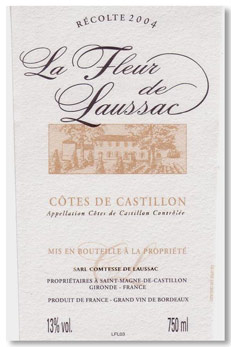
My tasting began with the Chateau de Laussac Castillon/Cotes de Bordeaux, Vintages 2008-2010, produced from very old vines and traditional vinification methods. The 75% merlot-25% cabernet blend goes through the malolactic fermentation process in thirsty new oak barrels, a method that helps insure a more accessible flavor and balance to the wine.  Although vintage 2010 had minimal bouquets related to the others, the flavors were very forward and concentrated with hints of vanilla and well-balanced acidity presenting the option of drinking now or later. I am beginning to understand why Bordeaux is quite anxious to showcase the vintage 2010, a source of pride to the region.  It will be interesting to discover if this trend persists in other wines.

From the Fronsac appellation, the 16th Century Chateau de la Dauphine now produce merlot and cabernet franc on the same vines in heavy limestone soil. One would expect an 80% merlot blend to be soft and accessible, but the Chateau de la Dauphine Fronsac Vintages 2008, 2010 delivered more concentrated fruit than anticipated with vintage 2010 bringing a soft minerality throughout a very long finish.

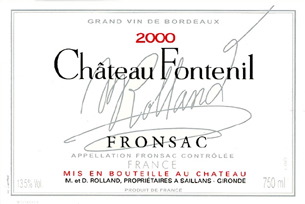
Another local estate, Chateau Fontenil Fronsac ($40-55) creates a heavily merlot-dominant blend amid the limestone that, in past years, has received consistent ratings in the low 90 pt. range. Vintage 2008 had very expressive fruit on the nose and soft tannins.  Resolved that it needs more time on the bottle, vintage 2010 still conveyed nice spicy herb bouquet and highly concentrated fruit.  If you can find a bottle, decant it.  Some research revealed that K&L Wines (www.klwines.com) is selling futures for vintage 2009, with delivery anticipated in late 2012.

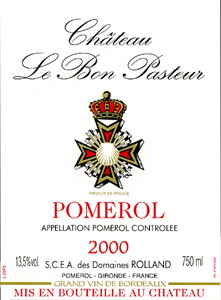
The malolactic fermentation process, through the introduction of lactic acid eating bacteria to the barrel, is designed to balance the acid in the wine, exposing more concentrated fruit flavors.  One result of the process, the Chateau le Bon Pasteur 2010, from the Pomerol appellation, was, without question, the most balanced and flavorful wine at the event.  One should expect a burst of fruit and spice on the nose followed nice earthy mushroom flavors.

Also from Pomerol, the dark, inky colored Merlot-blend, the Clos L’ Eglise Pomerol 2010 offers very accessible, well-balanced flavors at a moderate price. We next tasted a flight of three vintages, 2008-2010, of the Chateau Fayat Pomerol, each with strong berry flavors and a long finish.  The vintage 2009 stood out with a nice rose petal nose.

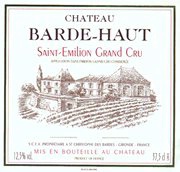
My favorite wine of the entire tasting was a wonderful Merlot-dominant Chateau Barde-Haut Saint-Emilion Grand Cru 2008 which had everything one could expect from a Bordeaux blend, very dark color, hints of lavender aromas, mild tannins, and abundant berry flavors that linger well after spitting.  The representative explained that it was occasionally available at K&L Wines in Hollywood, something to watch for.

French winemakers in all the regions hold the utmost respect for the soil. Whether it consists of river rock, limestone, red sandstone or clay, recognizable impacts from the soil are evident in all flavor profiles.  With only 10% Cabernet Franc, the Chateau Rol Valentin Saint-Emilion Grand Cru 2008 combines grapes grown in both sandy and clay soils. The result is a very fruit-forward wine that maintains complex flavors through the finish.

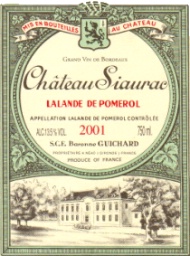
The vintage 2010 Chateau Siaurac Lalande de Pomerol, a medium-bodied blend, was very smooth and accessible with dominant black cherry flavors in comparison to the very earthy vintage 2008, my choice, with flavors of fresh herbs and mushrooms.

Our afternoon concluded by sampling vintage 2008 and 2010 of the Chateau Vray Croix de Gay ($60), a red blend that is consistently rated in the low to mid-nineties.  Both wines produced very concentrated fruit and were well-balanced.  The vintage 2010 emerged for me as a very masculine wine, preceded by nice perfumed aromas.  A momentous ending to a very informative event.

Purchasing Bordeaux wines can be a bit tricky.  Since demand often results in investment by U.S. consumers in “futures” to ensure access to the wines. A recent story in Wine Spectator magazines chronicled the quality of vintages 2008 and 2009 as both rich, powerful, yet with very accessible flavors.  Reviews of twenty-three top 2008 red Bordeaux illustrated ratings ranging from 92-94 pts with costs from $45 to $3,000 per bottle.  Another article entitled “Values Across Bordeaux,” is a good starting point in researching Bordeaux wines.  Bottles of interest can be cross-referenced with lists and inventories in wholesale outlets throughout southern California.

Ironically, before this article goes to print, I will have had an opportunity to visit wineries in the Cotes de Rhone, the other great French wine region with appellations from Chateaunef-du-Pape, Girondas, and Vaqueyvas.  These blends consist of Grenache, Syrah and Mourvedre, among the 13 grapes, licensed by the AOC seal of quality assurance and permitted to be grown in the region.  My experience is another future story, but I was able to purchase a bottle for under 20 euros.

The moderate prices of local Rhone-blends are indicative of how much it costs to get it to U.S. shelves.  This was a nice change; given one Euro is valued at nearly one and one half times our dollar.  As a friend said, “Remember, that 10 euro salad is really $14”.  So, the secret of French wines is to taste, purchase and consume them in France, preferably in a beautiful place like Provence, with salami, numerous cheeses, fresh radishes, local olives and bread.


San Diego Wine and Food Festival


The wine community is not immune from the effects of the global recession.  The International Organization for Vine and Wine recently projected that production this year will fall to an eight year low.   This trend was not evident as the annual San Diego Wine and Food Festival attracted nearly 60 wineries to a reserve tasting event following a week of intriguing “fork and cork” programs.  Marketed as the largest festival of its kind in Southern California, the participation of 170 wineries and breweries, 70 restaurants and several celebrity chefs were apparent throughout the five-day affair.

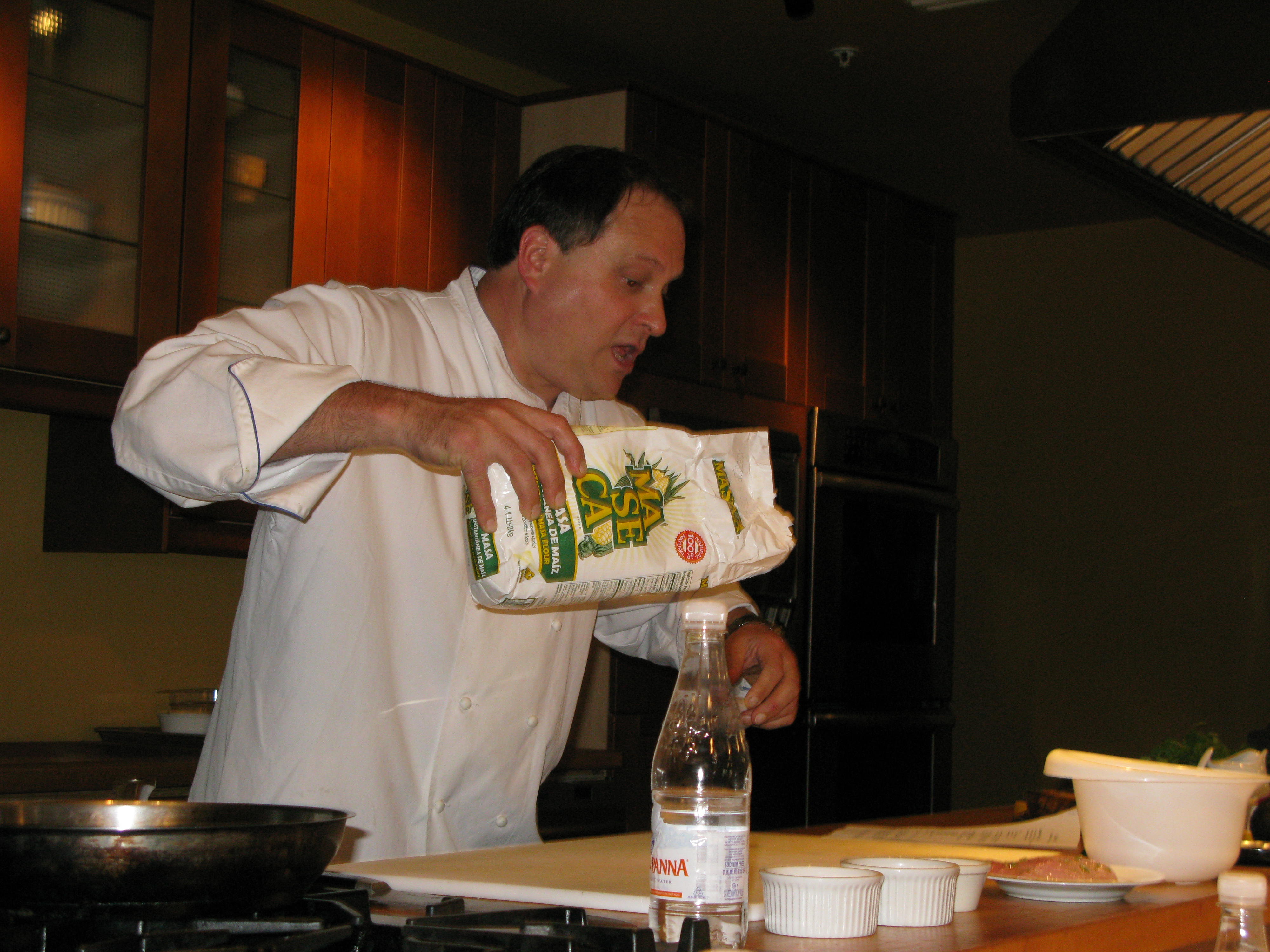
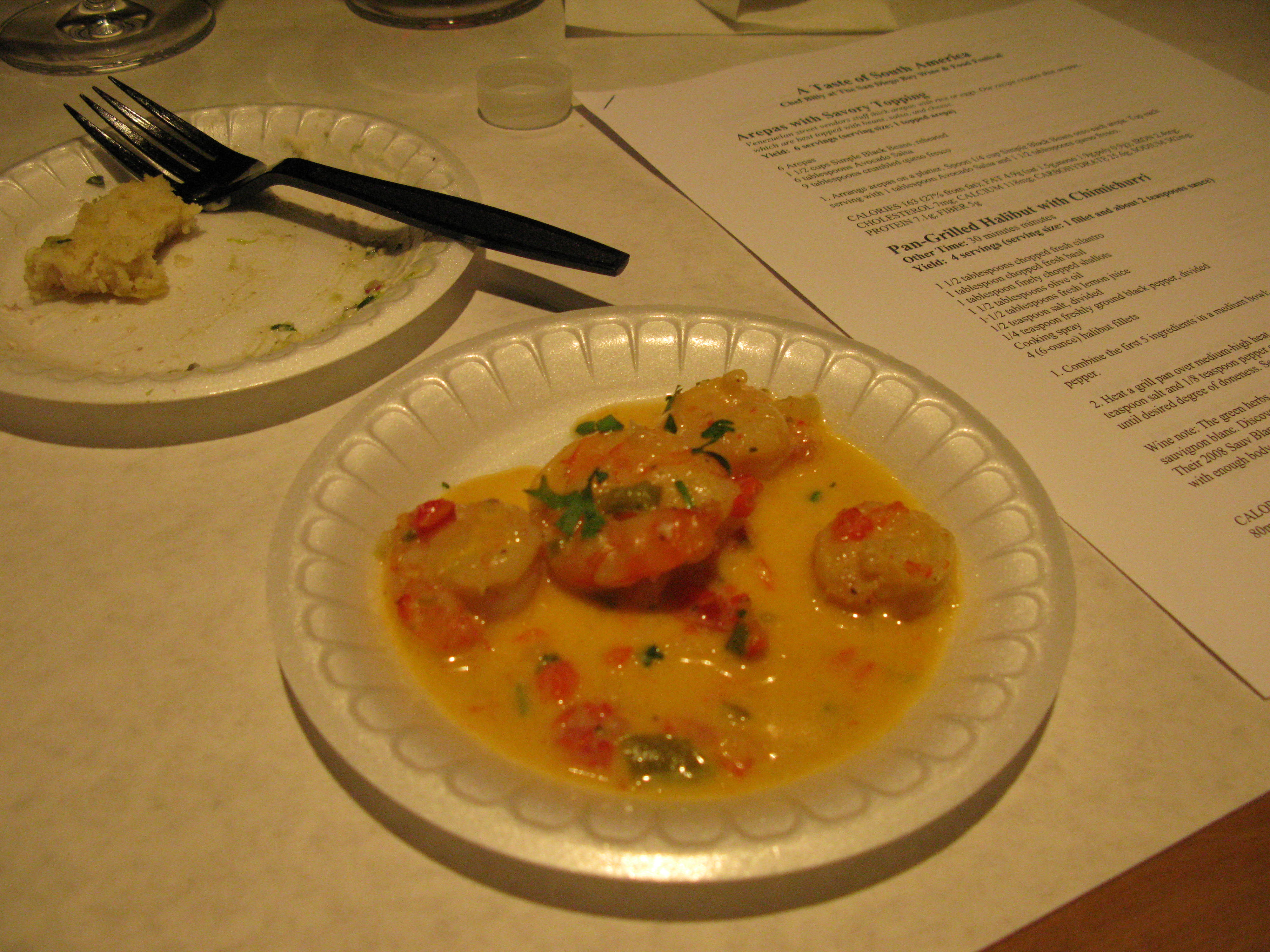
Food plays an equal role to wine at this festival, whether learning to cook California-style French food, South American cuisine or indulging in creative chocolate making through classes from one of the celebrity chef’s on-site or the fabulous small plates from San Diego’s finest restaurants.  Recently returning from the continent, we chose to attend “A Taste of South America,” with Billy Strynkowski, Executive Chef for “Cooking Light “ magazine.   Strynkowski’s east coast casual style provided energy and laughter as he guided us through mango mojitos’s and a menu of arepas, pan-grilled halibut with Chimichuri, maduros (sautéed sweet plantains) and enchilado de camerones (deviled shrimp).   The chef, aside from stressing proper knife cutting techniques, shared tips like “never buy an avocado with the stem missing,” “never crowd fish when cooking” and that “400 degrees is the new 350.”  Of course, our menu was paired with a solid Chardonnay and an excellent Tempranillo, both from Paso Robles’ WCP Cellars, an up and coming winery from a region that is the current “buzz” in California.

A few days after Wine Spectator magazine announced Justin Smith’s Saxum Winery  “James Berry Vineyard” Rhone blend its “2010 Wine Of The Year,” proof that Paso Robles winemakers have positioned themselves as a powerhouse was clear throughout the San Diego fête.

WCP Cellars was only the first of many fresh, new Paso wineries that we encountered.  Another occurred when co-founder Sherman Smoot, a former fighter pilot, was pouring wines at the Reserve Tasting from his boutique Bella Luna Winery, producing less than 2,000 cases.   Although they source varietals from other vineyards, the flagship wines, 2008 Bella Luna Estate Sangiovese and 2006 Estate Riserva, a Sangiovese-Cabernet Sauvignon blend, originate from their five-acre estate vineyard in the Templeton Gap, south of town.  Both wines stood up to other exceptional local Sangiovese in texture, balance and taste.

Clautiere Vineyard, a small east Paso winery with an interesting history, was pouring their unique blends and a 100% Mourvedre, an earthy grape noted for softening Rhone blends.  Aside from being well balanced and textured, their Clautiere Vineyard Estate “Mon Beau Rouge,” a classic Rhone-blend with Syrah, Counoise, Grenache and Mourvedre and Estate “Mon Rouge,” a Syah-Cabernet blend both delivered great taste and a notably long finish.

Curiosity of the varietal drew me to the 2006 Derby Wine Estate Petite Sirah, a young Paso Robles producer whose distinctive wines, including a 100% 2007 Counoise, are attracting attention. Counoise, another Rhone varietal, contributes spice and some good acidity to the ensemble, overcoming negligible depth of color.   The 2007 Derby Vineyard “Fifteen 10” red Rhone-blend and the unique 2006 “Mocab” (Mourvedre 60%-Cabernet Sauvignon 40%) blend are both wines I would suggest.  The “Fifteen 10 white Rhone, not available in San Diego, has also received good reviews.  Exploring the many new, gifted wine producers from Paso Robles promises to be both fun and informative in coming years.

The Reserve and New Release Tasting event, held aboard the elegant Hornblower Inspiration yacht, is a great opportunity for wine enthusiasts; winemakers and restaurateurs to network through new release wines and great food.  Among the wineries represented, my most significant take away was a Chardonnay from a small Sonoma County winery in Healdsburg.

With no prior knowledge that it had amassed accolades including best of varietal at the 2010 San Diego International Wine Competition, the 2008 Dutcher Crossing “Stuhlmuller Vineyard” Chardonnay instantaneously became my favorite new discovery of the event.  Expressive, creamy texture, the result of 100% malolactic fermentation, leads us through soft fruit flavors followed by those of nuts and butterscotch on the finish.  The high-end $34 price tag is justified for those drawn to Chardonnay multi-layered with flavor and texture.  This wine will remain on my radar.

Few are aware that nearly 20% of California’s total wine production originates from Lodi, exceeding Napa and Sonoma combined. While Zinfandel put the region on the map, Lodi is also a leader in the production of Cabernet Sauvignon, Merlot, Chardonnay and Sauvignon Blanc.

Last month I mentioned that Michael and David Winery’s “Earthquake Zin,” from Lodi, was a good locally available wine.  “MDW” has recently expanded its accreditation, primarily through the release of their full-bodied “Seven Deadly Zins” wine.  The festival affords enthusiasts occasion to be on the front end of something good. At the reserve tasting, I had the pleasure to try the Michael and David Winery 2007 “Sloth,” “Lust,” and “Gluttony,” all part of the new “Sin series,” all living up to the hype.  Each of the wines hails from a specific vineyard, offering a unique blend with the Zinfandel grape.  All three posses a smooth, creamy texture with “Lust,” certainly no coincidence, adding hints of caramel and chocolate on the finish.

Lodi and nearby Calaveras County also produce much of the state’s Petite Sirah, an ink colored wine that usually delivers strong bouquets and well-balanced dark fruit favors, often under $20.  Once such wine is the 2008 Van Ruiten Family Vineyards Petite Sirah, drinkable now, priced at $19.99.

Vintage 2007 was good for Napa Valley Cabernet Sauvignon.  The region placed five wines in the first twenty of Wine Spectator magazine’s top 100 of 2010 including the 2007 Altamura Napa Valley Cabernet Sauvignon, listed as #4 with 97 pts. A part of that success resides in a small area, southeast of downtown Napa, known as the Tulcay-Coombsville District.

Bruce Ahnfeldt first planted Cabernet Sauvignon and Merlot in Coombsville during the mid-eighties, providing grapes to other wineries, including Altamura.  Since the inception of his label in 2002, Ahnfeldt wines have consistently been rated in the nineties by major periodicals.  The 2005 Ahnfeldt Cabernet Sauvignon Napa Valley was a nice relief from the rain and wind that impacted the Saturday Grand Tasting Event, staged on the green near Seaport Village.  The boldness of this wine is not overbearing, softened by impeccable balance and a smooth, creamy texture.  The Coombsville area has several family owned wineries, waiting to be included in future explorations of Napa Valley.

For those who love food, wine and this city, the San Diego Wine and Food Festival, held annually in November, is a great way to welcome in the winter.  We came away with some great recipes and cooking tips, sampled food from the areas finest restaurants and, of course, discovered several new wine releases, all of high quality.

Although the festival lasts only five days, the experience continues as we try to perfect new dishes and pursue the best values from the world’s finest wine regions.  There is also plenty of opportunity to hang out in the Gaslamp District or at the beach.


Santa Rita Hills, 2011

New establishments like Palate Food and Wine generate much of the excitement surrounding the South Brand district in Glendale.  Self-proclaimed as “a restaurant with a wine shop/wine shop with a restaurant”, they also host specialty wine pairing dinners and weekly events like “Tuesday Night Jazz N’ Juice featuring wines from a specific world region followed by nice, local jazz.  We were invited, last month, to a mid-week “Santa Rita Hills, 2011” tasting event for their new releases that led to some out of the ordinary discoveries.  The Santa Rita Hills appellation has earned the prestige that comes with creating consistently great wines.  The status that has experts comparing each vintage, looking for the “one of a lifetime.”

In describing the Santa Rita Hills region to California natives, I begin with its between the Anderson Split Pea Soup restaurant in Buellton and the beach in Lompoc.”  I also add that it is the north side of Point Conception, the only east-west coastal mountain range in California.  The vineyards use heat, wind, fog, and soil to produce Pinot Noir and cool-climate Chardonnay and compete with any region in the world.  Many of the top winemakers were present, but there were enough new unearthings to make it fun and unique.

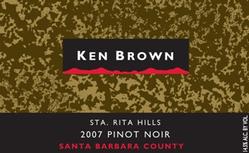
The Santa Rita Hills appellation is mostly known through its vineyards whose grapes are outsourced to wineries up through the central coast.  Ken Brown Cellars, since 2003, has earned a reputation for producing small lot Pinot Noir from top SRH vineyards like Clos Pepe, Sanford and Benedict and Rio Vista.  The Ken Brown Cellars Santa Rita Hills Pinot Noir 2007 ($38), from multiple vineyards had soft fruits flavors with nice hints of vanilla while the single-vineyard Ken Brown Cellars Clos Pepe Vineyard Pinot Noir 2007 ($50) had much more depth with a nice spice on the finish.

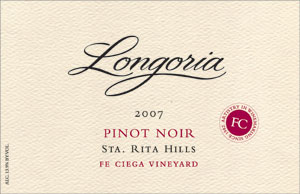
The Richard Longoria “Fe Ciega Vineyard” Pinot Noir is, vintage to vintage, one of the finest from the appellation.  However, the first pour was the 2007 Richard Longoria “Lovely Rita” Pinot Noir ($32), a soft, fruit-forward wine from the Fe Ciega and Rancho Santa Rosa vineyards.  Awarded 90 points by Wine Spectator, “Lovely Rita” is an affordable, very accessible wine that can stand on its own, but lacks the age of their flagship release.  The 2007 Richard Longoria “Fe Ciega Vineyard” Pinot Noir ($50) is a classically elegant, medium-bodied wine with an herbal spice interacting with the dried cherries and vanilla flavor throughout.  Influenced by 35% new French oak, the $50 price tag of the 2007 is softened by its 93-point rating.

My “bolt from the blue” of the tasting was the 2006 Richard Longoria “Clover Creek Vineyard” Tempranillo ($36), the Spanish grape that thrives in the Roija region, between Barcelona and Bilbao.  Atypical to this area, Longoria has found the warmer Santa Ynez Valley as a near ideal terrior for his Tempranillo vines.  His wine is rich in texture, bouquet and flavors with a soft earthiness throughout.  Aside from fine restaurants in the area, all Longoria wines are available at their Los Olivos village tasting room.

About a mile and a half from the 101, west along Highway 246, is the Hitching Post Restaurant, made famous by the film, “Sideways”.  They are known for fine food and a fantastic wine list, but few are aware that they produce their own line of wines.  Chef/owner Frank Ostini and friend Gray Hartley turned a hobby, some thirty years ago, into an annual search for high-end Pinot Noir from some of the celebrated vineyards in the Santa Rita Hills appellation.  This day, they were pouring single-vineyard Pinot’s from the Cargasacchi and Fiddlestix Vineyards, both well represented throughout the event.

The Cargassachi Vineyard is more westerly than any other in the appellation, designating it “the coolest of the cool.”  The Hitching Post “Cargassachi Vineyard” Santa Rita Hills Pinot Noir 2006 ($42) expressed well-balanced flavors with hints of raspberry, benefiting from the softness of the wine.  Fiddlestix Vineyard, along Santa Rosa road near the Fe Ciega Vineyard supplied the grapes for the Hitching Post “Fiddlestix Vineyard” Santa Rita Hills Pinot Noir 2006 ($42), influenced by new oak, a rich, full-bodied Pinot that can even get better in time.

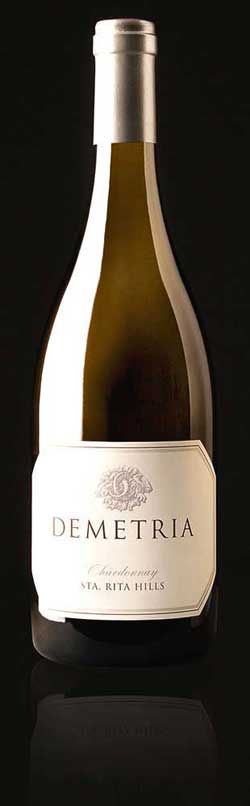
New discoveries are always the best “takeaways” from tasting events, especially taking note of a specific wine like the 2007 Demetria Estate “Eighteen” Chardonnay Santa Rita Hills ($45).  Barrel-aged for 22 months in primarily new French oak, another nine months in the bottle, the “Eighteen” delivers complex bouquets and flavors, floral hints throughout in a rich, creamy package that delights the palate.  It is no wonder that most of my favorite California chardonnay hails from this appellation.

With a deep garnet color and bouquet like a bowl of fresh berries, the 2007 Demetria Estate Pinot Noir Santa Rita Hills ($40) adds hints of vanilla and significant oak influence to an intricate flavor profile.  Demetria Estate also produces white and red Rhone-style blends, mainly in the Santa Ynez Valley.  They re worthy of inclusion in any wine enthusiasts “tickler” file.

Kathy Joseph, owner/winemaker of Fiddlehead Cellars, is one of my favorite people from this region and her Fiddlehead “Goosebury” Sauvignon Blanc is, hands down, my favorite of the varietal.  The three Santa Ynez Valley Sauvignon Blancs were left at her tasting room, but at least she was present with three consistently high-end Pinot Noir, two from the Santa Rita Hills and one from Oregon.

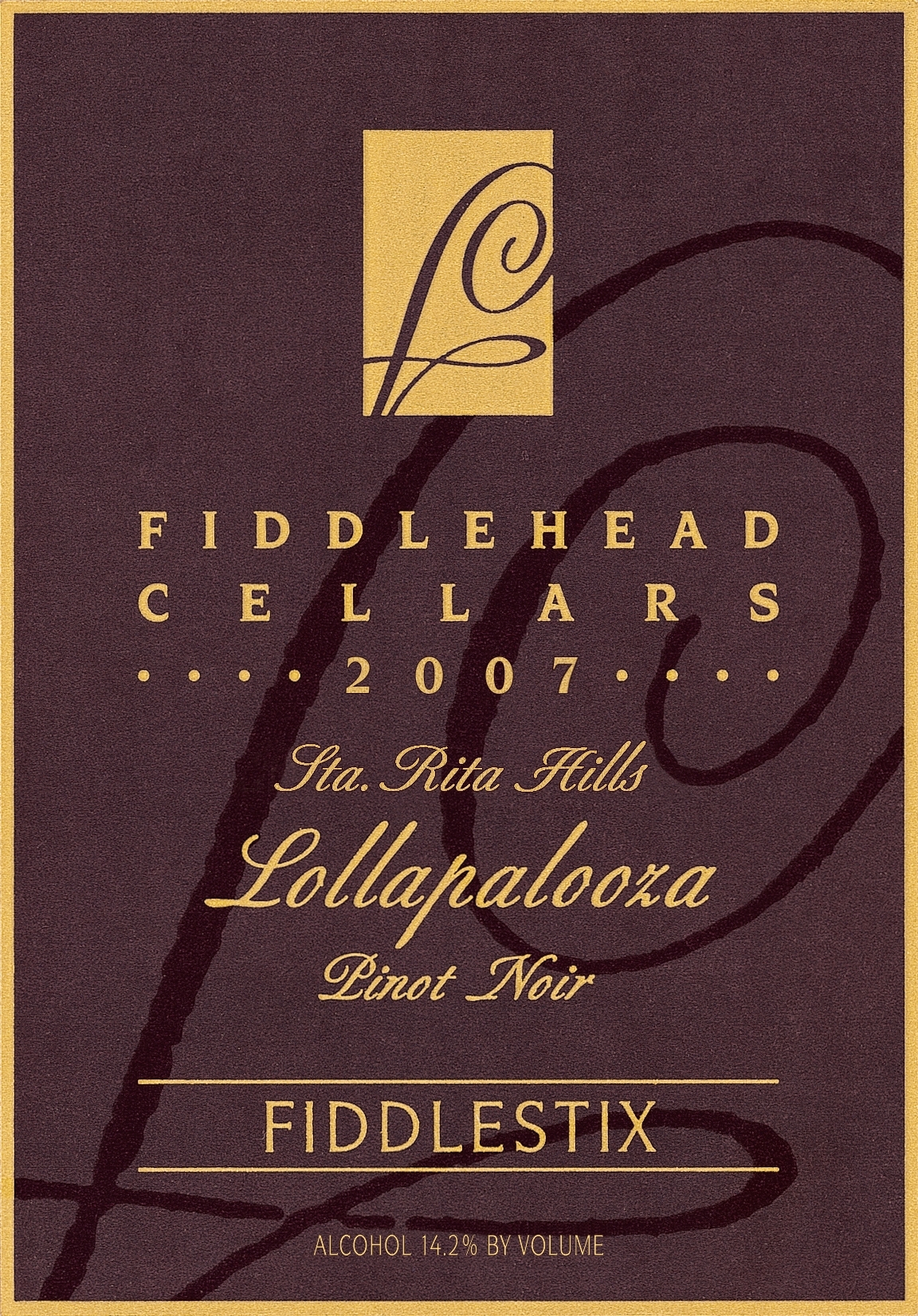
The Fiddlehead Cellars “728” Pinot Noir Santa Rita Hills 2007 ($42), named after the mile marker at the entrance to Fiddlestix Vineyard, is Kathy’s first Pinot, full of black cherry, plum flavors and a bit of black pepper.  Once the wines are aged for 18 months, the most elegant barrels, silky and rich, are selected for the Fiddlehead Cellars “Lalapalooza” Pinot Noir Santa Rita Hills ($75), her premium wine.  A soft minerality accompanies rich dark cherry and berry to form an elegant structure.  My familiarity with this wine never interferes with my anticipation of great flavors.

Unique among winemakers in this region, Kathy produces an  Oregon Pinot, the Fiddlehead Cellars “Oldsville” Pinot Noir ($50), although the grapes are shipped in refrigerated trucks to her Lompoc facility for processing.  While the  Oregon vintage 2008 is getting all the “buzz,” she passed along that vintage 2007 is “opening up.”

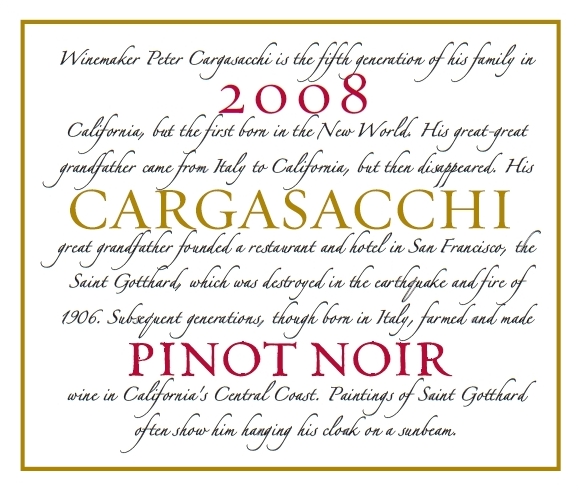
The owners of two esteemed vineyards, Cargasacchi and Clos Pepe, were in attendance, pitching their own Pinot Noir releases.  Both vineyards can “sell” a bottle of wine, so logic tells us that the terrior will continue to influence their own wines.  Cargasacchi poured vintages ’07 and ’08 of the Cargasacchi Vineyards Pinot Noir Santa Rita Hills, both fruit forward with long finishes.  In my opinion, the ’08 had more depth and a wonderful bouquet.  I would recommend this wine to someone who wants to discover the varietal.

Clos Pepe Vineyards creates Pinot Noir that shows restraint, believing that too much emphasis is placed on the highly concentrated, jammy wines.  That being said, the vintage ’07 and ’09 Clos Pepe Vineyards Pinot Noir Santa Rita Hills both walk the fine line between elegance and masculinity, expressing nice traditional bouquet and flavor.

Years ago, Pinot Noir was intended for consumption within a year of release.  Today, California’s bold Pinot’s are more tannic and can improve over years.  Proving this point, the winemaker opened a 2001 Cargasacchi Vineyards Pinot Noir Santa Rita Hills, expressing exceptional balance and integrated flavors, surprising for a decade old release.

My last stop resulted in an interesting conversation with Deborah Hall, owner/winemaker at Gypsy Canyon Vineyards and Winery whose wines have been highly recognized by many periodicals.  Generating under 350 total cases, her Pinot Noir is big, bold and ripe for aging while her other release, a dessert wine is steeped in California history.

Deborah’s Pinot Noir, in the opinion of many, is “not for everyone.”  She is said to create very individual wines, usually bold, tannic, clearly developing with time.  However, consensus is that her 2008 Gypsy Canyon “Trois” SRH Pinot Noir ($95) has reached a new plateau in complex flavors, balance and texture.  The traditional plum, dark berry flavors are smokey and earthy, yet perfumed.  Be prepared to give it some time.

Originally planted by the Franciscans as they established  California missions, the fortified dessert wine, Gypsy Canyon Ancient Vines “Angelica” ($135) is a pure re-creation of the original, using Mission grapes from the same vineyard, overgrown and hidden for a century.  Expensive, but a must for those interested in California history, wine and good taste.  More like port than dessert wine, the sweetness is offset by a rich, creamy caramel flavor.  There is a great story woven into the fabric of this winery, one that would invite further exploration.

Events such as the Palate Food and Wine tasting opens new doors and is a reminder that world-class wines are produced less than an hour north of Santa Barbara.  Vineyards and charming villages like Los Olivos expose another side of the region.  With a plethora of good restaurants, wineries and inns, it’s your next weekend get-a-way waiting to happen.  Here are a few recommendations among a multitude of options.

Restaurants:  Los Olivos Cafe, Patrick’s Side Street Cafe, The Ballard Inn Restaurant, The Hitching Post.

Inns:  Fess Parker Wine Country Inn, The Ballard Inn, Hadsten House (Solvang)

Wineries:  Lincourt, Fiddlehead Cellars, Ampelos Winery, Richard Longoria, Melville, Foley Estate


Wine Spectator’s Annual Review


Wine Spectator magazine’s release of its “Top 100 wines of 2010” is much more than a list of those with the highest ratings. It would be simplistic and one-dimensional to list great wines that we, most likely, could not find or afford. By adding criteria of value, availability and intangibles to quality, the magazine annually offers us a “snapshot” of recent trends in the world’s wine community. Described as the magazines view of the most exciting wines, the 2010 list, as past lists, provides enthusiasts with a concise summary of the present and insight into the future.

for those who have monitored the progression of the Paso Robles region, especially the recent foray in Rhone blends, have known it was only a matter of time for the area’s star to shine on a larger stage. Well, that time is now as Justin Smith’s Saxum James Berry Vineyard Paso Robles 2007 ($67/98 points), a creative blend of grenache, mourvedre and syrah was named 2010 Wine of the Year.” this is not a complete surprise to those knowledgable of the region, given that the Saxum Broken Stones Paso Robles 2006 and the Tablas Creek Espirit de Beaucastel Paso Robles placed No. 12 and No. 50 respectively on WS’ 2009 list. It is, nonetheless, a significant achievement for Saxum and the entire region.

Eastern Paso Robles is hot enough during the summer months for the grapes, especially zinfandel, to fully ripen, exposing momentous flavors. However, the breezes off the Pacific Ocean, apparently adding more depth and balance to the flavor, cool the heat in the western valleys. Smith has roots in the area and the foresight to include the grenache varietal, popular among local Rhone Rangers, in 20% of his vineyard portfolio. the 2007 “James Berry Vineyard” blend is dominated by grenache (41%), aligned with new post-harvest techniques that reportedly result in vibrant, yet subtle flavors and near perfect balance. Smith’s friend colleague, Matt Trevisan from Linne Calodo, introduced me to the practice of aging these blends in large wooden puncheons, reducing the influences of smaller oak barrels. This seems to be a trend among the new Paso winemakers, resulting in a more subtle, well-textured wine. those choosing to discern future blends from the region will be rewarded with the best California has to offer.

Although all Saxum wines are nearly impossible to acquire, there are numerous Rhone-style blends available to please your palate. One is the Tablas Creek Espirit de Beaucastel Paso Robles 2007 ($50/94 points) which joins Saxum on the 2010 list at No. 33. The Tablas Creek winery, through a long-term relationship with Chateau de Beaucastel in France, has been a pioneer in the areas’ shift toward Paso Robles blends that resemble Rhone-style blends.

California is the big winner in 2010, contributing 24% of the releases on the list.  Much of the credit goes to the successful 2007 vintage for Napa Valley cabernet sauvignon with seven among the top 30, averaging 97 points and, of course, $1112 per bottle.  The Revana Cabernet Sauvignon St. Helena 2007 ($125/97 points) and the Altamura Cabernet Sauvignon Napa Valley 2007 ($85/96 points) landed in the No. 4 and No. 5 spots respectively.  However, the huge story comes from Schrader Cellars, releasing six cabernets, two rated a perfect 100 points and one each at 99, 98 and 96 points.  The Schrader Cellars Cabernet Sauvignon Napa Valley CCS Beckstoffer to Kalon Vineyard 2007 ($150/100 points) from the renowned Napa Valley vineyard placed 15th on the 2010 list, cited for mesmeric richness, complexity and balance.

Included in the San Diego Wine and Food Festival Reserve Tasting event, the reasonably priced Hall Cabernet Sauvignon Napa Valley 2006 ($40/94 points) featuring three  geographically divergent vineyards is the best cabernet value on the list, ranked at No. 18.  We had the opportunity to visit the Hall Winery on New Year’s Day and picked up a few bottles for the cellar.  Significant oak influences, spice, fruit and some chocolate on the finish highlights this vintage that is rapidly disappearing due to recent accolades.

France contributed 19 wines, though surprisingly only one from the Bordeaux region.  Ironically, the highest rated Bordeaux-blend, the Coho Headwaters Napa Valley 2007 ($40/95 points), originates from the Coobsville district in the  southeast Napa Valley.  Also surprising, Chateaunef-du-Pape, a region famous for French Rhone Classic Cru, contributed the Clos deds Papea Chateaunef-du-Pape White 2009 ($100/95 points), the most expensive white wine encountered.  We are resigned to “drool” over the wonderful description of a grenache blanc, roussane, picpoul and bourboulenc blend, crisp and fresh from steel tanks and no malolactic fermentation.

the highest ranked California white wines, the Mount Eden Vineyards Chardonnay Santa Cruz Mountains 2006 ($48/96 points) and the Ridge Chardonnay Santa Cruz Mountains Monte Bello 2006 ($60/95 points) hailed from the mountains near my hometown of San Jose, each vineyard historically producing tremendous wines.

The Santa Cruz Mountains region has produced very fine chardonnay, pinot noir and other varietals for years.  With some research, one can find highly respected mountain vineyards north of Santa Cruz to Woodside, above Stanford University.

In both good and bad years, Sonoma’s Kosta Brownes winery provides assurance that the pinot noir varietal will be annually represented.  At No. 12 was the multi-vineyard Kosta Browne Russian River Valley 2008 ($52/94 points), two bottles of which are contentedly spending time in my cellar.  From arguably the world’s best appellation, the Paul Hobbs Pinot Noir Russian River Valley ($45/94 points) secured the No. 6 spot, another top ten honor.

My instincts are telling me that the 2008 vintage Oregon pinot noir is noteworthy.  The representatives, Roco Pinot Noir Willamette Valley 2008 ($30/92 points) at No. 71 and A to Z Wineworks Pinot Noir 2008 ($20/90 points) at No 75, certainly benefited by their high value/rating ratio.

Washington State placed six wines to the list, equaling the Rhone Valley and Australia.  The diversity of the varietals contributed were surprising an acknowledgement of the area as a premier wine-producing region.  Syrah, merlot and cabernet sauvignon are created as single varietals or blended in such releases as the Goose Ridge “Vireo” Columbia Valley 2006 ($25/93 points) and the Tamarack Cellars Firehouse Red Columbia Valley 2008 ($16/90 points) Nos. 41 and 49 on the list,  respectively.

In another 2010 story, Portugal has burst on the scene with three wines within the top 25, blends with lesser known grapes like Touriga Nacional, Touriga Franca, Tinta Roriz, Tinta Amarela and Sousao in the Douro appellation in northern Portugal.  The CARM (Casa Agricola Roboredo Madiera) Douro Reserva 2007 ($27/94 points) seems to be a good value at No. 9.  It is typical for the country’s port to be acclaimed worldwide.  However, the Dow Vintage Port 2007 ($80/100 points), also from the Douro region, was one of two wines on the list awarded 100 points.

One would hardly anticipate that Hungary would place the same number of wines on the list as the mighty Bordeaux region.  The Royal Toakaji Wine Co., located north of Budapest, has placed a wine on the Wine Spectator list two years running.  At No. 28, the Toakaji Aszu 5 Puttonyos Red Label 2006 ($39/94 points) blends furmint, harselvelu and muscat de lunel grapes to create the wine only in exceptional years.  Known for its sweet wines, the Red Label uses aszu, dried grapes affected by “noble rot” for sweetening.  Five puttonyos is equal to 120 to 160 grams of sugar per litre.

The list includes 14 countries, four U.S. states and numerous regions.  The United States asserted itself by supplying 35 wines to the list, mostly from California.  We, once again, have proven to the world that we have the diversity of terrior to match up with appellations throughout the world  From Santa Barbara to Mendocino, from Monterey to Lodi, California continues to push the envelope toward becoming the “melting pot” of future wine exploration.