Lyle’s Totally Subjective Top Ten Films of 2011

Exceptional films like “The Guard”,  “Margin Call”, “The Whistleblower” and “Ides of March” are not among the pictures on the 2011 list.  In a myriad of fine films, a few reach you and seem to stay in your head or heart for awhile.  The Steve McQueen film, “Shamless” tried to appeal to other parts of my anatomy, but I couldn’t get past the poor film making.  A major limitation of any film list is that we can’t see them all.  Had I seen films earlier, such as “In A Better World”, the 2010 winner in the foreign film category,  it would have certainly been included in last year’s list.  The following ten films, in some way, caught my attention, generated discussion or exceeded my expectations in 2011.

#10:  A very late release and the risk of treating a sensitive subject in typical Hollywood fashion bred skepticism for “Extremely Loud and Incredibly Close.” However, the plot focused on the human tragedy of 9/11 and a young boy, Oskar Schell, trying to keep his father’s memory alive by following the path of a key, found in dad’s belongings.  Adeptly played by Thomas Horn, Oskar’s character soon reveals to us that he may suffer from Asperger’s Syndrome, creating difficulties with his social finesse.  Viola Davis also delivers a terrific performance.  Though it is definitely a “three-hanky” movie, the writing and acting is layered and real.

#10 Extremely Loud And Incredibly Close

#9:    A small market film,  “Sunflower and the Secret Fan”is my sleeper of the year.  A compelling story of how two girls, oppressed by cultural norms toward women, supported

#9 "Sunflower and the Secret Fan"

each other throughout their lives with a secret code.  Director Wayne Wang delivers heartwarming realism and exceptional cinematography.

#8 "The Artist"

#8:  The release of a B&W, silent film in 2011 seems, metaphorically to be an antonym for the chaotic social networking. Blogging, tweeting of our “YouTube world.   “The Artist” succeeds in keeping you focused with two tremendous performances, a simple, very believable story revealed with the help of a few key spoken words and a dog.  Stop texting and pay attention!  This film makes us understand why we still love B&W.

#7:  Happy to see Martin Scoresese’s “Hugo” in 3D, but would have enjoyed the story and cinematography without it.  The various “gears” depicted in the film were enough to keep me intrigued.   Amidst an uplifting story of self-actualization is a disabled station guard, hilariously portrayed by Sasha Baron Cohen, in search of love and an old man’s strategy to win the affection of the spinster.  A classic film experience and another superb effort by one of the best all-time directors.

#7 "Hugo"

#6:  Admitting a bias for films that are set in the sixties and deal with the issues of that time, I enjoyed “The Help”as much as any film in 2011.  That being said, I would not have had interest in a film about the conditions imposed on house maids in the South had my wife not just read and recommended Kathryn Stockett’s  book.  Among its many qualities, this film is a “revenge” movie with the violence replaced by one pie.  The performances will certainly be recognized at the Oscars.  Billy Crystal will mention the pie.

#6 "The Help"

#5:  Innocent child’s play is abruptly cut short by a knock on the door, foreshadowing drastic changes in the lives of 13,000 Jews in France.  Through the film, “Sarah’s Key”,the tragic story of the Vel’d’Hiv Roundup in 1942 is exposed through research of a present day journalist, Kristen Scott-Thomas, who connects the  pieces through the eyes of a young girl, Sarah Starzynski, played by young actress, Melusine Mayance in clearly one of the most compelling performances of the year.

#5 "Sarah's Key"

#4:  I like Alexander Payne films.  They are accessible for most to watch, but exonerate the typical Hollywood-style with real characters, coping and sometimes not, with the complications of life.  Dealing with tragic family circumstances that only get compounded, “The Descendants” focuses on a father-daughter relationship, skillfully played by George Clooney and Shailene Woodley, earning my nomination for best supporting actress.
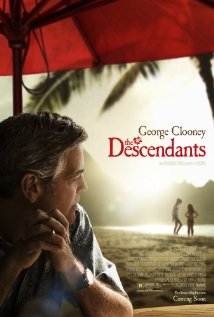
#4 "The Descendants"

#3:  Mostly from the Oscar “buzz” surrounding the Best Foreign Film category, I placed “A Separation”from Iran on my must-see list.  I was mesmerized by the end and, although certainly intrigued by the film, focused too much on the cultural issues.  Later, Karen convinced me that, cultural aspects aside, this was a film about people and relationships that can happen anywhere.  In this film, the status of women in Iran was a

#3 "A Separation"

driving force, but the story could have been translated to a different culture.  Great film on a level with“The Lives of Others.”

#2:  Baseball setting aside, consideration in naming “Moneyball”my #1 film came from the timeless American story; someone burdened with difficult circumstances that ultimately inspire creativity and extraordinary success.  The film, that book author Michael Lewis said could never be made, does an admirable job of defining Billy Beane’s past, his motivation (along with lack of money) to think out of the box.  Brad Pitt and Jonah Hill deliver performances worthy of recognition.  This is the “Rocky” of 2011.

#2 "Moneyball"

#1:  Woody Allen has certainly seen resurgence in his career after a brief lull.  Recent films like “Matchpoint”, “Vicky Christina Barcelona” and “Whatever Works” have put him, already a legend, among the best writers and directors of the past decade.  The concept alone for “Midnight in Paris”deserves consideration for an Oscar nomination; bored assembly-line screenwriter, painfully agonizing over his first novel, in Paris surrounded by egotistical, arrogant, shallow people (Woody’s favorite theme), fantacizing about a past romantic lifestyle.  The scenes of Paris were reminiscent of our rainy day walks last Spring.  The ensemble cast of Kathy Bates ( Gertrude Stein), Marion Cotillaid, Adrian Brody (Salvador Dali), Rachel McAdams, Carla Bruni, Michael Sheen and Wilson deliver performances that only Woody can arouse.  Some understanding of his style enables one to distinguish the improvisation that makes his films so real.  Great writing, acting and the nourishment of creative interpretation is a formula for success; one that strips the confines of the character and lets actors act.

Mr. Allen, well into his seventies, can still write modern romantic comedy and the top actors in the world line up to work with him.  I anxiously await his next film.
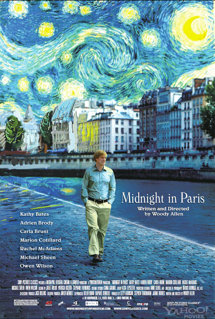
#1 "Midnight in Paris"
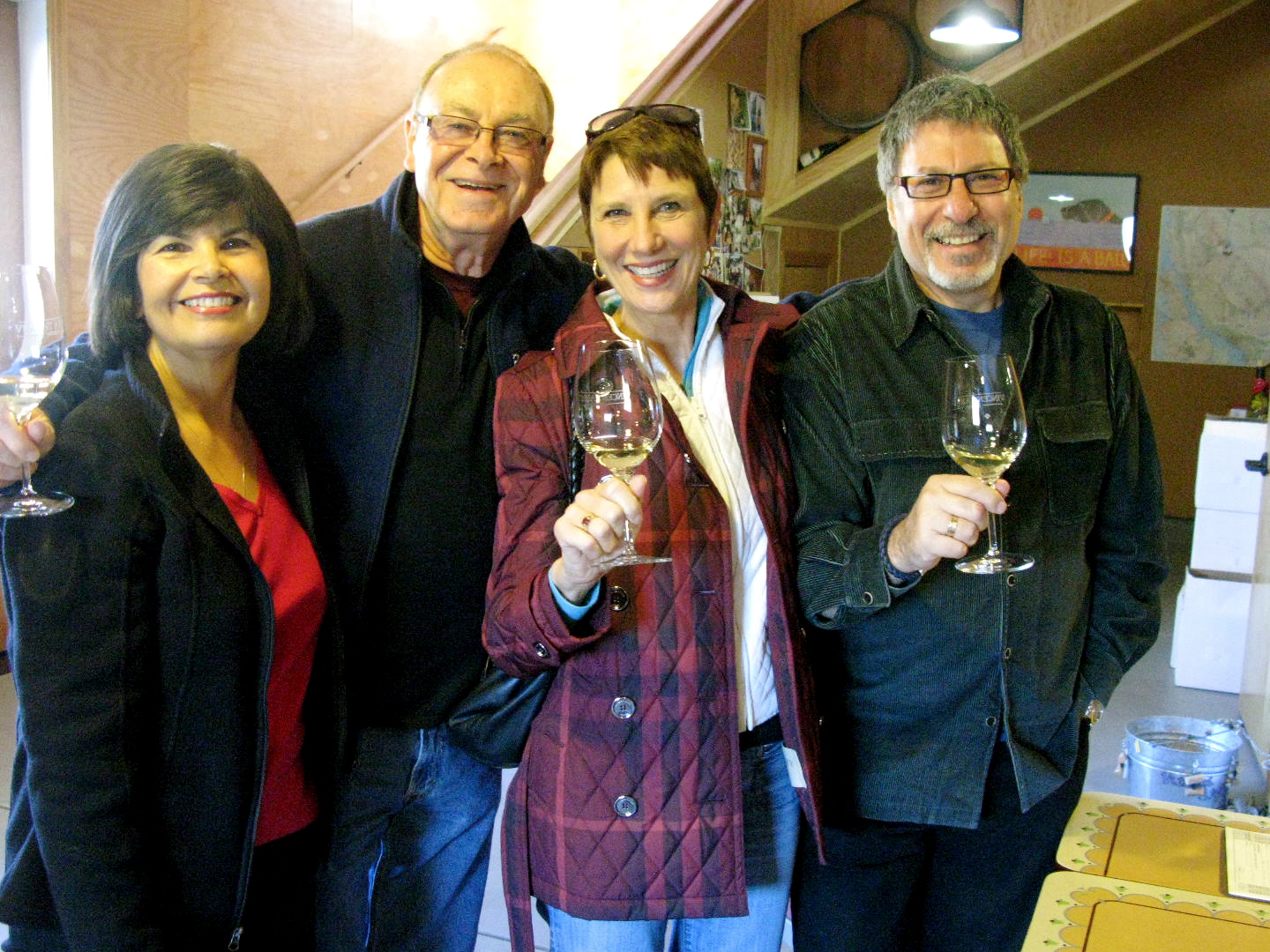

North Napa Wineries(And Great Food!)

Our annual New Year’s tradition in Napa Valley began by responding to a “Living Social” offer for a bed and breakfast/spa package in Calistoga, a small town in the north valley that served as a regular get-away decades ago.  Friends and fellow “foodies”, Rosemary and David, carefully selected some restaurants of recent note and we were off for a mini “fork and cork” experience that began with lunch at Cindy’s Backstreet Kitchen.

Chef Cindy Pawlcyn, beginning 25 years ago with the infamous Mustard’s Grill on Highway 29, has developed three restaurants in the Napa Valley, including Cindy’s Backstreet Kitchen, located in a quaint historic building along the railroad tracks, east of St. Helena.   The charming old supper club atmosphere is enhanced by a very unique menu that includes such dished as the “Chinatown Duck Burger with house made shiitake mushroom ketchup and French fries” and “Adult Grilled Cheese, mostly vegetarian NO CRYBABIES! and polenta fries”.    They feature a very diverse choice of fine wines by the glass and bottle, micro brews like “Death and Taxes” Black Lager from Moonlight Brewing and creative cocktails such as their “Thai-gin-tini”.  What a wonderful start to an entire weekend of gourmet experiences.

The town of Calistoga is historically known for its spas that feature naturally hot mineral and volcanic ash baths.  Over the past decades, restaurants, B&B inns, elegant spa hotels and boutique wineries have become mainstays of the local landscape.  Our first wine tasting stop, the Vincent Arroyo Winery, fits the local persona with wines as unpretentious as they are bold and supple.

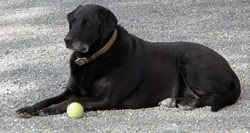
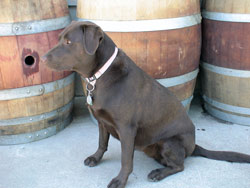
Entering the barn at Vincent Arroyo Winery, after an official greeting by black lab, JJ and chocolate lab, Bodega, their tails wagging, you are reminded that this is a small working winery and, amid a relaxed environment are friendly staff that are very serious about their wine.  We tasted several current releases, beginning with the 2010 Vincent Arroyo Chardonnay ($24), two-thirds fermented in stainless steel tanks and the rest in French oak barrels resulting in a very crisp flavors with hints of vanilla.

JJ - Vincent Arroyo greeter

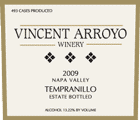
Tempranillo has become a very trendy varietal and seems to be expanding in very diverse regions throughout the state.  Of Spanish origin, the grape typically generates nice, heavy fruit

Vincent Arroyo Tempranillo 2009

bouquet and flavors and, like Cabernet Sauvignon, enjoys the company of oak.  The 2009 Vincent Arroyo Tempranillo ($28) delivers all the features of a dry Cabernet, with ripening fruit flavors at a relatively moderate price.   Moving to blends of French descent, the 2008 Vincent Arroyo “Nameless” ($30)is a left-bank Bordeaux blend of merlot (62%) and cabernet

Bodega - unofficial host

sauvignon (38%) that is well-balanced, semi-tart and great to pair with food.

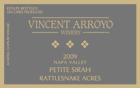
Another varietal expanding throughout California wine regions is petite sirah, a dark inky-colored grape with rich texture and very soft, accessible flavors.  Of the three produced, we enjoyed the 2009 Vincent Arroyo Petite Sirah Rattlesnake Acres, from a vineyard at the winery entrance.  Exhibiting all the traditional qualities of the varietal, the flavors were very forward with a nice lingering finish.   The 2008 Vincent Arroyo Petite Sirah “Winemaker’s

Vincent Arroyo Petite Sirah "Rattlesnake Acres" Vineyard
Reserve” ($50) aged three years, is still young, but has a structure that will continue to mature.

The flagship wine of our day was the 2009 Vincent Arroyo “Entrada”  ($65), an unusual blend of syrah, cabernet sauvignon and petite sirah with bold flavors and near perfect balance that is drinking well now, but will continue to develop structurally with time.

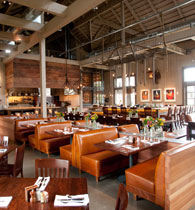
For our first dinner, Rosemary had reserved a table at the Michelin-starred SolBar, on the Solage Spa grounds, just east of town.  We are pleased that she did.   Upon entering SolBar, one is immediately immersed in an understated elegance that is inviting for fine food and wine.  It is a modern, sleek, but homey room where everything seems to work the way it should.  Carrying a bottle of Kosta Browne Pinot Noir Garys’ Vineyard 2009, we were definitely in the mood to sit, relax, select and enjoy.   One look at my wine and our young female waiter suggested that we decant it right away.  That’s apparently what happens at a Michelin-starred restaurant.   The pinot noir opened up and paired perfectly with the wild, sustainable sea bass as well as the beef confit salad. The SolBar experience was my best in recent memory.

SolBar restaurant

Laura Zahtila Swanton’s story is a somewhat familiar one, one that has a happy ending.  Working at Cisco Systems in Silicon Valley, she purchased the property of her estate vineyard and winery, relied on her technological skills and set out to produce limited-quantity boutique wines along the Silverado Trail in the Napa Valley.  Coming upon her property, with no prior knowledge of her wines, we decided to make the short trek to a quaint tasting shack only to be pleasantly surprised by many of her recent releases.

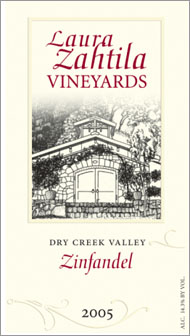
Laura Zahtila "Odone Vineyard" Zinfandel 2005
We began with a comparative tasting between the 2004 and 2005 vintages of the Laura Zahtila Vineyards Zinfandel “Odone Vineyard” ($40), revealing vast differences in flavor and structure.  The 2004 was well structured, soft and a bit tannic while the 2005 was much more fruit forward with nice vanilla and cinnamon hints.  Both wines need decanting for a few hours.  Decanting is also recommended for the Laura Zahtila Vineyards Zinfandel “Oat Hill

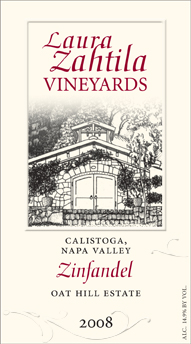
Laura Zahtila "Oat Hill" Zinfandel 2008

Vineyard” 2007 ($45), much more jammy with plum and blackberry.

This is the Napa Valley.  While winemakers are experiencing with different varietals and terrior, cabernet sauvignon is still king.  As we were tasting the Laura Zahtila Cabernet Sauvignon “Barlow Vineyard” 2007 ($50), a nicely structured wine aged in 40% new French oak, our hostess opened a library bottle of Laura Zahtila Cabernet Sauvignon “Beckstoffer and Georges III Vineyards” 2002 ($60) from two famed valley vineyards.  This wine expressed a very unique bouquet and an earthiness indicative of the fine wines produced from these Rutherford vineyards

Our final carefully selected culinary destination was “Farmstead”, the gourmet, comfort-food restaurant by Long Meadow Farms, a 650-acre ranch above the valley that produces grass fed beef, eggs, heirloom fruit and vegetables, olive oil, all in a sustainable, organic and responsible way.  Having supplied top American chefs with fresh products, they developed “Farmstead”, south of St. Helena to showcase their mission of healthy, responsible food that tastes great.  Dishes like “Brick-cooked chicken with savory spinach with rancho gordo beans and salsa verde” and “Salad of kalcinato kale with chile pequin, lemon and toasted

Farmstead Restaurant in St. Helena

grana cheese” are rare recipes that are not duplicated anywhere else.

Our final tasting was at Summers Estate Wines, a small boutique winery, north of Calistoga, producing 8-9,000  multi-varietal cases per year, mostly from their 28-acre estate vineyards.  My first contact with Summers wines was a glass of their “La Nude” Unoaked Chardonnay 2008, recommended as being crisp, but with softer flavors.  The Summers Estate 2008 Reserve Chardonnay ($22), dissimilar from others we had recently tasted, was aged for 10 months in French oak, infusing a rich vanilla essence with nice orchard fruit flavors.

Among other fine attributes, Calistoga apparently has good “terrior” for the rare, once abundant Charbono grape that suffered from an identity crisis in its early California years.  Story

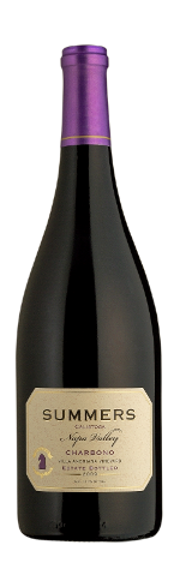
Summers Estate Wines Charbono 2009

has it that Italian immigrants brought the grape here during the Gold Rush, thinking it was barbera.  Although widely grown throughout the Napa Valley in those early years, Summers reports that their 80-acres are the only Charbono vines left on the planet.  The Summers Estate Charbono, Villa Andrianna Vineyard 2008 ($28), aside from deep ruby color, has rich berry and spice flavors that pairs well with pasta and tomato-based sauces.

Zinfandel is a varietal that generally thrives on mature vines that have adapted, over the years, to their soil conditions.  The Summers Estate Zinfandel “Four Acre Zin” ($34) is one of those wines, made from 40-50 year old vines, creating a wine that effectively balances the sumptuous flavors of strawberry jam and the spiciness of cracked pepper.  Our last wine, the Summers Estate Reserve Cabernet Sauvignon ($48) expressed multi-layered flavors and nice texture.  Unlike the Charbono and jammy Zinfandel, this wine must compete with the multitude of other Cabernets that have made the Napa valley famous.

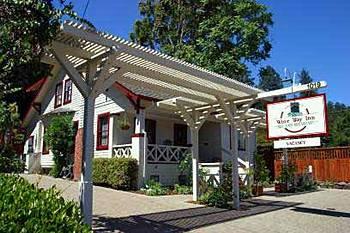
Synonymous with renowned names like Mondavi, Stag’s Leap and Spottswode, the Napa Valley has also become, over the past 30 years, a region that can still be accessible to small production, boutique winemakers who rarely get the ratings and major press, but nonetheless are serious and talented in their craft.  These and other north valley wineries are worth exploring, using Calistoga as a home base, whether in a local B&B such as the Calistoga Wine Way Inn or the Mount View Hotelon Lincoln Avenue.  Memorable food, good

Calistoga's "The Wine Way Inn"

wine, spa treatments and other outdoor activities are at your fingertips in the north Napa Valley.


“Fork and Cork” in Angels Camp


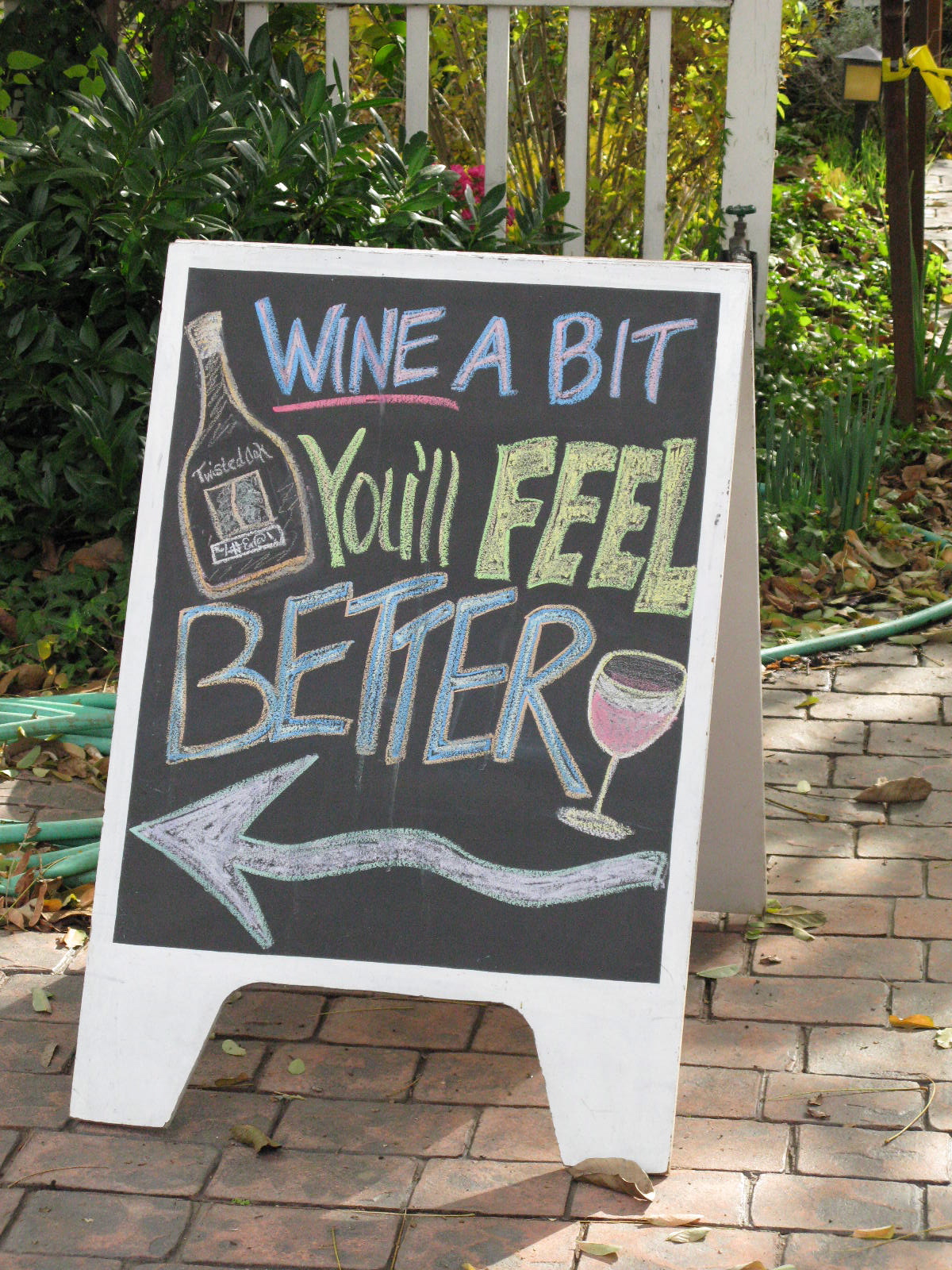
"Wine a Bit"

The Brown’s Valley Fork and Cork Society, growing impatient of scheduling problems, grabbed an open weekend and assembled at our friends Robin and Ginny Jaquith’s mountain home in Angels Camp to express our culinary (or lack of) skills, share wine, catch up and plan something special. This weekend included a private winemaker’s dinner, exploring new area wineries and some good home cooking. For those unfamiliar with Angels Camp or Murphys, CA, my advice is explore these quaint villages, located in the Sierra foothills, the heart of gold country with shops, restaurants and new, exciting wines from the Calaveras and Amador

Robin and Ginny Jaquith

appellations.  Uniquely designed frogs fronting many of the business’s reminds us that Angel’s Camp is the setting of Mark Twain’s 1867 fiction, “The Celebrated Jumping Frog of Calaveras County”, a familiar novel if you are my age.

The first order of business upon our arrival was to complete the Thursday night dinner main course, our contribution to the weekend festivities.  We extracted a “Fennel-crusted Salmon with Celery Root/Pear Puree” recipe from Wine Spectator magazine, added some fresh grilled asparagus and paired with a local 2008 Leona Valley Winery Sangiovese.  The meal began with a fresh butternut squash soup with crème fraiche paired with a superb Russian River Valley sauvignon blanc, arguably one of the varietals best in California with past appearances on Wine Spectator’s annual Top 100 list.

Merry Edwards RRV Sauvignon Blanc 2008

The 2008 Merry Edwards Russian River Valley Sauvignon Blanc, with consistent ratings in the mid-nineties, expresses a rich texture, soft flavors of honey and melon and a bit of citrus.  A fantastic food wine, it enhanced the butternut squash soup and was a bridge to the herbed, grilled asparagus.

David Reynold’s 2008 Leona Valley Winery Sangiovese began with an interesting story.  For various reasons, his neighbors could not pick their sangiovese grapes and offered them to David with the promise of his first ten cases.  The wine, with multi-layered flavors, some added barbera, stood up to the fennel, also offering a long, soft finish.

Friday morning led us to Amador County’s wine trail to visit a new producer that has “accelerated” onto the local scene.  The

"combustible sculpture" at Driven Cellars

location, Driven Cellars, is novel on many counts; including the eclectic collection of old trucks and tractors that adorn the property like some “combustible” sculpture garden.  The vineyards began in 1993 with mostly popular zinfandel and have expanded to a variety of other reds, releasing the first vintage in 2003.  Although their impressive  “green” facilities incorporate recycled buildings, rainwater collection systems and solar heating/cooling, the impression that I left with was one of a variety of very fine wines, quietly produced under the radar and offering high quality for value prices.

We tasted the entire palette of wines from Driven Cellars, a barbera with candied fruit on the nose, luscious zinfandel and aprimotivo, aged in, of all things, Minnesota oak.  Of all these nice wines, three stood out, unique examples of the local terrior.  The tempranillo varietal, known as the Spanish cabernet sauvignon, seems to thrive in California’s gold country.  The Driven Cellars Tempranillo 2008 ($23), to prove my point, was luscious on the nose and palate, with rich fruit through a long finish.

The tempranillo varietal seems to standout in the Sierra Foothills, notably the Twisted Oak “The Spaniard” blend and young Allegorie Tempranillo 2009, recently tasted in the picturesque town of Murphy’s.

The petite sirah grape also prospers in the local terrior, but a few offer even more than the deep, dark color and deep, dark cherry fruit. Strong hints of fennel and mint on the nose distinguish the Driven Cellars Petite Sirah 2006, adding rich flavors that

Driven Cellars Petite Sirah 2006

were balanced and complex. I now sense that we have set upon something authentic, something beyond the panoramic views and abstract metal, reminiscent of man’s relationship with vehicles, those monstrosities needing V8’s to leave tire marks on the pavements.

It is all seemingly tied together with the Driven Cellars “454” Red Wine 2007, their inimitable flagship blend that pays homage to the cubic inches of those hot rod engines. This exclusive blend of primotivo (48%), syrah (24%), zinfandel (23%) and tempranillo (5%) manages to maintain texture and balance, with flavors accessible for most palates. The novelty of the site does not overpower the wine, but foreshadows that which exceeds expectations.

Robin and Ginny continued our exploration of Calaveras County wineries by planning an exclusive “Fork and Cork” winemaker’s dinner at Val Du Vino Winery in Murphy’s. Owners Jonathon Phillips and Jeanine Hebel have a clear division of duties in operating the winery.  Jonathon sticks to winemaking and Jeanine, a renowned French chef, handles catering and special pairing dinners.  What a treat to enjoy Jeanine’s exquisite cooking and Jonathon’s stories of his diverse career as he poured and exuded pride in his wines.

Jonathon Phillips sources all of his grapes from fine vineyards in the Sierra Foothills and beyond.  His profile includes a zinfandel from Paso Robles and a north coast cabernet sauvignon, undertaking a hands-on approach to winemaking and content with limited production.

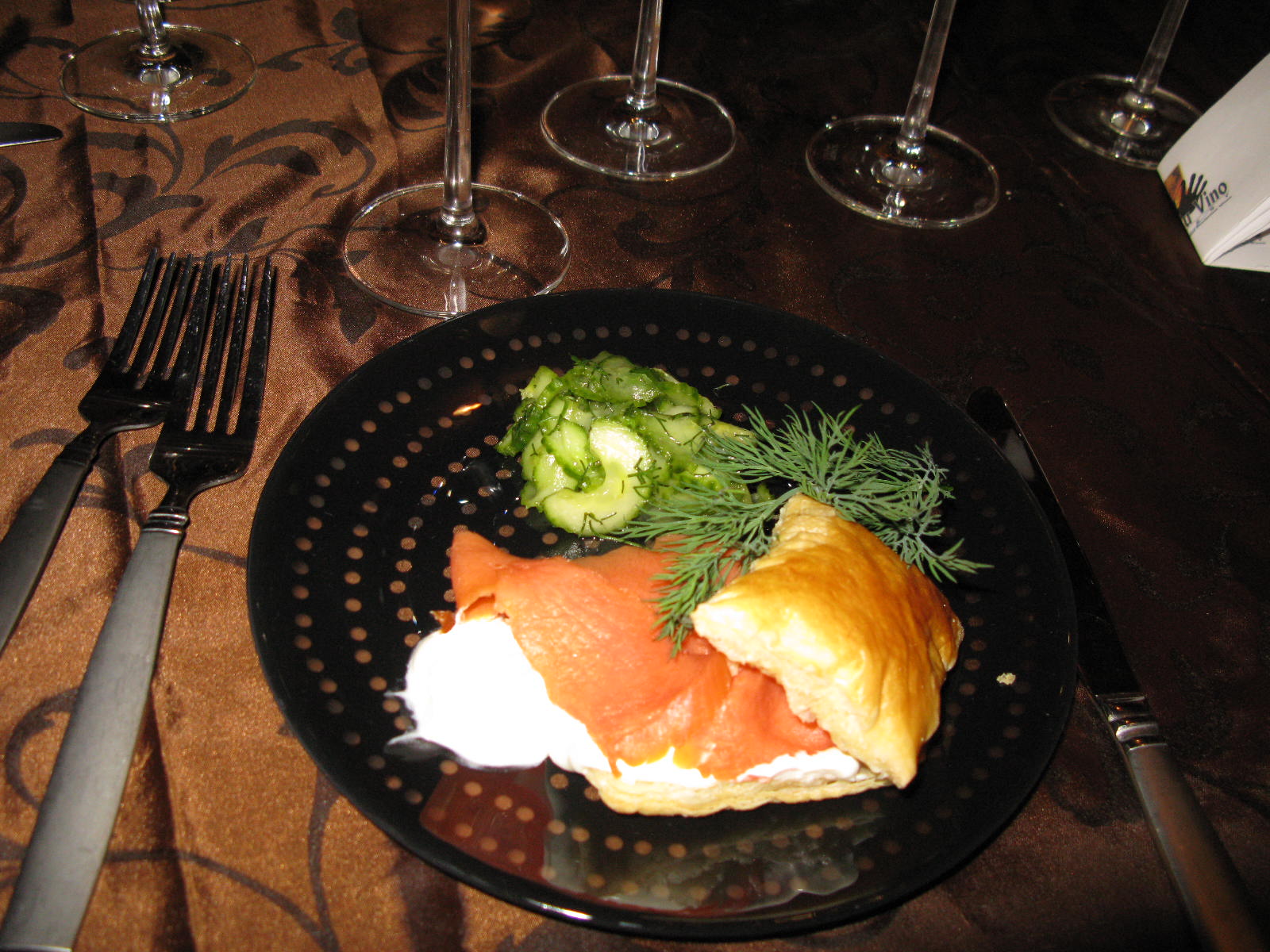
salmon galette filed with herbed goat cheese, figs and prosciotto

Jeanine’s delicious Shrimp Viognier Aspic Soup topped with Zabaillone was paired with the Val du Val Viognier Amador County 2010 ($24), very aromatic wine with strong impressions of the orchard fruits.  There was at least one bottle in each couples cart that evening.  The second pour, the Val du Vino Grenache 2009, grown locally and emanating highly ripened berry flavors, accompanied a Galette filled with Herbed Goat Cheese, Figs and Prosciotto. The herbs enhanced the strong fruit-based flavors, a common component of any good grenache

The magnificent entrée’s were paired with three bold new red wine releases, one, the Val du Vino Syrah 2009 ($30) from Calaveras County coupled with her Lamb Moussaka.  Heavy spice hints combine with concentrated fruit in classic syrah style, always good with lamb.

The ultimate paired wines included a fruity Val du Vino Zinfandel Paso Robles 2009 ($25) and Val du Vino Cabernet Sauvignon 2007 ($35) from Mendocino County.  The cabernet, surprisingly paired with Salmon Fillets in a Cabernet Sauce served with Potato Leek Ravioli, was big and soft at the same time, the result of good balance and texture. The jammy flavors of the central coast zinfandel stood up some incredible Baked Pears filled with Stilton, Cranberries and Walnuts. What a feast, kept real with moderate portions that truly helped the expression of the wine.


Val du Vino Winery was a nice discovery; tasting handcrafted, boutique wines with celebrated contemporary French cuisine. These limited production releases will be impossible to find in So Cal, making their wine club or internet sales the best option.

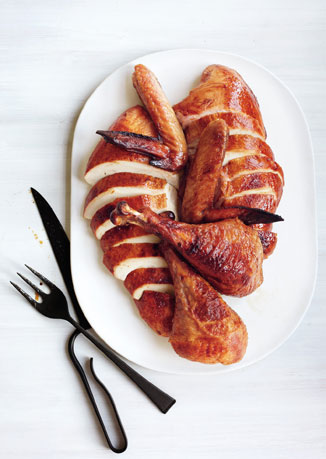
Our hosts coordinated a divine pre-holiday feast for Saturday evening, our last together.  It was an Anita Lo menu in Bon Apetite’ that included Cider-Brined Turkey with Star Anise and Cinnamon, Kabocha Squash Puree with Ginger and Candied Mandarin Oranges and Cranberries; a diverse menu, but not a challenging one to pair. We began with a Foley Estate “Barrel Select” Chardonnay 2008, from the Santa Rita Hills appellation; a creamy, well-structured, full-bodied wine

Cider-brined Turkey with Star Anise and Cinnamon

with nice aromas and flavors of melon, tropical fruit, honey and butterscotch on the finish.

The Novy Syrah Rosella’s Vineyard 2008, from friend David’s cellar, would be the first dinner wine.  Novy Family Wines, based in Santa Rosa, produce mostly syrah from some of the state’s finest vineyards. This one has been consistently rated in the mid-nineties. The second pair, RN Estate Pinot Noir Santa Rita Hills 2009 from Kathy Joseph’s Fiddlestix Vineyard conveyed nice, balanced fruit aromas and flavors. Both wines matched up well with the spices of the meal, as they were intended to.

Friends of nearly 40 years, Robin and Ginny earned their service points for the Brown’s Valley Fork and Cork Society.  Thanks for a delightful and informative weekend.


Wine Spectator’s Top Wines of 2011


"Wine of the Year"

As someone who enjoys lists, Wine Spectator magazine’s annual release of the year’s most exciting wines is highly anticipated, providing a plethora of information on current trends and vintages, both domestic and throughout the world.  Stories boasting the quality recent vintages for Sonoma County, Napa Valley, France’s Rhone Valley and Tuscany played out through their dominance on the list, generating nearly half the wines.  The prestigious top ten wines included two pinots from Sonoma, an exciting new Napa Valley cabernet sauvignon, three French and two Italian blends.

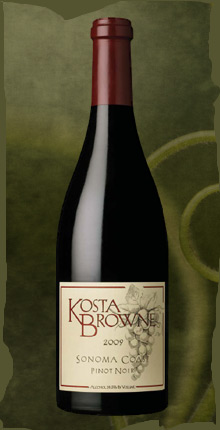
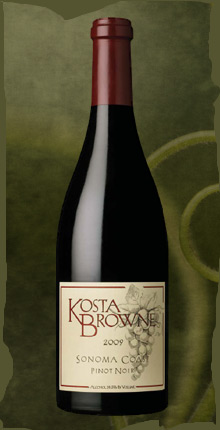
No stranger to the list during the past decade, the Kosta Browne Pinot Noir Sonoma Coast 2009 ($52), a wine for which I am very familiar, was the WS “2011 Wine of the Year”. The story of the emergence of Dan Kosta and Michael Browne as premier producers of pinot noir is not one of pedigree or years of apprentice in the region of Burgundy.  It’s simply the story of a couple of guys with nothing but desire, who plunged into winemaking and learned as they went along to ultimately discover their identity in the depth, richness and elegance usually distinguished in the great Burgundian treasures.

In 2011, Kosta Browne produced 11 pinots, most exclusively from esteemed vineyards such as Amber Ridge and Kanzler in the Russian River Valley. With all the leading single-vineyard releases, ironically, the top wine combines grapes from three different vineyards near the northern Sonoma coast and is, at $52, one of their most moderately priced wines. Not new to the WS list, this is the third vintage to reach the top ten since 2006.  Although my two bottles will remain in rest for at least another year, I have enjoyed the last five vintages and found extraordinary richness, “heavy on the tongue” creamy texture, concentrated, candied flavors and long finishes with each.  For those of us that follow California Pinot Noir, this 2011 coronation for Kosta Browne was only at matter of time.

#5 Dehlinger Pinot Noir RRV 2008

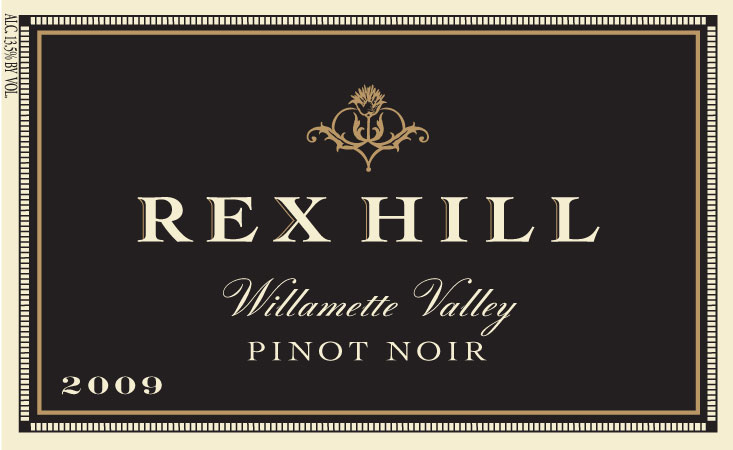
There were eight representatives from the pinot noir varietal, five from Sonoma and three from Oregon. Senior editor James Laube foreshadowed great results when he named the 2009 vintage California, especially Sonoma County pinot noir as the decade’s best; possibly the best ever.  The top ranked of the varietal all had ratings of 94-95 pts and all cost about $50, including the Dehlinger Pinot Noir Russian River Valley 2008 (95pt/$50) from a well-respected Sonoma winemaker with a reputation for producing very fruit forward, graceful wines.  The Domaine Serene Pinot Noir Dundee Hills Grace Vineyard 2008, from the Willamette Valley in Oregon was the highest rated at 97 pts, but was ranked #85 because the $125 price made it much less exciting.  I was pleased to see the Rex Hill Pinot Noir Willamette Valley 2009 (93pt/#38) on the list. They are very serious, hard-working winemakers and have released many nice pinots over the years.

The US contributed 41 wines, 28 from California, followed by exceptional vintages from Tuscany and France’s Rhone Valley, regions also rewarded with good recent vintages.  Outside of California, Washington state, continuing to emerge as a region of good quality and diversity, landed seven wines, Oregon four, New York state and New Mexico, one each.

If one commenced to produce a high quality, moderately priced sparkling wine, I doubt that they would seek to plant vineyards in

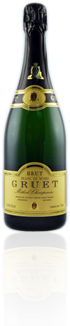
#43 Gruet Blanc de Noirs New Mexico

Truth or Consequences, New Mexico.  The Gruet family has planted pinot noir and chardonnay grapes at very high altitudes to bring into being the Gruet Blanc de Noirs New Mexico, scoring 90 pts from WS and retailing for $14 a bottle.  This sparkling release has generated enough curiosity to be ranked as the 43rd most exciting wine.  With 20,000 cases made, it shouldn’t be too hard to find.

Once again, the Paso Robles region had respectable representation on the list, with the 2010 “Wine of the Year,” Saxum James Berry Vineyard Paso Robles 2008 (97pt/$75), returning at #52.  Although it had a similar “off the charts” rating with a slight price increase, it is difficult, if not nearly impossible, to generate that much excitement for more than one year.  Known for sourcing grapes to other winemakers, the 126-acre Denner Vineyard produced the Syrah grapes for the Denner “The Dirt Worshipper” Paso Robles 2008 (97pt/$45), the highest ranked Paso wine at #11.  At this point, it is intriguing, but scarce.

Tablas Creek, a winery whose Rhone blends like the “Espirit De Beaucastel” are regulars on the list, placed the Tablas Creek Cotes de Tablas Paso Robles 2009 (93pt/$30) in the 37th spot. This Grenache-dominant blend with Syrah, counoise and mourvedre is fermented and aged in the French style and has the consistent quality expected from a pioneer of California Rhones.  Cheers for the Grenache grape; a dominant component of 10 wines on the list, four from the Golden State and six from the Rhone Valley.

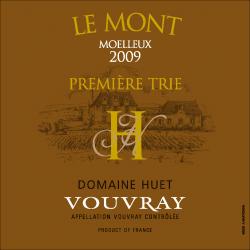
Aside from the Alain Graillot Crozes-Hermitage La Guiraude 2009 (94pt/$55), a reprise of the winemaker’s 2001 top ten appearance, the most interesting and highest ranked French wine was the Domaine Huet Vouray Moelleux Clos du Bourg Premiere Trie 2009 (96pt/$69),a chenin blanc from the Loire Valley, that used wet weather-induced Botrytis rot to help

#9 Alain Graillot Crozes-Hermitage La Guiraude 2009

create, as experts claim, a beautifully balanced, fruit forward white wine.

Washington State repeated an excellent 2010 performance with the inclusion of seven wines, all within the top 50. A nice balance of red wines including three Cabernet Sauvignon, two syrah and two Bordeaux blends illustrates the diversity of the great Pacific Northwest, also known for the production of Riesling.  The magazine placed the Baer “Ursa” Columbia Valley 2008 (95pt/$35), the winery’s signature merlot/cabernet franc blend, as #6, noting its consistent richness and clean flavors. In addition to the “Ursa”, wines like the Efeste Syrah Yakima Valley Jolie Bouche Boushey Vineyard 2008 (95pt/$36)have shaped Washington’s character in producing high quality at moderate prices. This syrah is very intriguing, but with only 385 cases made, it will be nearly impossible to find.

#6 Baer "Ursa" Columbia Valley Washington

There are some California wines that deserve specific mention.  Recently, I had an opportunity to enjoy a Merry Edwards Sauvignon Blanc Russian River Valley 2009 (93pt/$30) paired with a wonderfully rich butternut squash soup with crème fraiche.  A recurrent member of the annual list, this is one of the best food white wines out there, always expressing layered flavors and a trademark long, rich finish.

I am partial to Santa Cruz Mountains wines, having grown up among them.  This is one reason it’s nice to witness the Mount Eden Vineyards Chardonnay Santa Cruz Mountains 2007 and 2008 (95pt/$55) being honored in the top 20 in back-to-back years.  Coastal influences, great low-yield vines from historical vineyards and oak influences make for a great wine in most years.

In 2010, the well-textured Hall Cabernet Sauvignon Napa Valley 2006 was, at $40, one of the best values on the list.  Following early “buzz” upon its release, the Hall Cabernet Sauvignon Napa Valley “Kathryn Hall” 2008 (96pt/$90), named for the co-founder, was designated as the #2 wine in 2011.  I had the opportunity to taste the 2007 vintage and, although a bit pricy, it is definitely a collectible if it can be found.

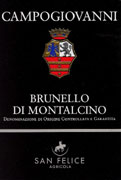
#4 Campogiovanni Brunello di Montalcino 2006

Tuscany contributed half of the Italian wines, most notably a classic Campogiovanni Brunello di Montalcino 2006 (96pt/$50), aged four years before release.  This wine may be available at K&L Wines/Hollywood in the near future.  With yet another example of Portugals’s port producers branching out to other reds, the Quinta Do Vallado Touriga Nacional Douro 2008 (95pt/$55), designated in the #7 spot, is a rare single-varietal (touriga nacional) wine from the north’s Douro region.

Another significant part of each year’s top wines list is who is not represented.  After resurgence the last few years, Germany listed only one Riesling and regulars, Australia and Bordeaux just two wines each. The safe bets among 2011 releases will come from Sonoma County, Tuscany, Washington State and the southern Rhone Valley.

The 2011 list clearly illustrates California’s prominence in the production of great wine.  With each new year, winemakers will monitor the weather and the soils as they care for their vines.  However, it is certain that the California “terrior” and passionate vintners will continue to prevail to create sensory wines in the grand appellations that serve them. Best to all in 2012!


Monopole: Pasadena’s new wine store


Pasadena’s “El Molino/Colorado Blvd.” Theater District has, for years, been one of our favorite southern California destinations, featuring such venues as the Pasadena Playhouse, Laemmle’s Playhouse 7 movie theater and a great bookstore.  However, with the Pasadena Playhouse in Chapter 11 bankruptcy and that we can now see great films locally at downtown Lancaster’s Laemmele Boulevard  Theater, could we find ourselves with no reason to go back?  Of course not.

The Pasadena Playhouse has re-structured its debt and is presenting their first full season in two years, restaurants like El Portal and Elements are still striving, Vroman’s Bookstore is continuously presenting authors and lectures and the new Monopole Wine at 21 South El Molino Avenue brings a whole new dynamic to the district.   We have walked by Monopole numerous times simplistically wondering how a retail wine shop could compete with wholesale and on-line establishments.  They seem to be doing well, but surely co-owners Peter Nelson and Hiro Tamaki have determined a strategy to set them apart.  It was time to discover just what that was and if it could make us steady customers.

Monopole (mon-uh-pohl), a French word meaning monopoly or, in wine terminology, sole vineyard ownership, was created to feature premium European wines and to educate through tastings and other fun events, an inviting business plan for someone who loves Pasadena and is ready to expand his knowledge beyond California and Pacific Northwest varietals.  Away from vast California vintages, it’s difficult to research value between the countless fine, century old wines from France, Spain, Italy and Germany.  Within a short time in the store, Peter directed me to good value and some unique norms of overseas wines.  Complimenting him on his selection of late 20th and early 21st Century vintages, Peter explained that they were all 2011 releases, cellared for nearly a decade before exposure to a consuming public.  California wineries may suggest further cellaring, but the release or “payday” usually happens within 24-36 months after grape harvest.

Another distinction of European wines comes from the label on the bottle.  While the prominent feature of a California label describes the varietal (usually a single grape), then the winery, region, vintage and, on occasion, a single vineyard, labels from France and surrounding countries tell a different story.

The most important and recognizable feature is the identification of the appellation or growing area.  In most cases, the grapes and percentages used are regulated by the Appellation d’Origine Controlee’ (AOC) and need not be identified. The next significant feature is the name of the individual winemaker or family that produces the wine, followed by the vineyard designation and finally, the bottler that may or may not be the same as the producer.  In rare cases, the varietals may be listed but typically identification of the appellation reveals that information.  Now, we have begun to understand European wines.

On this occasion, we taste a flight of wines from the Languedoc region, often disregarded as a stepchild to the mighty Southern Rhone wines from the Chateaunef-du-Pape, Vacqueyras and Gigondas appellations.  In April, we found that the city of Avignon, located due north of Provence, due south of the Rhone Valley and northwest of Languedoc-Roussillon, was ideal base for exploring southern France’s wine regions.  Although they all use basically the same varietals to produce their wines, Languedoc uses its “step-child” status to offer better value than the other, more famous appellations.  Today, we would learn more about the region and what Peter and Hiro consider good values.

First in a flight of good quality, moderately priced wines is the Chateau de la Liquiere Les Armandiers Faugeres Languedoc 2009 ($17), a blend of carignane, syrah, grenache and mourvedre that expresses texture and flavor found in blends with price points in the $25-35 range.  The nice bouquet foreshadowed soft, integrated flavors, accessible for most palates seeking a young blend requiring little to no analysis.  Unique to many wines from this region, red currant essence adds a subtle new dimension to the more traditional berry flavors of “straw” and “rasp”.  However, the key here is that none are overbearing, sending a subliminal message that it wants to be your friend.

Our second wine, a Domaine La Tour Penedesses “Montagne Noir” 2008 ($21) from the mountains in Faugeres in the Languedoc-Roussillon region offered a sweet, candied nose and nice bold flavors, although a bit tannic.  If you like fruit-forward wines at a moderate price, this would be a one to try.

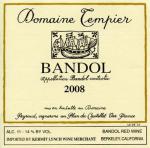
Mourvedre is an old, very famous grape known for playing a major support role to grenache and syrah in crafting those great southern Rhone blends.  Here, with the Domaine Tempier Bandol Rouge 2008 ($39), arguably the best wine from Provence, Mourvedre is featured with support from Grenache, cinsault and carignan.  The result is rich, concentrated flavors of juicy dark plums and ripening currants with some oaky, smokey on the finish.  This wine presents a unique flavor profile, different, one to remember more clearly while sharing my new bottle that lies in wait.

A very nice surprise and learned moment came with an offer to try a 2009 Domaine Cheysson Chiroubles Beaujolais ($20), recently awarded 91 pts from Robert Parker, produced exclusively from gamay grapes in the Chiroubles appellation of the Beaujolais region of France.  Apparently, 2009 was a great year for Beaujolais and this particular wine can be simply categorized as soft and ripe.  More specifically defined, the complexity of ripened tart fruit, combined with soft raspberry finishing with significant smokey, woodsy hints would be appropriate.  At $20, this package is what we call a value.

Our tasting was part of the “Mad Music Thursdays” event that occurs each Thursday on El Molino between Green St. and Colorado Blvd. and within participating businesses like Monopole.  It generally features gourmet food trucks and special music presented by local businesses like Zona Rosa coffee and Elements restaurant. This evening a cellist accompanied and joined our tasting.  The event is now on hiatus until summer 2012, but special wine tastings, wine dinners and other “educational” events will continue at the wine shop.  Those wishing to be informed of future events can register at info@monopolewine.com.

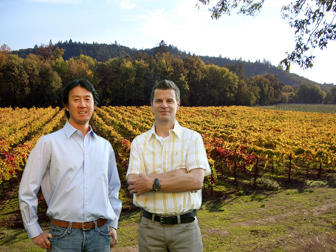
The paths that led partners Peter Nelson and Hiro Tamaki to Monopole are diverse, bonded through passion and some fate.  Nelson came to southern California from the Pacific Northwest to complete law school, while Tamaki came to California from Japan to pursue graduate studies, first in San Francisco, finishing with an MBA from USC.  Throughout their early years, they independently developed and pursued a passion for wine, both passing the Certified SommelierExam of the Court of Master Sommeliers and achieving the Advanced Level of the Wine & Spirits Education Trust, where they met.  Very highbrow credentials for a couple of casual guys, chasing second careers, that know what they are talking about and truly enjoy sharing their wisdom

Hiro Tamaki and Peter Nelson

As it turns out, Monopole is a tremendous resource to increase one’s knowledge of wines from Bordeaux, Tuscany, Rioja, Rhone Valley and other great region of Europe.  One may find themselves in a captivating discussion and leave with that special new “find” from the old country.

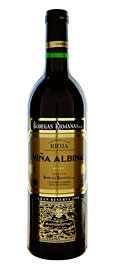
One such discovery occurred when our friends were searching for a good Spanish wine to pair with tapas at Three Drunken Goats in Montrose.  Peter led them a 1998 Bodegas Riojanas Vina Albina Gran Reserva Rioja ($40) from the famous region between Barcelona and Bilbao, recently boasting a 92 pt rating from Stephen Tanzer.  Surprised to find such an early vintage available, we learned it was a new release, aged over a decade.  It has all the complexity of an aged wine; beautifully layered flavors, great balance and texture.  Predominantly tempranillo, the wine delivers assorted hints of flavors from cherry to rhubarb and cedar; a perfect food wine.

1998 Bodegas Riojanas Vina Albina Gran Reserva Rioja

My passion for California pinot noir is no secret.  Hopefully, Peter and Hiro can help me understand it roots through the fine wines of Burgundy, a comparison of interest for sometime.  As I was about to leave, a young man came in with admittedly no knowledge of wine and asked for a recommendation, presumably for a potentially special dinner.  After some discussion of a probable menu, he was led to the relatively small California section and I overheard Peter asking him if he had seem the movie, “Sideways.”  He most likely hooked him up with a nice pinot noir from the Santa Rita Hills that could change his life forever.

In its simplest form, wine is still about passion; the kind of passion that created Monopole.  Wholesale outlets and wine warehouses have their place. Fortunately, shops like this still exist for those of us who remember the value of personalized service from a neighborhood store.  In this case, “professional service” includes impressive expertise, all within a district that continuously fuels the senses.


Wine Gossip

Vintage 2009 Pinot Noir

Autumn is a great time of year for many reasons; just one is that top Pinot Noir producers finally begin shipping their fall releases that have been purchased earlier in the year.  Many wineries will not ship to the Antelope Valley until November, assuring that our summer heat will not impact the wine.   Anticipations are high since Wine Spectator magazine’s James Laube declared the 2009 vintage pinot noir, especially Sonoma County, as arguably the decade’s best.   California pinot noir has made tremendous strides since early vintners set out to produce those astounding Burgundian wines in local soil.  Among the five major regions in the state to produce pinot noir (Mendocino, Sonoma, Carneros, Monterey Santa Barbara), the average vintage rating is nearly 96 points, 99 points for Sonoma which includes Russian River Valley, Sonoma Coast, Sonoma Mountain, Sonoma Valley and Green Valley appellations.  As a comparison, the previousl two vintages received ratings of 88.4 and 90.8 points.  Since 2003, Sonoma pinot noir vintages have averaged over 90 points.  The 2009 vintage has moved them from the “outstanding” into the  “classic” category.

Admittedly spoiling myself with fine pinot noir, I soon will be receiving 2009 vintages from Kosta Browne, William Selyem and Auteur from Sonoma and Seasmoke and Rusack from Santa Barbara County.  Among my meager allocation and budget will be a fruity, medium-bodied Williams Selyem Pinot Noir Sonoma Coast 2009 (91/$46) and a rich full-bodied Kosta Browne  Pinot Noir Sonoma Coast 2009 (95/$52), both highly touted and, more importantly, truly pleasurable to enjoy with friends.    By the way, the 10/15 issue of Wine Spectator has a good story on Ed Selyem and Burt Williams, early pioneers of California pinot noir.

Credit for the near-perfect 2009 vintage goes to moderate weather throughout the state and modest yields, something Brian Loring pays much attention to.  The Loring Wine Company produces outstanding Pinot Noir from 10 different vineyards located throughout the state.  His top rated vintage 2009 pinot noir, the Loring Pinot Noir Sonoma Coast Durell Vineyard 2009 (94/$45), the Loring Pinot Noir Paso Robles Russell Family Vineyard 2009 (94/$45) and the Loring Pinot Noir Santa Lucia Highlands Rosella’s Vineyard 2009 (94/$45) are evidence of statewide moderate weather and a credit to the winemaking aptitude of Brian Loring.

Garys’ Vineyard, located in Monterey County’s Santa Lucia Highlands region, again, claims a major presence in the 2009 vintage.  The story is old now.  Two childhood friends named Gary emerge from college to transfer agricultural land into one of most respected vineyards in the state.  The following chart list ratings of outstanding vintage 2009 pinot noir from major producers using grapes from Garys’ Vineyard:

Siduri                                    94            $53

Loring                                  93            $45

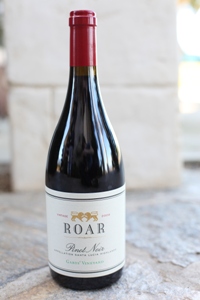
Roar Pinot Noir Garys' Vineyard 2009

AP Vin                                 93            $48

Kosta Browne                    93            $72

Roar                                     92            $50

Vision Cellars                    89            $48

Miner                                    86            $60

Logic tells us the grapes are exceptional and the winemaking varies.  However, if you find “Garys’ Vineyard” on any wine label, trust that you have found a quality wine.

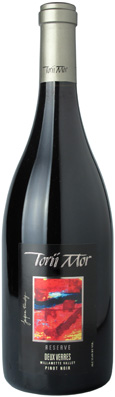
Although a brief perusal of our local Bevmo store revealed many vintage 2009 Pinot Noir, the Nautilus Marlborough Pinot Noir 2009 ($25/90pts.) from New Zealand and the Erath Pinot Noir 2009 ($20/88 pts.} are two that I would recommend as very good, moderately priced wines with good fruit and texture.  In addition, I must give special mention to the Torii Mor “Deux Verres” Pinot Noir 2007 ($40/92 pts.) from a well-respected Oregon winemaker.  This may be a “find” since I checked the winery website and they have none listed under available library wines.

Vintage 2011

The trend of great California vintages in odd-numbered years may be coming to an end with much concern worldwide over the 2011 vintage.  In California, it was too much rain, in parts of Europe; there was excessive heat through the spring.  In other regions, periods of steady rain and extended heat played havoc with the vines.

As we all know, California experienced early rainfall and plenty of it through the spring.  In many regions mildew and even botrytis, a fungus that affects the vines, threatened low-yield and difficulty ahead in maintaining quality in a tough year.

The Napa Valley, who experienced a near perfect vintage 2007, had unusually cool temperatures that delayed harvest.  Central Coast and Paso Robles region were hit with a late frost that resulted in voluntary and involuntary fruit loss.  Many Mendocino County vineyards, impacted a few years back with fire damage, had to deal with above average rainfall and low temperatures.

By no means should we “throw in the towel” on vintage 2011.  First, October could offer some extra sunshine and winemakers are accustomed to unpredictable weather and adapting to make the best with what they have.  One prediction seems probable; that there will be less wine to go around when vintage 2011 is released in a few years.  Until that time, enthusiasts should be conscious of good value wines from vintages 2007 and 2009.

Vineyards on Catalina Island?

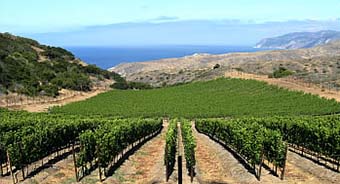
If one had access to acreage on the islands and was inclined to plant wine grapes, what varietals would match the terrior?   Having not been to Santa Catalina, almost totally unfamiliar with its climate, I can speculate to the existence of many microclimates that can support such diverse grapes as pinot noir and zinfandel.

Rusack, a small Santa Ynez Valley boutique winery, has produced well-reviewed pinot noir, syrah and sauvignon blanc for the past decade in the Solvang foothills.  Rusack is announcing their first release from the Santa Catalina Island Vineyards, the 2009 Zinfandel from the old El Rancho Escondido property.  So, why after many years in the wine business would Geoffrey Claflin Rusack and Alison Wrigley Rusack decide on the Catalina Islands?  The answer begins with Alison’s middle name.

Her great-grandfather, William Wrigley Jr. purchased the Santa Catalina Development Co. in 1919 and the family stills controls the land, including the old ranch site along the southwestern coast.   That’s where the Rusack’s have planted 4.5 acres, mostly in pinot noir and cool-climate chardonnay with a small plot dedicated to a zinfandel clone, unique to their name.

Santa Catalina Vineyards

Geoffrey Rusack discovered some vines, apparently from an old winery on Santa Cruz Island, part of the Channel Islands chain, received permission to remove them and had them analyzed by UC Davis as a zinfandel clone.  Some of the vines were relocated and planted on a small half-acre plot on the Santa Catalina Island Vineyards.  The Rusack Santa Catalina Island Vineyards Zinfandel 2009 will soon be the first release from the new label.  As a member of Rusack’s “Anacapa Club”, I will have an opportunity to acquire some fairly soon and am anxious to try it.

Whatever trends occur in the wine industry are most likely generated in California, responsible for 92% of US production.  Through good and bad vintages, our wine production will continue to grow at an extraordinary pace.  A 2008 study, “Recent Trends in the California Wine Grape Industry” by professors at UC, Davis, states that wine is responsible for 8.7% of agricultural revenue, a percentage that will continue to grow.  The North and Central Coast regions produce 36% of the state’s wine and regions like Paso Robles, as we have seen, have grown from 20 wineries in 1990 to over 170 today.

Nature’s element, new expanded regions and near fanatic attention to terrior reminds us that holistic wine production is an art as well as a science.  It is a part of our culture and will increasingly be a part of our identity.


Santa Barbara Wine Day


By Lyle W. Norton  (8/13/2011)

An invitation to attend an afternoon Pinot Noir release party afforded me an opportunity to plan a complete wine day tasting new releases from the Santa Rita Hills and Santa Ynez appellations. If I timed my day properly, I could fit in lunch at Los Olivos village and a tasting of new Richard Longoria wines before the Foley Estate event.

Rancho Santa Rosa Vineyard

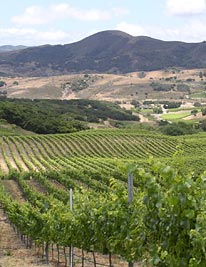
Foley Estate Winery, creators of some of California’s finest Pinot Noir and Chardonnay since the 2002 vintage was celebrating the release of their special “Brand” series and Lindsay’s Vineyard Pinot Noir, vintage 2009.  Having covered earlier vintages, their careful blending of clones within the 230-acre Rancho Santa Rosa Vineyard and Lindsay’s (formerly Rancho Los Hermanos) Vineyard, use of oak as well as fermentation techniques has pushed complex flavors forward and increased richness and texture with each vintage.

An irony of the afternoon was finding time to sneak across from the tents to the tasting room to secure a few bottles of 2009 Foley Estate “Barrel Select” Chardonnay ($50), my hands down favorite.  This Chardonnay delivers nice flavors of tropical fruit, honey, and vanilla within a creamy, rich texture.  To paraphrase The Most Interesting Man In The World:  “ I don’t always drink Chardonnay, but when I do, I prefer Foley Estate “Barrel Select”. However, this party is about Pinot Noir and the food that supports it, ready to showcase local restaurants.

Oak influences are the signature of the 2009 Pinot Noir Rancho Santa Rosa Vineyard, lending earthiness to the bouquet and flavors.  Some tannins and tartness add to the structure of a rich, concentrated texture.

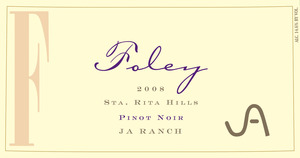
JA Ranch Pinot Noir

Perfectly braised beef short ribs from the Hadsten House Hotel, near the entrance of Solvang, accompanied the Foley Estate 2009 Pinot Noir, JA Ranch ($45), combining specific clones from the Rancho Santa Rosa and Lindsay’s Vineyards.  Typical Pinot elegance was evident on the nose and the earthiness was balanced with hints of vanilla, anise and a very soft texture.

Offering many luxury amenities at reasonable prices, the Hadsten House has been a true “find” in the Solvang area.  It is family friendly, offers a true gourmet breakfast and, now has an on-site restaurant featuring traditional dishes of chicken, salmon, chops steaks and a wine list continuously updated to feature the best the region has to offer. I can tell you that their well-spiced short ribs fell off the bone.

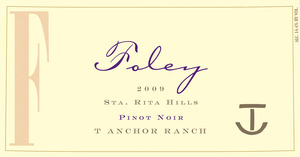
Just when I felt the “JA Ranch” Pinot was the “best of show,” along comes the Foley Estate 2009 Pinot Noir, T Anchor Ranch ($55)with enough spice on the nose and palate to pair with spice-rubbed lamb, courtesy of Petros Restaurant in the Wine Country Inn at Los Olivos village.  Certainly the most complex wine of the release, the “T Anchor

2009 "T Anchor" Pinot Noir

” has a variety of strong spices including cloves, brown sugar and cinnamon delivered through a velvety texture that lasts and lasts.  This is a good wine to track throughout the year.

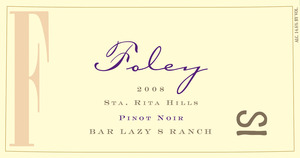
The “Brand Series” Pinot Noir blend specific clones from the Rancho Santa Rosa and Lindsay’s Vineyards. Our final series taste was the 2009 Pinot Noir, “Bar Lazy S”, a

"Lazy S Ranch" Pinot Noir

medium-bodied wine with classic black cherry flavors preceded by a candied nose. The wine was accompanied by cannellini beans with Italian sausage, black and white pepper, pairing nicely with the toasted nut hints on the finish.

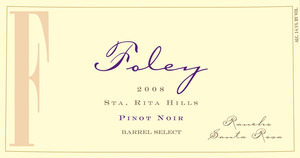
Whether red or white, the Foley “Barrel Select” concept blends the most complex and complementary barrels after the fermentation and aging process. A high percentage of the juice completes a malolactic fermentation process that adds to the softer, rich texture.  Fantastic Boneless Baby Back Ribs with Pressed Casaba Melon and Tomato Salad, for me, could pair with almost anything, including the 2009 Foley Estate Pinot “Barrel Select” ($60).  With a slight bouquet and traditional flavors, the complexity of this wine is nicely packaged in a creamy texture and long finish.

The 2009 Two Sisters Pinot Noir Lindsay’s Vineyard ($75)is comprised of the best clones within the vineyard, blended after individual aging in 90% new French oak barrels. With nice floral hints on the nose and caramel, cinnamon on the finish, “Two Sisters” has all the layered flavors and texture expected from a wine in the higher price range.

Foley "Barrel Select" Pinot Noir

The Foley’s daughters are placed in a prominent role throughout their family of wines.  After acquisition, the westerly Rancho Hermanos Vineyard was divided into two distinct vineyards and renamed for the sisters, Lindsay for the reds and Courtney for the whites. Both “Two Sister” wines are carefully crafted, but the Pinot Noir will need lengthy cellar time.

Another Foley family operation, Lincourt Winery, located in the Santa Ynez Valley near Los Olivos village, combines the sister’s names for its own.  Adding sauvignon blanc, pinot grigio and cabernet sauvignon to the traditional pinot noir and chardonnay, Lincourt offers a palate of reasonably priced, quality wines.

The Foley Estate Winery, under the leadership of winemaker Leslie Renaud, is producing luscious high-end Pinot Noir and Chardonnay in a region known for it, within a state that leads the world.  There are simply many to choose from.  For those interested in “stepping up” their wine experience a notch, I feel that the Captain’s Club” would be both informative and fun.  Although I am not a member, I do know that their wines are really getting good, the winery resides in a serene valley located off Highway 246 and they always host multiple events for the member’s enjoyment.

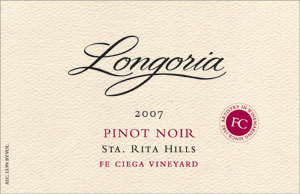
My previously mentioned detour to the Richard Longoria tasting room, initially intended to secure a specific wine, introduced me to some new releases, tasted outside, in a lovely garden setting.  I tasted the 2008 Longoria “Fe Ciega Vineyard” Pinot Noir ($48)as a symbolic gesture.  Actually, this wine had me at hello.  Rated consistently in the mid-

Longoria "Fe Ciega Vineyard" Pinot Noir

nineties, the vintage 2008 “Fe Ciega” has gotten great press, convincing me to acquire a few bottles to cellar for at least a year.

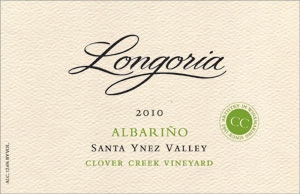
In the garden, we began with a vintage 2010 Albarino ($23), offering some soft tropical fruit with a citrus “kick”.  A nice wine, but with all the chardonnay, sauvignon blanc, viognier and white Rhone-style blends saturating the market, one wonders where this Spanish white grape will fit in.

Continuing to work with Spanish varietals in the warmer Santa Ynez Valley, Longoria has planted the tempranillo grape, often compared to our

2010 Longoria "Albarino" a white Spanish grape.

cabernet sauvignon. Having first tasted the 2008 Longoria Tempranillo Clover Creek Vineyard ($36) months earlier at a private tasting in Glendale, I was anxious to discover if my initial positive impressions were justified.  Once again, the somewhat earthy bouquet and flavors were enhanced with nice structure and texture, aided with hints of Merlot and Syrah. I would definitely select this vintage from a wine list to pair with red meats or pasta.

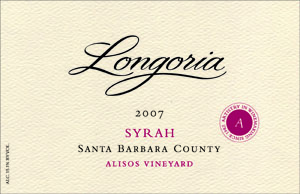
Richard Longoria produces two distinct single-vineyard Syrah, one from the Alisos Vineyard in Los Alamos Valley, the other from Clover Creek Vineyard in Santa Ynez.  Described as a more restrained vintage than past due to cooler late summer and less sugar content, the 2007 Longoria

Syrah from Alisos Vineyard in Los Alamos

Syrah Alisos Vineyard Santa Barbara County ($34), even if somewhat acidic, expressed wonderfully balanced spice and berry flavors.  Although it is drinkable now, this wine definitely needs time to optimize.  For those who have access to wild meats like venison or boar, this syrah would pair perfectly.

The thought of ten new and interesting wines, a few for my cellar, boneless baby back ribs with pressed casaba melon and tomato salad and an opportunity to spend a day amidst the new California landscape; oak-studded rolling hills and vineyards has me already wanting to do it again.


Galapagos!


Crossing to Santa Rosa Island

As we lift off the runway in Guayaquil, Ecuador and bank toward Baltra in the Galápagos Islands, some 600 miles away, I still don’t know what to expect.  I have dreamed of this moment for decades, but still wonder how the experience will match my expectations.  Hopefully, I can put aside anticipation and focus on the moment. Stepping onto Galápagos soil, my first reaction was, “Did I just see a Joshua Tree?

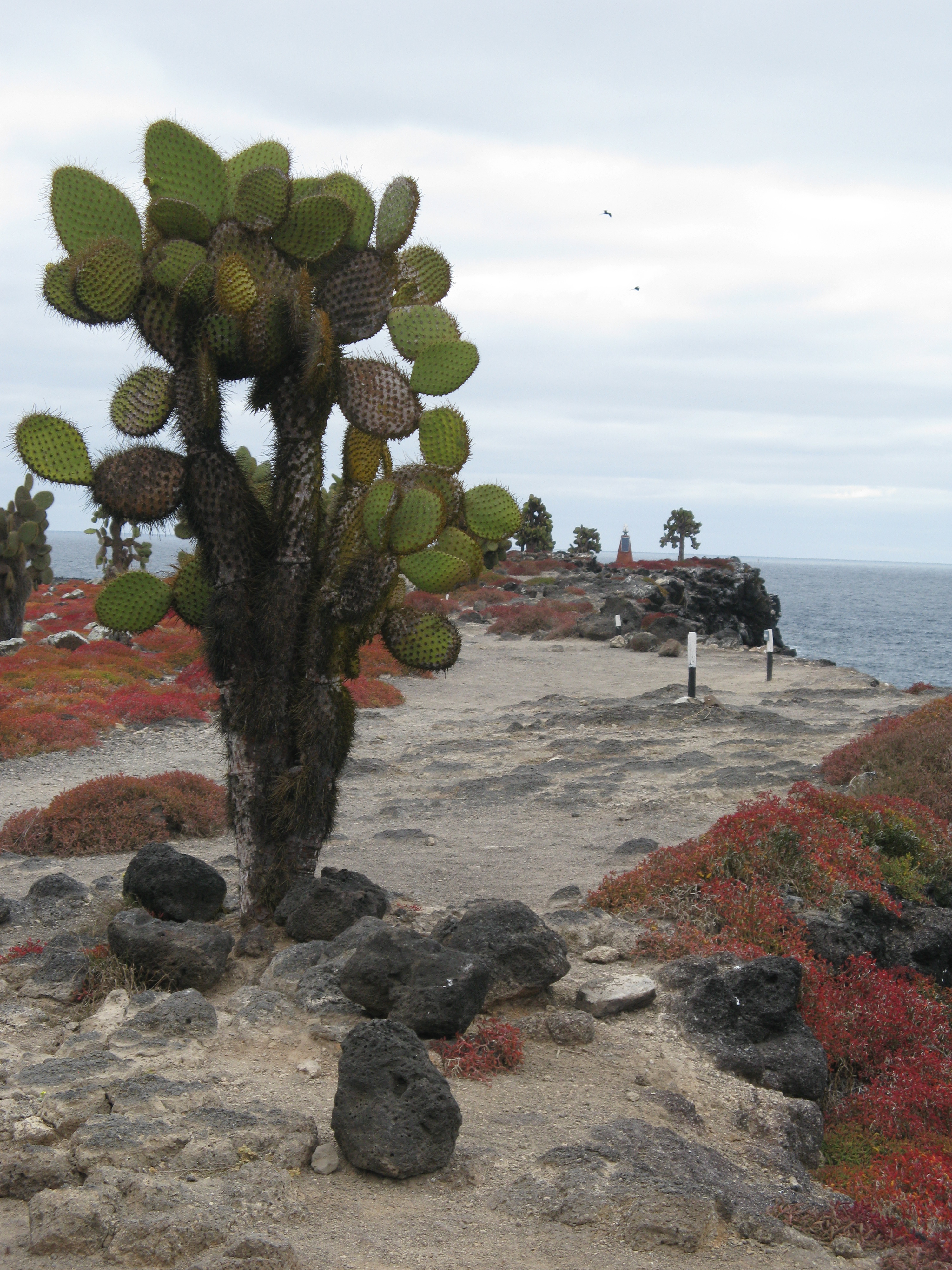
Proceeding through customs in a building without walls, covered only in thatch, with no lines is nearly stress free. A good beginning. Soon on the bus for the three-mile trek to our ferry, I got my first glimpse of the Prickly Pear tree, resembling the shape of the Joshua tree with large, flat, prickly pads.

Prickly Pear

An abundant and vital part of the Galápagos landscape, the flowers of the Prickly Pear feed the giant tortoises and the pads, after falling to the ground, are devoured by the land iguanas, “prickles” and all.

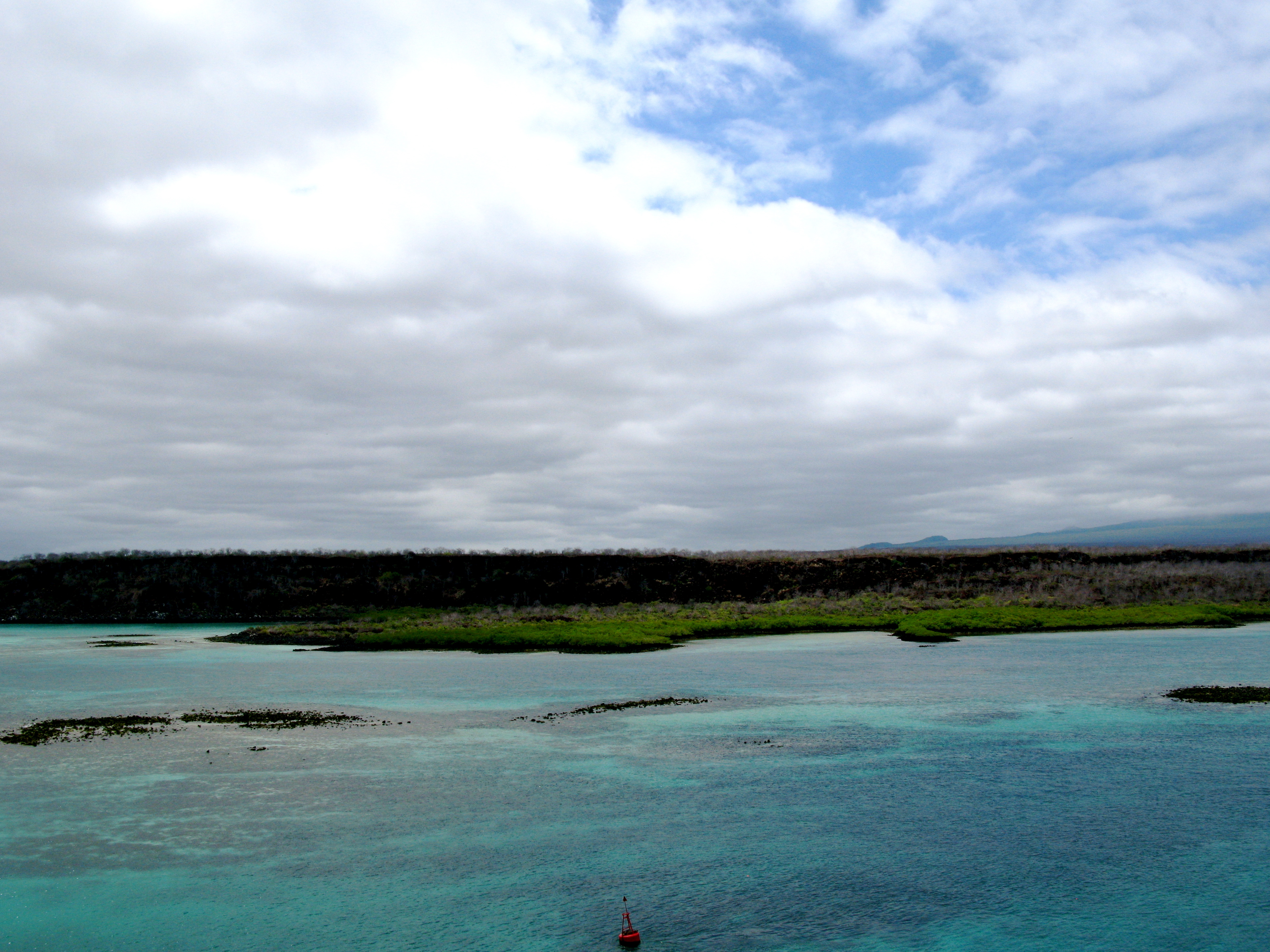
The first ferry ride was less than one mile, the distance between Baltra and Santa Rosa Islands. The initial arid landscape was now mitigated by this stretch of turquoise sea with visible sea life.  I’m here.

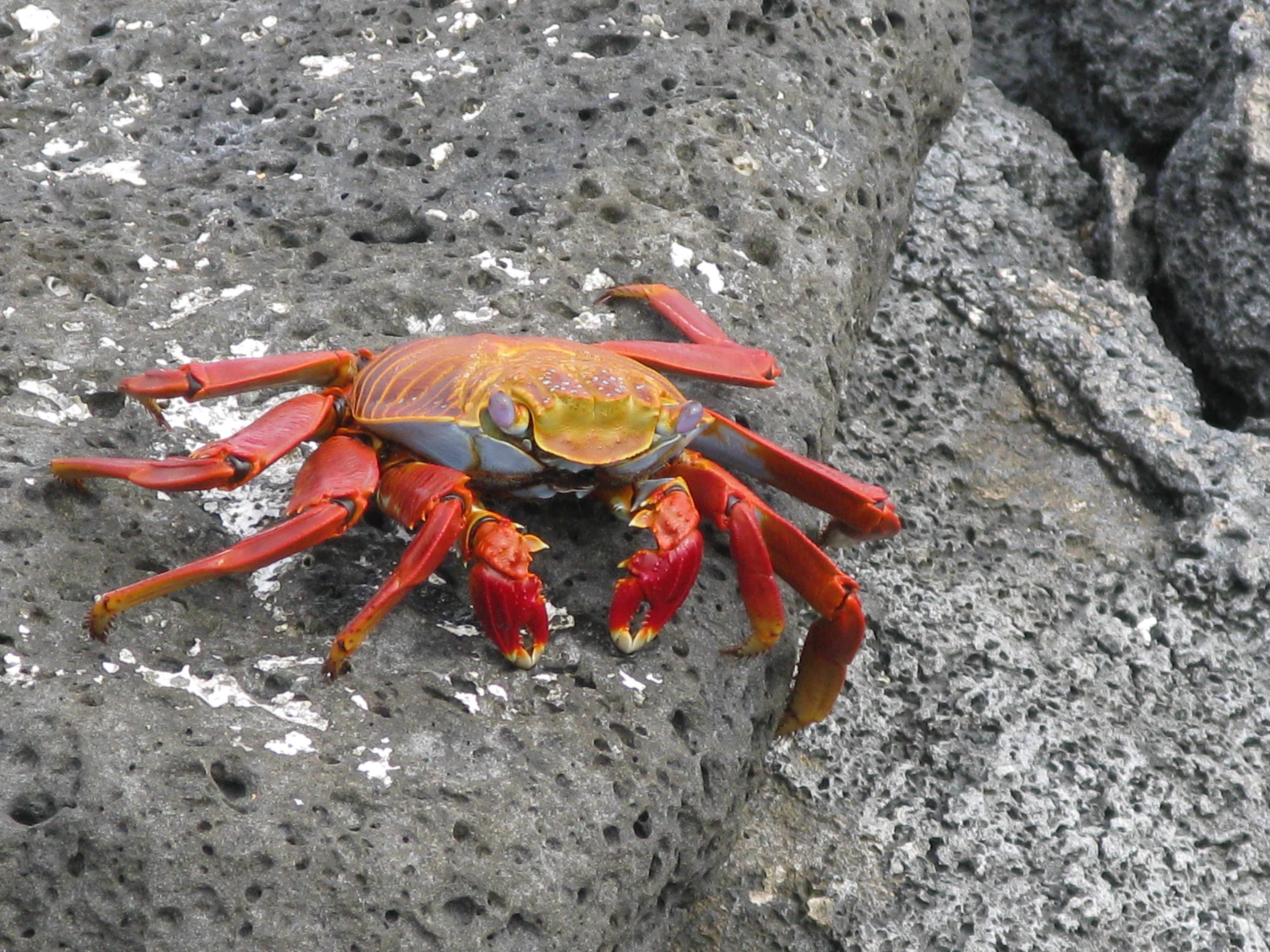
Sally Lightfoot Crab

Stepping off the ferry on Santa Cruz Island, one of the largest in the Archipelago, my eyes caught a Sally Lightfoot crab scurry across the volcanic rocks.  Hoping to see some of these colorful, animated creatures during the trip, my guess was that over 150,000 crossed our paths during the next four days. They were everywhere, their vibrant pigments contrasting the black rocks.  The babies are black for protection; the adolescents transform through a red period before assuming, as adults, a myriad of visually sensational colors.

Santa Cruz is more tropical than the other islands.  It is also home to the giant domed tortoise, that thrives inland of it’s namesake Baie Tortuga along the route to Peurto Isidro Ayora, where

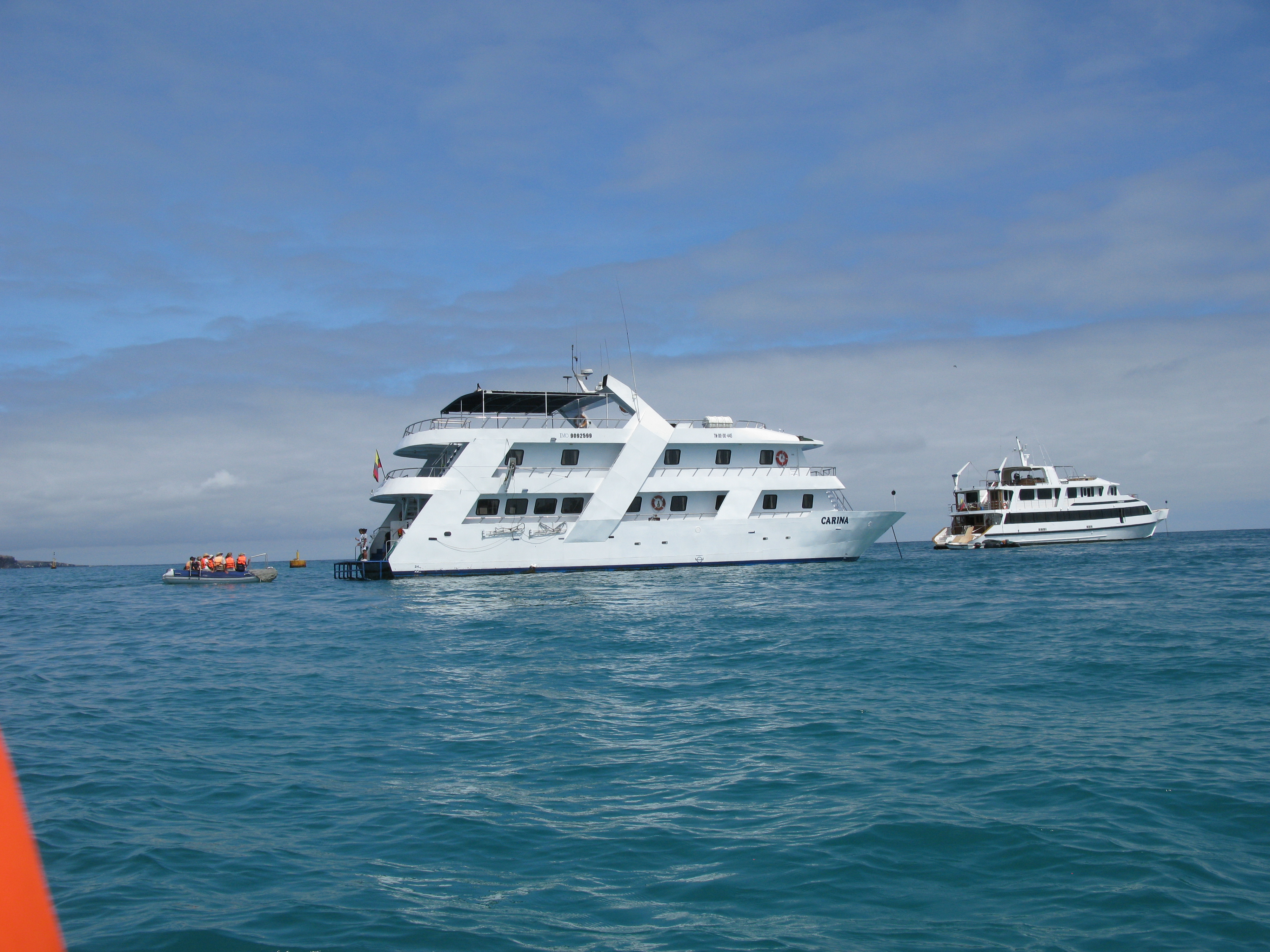
The Carmina

“Carmina,” our home for the next four days, was “anchor down,” awaiting us.  Only the gentle giants of this island are reason to delay our rendezvous.

A short hike off the road, into a large, lush meadow led to our first glance of the giant dommed tortoise.  Everyone’s eyes locked on the first creature, within seconds we distinguished 15 or so quietly eating the meadow grasses.  A few of the gentle giants withdrew into their shells as we passed, but most went about their normal routines of ingesting without chewing to begin the three-month digestive process. With shells waist-high to a normal adult and often six feet long, head to tail, it’s hard to comprehend these stupendous creatures once being slaughtered for fresh meat on pirate ships.

A new "old" friend

The necessity to perform the forbidden led to one memorable experience.  As we departed, the bus encountered a very large tortoise resting in the middle of the road.  We waited patiently for a few minutes before our naturalist, Pauli, announced that we had a boat to catch and sought volunteers to lift and relocate him.  Six of us carefully, with near precision, lifted the creature and moved him several feet off the road.  This experience was followed by observing, clearly the fastest moving of all tortoises.  Other islands are home to the saddle tortoise, whose shell is arched to provide more reach to the Prickly Pear flower, food that hangs three to four above the ground.

Puerto Isidro Ayora, Galapagos’ largest town with a population of 30,000 is a main port for all cruise vessels.  As our group of 15 boarded two zodiacs for the half mile journey to our small cruise ship, a discussion of our diverse expectations ensued, some fulfilling life-long dreams, others being drug along by their spouses.  Once again, I put aside perceptions and immersed myself in the moment.

After an onboard toast with pina colatas and a wonderful dinner prepared by our chef, Raoul, we went to bed early, hoping to survive the movement of the boat as we lifted anchor and cruised north to Bartolome’ Island, a volcanic rock with minimal plant or animal life.

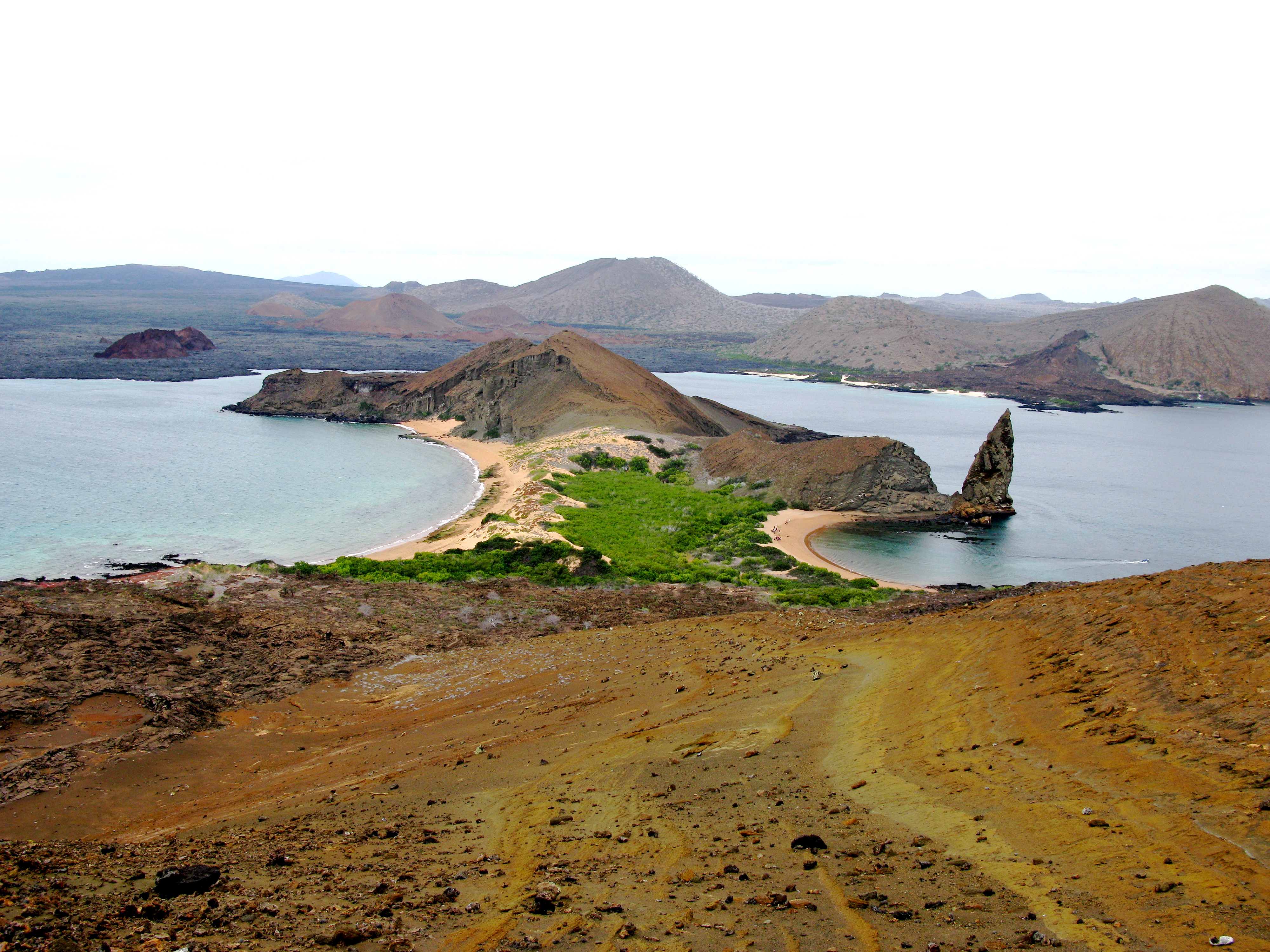
Sullivan Bay from Bartolome Island

On the zodiacs by 8 am, we departed for the island and a challenging hike up some 400 steps through the lava beds to the top, followed by snorkeling in a small cove in Sullivan Bay, directly below the majestic, wind-carved Pinnacle Rock.  Views from the top of Bartolome’ Island and below the ocean’s surface were stunning, the latter courtesy of a huge school of Yellow-tail Surgeon Fish.  We would see many more fish, along with sea lions, marine iguanas, eels, rays and sea turtles during our daily snorkeling adventures.

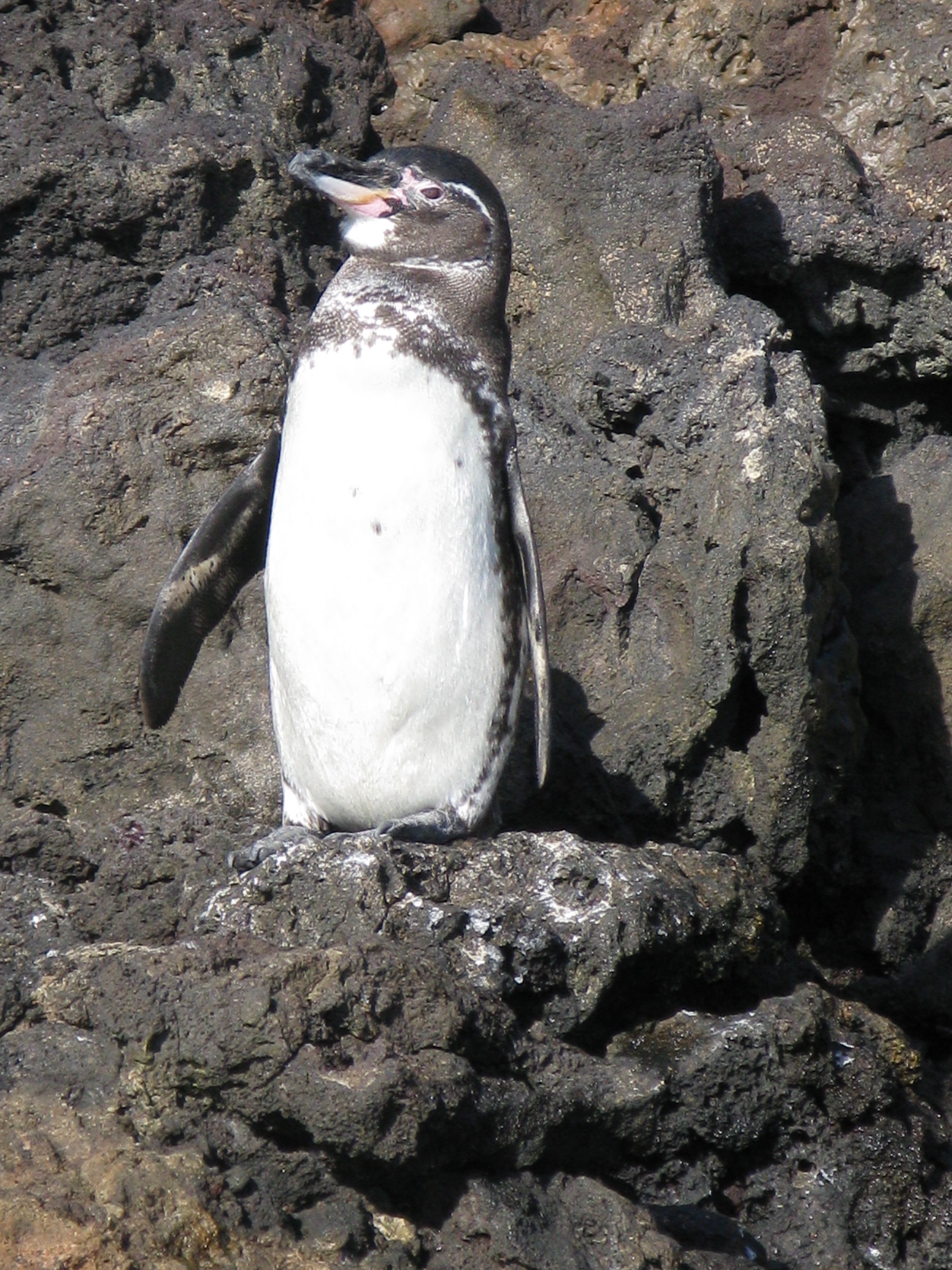
After lunch on “Carmina”, we are back on the zodiacs, patrolling the volcanic cliffs in search of the shy Galápagos penguins, camouflaged by the rocks, amongst the fluorescent Sally Lightfoot crabs and a few Blue-footed Boobies.  At twenty-four inches, these rare penguins are the second smallest of the species, generating tremendous speed and agility once in the water.

Lyle with the marine iguana

Day 2 began with a dry landing on Peurto Egas, a lava beach on Santiago Island and a hike encountering large colonies of sea lions, marine iguanas and, of course, more Sally Lightfoot crabs.  The volcanic cliffs led us to a flat lava plateau, filled with tide pools and ledges near the surf, providing protected water access for the sea lions and marine iguanas.  Hundreds of prehistoric looking marine iguanas appeared on the ledge, laying side by side and on top of each other, somewhat oblivious to our invasion.  Aside from the occasional snort, evacuating the salt from their latest ocean sojourn to eat red and green algae and cool their bodies, they seemed somewhat lifeless.  On a stakeout, we observed these lethargic creatures sunning themselves until the necessity to repeat the cycle drove them to the sea.

We’ve all seen the California sea lions, the Galápagos variety’s closet relative, but few have been invited into their world, to witness their daily lives, parenting habits as well as the chauvinistic attitudes of the alpha male.  Amidst these magnificent mammals, Pauli consistently identified red-billed

Galapagos penguin

tropicbirds, brown pelicans, flightless cormorants, Galápagos hawks, lava herons, and many of the 14 finches found on the islands.

Following snorkeling in a small bay, abundant with sea turtles and rays, we returned to the boat for lunch and navigation to Rabida Island for our first deeper water snorkeling off the dingy.  The timing for this jaunt was perfect to observe the last lunch call for several Blue-footed Boobies, innocent looking birds with striking turquoise feet that, once in the air, become missiles, driving into the surf with the force and synchronization of the Blue Angels.

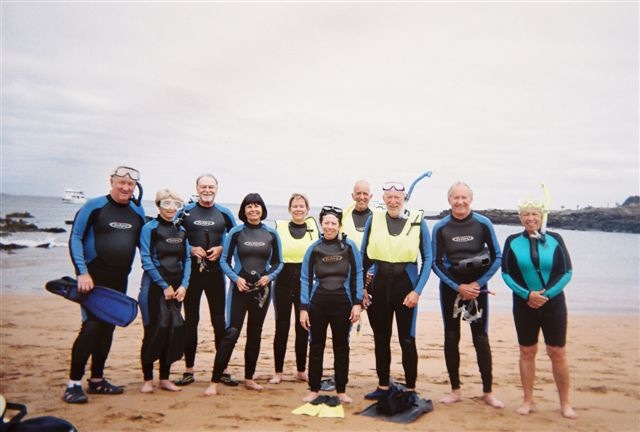
Flipping off the dingy like a scuba diver, Rod was first in the water.  Before I can slide in, he re-appears, emphatically pointing a specific location.   Adjusting my mask, I quickly put my face in the water to discover a marine iguana, feeding on some algae, and then proceeding to the surface.  Watching the creature swim was hypnotic, the spell finally broken by a sea turtle that

"The Team"

calmly passed

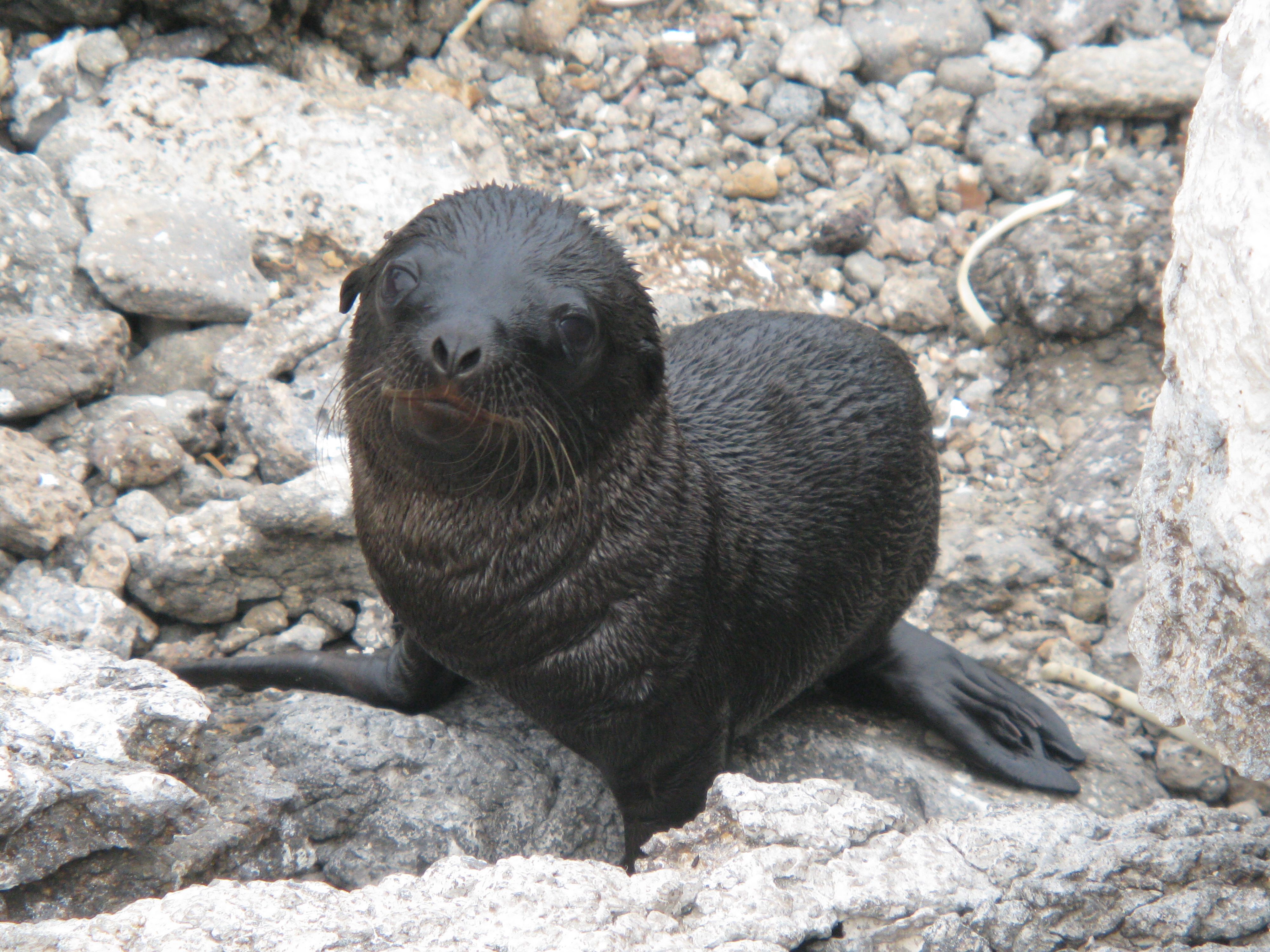
Baby sea lion

within arm’s reach.  The five of us who chose to join the first dingy dive were rewarded well beyond our expectations.  Back on the boat only to remove our wet suits, we re-boarded the zodiacs and crossed the inlet for a wet landing on Rabida Island

Gorgeous red sand beaches and a huge sea lion colony is the “cliff note” description of the small Radiba Island, southeast of Santiago Island.  A landscape of low to medium shrubs and Prickly Pear trees give a vibrant contrast to the red sand and soil.  Our first observation of the dictatorial alpha male hierarchy occurred on Rabida.  The large alpha male sea

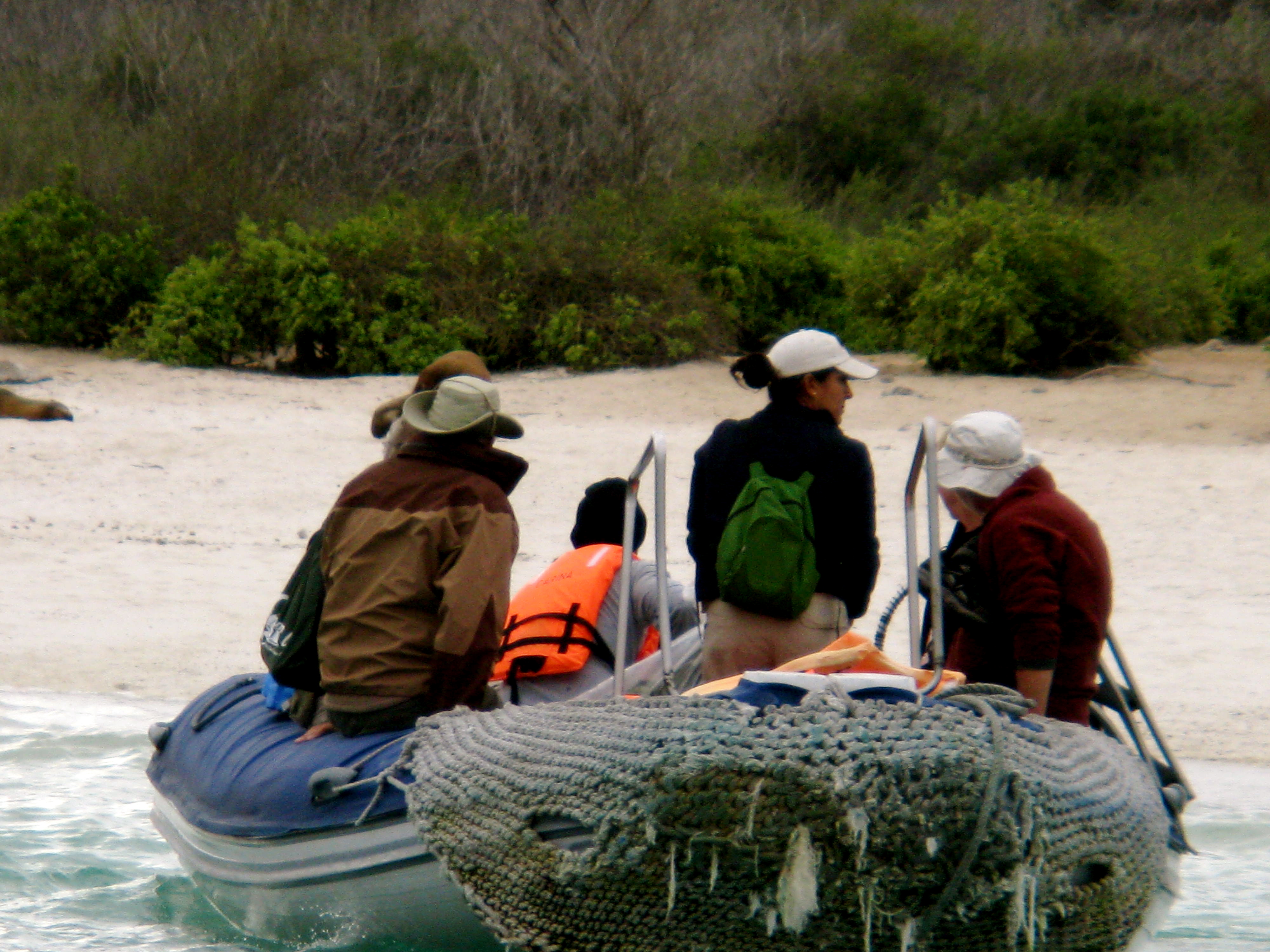
transportation in Galapagos

lions rule their “harems” with an iron fist, against other interested males and females with a wandering eye.  Thrusting out one’s chest and yelling stridently is, apparently, required to maintain their power; machismo a bit over the top for my tastes.

On the return trip to “Carmina,” the drivers meticulously maneuvered the dingy close to the rocks of the minute Nameless Island for close observation of Blue-footed Boobies nesting on the rocks.  The resting birds did not seem to fit their air acrobatic profile on display when they were hunting fish.  Back on the boat for dinner, we set sail to South Plaza Island, a small patch of land a few hundred meters east of Santa Cruz Island that promised unique terrain and wildlife.

The 6 am rumpling of a dropping anchor signaled that we were somewhat close to land.  South Plaza Island required a wet landing because the minuscule strips of sand immediately ascended to steep rocks that we carefully crossed to reach the effervescent scarlet and yellow seauvium succulent ground cover, contrasting the dramatic Prickly Pear trees.  The trails led to steep, vivid cliffs, affording views of fierce blue-green surf and Elliot’s storm-petrel “galapagosensis,” a long-legged bird that stays close to land, accentuating its speed and agility.

The male iguana that resides on South Plaza Island is unique, displaying lurid colors to attract females during mating season.  The ones we encountered, 2.5-3 feet in length, were

Quality time for land iguanas

bright yellow with scales resembling an ear of corn.  Karen carefully shot them from all angles, and then was rewarded when the female arrived for some quality time.  One lasting memory from this small island, thriving with life, was watching a mother sea lion and newly born pup. Pushing the pup away from the after-birth, toward the sea, she anticipated that the frigate birds would soon come in numbers for the unusual meal.  The dynamics of the whole, the acrobatic, hungry frigates, the protective sea lion mother and the pup, trying to comprehend “womb to water,” was mind-boggling to watch. Back to the boat for lunch and some relaxation as we sail to Santa Fe Island, our last exploration of this miraculous place.

Karen at Darwin Bay

Our time on Santa Fe, one of the oldest of the Galápagos Islands, began as the dingy entered the translucent waters of a small bay, leading to a wet landing on a beach with abundant sea lion activity that nearly caught one of our group in a compromising position between an angry alpha male and an unwelcome male intruder.  Amidst loud barking and some aggression by the alpha male, the situation was soon resolved as the female of interest accepted her fate.

The unforgettable wildlife of Santa Fe was beneath the ocean surface.  After a deep water entry off the dingy, we had the time to “snorkel” the bay, identifying three rays, spotted-eagle, diamond and sting, sea lions, eels, multitudes of fish and the large, graceful sea turtles methodically flying by.

Chef Roaul out did himself with a wonderful last dinner and we all had some time to reminisce.  The choppy waters, during our final sail to Peurto Baquerizo Moreno on San Cristobal Island, make us wish we had completed packing before dinner. Our bags managed to get outside the door by the 6 am deadline and we were soon on our last dingy ride to enjoy the village before departing for

Waiting for a water taxi

Quayaquill on the Ecuador coast.  The Galápagos experience was ending, the memories beginning.  We came upon more plant and wildlife imaginable, swam in its oceans and witnessed the results of volcanic eruptions.  A lifetime of activity condensed into five days.  After eating like a horse the entire trip, I returned home from Peru and Galápagos six pounds lighter. While the regiment doesn’t require one be a marathon runner, some physical preparation is required.  It’s definitely worth the gym time.


“Wine, Women and Song”


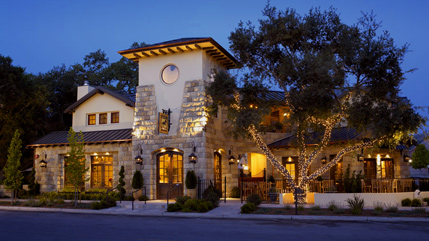
Hotel Cheval

Curiosity, and the Hotel Cheval property in Paso Robles led me to accept an invitation to attend an inaugural event called “Wine, Women and Song”, promoting a new book and wine company from author, entrepreneur Deborah Brenner and actress, singer/songwriter Rebecca Pigeon’s new release, “Slingshot,” due out in October 2011. Aside from promoting their wares, the two have embarked on a national tour supporting the Farm Aid effort.

Hotel Cheval is a charming inn, with 16 intimate rooms, located steps from the Paso Robles town square.  It’s perfect for those who want a pampered wine tasting weekend.  A quiet apéritif after dinner around one of the outdoor fireplaces or meeting friends for evening tastings at the Pony Club outdoor patio are both experiences that the property can deliver.  Well-appointed, luxurious rooms complete the upscale, relaxing encounter

Actually, Rebecca Pigeon was an attraction for me, having enjoyed many of her films including “State and Main,” “Red” and her memorable role as Susan Ricci in the classic “Spanish Prisoner,” directed by husband David Mamet.  This evening, her song writing and vocal skills will be showcased to 100 wine tasters, outdoors on a beautiful night.  No pressure there.


Deborah Brenner

During the writing of her book, “Women of the Vine,” Deborah Brenner met and conferred with several prominent women in the wine industry.  Women like Merry Edwards, Heidi Patterson Barrett, Amelia Ceja and others not only gave her inspiration to finish the book, but to initiate an original company to unite several top women wine makers contributing wine under the new brand, “Women of the Vine.”

The “Women of the Vine” label gives sustainable growers and female wine makers a collaborative setting that has provided opportunity to bring their wines to the marketplace.  Thus far, some high-profile wine makers are contributing some very good wines.

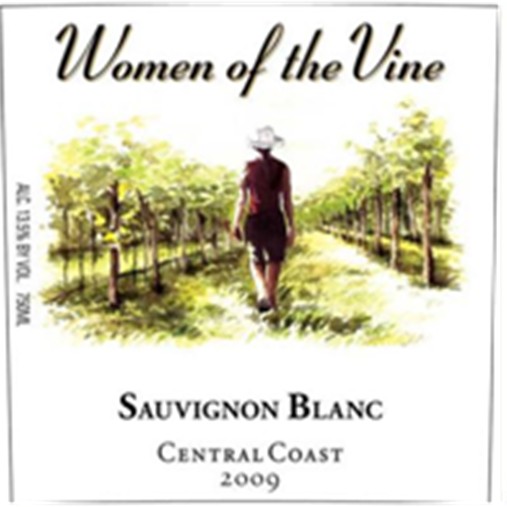
Alison Crowe, who “cut her teeth” in winemaking for Randall Grahm at Bonny Doon Vineyards, produced two white and three red varietals, her WOTV Sauvignon Blanc Central Coast 2009, in my opinion, leading the way.  In addition, some high-end single-varietals and blends, from noted wine makers, stole the show.

Winemaker Heidi Peterson Barrett is part of Napa lore as a member of the Barrett Family, who’s Chateau Montelena Chardonnay helped establish some dominance of California wines at the 1976 Paris Tastings.  She has earned her own reputation by upgrading Beuhler Winery to produce reasonably priced, high quality wines and from her work with Screaming Eagle.  Her WOTV wine is the beautifully balanced, spice-driven 2006 Napa Valley Syrah ($65), terrific from nose to finish.

Dorothy Schuler, known for her Spanish varietals under the Bodegas Paso Robles label, contributed the WOTV 2006 Paso Robles Tempranillo ($34), well-balanced with a nice “jolt” of vanilla on the finish.  Her WOTV 2003 NV Napa Rojo ($52) blend was not available but the mixture of dry-farmed touriga, graciano, tempranillo and tinto cao left me intrigued.

The tasting also included a variety of wines from Napa Valley’s Miner Winery and J Dusi Wines from winemaker Janelle Dusi who’s family has been an integral part of the Paso Robles wine community for decades.

Miner Family Winery

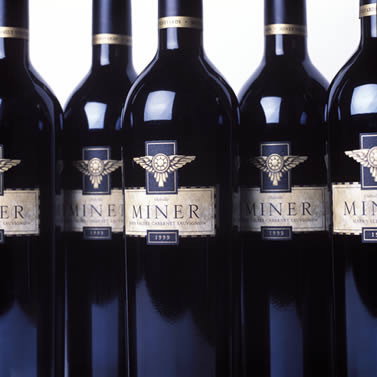
The Miner Family Winery has develop a reputation for creating fine wines, especially their meritage, “Oracle” ($90) from Napa Valley.  Tonight, we tasted a soft, accessible 2010 Sauvignon Blanc, the small lot 2009 Napa Valley Petite Sirah ($40) and the unique 2008 Sangiovese Gibson Ranch($24) from Mendocino County. Plantings of Sangiovese, the dominant grape of Italian Chianti, has expanded in California over the past decade, not necessarily in the cool northern coast.  Releases from the Miner Family Winery should interest all serious wine enthusiasts.  Of note, Miner is now producing Pinot Noir from Garys’ and Rosella’s Vineyards in the Santa Lucia Highlands.

J Dusi Wines

The Dante Dusi Vineyard has played an important role in providing grapes for several high-end Paso Robles zinfandel wines since WW11.  Dante’s granddaughter, Janelle has expanded the family repertoire into winemaking through the release of her own label, J Dusi Wines.  Vintages 2007 and 2008 J Dusi Zinfandel offer proof that she can consistently create good, old-fashioned jammy, Paso Zin.  A must to try from J Dusi is the luscious zinfandel port wine.  It is a dessert in itself.

The tasting was both educational an enjoyable, but it was time to take our glasses and ourselves to the patio to enjoy the musical portion of the evening.

While reviewing her CD, “Slingshot”, one critic compared Rebecca Pigeon to the legendary Joni Mitchell, not musically but for imaginative lyrics. As she opened with “Get Up Get Out’, a song about change, I found her musical style to be as elusive as it was creative and charismatic.

Rebecca Pigeon

Beautifully produced by Larry Klein, “Slingshot” is a compilation of short stories that evoke visual images that one may find in a film. The haunting “Kiss Me”, with a melody reminiscent of early Janis Ian and the deceivingly upbeat, “I Love No-One” illustrate the diversity of her music, tied together with self-revealing, meaningful lyrics and an expressive voice.

Ms. Pigeon references acting as a metaphor for real life hypocrisy in “Is Anyone”, melodically set in a 30’s French style which leaves us with the following thought”

“And we play out the scene

And our heat sears the screen

Are we really what we seem

Oh well, Is Anyone?”

“He’s as young as Prozac, he’s as old as the wheel“ describes Rebecca’s “Disintegration Man”, a rock ballad filled with witticisms and edgy modern references.  Her signature piece at the concert and on the CD is a poignant cover of the late Warren Zevon’s classic ballad, “Searching For A Heart.”  Briefly commenting on Zevon, she then paid tribute through her beautiful rendition, a lasting end to the concert and our evening.

Both the “Women of the Vine” and “Wine, Women and Song” collaborations support and promote the Farm Aid benefit, donating a part of their profits to help sustain the American farmer. This event was the first of a national tour through October featuring wine tasting and Rebecca’s music, a combination I would willingly experience again.  More information on both artists can be found at www.womenofthevine.com and www.rebeccapigeon.com


The Value of “Barrel 27”

On our way to attend an event called, “Wine, Women and Song” at the quaint Hotel Cheval in downtown Paso Robles, we received a text that our friends, Rosemary and David, were going to be in town for the last few nights of their month-long “No Reservation Road Trip.”  This two night get-a-way just got busier.

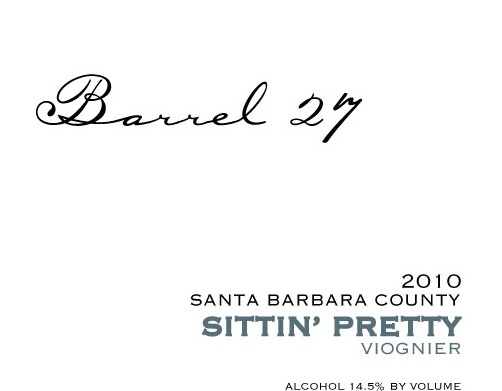
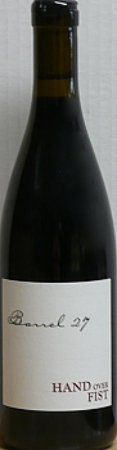
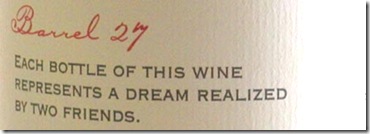
As friends, our serious interest in wine began in the mid-eighties.  Discovering new eating establishments and wines is what we are about when our paths cross in Paso.  During lunch, I explained my plans to visit Barrel 27, a new winery that recently has received recognition for producing good value-priced Rhone-style blends. With everyone game after lunch, we headed east from town to hopefully, discover some new releases.

Reviews from two major periodicals led me to the Barrel 27 ’08 “High On The Hog” White blend ($15) with ratings well into the nineties, medium-dry with layers of flavor.  Aside from comparing “Hog” vintages ’08 and ’09, the plan was to taste their entire palate of single-varietal and blended wines.

Barrel 27 Winery is located approximately one mile east of Highway 101, in the old industrial condo building that once housed Garretson Winery.  It’s visible from Highway 46, but only accessible from Golden Hill and Union Roads   Winemakers and friends, McPrice Myers and Russell From, drawn together by fate, are very upfront about their mission to respect the fact that hard working people should be able to drink high quality wine and still pay for the mortgage, car, kids and pets.  With two whites, five reds and a moscato dessert wine, we set about to make our own judgments.

From 100% Santa Barbara County vineyards, their second release of “Sittin’ Pretty” Viognier 2010 ($18) delivered a nice blend of tropical and orchard fruits, but the rich, dense texture embodied the softer flavors of honey and melon. Although its price is average, this wine surpasses the standard in bouquet and taste.

I was not surprised that the 2009 “High On The Hog” White ($16), primarily Grenache Blanc and Viognier, stood up to its predecessor in overall quality.  Strong floral hints on the nose led to complex orchard fruit, honey and softened mineral flavors through a nice finish.  This is a great food wine.

Only their second vintage, Barrel 27’s single-varietal release of Grenache, a grape that, when done properly, can push the fruit forward without becoming overpowering.  Exhibiting a beautiful deep, ruby color, the 2008 ‘Rock and a Hard Place”  Grenache” ($18) was superbly balanced and full-bodied, delivering jammy fruit and spice on the palate.  The wine was rated in the high eighties by Wine Spectator and Robert Parker.

The winery’s signature release, sourced from Santa Barbara County vineyards exclusively, is poised to deliver the highest quality at value price of any Syrah in California. Consumer interest in Syrah from our central coast has driven starting costs above $30 per bottle.  The 2007 “Right Hand Man” Syrah ($18) is bold, both in bouquet and taste, with complexity and richness of wines twice the price.  Simply stated, this wine is a wonderful “find.”

The next wines are special, illustrating the winery’s ability to create single-varietals and blends with texture and complexity.  The costs are higher, but very competitive with similar high-end wines. Three wines before us, a bold Syrah, a classic Rhone-style and a “bullish” blend that promises to, possibly, be “the great steak wine of all-time.”

Smelling the bouquet of the 2007 “Head Honcho” Syrah($28) is a sensual task in itself.  The longer you do it, the more aromas you discover. The texture (heavy on the tongue) and the balance of sweet and savory flavors, to be expected from quality syrah, combine with typical spice influences to signify a compelling wine even before you experience floral hints on the finish.  A few bottles will rest in my wine cabinet for 6-12 months because everything about this exceptional wine signals that it will get better with time.

After discovering Barrel 27 through their white Rhone-style blend, the moment has come to taste their only classic Rhone-style red blend, unavoidably mindful of comparisons with wines tasted during my recent trip to Chateaunef-du-Pape.  The 2008 “Hand Over Fist” ($30) is Barrel 27’s highest rated wine, a classic Rhone-style blend of syrah (60%), Grenache (30%) and mourvedre (10%), nearly identical to those in the southern Rhone Valley.  Quoting some knowledgable person, “this wine is big and bold from nose to finish.”  The flavors are perfectly balanced, very jammy and liqueur-type in their intensity.  I agree with the winery’s recommendation to decant the wine for at least an hour, thinking maybe two is better.  A wine like this must have time to breathe and adjust to a new environment before it begins to “open up” to strangers.

I propose another historical event, a blind tasting to be held in Avignon, pitting new Paso Robles Rhone-style whites and reds against legendary, century-old wines from Gigondas, Chateaunef-du-Pape and other southern Rhone Valley appellations.  California is at the same stage in Rhone-style blend development as the Napa Valley was with Cabernet Sauvignon and Chardonnay during the 1976 Paris Tastings.  How we would compare is still a question, but my instincts see us performing better than expected.

Visualize the “Hand Over Fist,” The Saxum James Berry Vineyard Paso Robles 2007 ($67), Wine spectator’s 2010 Wine of the Year, the Tablas Creek Espirit de Beaucastel Paso Robles 2007 ($50) representing California going head-to-head with France’s Chateau de Beaucastel Chateaunef-du-Pape Hommage a Jacques Perrin Grande Cuvee’ 2007 ($535), Domaine les Pallieres Gigondas Terrasse du Diable 2007 ($28) and others.  We have nothing to lose and everything to gain from such a contest.

In conversations within French people about California, they always inquire how far I live from the Napa Valley.  Paso Robles, as a winegrowing region, was not on their radar at all.  A good showing from our stealth Paso wines would send shock waves through the world wine business.

The previously referenced “monster wine” is a powerful, multi-regional blend of Petit Verdot, representing Bordeaux, Syrah, from the Rhone Valley and Tempranillo, originating from the Roija region of Spain.  Concentrated fruit and berries, exotic spices, vanilla and, even chocolate are up-front on the nose through the finish of the 2007 “Bull By The Horns” Red Wine ($32).  This is a wine that needs that to be tamed by some extra time in the bottle, at proper temperature, with regular turnings.  This investment will result in a mature wine that will enjoy the company of a Filet Mignon with “Diana Sauce,” a favorite recipe from the “Wine Lover’s Cookbook.”

The tasting concluded with the 2008 “Head Over Heels” Moscato ($23), Barrel 27’s sweet, slightly sparkling, dessert wine. To me, an apéritif or dessert wine must stand on its own, shine with or without the accompaniment of everything from crème brulee to sharp cheeses.  The “Head Over Heels” has complex flavors of orchard fruits(peach), honey and melons. However, minerality and nice floral hints on the finish build a case that it can be THE dessert if necessary.

I wrote about all Barrel 27’s releases because I like them all.  For those beginning to research and target wines, they offer very good quality at a decent value.  My recommendation is to discover and enjoy their wines before the entire area does. Real or perceived scarcity can result in higher prices.

Our rendezvous with friends also led to some “catching up” over a nice lunch at Thomas Hill Organics and another memorable dinner at “Artisan,” arguably Paso Robles best restaurant, accompanied by a 2005 Leona Valley Winery “I+L+Y=O” Bordeaux blend from my cellar.  As for the “Wine, Women and Song” event, that’s another story.