Wine Spectator’s 100 Top Wines of 2015: An Overview


On the surface, Wine Spectator magazine’s annual list of exciting wines seems to be another coronation of the fabulous Napa Valley Cabernet Sauvignon and the luscious 2010 releases from the Brunello Di Montalcino region of Tuscany.  However, just below the surface is a story of tremendous diversity, both with varietals and regions in
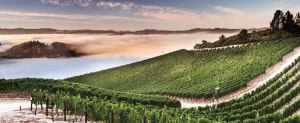
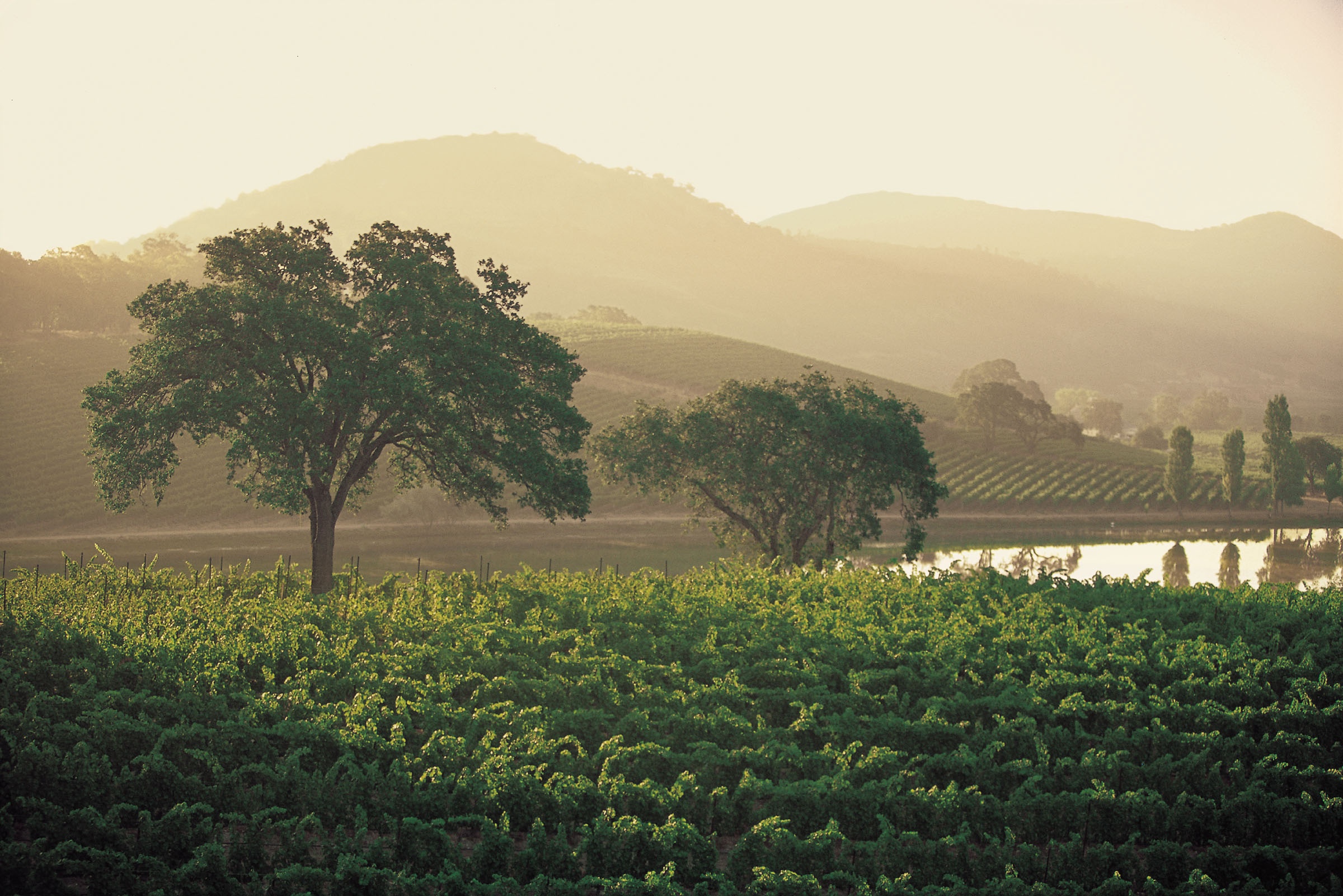
fog descends on vineyard at Peter Michael Winery

fog descends on vineyard at Peter Michael Winery

California and throughout the world.

The 18 California wines on the list represents 10 different varietals and 10 regions.  Europe’s great appellations in Italy, France and Spain are all still dominant, but world demand is creating opportunities to successfully explore new terroir.  The French wine region  listed most often is “other,” more than Bordeaux, Burgundy, Rhone or Champagne.  This year’s list is an eclectic blend of tradition and the swell of wines from the New World, but let us begin with the time-honored California Cabernet Sauvignon.
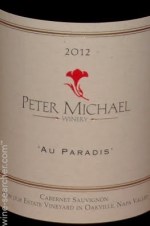
2015 WS Wine of the Year

2015 WS Wine of the Year

All of the five California “Cab” on the 2015 list are well-known, pedigree wines, two of which have made it before and for the fifth time in its history, a Napa Valley Cabernet Sauvignon, the Peter Michael Cabernet Sauvignon Oakville Au Paradis 2012 (96pt/$195) is the magazine’s “Wine Of The Year.”

Over the years, Peter Michael has developed a

Sir Peter Michael

Sir Peter Michael

reputation for producing marvelous chardonnay and a top-notch red Bordeaux blend, “Les Pavots” from the Knights Valley region, due north of the Napa Valley.  The “Au Paradis” originates from an Oakville district vineyard in the Napa Valley that Michael purchased a few years ago, perfectly positioned to absorb the valley heat and the cooling breezes from San Pablo Bay, the quintessential terroir for a “classically structured Napa Cabernet.”

The Napa Valley was also aptly represented by the #57 Altamura Cabernet Sauvignon Napa Valley 2012 (95pt/$90) and the #65 Chappellet Cabernet Sauvignon Napa Valley Signature 2012 (93pt/%56), one of the best values on the list whose 2006 vintage made the top ten in 2009.  Although their estate vineyards are in different parts of the valley, both are diverse in ripe characteristics, paired with perfect stock.

The northerly Alexander Valley appellation bestowed the #59 Rodney Strong Cabernet Sauvignon Alexander Valley Rockaway Single Vineyard 2012 (94pt/$75) and #(78 Chateau St. Jean Cabernet Sauvignon Alexander Valley 2012 91pt/$30), each from long-standing Sonoma County producers who are also celebrating the 2012 vintage of California cabernet sauvignon.

The three California chardonnay varietals on the 2015 list, each from separate regions,
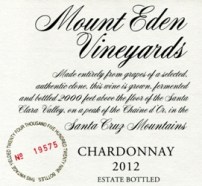
Mount Eden Vineyards Chardonnay Santa Cruz Mountains 2012

Mount Eden Vineyards Chardonnay Santa Cruz Mountains 2012

clearly exemplify its diversity and long-standing presence statewide.  The routinely present #5 Mount Eden Vineyards Chardonnay Santa Cruz Mountains 2012 (95pt/$60) is arguably our best, vintage to vintage, and indicative of what a California chardonnay can be. This vintage is barrel fermented sur lie in French oak for 10 months with 100% malolactic fermentation, bringing back fond memories of past vintages.

The consistently good, very accessible #35 Rombauer Chardonnay Carneros 2013 (92pt/#36) comes primarily from the Sangiacomo Vineyard that supplies grapes for many creators of fine chardonnay.  Their traditional creamy, fruity style, again, comes from French oak, malolactic fermentation and periodic stirring of the lees. The diverse value-priced #48 Calera Chardonnay Central Coast 2013 (90pt/$20) blends vineyards from Monterey to Santa Barbara counties.

Other noted California varietals in include the #12 Limerick Lane Zinfandel Russian River Valley 2012 (94pt/$32), dry-farmed from century-old vines and winemaker Randy Mason’s #40 Pomelo Sauvignon Blanc California 2014 (90pt/$12), a white wine composed of grapes sourced exclusively from Lake County vineyards, an area recently ravaged by fire.

The petite sirah grape was also highlighted among 2015 releases beginning with the soft #17 Turley Petite Sirah Howell Mountain Rattlesnake Ridge 2013 (95pt/$44) from Napa Valley and Amador’s #42 Keplinger SUMO Amador County 2013 (95pt/$70) described as “a Cote Rotie twist on Petite Sirah,” blending petite sirah (76%), syrah (20%) and viognier (4%) to create a “massive, plush wine.”
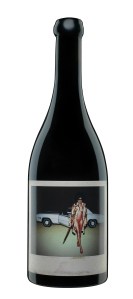
Orin Swift "Machete" California Red Wine 2013

Orin Swift “Machete” California Red Wine 2013

Having enjoyed past wines from Napa Valley’s Orin Swift Winery, I was pleased to see the #97 Orin Swift “Machete” California Red Wine 2013 (93pt/$48) on the list, another earthy blend of petite sirah, syrah and grenache boasting floral notes with concentrated berry flavors and manageable tannins.

Italy contributed 20% of the wines on the list, mostly from Tuscany, more specifically, 2010 vintages from the Brunello di Montalcino region, landing three spots within the top 20 wines.

Having had an opportunity to taste the #4 Il Poggione Brunello di Montalcino 2010 (95pt/$85) at a sponsored tasting event in early 2015, I am aware that this
Il Poggione Brunello di Montalcino 2010

Il Poggione Brunello di Montalcino 2010

superb wine represents five generations of family ownership and over 300 acres of estate vineyards.  Following a time-honored process involving lengthy maceration on the skins and extensive aging, their history shows consistent brilliance. The #13 La Serena Brunello di Montalcino 2010 (96pt/$60) and the legendary #18 Altesino Brunello di Montalcino 2010 (98pt/$125) continue to highlight an excellent 2010 vintage for the region.

At the same 2015 event, I also tasted the outstandingly balanced #8 Amarone della Valpolicella Classico Serego Alighieri Vaio Amaron 2008 (95pt/$85), from another family producer in the Veneto region of northern Italy that uses a traditional “appassimento” process of drying the grapes for 90 days before pressing, then committing to five years in the barrel, usually resulting in a memorable wine.

Throughout its tremendous growth, Washington State has proven to have the diverse
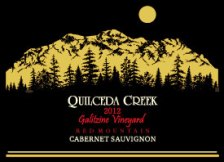
Quilceda Creek Cabernet Sauvignon Columbia Valley 2012

Quilceda Creek Cabernet Sauvignon Columbia Valley 2012

terroir to support many varietals.  That being said, the 2015 star is the #2 Quilceda Creek Cabernet Sauvignon Columbia Valley 2012 (96pt/$140), celebrating their third top ten designation since 2006 with the annual reviews of a collector’s classic.

Placing in the top ten in 2011, the Bordeaux-style blend, #28 BAER Ursa Columbia Valley 2012 (94pt/$39) combines 40% each of merlot and cabernet franc with small amounts of cabernet sauvignon and malbec.  Experts speak of herbal aromas, layered chocolate and cherry flavors in a wine that will soon be in short supply.  The moderately priced #34 Tenet Syrah Columbia Valley “The Pundit” 2013 (92pt/$25) is yet another in a growing line of good syrah from the region.

Washington’s Walla Walla area has grown exponentially over the past decade and is the source of two wines on the 20125 list, the #22 Gramercy Syrah Walla Walla
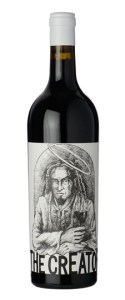
K "The Creator" Walla Walla Valley 2102

K “The Creator” Walla Walla Valley 2102

Valley “The Deuce” 2012 (95pt/$52) and #31 K “The Creator” Walla Walla Valley 2012 (94pt/$55), a blend of cabernet sauvignon and syrah, co-fermented in stainless steel tanks.

With all the industry “buzz” regarding the vintage 2012 Oregon pinot noir, it is no surprise that the Willamette Valley provided five wines including the most talked about of all, the #3 Evening Land Pinot Noir Enola-Amity Hills Seven Springs Vineyard La Source 2012 (98pt/$70), Oregon’s highest
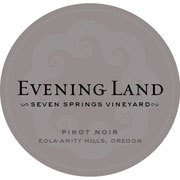
Evening Land Pinot Noir Enola-Amity Hills Seven Springs Vineyard La Source 2012

Evening Land Pinot Noir Enola-Amity Hills Seven Springs Vineyard La Source 2012

rated.  Having tasted past first-rate vintages of Evening Land pinot’s, obtaining a bottle of this wine, from a unique geological site within the mid-Valley Seven Springs Vineyard, remains clearly in my sites.

From the Yamhill-Carlton appellation, the #38 Solena Pinot Noir Willamette Valley Grand Cuvee’ 2012 (92pt/$25) and  the #11 Big Table Farm Pinot Noir Willamette Valley 2012 (95pt/$40) are highly rated wines at very reasonable prices, the latter noted for complex, concentrated fruit and spice flavors.

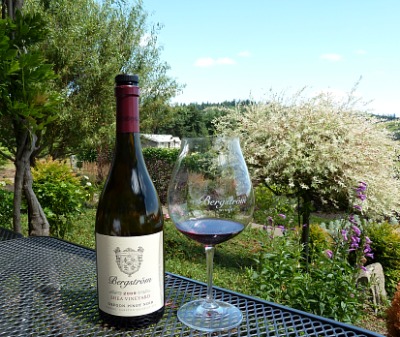
From the Valley’s Ribbon Ridge appellation and possibly my favorite Oregon point noir producer, the #14 Bergstrom Pinot Noir Ribbon Ridge Le Pre’ Du Col
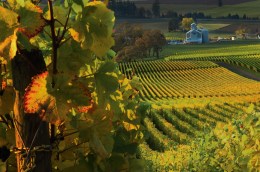
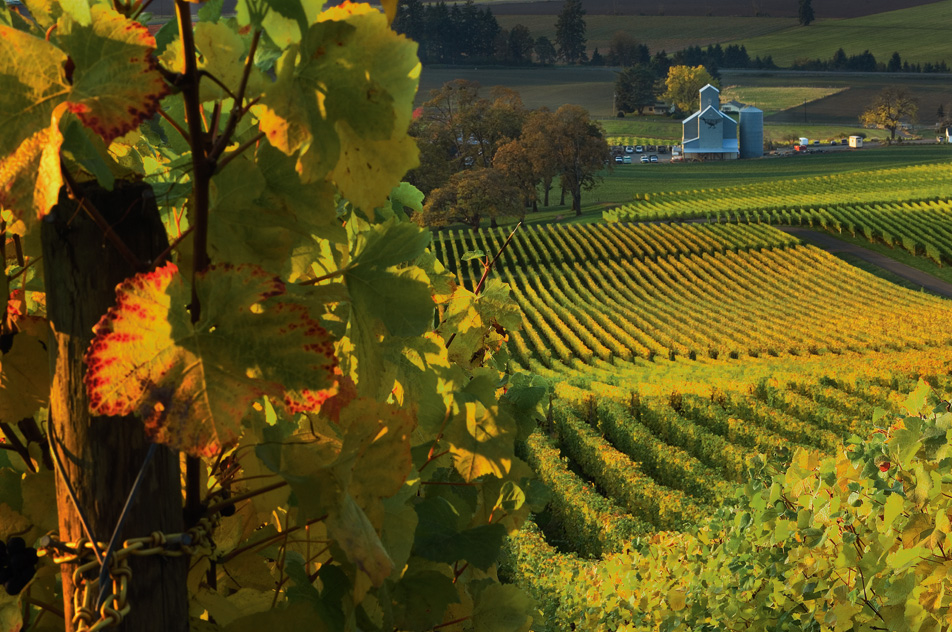
Willamette Valley vineyard

Willamette Valley vineyard

Vineyard 2013 (95pt/$60) is one of many single-vineyard pinot’s, all with exceptional structure and balance.  The Bergstrom tasting room experience, which includes chardonnay as well, is something not to be missed if you are in the area.  From the neighboring Chehalem Mountains appellation, the #45 Colene Clemens Pinot Noir Chehalem Mountains Margo 2012 (93pt/$36), is a fairly new player that deserves attention.

Aside from France’s acclaimed #9 Clos Fourtet St. Emilion 2012 (94pt/$72) from Bordeaux, I was intrigued with two wines from the Bandol region, having spent a week
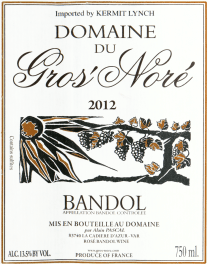
Domaine Gros Nore Bandol 2012

Domaine Gros Nore Bandol 2012

in Cassis a few years ago.  One of the top scoring wines from the region, the #94 Domaine Gros Nore Bandol 2012 (93pt/$39) is an engaging blend of mourvedre, cinsault and grenache that sells for a reasonable price.

Provence has secured itself as, arguably, the best new producers of rose’ wines and in 2015, the Domaine Tempier Bandol Rose 2014 (92pt./$40), a mourvedre, grenache, cinsault and carignane blend, aged in concrete vats, could be the best of the best.


The ten Spanish wines on the list originated from a variety of regions including Ribera Del Duero that contributed the #6 Bodegas Aalto Ribera Del Duero 2012
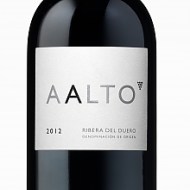
Bodegas Aalto Ribera Del Duero 2012

Bodegas Aalto Ribera Del Duero 2012

(94pt/$54) made from 100% “tinto fino” or tempranillo grape.  Following the CUNE Rioja Imperial Grand Reserva 2004 (95pt/$63) as 2013s Wine of the Year, the tempranillo-dominant blend #56 CUNE Rioja Imperial Reserva 2010 (93pt/$44), produced near the town of Haro, lends proof of their reputation for consistent, fine wines.

The growing quality and popularity of New Zealand wines is revealed on the 2015 list through a sauvignon blanc from Marlborough, a chardonnay from Auckland and two
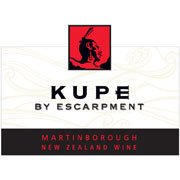
Escarpment Pinot Noir Martinborough Kupe Single Vineyard 2013

Escarpment Pinot Noir Martinborough Kupe Single Vineyard 2013

pinot noir from different regions including the 70% whole-clustered #7 Escarpment Pinot Noir Martinborough Kupe Single Vineyard 2013 (95pt/$69, originating from the southern tip of the northern island.  Another fine white, the complex  #21 Cloudy Day Sauvignon Blanc Marlborough 2014 (93pt/$28) is generally available in most wine outlets.

Each year, the list clearly illustrates the expanding global reach of the wine industry.  Today, our favorite wines have an equal chance of originating from Australia, South America or South Africa than California, France or Italy.  I applaud Wine Spectator’s effort in reviewing thousands of wines and continuing to open doors to discovering new, dynamic appellations, varietals and blends that encourage more exploration of the 2016 releases and beyond.
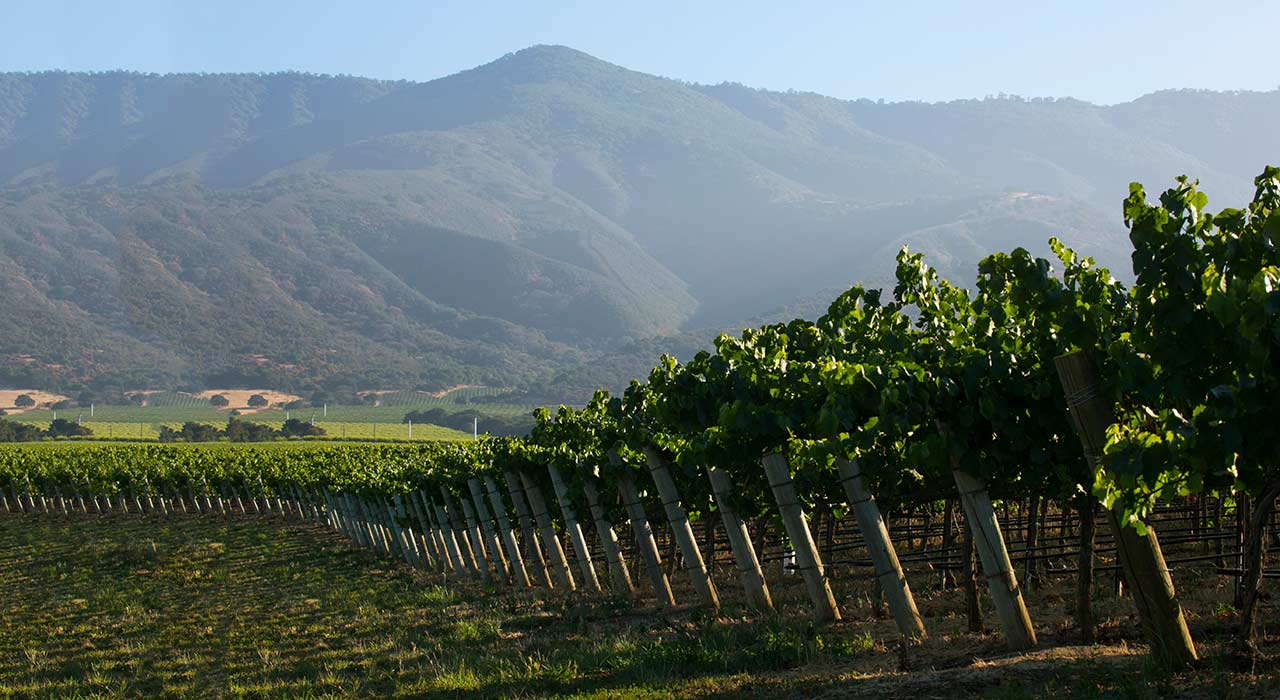
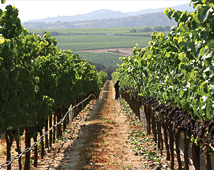
Pinot Noir ’12 & ’13


The following weather forecast appeared in my local newspaper last week:

Santa Lucia Highlands vineyard

Santa Lucia Highlands vineyard

“Russian River/Coast:  Areas of low clouds and fog, then sunshine today.  Mainly clear tonight, high 80/low 48”

Noting the 32 degree temperature swing made me smile because this forecast describes the ideal climate for pinot noir and cool-climate chardonnay and is consistent with the major regions in CA and Oregon where the best of the varietal, outside of the Burgundy region of France, originates.

Ideally, pinot noir awakens to fog, dripping moisture on its leaves, then basks in the mid-day sun, enjoying late afternoon cooling breezes and dropping evening

Rosella's Vineyard

Rosella’s Vineyard

temperatures.  This repetitive climate is one mandatory element of the terroir in all of our California and Oregon pinot noir growing regions, using the marine influence, extending from the northern Willamette Valley in Oregon to Santa Barbara County.

In California, the Anderson Valley in Mendocino County, the

Russian River Valley in Sonoma County, the Carneros region of the Napa Valley, the Santa Lucia Highlands in Monterey County and Santa Rita Hills in Santa Barbara County produce much of the best New World pinot noir on the planet.  As consistently good as they are, experts are deliberating between vintages 2012 and 2013 as the best in a decade, most saying that 2012 wines are perfectly structured while the vintage 2013 delivers more vibrant colors and concentrated fruit

Of special note is the Santa Lucia Highlands (91-94 pts.) and Russian River Valley (90-93pts)appellations who have produced, according to Wine Spectator and others, the finest California pinot noir among the 2012-13 vintages.  This is not a huge surprise

Garys' Vineyard

Garys’ Vineyard

, both have been among the leaders for decades.  The Russian River Valley is arguably the best U.S. appellation and pinot producers throughout the state have sourced grapes for years from the “Highlands,” namely Garys’, Rosella and Pisoni Vineyards that all began with two friends Gary Franscioni and Gary Pisoni elevating the region to worldwide recognition.

I am fortunate to have access to fine single-vineyard pinot noir from Sonoma’s Wiliams Selyem and Kosta Browne wineries who both built their reputations while sourcing grapes from top vineyards in the Russian River Valley and, eventually beyond.  Ironically, my vintage 2013 selections from each, for the most part, have been sourced from these Santa Lucia Highlands vineyards. One wine is the Kosta Browne Pinot Noir Santa Lucia Highlands Pisoni Vineyard 2013 (94-pt/$90) that Wine Spectator ranked among the top pinot noir wines using descriptive words like “depth, density and grace,” all music to my ears.
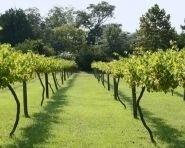
ROAR Pinot Noir

ROAR Pinot Noir

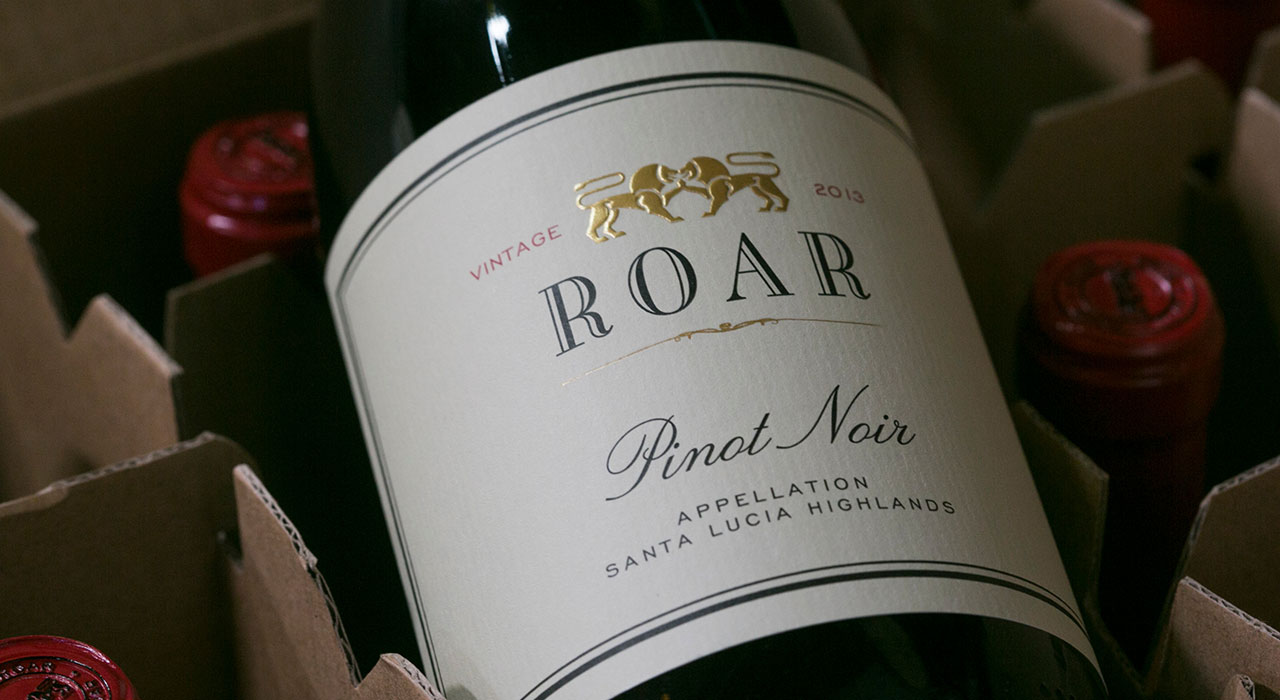
A second Franscioni-Pisoni partnership created ROAR Wines designed to introduce the distinct flavors of the Santa Lucia Highlands appellation.  Deserving of recognition among Wine Spectator’s top 2014 wines, I found the ROAR Pinot Noir Santa Lucia Highlands Rosella’s Vineyard 2012 (93 pt/$52) to have a uniquely wonderful floral bouquet that foreshadowed a rich, luscious mouthfeel that enhanced the flavors.

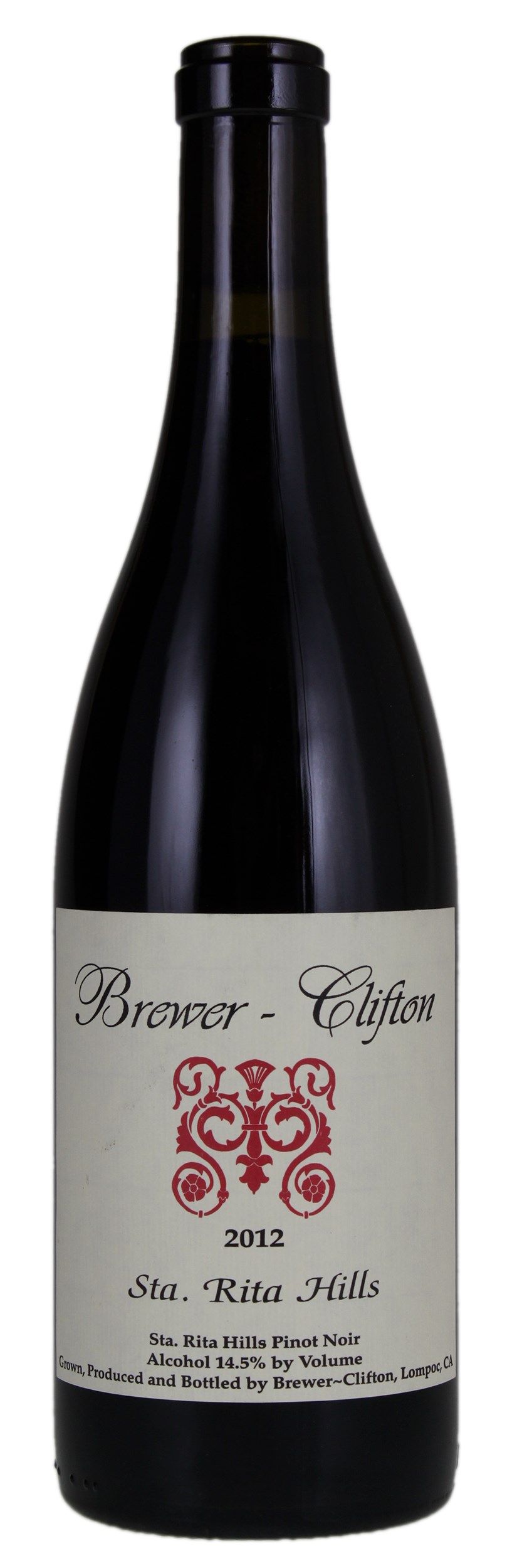
From Santa Barbara County, the Brewer-Clifton Pinot Noir Santa Rita Hills 2012 (94pt/$40), recognized by Wine Spectator as a Top Ten 2014 release, is the

culmination of a long standing, respected partnership.  Winemaker Greg Brewer uses whole cluster fermentation methods and his signature absence of any new oak to create very fruit forward, balanced flavors.  Also serving as winemaker for another Santa Rita

Brewer-Clifton Santa Rita Hills Pinot Noir 2012

Brewer-Clifton Santa Rita Hills Pinot Noir 2012

Hills producer, Melville Winery, Brewer’s low-yield Melville Pinot Noir Block M Santa Rita Hills 2012(97pt/$50), with complex flavors, was one of the memorable wines that I enjoyed this year.

Although the Meiomi Pinot Noir Monterey-Sonoma-Santa Barbara Counties 2013 (92pt/$22) has been reviewed as a top value-priced pinot noir, past vintages also

Meiomi Pinot Noir

Meiomi Pinot Noir

express very complex and structured flavors for the price, representing grapes from three of the major growing regions.

Amid the early stages of California’s drought, vintage 2013, especially in the Santa Lucia Highlands and the Russian River Valley,  experienced uniform, moderate temperatures with early rains no spring frost or summer heat waves. The lack of water may have slightly stressed the vines which often results more concentrated flavors.  We will be following with interest the 2016 vintage in California that may or may not have to adjust to the rains and weather patterns caused by “El Nino.”

The word “opulent” is what has Pinot Noir aficionados everywhere excited about the vintage 2102 of Oregon releases, the best since 2008, standing well above recent inconsistent vintages.  In 2012, the Willamette Valley and surrounding regions experience nearly ideal climate, requiring no extraordinary maintenance, seamlessly

Willamette Valley vineyard

Willamette Valley vineyard

aligned to the terroir.  Wine Spectator magazine, who rated the entire 2012 Oregon pinot noir vintage with 97-points, reported that nearly 60% of the wines tasted received ratings of 90-points or higher, opposed to 32% in 2011.

To me, good vintage Oregon pinot noir has sumptuously rich flavors that are restrained by the solid structure of the wine.

I can remember tasting the Bergstrom Pinot Noir de Lancellotti Vineyard 2008 (94pt/$60.00) during a 2010 visit and feeling that I had truly experienced the best

Bergstrom Pinot Noir

Bergstrom Pinot Noir

Oregon can offer.  Bergstrom remains among Oregon’s many extraordinary pinot noir producers and recently shared the spotlight with releases from the Seven Springs Vineyard in the Eola-Amity Hills appellation of the northern Willamette Valley.

The pinot noir and cool-climate chardonnay from Evening Land Vineyards has received several accolades over the past few years and, once again, their 2012 vintage, namely the Evening Land Pinot Noir Eola-Amity Hills Seven Springs Vineyard La 143793lSource 2012 remains atop pinots from Oregon or any other region.

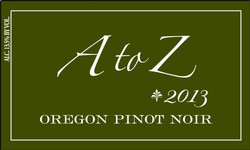
Focusing on Oregon vintage 2012 seems to be the key and great values can be found among veteran winemakers from Ken Wright, Ponzi, Chehalem and, of course, A to Z Wineworks who have, for some time, produced very nice pinot noir for under $20.  I have tasted previous vintages of this wine and was not surprised to see the A to Z Wineworks Pinot Noir Oregon 2012 (89pt/$19)

A to Z Wineworks Oregon Pinot Noir 2013

A to Z Wineworks Oregon Pinot Noir 2013

among Wine Spectator’s top values of the vintage.

Long known for their pleasantly “grassy” sauvignon blanc and other whites, New Zealand has spent the last few decades expanding and perfecting the production of pinot noir.  Average vintage ratings have been in the low to mid-90s since the beginning of this decade, with the South Island’s Marlborough and Central Otago regions leading the way.  In a recent Wine Spectator review of all New Zealand wines, seven of the top 10 were pinot noir.  Many experts agree that the structure, thought to be lacking in the past, is where the best wines have improved and, in many instances, become more expensive.  However, as  with sauvignon blanc, New Zealand still produces some very good, accessible pinot noir at competitive prices.  While the Amisfield Pinot Noir Central Otago RKV Reserve 2010 (94pt/$100) is one of the highest rated of the varietal, they also produce the reasonably priced  Amisfield Pinot Noir Central Otago ($32), reviewed as complex, focused with good structure.

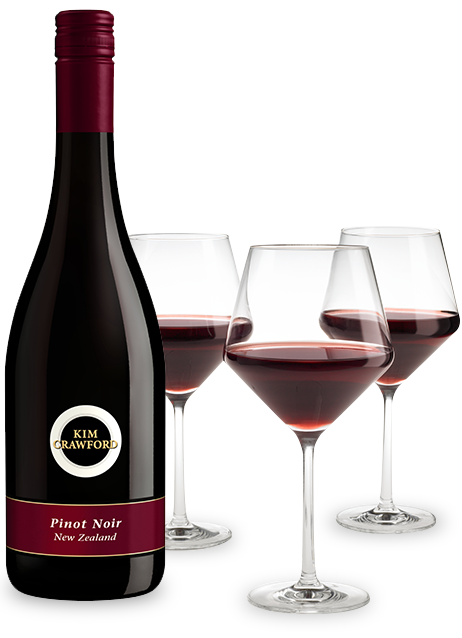
Quality, accessibility and cost are appealing features to many New Zealand pinots such as Kim Crawford Pinot Noir South Island 2013 (89pt/$19) and several others

Kim Crawford New Zealand Pinot Noir

Kim Crawford New Zealand Pinot Noir

that are often available at local outlets.

To fans of the “heartbreak grape,” be assured that the immediate future is bright.  Targeting California’s vintage 2012 & 2013, Oregon vintage 2012 and anything from New Zealand since 2010 seems to be the key in searching for your perfect pinot to pair with fresh salmon, Thanksgiving turkey or Monte Enebro, a slightly pungent, creamy-style goat’s milk cheese from Spain.


Hall Wines: A Sustainable Experience


Hall Wines from St. Helena in the Napa Valley is, without question, an upscale winery.  Most wines retail for well over $100.,the outdoor sculpture collection is exquisite and they offer  a variety of specialized tastings, tailored to individual preferences and pocketbooks.  This place is accessible, friendly and inviting to all guests, but for those who choose to invest in a membership, the entire estate becomes an oasis for serious wine drinkers who also

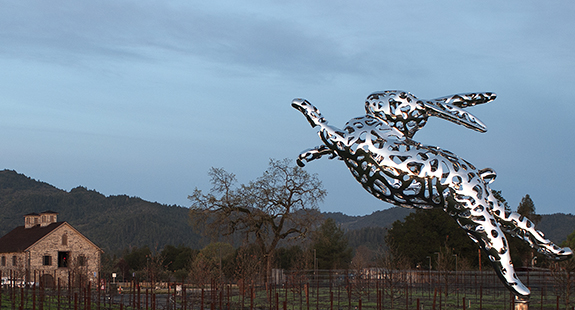
"Bunny Foo Foo" by Lawrence Argent

“Bunny Foo Foo” by

enjoy art, sculpture, stunning natural landscapes, surrounding vineyards and events that help pair extraordinary wines with culinary delights.  On a beautiful, late summer afternoon, we sought to discover the Hall experience that began with “Bunny Foo Foo,”  a 35-foot high stainless steel rabbit by artist Lawrence Argent, leading us, full stride to the old Bergfeld Winery property .

I first encountered Hall Wines in 2012, shortly after the buzz was created when Wine Spectator magazine awarded the Hall Cabernet Sauvignon Napa Valley Kathryn Hall 2008 a 96-point rating, placing it #2 on their Top Wines of 2011 list.  Each vintage since, including the 2013 which is still in the barrel, has achieved ratings in the high 90s.  An extraordinary wine named for an extraordinary woman.

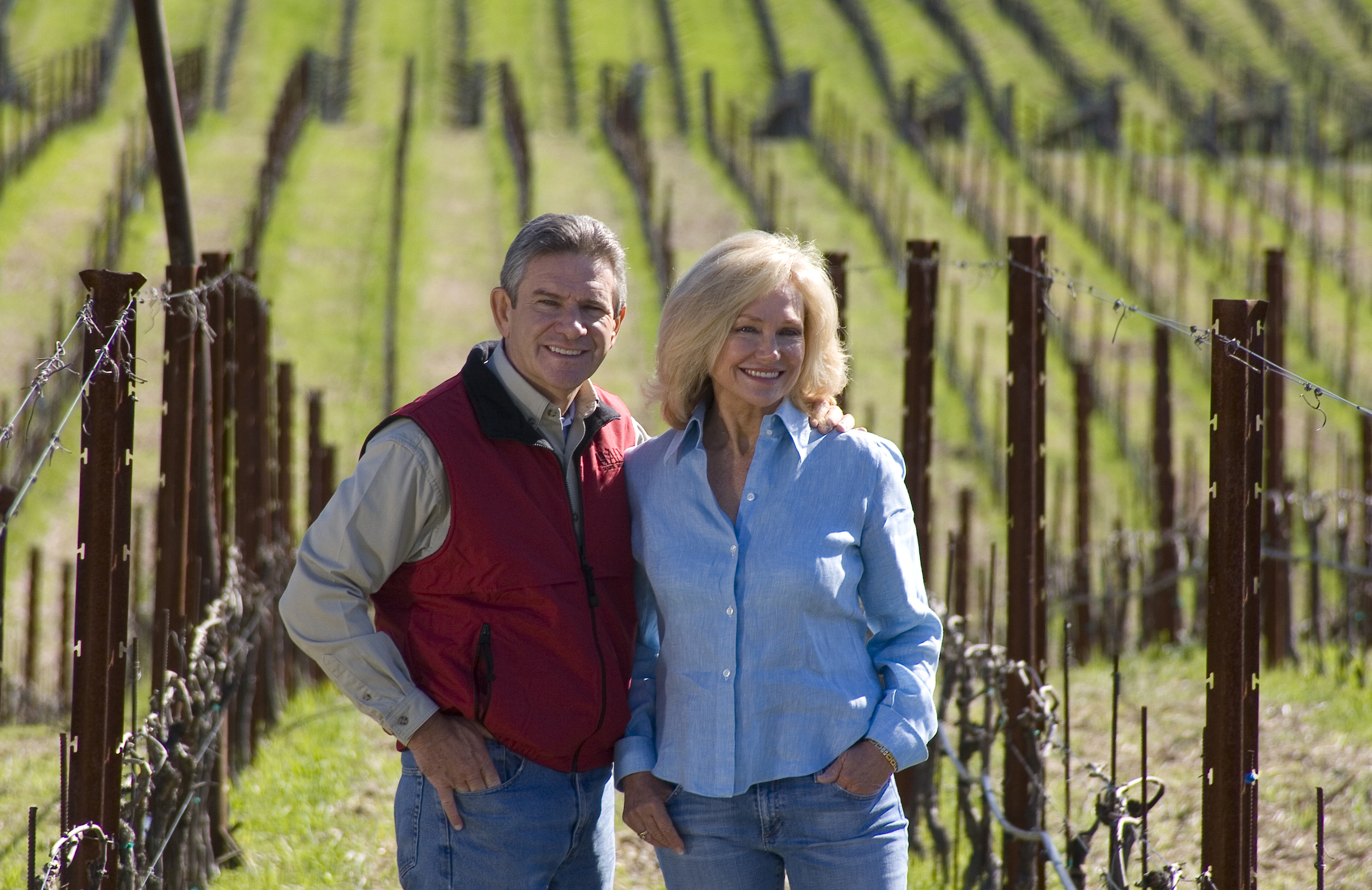
Vintner Kathryn Walt Hall, who owns Hall Wines with her husband, Craig, was first exposed to viticulture when her parents purchased a vineyard years ago, sourcing grapes to various vintners. Kathryn later managed the family vineyard and the Halls still produce wines under the WALT label

Outside of wine, Kathryn has had an esteemed personal and professional career beginning with an economics

Craig and Kathryn Hall

Craig and Kathryn Hall

degree and MBA from UC Berkeley, a JD from Hastings School of Law, stints in municipal and corporate law and, from 1997 to 2001 service as United States Ambassador to Austria under the Clinton Administration.  While working as an attorney and businesswoman in Dallas, TX, Kathryn carried on her passionate commitment to public office and community service with an extensive list of achievements.

Our first taste of “Kathryn’s Cab” since the noble vintage 2008 came in the barrel room with the 2013 HALL Cabernet Sauvignon Napa Valley Kathryn Hall, a wine that is at least a year from release.

Although it will spend another six months in the barrel, still another six months in the bottle, this wine had the maturity of many wines already on outlet shelves.  The tannins were present but had softened considerably while young, complex flavors foreshadowed possible greatness

Described as a “hopeless entrepreneur,” Craig Hall has been forming businesses since he was a kid mowing lawns.  He

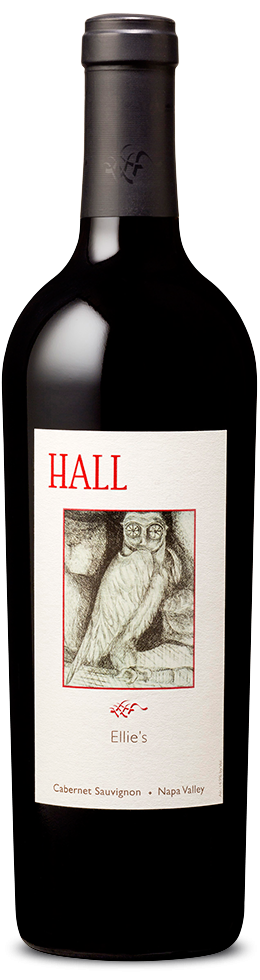
2012 HALL "Ellie's" Cabernet Sauvignon

2012 HALL “Ellie’s” Cabernet Sauvignon

parlayed an early investment in a small apartment complex into a real-estate empire and, eventually the Hall Financial Group.  Aside from their successful careers, the both Kathryn and Craig remain committed to a better community with multiple efforts and contributions recognized on a global scale.

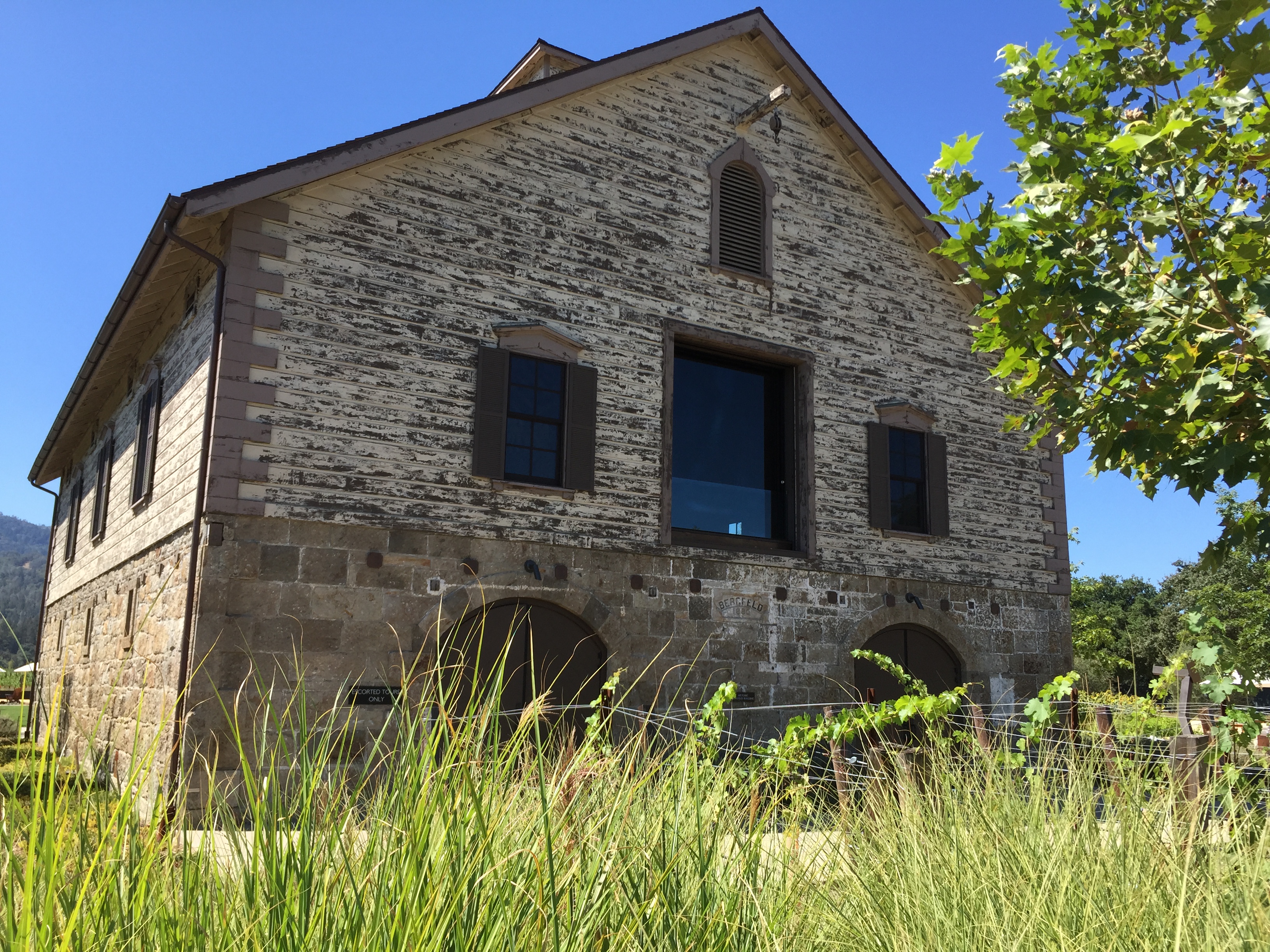
With vision in hand, the Halls purchased the historic Bergfeld Winery (circa 1859) in 2003, intent on honoring

Historic Bergfeld Winery building

Historic Bergfeld Winery building

the land with an environmentally efficient operation, great art and architecture and, foremost, first-class wines. Through sensitivity and innovation, Hall became the first winery in California to attain a Leadership in Energy and Environmental Design (LEED) Gold certification as a fully sustainable facility.  What is most impressive is that they have achieved it all without sacrificing design or quality in any aspect of the operation.

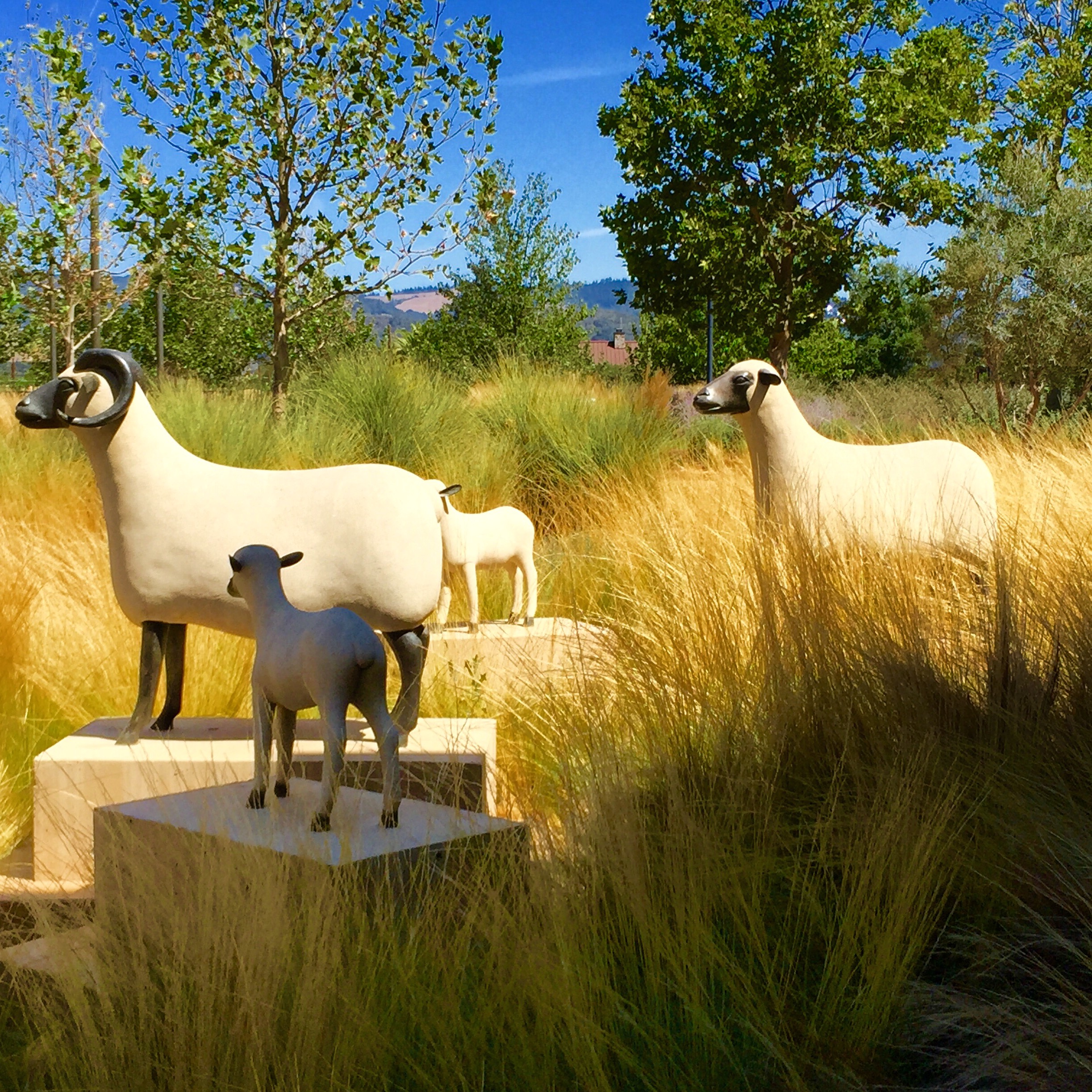
"Mouton Transhumandt

“Mouton Transhumant” by Francoise

Part of the Hall aesthetic is the art, both indoor and out. Carrying on the animal theme set by “Bunny Foo Foo’s entry way greeting, access to the tasting room/production facility requires passage by sculptors Francois-Xavier Lalanne’s whimsical sheep, “Mouton Transhumant” and John Baldessari’s recent, blue-eyed “Camel (Albino) Contemplating Needle,” both setting the mood to taste some exceptional wine.

Camel (Albino) Contemplating a Needle

Camel (Albino) Contemplating a Needle


Winemakers know that it all starts in the vineyards and at Hall, the best stock of all organic grapes sets the tone and precise viticulture delivers the result.  This was evident in the 2012 HALL “Ellie’s” Cabernet Sauvignon ($80), a Cabernet Sauvignon (79%)/Merlot (21%) blend named for Craig’s mother who was a WWII Navy veteran and navigator on a ship.  Merlot fosters softness to the young wine, with floral and herb influences that coexist with flavors of black currants, earning a 92-point rating from Wine Spectator’s James Laube.


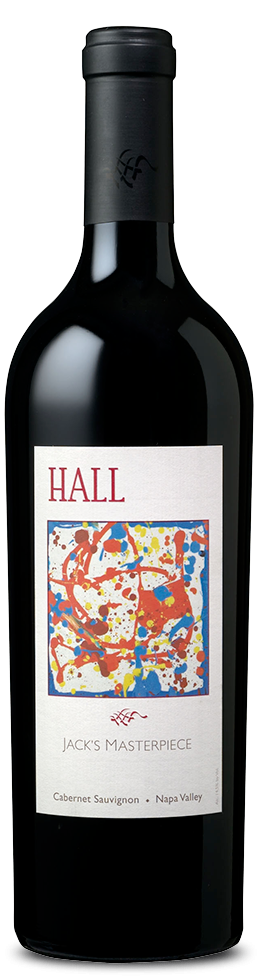
The art and wine theme continues in a very unlikely fashion with the dense 2012 HALL “Jack’s Masterpiece” Cabernet Sauvignon ($125) which originates from several vineyards in the Napa Valley.

HALL Cabernet Sauvignon "Jack's Masterpiece" 2013

HALL Cabernet Sauvignon “Jack’s Masterpiece” 2013

The wine results from current HALL President Mike Reynolds’ annual honing of his winemaking skills.  With plenty of spice on the nose and palate, it delivers a creamy, chewy mouthfeel and rich flavors heavily influenced by 24 months in new French oak.  The label of this luscious, soft Cabernet adorns “Jack’s Masterpiece,” a drawing by Reynolds 18-month old son as a Father’s Day gift; a clear improvement over my plaster “hand print” wall hanging.

Taking a break from these alluring Cabernet Sauvignons, we tasted two pinot noir varietals from the Anderson Valley in Mendocino County, produced under their WALT label.

Offering very forward cherry and boysenberry flavors, the 2013 WALT Pinot Noir “Blue Jay” Anderson Valley ($40) has a rich mouthfeel with hints of baking spices.  Our host, Colin, suggested that this wine surprisingly pairs well with BBQ ribs.

2013 WALT "Blue Jay" Pinot Noir Anderson Valley

2013 WALT “Blue Jay” Pinot Noir Anderson Valley

Recently awarded 92-points by Wine Spectator, extraordinary bouquet and classic flavors reward those who taste the 2013 WALT Pinot Noir “The Corners” Anderson Valley ($75).  From a vineyard near Booneville, the complexity and depth of the aromas and distinctive flavors places

2013 WALT Pinot Noir "The Corners" Anderson Valley

2013 WALT Pinot Noir “The Corners” Anderson Valley

it among the higher echelon of the varietal in California.

Hall wines, mostly Bordeaux varietals, come from over 500 acres under vine among five unique estate vineyards ranging in location from the valley floor, the Pope Valley to the northeast, Sonoma County and the nearby Vaca Mountains.

Bergfeld Vineyard

Bergfeld Vineyard

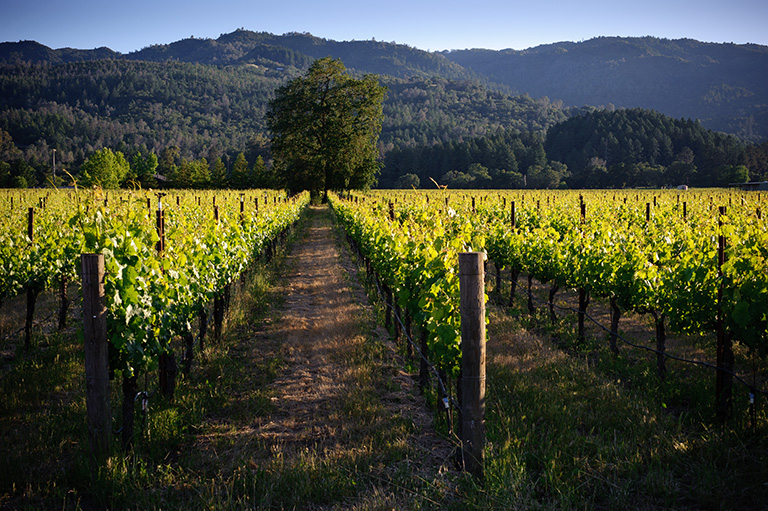
The St. Helena Valley historic Bergfeld Vineyard that surrounds the winery was first planted in 1859 by sea-captain, William Peterson who later sold it to the Bergfeld family.  The hot valley floor with surrounding mountains as a gorgeous backdrop creates the perfect terroir for Cabernet Sauvignon and a testament to our final wine.

Just days before its release, we were able to experience the premium 2012 HALL “Kathryn Hall” Cabernet Sauvignon ($150), recently rated with 97-points by Wine Advocate’s Robert

2012 HALL "Kathryn Hall" Cabernet Sauvignon

2012 HALL “Kathryn Hall” Cabernet Sauvignon

Parker.  Sourced from the Bergfeld and Sacrashe Vineyard in nearby Rutherford, this Cabernet Sauvignon (75%) and Merlot (25%) blend has complex aromas and very concentrated, rich fruit flavors with depth, texture and the soft lingering finish of a classic.

IMG_2432

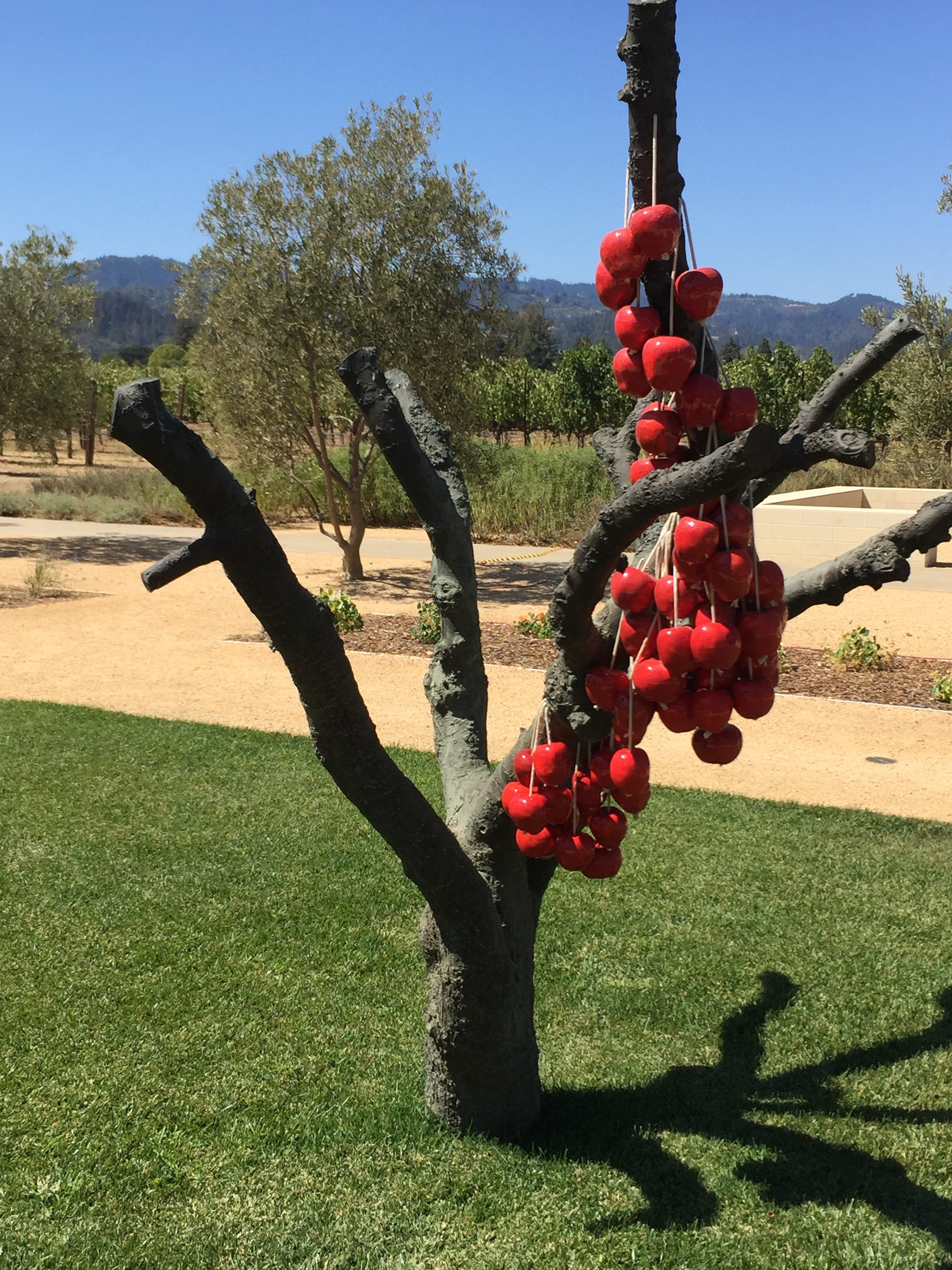
“Because Nothing Has Changed” by Anya Galleccio

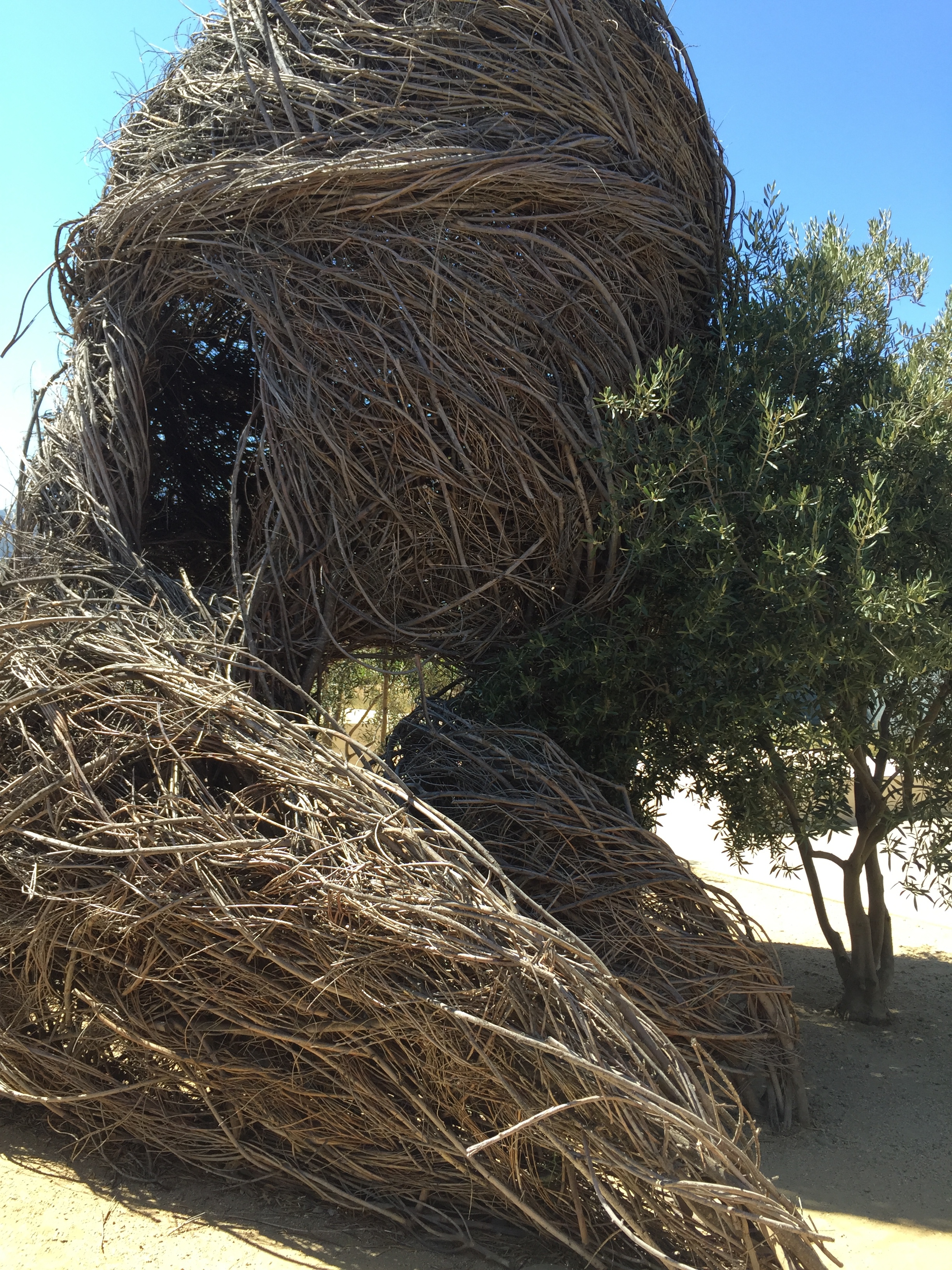
As we concluded our stroll through the sculpture garden among pieces like Anya Galleccio’s surrealistic apple tree entitled “Because Nothing Has Changed” and one of Patrick Dougherty’s interwoven twig houses called “Deck The Halls,” I fully appreciated being there among the spectacular natural beauty of the valley, all driven by the creation of fabulous wines and preserved in a most caring and holistic manner.  Hall Wines are not for everyone but the experience is unparalleled and clearly the result of good old American initiative and hard work.

Patrick Dougherty's "Deck The Halls"

Patrick Dougherty’s “Deck The Halls”

There are several other wineries in the immediate area and the quaint, high-end town of St. Helena, with its restaurants, art galleries and shops, should be a definite stop during your next Napa Valley excursion.


A Landing for Chenin Blanc


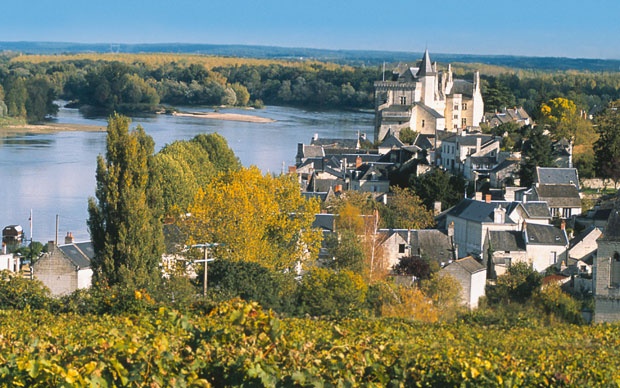
Today, I understand the French chenin blanc grape to be among the world’s most versatile varietals, comfortable as a dry, off-dry, dessert or sparkling wine, flexing its natural acidity to pair well with almost anything edible. I can remember our first

Loire Valley vineyards

Loire Valley vineyards

connection in the early seventies when Charles Krug introduced it by name to California, apparently combining demand with scarcity to force the sale of less desirable wines.  In those days, it was simply a nice, crisp “summer sipper” and easier to pronounce than sauvignon blanc.

Despite its multi-faceted qualities, chenin blanc became lost and underrated in California over the years, succumbing to the emergence of our Burgundy and Bordeaux whites like chardonnay and sauvignon blanc.  A few years ago, I began to see references to and tasting new chenin blanc releases, becoming re-aquainted with its character.  It has become more abundant in California and is comfortably grown in appellations from Santa Barbara County to the Napa Valley.

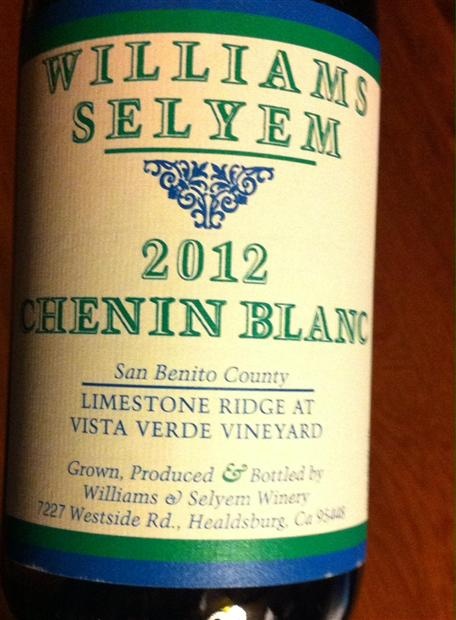
To prove my point, let me introduce you to the 2013 Williams Selyem Chenin

Williams Selyem Chenin Blanc 2012

Williams Selyem Chenin Blanc 2012

Blanc Vista Verde Vineyard ($32), produced in the Russian River Valley with grapes from limestone-laden San Benito County vineyards near the town Tres Pinos, so exclusive that one can only find it by visiting the winery, that is not readily available to the casual wine taster.  I had not known of this wines existence despite being on the wineries allocation list for nearly a decade.

True to the high quality standard from Williams Selyem, the acidity is finely balanced, crisp yet rich with notable mineral elements on the finish. One characteristic of chenin blanc is that it is more age-worthy than most white wines.  We are being patience with the two bottles in my cellar, but the end of summer is near.

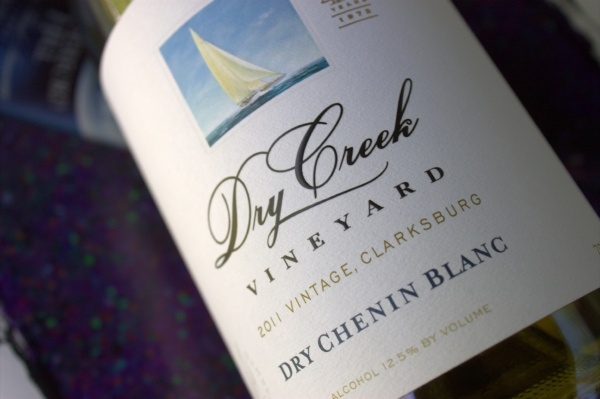
Also in Sonoma County, the iconic Dry Creek Vineyards produce a chenin blanc using grapes sourced from Clarksburg in the Sacramento Delta area, a major growing region

Dry Creek Vineyards Dry Chenin Blanc Clarksburg

Dry Creek Vineyards Dry Chenin Blanc Clarksburg

.  The 2013 Dry Creek Vineyards Chenin Blanc Clarksburg ($12), a tremendous value, is described as maintaining the “Loire character of earth and crushed minerals”. Enjoying the mineral elements, I found a nicely balanced acidity that allows the fruit to be more expressive.  The 2014 vintage has been released with good ratings from Robert Parker and Wine Enthusiast magazine.

The origins of chenin blanc lie in the beautiful Loire Valley, 150 miles south of Paris, west of the Burgundy region, where it is often called Pineau de la Loire.  To most, the wines from the Vouvray appellation best represent the region with an off-dry style wine, a bit softer and textural, revealing more

Loire Valley vineyards

Loire Valley vineyards

floral characteristics then the dry wines.  The dry chenin blanc comes from the Anjou area, also known for its sweet wines.

Several vineyards in Anjou use “botrytized” grapes, infected with Botrytis Cinerea, to produce high quality sweet dessert wines. The French have turned the “noble rot” disease into a sensory art form, only truly appreciated through a glass.

Loire Valley wines can be found in most wine shops and on-line, identified by the appellation.  A quick search on K&L Wines revealed two “vouvray” wines from the region that had high ratings and reasonable prices.  The 2013 Les Chancelieres Vouvray ($12), aged in stainless steel tanks, was described as having ripe fruit, floral aromas and solid citrus, a good formula for a satisfying dry wine.

K&L used the term “impeccably balanced” when recounting the fruit, earth and mineral aspects of the off-dry 2011 Domaine du Viking “Tendre” Vouvray ($23) while others, including Wine Spectator magazine, agree that this wine is among the best from the region.

2011 Domaine du Viking "Tendre" Vouvray

2011 Domaine du Viking “Tendre” Vouvray

Although chenin blanc is native to the Loire Valley in France, much more comes from most New World wine-producing countries such as Chile, Argentina, Australia, South Africa and the “Golden State,” where it is ranked third among white varietals, behind chardonnay and sauvignon blanc, in acres planted.

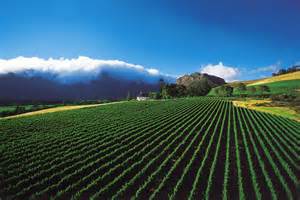
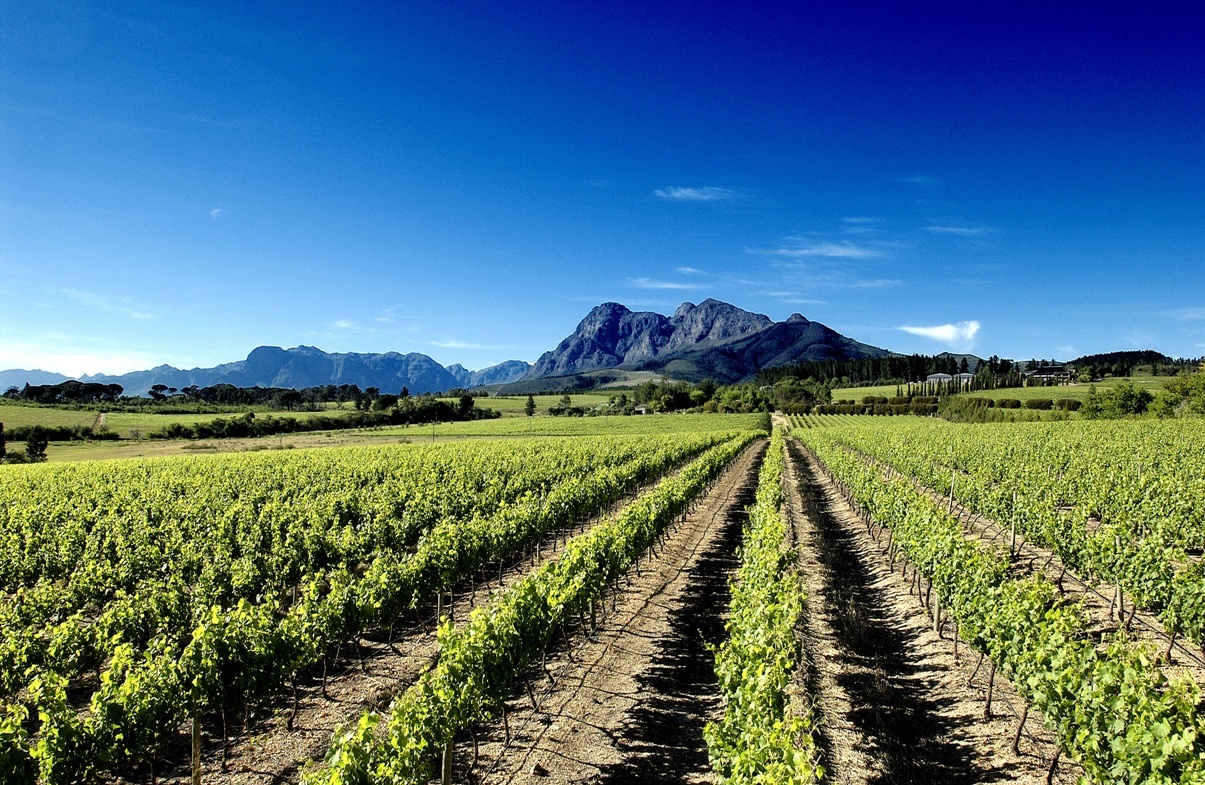
The world’s largest producer of chenin blanc where it is known as Steen, South Africa

South African vineyards

South African vineyards

has over 45,000 acres under vine and continues to export a wide selection of fine, dry-style wines to US and other markets, many available under $15.

One South African wine that has appeal to reviewers, the 2014 MAN Vintners “Free

MAN Family Vintners Chenin Blanc, South Africa

MAN Family Vintners Chenin Blanc, South Africa

Run Steen” Chenin Blanc ($12), from dry-farmed vineyards in the Agter-Paarl region, is noted for strong tropical fruit and citrus flavors that tend to linger.  From the Stellenbosch region, the dry Spier 2011 Chenin Blanc Stellenbosch ($10) has been rated in the high 80s with a low price.

Another interesting wine that has been consistently rated with 90+ points, the Badenhorst Secateurs Chenin Blanc 2014 ($23) has the full rounded flavors that one finds with a Vouvray from France and will appeal to those who favor chardonnay or sauvignon blanc.

As previously mentioned, chenin blanc, due to high natural acidity, is used to create very diverse wines, each with its own flavor palate.  Floral, herb and spice notes often surface in the bouquet while depth of the flavor profile generally includes spirited berries, fruitsf59f9519537b69690b7d78ef67273dec and citrus. Most of it is produced in stainless steel tanks, some in the concrete egg and the juice is often introduced to oak during the initial aging process, enhancing the buttery, creamy elements, especially in the off-dry wines.

In California, chenin blanc expresses more stone fruit flavors like peaches, apricots and, depending on the style and oak influence, honey, mineral elements with floral aromas while South Africa’s dry-style exude more tropical fruits, namely banana, guava and pineapple.

It is equally versatile in food pairing, comfortable with salads, fish, chicken, cream sauces and my favorite, Asian food.

The grape’s healthy acidity can stand up to those spicy Thai sauces, even curry.  It is also versatile in pairing with cheeses such as asiago (cow), California’s Humboldt Fog (goat) and, of course, a creamy, pyramid-shaped Valencay (goat) from the Loire Valley.

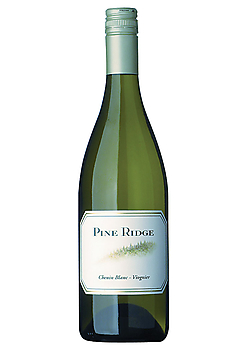
With more grapes sourced from Clarksburg, Napa Valley’s Pine Ridge Winery produces

Pine Ridge Chenin Blanc-Viognier, Napa Valley

Pine Ridge Chenin Blanc-Viognier, Napa Valley

a single varietal chenin blanc and a unique, consistently good chenin blanc-viognier blend, the unlikely merger of varietals from the Loire and Rhone Valleys. Wilfred Wong of wine.com  described the off-dry Pine Ridge Chenin Blanc-Viognier 2014 ($15) as having “lots of fresh fruits and aromatics, a faint touch of sugar, yet crisp in the finish,” awarding it another 90-point rating.

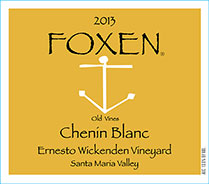
Toward the southern end of the state, chenin blanc releases from the Santa Ynez and Santa Maria Valleys have become more available. Described as an off-dry style, supple wine, the Foxen 2013 Chenin Blanc Ernesto Wickenden Vineyard “Old Vines” ($25) is produced whole cluster, fermented in stainless steel and aged in neutral oak.  This wine is on the exploration list for my next visit to the Santa Barbara wine area.

2013 Foxen Chenin Blanc Santa Maria Valley

2013 Foxen Chenin Blanc Santa Maria Valley

With nearly 65,000 total acres under vine in an appellation spanning three counties, Sacramento, Solano and Yolo; Clarksburg, in the minds of some, has replaced the Loire Valley as the world’s best producer of chenin blanc.  Aside from loamy soil, the Sacramento Delta vineyards battle heat, fog and wind, but seem to thrive.  More of the grapes are sourced and crushed in other areas, but some are locally produced including the zesty Vinum Cellars 2014 Chenin Blanc Clarksburg ($15), whose focus is to maintain the natural acidity, resulting in intense citrus and tropical fruit flavors.

Albeit not the major player, chenin blanc maintains a respectable presence in Washington State.  One that comes to mind is the off-dry 2009 L’Ecole No 41 “Walla Voila” Chenin Blanc, Columbia Valley ($14), a tribute to the owners collection of Vouvrays that expresses deep, honeyed fruit flavors, maintaing a crisp, citrus finish

VineyardsEven with its tremendous growth and appeal worldwide, the future of chenin blanc is uncertain giving the proliferation of traditional and new whites like albarino, Gruner Ventliner and viognier emerging from New World appellations into the marketplace.  It does, however, give us an alternative as a crisp, refreshing “sipper” with diverse flavors reflecting the region of the world where it is created.  Readily available and inexpensive, it is certainly an option that may become your next preferred white wine.


Gloria of Carneros


Friends visiting from Seattle requested that we join them for a private tasting at the Gloria Ferrer Winery in the Sonoma/Carneros region.  It seems they prefer the “bubbly” and have become members, thanks to the winery’s willingness to ship anywhere.  I had previously passed by the entrance gate or had occasional glimpses on wine shop

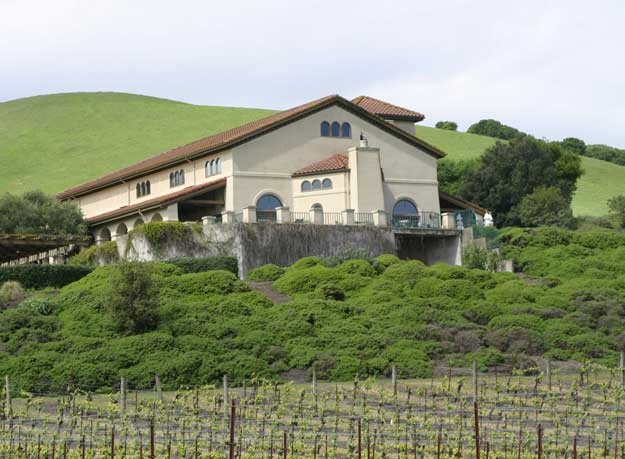
Gloria Ferrer Winery

Gloria Ferrer Winery

shelves, but knew very little about their releases over the last three decades.

First impressions are always important and the Gloria Ferrer Estate did not disappoint. There is a half-mile of winding road through gentle hills with vineyards before you reach any buildings.  The indoor/outdoor tasting room was huge with a chef on-hand, preparing food to enhance the experience.  Add some live music and they have marketing appeal from “Baby Boomers” to the “Millennials.”

Because of our VIP friends, we were escorted into a room to taste sparkling and still wines, each paired with a taste of something good and enlightening commentary.  Being a person that likes to take a little something home from these experiences, it was here that I discovered the 2006 Gloria Ferrer

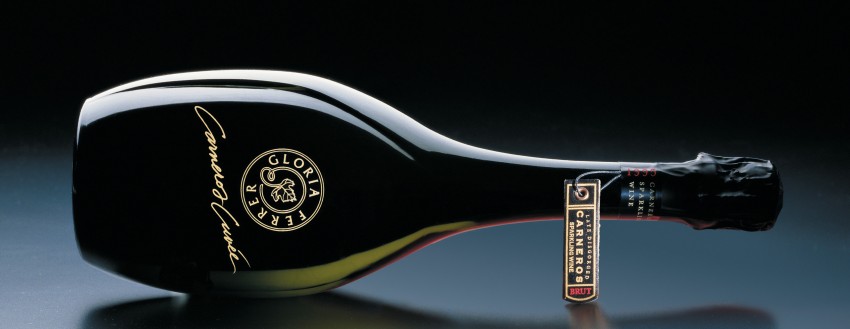
Gloria Ferrer "Royal Cuvee'" sparkling wine

Gloria Ferrer “Royal Cuvee'” sparkling wine

Royal Cuvee’ ($37), a sparkling wine (66% pinot noir, 34% chardonnay) that impressed with multiple flavors on the nose and palate.  I enjoy sparkling wines but often the true flavors are disguised by the effervescence.  This is not the case with the “Royal.”  The apple, honey nose extended through the palate with a creamy texture and, surprisingly, a pleasant minerality on the finish.

Something that most of us do more of during a formal tasting is exploring the bouquet of the wine.  Neglecting to do this while enjoying a glass with dinner diminishes our capacity to capture the full sensory adventure.

Gloria Ferrer is located in the south Sonoma County Carneros region, impacted by morning marine layers from San Pablo Bay and, for years, described as an area to avoid when planting new vines.  It is the coolest and windiest region in both Sonoma and Napa Valley and the poor draining, rocky soils make it a struggle for grapes to survive. A possible solution is to find a grape varietal that prefers cool, wet winds and indigent soil.

Carneros Vineyard

Carneros Vineyard

After early century phylloxera (root disease) decimated the original vines, further damaging the region’s reputation,  well-known wine producer Louis Martini purchased a large area within the Carneros in 1942 and began to experiment with cool-climate chardonnay and pinot noir.  Known as the “heartbreak grape,” the difficult pinot noir does seem to thrive when coping with the challenges that define the Carneros terroir.  Soon, Carneros caught the eye of sparkling wine producers and rapidly became a desired region, associated with quality chardonnay, pinot noir and sparkling wines.

Our next taste was the flagship 2003 Gloria Ferrer Carneros Cuvee’ ($75), a pinot noir and chardonnay blend awarded double-gold at the San Francisco International Wine Competition and 90 points from Wine Spectator, expressing complex aromas and layered flavors of apple, pear

2003 Gloria Ferrer "Carneros Cuvee'"

2003 Gloria Ferrer “Carneros Cuvee'”

and Meyer lemon.  There is a remarkably rich texture to this Carneros sparkling wine, enhanced when paired with smoked salmon and goat cheese.


The Ferrer family’s path to the Carneros region began over 600 years ago in Spain where they were already respected wine growers and makers.  In the early 20th Century, two prominent wine families were merged with the marriage of  Pedro

Pedro Ferrer and Dolores Sala Ferrer

Pedro Ferrer and Dolores Sala Ferrer

Ferrer to Dolores Sala.  Soon after, the young couple released their first cava (Spanish sparkling wine) and established the  Freixenet label becoming  largest producer of “method champoise” wines in the world.

After a 1930s visit, Pedro’s dream of launching a winery in the United States was tragically cut short when he was killed in the Spanish Civil War.  His ambition lived through his son, Jose, who returned in 1982 to purchase land in the Carneros and establish Gloria Ferrer Winery, named after Mrs. Ferrer.  A few years later the Gloria Ferrer Caves and Vineyards opened with production and tasting facilities replicating a “classic Catalon farmhouse”.  Today, the family and team farm over 300 acres of estate vineyards producing six sparkling wines, five pinot noir, a cool-climate chardonnay and a merlot.  Did someone say merlot?

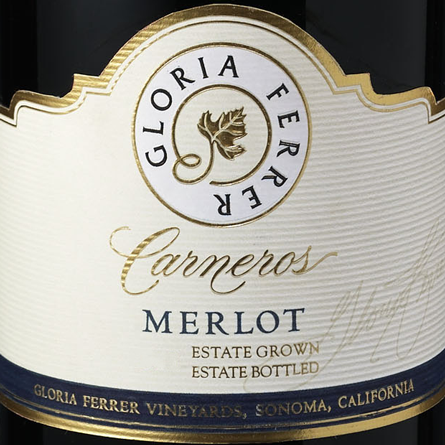
The Carneros is known for being tough on varietals other than cool-climate chardonnay and pinot noir.  Zinfandel was the chosen one for a short time, but could not sustain quality vintages. So, I was surprised when our tasting included the

Gloria Ferrer Carneros Merlot

2009 Gloria Ferrer Carneros Merlot

2009 Gloria Ferrer Carneros Merlot ($28), a Bordeaux varietal that was nicely balanced with dominant dark berries bouquet and chocolate hints to enhance the dark fruit flavors.  Of course, merlot pairs best with beef or lamb dishes.  However, vegetarians can pair it with aged cheeses and even vegans can enjoy this accessible wine by itself..

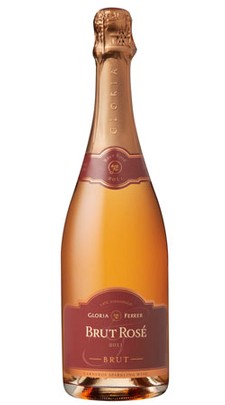
In the wine world, the opposite of sweet is defined as “dry.”  With sparkling wines, dryness in described through “brut” and “extra brut”.   The pinot noir dominant 2011 Gloria Ferrer Brut Rose’ ($47) is emblematic of the modern rose,’ varietal specific, crafted from carefully selected fruit, dry and a bit pricy.

Partial to the ascendant aromas and flavors of a 90% pinot noir rose,’ the small amount of chardonnay is most apparent during the finish.  There is ample quality rose’ available at varied prices but few the combine pinot noir and chardonnay,

Gloria Ferrer Winery Tasting Room

Gloria Ferrer Winery Tasting Room

making this one special.

For those seeking a very dry sparkling wine, the 2006 Gloria Ferrer Extra Brut Cuvee’ ($47) is an option and those who prefer something sweeter can choose from two flavorful, value-priced, non-vintage sparkling wines that concluded our tasting.

Using only premiere taille (first press) grapes and the bebourage technique of allowing the juice to settle overnight, then aging 18 months en tirage (on the yeast), the Gloria Ferrer Sonoma Brut ($22), from numerous estate vineyards, expressed compounded  fruit and floral overtones with a creamy texture and the Gloria Ferrer Va De Vi ($22), awarded “Best of Class, Semi-Dry” in the 2015 San Francisco Chronicle Wine

Gloria Ferrer Brut Rose'

2011 Gloria Ferrer Brut Rose’

Competition, is also very fruit forward with some sweetness courtesy of a small amount of muscat in the blend.  Both sparkling wines offer pleasant zest and texture at a reasonable price.
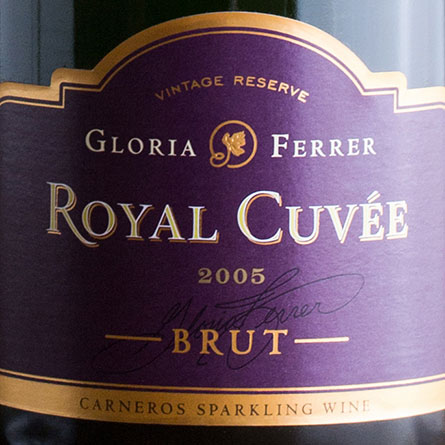
With 335 contiguous acres under vine, the Gloria Ferrer Estate makes for an impressive landscape that allows assorted options to “isolate and enhance” flavors while producing unique Sonoma County wines.  While pinot noir and chardonnay are hallmark varietals for the region, the blending of the two in creating diverse sparkling wines is rare.

In the heart of the Carneros that bridges two great regions, Sonoma County and the Napa Valley,

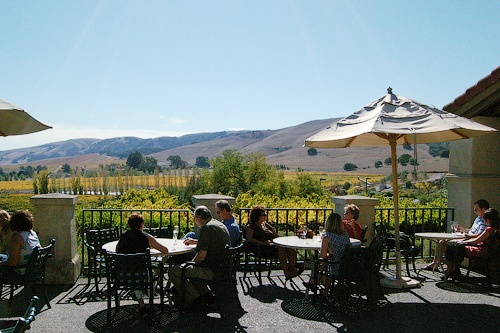
Outdoor Patio overlooking vineyards

Outdoor Patio overlooking vineyards

the Gloria Ferrer Winery is a relaxing 50-mile drive from San Francisco and provides another dimension to your exploration of the Napa-Sonoma area, renown throughout the world for the production of extraordinary still and sparkling wines.


Beyond Oak

Oak has played a major role in winemaking forever.  C’mon, it’s synonymous with wine. Descriptions of most fine wines list the varieties of oak used in creating the unique effects of each release.  Oak barrels range from high impact, thirsty “new” to “neutral,” which

Quintessa Winery vineyards

Quintessa Winery vineyards

serves as storage only.  They range ethnically from French, American to Slovenian and for centuries, most winemakers employed “coopers” to construct their own barrels.

In France, renown oak barrel makers are in high demand and like most vintner’s, their craft dates back generations.  Their barrels are the most expensive in the world although their life span triples those from other countries.

California winemakers have introduced oak to chardonnay, a match made in heaven for those rich, creamy wines, something the French would scoff at, adhering to their stainless steel traditions.

I’ve recently noticed that for reasons of both cost and taste, winemakers are moving away from oak in subtle and not so subtle ways. For instance, a few years ago, I tasted a 2012 Foresight Winery “Unoaked” Pinot Noir, my first and later met with Melville Winery whose winemaker, Gary Brewer, employs only neutral oak with all his pinot noir, quite a departure

2013 Melville Chardonnay Clone 76

2013 Melville Chardonnay Clone 76 “Inox”

Many California wineries who produce chardonnay now include at least one “unoaked” release. From the 2012 Columbia Crest Unoaked Chardonnay in Washington State to the 2014 Melville Chardonnay “Inox” in Santa Barbara County, the 2014 Morgan “Metallica” in Monterey and, my personal favorite 2013 Williams Selyem Unoaked Chardonnay from Sonoma, we have begun to lean on stainless steel and other methods.

Great French chardonnay from Burgundy is all stainless steel, oak would be cheating their values. California chardonnay is

2013 Williams Selyem Unoaked Chardonnay

2013 Williams Selyem Unoaked Chardonnay

identified by oak, though an increase in unoaked releases must be a response to demand.  So, what is the difference between the two?  It basically revolves around mouthfeel and taste.
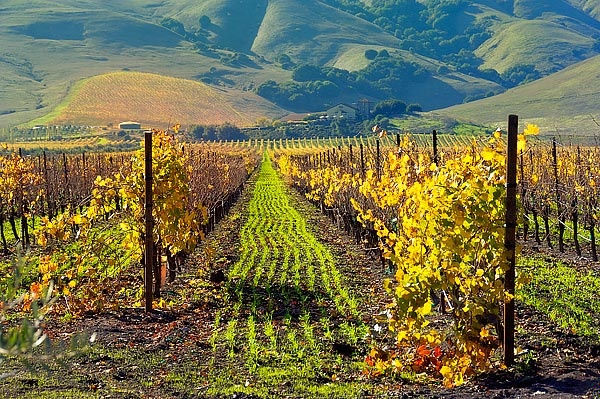
Oak adds additional aromas to the wine, such as vanilla and hazelnut and tends to build a more rich and creamy texture while stainless steel captures only the aromas and taste originated by the grape, trending toward a more crisp and fruity wine.  Stainless steel chards are generally preferred when pairing with foods such as shellfish, ceviche, tuna and oysters and those oak-laden are terrific al fresco. While these fermentation methods offer clear alternatives, some winemakers are experimenting with even newer ones.

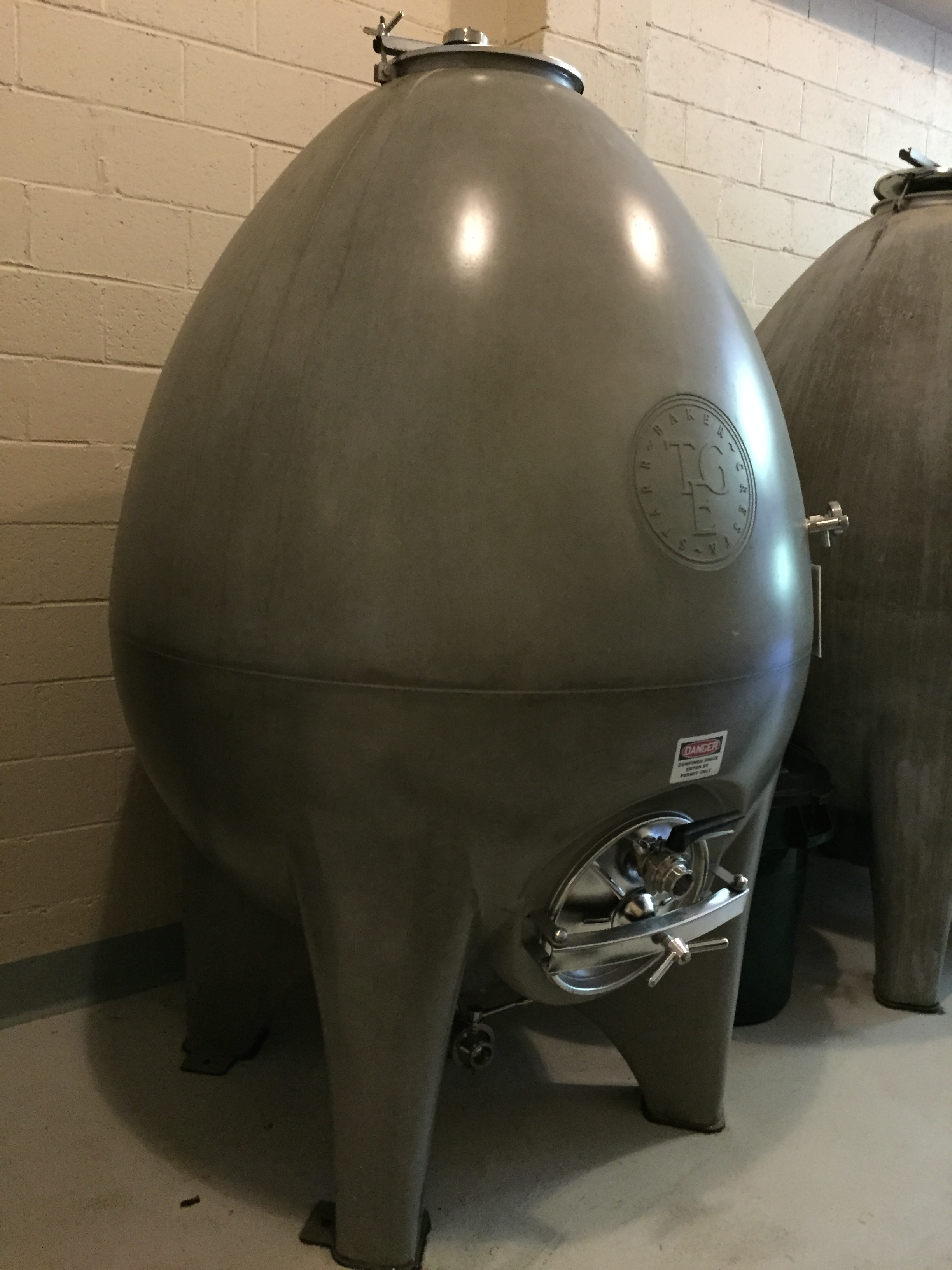
Within the last two weeks, I have discovered numerous vintners fermenting wines in

concrete egg at Thomas George

concrete egg at Thomas George

large concrete “eggs,” rounded vats about six feet tall.  Surely, they seem indestructible with almost an infinite shelf life, but how do they impact the juice. Apparently, the concrete is porous, allowing oxygen into the wine. Concrete vats have been used in winemaking for over century, but the egg shape is a 21st Century concept, first commissioned by a French winemaker in 2001.  The rounded “egg” is more efficient, eliminating dark corners and allowing the juice to easily co-mingle.

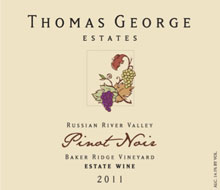
Thomas George Winery in the Russian River Valley offered

2011 Thomas George Baker Estate Vineyard Pinot Noir

2011 Thomas George Baker Estate Vineyard Pinot Noir

some comparisons with a flight of three chardonnay, each from a different fermentation process. The crisp 2011 Thomas George Estate Chardonnay, Concrete, with no malo-lactic fermentation, aged nine months sur lie in concrete eggs, has very forward fruit aromas and flavors with a delightful minerality on the finish. Each process create different nuances and the “concrete egg” will appeal to many palates.

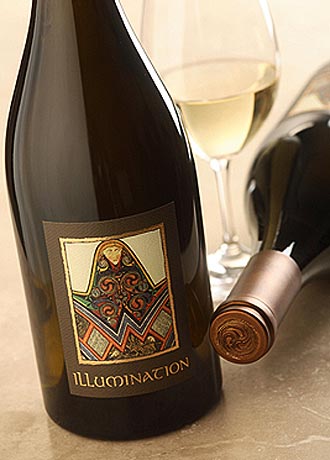
William Selyem Winery uses the “egg” for their crisp 2013 Williams Selyem Chenin Blanc San Benito County while Oregon’s Archery Summit Winery produces the 2014 Archery Summit Ab Ovo Pinot Gris, combining juice aged in the “egg,” stainless steel and oak.  Napa Valley’s Quintessa, known for extraordinary Cabernet Sauvignon blends, has also produced the highly touted 2013 Quintessa

Quintessa

Quintessa “llumination” Sauvignon Blanc

“Illumination” Sauvignon Blanc using concrete egg fermenters.

History will determine its ultimate fate, but practicality and effect seems to be telling us that the “egg” is here to stay.

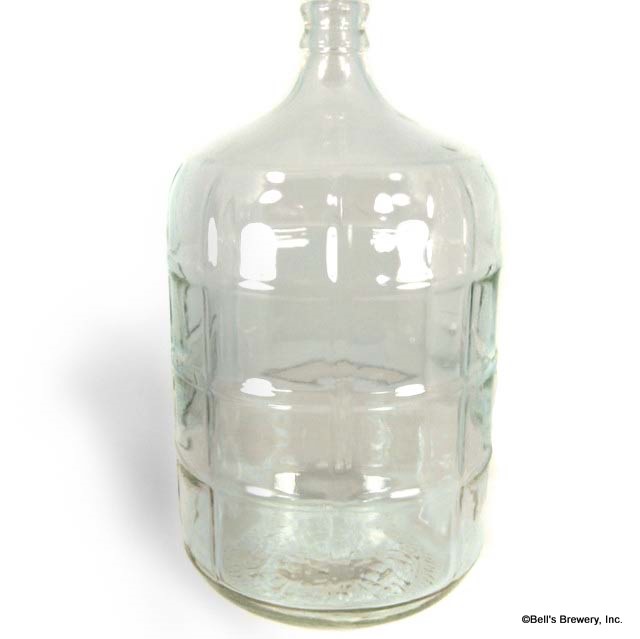
Randall Grahm from Santa Cruz’s Bonny Doon Vineyard and Cellars has produced his flagship Rhone blend, “Le Cigare Volant,” since the early 1980s.  A few years ago he surprisingly changed the fermentation vessels from oak to 5-gallon glass carboys, the same ones that fit atop the office water cooler before plastic became the norm.  Over 900 cases of the 2011 Bonny Doon Le Cigare Volant Reserve “en bonbonne,” a blend consisting

5-gallon carboy or

5-gallon carboy or “boubonnes”

of mourvedre, grenache, syrah and cinsault grapes from eight different Monterey County vineyards, were produced, all aged nine months, sur lie in 5-gallon carboys. After much research, I discovered that “en bonbonne” is in fact a French term referring to the use of glass vessels in wine fermentation, although generally larger than Randall’s 5-gallon containers.

The significant impact that Randall recounts is in the texture of the wine.  He describes the texture as “utterly seamless and sleek, and secondarily, their quality of umami, no doubt a function of the glutamate released from the autolysis of yeast cells during the élevage”.  My interpretation of Grahm’s abstract comments is that, seemingly, the glass carboy, which certainly adds no flavors, acts as a decanter, allowing in oxygen to soften or “open” the wine. Of course, sur lie is the process of combining yeast build up with the juice rather than removing it, also resulting in a more textural vino.

As a “DEWN” member, I am among a select few who have tasted the 2011 “en

2011 Bonny Doon

2011 Bonny Doon “Le Cigare Volant Reserve en bonbonne

bonbonne” reserve and can vouch for it’s gratifying  richness.  My second bottle will lay down awhile and we will see just how good it can be.

We are definitely thinking beyond oak and this is a good thing.  To me, it is all about expanding our comfort zones to embrace new ideas which will result in the betterment of all.  These new fermentation methods will soon assimilate and, who knows, may make oak-centric wines better.


Westside Road Wineries


Sonoma County’s Russian River Valley is synonymous with world-class pinot noir and

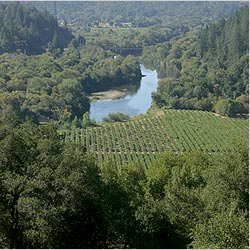
Russian River Valley, Sonoma County

Russian River Valley, Sonoma County

cool-climate chardonnay.  Its name on a wine label commands immediate respect.  The river itself streams down from Mendocino through the heart of the valley, flowing into the Pacific Ocean north of Bodega Bay. The valley vineyards appear as islands as the road emerges from the thick pine and redwood forest.  The Westside Road is a beautiful, scenic thoroughfare connecting Healdsburg with River Road and the Guerneville area and home to some of the appellations finest winemakers.  Today, we are visiting a patriarch among California producers of Burgundian wines and a fairly new operation on a renovated, historic site, both offering fine wine and unique tasting opportunities along Westside Road.

WILLIAMS SELYEM

IMG_1930

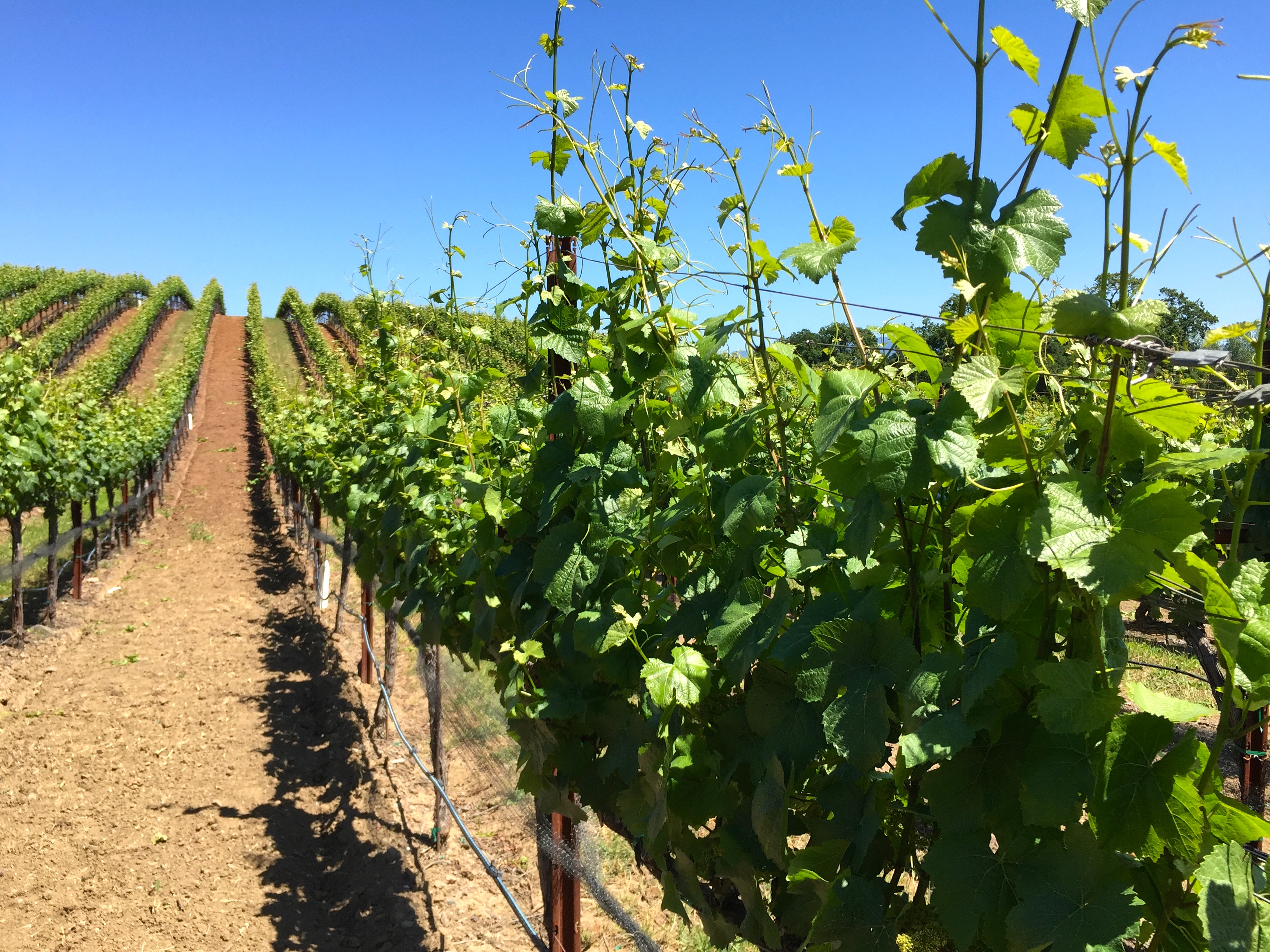
Estate vineyard at Williams Selyem

Simply stated, Williams Selyem produces some of the best wine California has to offer.  Admittedly a customer for several years, I find  all of their releases to be balanced, complex with layered, lingering flavors.  Opposed to some of the luscious “fruit bombs” from the Valley,  Williams Selyem wines are more austere, medium-bodied, with flavors and texture than appeals to palates of all levels.

What began in the late 1970s  as two friends making wine in a Forestville, CA garage, Ed Selyem and Burt Williams have, in a few decades, turned their hobby into an aptly self-proclaimed “cult status winery of international acclaim”.  After some early renditions, the first vintages of the Williams Selyem labels were released in 1984 and soon after, accolades for their single-vineyard pinot noir from Richioli Vineyards began to set them apart from other wineries and

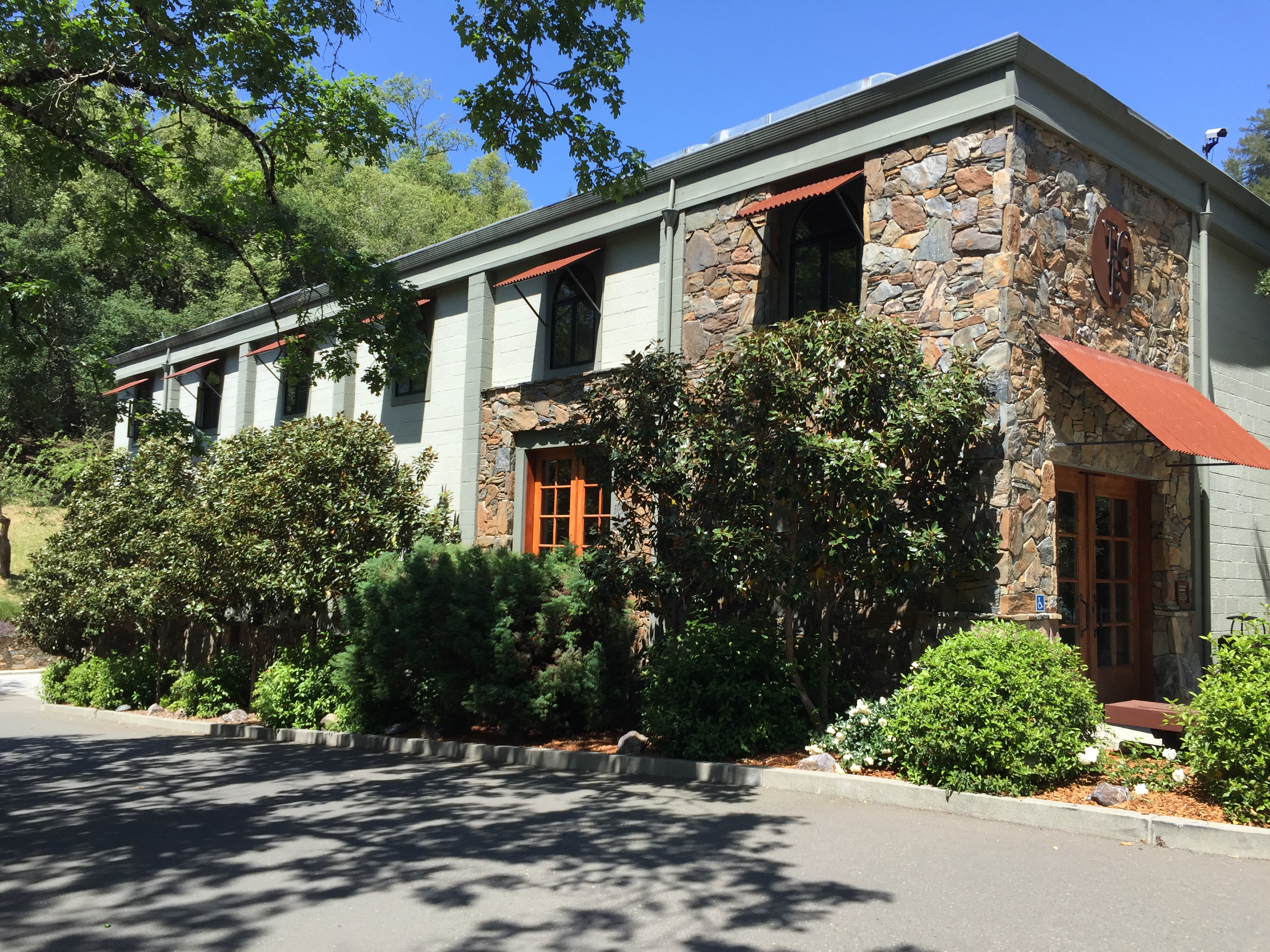
Williams Selyem Winery

Williams Selyem Winery

build a reputation for the Russian River Valley as a premier wine region.  Burt and Ed sold the winery to John Dyson in the late 1990s who later relocated it to the Westside Road property, establishing the first estate vineyards and completing a new sate-of-the-art winery in 2010.

Weathering a change of ownership, head winemaker and location, Williams Selyem has more interest in their wine than they can handle and still produce world-class pinot noir, chardonnay and zinfandel sourced from our finest vineyards.

I have been a patron of Williams Selyem for more than a decade and did not know that they produced a 100% chenin blanc wine, a Loire Valley grape that has made somewhat of an international comeback in recent years in South Africa and other regions.  Available only at the winery, the 2012 Williams Selyem Chenin Blanc Vista Verde Vineyard ($30), sourced from a San Benito County vineyard.  As one would expect, they have succeeded in  balancing the tartness of this varietal by pushing the fruit flavors forward.  I recommend this wine as a vibrant, crisp summer wine, but it is only available to those willing to explore the depths of Westside Road, past the one-way bridge to Williams Selyem.  Your reward is a lovely property with  impressive tasting room, tour program and space for a nice picnic.

2013 Williams Selyem Unoaked Chardonnay

2013 Williams Selyem Unoaked Chardonnay

One of the spring releases that I was picking up was the 2013 Williams Selyem “Unoaked” Chardonnay Russian River Valley ($39), fermented in stainless steel, once again balancing a crisp acidity with full texture and mouth feel.  This exceptional wine can be perfectly paired with sushi, crab, river trout or enjoyed al fresco.

Williams Selyem has received acclaim for single-vineyard chardonnay sources from the Allen, Drake and Heintz Vineyards, all rated in the mid to high 90-point range.  I prefer the Heintz Vineyard located in Occidental, CA, family owned for over 100 years with an abundance of dirt called Goldridge Sandy Loam.

Two more tasting room exclusives, both estate pinot noir, were the next pours. The initial vintage 2012 Williams Selyem Pinot Noir “Luella’s Garden,” named after previous property owner Leulla Litton, who kept a garden where the vineyard now stands, was very fruit-forward with rich concentrated cherry and spice flavors.

Unlike the single clone “Leulla’s Garden,” the 2012 Williams Selyem Block 10 Mass Selection Estate Vineyard Pinot Noir is planted to 18 different Pinot Noir clones and is reminiscent of the Burgundy-style wines, medium-bodied with layered flavors and a pleasant minerality.

Williams Selyem Central Coast Pinot Noir

Williams Selyem Central Coast Pinot Noir

Williams Selyem produce an array of single-vineyard pinot noir releases from esteemed vineyards like Bucher, Ferrington and Allen. Past vintages, the 2008 Hirsch Vineyard Pinot Noir and the 2009 Precious Mountain Pinot Noir both received near perfect 99-point ratings from wine Enthusiast magazine.

Today, I received a bottle each of two pinot noir releases, both different and uniquely

Williams Selyem Central Coast Pinot Noir

Williams Selyem Central Coast Pinot Noir

notable. The 2013 Williams Selyem Central Coast Pinot Noir ($39) is sourced from the Vista Verde Vineyard in San Benito County, near the small town of Tres Pinos where the soil is heavily laden with limestone.  The result is usually an earthy wine with beautiful bouquet, firm tannins and full floral and spice flavors.

Highly rated, vintage to vintage, the 2013 Williams Selyem Sonoma Coast Pinot

Noir ($52), sourced from the Hirsch and Estate Drake Vineyards, is often their most complex with flavors of cherries, cranberry, orange, vanilla and even chocolate among others.

THOMAS GEORGE WINERY

Although their first vintage was 2007, the Thomas George Winery is steeped in Westside Road history.  The picturesque, recently renovated property was previously owned by Russian River Valley icon, Davis Bynum, the first winemaker to establish a winery on Westside Road and use the Russian River Valley

Thomas George Winery

Thomas George Winery

appellation designation.  The Baker Family, dad Thomas and son Jeremy purchased the Bynum Winery and assembled three estate vineyards with fully intention to carry on a tradition of fine wines from the property.

We met up with Operations Manager Sean Tevik who showed us around the property including the vineyards and the impressive tasting room cave.  He explained that nine staffers handle all facets of the operation that

Baker Ridge Vineyard

Baker Ridge Vineyard

encompasses 8,000 cases of wine produced annually, some in concrete eggs.  Thomas George owns around ten concrete “eggs” that serve as a new approach other than oak or stainless steel to construct chardonnay.  Unlike stainless

steel, concrete is porous and permeable to water and can impact the flavors of the wine.

Our first tasting, the 2012 Thomas George “Concrete Egg” Estate Chardonnay ($42), aged sur lie for nine months with no malolactic fermentation had a nice tartness

concrete egg at Thomas George

concrete egg at Thomas George

and minerality that was balanced by the full-bodied tropical flavors.  The larger production 2011 Thomas George Estate Russian River Valley Chardonnay ($34), comes from 70% oak barrels and 30% concrete eggs with some malolactic fermentation giving it a nice rich mouthfeel with tropical and stone fruit flavors.

Next we tasted a flight of three pinot noir from different blocks within the Baker Ridge Vineyard, each from a unique micro-climate. East-facing for ample morning sun, the 2011 Thomas George Baker Ridge Backbone Block Pinot Noir ($75)comes from a cooler, protected slope, producing less than 100 cases of a deeply rich wine with a complex, floral nose and dark fruit flavors.  A lovely wine that will become exceptional with age.

From a south-facing slope that receives sun until 7 pm during the peak growing season, the 2011 Thomas George Baker Ridge Dexter’s Block Pinot Noir ($75) exhibited intense floral aromas and a rich, concentrated and complex flavor profile.  The 2011 Thomas George Baker Ridge Russian River Valley Pinot Noir ($70) originating from multiple cloned vines planted decades ago by Davis Bynum, exudes floral aromas and dark berries and spice on the palate.

2011 Thomas George Baker Estate Vineyard Pinot Noir

2011 Thomas George Baker Estate Vineyard Pinot Noir

We finished the pinots with the 2012 Thomas George “Barrel Selection” Pinot Noir ($50) and the 2012 Thomas George Cresta Ridge Vineyard Pinot Noir ($60), the later as full-bodied as any tasted.

Our tasting concluded with a delightful grenache sourced from local vineyard management icon, Ulises Valdez’s El Diablo Vineyard. The 2011 Thomas George Grenache El Diablo Vineyard  was very fruit forward with a satisfying finish that lingered.

Valdez, an immigrant and self-made man, farms and manages over 800 acres of vineyards, mostly in the Russian River Valley including all the Thomas George estates.

Thomas George Winery intends to address all needs, grape to glass.  Cave tours, beautiful picnic facilities, locations for

Cave and tasting room at Thomas George Winery

Cave and tasting room at Thomas George Winery

outdoor weddings, special events await wine club members and those looking for a unique wine experience in the heart of the Russian River Valley. Wine club members also enjoyed reduced rates on the four upscale guest houses on the site.

Westside Road is synonymous with the Russian River Valley which is synonymous with, arguably, the best pinot noir and chardonnay produced outside of Burgundy, France. Williams Selyem and Thomas

George are but a few of the many great experiences available to those who travel “The Road.”


Healdsburg and the Dry Creek Valley


Sonoma County is known for great appellations like the Russian River Valley, Sonoma Coast and Alexander Valley that produce famous pinot noir and chardonnay with the aid of coastal

Endeavor Vineyard in the Dry Creek Valley

Endeavor Vineyard in the Dry Creek Valley

influences.  The overshadowed, more inland Dry Creek Valley appellation serves as the region’s “banana belt,” somewhat protected from the morning fog, causing warmer average temperatures.  As a result, Dry Creek Valley boasts some of the best zinfandel and sauvignon blanc, anywhere in the world.

Another attraction of the Dry Creek appellation is that all of its wineries are within a few miles from

Healdsburg Plaza

Healdsburg Plaza

quaint downtown Healdsburg, recently described as “Carmel North” for the upscale lodging, restaurants and shopping that is available on the plaza.  If the thought hasn’t already crossed your mind, this spectacular area is ideal for your next wine-tasting getaway. Luckily, Healdsburg is 12 miles from my new home, so I can do some quick on-site research to help entice you.

The Dry Creek Valley is rooted (pun intended) in California’s wine history and was one of the first areas to be recognized with an American Viticulture Area (AVA) designation.  With vines dating back 140 years, the area was booming in the late 1800s with nine wineries and over 800 acres of vineyards.  The boom was interrupted by Prohibition, leaving only Frei Brothers and J. Pedroncelli post-repeal, both still producing fine wine.

The area’s current winery map, boasting over 9,000 acres under vine, includes historic patriarchal producers and a plethora of new start-ups that are focusing on organic, sustainable farming, remarkable zinfandel and the exploration of new varietals.  On a recent gorgeous afternoon, we visited two wineries, one established in 1972, the other in 2007, that are representative of the Dry Creek Valley profile.

TRUETT-HURST

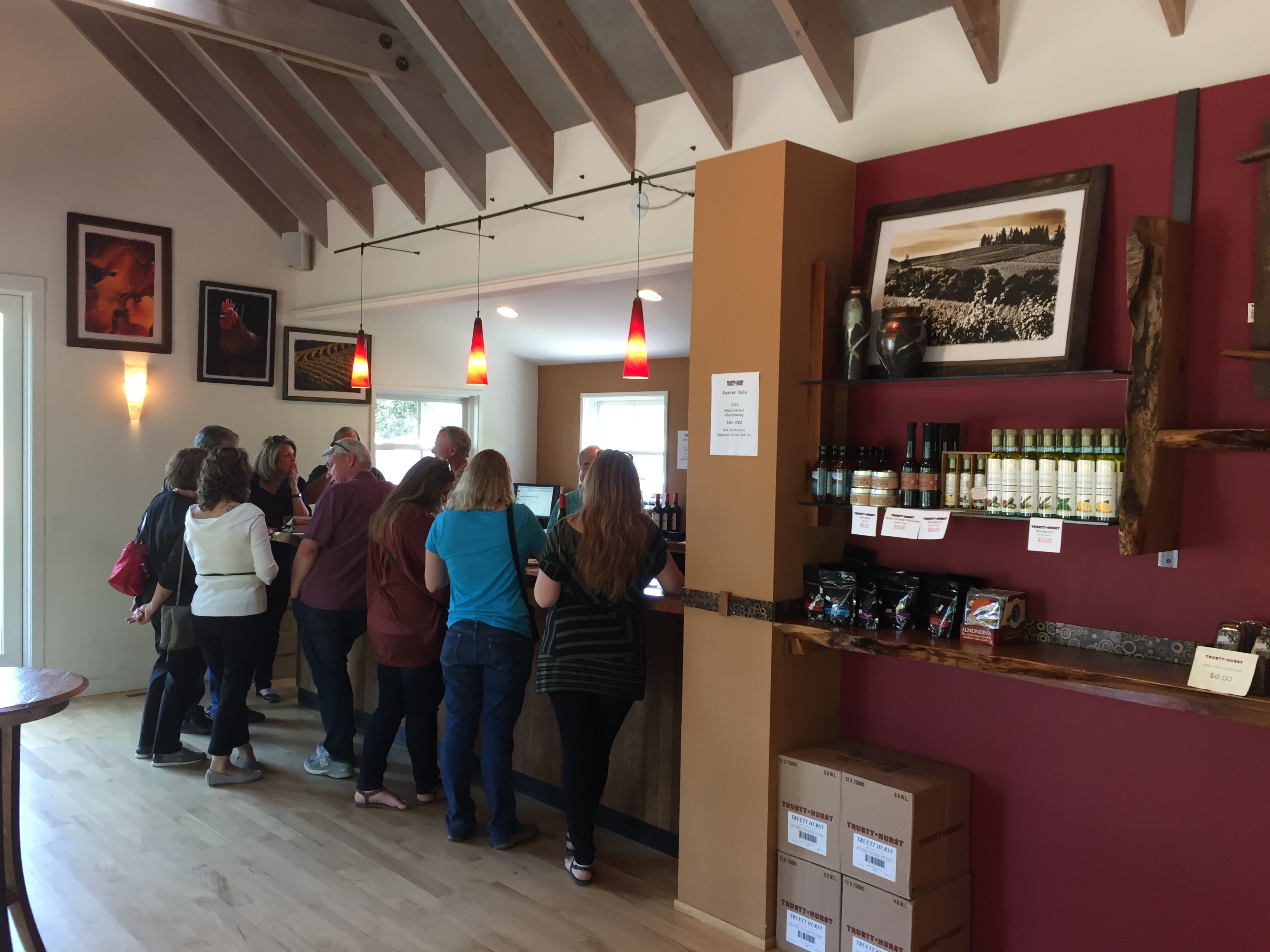
Part of a large, wine-producing conglomerate, Truett-Hurst was established in 2007, as

Truett-Hurst Tasting Room

Truett-Hurst Tasting Room

a flagship winery to create high-end wines using “holistic” biodynamic farming methods.  The estate vineyards, included in a magnificent setting for picnics and strolling, are composed of zinfandel and petite sirah vines from cuttings that the Italian immigrants brought over a century ago. To extend their palate of wines, Truett-Hurst also source chardonnay, pinot noir and cabernet sauvignon grapes from nearly Russian River and Napa Valleys.

Our tasting began with the 2014 Truett-Hurst Gewürztraminer Russian River Valley ($24) expressing fragrant bouquet and crisp flavors of pear, melon and

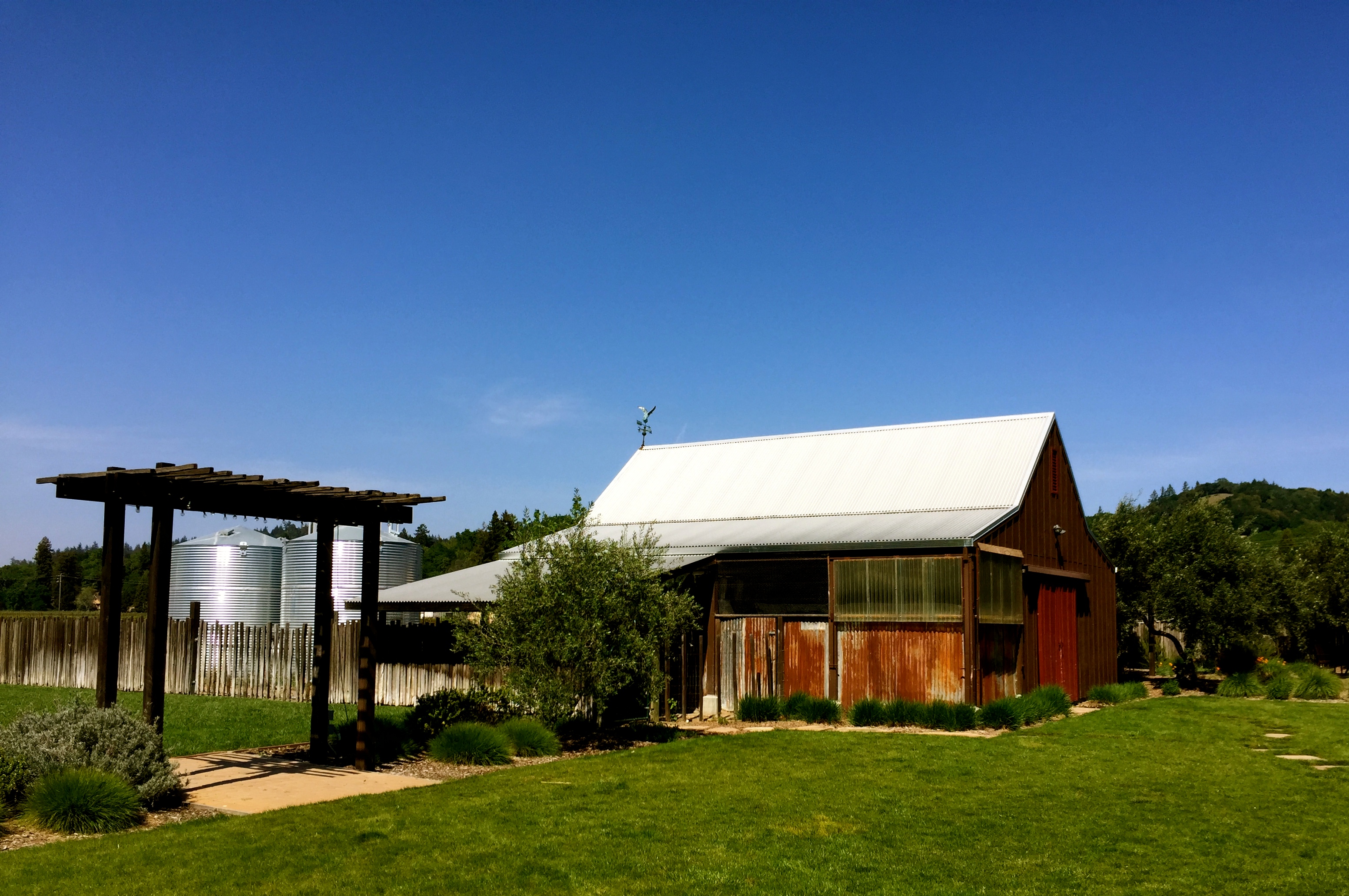
Barn at Truett-Hurst

Barn at Truett-Hurst

honeysuckle and a very dry 2013 “Salmon Run” Zinfandel Rose Dry Creek Valley ($18) with pleasant, soft flavors of peach and strawberry.  Specialty, boutique rose’ is popular and the full-flavored zinfandel grape seems to be conducive to the style.

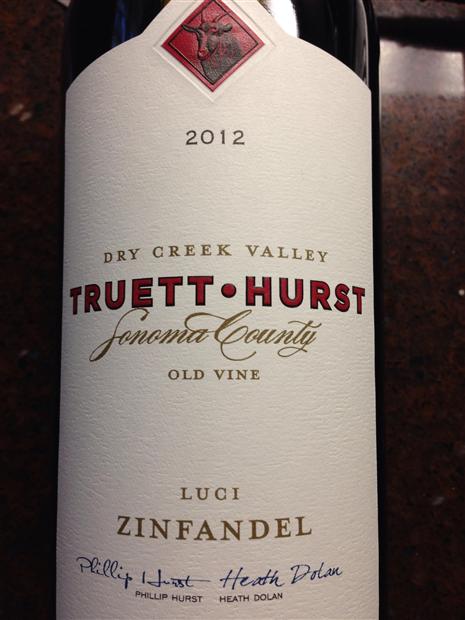
Next, a flight of their Dry Creek Valley zinfandel releases was in order beginning with the jammy 2013 Truett-Hurst “Luci” Zinfandel ($35), named for Lucifer, the

Truett-Hurst "Luci" Zinfandel 2012

Truett-Hurst “Luci” Zinfandel 2012

property’s lone black goat, clearly expressing the richest texture and body with delightful  blackberry overtones.  The lighter 2013 Truett-Hurst “Rattler Rock” Zinfandel ($33) provides a different alternative with loads of cherry, pepper and very soft tannins. I now have both options in my cellar.

The single-vineyard 2013 Truett-Hurst Bradford Mountain Grist Vineyard Zinfandel ($35) is still young, but has much going on with nice layered flavors.  The rich texture, spice and lingering finish are all indications that this

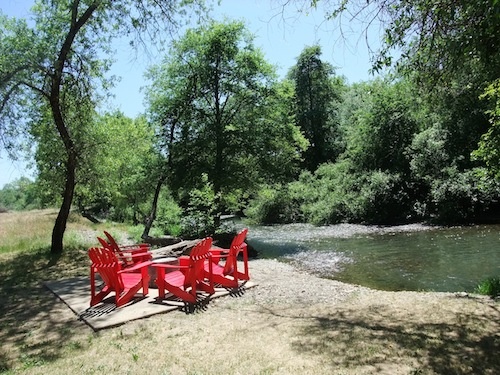
Adirondack chairs along the river at Truett-Hurst

Adirondack chairs along the river at Truett-Hurst

wine will be a “gem” in a few years.

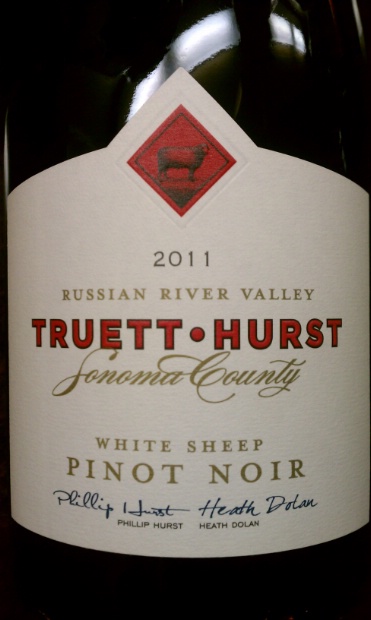
The winery’s two pinot noir releases, from different micro-climates within the nearby Russian River Valley, also offer the consumer distinct styles of the varietal. Probably named after the friendly beast that I petted on my walk, the lighter Truett-Hurst Pinot Noir “White Sheep” ($40), from the nearby Deer

Creek area in west Russian River Valley, has pleasant spice and raspberry flavors.  From the heart of the valley, the full-bodied Truett-Hurst Pinot Noir “Black Sheep” ($40),  has an expressive nose and loads of cinnamon, vanilla and berry flavors, fully balanced.  It’s difficult to compete in one of the world’s

Truett-Hurst "White Sheep" Pinot Noir

Truett-Hurst “White Sheep” Pinot Noir

finest pinot noir markets, but these reasonably priced options are recommended.

An unusual blend of syrah (75%) and zinfandel (25%), the 2013 Truett-Hurst “Dragon Fly” Red Blend ($35) represents the new Dry Creek Valley persona, innovation with zinfandel ever-present. The wine is still young, but nice hints of vanilla with plenty of oak project a very promising future.  We finished our tasting with a nice cabernet from prestigious Rutherford in the Napa Valley.  The reasonably priced 2012 Hurst Family Collection “Osprey” Cabernet Sauvignon NV ($52) has soft, balanced flavors and tannins, a true value.

The grounds surrounding the tasting room/winery have several picnic areas for small or large groups, live music on Saturdays, an herb garden, trails, goats, grape vines and a flowing river.  The Truett Hurst Winery is a place to relax, but get serious about enjoying good wine.

DRY CREEK VINEYARDS

Following an M.I.T. education and some time in the work force, David Stare made his

Dry Creek Vineyards Founder David Spare

Dry Creek Vineyards Founder David Spare

way to California in the 1960s, founding Dry Creek Vineyards in IMG_13441972 and, eventually, providing the leadership for the re-emergence of the Dry Creek Valley as a prime wine region.  Today, with all their history and prominence, they are still producing high quality wines at favorable prices.

Ironically, our tasting began with the 2014 Dry Creek Vineyards Chenin Blanc ($12) from Clarksburg, near the Sacramento Delta and far from the Dry Creek Valley. This re-emerging varietal, produced in stainless steel, has a good, crisp minerality, tropical fruit flavors, a long finish and a fabulous price.  Everyone should have at least one chenin blanc in their cellar.

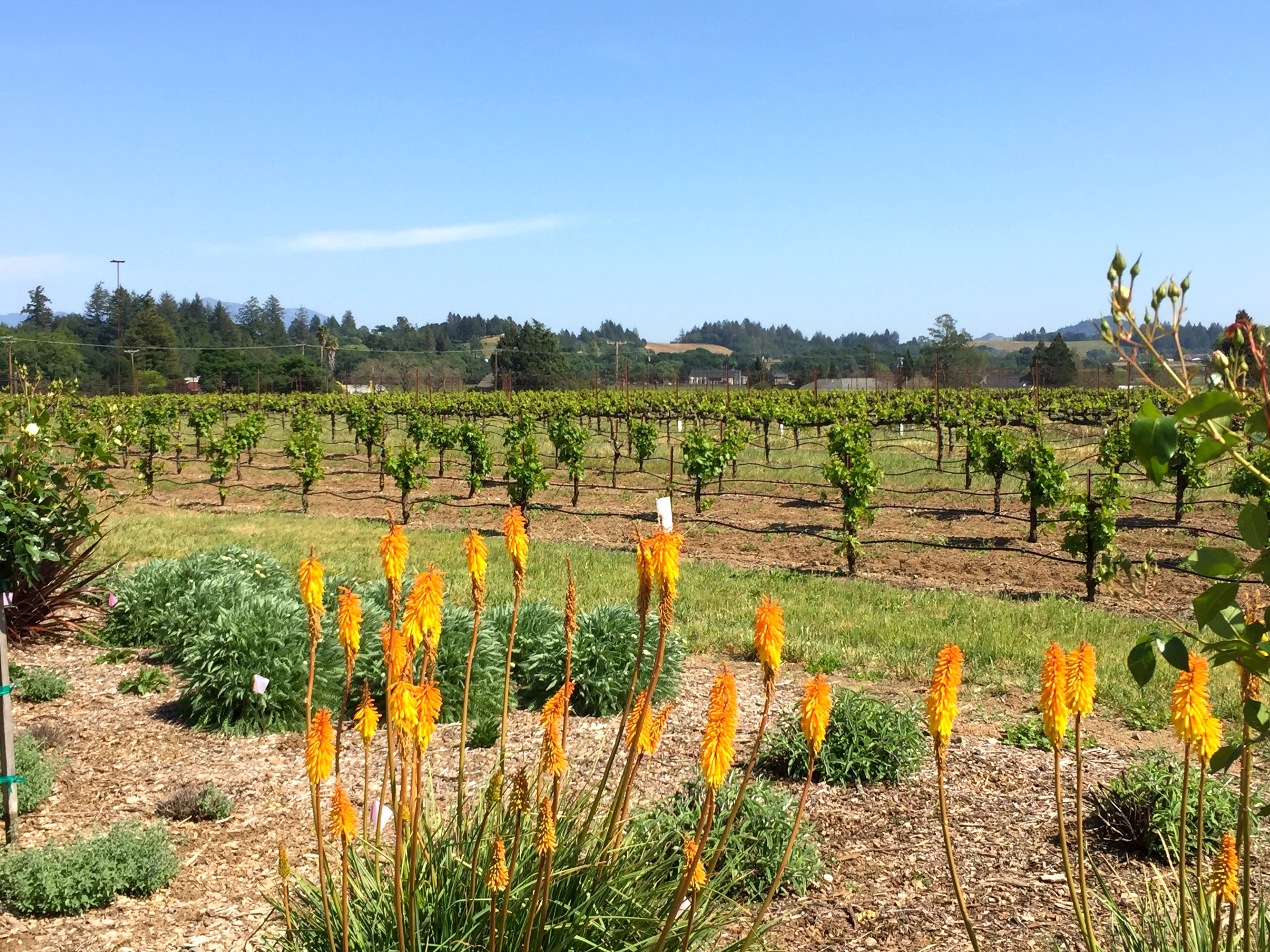
Vineyards at Dry Creek

Vineyards at Dry Creek

The flight of three sauvignon blanc releases is yet another reminder of how fine wines can bring you to another level, vetoing anything you have previously enjoyed.  In the 1970s, Dry Creek Vineyards followed Robert Mondavi’s lead, re-naming their sauvignon

blanc releases Fume Blanc’  The 2013 Dry Creek Vineyards Fume’ Blanc is the sauvignon blanc varietal from the Russian River Valley where, apparently, there is more leaf growth, hence canopy, to protect the grapes from wind, fog and heat.  The winery’s description, “the palate repeats vibrant aromatic themes” is apparent with the crisp, citric aromas and flavors.

The next wine originates from the first Sauvignon Blanc vines planted in the Dry Creek Valley, decades ago.  The 2013 Dry Creek Vineyards Sauvignon Blanc ($18), awarded 90-pt by Wine Enthusiast, expresses a ripe melon on-the-nose, adding soft citrus and tropical flavors aided by small amounts of a unique clone,

foreshadowing the next wine.

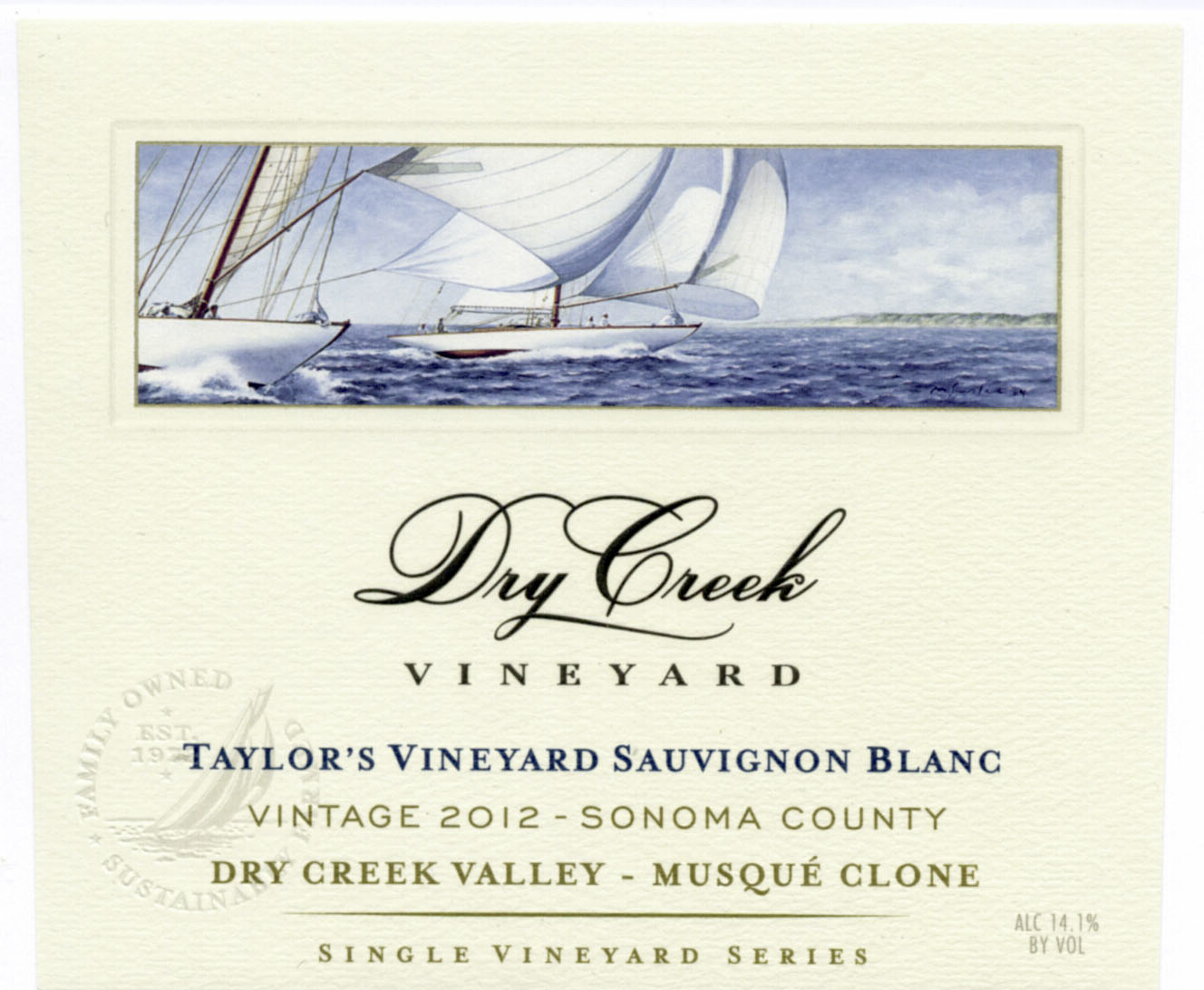
Once you have tasted the 2013 Dry Creek Vineyards Sauvignon  Blanc Musque’ Taylor Vineyard ($25), you can’t go back. Take the previous wine, overlay a

2012 Taylor Vineyard Sauvignon Blanc Musque

2012 Taylor Vineyard Sauvignon Blanc Musque

very rich, creamy mouthfeel with many layers including hints of zesty orange peel, and

suddenly, the “musque” is the only white wine you need or desire. Highly recommended!

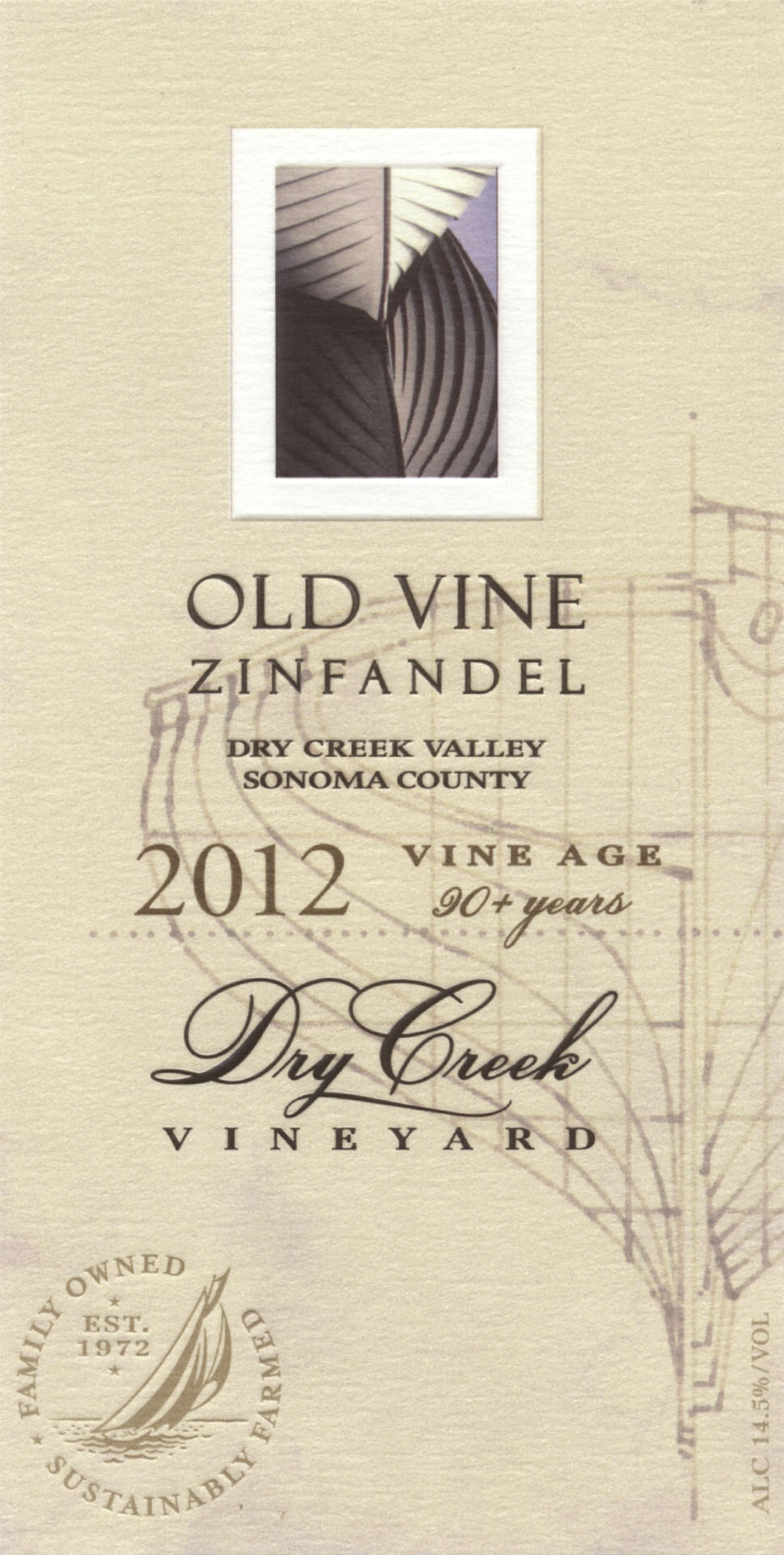
Claimed to be the first “old vine” designation in California, the flagship 2013 Dry Creek Vineyards Old Vine Zinfandel ($30), from 80-120 year old estate vines, is composed of 23% petite sirah, adding to its richness and deep berry flavors, earning a 90-p

2012 Dry Creek Vineyards "Old Vine" Zinfandel

2012 Dry Creek Vineyards “Old Vine” Zinfandel

t rating from Robert Parker.

The 2012 Dry Creek Vineyards Cabernet Sauvignon ($25) and the 2011 Cabernet Merlot ($25) are actually blends similar to those from the left and right banks of Bordeaux,

Dry Creek Vineyards

Dry Creek Vineyards

each featuring the addition of malbec, cabernet franc and petite verdot.  Both wines had balanced, smooth, rich flavors, high ratings and a reasonable price.

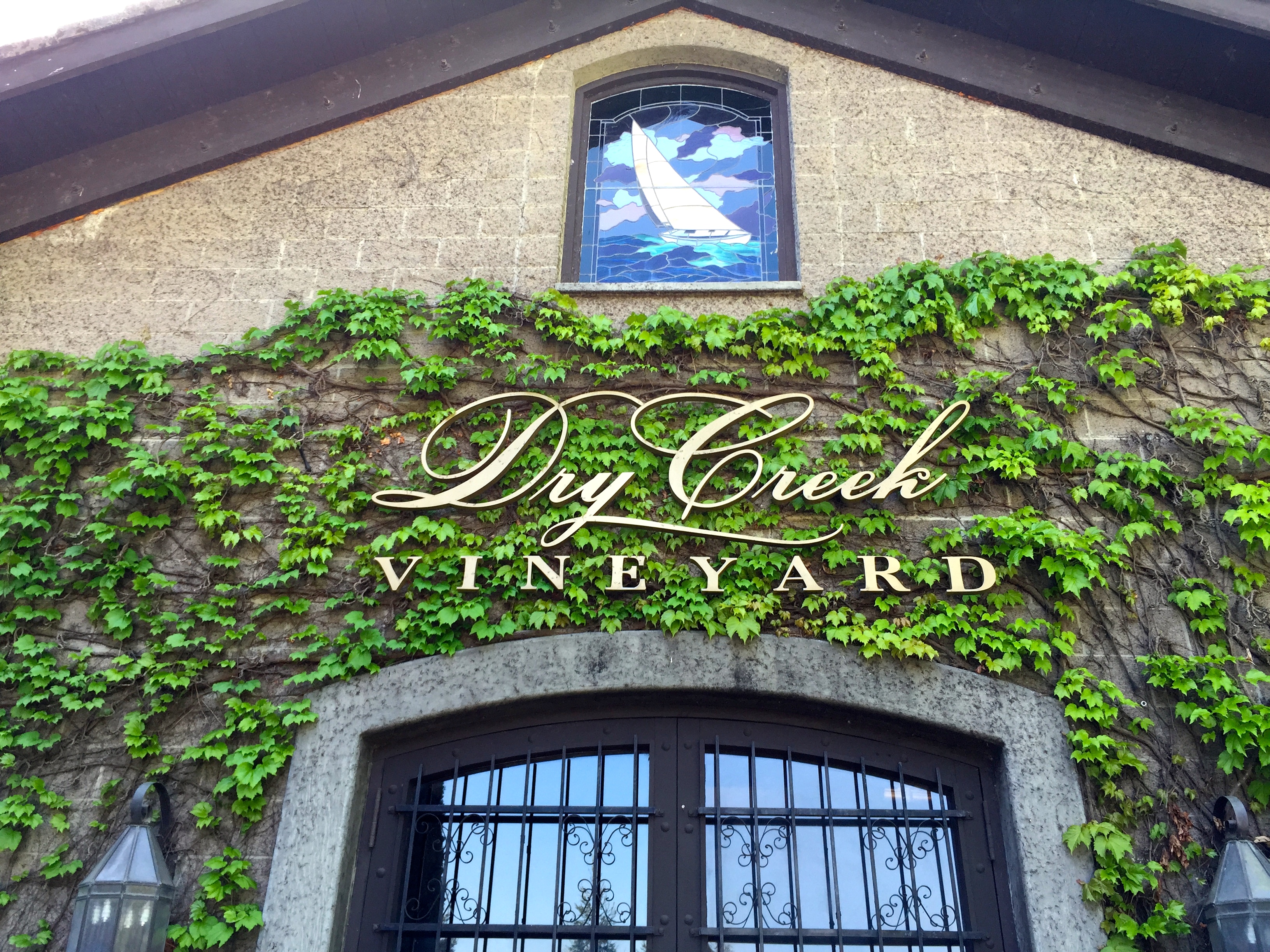
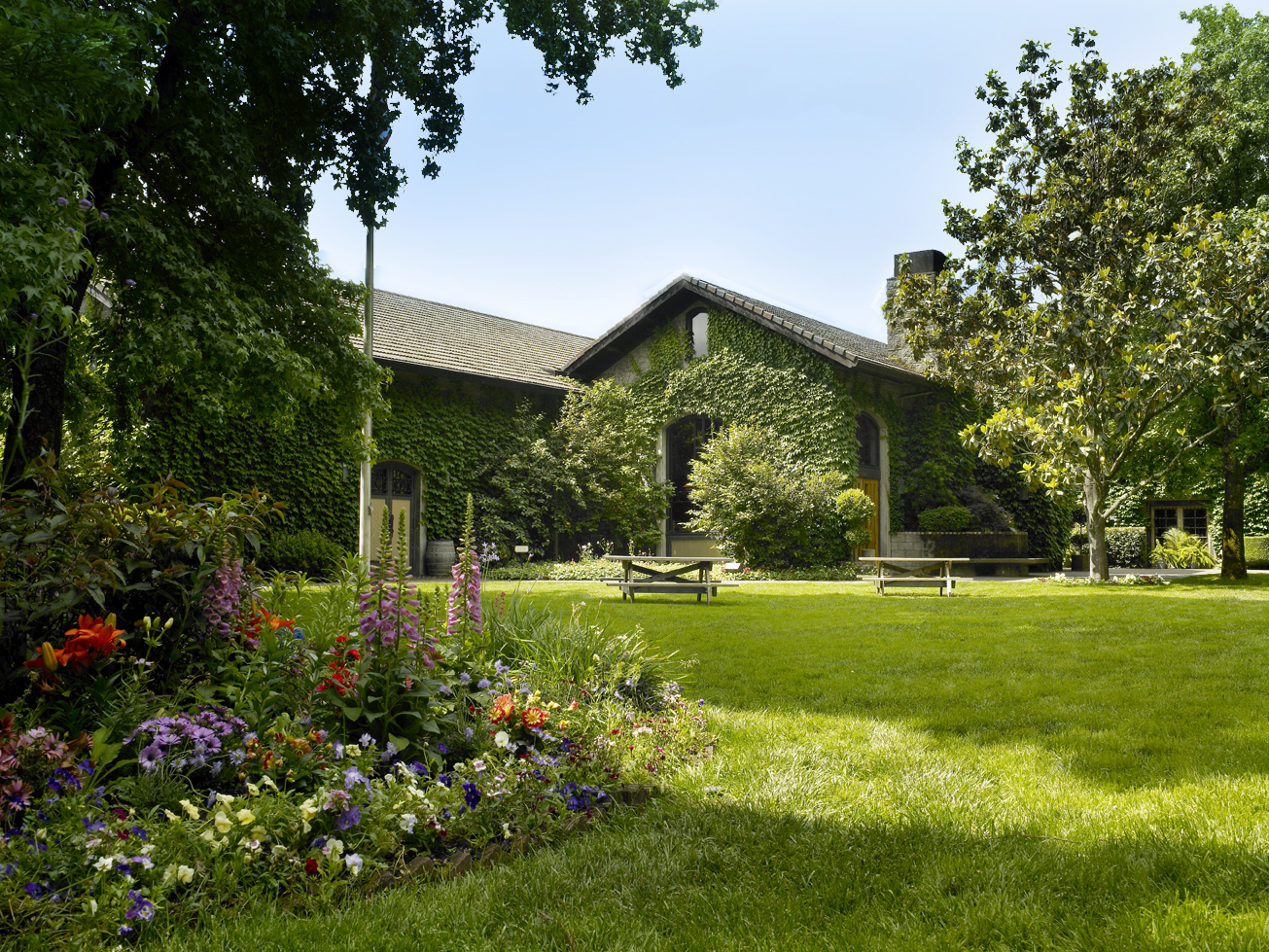
The grounds and tasting room at Dry Creek Vineyards are befitting a patriarch with ivy-covered walls and picnic facilities amid lush landscaping. More importantly, they haven’t sacrificed quality as their business and reputation has grown.

Healdsburg and the Dry Creek Valley are located 60-90 minutes north of San Francisco along the Redwood Highway.  There are also two flights per day from LAX to the Santa Rosa Regional Airport, less than 10 miles from the heart of Healdsburg.

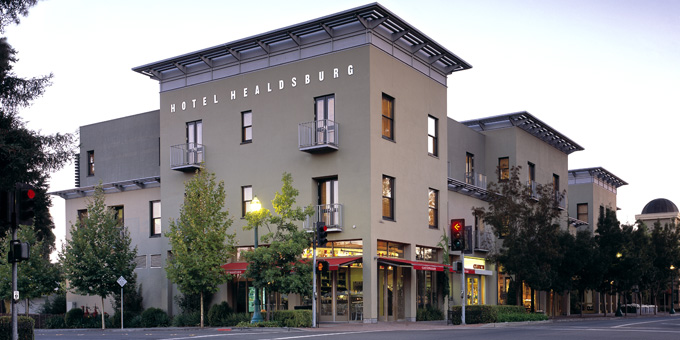
Once you arrive, options for lodging and dining are plentiful and varied. For a special experience, I recommend the Hotel Healdsburg on the downtown plaza or the stately Casa Madrona property a few minutes from town.  Healdsburg restaurants range from good burgers and salads to the full-on “foodie” experience at Dry Creek

Hotel Healdsburg

Hotel Healdsburg

Restaurant or Barndiva, not to exclude the Dry Creek General Store, a popular stop for lunch while touring the vineyards.

The abundance of nearby Dry Creek Valley wineries including, among others, Mazzocco, 32 Winds, Manzanita Creek, Kokomo and, of course, Truett-Hurst and Dry Creek Vineyards sets the stage for your next perfect Sonoma wine country sojourn.


New Whites of Spring


In addition to longer days, spring in most places means enjoying being outside in the early evening, appreciating the sunset with a nice white wine.  Although chardonnay and sauvignon blanc are among my favorites to enjoy with or without food, today is about breaking out of the box and investing some time exploring alternative whites whose only negative feature is that very few people are aware of them.  The fact is that with little effort and some curiosity, one can find captivating white wines that may just “float your boat.”   What follows are some suggested full-flavored varietals that can change the discussion at any gathering or dinner.

Gruner Veltliner

Admittedly, most of the Gruner Veltliner that I have stumbled on appeared on some

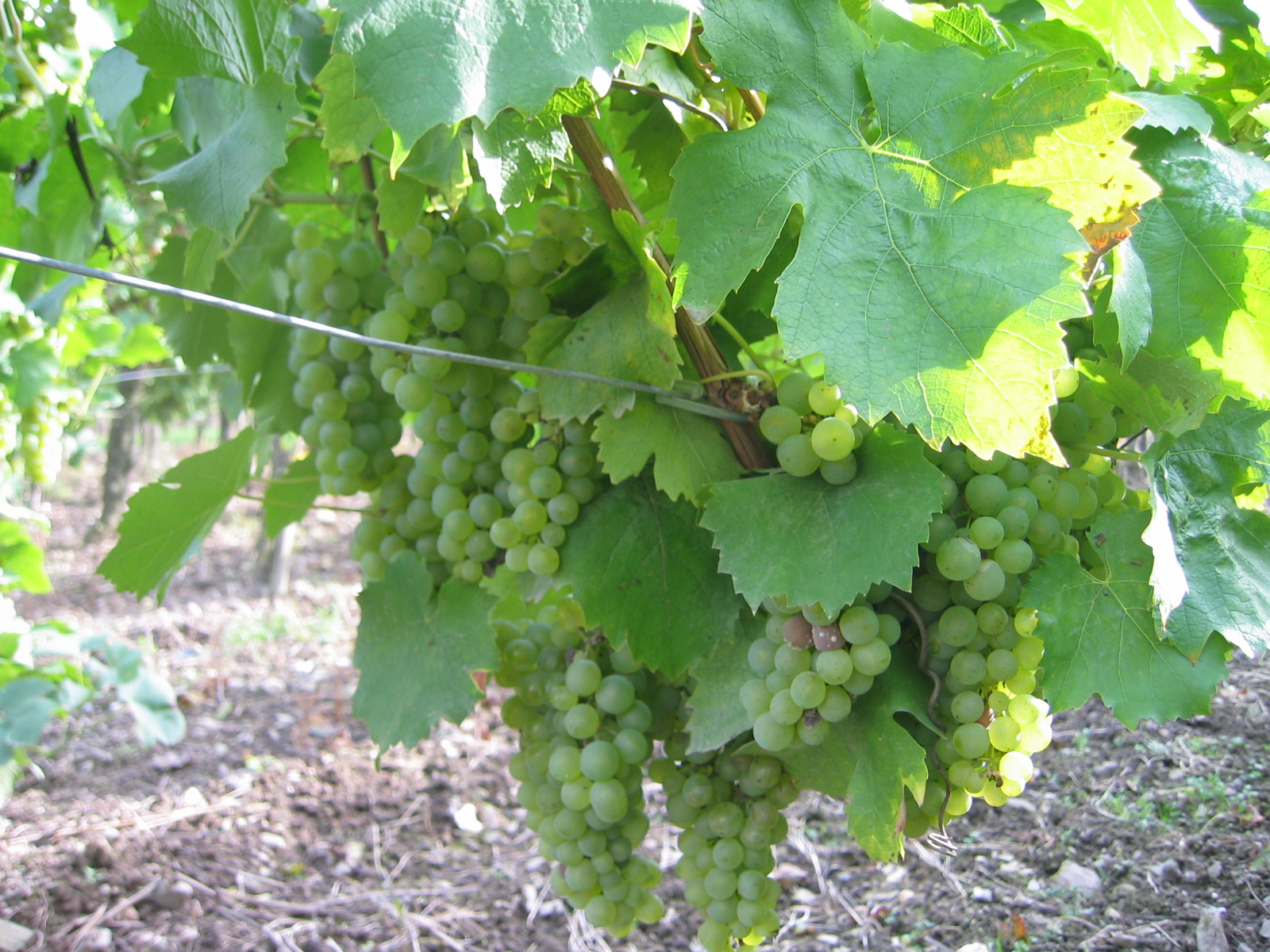
Gruner Veltliner vine

Gruner Veltliner vine

restaurant wine list when I’m in exploration mode.  Mostly grown in Austria where it accounts for more than one-third of the country’s production, Gruner (“Green”) Veltliner, while not abundant in the States, is grown in Oregon, Washington State, the Fingerlakes region of New York and in many diverse regions of California including the Santa Ynez Valley, Monterey County and Napa Valley.

While known for citrus and stone fruit flavors, crispness and minerality is what sets it apart from other white wines. Enjoy it with seafood, shellfish, triple crème cheeses like Brillat-Savarin as well those hard aged like Mimolette.

Von Strasser Gruner Veltliner from Napa Valley

Von Strasser Gruner Veltliner from Napa Valley

From Napa Valley’s Von Strasser Winery, the first producer of Gruner Veltliner in California, the 2010 Von Strasser Gruner Veltliner Diamond Mountain District ($35), fermented in stainless steel, remains very popular with a nice, tart minerality and green apple flavors, earning a 90-point rating from Wine Spectator magazine.

While traveling through the northern Oregon’s Willamette Valley, I enjoyed a 2010 Chehalem Ridgecrest Vineyard Gruner Veltliner ($24) from one of their most respected winemakers. The efflorescent savory flavors of herbs and white pepper truly express the vibrancy of the varietal and the current 2013 vintage, available now, has received good reviews.

Noted for the production of many alternative whites like chenin blanc, viognier, verdelho, the Clarksburg AVA in the Central

2010 Dancing Coyote Gruner Veltliner Clasrksburg

2010 Dancing Coyote Gruner Veltliner Clasrksburg

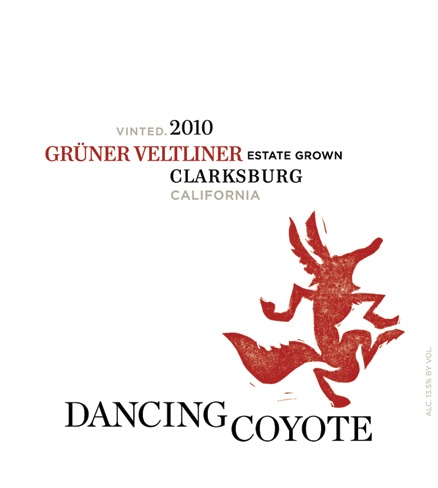
Valley near the Sacramento Delta also produces gruner veltliner such as the affordable 2009 Dancing Coyote Clarksburg Gruner Veltliner ($12), reviewed as a very drinkable wine for the price.

Semillon

Most people have heard of the great Cabernet Sauvignon or Merlot-based red blends from the Bordeaux region of France, but  what about the white varietals?  Bordeaux white blends consist of two grapes, sauvignon blanc and semillon, known for its exposure to botyrtis cinerea, the “noble rot,” to create the world-famous Sauternes dessert wines. Single varietal semillon is widely produced in Australia where exposure to warmer temperatures push the floral and fruit flavors forward.  While semillon production is rare in California, my favorites, once again, emanate from diverse regions.

2012 Foresight Semillon Anderson Valley

2012 Foresight Semillon Anderson Valley

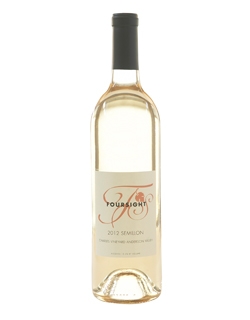
Last year, I had an opportunity to taste the 2012 Foresight Charles Vineyard Semillon ($28) from the Anderson Valley region and purchased two bottles.  Very rare in the Valley, this wine expresses toasty, creamy qualities, enhancing the floral and mineral facets that please the palate.

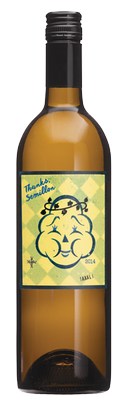
It seems repetitive to continually applaud wines from Bonny Doon Cellars, but they keep sending me excellent releases.  Half way through the writing of this prose, I received two bottles of something winemaker Randall Grahm calls the 2014 Bonny Doon “Thanks, Semillon” ($24), a single-varietal from a Yountville vineyard in the Napa Valley.  Opening the Gary Taxali labeled wine for research, we found melon, fig and lime on the nose with nice floral,

2014 Bonny Doon "Thanks Semillon"

2014 Bonny Doon “Thanks Semillon”

citrus flavors and lingering minerality throughout the finish.  Another gem that renews my passion to remain a D.E.W.N. member forever.

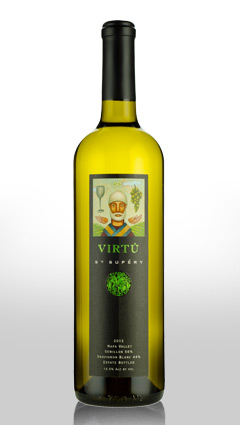
California’s best example of a white Bordeaux blend, half semillon and sauvignon blanc, is the 2012 St. Supery “Virtu” from their Dollarhide Estate Vineyard in the Napa Valley. Sur lie maturation leads to a toasted creaminess and vibrant flavors of lime, fig and pear. St. Supery Winery offers fine wines on a beautiful property outside of St. Helena and should be included in your next visit to the area.

Semillon pairs well with gruyere or camembert cheeses.  Of course, if you

St. Supery "Virtu" Napa Valley

St. Supery “Virtu” Napa Valley

want to go “heavenly,” treat yourself to a French Sauternes paired with a southern Oregon Rogue River Blue with honey.

Riesling

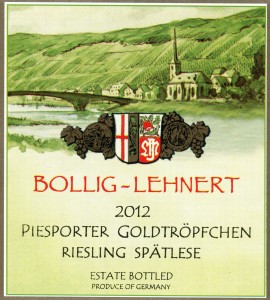
The simplest description of riesling is a combination of fruit and mineral and, maybe, some petrol added in.  My exposure to the elements of a fine German riesling came several years ago when I tasted a 1996 Bollig Lehnert Piesporter Goldtropfchen Riesling Spatlese ($17) and experienced the successful marriage of full fruit flavors with a soft minerality, often described as “petrol.”

The riesling grape is “terroir expressive,” adapting and

Bollig-Lehnert Piesporter Goldtropfchen Riesling Spatlese

Bollig-Lehnert Piesporter Goldtropfchen Riesling Spatlese

demonstrating different personalities in Germany, Alsace, South Australia, California, New York and Washington State.  In its origin Germany, styles generally differ from the Kabinett lighter style to the fully ripened Spatlese. 

High quality riesling from Germany and South Australia can be easily found at outlets or online.  Very nice riesling from the Fingerlakes region of New York are also recommended, taking a bit more research. However, there is readily available riesling from California and Washington State that can meet the standards of those most serious about wine.

Named for Beethoven’s Third Symphony, the “Eroica”

Chateau St. Michelle Ethos Late Harvest Riesling from Washington State

Chateau St. Michelle Ethos Late Harvest Riesling from Washington State

series of riesling wines from Chateau St. Michelle in Washington offers the best value to price ratio of any releases in the US. Many outlets stock various vintages of the Chateau St. Michelle “Eroica” Riesling ($22) that expresses many characteristics previously described.  Although this wine can satisfy most palates, those seeking something special can explore the Chateau St. Michelle “Eroica” Gold Riesling ($30) or, for those above my pay grade, the Chateau St. Michelle “Eroica” Single Berry Select Riesling ($200), boasting a 97-point rating from Wine Advocate magazine.  If your curiosity is still not quenched, full self-indulgence can be found in the 2013 Chateau St. Michelle Ethos Reserve Late Harvest Riesling ($40), dessert in a bottle.

Defined as the “absolute embodiment of springtime,” the 2013 Bonny Doon “The Heart Has No Riesling” ($16) is always a personal favorite as well

Bonny Doon "The Heart Has No Riesling"

Bonny Doon “The Heart Has No Riesling”

as the 2011 Thomas Fogarty Riesling “Skyline,” ($15.5) both from Central Coast vineyards. For a luscious cheese pairing, California “Humboldt Fog” or French “Morbier” are both available at fine grocery outlets.

Rhone Wines

Red and white blends from the southern Rhone Valley are renown throughout the world.  Chateaunef-du-Pape, Gigondas and other

Thomas Fogarty Winery above the Silicon Valley

Thomas Fogarty Winery above the Silicon Valley

appellations in the region produce arguably some of the world’s finest wines. Their reputation allows first-rate restaurants, such as The Girl and the Fig in Sonoma to offer an extensive wine list of exclusively Rhone varietals. Southern Rhone Valley winegrowers prohibit any single-varietal wines and regulate which grapes can be grown including marsanne, roussanne, grenache blanc and viognier,  known as part of a blend, not their individuality.

Avoiding costs and limited availability of those from the Rhone Valley, we Californians are blessed that the greatest blends and wines outside of the Rhone Valley are never more than a day’s drive.  The Paso Robles region, centrally located, with their New Rhone Rangers, can produced more exceptional Rhone-style wines than most of us can experience in a lifetime.  Here are a few recommended wines that are easily available in the region.

Many agree that the Barrel 27 “High On The Hog” White Wine ($16), an equal

2010 Barrel 27 "High On The Hog" Rhone blend

2010 Barrel 27 “High On The Hog” Rhone blend

blend of roussanne, viognier and grenache blanc, is one of the best values among Paso Rhone blends.  Nice expressions of stone fruits, spice and floral notes are encased in a rich texture.

Tablas Creek Winery, a patriarch of Rhone wines in the region, offers a diversity of single varietal Rhones, including grenache blanc, viognier and roussanne.  Nevertheless, the Tablas Creek Cotes du Tablas Blanc ($27) and Espirit de Tablas Blanc

Tablas Creek Winery Espirit de Tablas Blanc

Tablas Creek Winery Espirit de Tablas Blanc

($45) are always, according to the experts, among the best blends in the region.

From yet another westside vineyard, the Adelaida “Version” White Anna’s Vineyard ($35), vintage to vintage, is a noteworthy Rhone blend with aromas and full flavors of honeydew melon and pear.

After finding your favorite chardonnay or sauvignon blanc, you will feel

Adelaida "Version" White Rhone Blend

Adelaida “Version” White Rhone Blend

that’s your the wine forever.  Unless you have explored others varietals, you will never really know. Just think, you may discover that you are a gruner veltliner person.


Lyle’s Totally Subjective Top Ten Films Of 2014


This past year in film was filled with high expectations.  There were some disappointments, a few good biographical films from England, exceptional ensemble casts, and a film twelve years in the making. The word, “subjective” is proudly displayed in the title because, by nature, I am a very impressionable person, guided by who I am with, what I had to eat or drink and whatever mood that results.  Sitting in a dark theater watching credits, trying to embrace what I just watched, Karen’s interpretation of the film, Calvary confirmed what I was feeling.  Released in August, no other stood up to the power of this film.

#1 – Calvary (John Michael McDonagh)

Maybe it was the modern, intimate Volant Theater in Austin, Texas, maybe the spring rolls and beer that I carried into the

"Calvary"

“Calvary”

small house, but the little heralded Irish film, Calvary moved me like no other film in 2014.  From the startling opening line to the last scene, this is a bold film delivered by Brendan Gleeson’s brilliant portrayal of a priest in remote northern Ireland,  A creatively aberrant screenplay and a topical issue of these times, the plot is unveiled in the opening scene with a threat that is consuming throughout as the story reveals a wave of eccentric characters that could all be the ultimate antagonist.  The priest’s connection with his confused daughter reveals much depth and integrity to Gleeson’s innocent character as he confronts peril connected to the issue of child abuse within the Catholic church.  It may not be for the timid, but Calvary delivers realism through good writing, exceptional film-making and deserves to be called one of the best films of 2014.

#2 – Birdman or the Unexpected Virtue of Ignorance (Alejandro Inarritu)

My expectations for Birdman were high.  A dark comedy and Michael Keaton always seems to be a good marriage.  The

"Birdman"

“Birdman”

cast, with names like Edward Norton, Naomi Watts, Emma Stone and Zack Galifianakis begs the question, “Why did so many fine actors choose this film?”  because it clearly could not be for the money.  Lastly, director Alejandro Inarritu usually rides the fence between mysticism and reality.  In a biographical twist, Keaton portrays yesterday’s celebrity superhero who puts his heart, soul and legend into producing his own play, based on an obscure novel.  The future of his career, his relationships, his self-worth is on the line while he fights off the pressures of a scattered past.  Norton delivers an Oscar-worthy performance as the obnoxious, narcissistic co-star and Emma Stone’s character balances compassion and confusion.  So, just throw caution in the wind and enjoy the film that would get my vote.

#3-A Most Wanted Man (Anton Corbijn)

From a John Carre’ novel on international espionage, A Most Wanted Man features Philip Seymour Hoffman, in his

"A Most Wanted Man"

“A Most Wanted Man”

last role, as a crusty, veteran German spy obsessed with the capture of an illegal with ties to a terrorist organization.  A reluctant collaboration with an American CIA agent, played by Robin Wright leads to much intrigue and suspense with an unexpected twist at the end.  Philip Seymour Hoffman’s performance was so seamless that I fully foresaw an Oscar nomination.  Unfortunately, an early release date may have resulted in the film and performance being overlooked.

#4-Boyhood (Richard Linklater) 

There has never been another film like Boyhood.  Taking 12 years to make a film with two

"Boyhood"

“Boyhood”

important child characters is always a risk.  However, I was most intrigued with the physical, emotional and maturational changes in the adult characters, namely Patricia Arquette and Ethan Hawke, both deserving of their nominations.  Overall, this is a story of survival and, in my two-hour snapshot, I felt like a 12-year friend of the family.  Director Richard Linklater created the groundbreaking experiment and it worked.  It would be unfortunate to make him wait another 12 years for an Oscar.

#5-The Grand Budapest Hotel (Wes Anderson)

What’s not to like about Wes Anderson films, quirky stories developed around quirky characters that seem to attract the best actors in the world.  Although The Grand Budapest Hotel boasts a

brilliant screenplay and great performances, led by Ralph Fiennes, what sets it apart, for me, was the extraordinary

"The Grand Budapest Hotel"

“The Grand Budapest Hotel”

cinematography.  This was a beautiful film to watch and, not since the French film, Amelie, have colors played such a significant role in the enjoyment of a movie. Let’s all root for cinematographer Robert Yeoman to win Oscar.

#6 – The Imitation Game (Morten Tyldum)

c1b0f1b5-e79e-3356-b613-d9f422a10379

“The Theory of Everything”

The idea of a mathematician developing a machine that breaks the German “enigma” code, literally ending WWII, later to be persecuted by the same government he served for being homosexual would make a compelling screenplay.  Actually, it is a true story that needed to be told.   Benedict Cumberbatch does indeed deliver a gifted performance as Alan Turing, the man who actually did break the code and was later prosecuted for his sexuality.  Kiera Knightly’s character as a young female mathematician living with the glass ceiling for woman in the 40’s, added good chemistry.

#7 – The Theory of Everything (James Marsh)

The second big British biopic featured Eddie Redmayne’s staggering portrayal of acclaimed physicist Stephen Hawking during his famous research and struggles with the onset of ALS disease.  While

"The Theory of Everything"

“The Theory of Everything”

Redmayne’s performance makes him an Oscar frontrunner, I found Felicity Jone’s role of Jane Wilde Hawking to be a major force in the film and she deserves her nomination.  The Theory of Everything had everything from beautiful cinematography to compelling drama.

#8 – American Sniper (Clint Eastwood)

The focus of this film was the man, the human being that was Chris Kyle and what led to his role

"American Sniper"

“American Sniper”

and legend as a famous sniper.  That being said, Bradley Cooper does an admiral job delineating the man who saw himself as a protector.  The film contains realism that is, at times, hard to watch, but any judgements on the controversial subject were left to the viewer, as it should be. Clint Eastwood’s low-key, efficient style makes this film work.

#9 – Gone Girl (David Fincher)

I liked Gone Girl, I even liked the ending.  Having not read the book, I found it to be a classic thriller, unique in its own way, with a rememberable performance by Rosamund Pike as Amy Dunne, the lovely young wife who becomes something else.  Who would have thought.

"Gone Girl"

“Gone Girl”

#10 – Rosewater (John Stewart)

I give the nod to Rosewater, John Stewart’s first venture into film, due to the timely topic and Gael Garcia Bernal’s riveting performance as Maziar Bahari, an Iranian-Canadian journalist who

"Rosewater"

“Rosewater”

was detained for over 100 days in an Iranian prison because of a satirical  interview on Stewart’s, “The Daily Show.”  The film has some flaws, but the interchange between the Bahari character and the interrogator was worth the price of admission.

If you can find them, “Me And My Moulton” and “Boogaloo and Graham” are highly recommended in the Animated Short and Live Short categories.  Enjoy the movies!