Kenneth Volk Wines


    Photographs By:  Karen Norton


Ken Volk is a winemaker, consummate in his knowledge of horticulture, terroir, soils and grape varietals.  He knows who farms the best vineyards and, more importantly, how to access the fruit that he can effectively mold into his fine signature wines.

Kennet Volk

Kenneth Volk

After spending a few hours with him, I realized that he has likely forgotten more about wine than I have ever understood.  He is also a genuinely nice-guy who gives freely of his precious time to share the passion that has made him one of the most influential winemakers in the country.

A love of horticulture, specifically citrus and avocado, led him to a degree from Cal Poly San Luis Obispo and stints at a few wineries before starting Wild Horse Winery, which he built into a successful large-production operation.

His success drove him more to the business side and away from his ultimate desire to make wine.  He sold Wild Horse, assembled some land and in 2005, purchased the old Byron Winery site in Santa Maria and launched Kenneth Volk Wines, a smaller production boutique winery that allows him to be hands-on at every level.

It is harvest time in north Santa Barbara County.  With drought conditions and some of the hottest average temperatures on record, the grapes are ready.  These are critical times for winemakers who must convert newly picked stock into juice immediately to avoid impacts IMG_0513of the heat.  Once the grapes are ready, the window is very small.
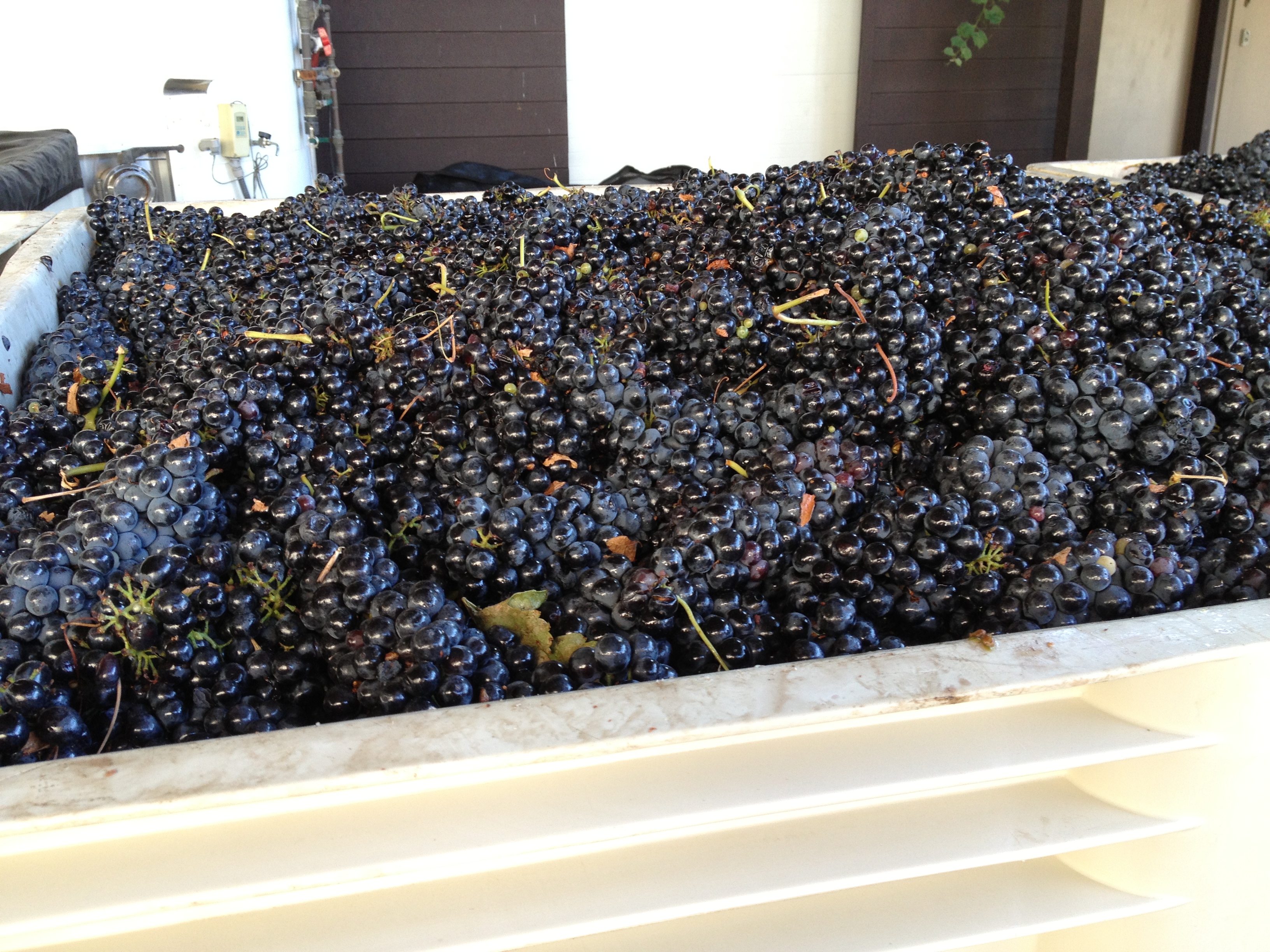
On this morning, trucks are delivering about five tons of tempranillo grapes in large tubs, removed by forklifts, weighed and inspected before the initial process began.

Larger in size than most wine grapes, the dark clusters have been infiltrated by small green berries.  Ken describes them as seedless grape buds than did not form the necessary enzymes to mature and expresses concern they could impact the quality of the juice.  He decided to reduce the speed of the de-stemmer/crusher, directing most of the little green invaders with the stems and leaves.  Some of the nice grapes must be sacrificed, at significant expense, but the only decisive factor is to support and enhance the superiority of the harvest.

Before our eyes, the grapes are dumped into a machine as crankshaft moves the good grapes to crushing, separating any
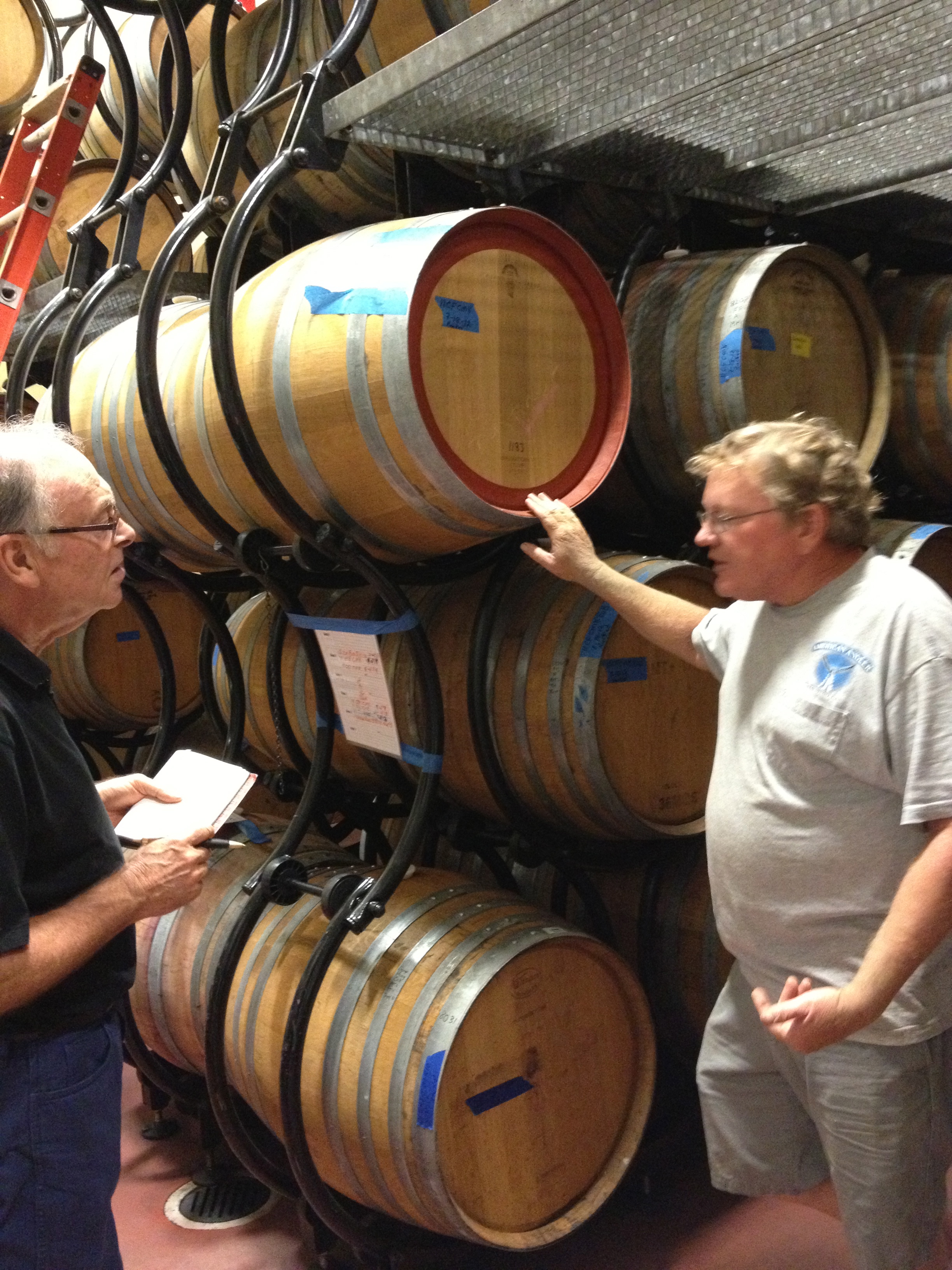
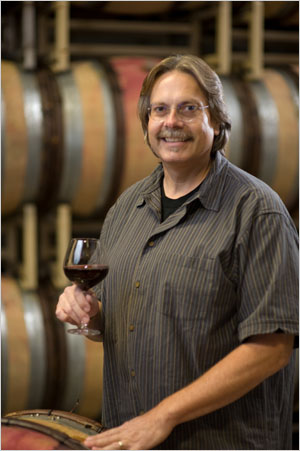
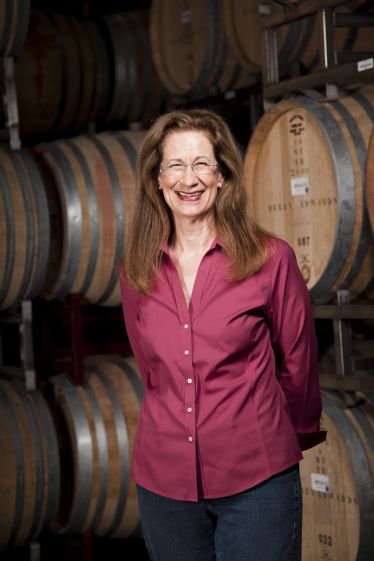
Ken in the barrel room

Ken in the barrel room

debris. The good juice is immediately pumped to stainless steel holding tanks for the first pre-barrel fermentation process.  Surprisingly, dry ice is introduced to cool the holding tanks, helping to get the field heat out of the fruit while protecting against oxidation. While in the tanks, yeast is introduced and the juice is pressed down, separating from the skins.

Even the barrel room at Kenneth Volk Vineyards is unique.  The racking system for the 1,000-barrel places each barrel on rollers to provide more “lees” (dead yeast cells and pulp) exposure for white wines.  Once again, the extra expense and effort are intended to augment the bouquet and flavor of the juice.

Once in the tasting room, Ken becomes a “kid in a candy store,” willing to share any of his treasured releases, both diverse and abundant.  Before the wine, we tasted some albarino grapes, fresh from the vineyard.  The floral aromas, sweetness of the grapes was over the top, far beyond any white table grape. Next, we sampled some sweet, partially fermented albarino juice that was already expressing strong hints of melon and stone fruits. The final part of this tasting trifecta was the 2012 Kenneth Volk Albarino Riverbench Vineyard ($24), a crisp, refreshing wine with a nice flavor burst on the backend.
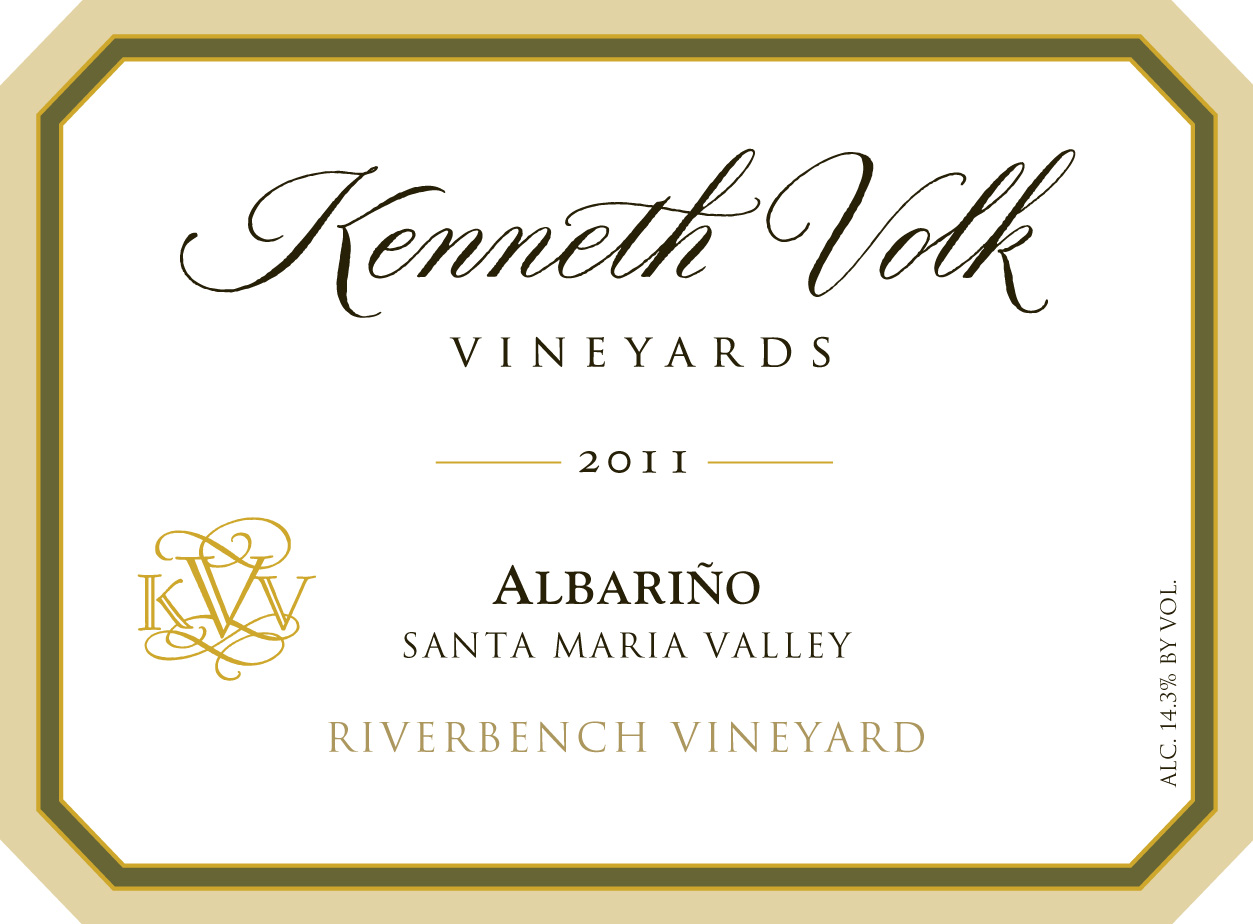
2011 Kenneth Volk Albarino Riverbench Vineyard

2011 Kenneth Volk Albarino Riverbench Vineyard

A nice surprise of this tasting was the 2010 Kenneth Volk Verdelho Pomar Junction Vineyard ($24). Grown in several regions throughout Portugal including the island of Madeira, verdelho plantings are expanding in many California appellations.  These grapes came from Templeton, south of Paso Robles to help create a brisk wine with a substantial burst of flavor and creamy texture on the finish.

A bit taken back when he suggested the 2012 Kenneth Volk Malvasia Bianca San Bernabe Vineyard ($24), Ken explained that his is not sweet, but dry, floral, aromatic and slightly astringent.  The vineyard, located along Highway 101, near King City is one of the warmest in the region for full ripening.

Next, we tasted the distinctively different 2011 Kenneth Volk Chardonnay “Jaybird” Santa Maria Valley ($22), crispy, totally sans oak and the oak-laden 2010 Kenneth Volk Chardonnay Bien Nacido Vineyard ($28), benefitting from malolactic fermentation and time in the barrel.   While poles apart, both wines share full flavor profiles and have been highly rated by Wine Enthusiast magazine.  The Bien Nacido Vineyard sources many high quality, well-farmed varietals to several winemakers throughout the region and here; we enjoy the rich texture, stone fruit and butterscotch nuances of a California chardonnay.

Volk’s winemaking skills were clearly on display as we tasted three unique pinot noir releases, two originating from the Santa
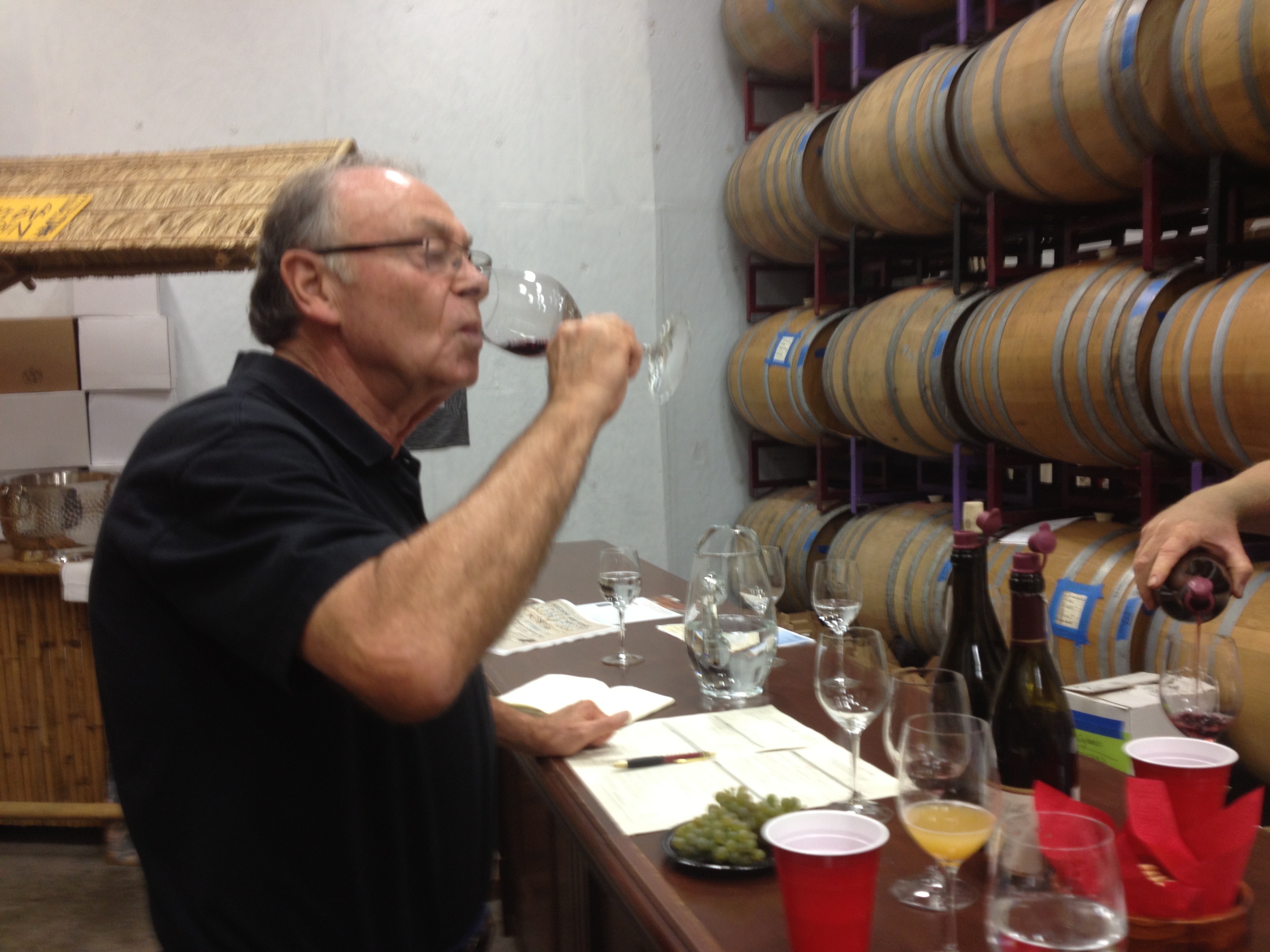
Tasting another release

Tasting another release

Maria Valley and another from an appellation in San Benito County that peaked my interest called Lime Kiln Valley.

The inland Lime Kiln Valley appellation, located south of the towns of Hollister and Tres Pinos, is known for soil composed of large amounts of limestone and dolomite.  All the Lime Kiln Valley vineyards are owned and operated by the Enz Family, who now grow many varietals exclusively for Kenneth Volk Wines.  Minerality in the aromas and flavors of the 2009 Kenneth Volk Pinot Noir Enz Vineyard Lime Kiln Valley ($48) are evocative of the fine, earthy red wines originating from the Burgundy region of France and, hence, my favorite.

With high expectations from this infamous vineyard, the 2009 Kenneth Volk Pinot Noir Bien Nacido Vineyard ($60), at a higher price, delivers that lush, velvety texture with flavors of strawberry and cherry following an earthy bouquet.

The value-priced 2009 Kenneth Volk Pinot Noir Santa Maria Cuvee ($30), awarded 90-points from Wine Enthusiast magazine, conveys another earthy bouquet followed by concentrated fruit on the palate.

Our tasting, far from complete, ended with five inimitable red varietals, many of which were new and fresh to my senses.  One of the common varietals used in ports and still wines from Portugal, the 2010 Kenneth Volk Touriga Nacional Pomar Junction Vineyard ($36) had robust floral aromas and complex flavors ending with a nice “slate” finish.
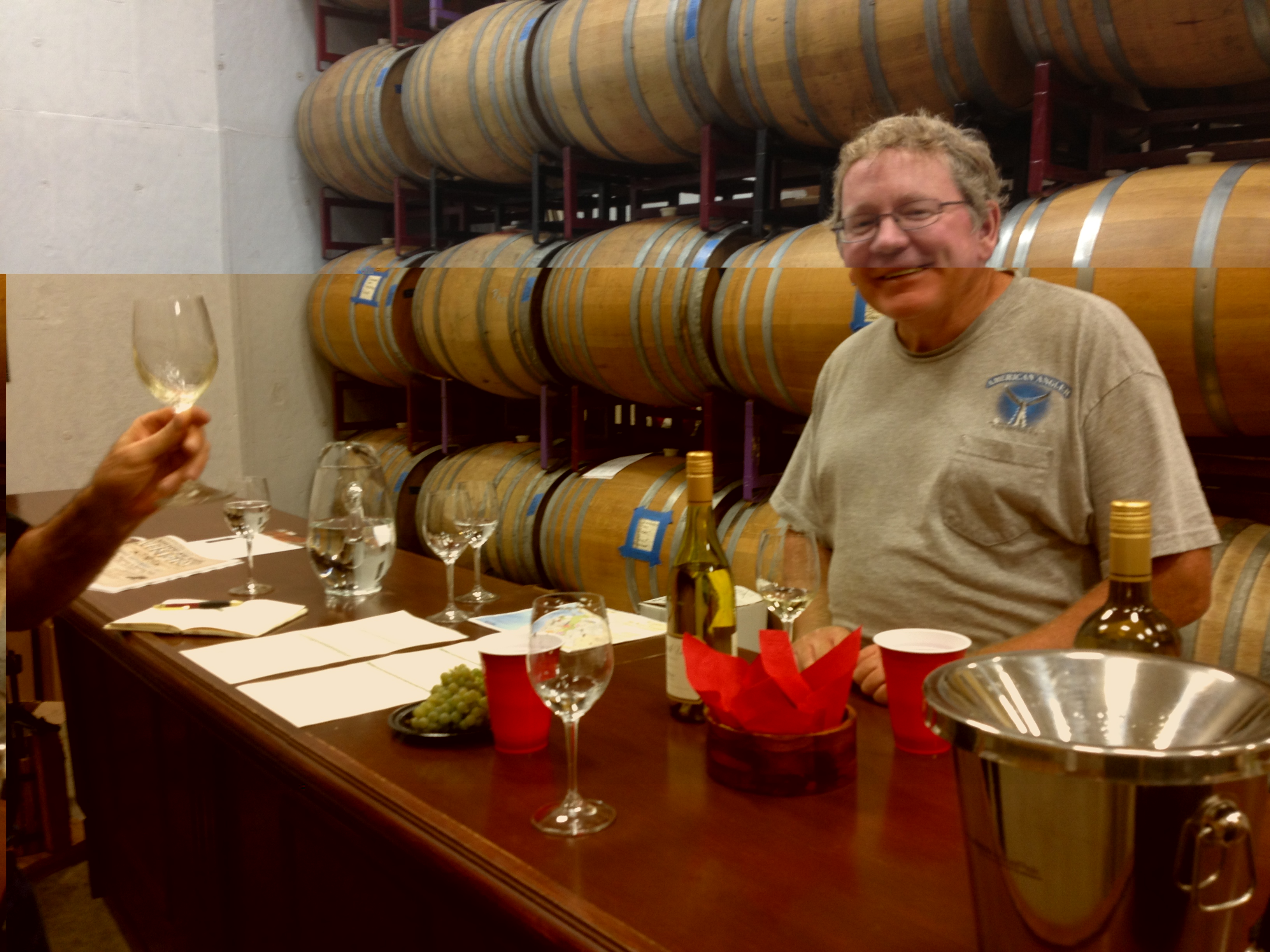
Ken Volk

Ken Volk

The Lime Kiln Valley AVA is, once again, showcased with the rare 2008 Kenneth Volk Cabernet Pfeffer San Benito County ($28), a varietal often confused with “Gros Verdot” from the Bordeaux region of France.  Many believe that these grapes are Gros Verdot, but our government only recognizes Cabernet Pfeffer.  Whatever the proper name, this drinkable wine adds a soft spice element to the bouquet and flavor.

Described with “aromas of humming bird sage and turned earth,” the 2010 Kenneth Volk Negrette Calleri Vineyard ($28), a
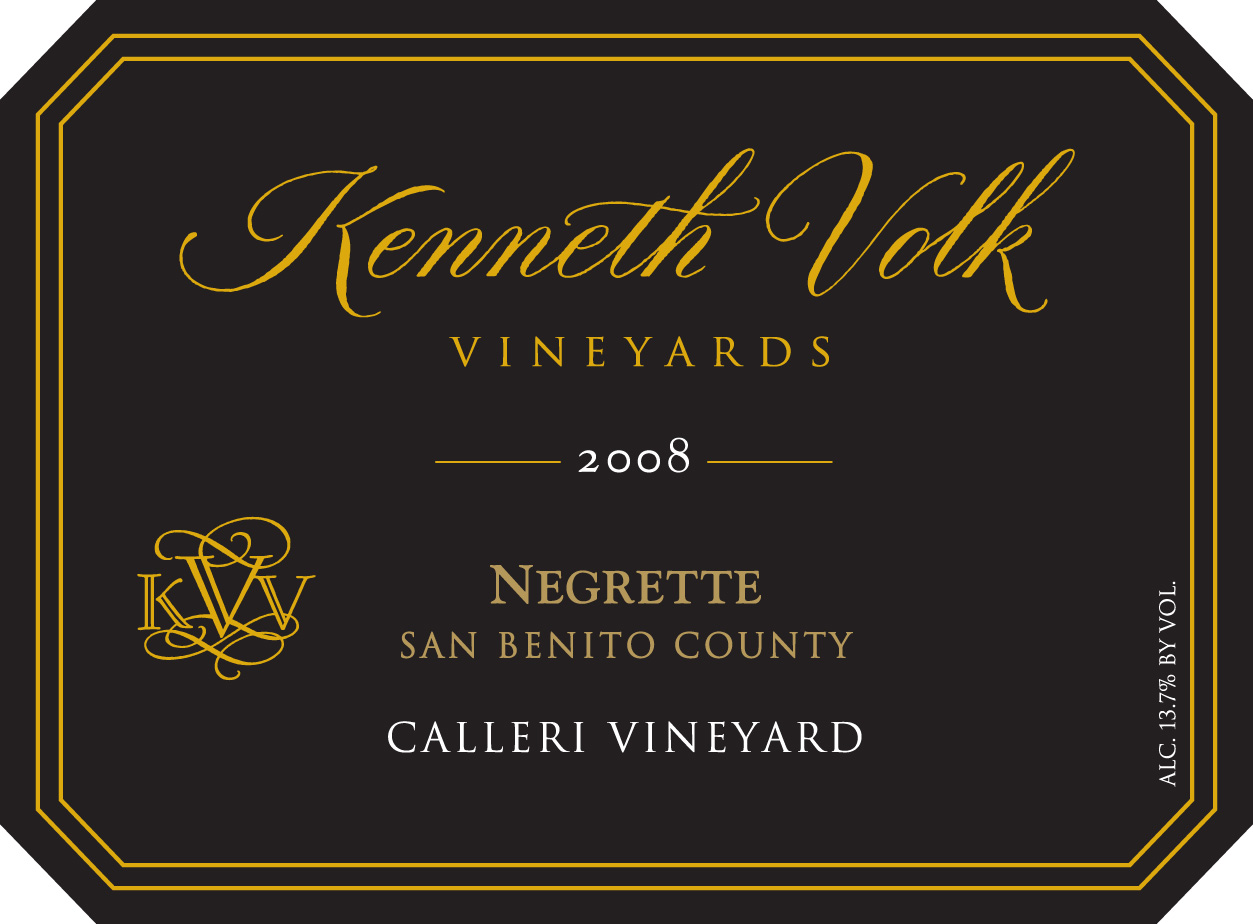
2008 Kenneth Volk Negrette Calleri  Vineyard

2008 Kenneth Volk Negrette Calleri
Vineyard

varietal originating in the Toulouse region of France, is dark red in color with softer tannins similar to Pinot Noir.

From the Basque region in southern France rather than the Rhone Valley, some winemakers in the Paso Robles region have begun to plant the rare Tannat grape.  Paso’s Bella Collima Vineyard sourced grapes for the 2010 Kenneth Volk Tannat Bella Collima Vineyard, a rich, full-bodied wine with robust flavors that pair well with meats and game.

2455547-110_1F

2008 Kenneth Volk Mourvedre Enz Vineyard

I have long enjoyed mourvedre as an important component, adding richness to the classic “Rhone Blends” in both France and California.  A few of our winemakers, throughout variable regions, have experimented with 100% mourvedre releases.  Once again seeing the potential of the warmer Lime Kiln Valley vineyard, the 2009 Kenneth Volk Mourvedre Enz Vineyard ($36) seems to provide enough season for the grapes to properly ripen, resulting in resonant aromas and concentrated flavors that will age well.
IMG_0510

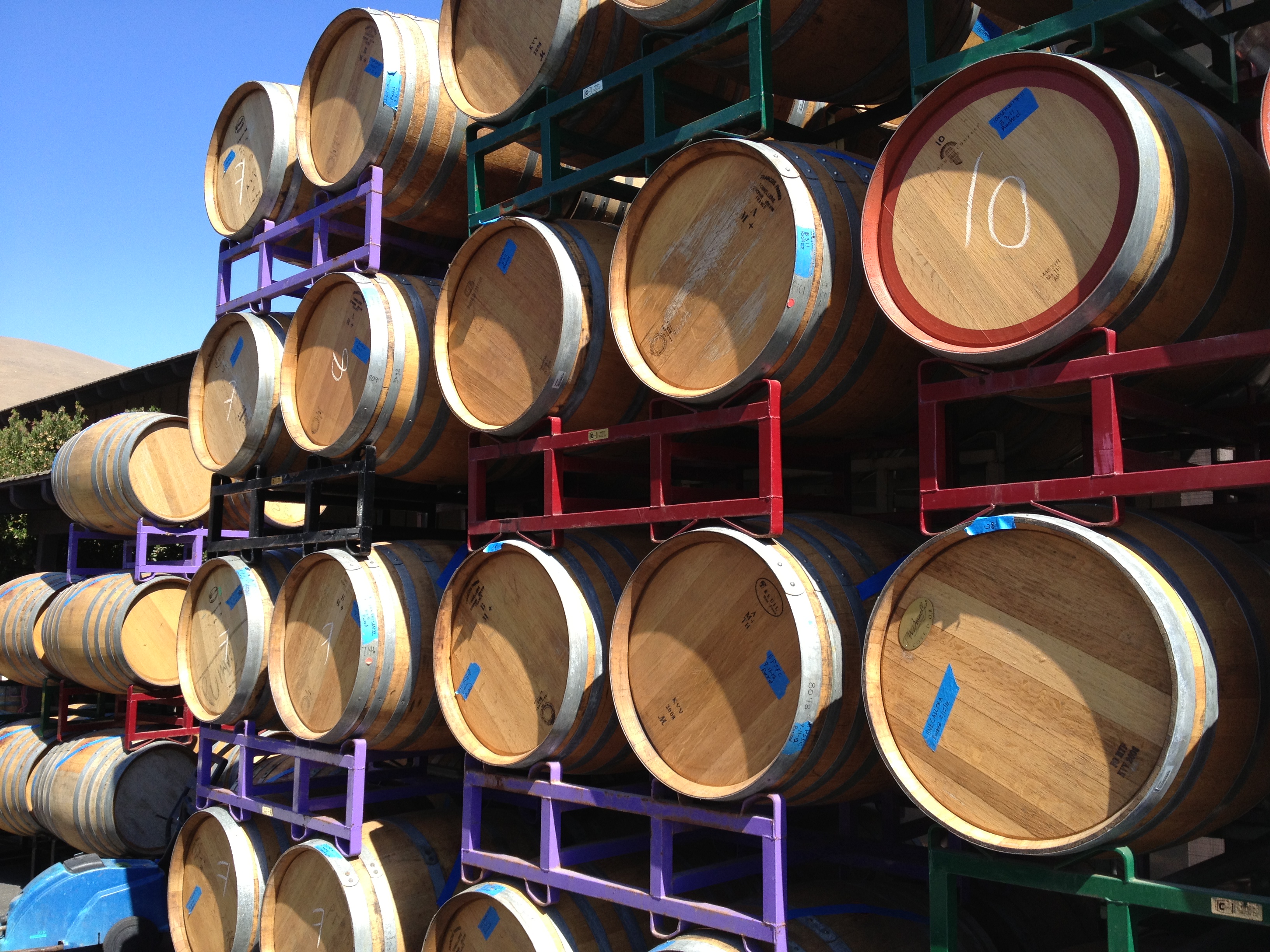
Colorful barrel racks

As we were leaving the winery, Ken asked why I hadn’t commented on the multi-colored barrel storage racks.  He explained that each year, some racks are painted in the color of the NBA Champions.  There are red for the Miami Heat, black for the San Antonio Spurs, green for the Celtics and, yes, purple and gold racks that are beginning to rust and in need of a new coat.

Extraordinary wines, stimulating conversation and a behind-the-scenes look at the Kenneth Volk Vineyard operation made for a wonderful afternoon in the Santa Maria Valley.  It also gives me confidence that wines produced under Ken’s name will exceed expectations.



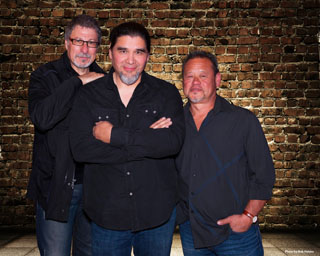
“Desperate Rain” – The Daniel Castro Band


Wherever Daniel Castro entered the vast continuum of blues music, he certainly looked back before forging forward with his style, bent through the affects of life.  The new release from The Daniel Castro Band, “Desperate Rain” offers a collection of original songs influenced by Muddy Waters, B.B. King, the 60’s British blues invasion among others, delivered through a modern, contemporary blues trio seeking out creative methods of releasing the music’s potential.dcb-1

Admittedly, I have a preference for the trio format in contemporary blues music, requiring each musician to be fully engaged with each other.  The tautness of these musicians is clearly expressed in “Almost Gone”, with hints of Clapton-Bruce-Baker of Cream and more recently, the John Mayer Trio. Drummer David Perper’s driving intro foreshadows what follows and Daniels’ stylized transition seems to search for the bass of Johnny Yu before shifting into a relentlessly resolute rhythm throughout the final note.


The individual and collective skills of this trio is also exposed in Daniel’s classic “No Surrender”, adding some nice vocal harmonies to their efforts.


From someone who was blessed to discover and recognize the value of blues music at an early age, listening to tunes like “Chrome-Plated 44”, “Worried Baby Blues”, and “Good Lovin’ Woman” renders me helpless to focus on anything else. Unswerving heartache, failed love affairs, hopelessness abound as the trio musically celebrates the faithful acknowledgement:

“I’ve got a good lovin’ woman,

She knows how to treat me right.

Ain’t no other woman in this world

Can keep me satisfied”


David Perper, Daniel Castro and Johnny Yu

David Perper, Daniel Castro and Johnny Yu

Tunes like these can still drive one to level-8 on the treadmill, get you to dance for first time in years and amp up the car stereo of youth, quickly turning down the volume during red lights to be less conspicuous.

This time through, one’s sense of the musical nuances, the arrangements and the musicians’ intuition are more acute.  The result is tracks like “Worried Baby Blues”, modeling the classics, now wrapped in a clean, present-day package that enhances Daniel’s unique style.

Dave Rubin of Guitar Player Magazine described Daniel as “one of the greatest guitarist to come bursting out of the highly competitive West Coast scene.”  He spent his childhood in the L.A. area listening to the likes of B.B. King and Albert Collins, paying his dues in the South Central L.A. blues clubs, backing many great artists of the time.  After relocating to the San Francisco Bay Area, Daniel soon became a fixture among North Beach blues artists, forming his first band in 1995.  Those early days in North Beach are celebrated in “Johnny Nitro”, a tribute to a fellow musician.

The new Daniel Castro Band evolved as a trio after reuniting with bassist Johnny Yu, who also contributed to the new arrangements.  Veteran drummer David Perper later became the last piece of the puzzle, commencing a new synergy that projects the passion and control defining Daniel’s music.

The opening phrases of the title track, “Desperate Rain” expose a more graceful and precise trio, with a nice interplay between guitar, bass and percussion. The piece intensifies into, instrumentally, one of their most complex arrangements.

The antonymic “Mr. Lucky” is another example of the trio flourishing.  Yu and Perper lay down the “bread crumbs,” allowing Castro to be adventurous and still find his way home. Daniel’s inexorable guitar is present throughout, seemingly crying the hard luck story:

“My mother asked the preacher

          Please pray for my son.

          Preacher told my mother

          Ain’t nothin can be done”


The harmonic opening of “Shelter Me” evolves into a persuasively stylized groove similar to Warren Zevon and later Bob Dylan recordings.  The depth of Daniel’s guitar style isDaniel-Castro-001-667x500 evident here, both ambitious and restrained.

The down-tempo, haunting “Dark Train” reminds us of our mortality and of the thin line upon which we all walk. The guitar solo, woven with Mid Eastern nuances, strikes a chord with the great Eric Clapton solo recordings.  As the final track ends, we leave with a firm impression of Daniel’s multifarious guitar style.

Castro’s life has been about “paying dues”, a thread woven within his music.  This recording with the new band is the result of hard work and persistence with assembled musicians who are capable of presenting the music with the respect it deserves.  The Daniel Castro Band consistently performs in Bay Area blues clubs and is just the thing for the “escape night” that you deserve.  Need we all be reminded that nothing is more inspirational and therapeutic than the “blues”.


Enjoy “Influential” Wines


Michael Cervin, from www.intowine.com, recently rated the “top 100 most influential U.S. winemakers,” highlighting those who have made long-standing contributions as well as newcomers that are making strong impacts to the national wine scene.  While reviewing his list, I found some familiar names that have created wines that I have enjoyed and will

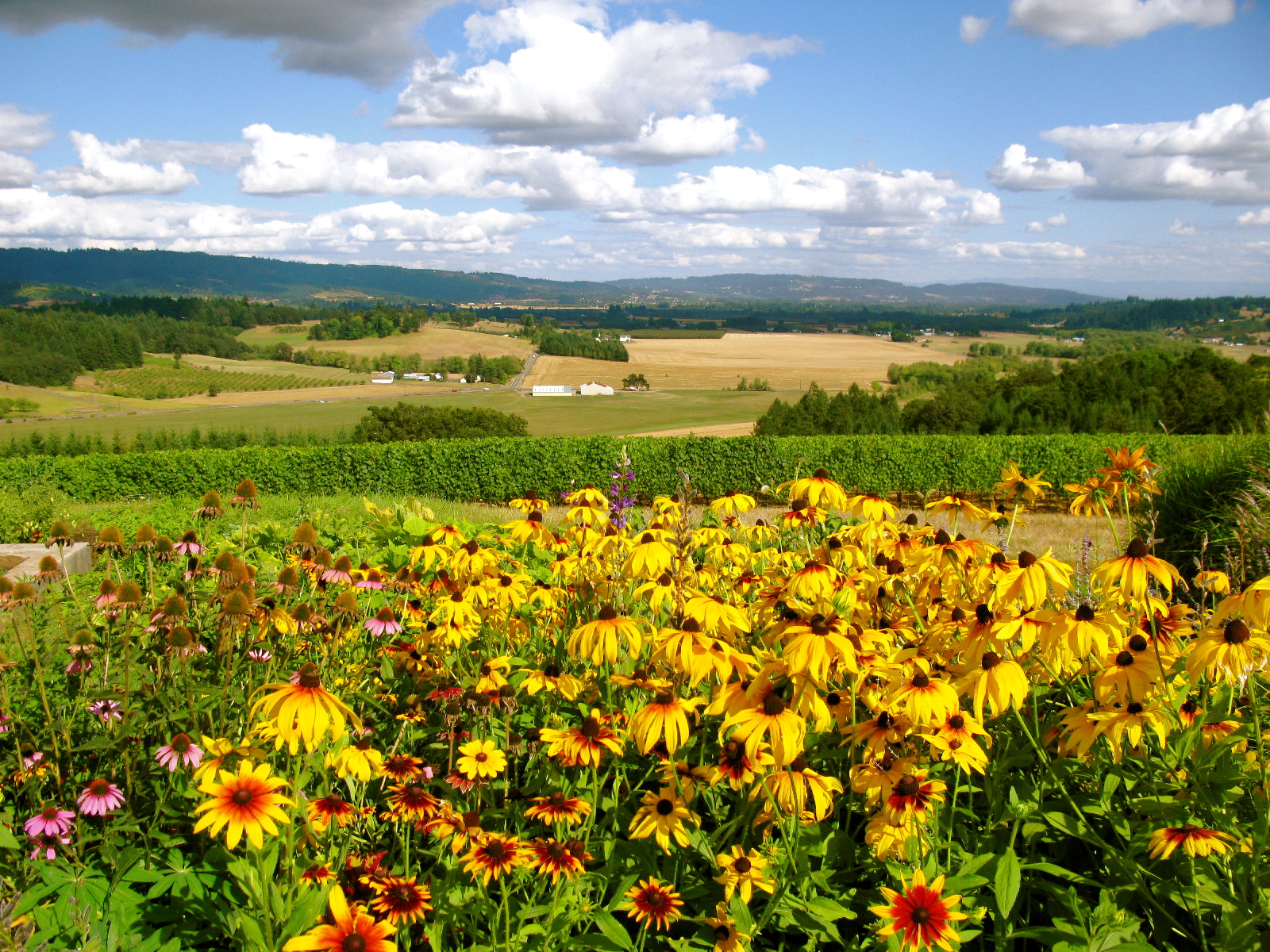
vista from Penner-Ash Winery

vista from Penner-Ash Winery

continue to pursue.

While a list of most influential winemakers makes for a fun read, the proof is always in the palate.  I thought it may be helpful to match some of the top winemakers with some of their specific wines that I have had the pleasure to experience.

These winemakers represent the Santa Maria Valley, Paso Robles, Sonoma County, the Santa Cruz Mountains and Oregon’s Willamette Valley, evidence of the growing de-centralization of power in the industry.  Many of these wines are so unswerving there was no need to list a particular vintage. The number indicates the winemaker’s ranking on Cervin’s list.

#58. Kenneth Volk          Kenneth Volk Vineyards

Kenneth Volk Cabernet Sauvignon Paso Robles 2005 ($36)

     Kenneth Volk Pinot Noir Garey Vineyard 2006 ($48)

Kenneth Volk Cabernet Sauvignon Paso Robles

Kenneth Volk Cabernet Sauvignon Paso Robles

Raised in San Marino, CA, Kenneth Volk made his name in the industry through his Wild Horse Winery in Paso Robles.  He has since sold Wild Horse to concentrate on Kenneth Volk Vineyards, producing boutique wines in north Santa Barbara County. At a recent tasting in Pasadena, I met Mr. Volk and enjoyed three fine pinot noir wines, the bold “Garey Vineyard” release, in my opinion, taking the varietal to a higher level.

Unfortunately, good cabernet sauvignon can be very expensive, especially from the Napa Valley.  The Kenneth Volk Cabernet Sauvignon Paso Robles 2005 is one of the “cabs” that I recommend in the $30-40 range.  From Westside vineyards, this wine is restrained, with softer tannins making it very drinkable now

#45. Neil Collins          Tablas Creek Winery

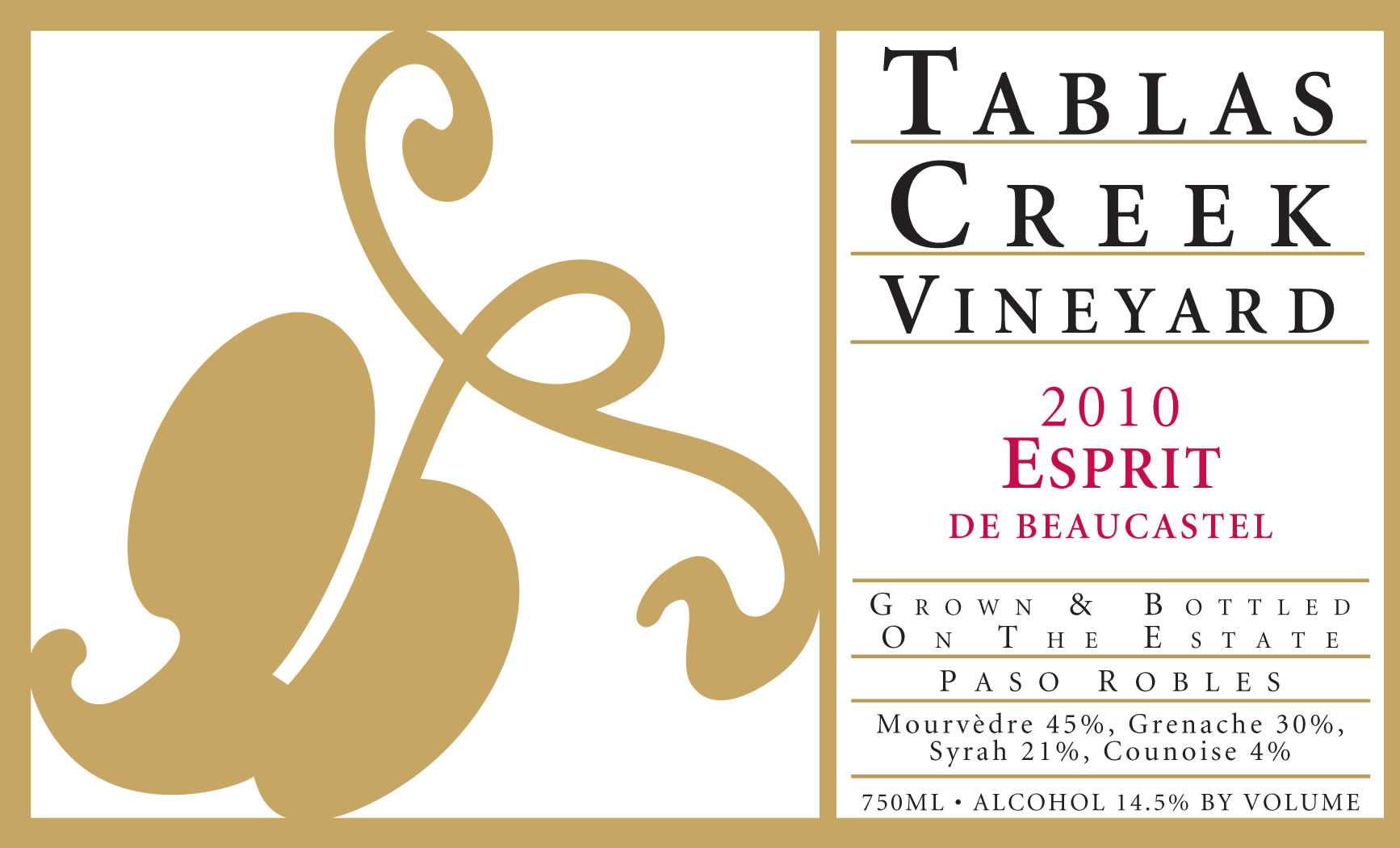
     Tablas Creek “Espirit de Beaucastal” ($55)

     Tablas Creek “Espirit de Beaucastal” Blanc ($40)

A pioneer in introducing Americans to the famous blends that originated from the Rhone Valley, Neil Collins was involved in importing Rhone vines to the U.S., enduring the quarantine and furnishing the research to encourage others to follow. Each vintage produces several high quality Rhone-blends from Paso Robles, many from vines propagated

2010 Tablas Creek "Espirit de Beaucastel"

2010 Tablas Creek “Espirit de Beaucastel”

from the original imports.  Tablas Creek produces a wide variety of wines, none more intriguing than the 2010 Tablas Creek “Panopile,” a mourvedre-dominant GSM blend that, like other vintages, is consistently rated in the mid-nineties. Admittedly, I have not yet tasted the wine whose meager 600 cases are reserved for members of their Vinsider wine club. Cautious with the restrictions of wine clubs, the high quality of red and white varietals, member programs and sustainable farming practices make Vinsider one that I would recommend.

My selections are the red and white wine from the “Espirit de Beaucastal” series, named for the French chateau that partnered with the Haas family to create Tablas Creek. Both wines display complex aromas and limestone-driven minerality that set them apart,


#43. Gary Eberle          Eberle Winery

Eberle Estate Cabernet Sauvignon ($34)

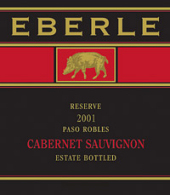
Eberle Reserve Cabernet Sauvignon Estate Bottled

Eberle Reserve Cabernet Sauvignon Estate Bottled

A patriarch of California, as well as Paso Robles winemaking, Gary Eberle’s eastside winery has been a leader in the region for decades featuring varietals such as syrah, zinfandel and viognier in many well-reviewed wines. Most vintages of the Eberle Estate Cabernet Sauvignon stand above, consistently ranked among the best California cabernet in the $30-40 price range.

#40. Lynne Penner          Penner-Ash Wine Cellars

Penner-Ash Pinot Noir Willamette Valley ($45)

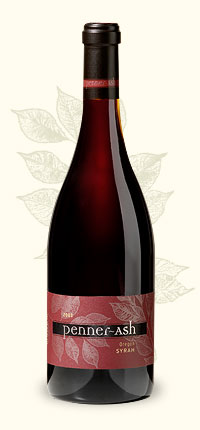
     Penner-Ash Oregon Syrah ($35)

After an early stint at Stag’s Leap in Napa, Lynne Penner became one of the first female winemakers in Oregon, spending many years at Rex Hill producing those nice pinots. In 1998, she founded Penner-Ash, one of the most beautiful and sustainable winery/vineyard operations in the

Penner-Ash Cellars Oregon Syrah

Penner-Ash Cellars Oregon Syrah

entire Valley.  During a visit last year, I was very impressed with the 2010 Penner-Ash Oregon Syrah with balanced tannins, rich texture and complex flavors comparable to any syrah from the vintage.  Most vintages of the Penner-Ash Pinot Noir Willamette Valley will deliver beyond expectations.
 

#32. Bob Cabral          Williams Seylem

Williams Seylem Sonoma Coast Pinot Noir ($52)

     Williams Seylem Bacigalupi Vineyard Zinfandel ($52)


Bob Cabral, Director of Winemaking at Williams Selyem

Bob Cabral, Director of Winemaking at Williams Selyem

Clearly one of the big treats of any vintage is my annual allotment of pinot noir from William Seylem, a pioneer in developing the Burgundy varietal in Sonoma.  Named “2011 Winemaker of the Year” by Wine Enthusiast magazine, Bob Cabral consistently creates high quality, medium-bodied single and multi-vineyard pinot noir and chardonnay. In reviews of each release, the “Sonoma Coast” Pinot Noir remains one of their best values.  In recent years, Cabral has added a new varietal with the Williams Seylem Bacigalupi Vineyard Zinfandel that, as one may expect, is among the best.

#19. Justin Smith          Saxum Vineyards

Saxum “Broken Stones Vineyard” ($89)


Justin Smith burst upon the wine scene a few years ago when his “Broken Stones” and “James Berry” Vineyard Rhone blends were included in Wine

Saxum "Broken Stones Vineyard"

Saxum “Broken Stones Vineyard”

Spectator’s top 100 list, the latter being named 2010 Wine of the Year.  Nearly impossible to obtain, an opportunity to taste the syrah-based “Broken Stones” revealed an elegant wine in perfect balance. Becoming pricy and rare cannot disguise the fact that it is a very special wine.

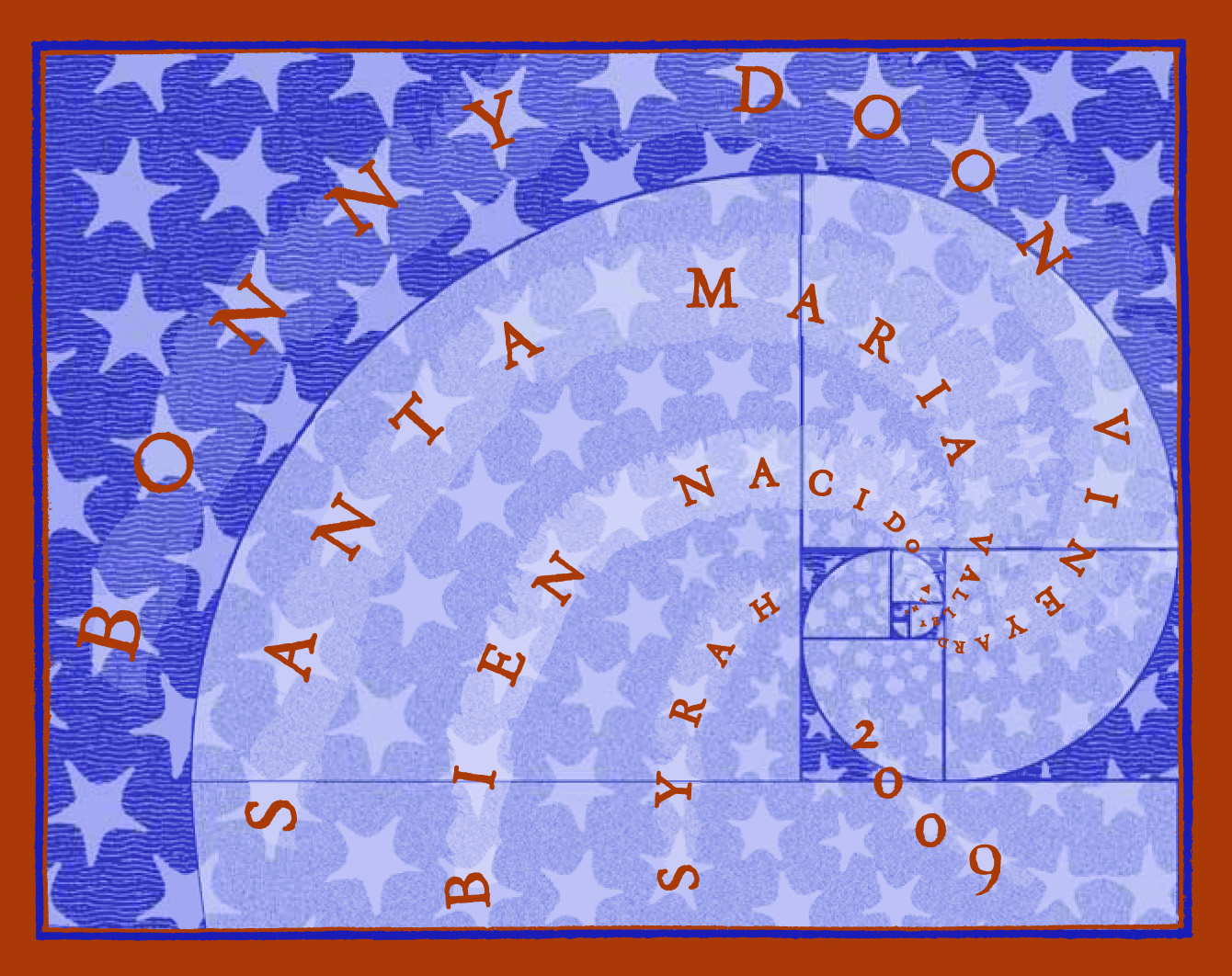
#11. Randall Grahm          Bonny Doon

Bonny Doon Cigare Volant Blend

     Bonny Doon Syrah Bien Nacido Vineyard

As a D.E.W.N. (Distinctive Esoteric Wine Network) member for more than a decade, I am never quite ready to move on from the Bonny Doon Winery and Vineyard family.

Bonny Doon Syrah Bien Nacido Vineyard

Bonny Doon Syrah Bien Nacido Vineyard

Founder Randall Grahm is legendary to the U.S. wine scene and opened wine consumers to a world outside of cabernet sauvignon and chardonnay by introducing Rhone varietals to the Santa Cruz and Monterey County regions.  In addition, he has been a leader in biodynamic farming and replacing corks with screw tops in high quality wines.  Reading Grahm’s newsletter itself is worth the membership.

Although the classic “Cigare Volant” Rhone blend is a must, three single-vineyard syrah releases have recently peaked my interest including the 2007 and 2008 Bonny Doon Syrah Bien Nacido Vineyard, a rich and balanced syrah from one of he state’s finest vineyards

#2.  Merry Edwards          Merry Edwards Winery

Merry Edwards Sauvignon Blanc ($32)

Among  influential winemakers of the world, Merry Edwards became renown as a winemaker and consultant long before

Merry Edwards

Merry Edwards

she launched her signature label in the late nineties, focusing on fine pinot noir.  However, her Merry Edwards Sauvignon Blanc is noteworthy because it is, arguably, our country’s finest.  From the floral nose of orange blossoms to the full-bodied, rich flavors, pairing this wine with seafood turns a scallops or salmon dish into a culinary masterpiece.

Merry Edwards Sauvignon Blanc

Merry Edwards Sauvignon Blanc

Leaders in the winemaking world are made from those who can create extraordinary wines and, directly or indirectly, make others better. Proof being in the palate, these wines impart the inspiration that we should expect from the influential winemakers of our time.


Penedes and the Spanish Cava Trail

280px-Penedès_region_and_DO.svg 


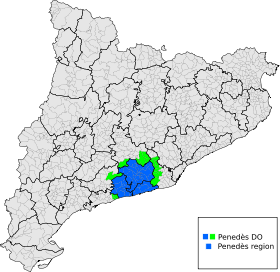
Considered one of Spain’s major wine-producing regions after Rioja, Penedes, located south of Barcelona, is best known for cava (sparkling wine) production.  Today, the region has expanded its range to exceptional white varietals and nice earthy reds.

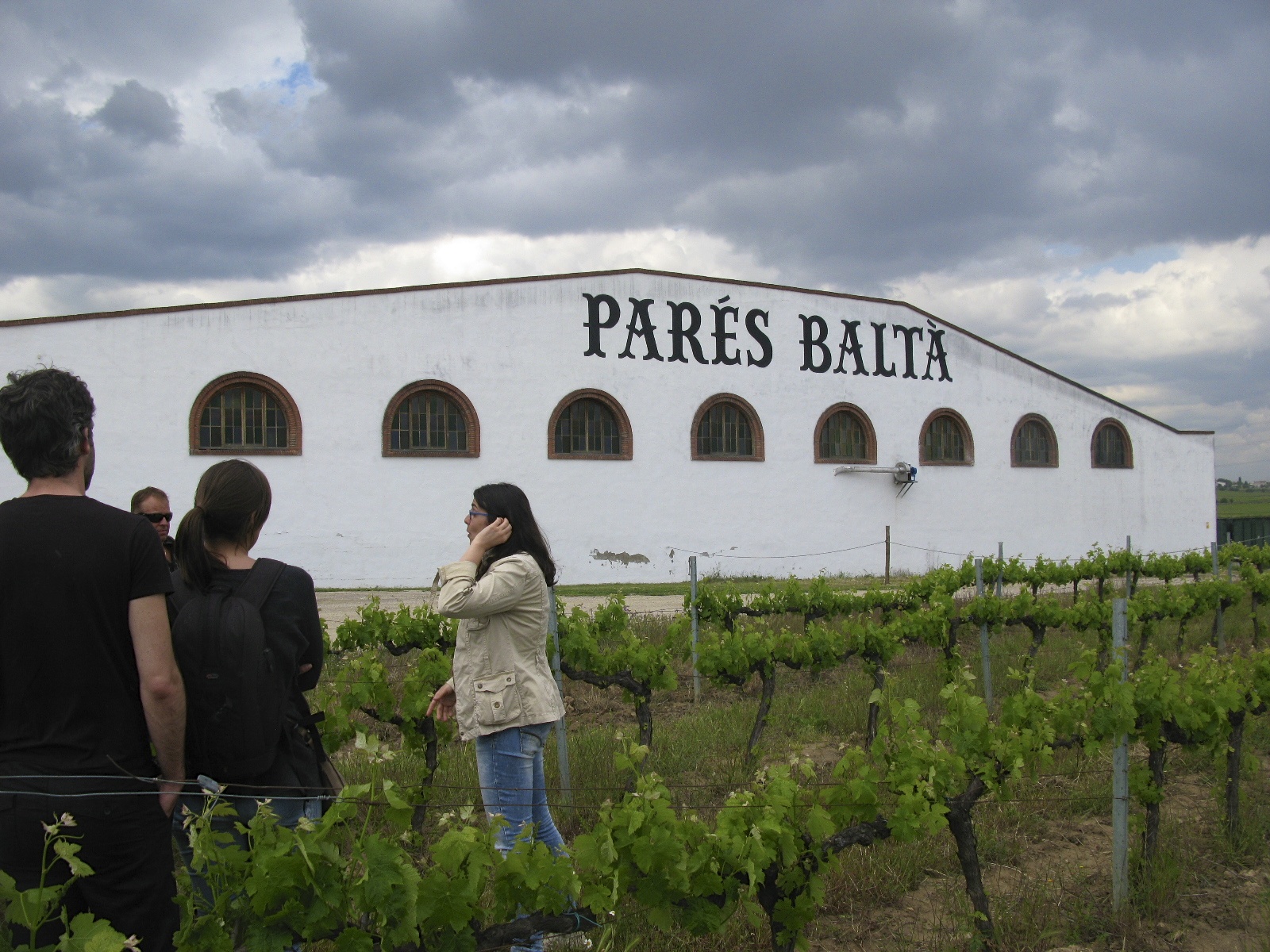
We often refer to sparkling wine as champagne, when if fact that name is only permitted if referencing what is produced in the Champagne region of France.  While made in the same “methode champenoise”, the sparkling wine of Spain is called “cava” and there are an abundance of producers in Penedes.  I recently had the opportunity to explore the “cava trail” in this region and taste cava at Pares Balta, who also create a number of quality still wines.

Part of Catalonia, Spain, Vilafranca del Penedes is situated between the steep Monserrat Mountains and the Mediterranean Sea. IMG_0916While cava’s ancestry is traced to the nearby Codorniu estate, Penedes is where it thrives today.

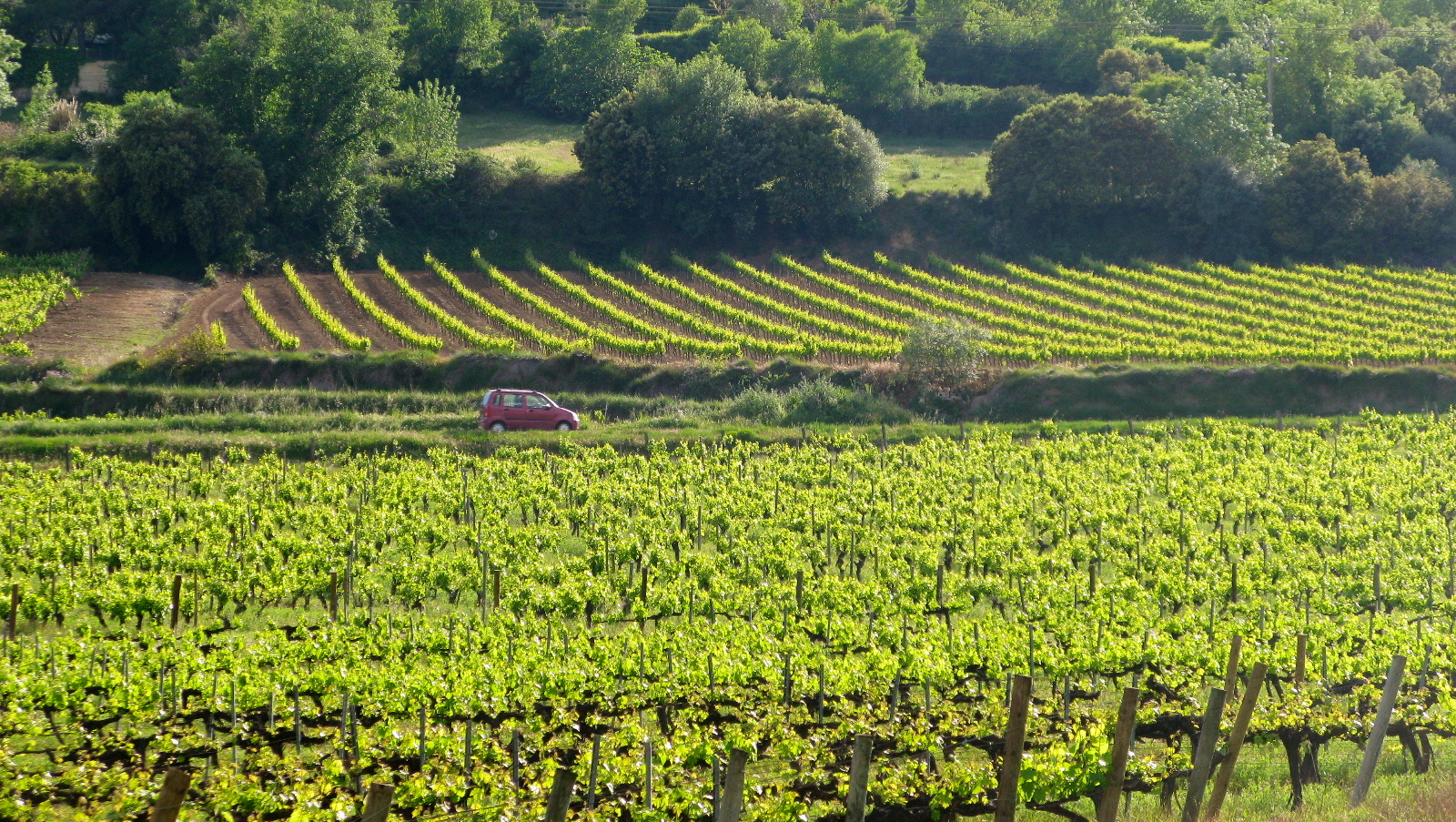
Widely considered one of the top growing areas, Penedes is a designated Denominacio d’Origen (DO) for wine and cava and one of the most ancient viticulture regions in all of Europe. A blessing in disguise, the generally poor-quality soils, heavy in limestone and fossil matter, can and do stress the grapes into highly concentrated flavors.

As with champagne, the blended white grapes are introduced to sugar and yeast in the bottle.  The second fermentation, lasting 12 months, creates carbon dioxide and those wonderful bubbles.  While viura is the dominant white grape in the Rioja, little known varietals like parellada, xarel.lo and macabeo are blended for both cava and still wines and seem to respond well to both methodsIMG_0860 of fermentation.

Following the morning at a monastery atop the Monserrat Mountains, we began our tour and tasting at Pares Balta, who have farmed the same vineyards since 1790.  The family has planted over 200 hectares (approx. 500 acres) in a unique terroir influenced by the coastal breezes and calcareous soils with an abundant of limestone at the surface.

Pares Balta has always practiced organic and biodynamic farming, but received certification in 2004.  While the winery is still owned by the grandsons of the founder, the winemaking and oenology is the responsibility of their wives, Maria Elena Jimenez and Marta Casas.  Rooted in cava, Pares Balta, over the past 25 years, have opened out to nearly 20 releases, a majority of which are red wines.

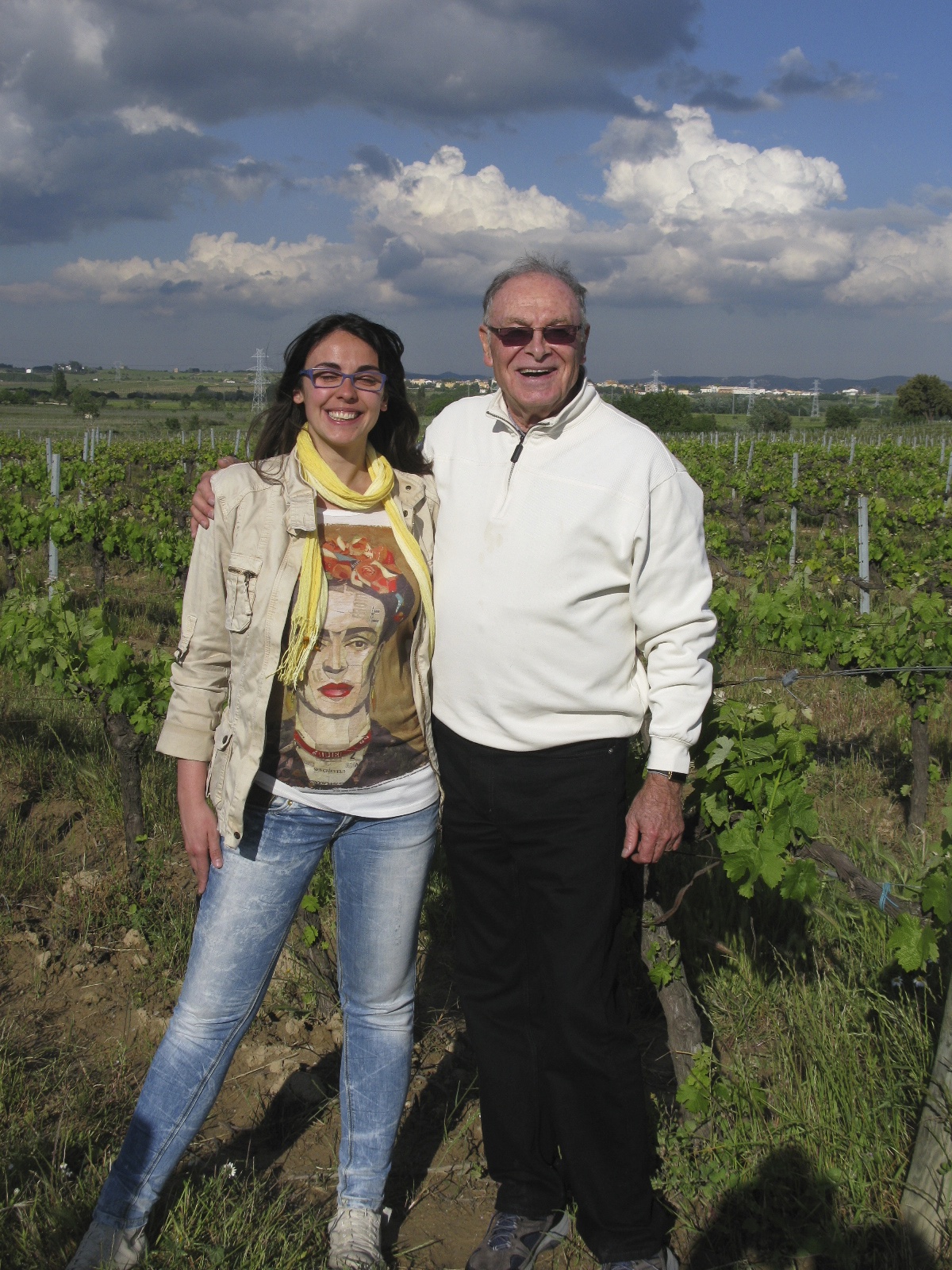
In a misty rain, our hostess, June Ordaz gave us a quick tour of the biodynamic, sustainable vineyards.  Organic farmers are fascinating in IMG_0870their creativity for plant survival such as hanging female hormones on the vines to falsely attract bees to help with pollination. Also, the wild grasses and legumes planted between the vines keeps the soil loose and re-charged with nutrients.

With one exception, all Pares Balta wines are estate grown.  All varietals are harvested August through October and are fermented individually for 3-5 years before blending. The results would soon be revealed as we began our tasting.

A blend of three white grapes, the Pares Balta Cava Brut is very fruit forward for a sparkling wine.  Parellada, the dominant grape known for adding floral notes to wines, certainly lived up to its reputation here. This cava is dry, but full-bodied and a good value for under $20.

Pares Balta Cava Brut

Pares Balta Cava Brut

With fermentation in stainless steel tanks, the Pares Balta Blanc de Pacs exudes a nice crispness and, once again, the parellada adds floral notes to the bouquet and orchard fruits to the flavor. By contrast, the Pares Balta Calcari 2009, utilizing the xarel.lo grape exclusively, has a negligible nose, but full flavors and a higher, yet balanced acidity.

Blended with cabernet sauvignon, merlot and syrah, the deep red Pares Balta Rose’ de Pacs rose’ offers an interesting balance of sweet and savory flavors.  The unique creamy texture would pair well with a nice Humboldt Fog goat cheese from northern California.

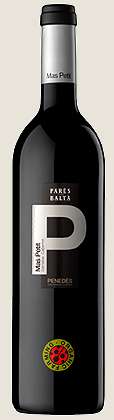
Another value at under $20, the cabernet sauvignon and Grenache-blended Pares Balta Mas Petit 2009 has soft fruit aromas and flavors with a unique minerality and gentle spices throughout.  This wine is both smooth and accessible to most palates.

c_120x0__20091217111118_winemaspetit_g

Pares Balta Mas Petit 2009

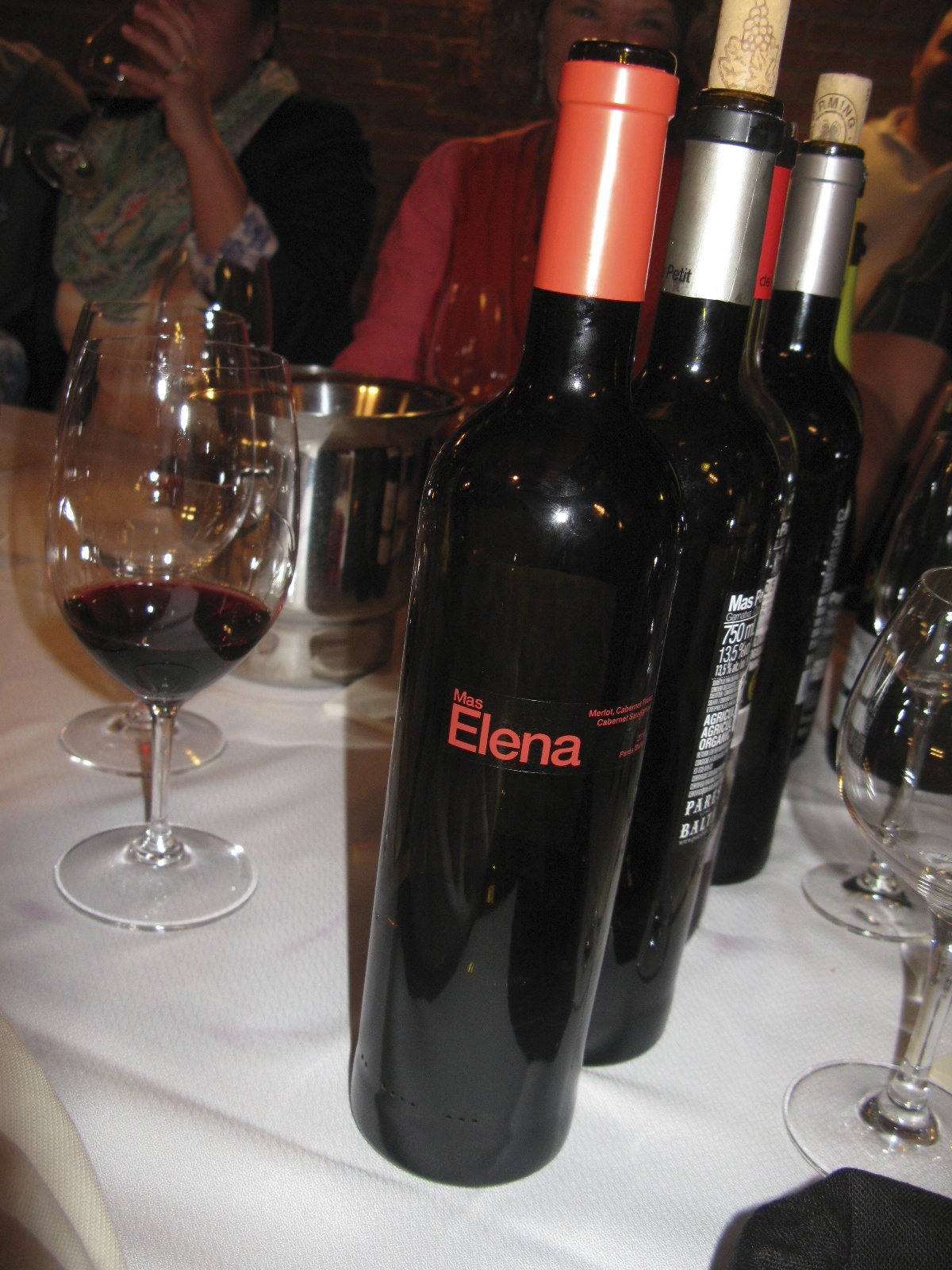
A blend of cabernet sauvignon, merlot and cabernet franc, the winemakers use malolactic fermentation to create the soft elegant flavors of the Pares Balta Mas Elena 2010, an excellent value for the price. Hints of spice from the nose through the finish add complexity to the wine.

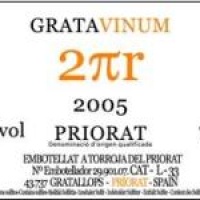
Our final tasting was an import from Priorat, Spain’s other significant wine region, known for unique slate and quartz soil called licorella that adds minerality to the flavors.  Blended primarily with Grenache (60%), carinena (25%) and small amounts of cabernet sauvignon and syrah, the 2007 Gratavinum Priorat 2 Pi R (the mathematical formula) has a nice earthiness throughout that generated comments from other tasters about the aromas and flavors of mushrooms balanced with raspberries and other fruits.md_21113_c5cfdadad6b4c17c42397b634f3e39b2

The Gran Reserva designation of this wine requires that the juice spend two years in the barrel and another three in the bottle. Although it has a higher price point, the “2 Pi R”, represents the finest example of why Priorat wines are considered among the most expressive in Europe.

The regions of Rioja, Penedes and Priorat, along with Ribera del Duero, make up the “Big Four” of Spain’s wine production.  Ribera del Duero, on the northern plain north of Madrid, produces bold tempranillo-based red wines such as Emilio Morro, that are occasionally available locally.

I have found cava brut and other Spanish wines from various regions at various outlets.  Further exploration of regional stores such as K&L Wines in Hollywood or Monopole Wines in Pasadena can uncover a plethora of still and sparkling wines and serve as a resource for discovering good values.

IMG_0907

Pares Balta Mas Elena 2010

Robert Parker certainly predicted the world’s prolonged interest in Spanish wines that will only get better and more approachable in time.  The Spanish soils are pushing these grapes in unique directions, resulting in consistent characteristics that experts can identify blindly. Anyone interested in good wine owes it to themselves to delve into what the excitement is

with June Ordaz of Pares Balta

with June Ordaz of Pares Balta

all about and experience the wines of Espana.


The Wines of Rioja!


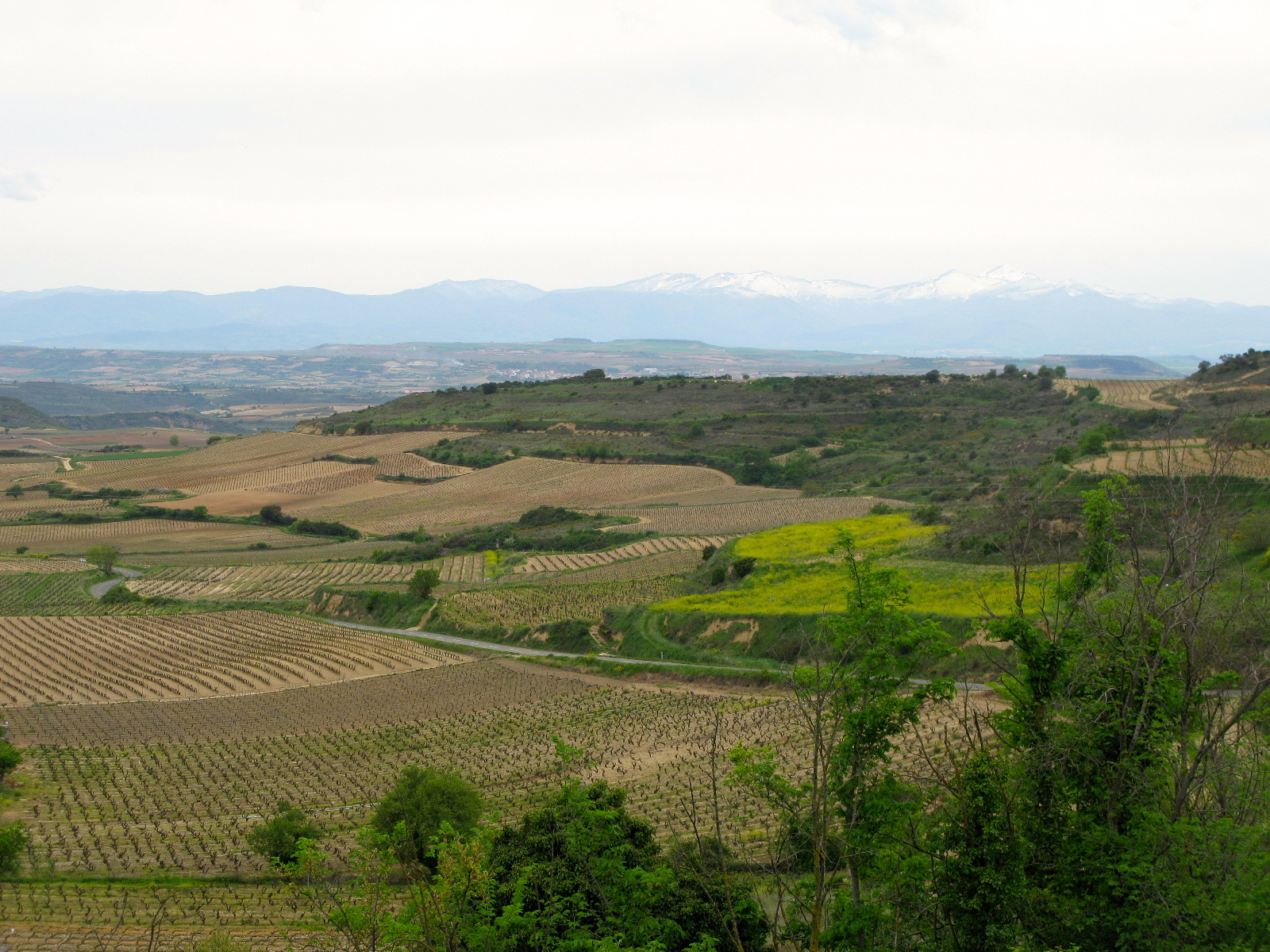
Wine critic Robert Parker predicted a decade ago that, in the future, we would all be drinking Spanish wines.  He, of course, was referring to the wines that originate from the Rioja region, in northeastern Spain, somewhere between Barcelona and Bilbao.  Recently spending a few days visiting Haro, in the heart of the region, I

Rioja

Rioja

found tremendous contrasts between old world tradition and the modernistic dimension that is preparing to welcome the world.IMG_1268

Haro is a fairly easy 45-minute drive from Bilbao, easier with a GPS.  Like the region, its appeal as a tourist destination is broadening with nice restaurants, proximity to other Rioja villages and their local wine loop within walking distance from town. In lieu of the quaint Hotel Lagonstinos, we opted for a newly renovated apartment through Los Zapatos Morados (The Purple Shoes), hoping, after eight days on the road, for a washing machine.  We found that and a delightful one-bedroom unit adjacent to restaurants, a fruit store and a cozy pintxos (tapas on a toothpick) bar with a welcome morning expresso.

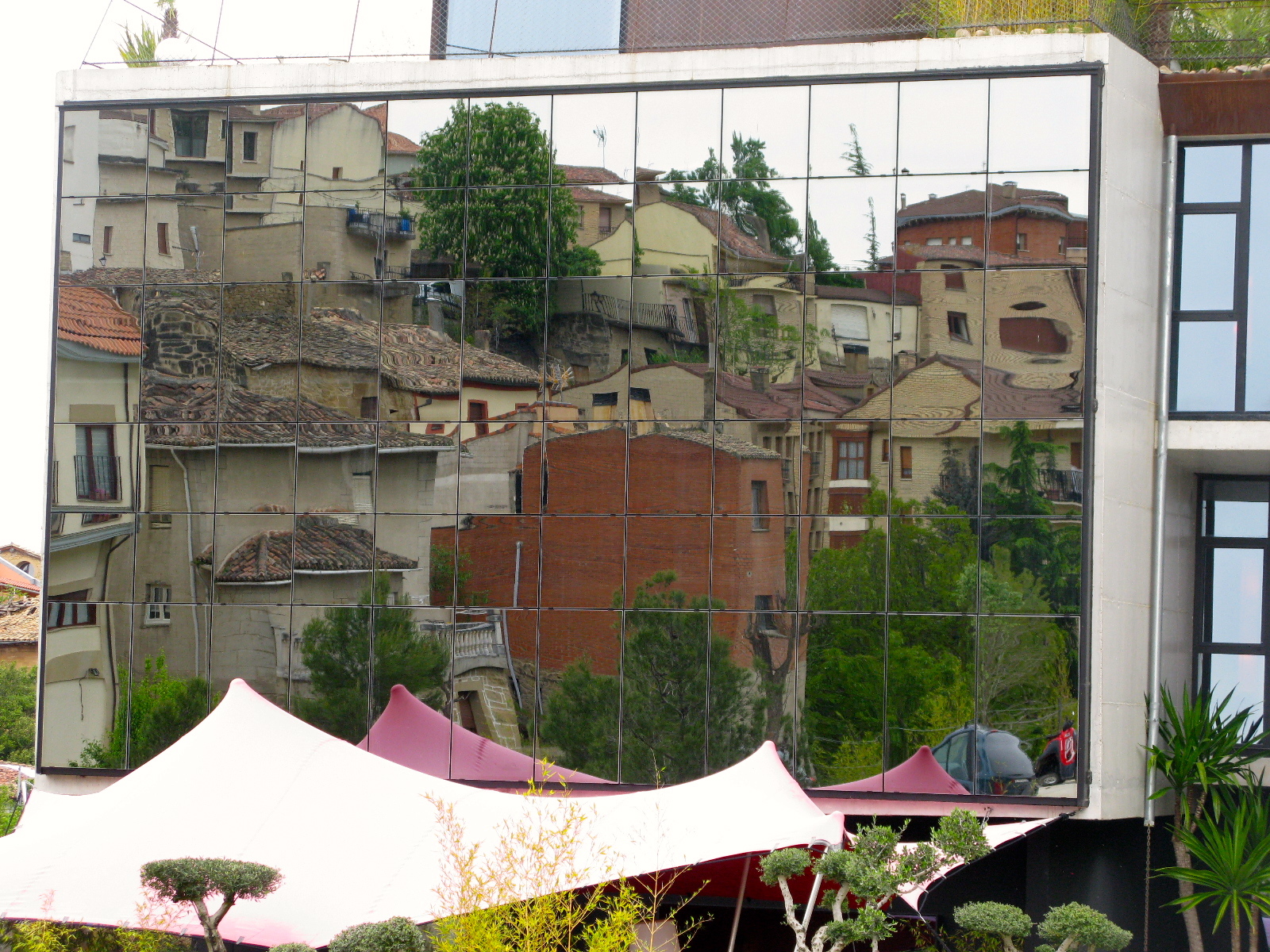
Having done some research on the area before departure, we took a 30-minute drive within a slight rainstorm seeking out one dramatic example of this melding of the 16th and 21st Centuries: Hotel Viura in the village of Villabuena de Alava. Waiting until the old farmer on his tractor passes, we turn onto small cobblestone streets and begin navigating the maze until it appears on our left.  Named for the

Hotel Viura in the village of Villabuena de Alava

Hotel Viura in the village of Villabuena de Alava

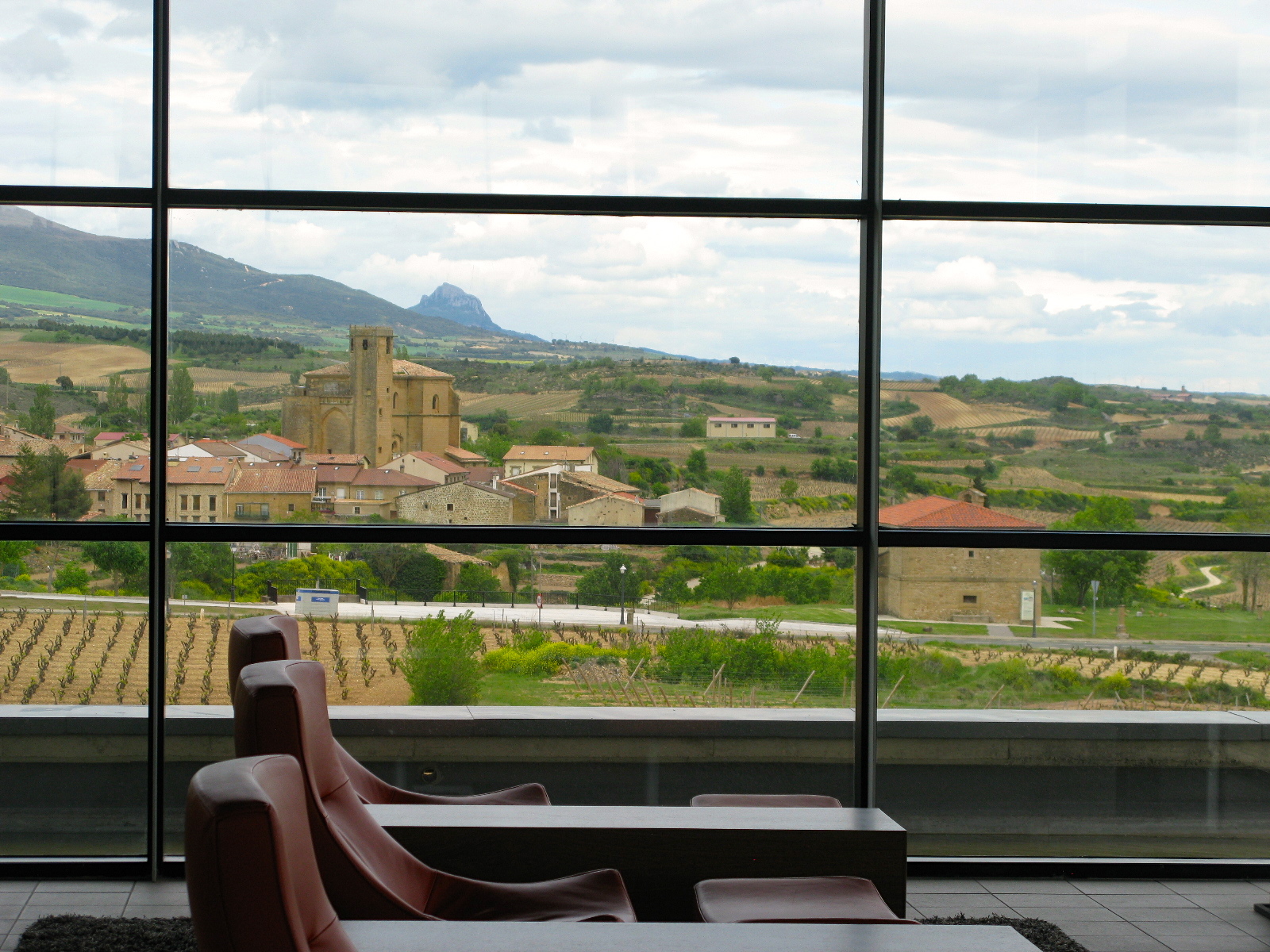
prominent white varietal of Rioja, Hotel Viura is an ultra-contemporary boutique hotel utilizing concrete and glass to mirror old world images back to the villagers.  With 26 rooms, it provides privacy, luxury within 30 minutes of all the regions top bodegas.

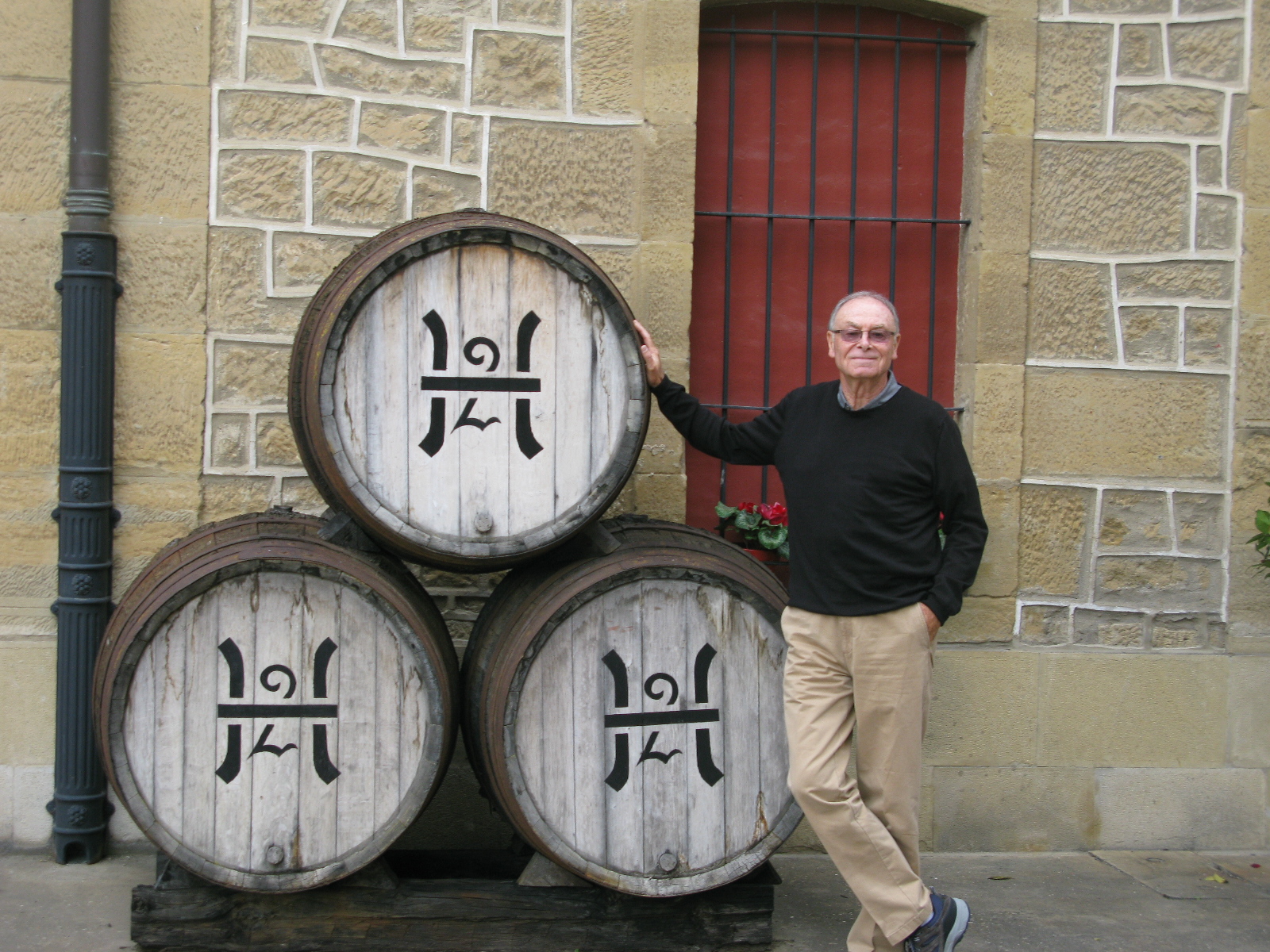
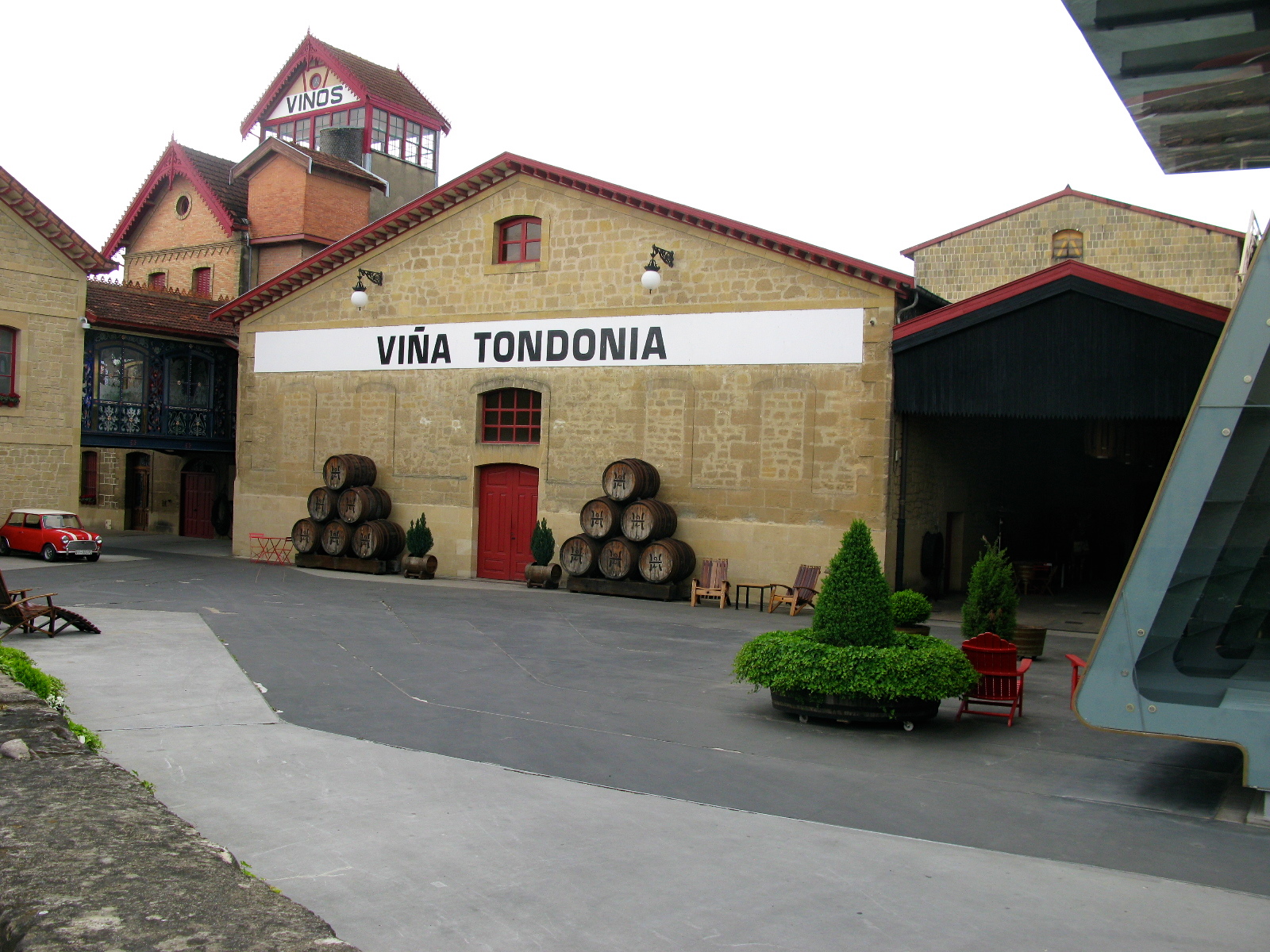
Closer to Haro, the R. Lopez de Heredia Vina Tondonia bodega, in its third century of winemaking, offered a look into how a relentless commitment to old school methods is managed in current times.  I reached out and they responded with an invitation to tour the old cellars and taste some of their “young” wines.

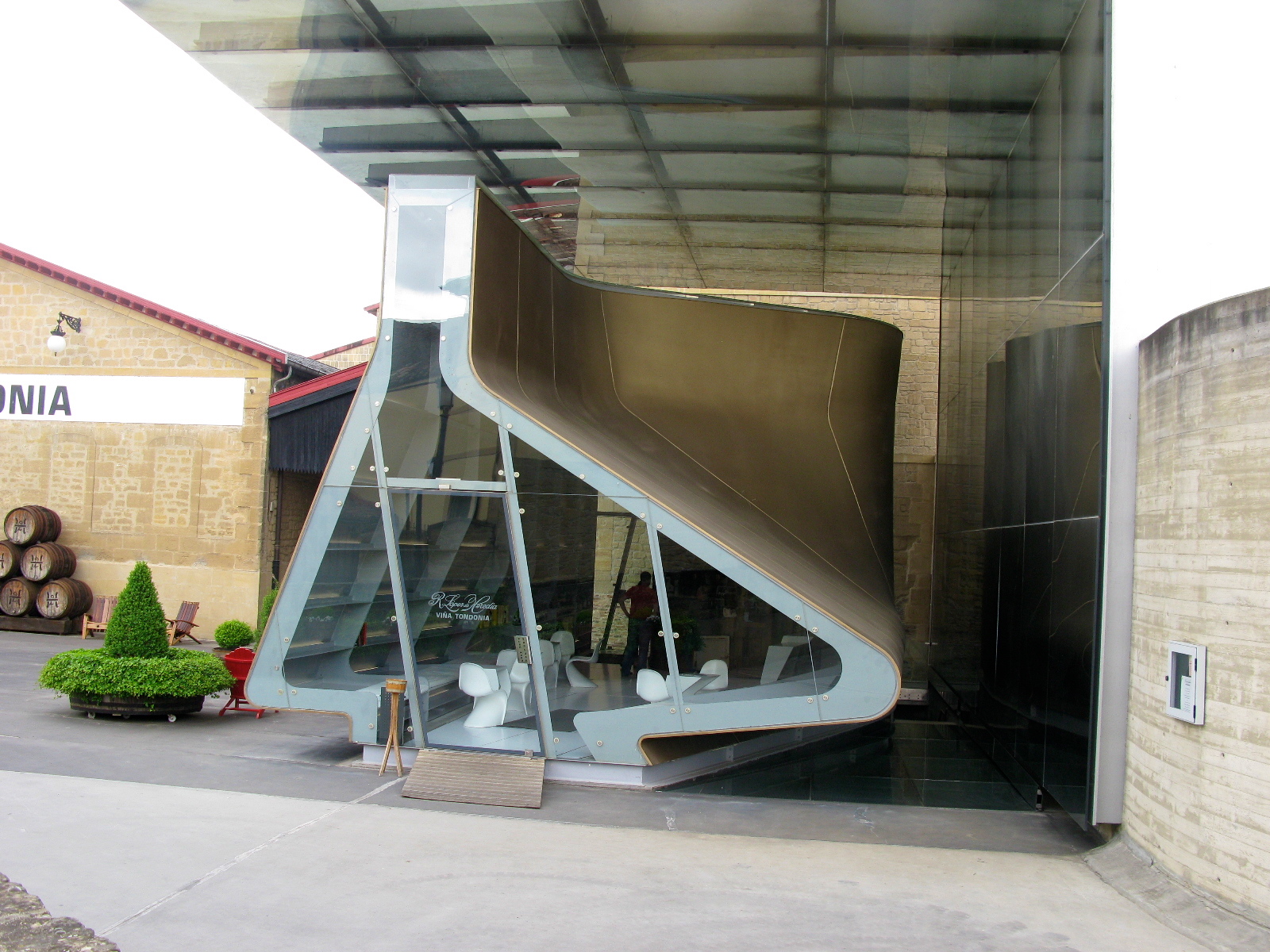
Before entering this “old world” winemaking bodega, one must pass through an ultra-modern tasting room designed in the shape of a wine decanter. The glass and steel building houses a large 19th Century stately dark oak bar and façade,

Tasting Room at Vina Tondonia

Tasting Room at Vina Tondonia

another example of the melding of new and old.

The founder, Rafael Lopez de Heredia, a Chilean immigrant, built and started the winery in 1877 and began exporting wine to France. Soon after, he began making wine in Haro, under his own label and sold it throughout the region.  Today, the 4th generation, brothers and sisters, led by Maria Jose Lopez de Heredia, are staunchly committed to the traditional Rioja style of winemaking influenced by their great-grandfather.  The tradition includes making your own barrels and continuing to store the wines for lengthy periods in 130-150 year old large vats with enough yeast sleeping in their walls to properly enhance the fermentation.

One Rioja tradition, foreign to California winemakers anxious to move their vintages to the marketplace, is to age the

R. Lopez de Heredia Vina Tondonia bodega

R. Lopez de Heredia Vina Tondonia bodega

wines up to ten years before release.  Vina Tondonia, the Heredia bodega’s flagship wines, spend six years in the barrel, another four in the bottle before any thought of release.  In fact, they will not consider releasing a new vintage before the previous one is completely sold.  Surprisingly, this tradition extends to white and well as red wines, the reason we tasted the

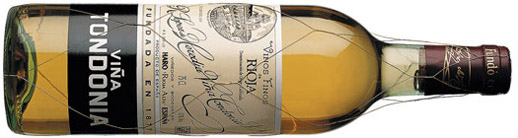
Vina Tondonia White 1998

Vina Tondonia White 1998

Vina Tondonia White 1998.

The tradition of R. Lopez de Heredia is also illustrated by their self-sufficiency.  They have always made their own oak barrels and have used the vats since the beginning.  All grapes are harvested by hand, and then put into self-made cone-shaped baskets, courtesy of the cooperage operation.

As with most winemakers, R. Lopez de Heredia strongly believes that the wine is made in the vineyard and that subsequent viticulture is of little significance.  In these vineyards, most of the credit goes to the alluvial soils with high concentrations of limestone.

Consisting of 90% viura, the prominent Rioja white grape, the Vina Tondonia White 1998, exhibiting a deep, naturally golden color and soft, balanced flavors, the result of extensive aging and fining with fresh egg whites, a common technique used with Rioja wines.

Introducing fresh eggs whites to the fermentation juice seems to naturally extract the sharp tannins from the reds and the acidity from the whites, allowing them to completely balance out their flavors while aging.  This process seems similar to malolactic fermentation used in The U.S.

The new and old of Rioja

The new and old of Rioja

The viura grape is fairly acidic.  Adding 10% of the sweet malvasia grape, with extended aging and 1-2 fresh egg finings tames the juice into a fresh, full, acutely poised wine, understated in its elegance.  Not sweet, not savory, but full-bodied enough to pair with spicy food and herbed mushrooms.  Oddly, we were told that these whites remain drinkable for 20 years.

Tempranillo, known as Spain’s cabernet sauvignon, is the principal red grape in Rioja and contributes 75% to the blended Vina Tondonia Red 2001, also adding small quantities of granacha, graciano and mazaelo.  The wine, with hints of vanilla on the nose, is dry, but rich and fully developed.  Following the 10 year

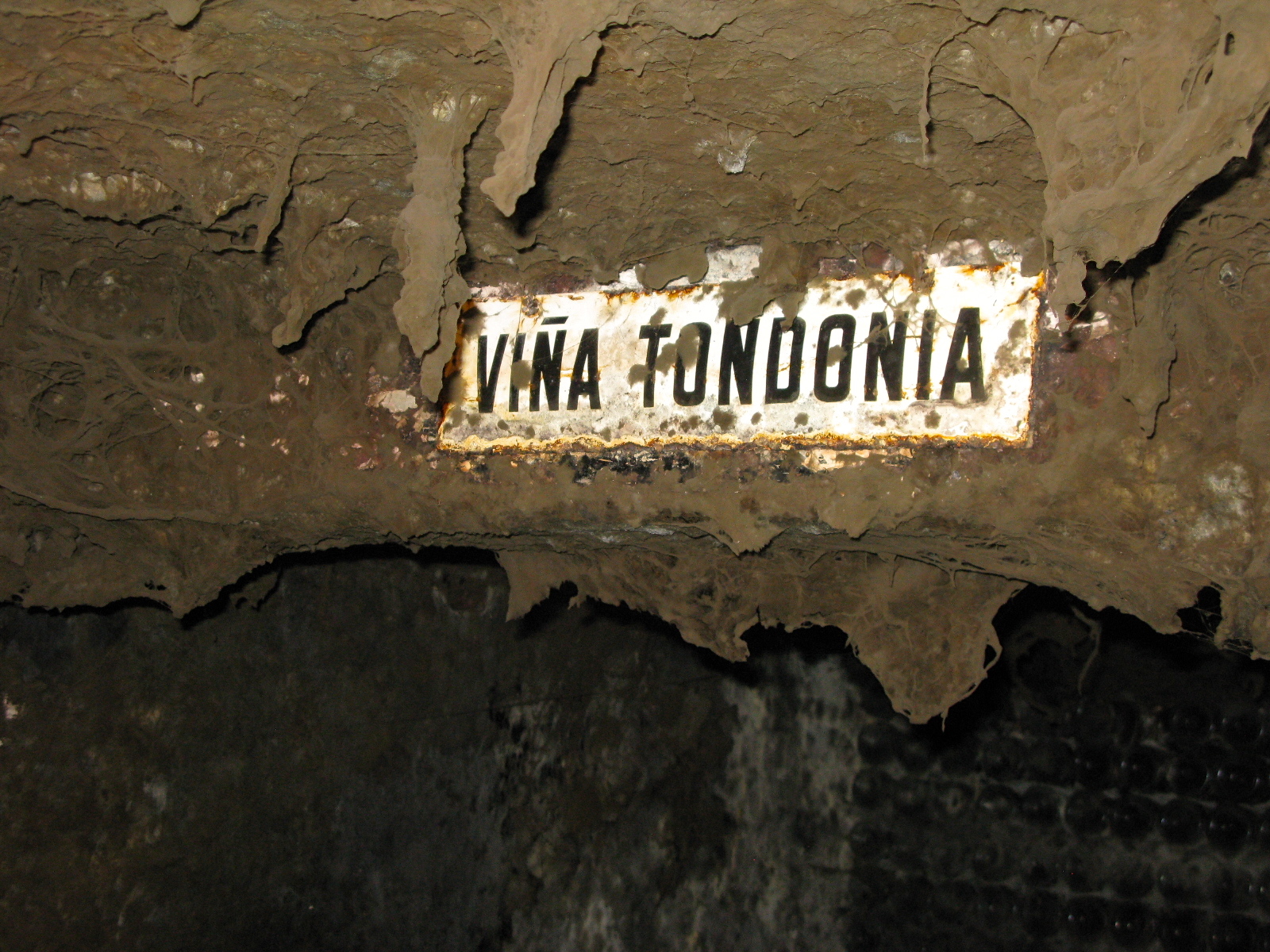
Moldy aging cellar at vina Tondonia

Moldy aging cellar at vina Tondonia

aging process, it was released in 2011 and will remain on the shelves until the vintage is completely sold. After carrying my bottle for several days, I enjoyed it in Sevilla with an assortment of Spanish cheeses, fruits and breads.

Walking the dark cellar caves, with pathways grooved for rolling barrels, racks and bottle cases covered in mold that serves as humidity control, my R. Lopez de Heredia winery visit and tasting was an experience, unique onto itself. They have never been about money, always about philosophy, culture and tradition.

By contrast, neighboring Bodegas Muga S. L. produces arguably the most popular Spanish wine in the USA, exporting 60% of their total production to 54 countries, mostly our east coast and California. Within their more aggressive approach, Muga still constructs its own vats and lives by a standard of not releasing sub-standard vintages.

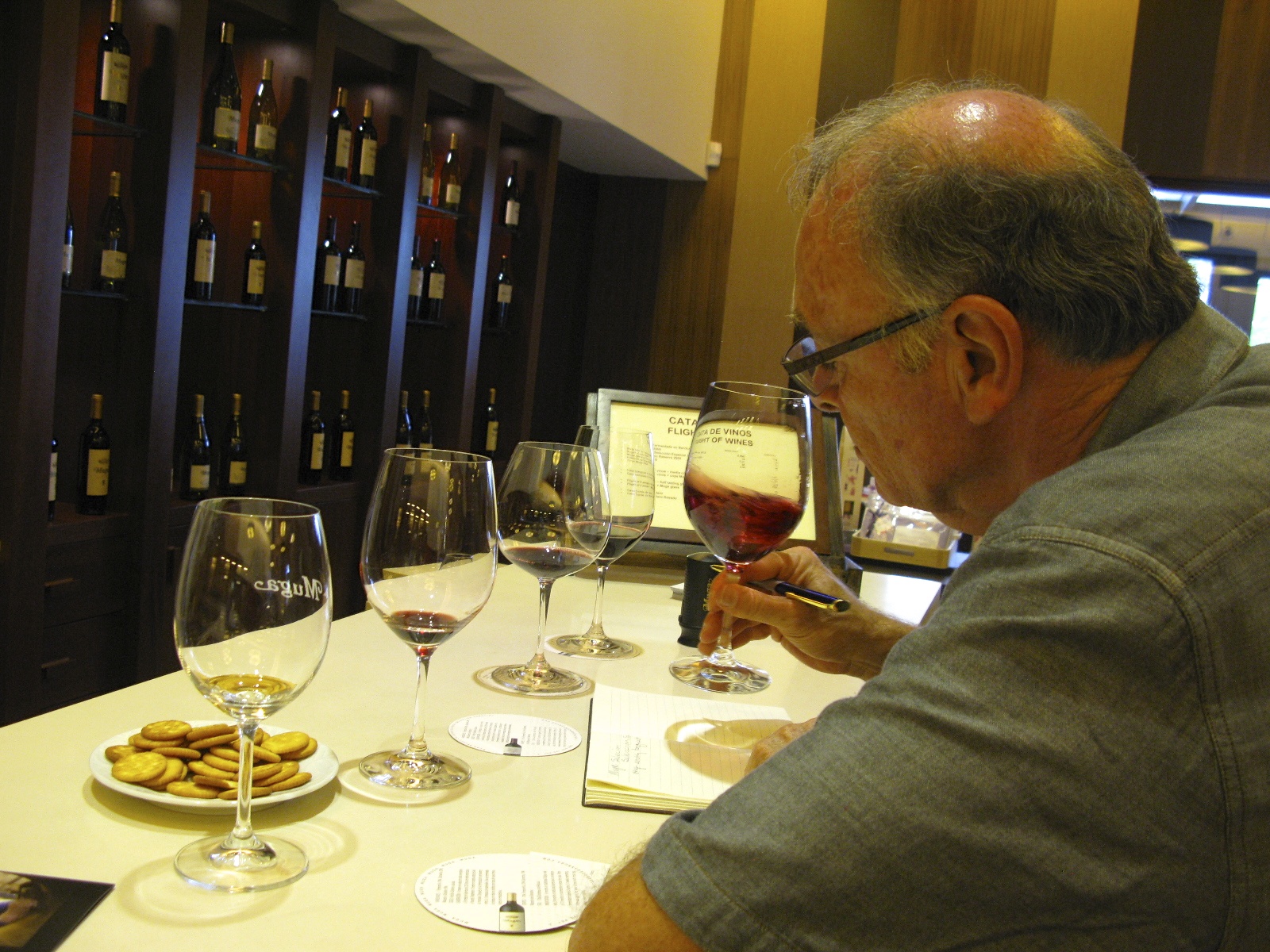
Our tasting flight began with a very young, traditional Muga White 2012 and the Muga Eneas 2011, a tempranillo-dominant blend with 10% viura.  The white

Tasting at Bodega Muga

Tasting at Bodega Muga

blend had a nice acidity with floral notes while the red blend exhibited a smooth earthiness from bouquet through an extended finish. Reasonably priced, these are the wines that consumers will find on California wine lists.  However, the last three reds definitely caught our attention.

The Muga Reserva Seleccion Especial 2009, a traditional tempranillo blend, is aged 12 months in the barrel, more in the bottle before release.  Although it will continue to develop, the wine has a profound earthiness surrounded by dark berries and herbs on the palate, evidence of the limestone in nearby soils.

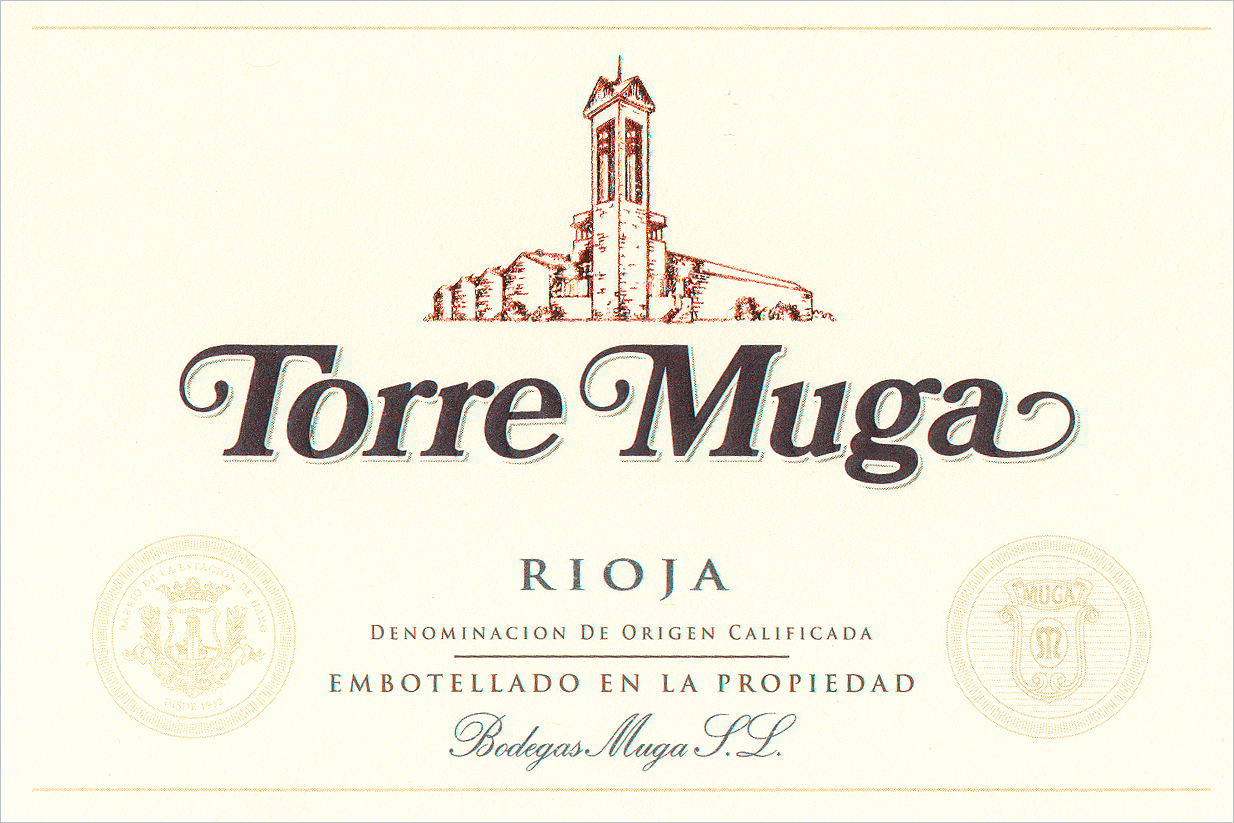
Torre Muga Rioja

Torre Muga Rioja

The last grapes to come into the winery after harvest are used for the Muga Prado Enea 2005 and the Torre Muga 2009 assuring the freshest for these premium tempranillo blends.  By far, these wines displayed the most complex and rich flavors of any of the Muga current releases. Aged 24 months in the barrel, 18 months in new French oak, then more in the bottle, the Torre Muga 2009 has a prominent, rich lusciousness while remaining in perfect balance.  Priced at 40 euros at the winery, consumers can anticipate paying $65-70 per bottle on local shelves.

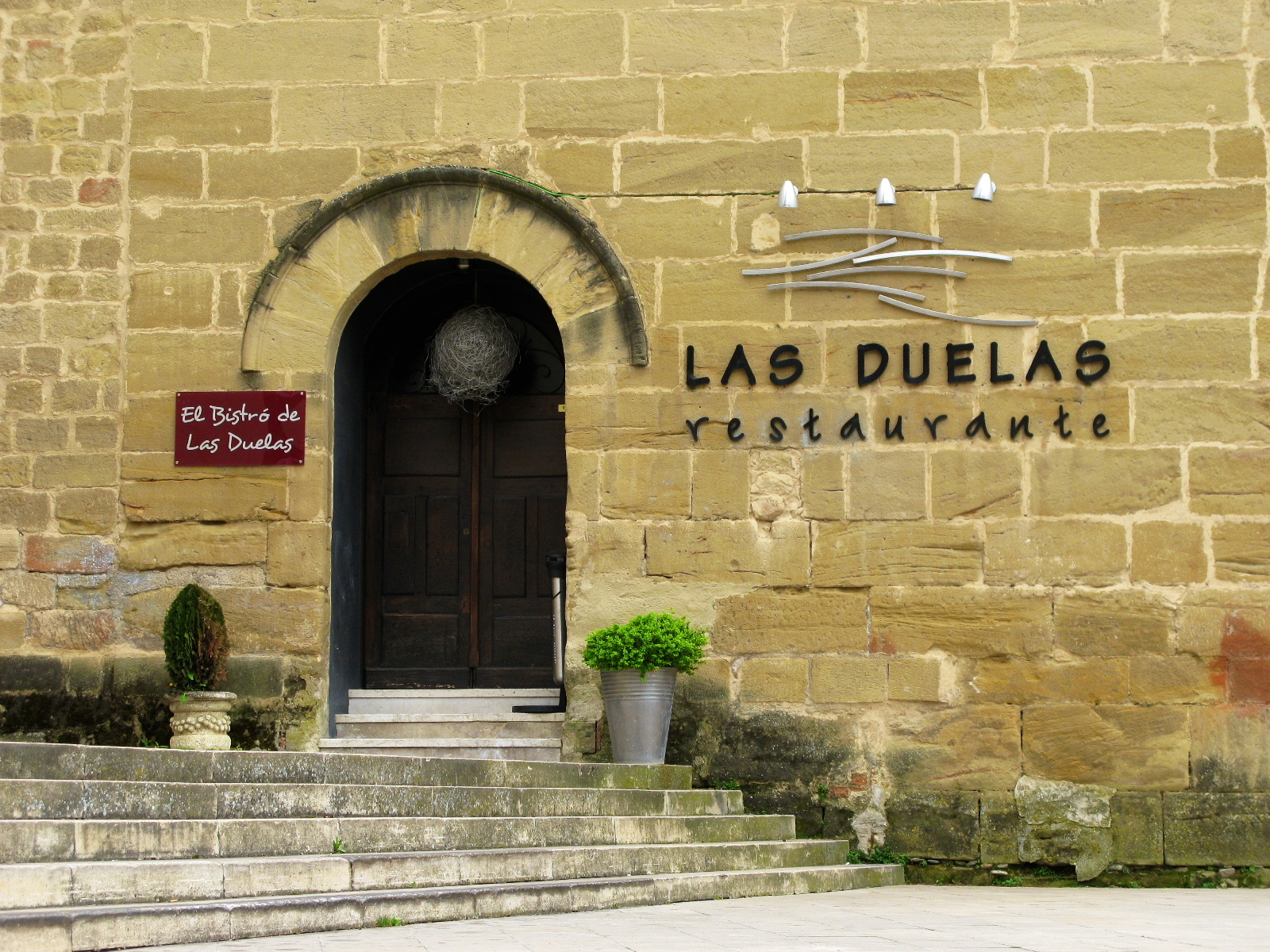
Based on a recommendation in Wine Spectator, we fit in a wonderful dinner at Las Duelas Restaurant, located in

Las Duelas Restaurant

Las Duelas Restaurant

the charming lobby of the Hotel Lagonstinos, a few steps from our apartment.  In typical Spanish fashion, we arrived at 9:30 pm without a reservation and they were just setting up for the dinner crowd.  We left at 11 pm and the place was buzzing.

Rioja has given me a new appreciation of Spanish wines.  Like the people, the wines are never rushed and the balance is always present.


Tablas Creek Winery


There are many reasons to like the Tablas Creek Winery other than the high quality of the wines they produce. As a patriarch that introduced Rhone varietals to the region, they continue to lead with sustainable farming and viticulture resulting in an acclaimed palate of wines and a commitment to the community.

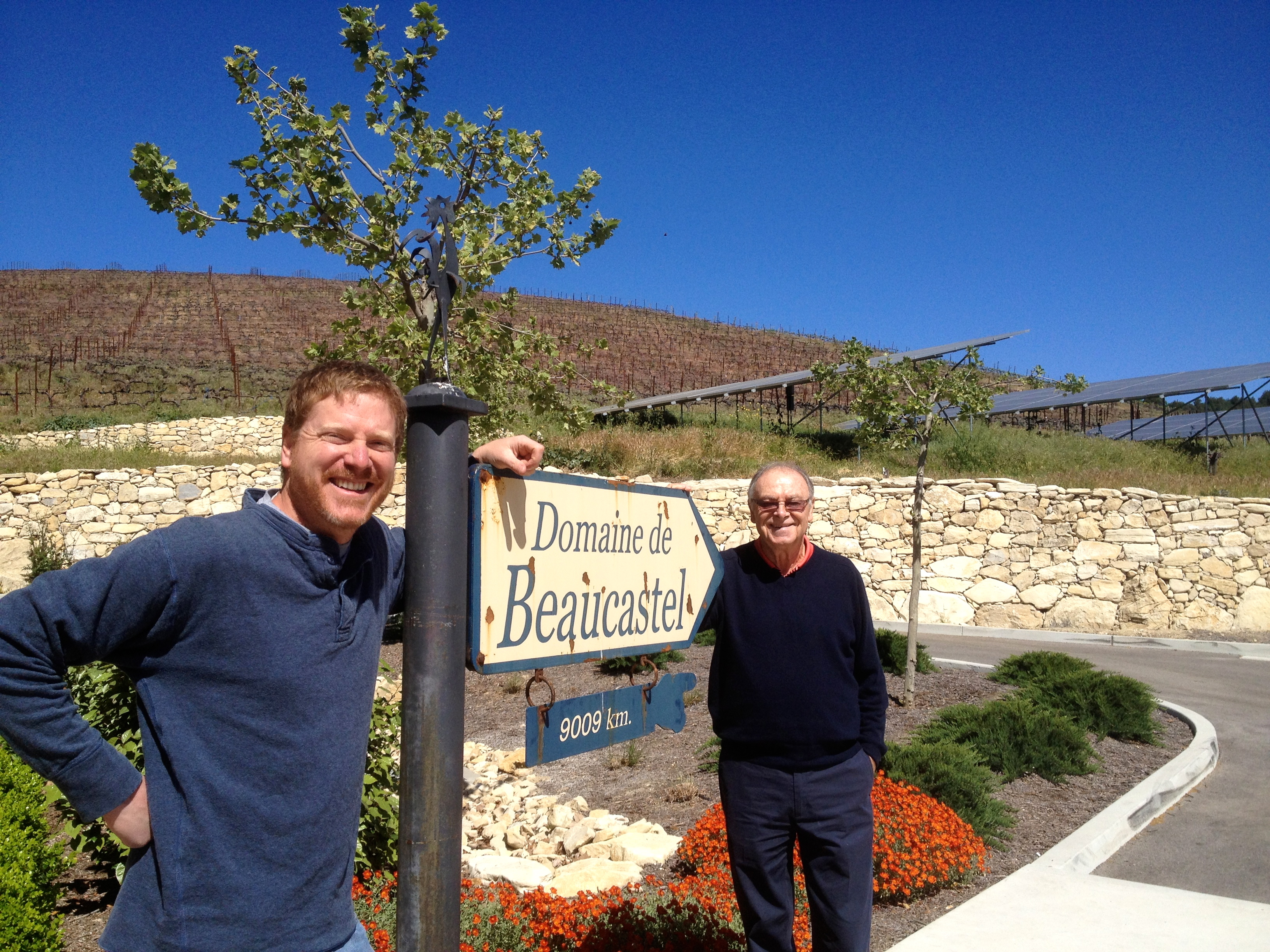
When east coast wine importer Robert Haas combined a long-time friendship with the Perrin family of Chateau de Beaucastel and a desire to move west to produce Rhone varietals, he eventually discovered a 120-acre site in the hills west of Paso Robles with the same terroir as Chateaunef-du-Pape, in the heart of the Rhone Valley.  A few years prior, the two families

Tablas Creek Winery

Tablas Creek Winery

formed a partnership and began the arduous task of importing traditional Rhone vines of mourvedre, syrah, grenache, quarantined while they passed multi-year testing by the USDA.

Those familiar with this area realize that as growing season days can be hot, the nights can be significantly cooler and, speaking to local winemakers, one understands their commitment to the rugged, limestone-laden vineyards.  This is the terroir of the Rhone.

Easy to say now, but this partnership took on the risk and the challenge to pioneer the finest region for Rhone varietals anywhere outside of France and the second Tablas Creek generation intends to search for the perfect blend through organic, biodynamic farming and the finest stock they can obtain.  Tablas Creek obtained organic certification for their 120-acre estate vineyard in 2003, began farming 20 acres Biodynamically in 2010 and is progressively converting the entire operation that way.

Jason Haas

Jason Haas

Last month I sat down with Jason Haas, son of the founder, whose first summer job was working for Chateau de Beacastel in France.  By comparison, mine was at IHOP.  These early experiences led to an advanced degree from Cornell, a management stint with a tech company and, eventually, back to the vineyards where he is involved in many facets of the Tablas Creek Winery operation.

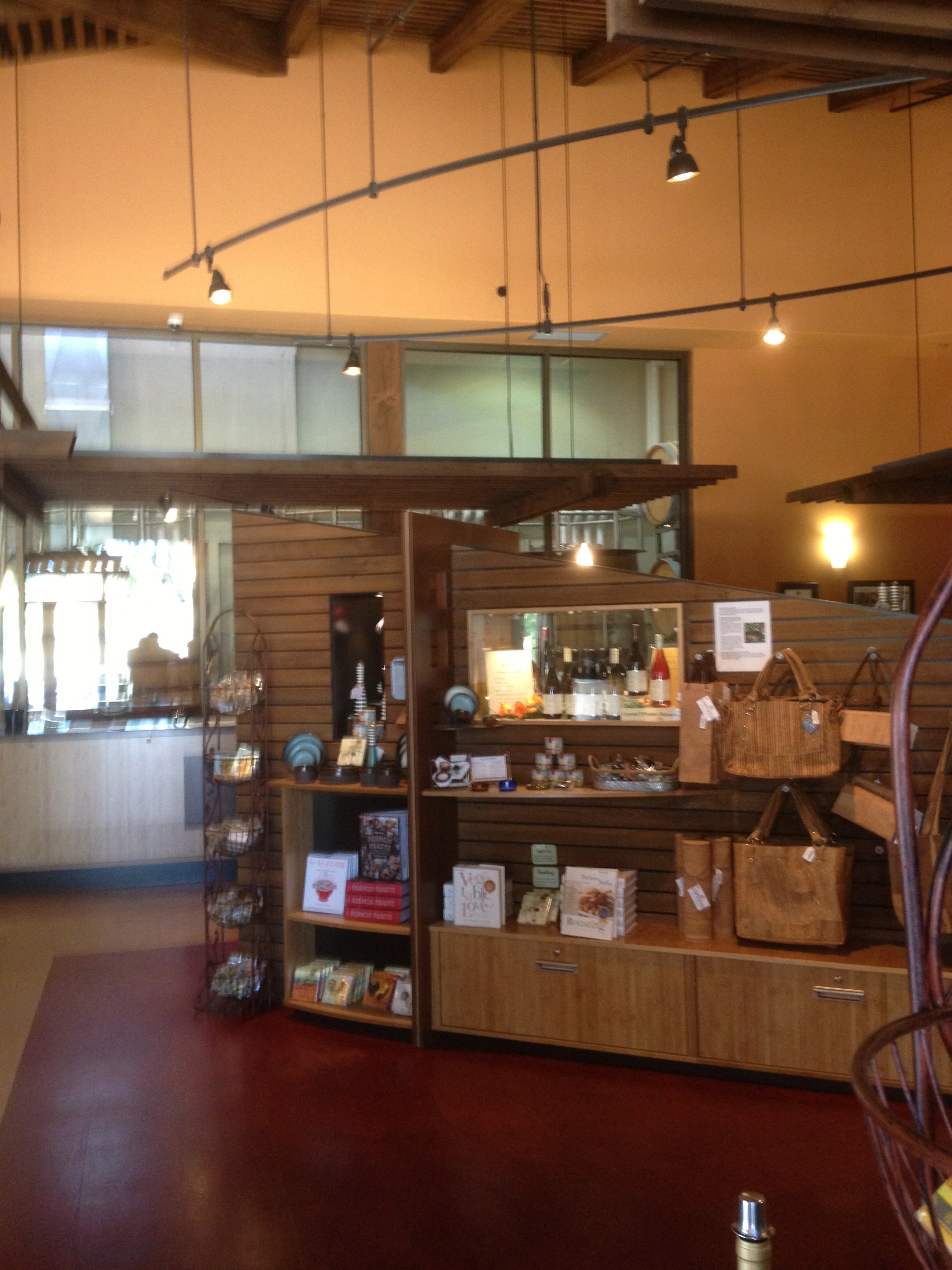
Looking quite different since my last visit, the winery site now has a new, contemporary tasting room facility with outdoor porch, solar panels, alpacas and sheep surrounded by those rugged, limestone-laden vineyards.

Tablas Creek blends basically fit into three brands, Espirit de Beaucastel, Cotes de Tablas and Patelin de Tablas, each with a red and white, as well as other Rose’, single varietals and some elite, small productions blends.  Among many impressive wines, it was reviews of the Espirit de Beaucastel in various periodicals that peaked my interest, including numerous Top 100 lists.

2010 Tablas Creek "Espirit de Beaucastel"

2010 Tablas Creek “Espirit de Beaucastel”

The mourvedre-based Espirit de Beaucastel 2010 ($55) is Tablas Creek’s, highly praised, flagship wine, consistently reviewed in the mid-90 point range.  In addition to the richness, mourvedre, in this vintage, contributes the meaty, savory flavors while fruit is expressively delivered by Grenache and syrah, comprising half of the blend, along with a touch of counoise to tame the syrah, a traditional Rhone role.

Both mourvedre and counoise grapes are native to Spain and were imported to the Chateaunef-du-Pape region in the 12th Century, when the papacy was in Avignon.  The Espirit de Beaucastel 2010 from Paso Robles will be a pleasant introduction to anyone seeking to discover why Rhone blends have been coveted for centuries.

While flavors of honey are indicative to roussanne-based white blends, I found a nice minerality on the nose through the long finish with the 2010 Espirit de Beaucastel Blanc ($40), directly attributed to the limestone in the vineyard soils.  Once the roussanne/grenache blanc blend opened up in the glass, the tropical and orchard fruits emerged on the nose and palate. The Grilled Scallops with Grilled Apples and Honey Drizzle, a recipe found on the Tablas Creek Winery website, served as a perfect pair with my bottle.

In the shadow of the Espirit de Beaucastel for years, the

Cotes de Tablas 2009 shared the spotlight when named to the Wine Spectator magazine’s Top 100 Wines of 2011.  As we walked through the 120-acre certified organic vineyard on a cold morning last month, Jason pointed out a slight amount of late season frost damage to the new, delicate leaves. A late-season frost in 2011 ultimately resulted in lower yield and,

2011 Cote de Tablas

2011 Cote de Tablas

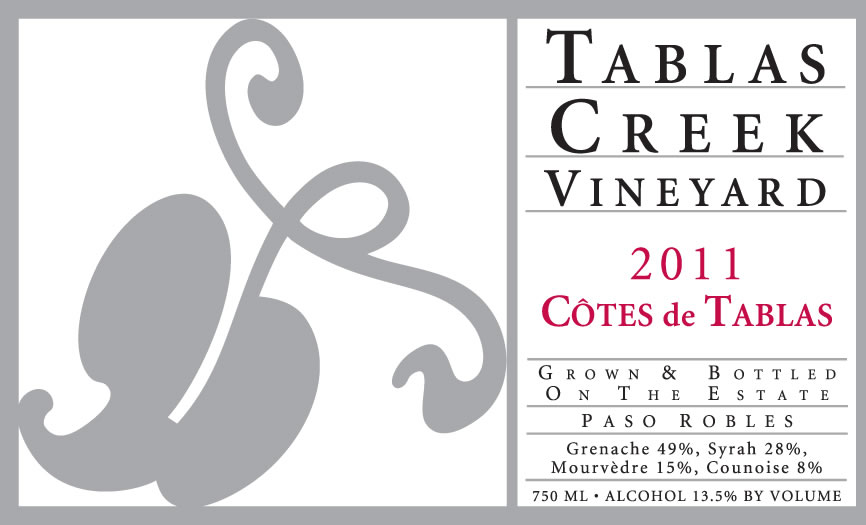
according to staff, produced the Grenache dominant Cotes de Tablas 2011 ($30), a wine that rivals the 2009 vintage in richness and the expression of fruit and spice. With over 75% of the blend comprised from Grenache (49%) and syrah (28%), the flavors of deeply ripened fruit and sweet spice were present when my first glass opened up.  This wine reminds me why I prefer Grenache-dominant blends.

Nearly equal parts viognier. Grenache blanc, roussanne and marsanne, Cotes de Tablas Blanc 2011 ($27) benefits from all grapes with a floral nose, rich orchard fruit flavors and a nice minerality throughout, courtesy of the latter two grapes.  Fermentation in stainless steel tanks adds crispness to its complexity.

The winery’s new Patelin de Tablas series surfaced in 2010 with the goal to produce high-quality, value-priced wines based from syrah and Grenache blanc by sourcing some grapes from as many as 15 other local vineyards.  Priced at $20 each, the 2011 Patelin de Tablas ($20) and 2011 Patelin de Tablas Blanc ($20) are both nicely structured, fruit forward wines that have been recognized through the “bang for your buck” they deliver.

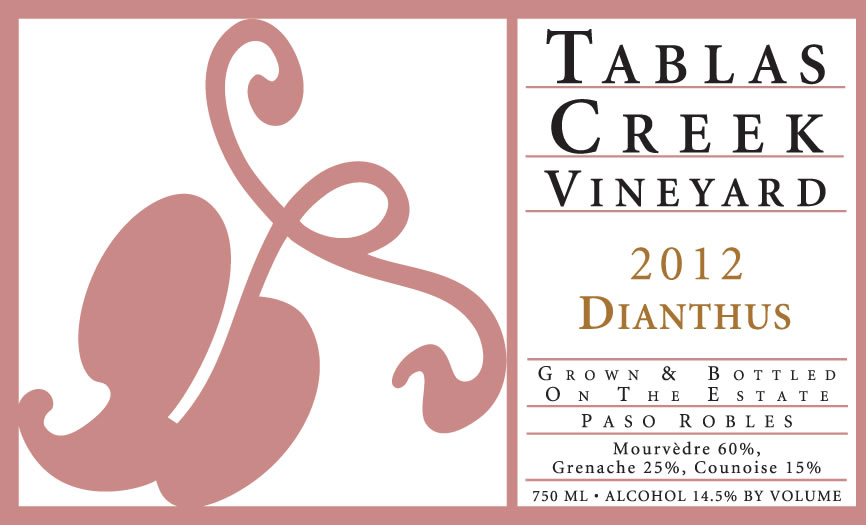
2012 Tablas Creek "Dianthus" Rose'

2012 Tablas Creek “Dianthus” Rose’

Not respected for years, the age of new, complex rose’ is well upon us.  The mourvedre-grenache-counoise blend, 2012 Dianthus Rose’ ($27) has a wonderfully complex nose but the vibrant flavors of wild berries, pomegranate and citrus are extraordinary, awarded 90 points by Wine Spectator.

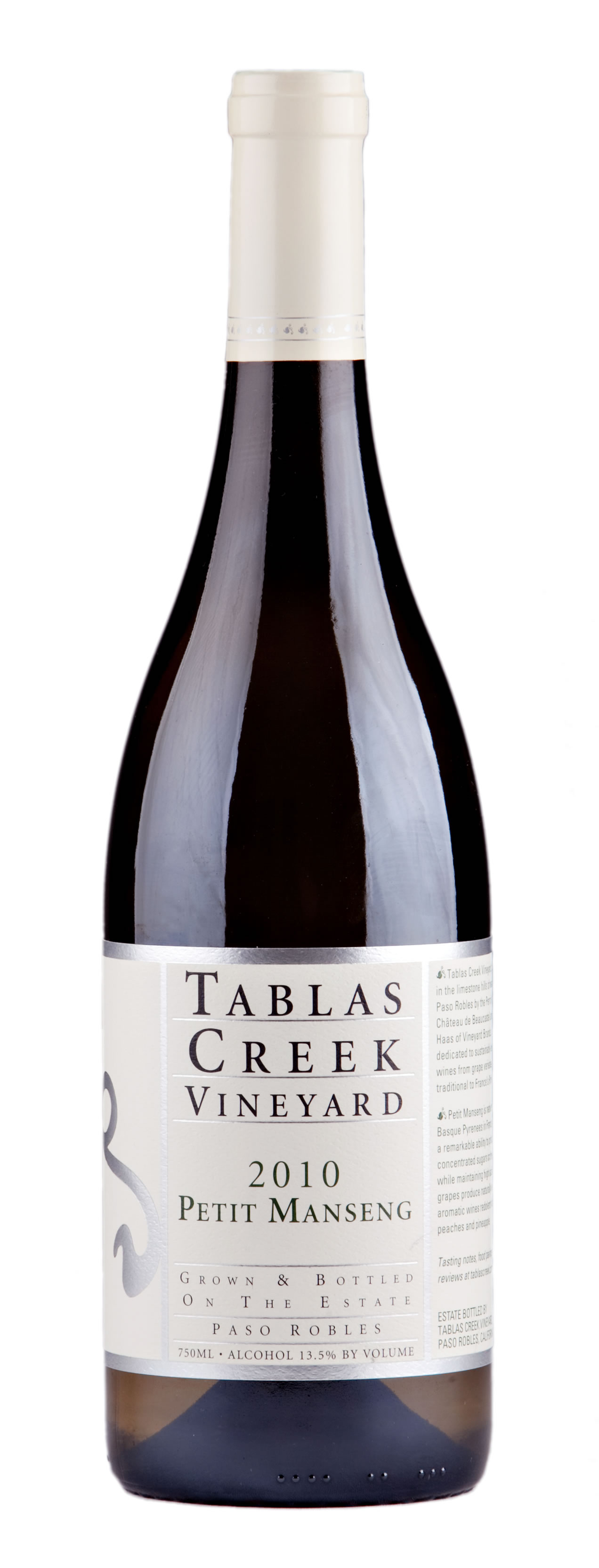
The remainder of the Tablas Creek palate includes special varietal specific wines and low production blends that are both rare and eminent including 2011 Petit Manseng ($35), 2011 Picpoul Blanc ($27), 2010 Counoise ($35) and a premier blend, the

2010 Tablas Creek Petit Manseng

2010 Tablas Creek Petit Manseng

2010 Panoplie ($95) featuring the best, hand selected mourvedre, Grenache and syrah aged together in one 1,200-gallon oak cask to produce 600 cases.  They are all astounding wines, but rarely available to those outside of their Vinsider Wine Club

members who have committed to in-depth exploration

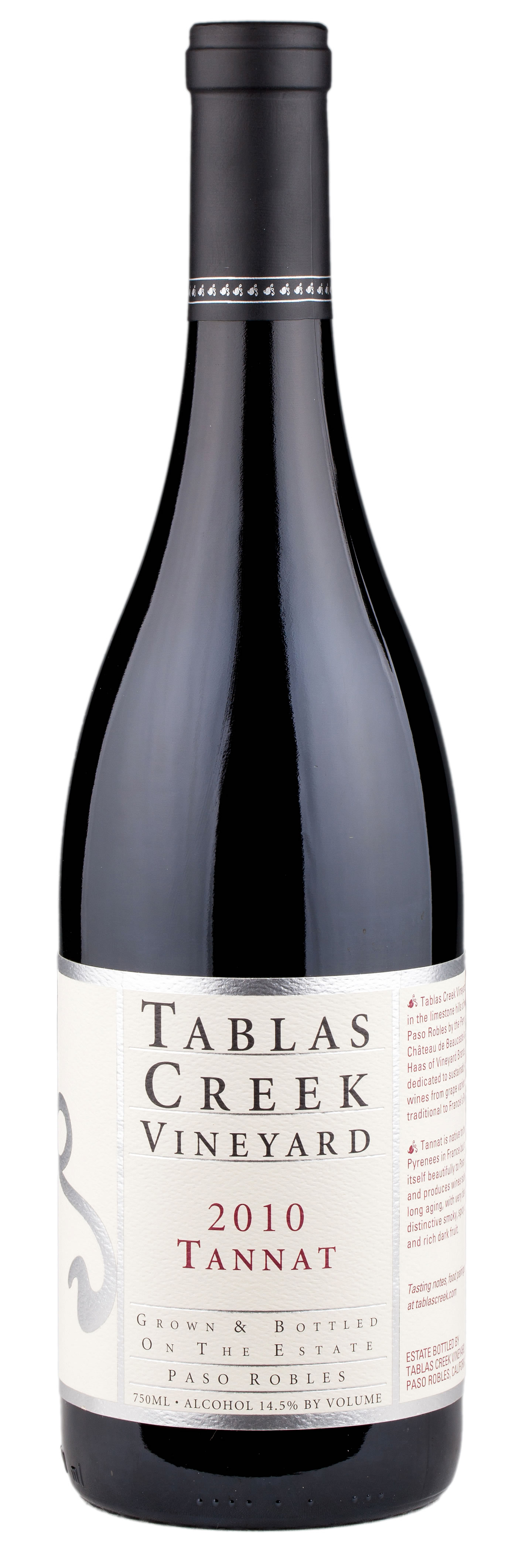
The single varietal that we recently tasted was the 2010 Tannat, a grape predominate in the Pyrenees Mountains of Basque country that is also used with Bordeaux blenders like cabernet sauvignon and cabernet franc.

2010 Tablas Creek Tannat

2010 Tablas Creek Tannat

A carnivore’s delight, the 2010 Tannat ($36), at first glance looks deep and dark, like it belongs in a large glass next to your favorite steak.  Expect some tannins, anticipate the full berry flavors, but focus on those earthy, smoked nuances that balances and give identity to the wine.  My next bottle will be given a year to evolve.

The Paso Rhone Rangers offer a great story, bringing old World wines from southern France literally to our doorstep.  There in the beginning, leading for the future, Tablas Creek Winery is continuously striving to achieve success by doing it the right way.

Located deep into the Westside foothills on Adelaida Road, the tasting room is open from 10am-5pm daily and should definitely be a scheduled stop on your next journey to the Paso Robles region.

Tablas Creek Tasting Room on Adelaida Road

Tablas Creek Tasting Room on Adelaida Road


Collecting Wine And Why


Establishing a wine collection is far more than selecting some great bottles from an afternoon tasting but certainly does not have need of the time, money and research to acquire rare vintages. It requires some education of both the mind and palate because beyond the labels, specific varietals and ratings, the crescendo of wine is all about taste and the color, aroma and texture that precede it.

Taste is always upfront in my pursuit of wines, searching for the perfect balance in fruit, spice and earthy flavors. However, collecting is usually constrained by budget and many collectors agree, “Once you’ve gone Burgundy, you can’t go back.” As great as Burgundian wines are, collecting the “grand cru” would, inevitably, lead to bankruptcy for most of us. Fortunately, wines from our local California neighborhood have the quality and accessibility to satiate a collector’s appetite.

The main factor surrounding my collection is that I am an occasional wine drinker. My wife, declaring war on sugar some 15 year ago, no longer takes pleasure in wine and I am not going to open a nice bottle for one glass.  The result is a small collection, quality over quantity that can be shared with others, the best way to enjoy the attributes of wine.

2009 Kosta Browne Pinot Noir Sonoma Coast

2009 Kosta Browne Pinot Noir Sonoma Coast

Sharing is wonderful, but the goals of any cellar reflect the individual tastes and diverse varietals enjoyed by the collector.  Surprises and opportunities aside, the following guides the search for wine within my budget.

#1:  Explore the finest pinot noir from California and

Oregon

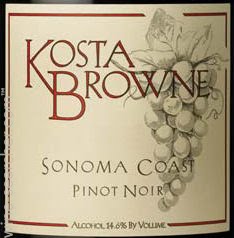
With few exceptions, the world’s optimum pinot noir is produced in Burgundy France, Oregon and California.  The core of my pinot noir comes from three California producers, Kosta Browne Winery, Williams Selyem Winery from Sonoma County and Seasmoke Cellars from the Santa Rita Hills in northern Santa Barbara County. There are enough diverse releases from specific vineyards and terroir among the three to provide for an impressive array of pinot noir. Among my Kosta Browne pinot’s, the 2009 Sonoma Coast, 2008 Russian River Valley and the 2007 Sonoma Coast were all among top ten wines on Wine Spectator magazines annual list, the 2009 named “2011 Wine of the Year.”

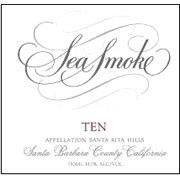
2009 Seasmoke "Ten" Pinot Noir

2009 Seasmoke “Ten” Pinot Noir

My routine is to “lay down” the new vintages for a year, making the older ones available for consumption.  My 2009 Seasmoke “Ten” Pinot Noir is now a prized bottle in the “drink/hold” status waiting a special occasion while the 2010 and 2011 vintages can rest.  It takes patience to receive an allocation of these great wines, but the rewards to your palate are worth it.

Other pinot noir wines are discovered while tasting in other regions, none better than the Willamette Valley of Oregon. In 2012, I acquired two bottles of 2010
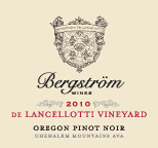
Bergstrom Wines “De Lanciotti Vineyard” Pinot Noir
which are drinkable 2012-2022. While one bottle will rest longer, the other, consistent with my goals, is earmarked to celebrate my son’s completion of his MBA in June. In researching ongoing reviews of Oregon pinot noir, I follow the vintages of wineries such as Argyle, Ponzi, Evening Land, Penner-Ash, Archery Summit and others that are all capable of producing memorable

Bergstrom "De Lancelotti Vineyard" Pinot Noir 2010

Bergstrom “De Lancelotti Vineyard” Pinot Noir 2010

wines.

#2:  White wines with food.

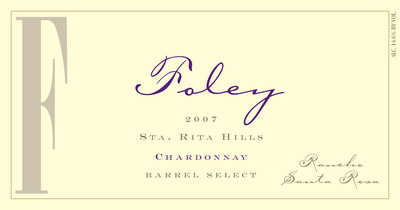
Although there are an abundance of fine white wines to choose from, chardonnay adds to food like no other varietal and, given that I no longer eat meat, it will receive expanded shelf space in my cellar.  Vintage to vintage, my chardonnay assortment includes bottles of Foley Estate “Barrel Select” Chardonnay, Mt. Eden Chardonnay Santa Cruz Mountains and, most recently, Seasmoke “Grand Cru” Chardonnay, a superb first vintage from the venerated producer of Santa Rita Hills pinot noir.

Violating my own rule of diversity, these wines are very similar in style and share my highest standard in color, bouquet, oak, flavor, texture and finish. I recently shared my only bottle of the new Seasmoke “Grand Cru” with friends and it immediately became the topic of discussion for the next several

Foley Estate "Barrel Select" Chardonnay

Foley Estate “Barrel Select” Chardonnay

minutes, including the question, “How do we obtain some of this?”  Their answer was revealed, days later, when my annual allocation letter granted me permission to purchase four bottles in 2013. As good as the Seasmoke is, the French “Grand Cru” designation is meaningless in the US.

Aside from these wines, I am always looking for a good bargain on an authentic “Grand Cru” from Burgundy where chardonnay is the only white grape permitted to be grown.

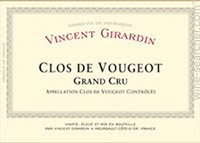
2005 Vincent Girardin Clos Vougeot Grand Cru Vielles Vignes

2005 Vincent Girardin Clos Vougeot Grand Cru Vielles Vignes

Burgundian white wines are elegant and fruit-forward, distinguishing themselves with a soft minerality on the finish.  My current prized bottle is a 2005 Vincent Girardin Clos Vougeot Grand Cru Vielles Vignes.  A brief review on reading French labels tells us this wine comes from grapes within a walled-in (clos) vineyard in the village of Vougeot, they are old vines (vielles vignes) and Vincent Girardin produces it.  Actually, the vineyard, at 125 acres, is a very large “clos” vineyard, the only one in the village.

Other “pairing” white wines that consistently have shelf space in my compilation are the Merry Edwards Sauvignon Blanc, the Fiddlehead “Goosebury” Sauvignon Blanc and well-reviewed sauvignon blanc from the Marlborough region of New Zealand, when nice, pungent flavors of lemongrass are needed to enhance a dish like well-prepared, rare hamachi.

#3: Rhone Blends and Value Cabernet Sauvignon

The great blends of France’s Rhone Valley, featuring Grenache, syrah, mourvedre and other varietals are being replicated by California “Rhone Rangers,” free to add their own creative twist to centuries of tradition. New and established wineries, such as Tablas Creek Vineyard, Linne Calodo Cellars and Terry Hoage Vineyards

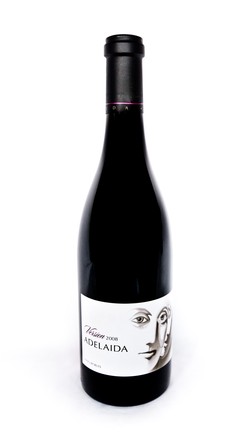
from the Paso Robles region offer great Rhone blends to choose from. An annual favorite and a consistent reflection of the local terroir is the Adelaida Cellars “Version” Rhone

Adelaida "Version" Red  Rhone Blend

Adelaida “Version” Red
Rhone Blend

Blend, legendary to the area.


Not being the main varietal focus of my collection, budgeting for the Napa Valley Cabernet Sauvignon is, with few exceptions, not an option. I enjoy exploring value-priced Cabernet from other regions.  The best example of stand-alone great flavor for under $35 is the Eberle Estate Cabernet Sauvignon from Paso Robles’ eastside.  Of course, the pricier Eberle Reserve Estate Cabernet Sauvignon is a good collectible to age for a special occasion.  With 10-15 cabernet sauvignon and Bordeaux varietals, vintages 2002-2006, in my cellar, acquiring new ones before enjoying current inventory is a low priority.

Eberle Reserve Cabernet Sauvignon Estate Bottled

Eberle Reserve Cabernet Sauvignon Estate Bottled

#4:  Discoveries

Allowing flexibility in my collection for special wines that I come across at tasting events, classes, winery tours etc. is a must.  Generally, these wines fill in varietals like merlot, petite sirah, syrah, zinfandel, riesling and others that comprise one-third of my collection.


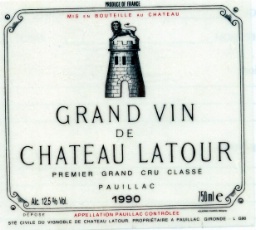
Let me end with a story that has bought laughter and tears for two decades.  Several years ago, our family hosted an exchange student from Germany; just about the time my interest in wine in its adolescence.  The next year, he returned as our guest and presented me, from his parents collection, with two bottles of 1990 Chateau Latour and a 1990 Chateau Margaux.  I knew they

1990 Grand Vin de Chateau Latour

1990 Grand Vin de Chateau Latour

were nice French wines, not realizing that these Bordeaux giants are, vintage to vintage, arguably the world’s finest wines.  The 1990 Chateau Latour was Wine Spectator’s “1993 Wine of the Year” with a 100- point rating.  To give some perspective of the value of these wines, the recently released 2009 vintage sells in the range of $1500 per bottle. We managed to drink them all, my only memory is sharing the Chateau Margaux with my wife on our anniversary at the old Downtown Bistro on Lancaster Blvd, not completely understanding its complexity, but agreeing it was “liquid velvet” to our palates. The irony of the tale is that, knowing what I know today, I would be reluctant to ever open them, facing the reality of no longer having two of the world’s great wines.  Ultimately, wine collections are to enjoy with others, not displayed on a shelf.


Pinot Fest ’13


Large wine events are most often over-crowded with an overwhelmingly number of represented wineries and more people having fun and supporting a charity then seriously tasting new pinot noir releases. Thus, my strategy for “PinotFest 2013”, held at the Alta Dena Country Club near Pasadena, was to work the room and select a few new wineries to explore. Because they are contemporary and boasting high ratings, I started with a relatively new winery that is producing wines in the Russian River Valley and other prominent Sonoma County appellations

Sojourn Cellars began in 2001, a collaboration of two friends committed to producing distinctive pinot noir in a region that, arguably, leads the world.  square-1CraigHaserot and winemaker Erich Bradley source their grapes from vineyards north of Sonoma, near Cotati, where I watched my uncle race formula cars in the early sixties.  Today, we tasted three single vineyard pinots, one asserting a 96-point rating from the Pinot Report.

We began with the 2009 Sojourn Cellars Sangiocomo Vineyard Pinot Noir ($54/96), a wine that put across an earthy, dark fruit nose followed by complex flavors and a rich, creamy texture.  Not a bad beginning.  The second pour was a pinot noir from Gap’s Crown Vineyard whose out-sourced grapes are used in many fine wines.  The 2009 Sojourn Cellars Gap’s Crown Vineyard Pinot Noir ($54/95) comes from a hilly slope with stressed soil pushing the grapes to fully ripen, producing those jammy, concentrated flavors that are nicely structured.

The very earthy 2009 Sojourn Cellars Rodger’s Creek Vineyard Pinot Noir was actually my favorite of the three, adding mushrooms and savory herbs to the concentrated dark fruit flavors. As I finished the server leaned forward and whispered, “Do you want to taste our dark pinots,”

Many winemakers could not resist “bootlegging” some of their other varietals into “Pinot Fest 2013” and, in this instance; it was two new Cabernet Sauvignon wines from extraordinary vineyards that were about to steal the squareshow.

The Beckstoffer Georges III Vineyard is royalty among the many great Napa Valley cabernet sauvignon vineyards.  The name adorns the label of many great $100+ wines from the Napa Valley floor in Rutherford.  The 2009 Sojourn Cellars Beckstoffer Goerges III Cabernet Sauvignon ($95/) was, of course, very full-bodied with deep dark cherry flavors and luscious textures, a wine to savor.

A late frost, prompting a decision to cut back clusters, reducing volume, ultimately led to a wine rich both in structure and flavor that was one of the “hits” of the show.  A suitable descriptive adverb for the 2009 Sojourn Cellars Home Ranch Vineyard Cabernet Sauvignon ($48) is “opulent,” with complexity and structure of wines twice the price.  For those serious about cabernet sauvignon, this is a find.

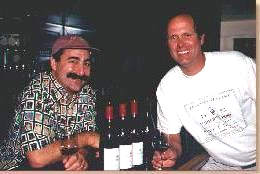
Winemaker Kenneth Volk, born and raised in San Marino, CA has been a fixture in the central coast wine culture for decades, having started Wild Horse Winery and Vineyards over thirty years ago, ultimately

Kennet Volk

Kennet Volk

producing 150,000 cases annually.  Now operating in the Santa Maria Valley AVA, north of Santa Barbara, Volk is producing pinot noir, cabernet sauvignon and chardonnay under the label that bears his name, his signature.  Today, we tasted two single-vineyard pinot noir and a few “bootlegged” varietals.

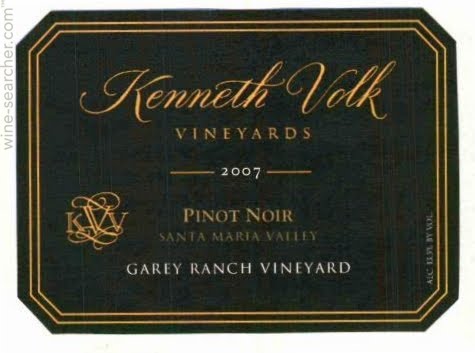
From a small township in the Santa Maria Valley, the 2009 Kenneth Volk “Garey” Vineyard” Pinot Noir ($48) was, clearly, one of the notable wines poured, an atypically huge wine with extracted flavors that can pair with a broader range of food. Aside from the influences of French oak, the warm location of this vineyard allows for full ripening of the grape.

For pure elegance in the pinot noir tradition, the Kenneth Volk “Sierra Madre Vineyard” Pinot Noir ($48) has floral and spice aromas and delivers a nice, flavorful finish. Volk’s pinot noir wines are well crafted, respecting the tradition of the Burgundian grape but willing to push the envelope to higher levels.

2007 Kenneth Volk "Garey Vineyard" Pinot Noir

2007 Kenneth Volk “Garey Vineyard” Pinot Noir

A close look reveals that the Paso Robles region is quietly producing some nice cabernet sauvignon, adding to an already expansive range of varietals that thrive in the area.  One example is the 2008 Kenneth Volk Cabernet Sauvignon ($36), sourced from multiple vineyards in the region.  Again, French oak is used to create complex smoky flavors that continue through the finish.

KENVOLKVIN08CSVF

2008 Kenneth Volk Cabernet Sauvignon

At 86 years and claimed to be one of the oldest California plantings, the mourvedre vines from the Enez Vineyard produce low-yield, small cluster fruit, resulting in intense flavors.  The 2009 Kenneth Volk Enez Vineyard Lime Kiln Valley Mourvedre ($36) earns the prize as the pleasant surprise of the tasting.  The flavors also linger on the palate.

A decade since the Alexander Payne film, “Sideways” put the Hitching Post restaurant and the region on the map, the eating place and their fine selection of pinot noir, expressive of the local terroir are thriving.

In the late seventies, Frank Ostini Jr. the co-owner of the Hitching Post family business and friend Gray Hartley began making wine at

Frank Ostini Jr. and Gray Hartley

Frank Ostini Jr. and Gray Hartley

their home. Soon, they were making wines for specific cellars and eventually the Hartley-Ostini Hitching Post label, exclusively pinot noir, was born.

Personal wine labels, created under the wing of a successful restaurant often fall below expectations of serious wine drinkers.  This is NOT the situation at Hartley-Ostini Hitching Post wines.  They are the real deal, sourcing grapes from the best vineyards because the partners agree that is where great wines are made. Having met Frank Ostini, Jr. at a Glendale tasting years ago, Gray Hartley was on hand at this event to guide me through their new releases.

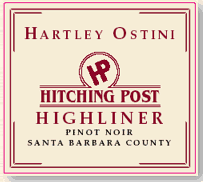
Combining warm Santa Maria Valley and cool Santa Rita Hills vineyards, the flagship Hartley-Ostini Hitching Post “Highliner” Pinot Noir combines the best barrels of the best vineyards to achieve balanced, complex flavors and the overall elegance typical to the region.

From Fiddlestix, Sanford and Benedict and Clos Pepe, three notable Santa Rita Hills vineyards, the 2009 Hartley-Ostini Hitching Post “St. Rita’s Earth Pinot Noir($34) is very fruit forward for those who prefer a healthy dose of black cherry flavors.  Two single-vineyard

Hartley-Ostini Hitching Post "Highliner" Pinot Noir

Hartley-Ostini Hitching Post “Highliner” Pinot Noir

pinots from the Fiddlestix and Bien Nacido vineyards both have the structure to become excellent wines in time.

Gray’s “bootleg” offering was the reasonably priced Hartley-Ostini “Big Circle” Syrah ($20) sourced, once again, from warm and cool climate vineyards throughout the region.  The bouquet hints of the wine’s complex flavors that don’t disappoint on the finish.

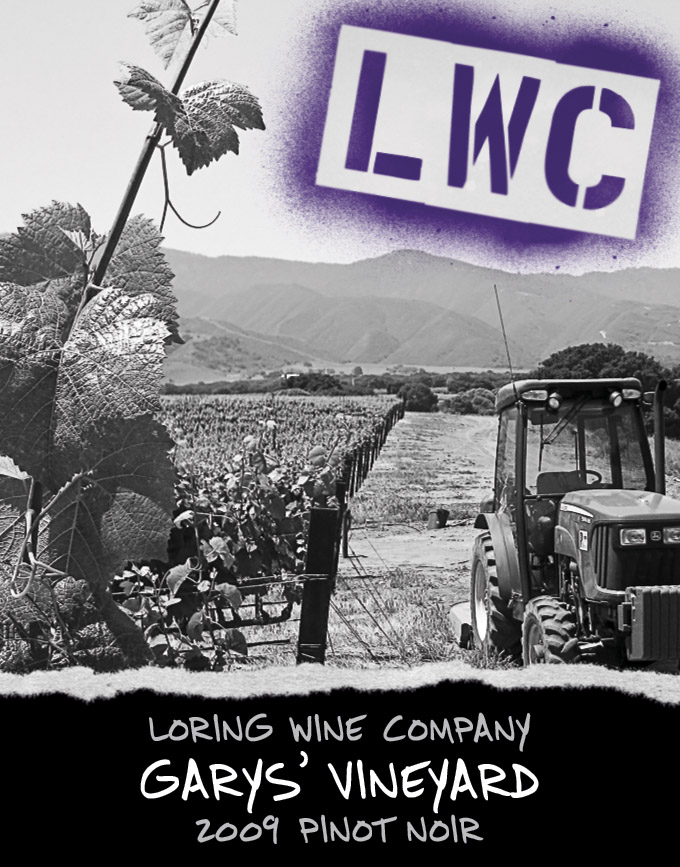
Recognition also goes out to the new releases of pinot noir from the Brian Loring Wine Company.  The technique of sourcing grapes from the best vineyards in California to produce world-class pinot noir has served him and us well. If you enjoy pinots, you will take pleasure in any wine from the Loring Wine Company.

00202 LWC 2009 Pinot Keefer Ranch 750ML Label

2009 Loring Wine Company “Garys’ Vineyard” Pinot Noir

All in all, attending the “Pinot Fest 13” event led to some new discoveries and opportunities to do more follow-ups at their respective wineries and vineyards.  Ironically, my favorite wine of the event was the “bootlegged” 2009 Sojourn Cellars Home Ranch Vineyard Cabernet Sauvignon, one of the “dark pinots.”


Don’t Walk Away, Viognier


The French grape viognier burst onto the California scene in the mid-nineties and was pondered as the next “wine noir” to supplant Queen Chardonnay.  While it did not meet those expectations, viognier plays a vital role in blends on three continents and has realized success as a single varietal wine in the United States with nearly 3000 acres planted.

Modern-day viognier, pronounced “Vee-ohn-yay”, emerged from the small northern Rhone village of Condrieu, where it is the only grape permitted. old_shed Known for floral, aromatic bouquets and concentrated orchard fruits, it has gained appeal in California as a single varietal Elsewhere, it is most identified as a vital component of the famous Rhone Valley blends and, more recently, of those in south Australia.

Adding color and robust aromas, viognier teams up, in varying degrees with marsanne, roussane, counnoise and Grenache blanc to create the renowned whites from Chateaunef-du-pape in the south and Hermitage in the northern Rhone Valley.  While these are timeless wines, they do require some research to assess quality and availability. Fortunately, California Rhone blends can provide an excellent alternative.

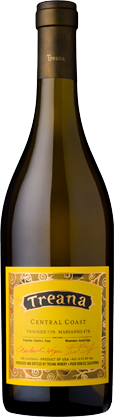
Two blends, produced on the Central Coast, are more readily available and can aptly help one discover what the thrill is all about.  From cool Monterey County, the flagship 2010 Treana White ($23) of the Hope Family Wines collection equally combine marsanne and viognier to produce beautiful jasmine bouquets and treana_whitestone fruits on the palate. Aged separately in French oak, it has a honey-like rich texture that will actually improve with age.

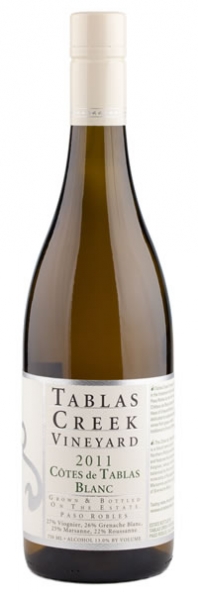
A rare viognier-dominant Rhone blend, the 2010 Tablas Creek Cotes de Tablas Blanc ($27), from Paso Robles’ patriarch of California Rhones, consists of 54% viognier, 30% Grenache blanc, some marsanne and roussane, all aged in stainless steel tanks.  Of course, this wine has a serious nose to accompany a rich texture of peach and melon, adding a nice minerality on the finish.

11_CotesBlanc_web_size_1In the northern Rhone Valley, viognier and syrah vines are often inter-planted (intermingled) and blended together to enhance the final syrah.  Adding viognier, typically far less than the legal limit of 20%, with the red grape seems to enhance the color and bouquet, adding peach and spice to the traditional dark berry flavors.

Recent excitement for viognier/syrah blends is coming from south Australia where several top-of-the-line; highly rated shiraz producers are adding 2%-12% viognier to their best wine with terrific success.  Rarely inter-planted in Australian vineyards, the two grapes are blended before fermentation, a technique called co-fermentation.  While the characteristics of viognier can easily over-power or alter the syrah flavor profile, when in balance the enhanced color and aromas are significant.

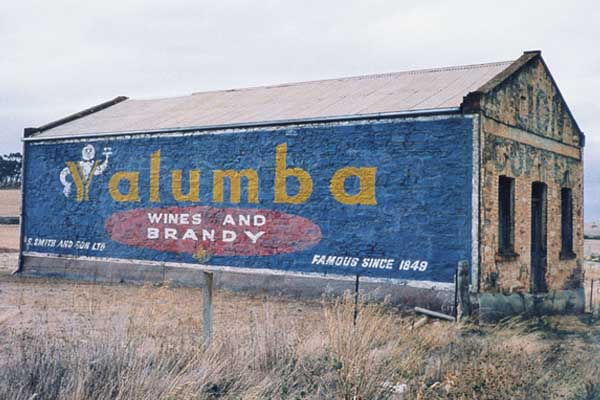
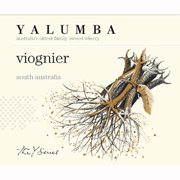
A moderately available, value-priced shiraz/viognier blend, from Yalumba, one of Australia’s oldest family-owned wineries, the Yalumba Eden Valley Shiraz + Viognier 2008 ($20) is a nicely balanced wine with aromas of violet preceding concentrated dark fruit and spice flavors.  As for a 100% viognier, I recently purchased a Yalumba Y Series Viognier Barossa Valley 2012 ($13) at Cost Plus World Market.  As with previous vintages, this wine expresses more of a honeysuckle bouquet and combines soft tropical and stone fruits through the finish120826l

In California, viognier have traditionally flourished in the Paso Robles, Santa Lucia Highlands, Edna Valley and Russian River Valley appellations.  In recent years, as with most varietals, experimentation has broadened the appeal of viognier into new terroir.  A brief trip last year to Calaveras County introduced me to a few wines that caught my attention.
Located in the middle of a wooded area just beyond the main street in Murphy’s, California, Val du Vino Winery sources grapes throughout the region to produce a variety of fine red and white wines.  I find their 2011 Val du Vino Viognier Calaveras County Dalton Vineyard ($25), similar to previous vintages.  It conveys nice honeysuckle aromas with very forward stone fruit flavors of peach and apricot and a nice finish

Adding 11% of the highly acidic picpoul grape to viognier from the Dalton Vineyard, the 2011 Twisted Oak Calaveras County Viognier ($19) maintains good balance with concentrated tropical and stone fruits and a slightly astringent finish.

Surprisingly, California is neither the only, nor necessarily the best producer of viognier in the United States. It seems that “Old Dominion,”  the state of Virginia has the terroir, the will and over 100 wineries to produce highly rated viognier and a few other varietals.  The soil and extended warm growing season around Thomas Jefferson’s Monticello estate allows the grape to fully ripen, exposing provocative aromas and full tropical and stone fruit flavors.  This is secondhand information provides incentive to plan a trip to the Washington D.C. area.

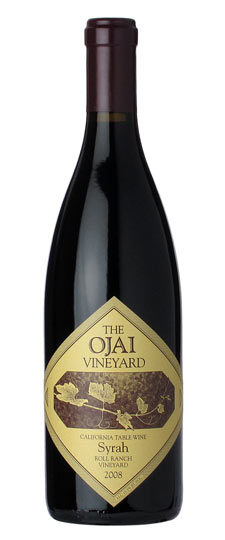
1116555xInvestigation of viognier has peaked my interest in finding new wines that reveal its characteristics, individually or in a blend.  Two wines top my wish list, one a highly rated Santa Barbara County syrah and the other a rare blend.  Rated in the mid-nineties, the 2008 Ojai Vineyards “Roll Ranch Vineyard” California Syrah ($40) is co-fermented with 2% viognier.  Many reviews boasted those deep dark berry flavors, but all emphasized a copious floral nose.

Finding viognier in the company of marsanne or Grenache blanc is not anything out of the ordinary.  They arguably, comprise the greatest white blends of them all. For these reasons, the 2011 Pine Ridge Chenin Blanc-Viognier ($12), an unusual blend, peaks my curiosity. 122046lReading consistent comments like “intensely aromatic” and “added floral and spice” tells me that the 21% viognier from Lodi has tamed, to some degree, the crisp acidity of the 79% chenin blanc grapes from the Sacramento Delta.


Viognier has certainly not supplanted Chardonnay, or most white grapes as the preferred wine for California palates. However, along with the expanded production of chenin blanc, albarino, verdelho and the Rhone blend grapes, viognier stands tall as a white varietal that gives us enormously fragrant aromas and complex flavors.  It’s global presence and adaptability to east and west coast climates implies that it is here to stay.

Viognier pairs well shellfish and poultry, especially recipes containing bridge ingredients like peach, pear, honey, dried flowers or piquant spices.  A personal favorite is “Duck Breasts with Honey, Ginger and Lavender” from Sid Goldstein’s “The Wine Lover’s Cookbook.”


Lyle’s Totally Subjective Top Ten Films of 2012


Many of the distinguished films in 2012 were difficult to watch.  Writer/director Michael Haneke’s “Amour”, a frontrunner in the best foreign film category, boasting a brilliant performance by Emmanuelle Rivas, slaps us in the face with the harsh reality of the struggle to die with dignity.  Joaquin Phoenix delivered a Brando-esque performance with his self-destructive character in “The Master” another difficult view.  John Hawkes’ character in “The Sessions”, confined mostly to an iron lung, was somewhat claustrophobic, but the sex therapy created a nice balance.  The following films were my standouts in 2012, each compelling in their own way, a few actually easy to watch.

10. Beasts of the Southern Wild

The entire “Beasts” scenario is noteworthy, 30-year -old Benh Zeitlin writes and directs his first film, conceived from memories of a childhood vacation to New

Beasts of the Southern Wild

Beasts of the Southern Wild

Orleans.  Amidst devastation and squalor in a poor bayou community after hurricane Katrina lays the story of a dying man, helping his young daughter to endure the immediate danger while preparing her with the strength to survive being orphaned.  It is the struggle with endings and the joy of life to seek new beginnings in one package.   Zeitlin found the perfect “Hushpuppy” personality in a young local girl with no previous acting experience.  Quvenzhane Wallis now has an Oscar nomination.
9. Django Unchained

111036

Django Unchained

Quentin Tarantino’s revenge films have always stood out from the others, each with in-depth scripts and great characters whose appeal comes from the fact that they don’t seem to belong in the existing environment.  Such is true with Dr. King Schultz, a German gentleman bounty hunter played by Chistoph Waltz, who offers slave Django  (Jamie Fox) freedom, revenge and money to help him identify several individuals “wanted dead or alive”.  Samuel Jackson as the dominating head servant, Don Johnson and Leonardo Di Caprio, as plantation owners each deliver outstanding performances.  Waltz deserves an Oscar in a competitive category.
 

8. Moonrise Kingdom

From Wes Anderson, the director that bought us “The Royal Tenenbaums” and “Rushmore”, comes the quirky story of two young twelve year

Moonrise Kingdom

Moonrise Kingdom

old children who, certain that they have fallen in love, decide to run away prompting chaos in the small island community.  The terrific ensemble cast of Bruce Willis, Bill Murray, Frances McDormand, Edward Norton and Tilda Swinton are comfortable delivering Anderson’s weird and wonderful script.

7. Bernie

Jack Black’s performance as Bernie Tiede in the peculiar film “Bernie” is one of this year’s best.  Black’s eccentric character becomes a perfect match for his new job as

Bernie

Bernie

assistant director of a funeral home in a small, odd community in east Texas.   He soon has the entire town charmed, including Marjorie Nugent (Shirley McLaine), the disliked local wealthy widower.   The plot thickens and certain strange circumstances have the burg engulfed in a storm with Bernie sitting in the middle.  Matthew McConaughy delivers a noteworthy performance as Sheriff Buck.

6. Rust and Bone

Despite lofty expectations and disappointing accolades, I found “Rust and Bone” to be a wonderfully written story, involving a complex

Rust and Bone

Rust and Bone

plot of  “boys wants girl-girl doesn’t want boy-girl needs boy-boy needs girl”.  The evolution of the relationship between Stephanie and Alain is, to say the least, extraordinary and the characters are portrayed brilliantly by  actors Marion Cotillard and Matthias Schoenaerts.  Ms. Cotillard

deserved an Oscar nomination.

5. Silver Linings Playbook

Had it been written and released in the 40’s, I visualize a young Tracy and Hepburn in the lead roles.  This is the consummate anomalous

Silver Linings Playbook

Silver Linings Playbook

love story, one that can only work with great acting from Cooper and Lawrence who generated “Spence and Kate-like” chemistry.    Robert DeNiro and Jacky Weaver aptly enhanced the dysfunctional milieu and director David O. Russell proved that he is very good, following his earlier release, “The Fighter”.  Definitely the feel good film of the year with dazzling performances.

4. Argo

The premise of this true story is bizarre, another potentially volatile situation, unfolding during the 1978 hostage crisis with Iran, involving

six Embassy staffers who escaped and hid at the Canadian Embassy.   The story of the uncanny rescue was kept secret for 17 years and is now

Argo

Argo

exposed to the public under the direction of Ben Affleck and producer George Clooney. Despite knowing the out come, the threat of discovery

keeps you on the edge of your seat. The brilliant cast featuring Affleck, John Goodman, Alan Arkin, and Bryan Cranston inject some “Hollywood” into this out of the ordinary authentic tale.

3. The Intouchables

The Intouchables

The Intouchables

Those complaining that French films are too cerebral and boring should see “The Intouchables”, France’s entry in the foreign film category.  When a grieving, wealthy quadriplegic needs a caretaker, he takes a risk on a street-smart, black Muslim ex-con who is only interviewing as a stipulation of his unemployment.  This is the story of two very different people coming together at a time when each can help one another.   In a very entertaining way, this film reminds us that, although we live in varying circumstances, we all really are the same.


2. Lincoln

Steven Spielberg’s meticulous authenticity and Daniel Day-Lewis’ virtuoso performance as our 16th  President is, alone, worth the price of admission.  The story focuses on the end of Lincoln’s life when he was obsessed with uniting the country and abolishing slavery before the end of the Civil War.  Exceptional cinematography reveals the story by placing the viewer in a beautifully illustrated virtual book.  Adapted from Doris Kearns Goodwin’s book, “Team of Rivals” this film is already an American classic.

Lincoln

1. Zero Dark Thirty

A film chronicling the discovery and execution of Osama Bin Laden could have gone wrong in so many ways.  The balance of authenticity

Zero Dark Thirty

Zero Dark Thirty

and a film that would captivate an audience recently absorbed in the real drama would be a difficult task.  Director Katherine Bigelow created a fictional account, encased in reality that mesmerized me and, most importantly, left many judgments with the viewer.   Visual realism, striking cinematography, Mark Boal’s story and the fact that Jessica Chastain pulled off one of the year’s most challenging roles makes Zero Dark Thirty, in my subjective opinion, a great project and the best film of 2012.