Category Archives: Wine

The Women of Domaine de Mastrot


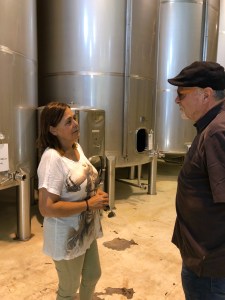
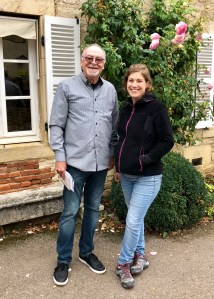
Elsa Martrot and moi

Adele and Elsa Martrot are eighth generation winemakers from the Meursault village in Burgundy.  They are the daughters of seventh generation Thierry & Pascual Martrot.  Females have dominated the most recent offspring and it does not appear that this trend will change in the future.  Elsa delivered a baby girl three months ago and Adele is expecting a baby girl in December, almost assuring that, if the will is there,  the ninth generation will be lead by women.

Winding through backroads that connect small villages of Pommard, Volnay and Monthelie in the Cotes de Beaune region, we arrived at the Domaine de Martrot estate which consisted of old stone buildings, farming equipment and a cellar beneath the house.

Those who are familiar with Burgundian wines have most likely experienced their releases.

They began exporting wines to the states in the 1950s and, today, seventy percent of their production is exported, mostly to the United States, Japan, Norway, Denmark and, more recently, other parts of Asia.  

Although records were destroyed during the French Revolution, they know that their family has produced wine in Burgundy since the late 1800s. Their total production is 150,000 bottles or 12,500 American cases per vintage.  The wines originate from 24 hectares of estate vineyards (60 acres) located throughout Cote de Beaune’s best appellations.

The only AOC permitted grapes in Burgundy are chardonnay and pinot noir with one small exception.  Beaujalois had a few gamay vineyards grandfathered in.  The weather is much like Sonoma County, the Carneros and Santa Rita Hills, California appellations that produce our finest Burgundian varietals
In 2016, there was an April frost from Chablis to Macron and they lost 60% of their grapes which resulted in 80% less yield. Adele explained that the moisture left from the frost combined with the heat from the sun can burn the buds.  At times, to save their vintage, they are forced to burn hay bales to create a smokey haze that filters the sunlight.

Less quantity usually results more highly concentrated wines.  When weather creates hardships for the producer, Mother Nature and the consumer are often the winners.  Hence, we tasted selections from the 2016 vintage.

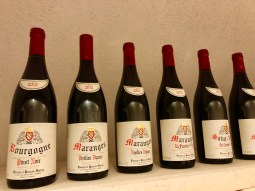
Domaine de Martrot produces about twenty wines per year, evenly split between rouge and blanc.  French wines are always identified by the region and appellation and we tasted a diversity of terroir, each with its own identity.

To begin, Adele poured the 2016 San Romain, a blanc from northern Cote de Beaune.  Because it is warmer and the days are longer, the grapes mature faster and are picked in August. There was a clear minerality to the young wine that will become rounder within four to five years.   

The 2016 Meursault/Blagny 1st cru (premier growth) from a nearby appellation had a healthy acidity that was balanced throughout.  Adele described it as a good pairing with spicy Asian food, specifically  sushi.  They are increasingly exporting their wines to the Japan market.

For me, the white that stood out was the 2016 Meursault-Charmes !st Cru, a wine recently awarded 94-points by Wine Spectator.  Musky, stone fruit and minerality aromas preceded  complex, rounded stone fruit flavors with hints of honey and vanilla.  This wine is
available in the Bay Area for $90.  My bottle cost 55 euros, purchased and enjoyed in Burgundy.

Another 1st Cru release, the 2016 Puligny-Montrachet Les Chalumeaux was a stunning blanc with very clear floral notes on the nose and palate.

The 2016 Monthlelie, an elegant village wine from low-yield vines, was more medium-bodied than the other red wines that we tasted. The result of an early Spring hailstorm was lower quantity and higher quality.

I questioned Adele on how and by whom the grapes were harvested.  Because of how the vines are planted, the chardonnay is done by machine and the pinot noir by hand.  Migrants from French West Africa, including Senegal, Chad and other countries as well as Spain augment locals from the area.

Our last wine was a 2014 Blagny Le Piece Sous le Bois 1st Cru, expressing significant black cherry and spice aromas, reminiscent of fine pinot releases from top California appellations.  The dark berry flavors were round and fruit forward, lingering on a long finish.
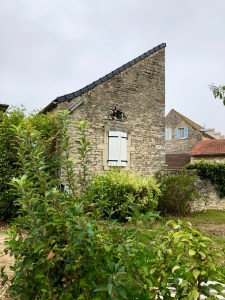
As we celebrate our granddaughter’s first birthday next week,  I will imagine her developing a palate for Burgundian wines and, maybe someday, crossing paths with two young cousins making wine under the roof of a stone building in Meursault.
Sonoma County wineries lead the way in direct to consumer shipments


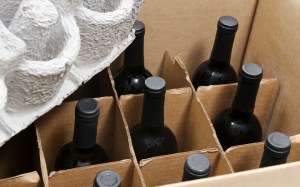
Recently, for a friend’s birthday gift, I phoned a local Sonoma County winery, selected a few favorite wines and had them shipped directly to his home in Los Angeles. Within three days, he had received them. A growing number of consumers are taking advantage of the convenience and easy access to fine wines through this process that eliminates the retail and shipping middle man.

One of fastest growing trends in the wine industry is something called direct to consumer (DTC) shipping.  In 2018, consumers spent $3 billion purchasing wine that was shipped to them directly by the winery, a 12% increase from 2017.  

Representing a nine percent increase from the previous year, wineries, in 2018, shipped over six million cases directly to consumers throughout the country except Utah, Kentucky, Mississippi and Alabama, four states that still prohibit it.  Oklahoma lifted their ban on direct to consumer shipments in 2018 and received $4.3 million worth of wine.

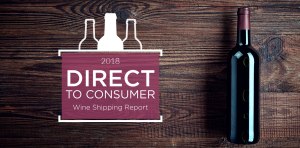
The recently released 2019 Direct to Consumer Wine Shipping Report sponsored by Sovos and Wines Vines Analytics revealed some interesting insights into what now accounts for ten percent of all off premises sales of wine domestically.

The research in the study is based on two major factors:  the volume or number of cases shipped and their value.  California is the most common destination representing 30.2% of the volume and 32% of the value of all wine shipped. Beyond California, Texas is, surprisingly, second in number of cases received at 8.2% followed by New York (6.0%), Washington State (5.4%) and Florida (5.0%). 

Sonoma County experienced the largest increase, 19% in number of cases and 18% in value, surpassing Napa County as the region with most wine shipped by volume at 1.8 million cases. There is also demand for wines from the Pacific Northwest as Oregon and Washington State enjoyed increases in volume shipped of 19% and 18% respectively.

Sonoma County’s advancements in both volume and value of shipments included an average per bottle price of under $30.  Napa County’s modest gains in both categories was accompanied by the highest average per bottle price of over $67, leading some to question if they have reached their price ceiling.

The report also detailed what size wineries are shipping the most with some surprising results.  Of the  9,997 wineries in the United States, 80% are small or limited in size, producing under 5,000 cases per year. These smaller wineries, along with large ones producing over 500,000 cases, experienced the biggest increase during 2018 in both volume and value.

The larger wineries had a 28% increase in volume and a 37% increase in value of their shipments with an average per bottle price of $17.28.  In contrast, the smallest low-production wineries experienced 17% more volume, but a 32% increase in value with an average per bottle price of $72.22. Overall, the value of direct to consumer shipments has more than doubled during the past decade.

The descending order of top shipped varietals are cabernet sauvignon, pinot noir, red blends, chardonnay and zinfandel.  Pinot noir took over the second spot in 2017 which seems to correlate with the increase of shipments from Sonoma County and the plethora of small “pinot-focused” wineries that exist there.

In 2018, rose’ shipments grew 24% in volume and 29% in value, indicative of the popularity of the light wine, now created with purpose and not as an afterthought.

It was a pleasant surprise to find that the volume of under-appreciated cabernet franc shipments rose 19.1%. Having recently tasted some fine releases and talked, over the years, with many winemakers who prefer the varietal, I often wonder why cabernet franc is not more prolific in California.

One explanation is that cabernet franc cannot compete with cabernet sauvignon, the popular grape that is abundantly produced and sold in California as a single varietal wine.  Actually, cabernet sauvignon is a relatively new grape, the result of an accidental blend of

Cabernet franc vines

cabernet franc and sauvignon blanc nearly three centuries ago.  Call me daddy.


With increased membership programs and more awareness, the sustained growth of direct to consumer wine shipments will be an interesting trend to follow in future years.  However, it’s always more fun to pick up your wine at the source and do some tasting.


Monochrome Wines puts color and creativity into unique white blends


Experimentation is a distinctive characteristic of wine makers who began, as hobbyists, making wine in their garages.  They embrace trial and error out of necessity and, as a result, learn to think out of the box. Such is true with Dave McGee, founder of Monochrome Wines, the only Paso Robles winery that focuses exclusively on white varietals and unorthodox blends.

Aside from a few fine white Rhone blends, the Paso Robles region is known for world-class red Rhone blends and zinfandel which begs the question, “Why the focus on whites here?”

Half joking, Dave explained that it gets very hot during Paso’s summer season and he and his wife prefer to drink cooler white wines.  They are also weary of the myth that white wines are simplistic, lacking in-depth and beneath most serious wine drinkers.

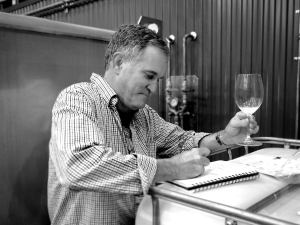
Dave McGee, founder and co-winemaker at Monochrome

To prove his point, Dave decided to take his focus on avant-garde white blends and plant it in the middle of red wine country. I wonder if the property values have begun to fall?

McGee is a transplant from the Bay Area and after three degrees from Stanford and a long career, he fled the rat race for the green hills of Paso Robles wine country.  When asked if wine was his second career, he said, “Actually, it’s my fifth or sixth.” 

After years of planning, tracking California weather patterns and comparing them to the noted European regions, the McGees founded Monochrome Wines in 2016, intent on changing faulty perceptions of white wines.

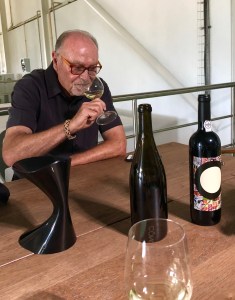
From the first taste, the 2017 Monochrome “Barrel Distortion” ($35), a 100% albarino sourced from the Plum Orchard Vineyard in the nearby Templeton Gap AVA, challenged my perceptions and became a new paradigm.

The albarino grape is typically aged in stainless steel to highlight its crispness and vibrancy.  The “Barrel Distortion” is aged in stainless steel and on the lees in neutral French oak, giving it a unique soft and rich mouthfeel without sacrificing the flavors and aromatics. 

McGee understands that the creation of captivating wines begins with the best fruit.  To that end, he has secured grapes from known sources in the central coast and north Santa Barbara County including the Zaca Mesa Vineyard in the Santa Ynez Valley and the nearby Happy Canyon Vineyard, a long-time producer of quality sauvignon blanc. 

Having spent much of this decade avoiding red meat and eating more seafood and vegetables, I enjoy complex white wines that pair well with food such as the 2017 Monochrome “Neither Here Nor There” ($38), a distinct blend of sauvignon blanc and chenin blanc, both with origins from different parts of France’s Loire Valley. 

Sancerre and the nearby Poiully Fume’ region produce extraordinary sauvignon blanc that is, by nature, very dry.  Chenin blanc is produced to the south and is more versatile in its flavor and texture profile with different regions like Vouvray or Anjou. 

Origins aside, “Neither Here Nor There” claims its identity from California terroir and is barrel, not stainless steel aged, hence the name.

The individual varietals in Monochrome wines are fermented separately, then carefully blended later under the close scrutiny of Dave and consulting winemaker, Riley Hubbard, resulting in inventive wines like the 2017 Monochrome “Altered Images” ($40), a blend of chardonnay and chenin blanc and the 2016 Monochrome “Analogue in a Digital Age” ($38), a blend of marsanne (81%) and chardonnay (19%) that is aged separately in earthenware amphoras, used 8,000 years ago and oak barrels, in use for only 2,000 years, to achieve a contemporary result.

Monochrome currently produces about 500 cases per vintage but looks to expand to 2,000 cases and has many new releases on the horizon.

A growing trend among smaller production wineries, the easiest way to access Monochrome wines, aside from a few local restaurants, is by direct to consumer shipments through their growing two-tiered membership program that guarantees seasonal releases. 

Monochrome also has a small tasting room south of the town of Paso Robles where Dave McGee personally pours current vintages and provides insights into his passion of create complex, memorable white wines. 

Whether a connoisseur or someone who simply enjoys white wines, Monochrome’s mission to explore their intricacies is something not to be overlooked. They have certainly made me a believer.


Clos du Val Winery continues to make history


It is the perfect scenario for a Hollywood movie. A dream come true for a man who settled in the Napa Valley to produce world-class cabernet sauvignon and watched his first vintage become a part of history, the kind of history that changes things forever.

Clos du Val began in 1972 when John and Henrietta Goelet, after years of searching, purchased a parcel in the what is today the Stag’s

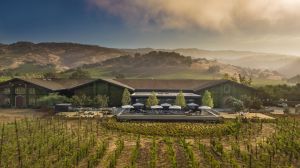
Clos du Val Winery in Napa Valley’s Stag’s Leap District

Leap District and set about making great cabernet sauvignon.  Working with French trained winemaker Bernard Portet, the inaugural release, the 1972 Clos Du Val Cabernet Sauvignon, was a part of the California contingency of wines that outscored the French wines in the venerable 1976 Judgement of Paris blind tasting.  In fact, the same vintage was the overall winner in a 1986 rematch.

If your first vintage helps to change the wine world and catapult California to the forefront, what’s next.  Well, Bernard Portet stayed at Clos Du Val for other 40 years, continued to produce top Napa Valley cabernet sauvignon and both became icons in the industry.  

Still owned by the Goelet family who reside on the East Coast, Clos du Val has, for over 45 years, succeeded through high-end consistency, stability among their staff and a focus on relationships, both with the customer and the surrounding community. They are also not willing to sit on their laurels.

In 2014, with new winemaker Ted Henry at the helm, Clos Du Val made the decision to dramatically reduce production, from 90,000 to 35,000 cases annually, and focus solely on making wines from their estate vineyards in the Stag’s Leap District, Yountville and the Carneros.

The 126-acre Hirondelle Vineyard, that surrounds their Stag’s Leap property, is the main source for cabernet sauvignon, cabernet franc, merlot, petite verdot and malbec, all native to the Bordeaux region. The State Lane and Riverbend Vineyards add more fine cabernet sauvignon clones, cabernet franc with sauvignon blanc and viognier.

Under Henry’s tenure, Clos Du Val is returning to where they started, to the principles on which they were founded. He realizes that they can’t be everything to everyone and that the experience starts with people first, then the wine.

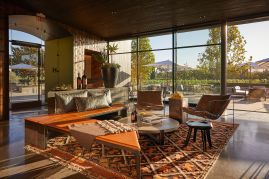
With the change in focus came the construction of a spacious, retro-modern tasting facility with indoor and outdoor spaces overlooking the Hirondelle Vineyard, furnishing comfortable enhancements to the experience.  Designer Erin Martin used the outside of old barrel staves as paneling and the inside of the staves for the ceiling to create history in the architecture.  Glass walls open to the West and bring in the outdoors with elegant patio furniture and water features. To the East, there is another glass door that opens to the barrel room and production facility.

We sat in a cozy nook with Ted Henry and members of the staff to taste some current releases that began with classic aromas of spice and red fruit in the 2016 Estate Pinot Noir, Gran Val Vineyard, Carneros, Napa Valley ($65).  Aged in 100% new French and Hungarian oak, the cherry and red fruit flavors were concentrated and lingering.

The next three wines were all sourced from the estate Hirondelle Vineyard beginning with the lush 2015 Estate Merlot, Hirondelle Vineyard, Stag’s Leap District ($65).  There were complex, earthy aromas of baked fruit and spice with integrated berry and fruit flavors and hints of espresso on the finish.

Cabernet franc, with tremendous heritage, is one of the most overlooked reds varietals in California.  The mineral and menthol hints on the nose of the 2015 Estate Cabernet Franc, Hirondelle Vineyard, Stag’s Leap District ($100) foreshadowed the full-bodied herbal

Clos du Val tasting room

flavors and elegant velvet finish.

The 2015 Estate Cabernet Sauvignon, Hirondelle Vineyard ($120) with merlot and cabernet franc added and the 2014 Three Graces Cabernet Sauvignon ($175), named for a sculpture that modeled the label design, were both exceptional wines that exemplify the grandeur and history of the Napa Valley.

As a special treat, we opened a 1996 Reserve Cabernet Sauvignon from the library and found it to be surprisingly pristine and fruit-forward, an acknowledgement of how well Clos du Val wines age.

The rich legend of the 1972 vintage will be preserved in perpetuity as the contemporary Clos Du Val winery continues to create great wines, ambiance and memories for a new generation. 


Winemakers adjust to the impacts of climate change


With everything that surrounds the mystique of wine, it is, essentially, an agricultural commodity, produced by farmers.  Like all farmers, wine grape growers are and must continue to adapt to the challenges of climate change.

The French word, “Terroir,” is used to describe wine grapes matched with the perfect soil type, rainfall, temperatures, sun and wind exposure, elevation, etc.  Scientific data has shown that the terroir is changing.

Winegrowers deal with the ever-changing climate conditions for each vintage where seasonal variations of yield can exceed thirty

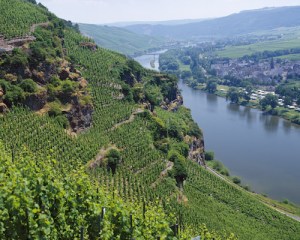
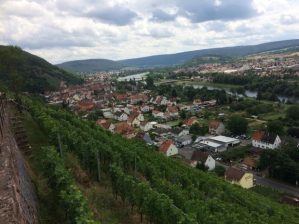
Hillside vineyard above the Mosel River

percent.  However, climate change may demand thinking beyond the grapes that have flourished in their regions for decades and even centuries.

As a co-author of a study in Nature on the impacts of climate change, assistant professor of organismic and evolutionary biology Elizabeth Wolkovich suggests that diversity is the answer for wine growers who should be exploring lesser known varietals.  She explains that while the old regions of Europe grow over one thousand different grapes, there are only twelve varietals that comprise over eighty percent of the market in New World countries

The Europeans, for the most part, produce blends that are not dependent upon a single varietal, whereas, in the United States, we have become fixated on single varietals like cabernet sauvignon, syrah or sauvignon blanc. 

Change in most parts of Europe will be difficult because of strict ordinances that carefully regulate what can and can’t be planted.  In California, we are regulated only by the strong influences of terroir and comfort.  Who can imagine the Napa Valley weaning itself from cabernet sauvignon and selling the vines to growers in a warmer Russian River Valley?

Don’t look for that change soon. The 2017 California harvest of cabernet sauvignon, the world’s most planted grape, was up six percent from 2016 at nearly 600,000 tons.  In contrast, most other varietals were down including popular chardonnay which dropped nine percent, the result of abnormal heat spikes.

California now grows sixty different wine grape varietals and Washington State has long had success with diverse plantings.  In contrast, Oregon is mostly pinot noir and may not be well-positioned to adapt to climate change. 

Although it may be short-lived, there is one country that is reaping the rewards of climate change. Over the past three decades, while

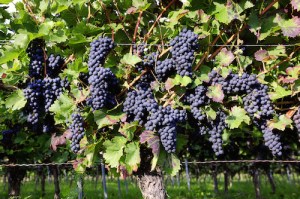
spatburgunder grapes (pinot noir)in Germany

Germany’s agricultural and tourist industries have been negatively affected by steadily rising temperatures, Germany’s wine industry,  at least for the time being, is benefitting from the spikes in heat, primarily because their prized riesling grapes are fully ripening.

A northern European country that has long been associated with beer, Germany has historically created fine riesling and gewürztraminer in the southerly Mosel region along the French (Alsace) and Luxembourg borders. Summer temperatures in Mosel had been fairly cool, averaging 64 degrees which, at times, did not allow the grapes to fully ripen, ultimately holding back the full expression of fruit and roundness to the wine.

Today, viticulture in Germany is less about finding ways to allow the grapes to fully mature and more about the fear of over-ripening. With increased temperatures, the riesling grapes are consistently ripening earlier increasing the yield and the quality of the wines, culminating with the 2018 vintage, that many say will be the best in a lifetime.  While acknowledging the harmful impacts of climate change to our planet, German winemakers admit that today, it is a boom for their product.

Conducive terroir for wine grapes has expanded to the North and opportunities to plant red varietals are growing.  There are reports of cabernet sauvignon, syrah and pinot noir plantings, previously unknown to Germany’s wine history, that are producing high-end results in the bottle.

Thirty years ago, all red grapes represented only ten percent of German vineyards, half that of riesling. Since then, higher average temperatures and a new approach to making red wines has catapulted them into the fore front.  Winemakers have focused on lower yields, malolactic fermentation to reduce acidity and oak aging to achieve their success.

Increased plantings of pinot noir, called spätburgunder, embody the growth of new German red wines that can be found online or in fine wine outlets throughout the Bay Area.

Meanwhile, we should all take advantage of extraordinary German kabinett (austere), spatlese (late-harvest) or auslese (dessert) style riesling wines, warmed by the new heat, and abundantly available at higher, but still reasonable prices.  


The storied history and elegant wines of Larkmead


All wineries have a story, but few match that of Larkmead, located five miles south of Calistoga on an estate that lies between Highway 29 and the Silverado Trail. Their story unfolds as an integral and colorful part of the history and evolution of wine in the Napa Valley.

Over a glass of their 2015 Solari, a current release from a nearby cabernet sauvignon block, I listened intently while current

proprietor’s, Cam and Kate Baker wove tales of Larkmead that spanned my lifetime. 

An Italian immigrant, Kate’s father, Larry Solari, held executive positions with the Wine Growers Guild and United Vintners as well as

Tasting center at Larkmead

Sales Manager for Italian Swiss Colony before and after he and his wife and Napa native, Polly purchased the 110 acre Larkmead Estate in 1948. As a Napa Valley icon, Solari was once described by Robert Mondavi as a mentor.

The Solari’s, aware of Larkmead’s storied past when they purchased it, sought to sustain its rich tradition by sourcing grapes to other local producers, then reviving the Larkmead label.  

Before the Solari family, the land began producing wine after it was leased, then acquired in 1895 by the Salmina family who migrated from Switzerland.

For years, Lillie Coit, the namesake of Coit Tower, lived at the estate which she named Larkmead for the abundant meadowlarks that resided in the surrounding trees. While still producing wine, she had a salon on the property and enjoyed entertaining her friends, including Robert Louis Stevenson who had close ties with the North Valley.

Kate Baker has spent her entire childhood at the Larkmead estate. She and husband Cam were very close to her parents and, while around the wine business for years, never planned to operate it, a commitment they made in 2006, in part, to honor the Solari legacy.

Cam, a graduate of Stanford University and UC Berkeley Law School had a distinguished law career interspersed with extensive community service and a stint in local politics. Kate is highly regarded as an artist and many of her works are displayed through the new

Proprietor’s Cam and Kate Baker

modern hospitality lounge, named The Lark.

Since committing to Larkmead, the Baker’s have overseen the complete replanting of the vineyards, the construction of a state-of-the art production facility and later, the new barrel room and lounge.

The Napa River, that dissects the property, along with elevation drops have resulted in the deposit of a unique diversity of clay, gravelly and sandy soils that are matched with a variety of clones and rootstock of cabernet sauvignon, merlot, cabernet franc, petit verdot, malbec, sauvignon blanc and an acre of left over tocai friulano.

Dan Petroski became the Larkmead Winemaker in 2012, working his way up from Cellar Master and Assistant Winemaker, beginning in 2006.  To achieve his desire for a savory lushness in his wines, Petroski is known for picking his grapes earlier, sometimes three to four weeks before anyone else.  

Today, Larkmead produces only 7,500 cases annually.

Veteran consulting winemaker, Scott McLeod filled in for Petroski and led us through a tasting of current Larkmead releases beginning

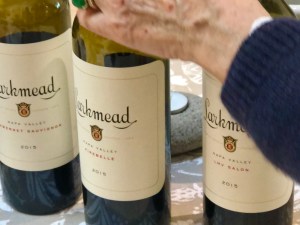
The Wines of Larkmead

with a limited sauvignon blanc, a crisp wine, aged in oak foudres from Sancerre.

Larkmead’s wines are defined as a Vineyard Series that showcases the estate varietals and the Larkmead Series that includes three different block-specific cabernet sauvignon releases, each from a different soil type.

The 2015 Cabernet Sauvignon is Larkmead’s most popular and highly produced wine at 2,000 cases.  Young by their standards, it was nicely balanced, fruit forward and soft on the palate.  Other wines in from the Vineyard Series include the 2015 LMV Salon, that features cabernet franc and the merlot-based 2015 Firebelle, both named after Lillie Coit.

The Larkmead Series are all among the best of Napa Valley cabernet sauvignon.  The elegant 2015 Lark, the 2015 Dr. Olmo, named for known plant breeder and the

Sauvignon blanc vines at Larkmead

aforementioned 2015 Solari all originate from land described as one of the ten best vineyard sites in the Napa Valley.

Whether it is savoring the history surrounding the estate, relishing in Cam and Kate’s commitment to the future or simply enjoying elegant wines, Larkmead is a special experience that’s worth a day trip.


Tasting Fine Napa Valley Merlot


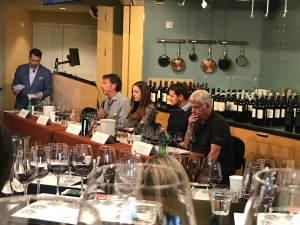
At a recent “Masters of Merlot” event at the COPIA Center in Napa, winemaker Chris Carpenter, referenced the film, “Sideways,” when he said, “Miles had a problem with his ex-wife, not Merlot.” Just as sales of men’s undershirts sharply declined when Clark Gable appeared bare-chested in the film, “It Happened One Night,” Miles Raymond’s declaration of “not drinking any @&%#ing merlot”

Moderator Anthony Giglio, Chris Carpenter/LaJota, Cleo Pahlmeyer/Pahlmeyer, PJ Alviso/Duckhorn, Ted Edwards/Freemark Abbey

created a setback to one of the most esteemed grape varieties in the world.  Estimates place peak California merlot plantings at 60,000 acres and, after some recovery, it seems to have stabilized at 44,000 acres.

Ironically, “60 Minutes correspondent Morley Safer’s 1991 segment, “The French Paradox” highlighted the health benefits of red wine and created a boom for all red varietals, including merlot.  

Carpenter also added that while “Sideways” turned the Carneros to pinot noir, what survived were the sweet spots for merlot in the Napa Valley.

It makes sense that the Napa Valley, birthplace of California’s Bordeaux-style blends, would produce the finest Merlot releases. While cabernet sauvignon is still dominant, pioneer Napa Valley wine makers like Dan Duckhorn fell in love right-bank Bordeaux wines where merlot is king.

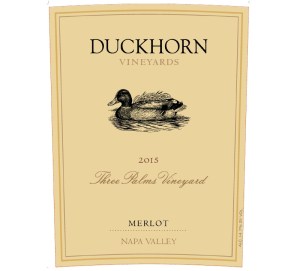
Duckhorn Vineyards has been the source of fine merlot wines for over forty years.  Vice President of Winegrowing P.J. Alviso recalled several stories, including the acquisition of the legendary Three Palms Vineyard, on the Silverado Trail, south of Calistoga, which produced the 2014 Duckhorn Vineyards Three Palms Vineyards Merlot Napa Valley ($98), Wine Spectator magazine’s 2017 Wine of the Year.

Alviso characterized the Three Palms Vineyard as an amazingly self-regulating site that includes fifty acres of low-yield merlot vines. 

2015 Duckhorn Three Palms Vineyard Merlot

The current 2015 Three Palms Merlot ($98) release had slate and berry aromas with complex flavors balanced with earthy elements on the finish.  Duckhorn also produces a Napa Valley Merlot ($60) sourced from over fifty growing lots from numerous vintners.

Freemark Abbey is storied in California wine history because its vintage 1969 Cabernet Sauvignon and 1973 Chardonnay were both included in the 1976 Paris Tasting.  Winemaker Ted Edwards shared that their first merlot release was the result of an abundant 1985 harvest.  Plans to sell off the excess changed after sampling the quality and they have released merlot as a single varietal wine since.

Freemark Abbey produces a Napa Valley Merlot ($30),aged sixteen months in French oak, with 11% added between cabernet sauvignon, petit verdot, malbec and cabernet franc. However, the 2015 Freemark Abbey Merlot Bosche’ Vineyard ($60), with 99% merlot from the Rutherford district, expresses exceptional depth of flavor and aroma. It’s rich, concentrated flavors of black cherry combine with nuanced spice elements.

Known primarily for their Pahlmeyer Proprietary Red, President Cleo Pahlmeyer talked of her father Jayson’s switch from law to winemaking in pursuit of creating a “California Mouton,” referring to an iconic Bordeaux wine from Chateau Rothschild. She introduced the estate grown 2015 Pahlmeyer Merlot, Napa Valley ($85), sourced from vineyards at 2,000 feet elevation on Atlas Peak, describing it as drinking like a cabernet sauvignon. 

In this impressive release, the aromas were timidly wild, structure was excellent and there was a slight perfume element to the flavors of black cherry and vanilla.  As is often the case, the rich mouthfeel is credited to a late rain that reduced net yield by thirty percent.

Mt. Brave and LaJota Vineyard Co. winemaker Chris Carpenter described the challenges of mountain vineyards in dealing with rocky

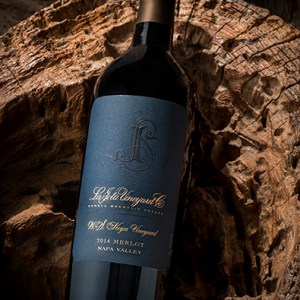
La Jota Vineyard Co. WS Keyes Vineyard Merlot Howell Mountain

soils, angles to the sun and tree lines.  He produced  250-300 cases of the 100% 2015 Mt. Brave Merlot, Mt. Veeder ($80) that had all the elements of an extraordinary wine with dark fruit and espresso flavors that lingered.

For LaJota, Carpenter delivers two fine merlot release from estate Howell Mountain vineyards in the town of Anqwin including the 2015 La Jota Vineyard Co. W.S. Keyes Merlot Howell Mountain ($150), awarded 96-points by Robert Parker, Jr.  Sourced from old gnarly vines in what was described as the “most highly prized merlot vineyard in the country,” the Keyes Vineyard release was one of the finest and most complex merlots that I have tasted from the color, bold flavors and mineral elements through the long finish.

The wine community has declared that merlot is back!  Those of us who were fortunate to taste new releases from these five top Napa Valley wineries realize that it never left.  I suggest that we selfishly make amends by drinking more merlot.


The Road to Conceito’s Wines


For many, the thrill of the wine experience is the search, finding that great value or rare hidden gem that you read about somewhere.  During a recent visit to Portugal’s Douro Valley, I pursued such an opportunity and survived to tell my story.

For centuries, Portugal has been known for producing the finest port in the world, using native grapes like touriga nacional, touriga francesa and tinto roriz, called tempranillo in neighboring Spain and other countries. In recent years, they have used the same varietals to produce acclaimed red wines.  

In 2014, three Douro Valley red wines, the Dow Vintage Port 2011(#1), Prats & Symington Douro Chryseia 2011(#3) and Quinta do Vale Meao Douro 2011(#4), dominated Wine Spectator magazine’s annual top wines list.

Most recently, critics have made note that quality white wines have emerged from the Douro.  One such release, the Conceito Douro

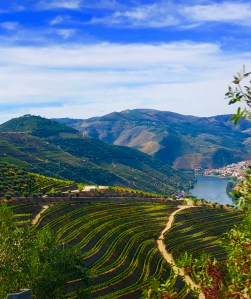
Hillside vineyards in the Douro Valley

Branca 2016 (white blend) and its story intrigued me and, although they were in the midst of the harvest, I reached out to winemaker Rita Marques Ferreira to arrange a visit.  

As with most wineries, Conceito’s small three person staff were in the throes of harvest, something that is time-consuming and must be undertaken within a precise window to maximize potential for greatness. 

Before leaving the hotel, I asked Lisa, the concierge for directions to the village of Villa Nova de Foz Coa-Cedovim.  She said that it was a beautiful ninety minute drive from our hotel in Peso da Régua.  An hour and a half to travel 43 miles should have been a clue.

What followed was a scenic, but harrowing drive up and over a mountain pass, via a long and winding road without many barriers.  At one point, we were behind a small truck carrying freshly harvested grapes.  For once, I didn’t mind the slow-moving truck.  It gave us some reprieve from being the only snail on the road.

Our GPS did a yeoman’s job of getting us to Cedovim. From there we were on our own, left to find Conceito with no commercial signage. We turned to the right and began to improvise.

In a few miles, we passed a small white building where a woman was observing a man on a fork lift dumping a tub of grapes through a de-stemmer. From her photos, I thought I recognized Rita, so we stopped and approached her.

Carla Costa Ferreira takes me on a tour

“We are very busy today, so you will meet with my mother, Carla,” she said.  “Besides, she speaks better English for you.”  I am always impressed how multi-lingual most Europeans are.

Unecessarily apologizing for the mess and her broken English, Carla Costa Ferreira, Conceito’s owner, gave us a tour of their small facility including the crush pad, large stainless steel fermentation tanks and the barrel rooms.

Afterwards, she led us to a small table with several bottles of their current releases to taste. I noticed a bottle of 2017 Conceito Douro Branca and inquired about the vintage 2016.  She left and soon returned, smiling.  “We have very little left, but I found a bottle,” she said.

The 2016 Douro Branca is a field blend of esgana cao, folgosado and verdelho, all native white varietals in the Douro. This wine was not a “fruit bomb”, dominated by one overpowering varietal, but a perfectly balanced blend with a subtle minerality and lush mouthfeel that lingered throughout a seemingly everlasting finish.  A truly pleasurable experience. Although it is priced at 20 euros in

Tasting the 2016 Conceito Douro white blend

Portugal, consumers in the states must pay $45 a bottle for the experience.

I asked Carla if she was aware that Wine Spectator had given the wine a 92-point rating in their national magazine.

“Yes, I am aware,” she said, “but I think they taste wines too early.  This wine will continue to improve for the next five to ten years.”

I believe her, but this wine was tasting very fine today.  Carla poured their top red blend, the 2015 Conceito Douro Tinta, another superbly balanced blend as well as their “Contrast” label red and white, designed as everyday wines at a lower price.  She said that the Contrast red was actually her favorite wine.

Conceito wines are authentic, created by a small team in a remote mountain village that does not seek notoriety of any kind.  Somehow, it still managed to find them.  


The Passion of Chateau le Puy


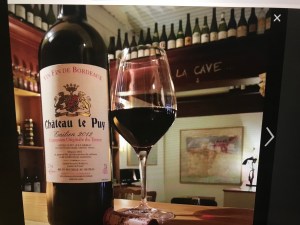
Jean Pierre Amoreau’s family has farmed grapes naturally on the same Bordeaux estate since 1610.  As far back as 1868, Barthelemy, Jean Pierre’s great-great grandfather questioned the need to use sulphur dioxide as an antioxidant and instead, founded the aging on lees method which is still used today to add richness and texture to the wine.  In 1924, the Chateau stopped using any chemicals and watched their vines continue to thrive.  In the mid-sixties, Chateau le Puy became one of the first Bordeaux estates to produce organic wines and in 1990 implemented biodynamic farming methods, something that has been adopted by many California producers.

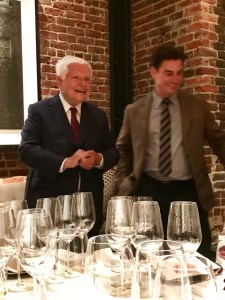
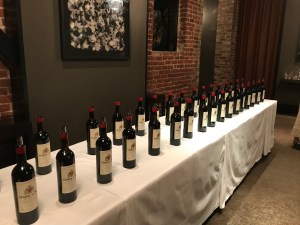
After more than 400 years of winemaking, the passion is still evident in eighty-year old Jean Pierre, his wife Francois and son Pascual, as we met at Quince in San Francisco last week to taste ninety years of the best Chateau le Puy Emilien vintages and pair some current releases with a wonderful lunch prepared by Chef Michael Tusk.

After surveying the eighteen available vintages dating back to 1926, we began with the current release, the Chateau le Puy Emilien 2016  which expressed earth, red fruit and mushroom on both the nose and palate.  It had the structure of a much older wine.  “You will find that my younger wines taste old and my older vintages still taste young and vibrant,” said Jean Pierre, preparing us as we progressed through past decades of his flagship wine that consists dominantly of merlot with some cabernet sauvignon, cabernet franc, malbec and a hint of carmenere.  Since no new oak is used at Chateau le Puy, the Emilien is aged in used barrels and centenary foudres for 24 months.

Jean Pierre enjoys a nice bouquet and the earth and spice aromas of the Emilien 1989 were off the charts. The roundness and complex flavor profile was highlighted with balanced red fruit on the finish.

Jean Pierre Amoreau and son Pascual

As we ventured into the older vintages, Jean Pierre offered more sage advice, “Wine is like marriage.  If it is not good from the beginning, it will never be good.”  While the Emilien 1961 had qualities of baked red fruit aromas and flavors, I found a subtle floral quality throughout.

Three other vintages of the Emilien caught my fancy: the 1955, 1944 and 1926.  The 1955 had a light garnet, almost caramel-like color, smokey aromas and flavors with some lingering hints of orange. 

Due to WWII, the 1944 vintage was produced by Paule, Jean Pierre’s mother and is a superb wine with bright fruit on the palate.

The 1926 vintage was very special because, well, it’s a 1926. With a steely mineralogy on the nose, there were savory elements that were as integrated and balanced as one might imagine.

Lunch began with Tsar Nicoulai Cavier serve with smoked eel, brioche, brown butter hollandaise paired with a Marie-Cecile 2015, simply the finest pure semillon wine that I have ever tasted with incredible aromas of pear and complex, lush flavors that honor the palate.

The Chateau’s Barthelemy, described as an emotional wine, is produced from a single field-blended plot called “Les Rocs,” planted with 85 percent merlot and 15 percent cabernet sauvignon  Six vintages of the Barthelemy, ranging from 2001 to 2014, were paired with diverse dishes from Charcoal Grilled Maine Lobster, Duclair Duck Lasagna with fois gras sauce to something defined as Lamb in Diverse Preparation with freshly dug potato and black truffle. Pinching myself to determine if this

Chateau le Puy vintages: 1926-2015

extraordinary Monday afternoon was real, I enjoyed vibrant aromas, balanced flavors and a rich mouthfeel that supported and enhanced the exquisite cuisine.

For dessert, a chocolate soufflé, served in a small copper sauce pan, was paired with a Retour des Iles 2012, another Chateau le Puy wine with a fascinating story.  From each vintage, the family selects a few barrels to be boarded on a brigantine ship named “Tres Hombres,” and sets them out to sea for eight to ten months.  Apparently, the salty winds and swells of the ocean water provide a unique aging process.  

In describing the Retour, Jean-Michel Brouard from Terre de Vins said, “A unique experience which reveals very round wines with almost exotic aromas, and a symbol.  That of an estate in the same family since 1610, and at the forefront of modernity.” His quote aptly describes the family and the thought and energy that they give to each vintage.


Lesser Known Wines from Pouilly Fume

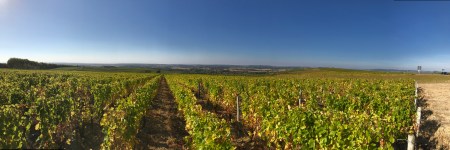
vineyards in Pouilly Fume

While cruising the Canal Lateral de Loire, we moored the boat near Sancerre and planned to do some wine tasting.  Wines from the Sancerre region and nearby Rue Pouilly Fuisse are exquisite and easily recognizable in the California marketplace. However, today we decided to travel east of the Loire River to explore some lesser known white wines from Pouilly Fume’.

The Pouilly Fume’ appellation has only 1,300 hectares under vine compared to 3,000 in Sancerre.  The region is small but has produced dry-farmed wines for four centuries.  The only grape planted in Pouilly Fume is Sauvignon Blanc, but the distinction in the wines comes from the terroir, more specifically the soil types:  limestone, marl, a lime rich blend of clay and silt, sand and flint.

Neighboring Pouilly sur Loire, a sub-region of Pouilly Fume’ produces its wines exclusively from the chasselas grape, named after a commune in the Saone et Loire region of Burgundy. A little known varietal with a global presence, chasselas vines grow in Portugal, Switzerland, New Zealand, Chile and other countries. Wherever it is grown, dry, full fruity wines are found.

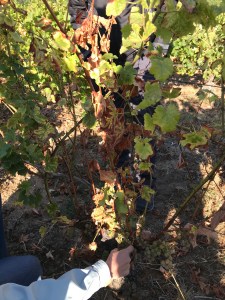
Distressed vines with signs of esca

Exploring the Pouilly Fume and Pouilly sur Loire vineyards, we found that the soils types could change within a few meters.  Although the region is 270 feet above sea level, there was clear evidence of sea fossils in the stones. 

The autumn changes were visible and some vines looked more stressed than others.  We discovered that this was due to the esca disease, which affects the trunks of the vines, requiring the replacement of nearly ten percent of stock each year.

Recent mechanical harvest missed some grapes at the end of the rows which we plucked from the vine and sampled.  Tasted side by side, the differences and similarities between the Sauvignon Blanc and chasselas were as evident as they are in the glass. Distinctively, Sauvignon Blanc offers more tropical while the chasselas more stone fruit on the palate.

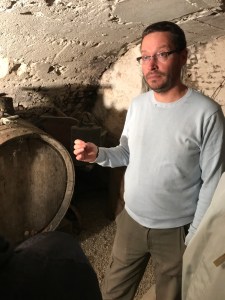
Eventually, we landed in the tiny community of Les Loges, population 78, where ten families have produced wines for generations.  It was there that we met one such heir, winemaker Clement Marchand, owner/winemaker of Domaine Marchand & Fils, whose family has been in the community since 1650.  Today, he makes his wines in the same cellar created by his grandfather, a damp stone chamber filled with stainless steel and fiberglass tanks where the juice of his recently harvested

Winemaker Clement Marchand

grapes were in a slight fermentation boil.  Later, the wines are aged for months in oak barrels.  

Marchand grows high environmental grapes, a method known in this county as biodynamic farming.  While explaining that balance is critical in his wines, he added that it’s all about the soil where limestone can add hints of citrus, flint a mineral element and stone fruit from the marl.

Marchand produces about 25,000 bottles per vintage, divided among his four releases, all of which we tasted.

The Pouilly sur Loire 2017, made to taste young, had clear hints of almond on the nose and a crisp, healthy acidity that would pair well with shellfish.

The Sauvignon Blanc in the Pouilly Fume’ 2017 (Les Kerots) was also fresh and crisp, but with more stone fruit flavors and a lingering finish.  This wine would enhance any seafood dish.

The Pouilly Fume’ 2016, from the local marl-based fossil soil named kimmeridgian, had much rounder texture and a more creamy mouthfeel than the first two, delivering nice stone fruit  flavors.  The “Kimmeridgian” was Marchand’s highest priced release at approximately $30.

Our last wine, the Pouilly Fume’ Prestige 2016 was complex, but not too heavy with nice texture and soft, tropical flavors that  lingered on the tongue.

I believe that environmental elements can effect the way the wines are perceived.  There I was, standing in an ancient

Marchand & Fils Winery in Pouilly Fume

cellar, tasting wines that date back centuries in an authentic, small and secluded French enclave, east of the Loire River.  Of course, they were all tasting great.

Marchand explained that it is hard for his wines to make it to US markets, dealing with limited production and competition of established wines like Chardonnay and Sauvignon Blanc from our soils.  Feeling fortunate to have discovered this region and acknowledging that we may not see them anytime soon, my travel mates and I purchased some bottles for the boat.  Pouilly Fume’ is a hidden gem worth exploring.